

San Francisco to Mesa Car Shipping Route
San Francisco to Mesa covers approximately 755 miles. Carriers accessing this route from San Francisco's dense urban core typically stage in the East Bay — Oakland or Fremont — or the South Bay near San Jose, where multi-car haulers can load without navigating the city's steep grades and narrow streets. From those staging areas, carriers route east on I-80 to I-5 south, or continue south on US-101 before connecting to I-10 east through the Inland Empire and into Arizona. The Sonoran Desert segment east of Blythe is straightforward but demands careful heat management in summer. Shipping rather than driving saves roughly 12 hours of high-desert driving and significant fuel cost. For a full breakdown of those savings, see https://california.auto-transport-shipping.com/articles/benefits-of-auto-transport-service-vs-driving-yourself.html
Mesa sits in the East Valley of the Phoenix metro at roughly 1,241 feet elevation — moderate enough that altitude rarely affects vehicle transport directly. Demand drivers are concrete: Boeing manufactures Apache helicopters at Mesa Gateway Airport, Banner Health employs thousands across multiple campuses, and Apple and Amazon both maintain operations in the broader East Valley corridor. The former Williams Air Force Base — now Phoenix-Mesa Gateway Airport — still anchors a significant military and veteran population, generating PCS-related shipments throughout the year. Summer heat between Blythe and Phoenix regularly exceeds 115°F, which affects carrier scheduling and open-transport exposure. Winter months bring snowbird volume that tightens capacity from November through March. Before you book, review https://california.auto-transport-shipping.com/articles/auto-transport-mistakes-to-avoid.html to avoid common errors.
San Francisco to Mesa Car Shipping Rates
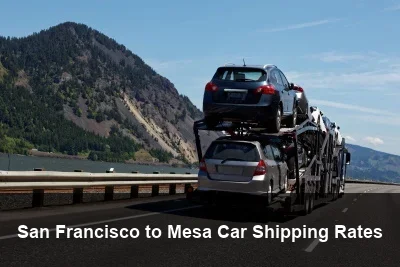
Rates on the San Francisco–Mesa lane are primarily driven by distance — 755 miles places this firmly in the mid-haul tier, typically ranging from $650 to $1,050 for a standard sedan on open transport depending on season and fuel costs. Summer desert heat can add a modest premium as carriers manage scheduling and load timing. Snowbird season from November through March pushes westbound volume up, occasionally tightening eastbound availability. Current diesel pricing directly affects carrier bids on this corridor; see https://california.auto-transport-shipping.com/articles/how-gas-prices-impact-california-auto-transport-fees.html for context.
What affects the cost of San Francisco to Mesa car shipping:
- Vehicle type and size — larger vehicles take more carrier space; aftermarket additions like lift kits, oversized mirrors, or roof accessories can add fees
- Open vs. enclosed transport — open is lower cost with stronger carrier availability; enclosed protects against weather, debris, and road conditions
- Standard vs. expedited pickup — expedited prioritizes your vehicle for the next available dispatch, typically at a $100–$300 premium
- Time of year — peak demand seasons drive rates higher; off-peak windows offer the most competitive pricing
- Fuel costs — diesel prices affect carrier rates; longer routes are more sensitive to fuel price swings
- Vehicle condition — non-running vehicles require special loading equipment and cost more to ship
| Vehicle Type | Open Car Shipping (Est.) | Enclosed Car Shipping (Est.) |
|---|---|---|
| Sedan | $650 – $900 | $1,200 – $1,600 |
| SUV / Crossover | $800 – $1,050 | $1,400 – $1,850 |
| Pickup Truck | $800 – $1,050 | $1,400 – $1,850 |
| Minivan | $800 – $1,050 | $1,400 – $1,850 |
| Luxury / Classic Car | $900 – $1,200 | $1,500 – $2,000 |
| Non-Running Vehicle | Add $150–250 | Add $150–250 |
* Estimated ranges based on recent San Francisco to Mesa shipments. Actual rate depends on vehicle, locations, booking date, and current fuel costs. Use the form on this page to compare real quotes from licensed carriers.
Open or Enclosed: What This Desert Corridor Actually Requires
For most standard vehicles on this route, open transport is the practical choice. The I-10 corridor through the Inland Empire and Sonoran Desert is well-trafficked by open carriers, keeping rates competitive and availability high. However, summer temperatures between Blythe and Phoenix regularly exceed 115°F, and prolonged sun exposure can affect paint and interiors on high-gloss or matte finishes. If you're shipping a luxury vehicle, classic car, or a vehicle with a custom paint job, enclosed is worth the added cost. Enclosed also makes sense if your delivery window falls during July or August monsoon season, when blowing desert dust and debris are real concerns.
How Long Does San Francisco to Mesa Car Shipping Take?
San Francisco to Mesa typically moves in two to four days once a carrier is assigned. Driving time for the 755-mile route runs about 11 to 12 hours, but carriers operate within federal hours-of-service rules and often carry multiple vehicles requiring intermediate stops. Carrier frequency out of the Bay Area on California-to-Phoenix-metro lanes is solid, meaning dispatch times are usually one to three business days. If your move date is fixed and non-negotiable, expedited booking can compress that dispatch window significantly — see https://california.auto-transport-shipping.com/articles/california-expedited-car-shipping-fast-cost.html for current expedite pricing.
| Service Type | Typical Transit | Pickup Window | Best For |
|---|---|---|---|
| Open — Standard | 2–4 days | 2–4 business days | Best value; most common choice on this route |
| Open — Expedited | 1–2 days | 1–2 business days | Firm arrival date; faster dispatch window |
| Enclosed — Standard | 2–4 days | 3–6 business days | Luxury, classic, or modified vehicles |
| Enclosed — Expedited | 1–2 days | 1–3 business days | High-value vehicles on a firm delivery deadline |
** Summer heat along I-10 between Blythe and the Phoenix metro can cause carriers to adjust departure times, running overnight to avoid midday temperatures above 115°F. This can add 12 to 24 hours to your delivery window. Monsoon storms in July and August occasionally close portions of I-10 near the Arizona border, adding further delay.
San Francisco to Mesa — Route & Logistics
Carriers on this route exit the Bay Area via I-80 eastbound or US-101 southbound, consolidate loads in the East Bay or South Bay, then connect to I-5 south or continue to I-10 east. From Ontario, California eastward, I-10 runs continuously into Mesa via Blythe and the Phoenix metro — roughly 755 miles total with no major mountain passes above 4,000 feet.
Key Corridor Waypoints
- Oakland / Fremont, CA Most carriers stage here rather than in San Francisco proper. The Port of Oakland area and industrial corridors in Fremont provide space for multi-car haulers that can't navigate SF's hills and narrow streets. Expect your vehicle to be transported by a smaller local driver to this staging point if your pickup address is in a restricted SF neighborhood.
- Stockton, CA A common overnight stop or driver exchange point for carriers running I-5 south from the Bay Area. Sitting at roughly 23 feet elevation in the Central Valley, Stockton has truck-friendly infrastructure and fuel stops. Carriers choosing the I-5 route through the San Joaquin Valley typically pass through here before connecting toward Los Angeles or cutting east to I-10.
- Ontario, CA (I-10 / I-15 interchange) The critical junction where carriers from Northern California converge on I-10 east. At roughly 1,000 feet elevation in the Inland Empire, Ontario is a major logistics hub with multiple carrier terminals. Loads coming from the Bay Area via I-5 or US-101 pick up I-10 here for the final desert run through to Arizona.
- Blythe, CA (California–Arizona border) The last California city before crossing into Arizona at roughly 268 feet elevation. The Border Patrol checkpoint east of Blythe is routine but adds a brief delay. This is also where summer heat becomes the dominant logistical factor — temperatures regularly exceed 115°F between here and Phoenix, and carriers factor that into their scheduling windows.
- Buckeye / Goodyear, AZ The western gateway to the Phoenix metro on I-10, at approximately 1,000 feet elevation. Many carriers make final phone contact with Mesa customers at this point — roughly 35 to 40 miles from delivery. Traffic on I-10 through the Phoenix metro can be dense during morning and evening commute windows, occasionally pushing final delivery timing by one to two hours.
- Mesa, AZ (Phoenix-Mesa Gateway area) Final delivery destination near the eastern edge of the Phoenix metro at 1,241 feet elevation. The Gateway Airport corridor and Superstition Springs area are carrier-accessible with standard multi-car equipment. Residential neighborhoods closer to downtown Mesa can have tighter streets; drivers may request a nearby staging spot such as a shopping center parking lot for final drop.
Pickup & Delivery Access
- Pickup Access in San Francisco San Francisco's street grid — particularly Nob Hill, the Mission, Twin Peaks, and most of the Peninsula neighborhoods — is difficult or impossible for 75-foot multi-car haulers to navigate. Carriers typically assign a local spot truck for door pickup or designate a meet point in a flat, accessible area such as the Caltrain parking lots near 4th and King, the Port of Oakland waterfront, or industrial streets in South San Francisco or Daly City.
- Delivery Access in Mesa Most of Mesa is accessible to standard open carriers. Newer subdivisions in East Mesa and the Gateway area have wide streets designed for suburban traffic and pose no clearance issues. Older neighborhoods near Mesa's downtown core and some Dobson Ranch streets have mature trees and parked-car congestion that can make door delivery difficult. If your address is in one of those areas, plan to meet the carrier at a nearby parking lot or commercial street.
- Nearby Pickup Locations Carriers picking up in San Francisco regularly extend service to Oakland, Berkeley, South San Francisco, and Daly City. Call 1‑800‑590‑6492 to confirm door-to-door availability at your address.
Open vs. Enclosed Car Shipping: San Francisco to Mesa
Both options use licensed, insured carriers and deliver door to door. For a full breakdown, read the pros and cons of open vs. enclosed car shipping.
Open Car Shipping
Most Popular- Lower cost — the practical choice for most vehicles
- More carriers available on this corridor
- Faster dispatch from booking to pickup
- Works well for sedans, SUVs, trucks, and minivans
- Vehicle rides on an open multi-car carrier
- Cargo insurance required on all licensed carriers
Estimated cost: $650 – $1,050
Enclosed Car Shipping
Premium Protection- Full protection from weather, debris, and road grime
- Best for luxury, exotic, and classic vehicles
- Recommended for low-clearance and custom-built cars
- Wheel-net or soft-tie systems prevent contact damage
- Higher cargo coverage — commonly $500,000 per load
- White-glove handling by experienced operators
Estimated cost: $1,200 – $1,850
Not sure which is right for your vehicle? Call 1-800-590-6492 and we'll point you in the right direction. Also worth reading: the top 10 questions to ask any car shipping company before you commit.
How to Prepare Your Car for Shipping to Mesa
A little prep before pickup protects you if there's ever a dispute about your vehicle's condition. This checklist is from our full guide on preparing your car for transport:
- Remove all personal belongings from the interior and trunk
- Leave only a quarter tank of fuel — enough to load and unload
- Take date-stamped photos of the full exterior and interior
- Remove or disable toll transponders (FasTrak, E-ZPass, etc.)
- Retract or remove roof racks, spoilers, antennas, and bike mounts
- Make sure the battery is charged and tires are properly inflated
- Tell the carrier about any existing leaks or mechanical issues
- Deactivate the car alarm before the carrier arrives
- Write down the mileage on the Bill of Lading at pickup
- Fold in side mirrors if the vehicle is wider than standard
Personal items: Most carriers won't cover belongings left in the car. Read the full rules on shipping personal items in your vehicle. Also review our Bill of Lading guide so you know exactly what to check at pickup and delivery.
When to Ship Your Car from San Francisco to Mesa
This corridor has two distinct demand peaks: the November-through-March snowbird season, when retirees and seasonal residents move vehicles between the Bay Area and the Valley of the Sun, and the late-July-through-August period, when Arizona heat and monsoon weather create logistics complications. Summer heat between Blythe and Mesa is the primary operational concern — carriers adjust schedules to avoid midday transport in extreme temperatures. For a detailed look at how winter seasonality affects scheduling and pricing, see https://california.auto-transport-shipping.com/articles/auto-transport-challenges-during-the-winter.html
Spring Departure (March–May)
Snowbird return season runs March through April, generating strong westbound volume as seasonal residents move vehicles back to California. Eastbound slots into Mesa are easier to fill during this window, often at competitive rates. May sees normal demand before summer heat becomes a scheduling factor. If you're shipping eastbound in spring, this is one of the better pricing windows on this corridor.
Summer Heat (June–August)
June through August is operationally the most demanding period on this route. I-10 east of Blythe regularly hits 115°F or higher. Carriers often run overnight legs through the Sonoran Desert to protect vehicles and equipment. Monsoon storms in July and August can briefly close sections of I-10. Build an extra one to two days of buffer into your delivery window if you're shipping during this period.
Snowbird Season (November–March)
This is the highest-demand window on the San Francisco–Mesa corridor. Retirees and seasonal residents from the Bay Area move vehicles to the Valley of the Sun from November through March. Eastbound capacity tightens noticeably by late October. If your move falls between Thanksgiving and New Year's, book at least two to three weeks in advance. Rates typically run 8 to 15 percent above spring and summer levels.
Student Moves — ASU Polytechnic (August & January)
Arizona State University's Polytechnic campus in Mesa adds a measurable student-vehicle spike in late July through mid-August for fall semester, and again in early January for spring. If you're shipping a vehicle for a student relocating to the Polytechnic campus area, book early — these windows coincide with peak heat season, and carrier slots fill faster than the calendar suggests they should.
Military PCS Cycles (Year-Round, Peaks in Summer)
The former Williams Air Force Base — now Phoenix-Mesa Gateway Airport — and nearby Luke Air Force Base in Glendale generate PCS-related shipments throughout the year. The primary military PCS window runs May through August, overlapping with summer heat. Military shippers should request firm scheduling and build extra transit buffer. Some carriers offer military discount pricing; confirm at time of booking.
How to Choose a San Francisco to Mesa Car Shipping Company
Getting multiple quotes is step one — knowing what to look for in those quotes matters just as much. Our guide on how to select a car shipping company covers the full process. Here are the six things that matter most:
FMCSA Registration
Every carrier or broker must hold a valid MC number. Verify any company at FMCSA SAFER before you book.
Proof of Insurance
Ask for a current certificate of insurance. Open carriers typically carry $100,000–$250,000 per load; enclosed commonly $500,000 or more. Learn what auto transport insurance covers.
All-In Pricing
Your quote should be a final number with no fees added after booking. Know the difference between brokers and carriers and confirm what the quote covers before you agree.
Bill of Lading
A complete Bill of Lading is filled out at pickup and delivery. Our Bill of Lading guide explains what to check. Never sign an incomplete one.
Real Reviews
Check Google and the BBB. Look at how they handled complaints and damage claims — that tells you more than a five-star average from happy customers.
Route Experience
A carrier who regularly runs Bay Area to Phoenix-metro loads knows that San Francisco door pickups almost never work for a full multi-car hauler — the practical pickup geography is Oakland, Fremont, or South Bay staging, and customers who understand that get faster dispatch. They know the I-10 checkpoint east of Blythe runs routine inspections and to budget time accordingly. They know the Ontario interchange is the consolidation point where Bay Area loads meet Inland Empire loads, and that timing arrival there ahead of afternoon rush matters. In summer, they schedule the Blythe-to-Mesa leg as a pre-dawn run, not a midday one. They know Mesa Gateway–area delivery is easy, but old-town Mesa streets require a spot truck or meet-point coordination. That operational familiarity translates directly into fewer delays and more accurate delivery windows for your vehicle.
San Francisco to Mesa Car Shipping — FAQ
How much does it cost to ship a car from San Francisco to Mesa?
For a standard sedan on open transport, expect to pay between $650 and $1,050 for the San Francisco to Mesa route at current market rates. The 755-mile distance places this in the mid-haul pricing tier. Several factors adjust that range: enclosed transport adds roughly $250 to $450 over open pricing; oversized vehicles like trucks and SUVs run $75 to $150 more; and snowbird season from November through March typically pushes rates 8 to 15 percent higher due to demand. Summer months can add a modest premium tied to heat-related carrier scheduling adjustments and current diesel costs. Get a current quote through the form on this page for the most accurate number based on your vehicle type and move dates.
How long does San Francisco to Mesa car shipping take?
Transit time on the San Francisco to Mesa corridor is typically two to four days once a carrier picks up your vehicle. The driving distance is approximately 755 miles, which is about 11 to 12 hours of road time, but carriers operate under federal hours-of-service limits and usually carry multiple vehicles with intermediate stops. Dispatch — the time between booking confirmation and actual carrier pickup — runs one to three business days on this well-traveled lane. During summer, carriers often run the Blythe-to-Phoenix desert segment overnight to avoid extreme heat, which can add 12 to 24 hours to the delivery window. If your timeline is firm, expedited service can compress dispatch time significantly.
Is my car insured during transport from San Francisco to Mesa?
Yes. Every licensed carrier is required by federal law to carry cargo insurance, and your vehicle is covered under that policy during transport. However, the carrier's policy is primary — your personal auto insurance typically doesn't apply during shipping, though some policies provide secondary coverage. Before your vehicle is loaded, you and the driver will complete a Bill of Lading documenting your vehicle's existing condition. At delivery, inspect your vehicle carefully before signing the delivery receipt. If damage occurred during transport, any discrepancy between the pickup and delivery condition sections of the Bill of Lading is the basis for your claim. For a full explanation of how coverage works, see https://california.auto-transport-shipping.com/articles/understanding-auto-transport-insurance.html, and review the claims process at https://california.auto-transport-shipping.com/articles/how-to-file-a-claim-for-vehicle-damage-during-transport.html before your shipment moves.
Should I choose open or enclosed transport for the San Francisco to Mesa route?
For most standard vehicles, open transport is the right call on this corridor. It's less expensive, carrier availability is higher, and the I-10 route is well-traveled by open haulers year-round. The case for enclosed becomes real in two situations: you're shipping during summer months when the Sonoran Desert segment between Blythe and Phoenix sees temperatures above 115°F, and your vehicle has a high-gloss, matte, or custom finish that's sensitive to prolonged direct sun and heat exposure; or you're shipping a luxury vehicle, collector car, or anything with a replacement value high enough that the additional enclosed cost — typically $250 to $450 more — is minor relative to the protection. For a side-by-side comparison of both options, see https://california.auto-transport-shipping.com/articles/open-vs-enclosed-auto-transport-pros-and-cons.html
Do I have to be present at pickup and delivery?
You don't have to be personally present, but someone with authority to release or accept the vehicle does need to be there. That person needs to be able to conduct the vehicle inspection with the driver and sign the Bill of Lading at pickup, and repeat that process at delivery. The Bill of Lading documents your vehicle's condition at each transfer point — it's your primary protection if a damage claim becomes necessary, so whoever represents you needs to take it seriously and not rush through the inspection. If you're relocating and can't be at one end of the move, a trusted friend, family member, or local agent can fill that role. For details on what the Bill of Lading covers and why it matters, see https://california.auto-transport-shipping.com/articles/california-auto-transport-bill-of-lading-information.html
How does summer heat in the Arizona desert affect my vehicle during transport?
The stretch of I-10 from Blythe, California through the Sonoran Desert to the Phoenix metro regularly hits 115°F or higher from June through August. On open carriers, your vehicle is exposed to that heat and direct sun for several hours. Plastic trim, rubber seals, and dashboard surfaces can experience accelerated wear under sustained extreme heat exposure. Fluids in the vehicle are generally not a concern at transport temperatures, but if you have aftermarket components — custom interior materials, vinyl wraps, or specialty rubber products — consider enclosed transport during these months. Carriers experienced on this corridor typically schedule the desert segment as a pre-dawn or early-morning run to limit heat exposure and protect both vehicles and equipment.
When is the best time to ship a car from San Francisco to Mesa to get the lowest rate?
Late spring — roughly mid-April through May — typically offers the best combination of competitive pricing and straightforward logistics on this corridor. The snowbird return season has wound down, reducing westbound competition for eastbound slots, and summer heat hasn't yet begun affecting carrier scheduling. September through mid-October is a secondary window with reasonable rates before snowbird demand builds again in November. Avoid booking during the Thanksgiving-through-New Year's stretch if rate minimization is your priority — that window sees peak snowbird eastbound demand and prices reflect it. If you must ship in summer, book well in advance to lock in the dispatch window before heat-related scheduling constraints tighten availability.
Can my carrier pick up directly from my San Francisco address?
Possibly, but it depends on your exact address and a standard multi-car hauler's ability to access it safely. San Francisco's steep grades, narrow residential streets, and parking-restricted corridors make door-to-door pickup difficult or impossible in many neighborhoods — including most of Nob Hill, the Mission District, Twin Peaks, the Castro, and similar areas. Carriers typically solve this in one of two ways: a local spot truck picks up your vehicle and delivers it to a staging area in Oakland, Fremont, or South San Francisco where the main hauler loads it; or the carrier asks you to meet at a nearby flat, accessible location such as a commercial parking lot or a wide street near a major arterial. When you book, be specific about your pickup address so the dispatcher can confirm access and set accurate expectations.
Ready to Ship Your Car from San Francisco to Mesa?
One form gets you up to 10 free quotes from licensed, insured carriers. Compare costs and transit times and book the best deal for your schedule.