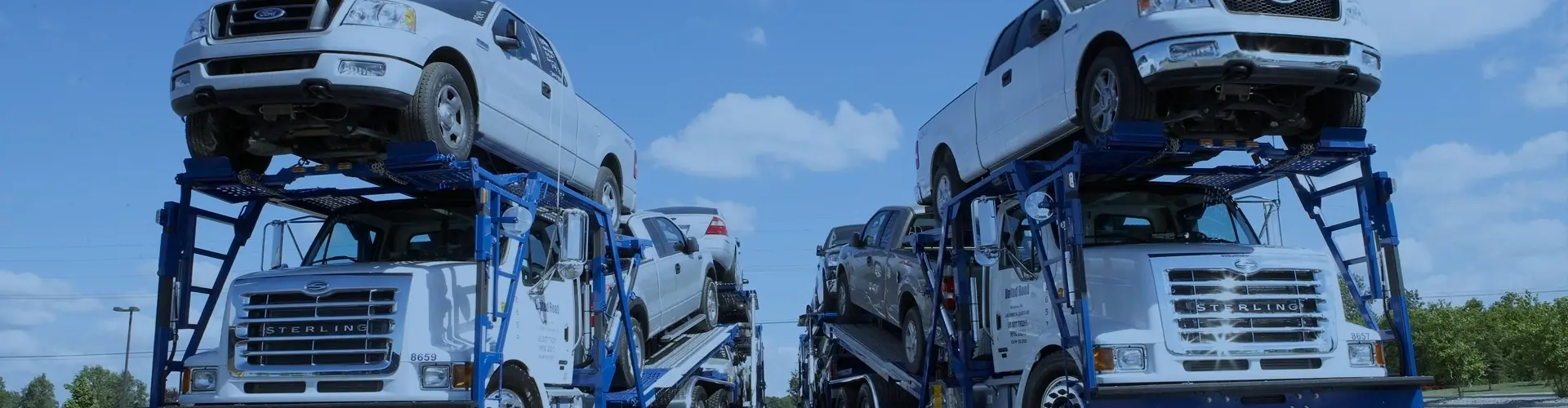
Whether you are buying a classic “barn find” in NorCal, inheriting a car that hasn’t run in years, or dealing with a mechanical breakdown, you may need to ship a vehicle that doesn’t start. Shipping an inoperable vehicle is entirely possible, but it requires specialized equipment and planning. Unlike a standard shipment where the driver simply drives the car onto the truck, a non-running car must be winched or forked into place. At California Auto Transport, we connect you with carriers who have the right tools to move your non-running vehicle safely.
Defining “Inoperable”
In the auto transport world, there are two main categories of non-running vehicles. Knowing which one applies to your car is critical for getting an accurate quote.
- Rollable and Steerable: The car does not start, but the tires are inflated, the wheels turn freely, the steering wheel is unlocked, and it has a working brake (or parking brake). These are the most common inoperable shipments.
- Non-Rolling (Dead): The car has flat tires, missing wheels, locked steering, or seized brakes. These cannot be pulled up a ramp easily and often require a forklift or a flatbed tow truck to assist with loading.
The Cost Factor: Why Is It More Expensive?
Shipping a non-running car typically costs $150 to $200 more than a running vehicle. This surcharge covers the extra labor, risk, and equipment involved. Loading a dead car is a slow process; the driver must hook up a winch, carefully guide the vehicle up steep ramps, and secure it without the aid of the car’s power brakes or steering.
Get up to 10 free quotes from licensed, insured carriers. One form — compare rates and schedules side by side without calling anyone.
Comparison: Running vs. Inoperable
See the differences in requirements for shipping these two types of vehicles.
| Feature | Running Vehicle | Inoperable (Roll/Steer) |
|---|---|---|
| Loading Method | Driven on by carrier. | Winched on (cable pull). |
| Equipment | Standard car hauler. | Must have a working winch. |
| Carrier Availability | High (All carriers). | Medium (Only carriers with winches). |
| Cost | Standard Rate. | Standard + ~$150 Winch Fee. |
Preparation Checklist for Non-Running Cars
To ensure your shipment goes smoothly, you must prepare the vehicle before the truck arrives. If the car is not ready, the carrier may be unable to load it.
- Inflate Tires: A car cannot be winched safely on flat tires. If the tires don’t hold air, you may need to repair them or buy cheap used tires.
- Keys are Required: Even if the engine is dead, the driver needs the key to unlock the steering wheel and shift the transmission into Neutral.
- Accessible Location: The car hauler is 75 feet long. It cannot pull into a tight driveway to winch a car out of a garage. You must push or tow the vehicle to a wide, open street or parking lot for pickup.
The “Forklift” Scenario
If your vehicle is completely wrecked, has no wheels, or cannot roll, a standard car carrier cannot take it. In this case, you will need a carrier equipped with a forklift or you must arrange for a forklift at both the pickup and delivery locations (common at salvage auctions like Copart or IAAI). Always clarify this with your transport specialist before booking.
Get up to 10 free quotes from licensed, insured carriers. One form — compare rates and schedules side by side without calling anyone.
How California Auto Transport Helps
We understand the complexities of shipping restoration projects, auction buys, and broken-down daily drivers. When you request a quote, simply check the “Inoperable” box. We will filter our network to find bonded and insured carriers who have the winches and expertise to handle your specific vehicle. We ensure there are no surprises on pickup day.
Get Your Inoperable Shipping Quote
Don’t let a dead battery or a blown engine strand your vehicle. Call us today at 1-800-590-6492 or complete the form on this page. We will provide you with accurate quotes that include the necessary equipment to get your car moving again.