
San Francisco to Phoenix Car Shipping Route
San Francisco to Phoenix covers approximately 752 miles by road. Carriers typically access the route via US-101 south through the Peninsula or I-280 to pick up I-5, then cut east on I-8 through El Centro and Yuma into Phoenix. Some loads stage in Oakland or South San Francisco where multi-car carriers can maneuver more freely before committing to the southbound run. The drive takes roughly 11 to 12 hours solo — longer with stops, fatigue, or a second driver needed back. Shipping your vehicle instead eliminates fuel costs, mileage on your odometer, and wear on brakes and tires over desert grades. For a full breakdown of the savings comparison, see https://california.auto-transport-shipping.com/articles/benefits-of-auto-transport-service-vs-driving-yourself.html
Phoenix demand is anchored by several large institutions and employer campuses. Luke Air Force Base in Glendale processes regular military PCS moves, generating year-round vehicle shipping demand in both directions. Arizona State University's Tempe campus enrolls over 70,000 students, creating seasonal spikes every August and May. Intel operates a major semiconductor fabrication campus in Chandler, and Banner Health's regional headquarters draws healthcare professionals relocating from the Bay Area. On the weather side, summer heat in the Sonoran Desert — routinely above 110°F — can affect open-carrier vehicles parked in staging, though transit exposure is brief. Before you book, review https://california.auto-transport-shipping.com/articles/auto-transport-mistakes-to-avoid.html to avoid common booking errors on this corridor.
San Francisco to Phoenix Car Shipping Rates
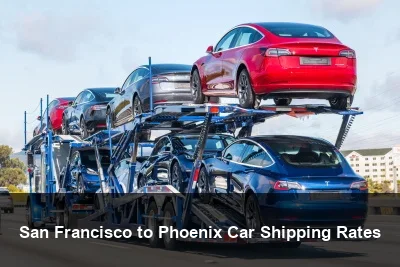
Rates on the San Francisco to Phoenix run reflect a 750-plus mile haul in a well-traveled corridor, which moderates base pricing compared to thinner routes. Expect seasonal surges in September through November when snowbird demand spikes and again in late spring when ASU students relocate. Summer fuel costs across the desert Southwest directly affect carrier pricing — for specifics on how that works, see https://california.auto-transport-shipping.com/articles/how-gas-prices-impact-california-auto-transport-fees.html. Urban pickup surcharges from San Francisco itself can add to the base quote.
What affects the cost of San Francisco to Phoenix car shipping:
- Vehicle type and size — larger vehicles take more carrier space; aftermarket additions like lift kits, oversized mirrors, or roof accessories can add fees
- Open vs. enclosed transport — open is lower cost with stronger carrier availability; enclosed protects against weather, debris, and road conditions
- Standard vs. expedited pickup — expedited prioritizes your vehicle for the next available dispatch, typically at a $100–$300 premium
- Time of year — peak demand seasons drive rates higher; off-peak windows offer the most competitive pricing
- Fuel costs — diesel prices affect carrier rates; longer routes are more sensitive to fuel price swings
- Vehicle condition — non-running vehicles require special loading equipment and cost more to ship
| Vehicle Type | Open Car Shipping (Est.) | Enclosed Car Shipping (Est.) |
|---|---|---|
| Sedan | $650 – $900 | $1,200 – $1,600 |
| SUV / Crossover | $800 – $1,050 | $1,400 – $1,850 |
| Pickup Truck | $800 – $1,050 | $1,400 – $1,850 |
| Minivan | $800 – $1,050 | $1,400 – $1,850 |
| Luxury / Classic Car | $900 – $1,200 | $1,500 – $2,000 |
| Non-Running Vehicle | Add $150–250 | Add $150–250 |
* Estimated ranges based on recent San Francisco to Phoenix shipments. Actual rate depends on vehicle, locations, booking date, and current fuel costs. Use the form on this page to compare real quotes from licensed carriers.
Open or Enclosed: What This Desert Route Actually Requires
Open transport is the practical choice for standard vehicles on this route. The I-8 corridor through the Imperial Valley and into Phoenix is heavily used by open carriers, and road conditions don't present unusual hazards to standard paint or glass. Enclosed transport makes sense for classic cars, exotics, or vehicles with fresh paint work — particularly in summer, when blowing sand and extreme heat in the Yuma-to-Phoenix stretch can affect finishes over long staging delays. If your vehicle's value exceeds $60,000 or it has cosmetic work you're protecting, enclosed is worth the premium.
How Long Does San Francisco to Phoenix Car Shipping Take?
Most San Francisco to Phoenix shipments complete in 2 to 4 days once a carrier picks up your vehicle. The driving distance is roughly 11 to 12 hours, but carriers run multi-stop loads and are subject to federal Hours of Service regulations, which typically add a day to pure drive time. Carrier frequency on this corridor is high enough that dispatch-to-pickup windows are usually short — often 1 to 3 business days. If your move timeline is tight, expedited options exist; see https://california.auto-transport-shipping.com/articles/california-expedited-car-shipping-fast-cost.html for how expedited pricing works on California routes.
| Service Type | Typical Transit | Pickup Window | Best For |
|---|---|---|---|
| Open — Standard | 2–4 days | 2–4 business days | Best value; most common choice on this route |
| Open — Expedited | 1–2 days | 1–2 business days | Firm arrival date; faster dispatch window |
| Enclosed — Standard | 2–4 days | 3–6 business days | Luxury, classic, or modified vehicles |
| Enclosed — Expedited | 1–2 days | 1–3 business days | High-value vehicles on a firm delivery deadline |
** Summer heat in the Sonoran Desert can slow carriers who stage in Yuma or El Centro during peak afternoon hours to protect vehicles and equipment. Monsoon season in Phoenix, typically July through September, occasionally causes brief delays near the I-10 and I-17 interchange. Budget an extra day during those months.
San Francisco to Phoenix — Route & Logistics
Carriers on this run typically exit San Francisco via US-101 or I-280 south, connect to I-5 through the Central Valley, then pick up I-8 westbound at Casa Grande or cut south earlier through Tucson. Total driving distance is approximately 752 miles. Most carriers stage loads in the East Bay or South Bay before heading south to avoid San Francisco's steep grades and narrow streets.
Key Corridor Waypoints
- Oakland / East Bay, CA Most multi-car carriers staging a San Francisco origin will position here rather than attempt pickup on the SF peninsula. The Port of Oakland area and industrial corridors off I-880 offer room to load and turn large equipment. Carriers dispatched from the East Bay typically merge onto I-580 or I-880 south before connecting to I-5 through the Central Valley.
- Stockton / Tracy, CA Where the I-5 and I-205 interchange feeds traffic toward the Central Valley and eventually I-8. Carriers running a Bay Area-to-Phoenix load often pick up additional vehicles in the Stockton or Modesto area before committing fully south. This is a common overnight stop point for drivers managing Hours of Service on the two-day run.
- El Centro, CA El Centro sits at approximately 50 feet below sea level in the Imperial Valley, one of the lowest points on the I-8 corridor. This stretch can reach 120°F in summer and carriers staging here during peak afternoon hours sometimes pause runs to avoid heat stress on equipment and vehicles. A California Agricultural Inspection Station operates nearby on I-8 eastbound.
- Yuma, AZ Yuma is the primary interstate junction where I-8 feeds into the final push toward Phoenix via US-95 north or continuing east toward Gila Bend. Marine Corps Air Station Yuma is located here and generates its own vehicle shipping traffic. Carriers crossing into Arizona are clear of California weigh stations and inspection requirements from this point forward.
- Gila Bend, AZ The I-8 and SR-85 interchange at Gila Bend is where many carriers decide whether to continue east to I-10 or cut north toward the Phoenix metro via SR-85 to I-10 west. Elevation here is approximately 735 feet. Summer temperatures routinely exceed 115°F. This is effectively the last waypoint before the Phoenix metro delivery zone begins.
- Phoenix Metro, AZ Phoenix proper sits at roughly 1,086 feet elevation. Carriers typically deliver to residential neighborhoods in Tempe, Scottsdale, Chandler, and Glendale without difficulty. Staging for downtown Phoenix deliveries sometimes shifts to the I-10 and SR-51 interchange area. Luke AFB deliveries in Glendale require coordination with base access protocols well in advance of scheduled delivery.
Pickup & Delivery Access
- Pickup Access in San Francisco San Francisco's street grid presents real challenges for multi-car carriers. Grades in Noe Valley, the Mission, and Pacific Heights exceed what a loaded 75-foot trailer can safely navigate. Most carriers will designate a meet point in SOMA, the Dogpatch waterfront area, or request you drive to a South San Francisco or Oakland staging lot. Confirm the exact pickup address with your dispatcher before scheduling.
- Delivery Access in Phoenix Phoenix is largely carrier-accessible across its suburban grid — wide streets and flat terrain make most residential deliveries straightforward. Downtown Phoenix near the I-10 and I-17 stack interchange can present congestion delays. Scottsdale's older Old Town streets may require a meet-point arrangement. For Luke AFB deliveries, carriers need advance notice; coordinate base access credentials at least 48 hours before arrival.
- Nearby Pickup Locations Carriers picking up in San Francisco regularly extend service to Oakland, Berkeley, South San Francisco, and Daly City. Call 1‑800‑590‑6492 to confirm door-to-door availability at your address.
Open vs. Enclosed Car Shipping: San Francisco to Phoenix
Both options use licensed, insured carriers and deliver door to door. For a full breakdown, read the pros and cons of open vs. enclosed car shipping.
Open Car Shipping
Most Popular- Lower cost — the practical choice for most vehicles
- More carriers available on this corridor
- Faster dispatch from booking to pickup
- Works well for sedans, SUVs, trucks, and minivans
- Vehicle rides on an open multi-car carrier
- Cargo insurance required on all licensed carriers
Estimated cost: $650 – $1,050
Enclosed Car Shipping
Premium Protection- Full protection from weather, debris, and road grime
- Best for luxury, exotic, and classic vehicles
- Recommended for low-clearance and custom-built cars
- Wheel-net or soft-tie systems prevent contact damage
- Higher cargo coverage — commonly $500,000 per load
- White-glove handling by experienced operators
Estimated cost: $1,200 – $1,850
Not sure which is right for your vehicle? Call 1-800-590-6492 and we'll point you in the right direction. Also worth reading: the top 10 questions to ask any car shipping company before you commit.
How to Prepare Your Car for Shipping to Phoenix
A little prep before pickup protects you if there's ever a dispute about your vehicle's condition. This checklist is from our full guide on preparing your car for transport:
- Remove all personal belongings from the interior and trunk
- Leave only a quarter tank of fuel — enough to load and unload
- Take date-stamped photos of the full exterior and interior
- Remove or disable toll transponders (FasTrak, E-ZPass, etc.)
- Retract or remove roof racks, spoilers, antennas, and bike mounts
- Make sure the battery is charged and tires are properly inflated
- Tell the carrier about any existing leaks or mechanical issues
- Deactivate the car alarm before the carrier arrives
- Write down the mileage on the Bill of Lading at pickup
- Fold in side mirrors if the vehicle is wider than standard
Personal items: Most carriers won't cover belongings left in the car. Read the full rules on shipping personal items in your vehicle. Also review our Bill of Lading guide so you know exactly what to check at pickup and delivery.
When to Ship Your Car from San Francisco to Phoenix
This route has two pronounced demand peaks. Fall — October through November — sees the heaviest inbound Arizona volume as snowbirds ship vehicles south ahead of winter. Spring — March through April — reverses flow as the same demographic ships vehicles back to Northern California. Summer is the route's most logistically demanding period due to Sonoran Desert heat. For a detailed look at how winter conditions affect connected routes in the network, see https://california.auto-transport-shipping.com/articles/auto-transport-challenges-during-the-winter.html
Spring Snowbird Return (March–April)
Northbound volume spikes as snowbirds ship vehicles back to the Bay Area and Northern California after the Arizona winter season ends. If you're moving a vehicle from Phoenix back to San Francisco during this window, book 2 to 3 weeks ahead. Carriers on this corridor run heavily in both directions, but northbound slots fill faster than people expect during peak spring weeks.
Summer Desert Heat (June–September)
June through September is the most logistically demanding window on this corridor. Carriers manage staging times carefully to avoid prolonged vehicle exposure above 115°F in the Imperial Valley and Gila Bend area. Monsoon storms in Phoenix from July through September can delay final delivery. Open transport remains the standard choice, but vehicles with fresh paint or vinyl wraps should consider enclosed during this period.
ASU Move-In and Move-Out (August and May)
Arizona State University in Tempe enrolls over 70,000 students, a significant share of whom relocate from California. August move-in and May move-out create short but sharp demand spikes in the Phoenix delivery zone. If you're shipping for a student heading to ASU, book at least two weeks before target delivery. Delivery windows in the Tempe and Mesa area can compress quickly when carrier capacity tightens.
Snowbird Season Arrival (October–November)
The highest-demand window on this entire corridor. Retirees and seasonal residents from the Bay Area and Northern California ship vehicles south to the Phoenix metro beginning in late September, peaking in October and November. Carrier slots fill well in advance. If your target delivery is before Thanksgiving, submit your quote request by early October to lock in pricing before demand surges push rates higher.
Military PCS Cycles (Year-Round, Peaks in Summer)
Luke Air Force Base in Glendale and MCAS Yuma both generate consistent vehicle shipping traffic. Military PCS orders cluster heavily in June and July, the primary reassignment window. Carriers familiar with this corridor know how to coordinate base access for Luke deliveries. If you're shipping on military orders, confirm base access requirements with your dispatcher at least 72 hours before the scheduled delivery window.
How to Choose a San Francisco to Phoenix Car Shipping Company
Getting multiple quotes is step one — knowing what to look for in those quotes matters just as much. Our guide on how to select a car shipping company covers the full process. Here are the six things that matter most:
FMCSA Registration
Every carrier or broker must hold a valid MC number. Verify any company at FMCSA SAFER before you book.
Proof of Insurance
Ask for a current certificate of insurance. Open carriers typically carry $100,000–$250,000 per load; enclosed commonly $500,000 or more. Learn what auto transport insurance covers.
All-In Pricing
Your quote should be a final number with no fees added after booking. Know the difference between brokers and carriers and confirm what the quote covers before you agree.
Bill of Lading
A complete Bill of Lading is filled out at pickup and delivery. Our Bill of Lading guide explains what to check. Never sign an incomplete one.
Real Reviews
Check Google and the BBB. Look at how they handled complaints and damage claims — that tells you more than a five-star average from happy customers.
Route Experience
A carrier who runs San Francisco to Phoenix regularly knows things that matter on this specific haul. They know to stage in Oakland or South San Francisco rather than attempt a loaded pickup on SF's hills. They know the I-8 corridor through El Centro and Gila Bend is a heat management problem from June through September, and they schedule crossings to avoid peak afternoon temperatures in the Imperial Valley. They know Gila Bend is the decision point for routing into the Phoenix metro, and that the I-10 and SR-51 stack in downtown Phoenix backs up on weekday afternoons. They know Luke AFB deliveries in Glendale require advance base access coordination. None of that shows up in a generic carrier profile — it's earned from running this road repeatedly.
San Francisco to Phoenix Car Shipping — FAQ
How much does it cost to ship a car from San Francisco to Phoenix?
Shipping a standard sedan from San Francisco to Phoenix typically runs between $650 and $950 on open transport, depending on the time of year and current carrier availability. SUVs and trucks run $750 to $1,100 given their size and weight on the trailer. Enclosed transport adds roughly 40 to 60 percent to those figures. The highest rates occur in October and November when snowbird demand peaks; the lowest are generally in January and February after that rush clears. San Francisco's urban pickup surcharge can add $50 to $100 to base quotes since carriers often need to stage in Oakland or South San Francisco rather than load directly in the city.
How long does San Francisco to Phoenix car shipping take?
Once a carrier picks up your vehicle, transit to Phoenix typically runs 2 to 4 days. The driving distance is approximately 752 miles — about 11 to 12 hours of actual drive time — but carriers run multi-vehicle loads with multiple stops and must comply with federal Hours of Service regulations limiting consecutive driving hours. After you submit your order, expect a dispatch-to-pickup window of 1 to 3 business days on this corridor, which is shorter than many California routes due to high carrier frequency. Total time from booking to delivery is usually 3 to 6 days. If your schedule is firm, expedited options can compress that window — see https://california.auto-transport-shipping.com/articles/california-expedited-car-shipping-fast-cost.html for details.
Is my car insured during transport from San Francisco to Phoenix?
Every licensed carrier operating on this corridor is required by federal law to carry cargo insurance covering vehicles in their care. That policy is active from the moment your vehicle is loaded onto the trailer until it is unloaded at delivery. Before your carrier departs, you and the driver should complete a Bill of Lading documenting your vehicle's pre-transport condition with notes on any existing scratches, dents, or paint issues. Photograph the vehicle yourself from all angles before handoff. If damage occurs in transit, that Bill of Lading is your primary evidence for a claim. For a full explanation of how coverage works, see https://california.auto-transport-shipping.com/articles/understanding-auto-transport-insurance.html, and review https://california.auto-transport-shipping.com/articles/how-to-file-a-claim-for-vehicle-damage-during-transport.html if you need to file.
Should I choose open or enclosed transport for the San Francisco to Phoenix route?
Open transport is the appropriate choice for the majority of vehicles on this corridor. The I-8 route through the Imperial Valley and into Phoenix is well-traveled by open carriers, and standard road conditions don't present unusual risks to typical paint or glass. Enclosed transport becomes worth the premium when you're shipping a vehicle valued above $60,000, a classic or collector car, an exotic, or a vehicle with fresh paint or vinyl work — particularly if you're moving during summer months when blowing sand and extreme heat in the Yuma-to-Gila Bend stretch can affect finishes during extended staging stops. For a direct comparison of both options, see https://california.auto-transport-shipping.com/articles/open-vs-enclosed-auto-transport-pros-and-cons.html
Do I have to be present at pickup in San Francisco and delivery in Phoenix?
You don't need to be personally present at either end, but someone with authority to release or accept the vehicle must be there. At pickup, that person needs to sign the Bill of Lading confirming the vehicle's pre-transport condition, hand over the keys, and ensure the vehicle is accessible at the agreed staging location. At delivery, the receiving party signs off on the vehicle's condition and accepts the keys. If you're relocating and can't be at either location, designating a trusted contact works — just make sure that person understands what to look for and how to note any discrepancies on the Bill of Lading. For a full explanation of that document, see https://california.auto-transport-shipping.com/articles/california-auto-transport-bill-of-lading-information.html
How does the summer desert heat affect my vehicle during shipping on this route?
The I-8 corridor through El Centro and the Gila Bend area regularly reaches 115 to 120°F in June through September. During transit, your vehicle is on an open or enclosed trailer moving at highway speed, so direct heat exposure is limited. The greater risk is extended staging — if a carrier parks a loaded open trailer in El Centro or Yuma overnight in July, interior temperatures in a sealed vehicle can spike well above ambient air temperature. Carriers running this route in summer typically manage staging times to minimize that exposure. For high-value vehicles or those with leather interiors, enclosed transport adds a meaningful buffer during summer months. Monsoon activity in Phoenix from July through September occasionally adds a day to final delivery timelines.
Is this route a good option for snowbirds shipping vehicles to Phoenix for the winter?
Yes, and it's one of the most active snowbird corridors in the Western United States. Carriers running from Northern California to the Phoenix metro are a regular fixture from late September through November, and again in March and April when those same vehicles return north. The volume works in your favor on pricing and availability — this isn't a thin route where you're waiting for a carrier to build a load. The caveat is that October and November are genuinely competitive for carrier slots. If you know your Arizona arrival date, submit your booking request 2 to 3 weeks out rather than waiting until the week before. That gap gives dispatchers time to match you with a carrier already running your exact corridor.
Are there special considerations for shipping a vehicle to or from Luke Air Force Base in Glendale, AZ?
Luke Air Force Base processes a significant volume of military PCS moves, particularly in the June and July reassignment window. Carriers familiar with this corridor know that base delivery requires advance coordination — the gate access process at Luke involves verifying credentials for both the driver and the receiving service member or authorized designee. You should flag the Luke AFB delivery address at the time of booking so your dispatcher can confirm the carrier has handled military base deliveries before. Allow at least 72 hours of lead time for the carrier to confirm access procedures before the scheduled delivery window. Military members shipping on PCS orders should also ask about available discounts at the time of quote.
Ready to Ship Your Car from San Francisco to Phoenix?
One form gets you up to 10 free quotes from licensed, insured carriers. Compare costs and transit times and book the best deal for your schedule.