
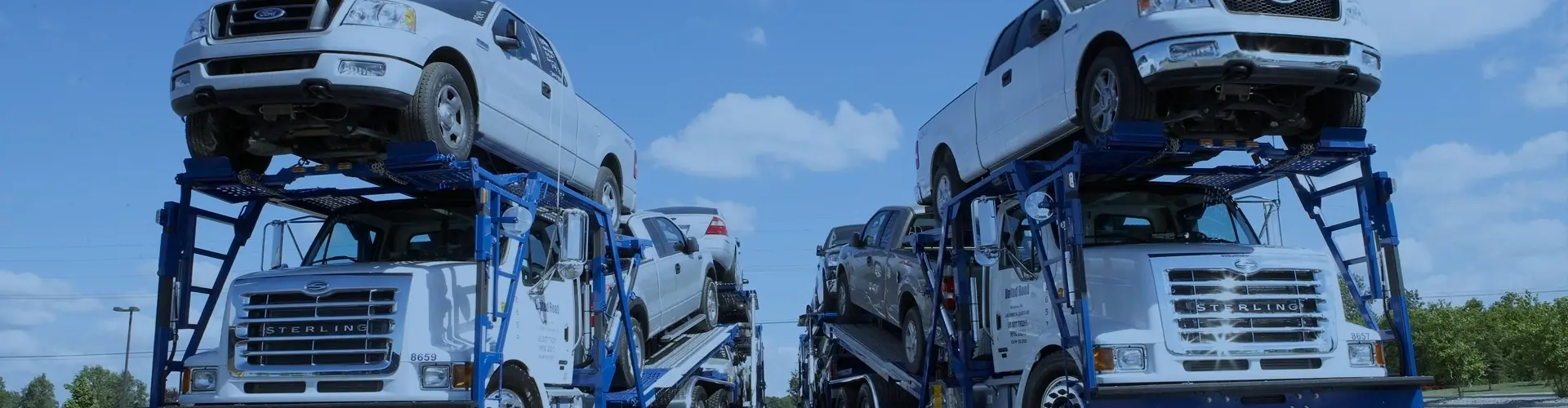
San Francisco to Raleigh Car Shipping Route
San Francisco to Raleigh, North Carolina covers approximately 2,859 driving miles. Carriers access the interstate system via US-101 across the Bay Bridge to I-80 East, or southward on I-280 to US-101 and into the East Bay. From there, I-80 carries trucks east through the Sierra Nevada, across Nevada and Utah, before connecting through Denver on I-70, then picking up I-40 East through Oklahoma, Tennessee, and into North Carolina. The full drive takes a solo driver five to six days minimum. Handing that off to a carrier saves you that time, fuel, lodging, and vehicle wear — see a full cost comparison at https://california.auto-transport-shipping.com/articles/benefits-of-auto-transport-service-vs-driving-yourself.html.
Raleigh demand is driven by a mix of military, academic, and corporate relocation. Fort Liberty — formerly Fort Bragg — sits about 60 miles southwest and generates a constant flow of PCS orders that keep carriers interested in the North Carolina market year-round. North Carolina State University, Duke University, and the University of North Carolina at Chapel Hill create high seasonal volume in late July and August. Major Research Triangle employers including Cisco, IBM, Red Hat, and SAS Institute pull Bay Area tech workers east regularly. Winter weather across Tennessee and the Appalachian foothills can slow transit in January and February. Before you book, review https://california.auto-transport-shipping.com/articles/auto-transport-mistakes-to-avoid.html to avoid common scheduling and logistics errors.
San Francisco to Raleigh Car Shipping Rates
Rates on the San Francisco to Raleigh corridor are shaped primarily by distance — at nearly 2,860 miles, this is a tier-three long-haul move. Diesel costs across Nevada, Utah, and Colorado push baseline pricing higher than shorter Southeast routes. Demand spikes in May through August when corporate and military relocations peak. Winter months can introduce weather surcharges tied to mountain and Appalachian passes. For a clear picture of how fuel costs affect your quote, see https://california.auto-transport-shipping.com/articles/how-gas-prices-impact-california-auto-transport-fees.html.
What affects the cost of San Francisco to Raleigh car shipping:
- Vehicle type and size — larger vehicles take more carrier space; aftermarket additions like lift kits, oversized mirrors, or roof accessories can add fees
- Open vs. enclosed transport — open is lower cost with stronger carrier availability; enclosed protects against weather, debris, and road conditions
- Standard vs. expedited pickup — expedited prioritizes your vehicle for the next available dispatch, typically at a $100–$300 premium
- Time of year — peak demand seasons drive rates higher; off-peak windows offer the most competitive pricing
- Fuel costs — diesel prices affect carrier rates; longer routes are more sensitive to fuel price swings
- Vehicle condition — non-running vehicles require special loading equipment and cost more to ship
| Vehicle Type | Open Car Shipping (Est.) | Enclosed Car Shipping (Est.) |
|---|---|---|
| Sedan | $1,100 – $1,600 | $1,900 – $2,700 |
| SUV / Crossover | $1,300 – $1,900 | $2,200 – $3,100 |
| Pickup Truck | $1,300 – $1,950 | $2,200 – $3,150 |
| Minivan | $1,300 – $1,900 | $2,200 – $3,100 |
| Luxury / Classic Car | $1,550 – $2,200 | $2,600 – $3,600 |
| Non-Running Vehicle | Add $200–400 | Add $200–400 |
* Estimated ranges based on recent San Francisco to Raleigh shipments. Actual rate depends on vehicle, locations, booking date, and current fuel costs. Use the form on this page to compare real quotes from licensed carriers.
Open vs. Enclosed on the San Francisco to Raleigh Run
Open transport is appropriate for most standard vehicles on this corridor. The route through Nevada and Utah carries dust and occasional gravel exposure, and the Tennessee and North Carolina sections can bring spring rain, but none of that warrants enclosed shipping for an everyday sedan, SUV, or pickup. Choose enclosed if you're shipping a classic car, luxury vehicle, or anything with a low ground clearance that would be at risk from road debris on I-40's rougher stretches through Oklahoma and Arkansas. Enclosed also makes sense if you're shipping in January or February when the Appalachian approach to Raleigh can see ice and snow.
How Long Does San Francisco to Raleigh Car Shipping Take?
Standard transit on the San Francisco to Raleigh route runs seven to ten business days from pickup. Carriers leaving the East Bay staging area hit I-80 East and typically make the run in stages — Reno overnight, Salt Lake City, then a southern dogleg on I-70 to I-40. Carrier frequency from San Francisco is moderate, so your pickup window can stretch two to four days after scheduling. If your timeline is tight, expedited options exist — details at https://california.auto-transport-shipping.com/articles/california-expedited-car-shipping-fast-cost.html — but expect a meaningful rate premium for guaranteed dispatch.
| Service Type | Typical Transit | Pickup Window | Best For |
|---|---|---|---|
| Open — Standard | 7–10 days | 2–5 business days | Best value; most common choice on this route |
| Open — Expedited | 5–7 days | 1–2 business days | Firm arrival date; faster dispatch window |
| Enclosed — Standard | 7–10 days | 4–8 business days | Luxury, classic, or modified vehicles |
| Enclosed — Expedited | 5–7 days | 2–4 business days | High-value vehicles on a firm delivery deadline |
** Winter weather is the primary transit wildcard. Snow closures on Donner Pass along I-80 in December through February can hold carriers for twelve to twenty-four hours. Separately, ice on I-40 through the Tennessee-North Carolina mountain segment can add one to two days in January and February. Build buffer into any hard deadline.
San Francisco to Raleigh — Route & Logistics
Carriers departing San Francisco access the Interstate system through the East Bay via the Bay Bridge to I-80, or via I-280 south to US-101 and then across. From Oakland or the South Bay staging points, I-80 East is the primary artery heading toward Reno. The route then follows I-80 to Salt Lake City, connects south to I-70 through Denver, and joins I-40 East for the long run through Oklahoma, Arkansas, Tennessee, and into North Carolina, terminating in Raleigh.
Key Corridor Waypoints
- Oakland / East Bay, CA Most carriers staging from San Francisco use Oakland or Fremont as their load point. San Francisco's steep grades and narrow streets in neighborhoods like Nob Hill and the Sunset make multi-car carrier maneuvering difficult. The East Bay flatlands along I-880 and I-580 give drivers room to load vehicles safely before merging onto I-80 East toward the Sierra Nevada.
- Donner Pass, CA — Elevation 7,056 ft Donner Pass on I-80 is the first major elevation challenge. At 7,056 feet, this stretch requires chains in winter conditions and is subject to Caltrans closure during severe snowstorms. Carriers plan this crossing carefully in December through March. Clear days mean no delay; a closure can hold a truck twelve to twenty-four hours at Truckee or Reno while conditions improve.
- Salt Lake City, UT Salt Lake City is a standard overnight stop for carriers on this corridor. The I-80 and I-15 interchange here is a major logistics hub, and drivers often fuel, inspect loads, and rest before deciding whether to continue on I-70 toward Denver or adjust routing. It's also where carriers may pick up additional vehicles to fill empty slots on the trailer.
- Oklahoma City, OK — I-40 Junction By Oklahoma City, the carrier has transitioned fully onto I-40 East, the main southern transcontinental corridor. Oklahoma City is a common fuel and rest point. Road surface quality on I-40 through Oklahoma and Arkansas can be rough in sections, generating more road debris exposure for open-transport vehicles than the western segments of the route.
- Nashville, TN — I-40 / I-24 Interchange Nashville sits at a critical interchange where I-40 and I-24 intersect and traffic volume increases substantially. Carriers confirm their eastern routing here — continuing straight on I-40 East toward Knoxville and the North Carolina state line. Nashville is also the last major metro stop before the Appalachian foothills slow average truck speeds heading into western North Carolina.
- Raleigh, NC — I-40 / I-440 Beltline Carriers enter the Raleigh metro on I-40 and typically access delivery points via the I-440 beltline. Most residential areas in North Raleigh and Cary are carrier-accessible without staging. Older neighborhoods close to NC State University and downtown Raleigh have narrower streets; your driver may request a nearby parking lot or side street for final delivery positioning.
Pickup & Delivery Access
- Pickup Access in San Francisco San Francisco's street grid creates real access problems for nine- and ten-car carriers. Grades exceeding 20 percent in Russian Hill, Twin Peaks, and the Castro make large trailer navigation unsafe. Most carriers will request a meet point in a flat commercial area — SoMa, the Dogpatch, or Daly City — or will direct you to an East Bay staging point in Oakland or Fremont for loading.
- Delivery Access in Raleigh Raleigh is generally carrier-friendly. Most suburban areas — North Raleigh, Cary, Morrisville, and Wake Forest — have wide residential streets and cul-de-sacs that accommodate standard multi-car carriers. Delivery near NC State's campus or in older Oakwood and Boylan Heights neighborhoods may require your driver to stage at a nearby shopping center or church parking lot and complete the last quarter-mile with a single-car transporter.
- Nearby Pickup Locations Carriers picking up in San Francisco regularly extend service to Oakland, Berkeley, South San Francisco, and Daly City. Call 1‑800‑590‑6492 to confirm door-to-door availability at your address.
Open vs. Enclosed Car Shipping: San Francisco to Raleigh
Both options use licensed, insured carriers and deliver door to door. For a full breakdown, read the pros and cons of open vs. enclosed car shipping.
Open Car Shipping
Most Popular- Lower cost — the practical choice for most vehicles
- More carriers available on this corridor
- Faster dispatch from booking to pickup
- Works well for sedans, SUVs, trucks, and minivans
- Vehicle rides on an open multi-car carrier
- Cargo insurance required on all licensed carriers
Estimated cost: $1,100 – $1,950
Enclosed Car Shipping
Premium Protection- Full protection from weather, debris, and road grime
- Best for luxury, exotic, and classic vehicles
- Recommended for low-clearance and custom-built cars
- Wheel-net or soft-tie systems prevent contact damage
- Higher cargo coverage — commonly $500,000 per load
- White-glove handling by experienced operators
Estimated cost: $1,900 – $3,150
Not sure which is right for your vehicle? Call 1-800-590-6492 and we'll point you in the right direction. Also worth reading: the top 10 questions to ask any car shipping company before you commit.
How to Prepare Your Car for Shipping to Raleigh
A little prep before pickup protects you if there's ever a dispute about your vehicle's condition. This checklist is from our full guide on preparing your car for transport:
- Remove all personal belongings from the interior and trunk
- Leave only a quarter tank of fuel — enough to load and unload
- Take date-stamped photos of the full exterior and interior
- Remove or disable toll transponders (FasTrak, E-ZPass, etc.)
- Retract or remove roof racks, spoilers, antennas, and bike mounts
- Make sure the battery is charged and tires are properly inflated
- Tell the carrier about any existing leaks or mechanical issues
- Deactivate the car alarm before the carrier arrives
- Write down the mileage on the Bill of Lading at pickup
- Fold in side mirrors if the vehicle is wider than standard
Personal items: Most carriers won't cover belongings left in the car. Read the full rules on shipping personal items in your vehicle. Also review our Bill of Lading guide so you know exactly what to check at pickup and delivery.
When to Ship Your Car from San Francisco to Raleigh
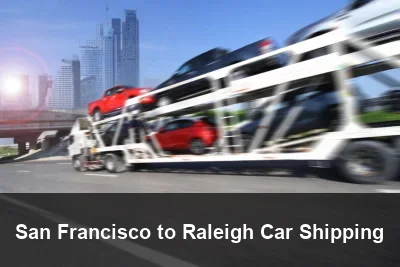
This corridor follows a predictable demand cycle tied to corporate relocation season and the academic calendar. Spring and summer bring the highest volume and the highest rates. Winter is slower but introduces genuine weather risk across the Sierra Nevada and the Appalachians. Military PCS orders, particularly to Fort Liberty, move year-round and keep carrier interest in North Carolina consistent even in off-peak months. For a detailed breakdown of winter-specific risks, see https://california.auto-transport-shipping.com/articles/auto-transport-challenges-during-the-winter.html.
Spring Relocation Season (March–May)
Corporate relocations from Bay Area tech companies to Research Triangle employers ramp up sharply in March. Carrier availability tightens and rates climb four to eight weeks into this window. If your move date is flexible, booking in late February locks in better pricing before the seasonal surge. Weather across Nevada and Utah is generally cooperative, though late Sierra snowstorms can still affect I-80 through mid-April.
Summer Peak (June–August)
This is the highest-demand window on the San Francisco to Raleigh corridor. NC State, Duke, and UNC move-ins drive August volume significantly. Military PCS orders to Fort Liberty peak in June and July. Book at least three to four weeks ahead during this period. Heat across Nevada and Arizona does not significantly affect open-transport vehicles, but carriers moving through the desert Southwest prefer early morning loading.
Fall Shoulder (September–November)
Demand eases in September, and rates soften by October. This is one of the best windows to ship on this corridor — carrier availability is better, pricing is lower, and weather across the entire route is generally stable. I-80 through the Sierra Nevada stays clear through October most years, and North Carolina's fall weather is mild. If your schedule allows flexibility, this window offers solid value.
Winter Weather Window (December–February)
Donner Pass and the Tennessee-North Carolina mountain approaches introduce real delay risk from December through February. I-80 closures at Donner are not rare events — Caltrans issues chain controls multiple times per season. Add two to three buffer days to any hard deadline during this period. Enclosed transport becomes a more defensible choice when ice and road salt exposure on the Appalachian approach to Raleigh is likely.
Military PCS Orders — Fort Liberty (Year-Round)
Fort Liberty, 60 miles southwest of Raleigh, generates steady PCS volume every month of the year. Service members receiving orders from California installations including Presidio of Monterey, Travis AFB, or Naval Base Ventura County frequently ship vehicles to the Raleigh area. This consistent military demand keeps carriers interested in the North Carolina market even during slow civilian months, which benefits all shippers on this corridor.
Academic Calendar Moves (Late July–August)
NC State University, UNC Chapel Hill, and Duke University collectively enroll over 80,000 students, and faculty relocations from California are common. August move-in creates a compression of demand that can make carrier slots scarce on two to three weeks' notice. Graduate students and professors relocating from Bay Area schools — UC Berkeley, Stanford, UCSF — are a consistent driver of late summer volume on this specific corridor.
How to Choose a San Francisco to Raleigh Car Shipping Company
Getting multiple quotes is step one — knowing what to look for in those quotes matters just as much. Our guide on how to select a car shipping company covers the full process. Here are the six things that matter most:
FMCSA Registration
Every carrier or broker must hold a valid MC number. Verify any company at FMCSA SAFER before you book.
Proof of Insurance
Ask for a current certificate of insurance. Open carriers typically carry $100,000–$250,000 per load; enclosed commonly $500,000 or more. Learn what auto transport insurance covers.
All-In Pricing
Your quote should be a final number with no fees added after booking. Know the difference between brokers and carriers and confirm what the quote covers before you agree.
Bill of Lading
A complete Bill of Lading is filled out at pickup and delivery. Our Bill of Lading guide explains what to check. Never sign an incomplete one.
Real Reviews
Check Google and the BBB. Look at how they handled complaints and damage claims — that tells you more than a five-star average from happy customers.
Route Experience
A carrier who runs San Francisco to Raleigh regularly knows that the East Bay load point — not San Francisco proper — is where multi-car operations actually work. They know Donner Pass in February can hold them at Truckee with no warning, and they build that buffer into their commitments. They know the I-40 surface through eastern Oklahoma deteriorates seasonally and plan tire inspections accordingly. On the Raleigh delivery end, experienced drivers know to call ahead in the NC State and downtown areas and confirm staging options rather than arriving at a blocked narrow street. They also know that Fort Liberty vehicles sometimes require base access coordination for on-post delivery, which adds lead time. Choosing a carrier familiar with this specific pair avoids surprises that a carrier running their first southern cross-country trip would walk into unprepared.
San Francisco to Raleigh Car Shipping — FAQ
How much does it cost to ship a car from San Francisco to Raleigh?
On the San Francisco to Raleigh corridor — approximately 2,859 miles — open transport for a standard sedan typically runs between $1,150 and $1,650 depending on season, fuel prices, and how quickly you need the vehicle picked up. SUVs and trucks run $100 to $200 more due to size. Enclosed transport adds $400 to $700 over open rates. Prices are highest June through August when Research Triangle relocation demand peaks. Booking two to four weeks out generally gets you better carrier options and lower rates than booking last-minute on this long-haul corridor.
How long does San Francisco to Raleigh car shipping take?
Plan for seven to ten business days from confirmed pickup to delivery on this route. The driving distance alone — close to 2,860 miles — requires five to six days of carrier transit time when accounting for federal Hours of Service regulations that limit how long a driver can operate per day. Add one to three days for the pickup window after dispatch, which is typical on a moderate-frequency corridor like this one. Winter months can extend transit by one to two days due to Donner Pass conditions or Appalachian weather near the Tennessee-North Carolina line. If your timeline is fixed, ask about expedited options.
Is my car insured during transport from San Francisco to Raleigh?
Every licensed carrier operating on this route is required by federal law to carry cargo insurance. That coverage applies to your vehicle while it's on the trailer for the entire 2,859-mile run. Before your vehicle is loaded, you and the driver complete a Bill of Lading documenting all pre-existing condition — note everything at pickup, and inspect the vehicle again at delivery in Raleigh before signing off. If damage occurs, that Bill of Lading is the foundation of your claim. For a full explanation of how transport insurance works, see https://california.auto-transport-shipping.com/articles/understanding-auto-transport-insurance.html, and if you need to file a claim, review https://california.auto-transport-shipping.com/articles/how-to-file-a-claim-for-vehicle-damage-during-transport.html.
Should I choose open or enclosed transport for the San Francisco to Raleigh route?
Open transport is the right call for most vehicles on this corridor. The route through Nevada and Utah exposes vehicles to road dust and occasional gravel, and the I-40 stretch through Oklahoma and Arkansas has rougher pavement, but neither condition causes meaningful damage to standard vehicles. Choose enclosed if you're shipping a classic car, a high-value luxury or exotic vehicle, or anything with very low ground clearance. Enclosed also makes practical sense in January and February when ice and road salt are possible on the Appalachian approach into North Carolina. For a full comparison of both options, see https://california.auto-transport-shipping.com/articles/open-vs-enclosed-auto-transport-pros-and-cons.html.
Do I need to be present at pickup and delivery?
You do not have to be present personally, but someone you authorize must be at both the pickup location in the San Francisco Bay Area and the delivery location in Raleigh. That person is responsible for inspecting the vehicle with the driver, signing the Bill of Lading at pickup, and confirming condition at delivery. Signing at delivery without inspecting the vehicle carefully is one of the most common and costly mistakes customers make. If you are in the middle of a relocation and cannot be there yourself, a trusted contact works fine — just make sure they understand what to look for. Details on the Bill of Lading process are at https://california.auto-transport-shipping.com/articles/california-auto-transport-bill-of-lading-information.html.
Will winter weather on I-80 or I-40 delay my shipment?
Yes, it's a realistic possibility between December and February. Donner Pass on I-80 sits at 7,056 feet elevation, and Caltrans issues chain controls or full closures multiple times each winter season. A closure can hold a carrier at Truckee for twelve to twenty-four hours. On the eastern end, the I-40 approach through western North Carolina and the Tennessee-North Carolina state line can see ice and snow in January and February, adding a day to final delivery. If you're shipping during these months, build at least two extra days of buffer into any hard deadline and don't schedule pickup the day before a must-have delivery date.
I'm PCS-ing to Fort Liberty — is there anything specific I should know about shipping my car?
Fort Liberty, formerly Fort Bragg, is about 60 miles southwest of Raleigh. Most carriers can deliver to a Raleigh-area address — on-post delivery to Fort Liberty itself requires the carrier to access the base, which means your driver needs to be vetted or you need to arrange for vehicle pickup just outside the gate. Coordinate this with your carrier in advance. The good news is that military PCS demand to Fort Liberty is year-round, meaning carriers are familiar with the Raleigh area and this is not an unusual request. Confirm delivery logistics and the exact address — on-post or off — when you book.
Can the carrier pick up directly from my San Francisco address?
It depends on your street. Many San Francisco neighborhoods are simply not accessible for a nine- or ten-car carrier — grades on streets in Nob Hill, Twin Peaks, Russian Hill, and the Castro can exceed 20 percent, and street widths in residential areas across the Sunset and Richmond districts are too narrow for a full-length trailer to turn safely. Your carrier will assess your specific address when contact is made before pickup. In many cases, you'll be asked to meet the driver at a flat, accessible area — a commercial block in SoMa, the Dogpatch, or the Bayshore corridor, or alternatively at an East Bay staging point in Oakland or Fremont.
Ready to Ship Your Car from San Francisco to Raleigh?
One form gets you up to 10 free quotes from licensed, insured carriers. Compare costs and transit times and book the best deal for your schedule.