
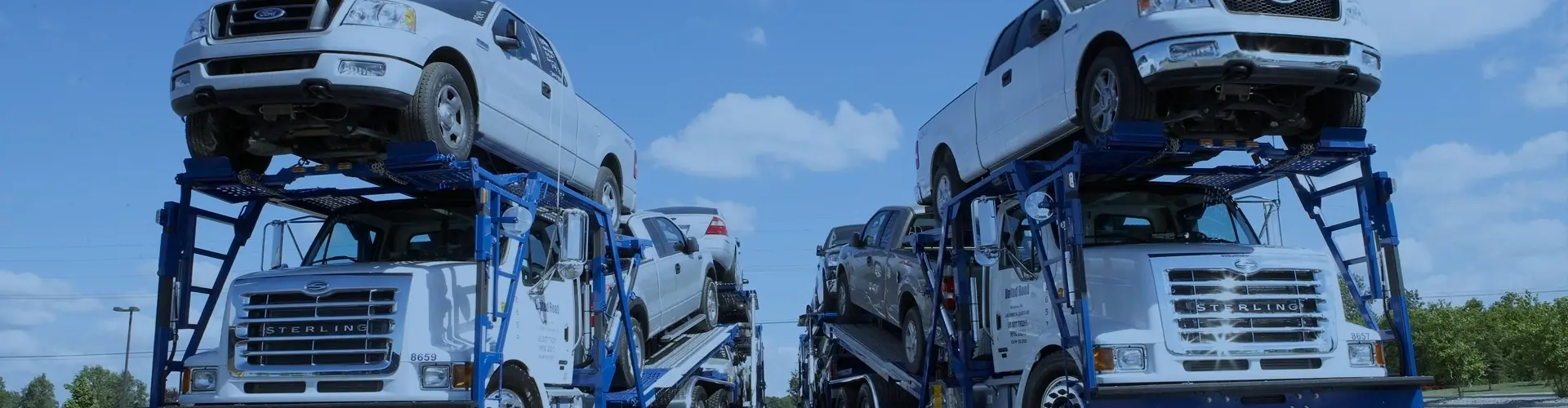
San Francisco to Arlington Car Shipping Route
San Francisco to Arlington covers approximately 1,765 miles. Carriers access the route via US-101, I-280, or surface streets to the Bay Bridge, then pick up I-80 East through Sacramento and across the Sierra Nevada. From Reno they continue east on I-80 through the Great Basin, then transition south through Salt Lake City or cut southeast via I-15 and I-40 before joining I-20 into the DFW corridor. The Sierra Nevada crossing adds elevation considerations — Donner Pass sits above 7,000 feet — but the freeway grades are manageable for multi-car carriers in most seasons. Driving this route yourself takes roughly 25 hours; using a carrier saves that time, fuel, and wear. See the full breakdown at https://california.auto-transport-shipping.com/articles/benefits-of-auto-transport-service-vs-driving-yourself.html.
Arlington's demand is sustained by several anchors. Naval Air Station Joint Reserve Base Fort Worth, roughly eight miles northwest of Arlington, generates consistent PCS traffic year-round. UT Arlington enrolls over 40,000 students, producing seasonal peaks in August and May. Major employers including Lockheed Martin in Fort Worth, GM Financial, and American Airlines Group at DFW International Airport pull steady corporate relocations from the Bay Area. Weather is a real factor on this corridor: West Texas and the Panhandle see ice storms and high-wind events between November and March that can slow I-20 segments by 12 to 24 hours. Book early and review common planning errors at https://california.auto-transport-shipping.com/articles/auto-transport-mistakes-to-avoid.html.
San Francisco to Arlington Car Shipping Rates
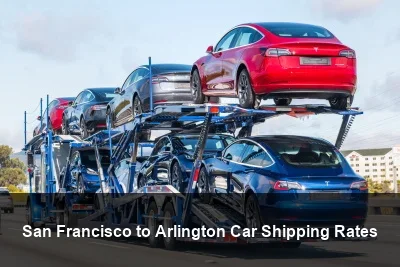
At 1,765 miles, this route falls in the long-haul pricing tier where per-mile rates typically run lower than shorter corridors but total cost is still significant. Rates spike modestly in late summer when UT Arlington's fall semester and military PCS season overlap. West Texas fuel costs and potential weather-related delays between November and March can also push carrier quotes higher. Diesel price swings directly affect what carriers charge on hauls of this length — see https://california.auto-transport-shipping.com/articles/how-gas-prices-impact-california-auto-transport-fees.html for the full picture.
What affects the cost of San Francisco to Arlington car shipping:
- Vehicle type and size — larger vehicles take more carrier space; aftermarket additions like lift kits, oversized mirrors, or roof accessories can add fees
- Open vs. enclosed transport — open is lower cost with stronger carrier availability; enclosed protects against weather, debris, and road conditions
- Standard vs. expedited pickup — expedited prioritizes your vehicle for the next available dispatch, typically at a $100–$300 premium
- Time of year — peak demand seasons drive rates higher; off-peak windows offer the most competitive pricing
- Fuel costs — diesel prices affect carrier rates; longer routes are more sensitive to fuel price swings
- Vehicle condition — non-running vehicles require special loading equipment and cost more to ship
| Vehicle Type | Open Car Shipping (Est.) | Enclosed Car Shipping (Est.) |
|---|---|---|
| Sedan | $950 – $1,350 | $1,700 – $2,300 |
| SUV / Crossover | $1,100 – $1,600 | $1,950 – $2,700 |
| Pickup Truck | $1,100 – $1,650 | $1,950 – $2,750 |
| Minivan | $1,100 – $1,600 | $1,950 – $2,700 |
| Luxury / Classic Car | $1,300 – $1,900 | $2,200 – $3,000 |
| Non-Running Vehicle | Add $200–350 | Add $200–350 |
* Estimated ranges based on recent San Francisco to Arlington shipments. Actual rate depends on vehicle, locations, booking date, and current fuel costs. Use the form on this page to compare real quotes from licensed carriers.
Open vs. Enclosed Transport on the San Francisco–Arlington Run
Open transport is the practical choice for most vehicles on this corridor. The I-80 and I-20 segments are high-traffic freight lanes with consistent carrier availability, and open carriers are far more numerous. Enclosed transport makes financial sense if you're moving a classic, exotic, or high-value vehicle — Donner Pass road debris and West Texas dust and gravel can accumulate on an open load. Expect enclosed quotes to run 40 to 60 percent above open on this distance. For daily drivers and standard production vehicles, open is sufficient and significantly more cost-effective.
How Long Does San Francisco to Arlington Car Shipping Take?
Standard transit on the San Francisco to Arlington route runs 5 to 8 days under normal conditions. Carriers driving roughly 500 miles per day — the realistic average accounting for HOS regulations — cover this distance in 4 driving days, but pickup scheduling, other stops on a multi-car load, and origin staging in the East Bay add time at both ends. Carrier frequency on I-80 East out of the Bay Area is high, so you're unlikely to wait more than 3 to 5 days for a pickup slot. If your timeline is tight, review expedited options at https://california.auto-transport-shipping.com/articles/california-expedited-car-shipping-fast-cost.html.
| Service Type | Typical Transit | Pickup Window | Best For |
|---|---|---|---|
| Open — Standard | 4–6 days | 2–5 business days | Best value; most common choice on this route |
| Open — Expedited | 2–4 days | 1–2 business days | Firm arrival date; faster dispatch window |
| Enclosed — Standard | 4–6 days | 3–7 business days | Luxury, classic, or modified vehicles |
| Enclosed — Expedited | 2–4 days | 1–3 business days | High-value vehicles on a firm delivery deadline |
** Winter ice storms between Amarillo and Fort Worth on I-20 and I-40 can ground or reroute carriers for 12 to 36 hours between December and February. Sierra Nevada snow closures at Donner Pass, though less frequent, can add a similar delay at the origin end. Build a buffer if your delivery window is rigid.
San Francisco to Arlington — Route & Logistics
Carriers leave San Francisco via US-101, I-280, or local surface streets to the Bay Bridge, then pick up I-80 East toward Sacramento. From Sacramento, I-80 continues over the Sierra Nevada and across Nevada. Carriers then route south through Utah or cut east on I-15 to I-40, eventually picking up I-20 into the DFW metroplex and exiting toward Arlington.
Key Corridor Waypoints
- Oakland / East Bay, CA Most multi-car carriers staging out of San Francisco use Oakland or the Port of Oakland area as their true departure point. Surface streets in San Francisco's residential neighborhoods and steep grades in neighborhoods like Twin Peaks are impractical for 75-foot car haulers. Oakland's industrial waterfront and flatland grid provide reliable access to the I-80 on-ramp without the routing complications of the San Francisco peninsula.
- Sacramento, CA Sacramento sits roughly 90 miles northeast of Oakland on I-80 and serves as the last major California metro before the Sierra Nevada. Carriers may pick up or drop off here on combined loads. It is also the practical point where drivers confirm weather and road conditions on the Donner Pass segment before committing to the climb. California CHP inspection stations operate on eastbound I-80 near this corridor.
- Donner Pass, CA — Elevation 7,056 ft Donner Pass is the highest and most operationally significant point on this route. Between November and April, Caltrans frequently requires chains or restricts commercial vehicles on this segment during storm events. Carriers running this lane monitor Caltrans QuickMap and often stage in Sacramento or Truckee to wait out closures. Delays here of 8 to 24 hours are possible in a heavy snow year — a real factor when estimating delivery windows.
- Reno / Sparks, NV After clearing Donner Pass, carriers descend into the Truckee Meadows. Reno is a natural rest and fuel point before the long haul across the Great Basin on I-80. Some carriers transition south here onto US-395 to connect with I-15 toward Las Vegas, depending on their next load destination. For direct Arlington routing, most stay on I-80 east through Winnemucca or cut south earlier toward I-15.
- Amarillo, TX Amarillo is the major staging and fuel point on the Texas Panhandle leg of I-40, roughly 360 miles west of Fort Worth. Carriers often overnight here or swap drivers. In winter, this stretch between Amarillo and Abilene on I-20 is the most weather-exposed segment of the entire run — high-wind advisories and ice events are common from November through February and can force carriers to hold position for up to 24 hours.
- Arlington, TX Arlington sits on I-20 between Dallas and Fort Worth, giving carriers two practical exit options. Most deliveries in the northern and central parts of the city are accessible directly off I-20 or TX-360. Residential neighborhoods near UT Arlington can involve narrower streets; carriers may request a nearby staging lot or commercial parking area for final positioning. The Six Flags and AT&T Stadium corridors along I-30 are broadly carrier-accessible.
Pickup & Delivery Access
- Pickup Access in San Francisco San Francisco's street network — steep grades in Noe Valley, the Castro, and Twin Peaks, plus narrow lanes in the Richmond and Sunset districts — makes direct residential pickup difficult for multi-car carriers. Most drivers will coordinate a meet point in a flat commercial area: SoMa, the Dogpatch, or Daly City. East Bay staging in Oakland's industrial zones near the port is the most common alternative for customers on the peninsula or in the hills.
- Delivery Access in Arlington Most of Arlington is carrier-accessible. Residential streets in established neighborhoods near UT Arlington and older subdivisions east of TX-360 can be tight for full-size car haulers. If your delivery address is on a cul-de-sac or a street with low-hanging utilities, confirm access with the driver in advance. Commercial staging near I-20 or the Ballpark Way corridor is easy to arrange and avoids any positioning issues in tighter residential blocks.
- Nearby Pickup Locations Carriers picking up in San Francisco regularly extend service to Oakland, Berkeley, South San Francisco, and Daly City. Call 1‑800‑590‑6492 to confirm door-to-door availability at your address.
Open vs. Enclosed Car Shipping: San Francisco to Arlington
Both options use licensed, insured carriers and deliver door to door. For a full breakdown, read the pros and cons of open vs. enclosed car shipping.
Open Car Shipping
Most Popular- Lower cost — the practical choice for most vehicles
- More carriers available on this corridor
- Faster dispatch from booking to pickup
- Works well for sedans, SUVs, trucks, and minivans
- Vehicle rides on an open multi-car carrier
- Cargo insurance required on all licensed carriers
Estimated cost: $950 – $1,650
Enclosed Car Shipping
Premium Protection- Full protection from weather, debris, and road grime
- Best for luxury, exotic, and classic vehicles
- Recommended for low-clearance and custom-built cars
- Wheel-net or soft-tie systems prevent contact damage
- Higher cargo coverage — commonly $500,000 per load
- White-glove handling by experienced operators
Estimated cost: $1,700 – $2,750
Not sure which is right for your vehicle? Call 1-800-590-6492 and we'll point you in the right direction. Also worth reading: the top 10 questions to ask any car shipping company before you commit.
How to Prepare Your Car for Shipping to Arlington
A little prep before pickup protects you if there's ever a dispute about your vehicle's condition. This checklist is from our full guide on preparing your car for transport:
- Remove all personal belongings from the interior and trunk
- Leave only a quarter tank of fuel — enough to load and unload
- Take date-stamped photos of the full exterior and interior
- Remove or disable toll transponders (FasTrak, E-ZPass, etc.)
- Retract or remove roof racks, spoilers, antennas, and bike mounts
- Make sure the battery is charged and tires are properly inflated
- Tell the carrier about any existing leaks or mechanical issues
- Deactivate the car alarm before the carrier arrives
- Write down the mileage on the Bill of Lading at pickup
- Fold in side mirrors if the vehicle is wider than standard
Personal items: Most carriers won't cover belongings left in the car. Read the full rules on shipping personal items in your vehicle. Also review our Bill of Lading guide so you know exactly what to check at pickup and delivery.
When to Ship Your Car from San Francisco to Arlington
This corridor stays active year-round, but pricing and timing are not constant. Summer — specifically late July through mid-August — is the highest-demand window, driven by military PCS orders and UT Arlington's fall move-in. Rates typically rise 8 to 15 percent during this window. Winter brings the opposite pricing pressure from weather risk: ice on I-20 through West Texas can deter some carriers and extend transit. For detail on cold-weather transport risks, see https://california.auto-transport-shipping.com/articles/auto-transport-challenges-during-the-winter.html.
Spring Semester End (April–May)
UT Arlington's spring graduation in May triggers a wave of southbound and eastbound moves as students and recent grads relocate. Carriers pick up volume going into the DFW corridor during this window. Pricing is moderate, weather on the Texas end is mild, and the Sierra Nevada is usually past its worst snow weeks. This is generally a favorable booking window — good carrier availability, manageable rates, and reliable transit times.
Peak Summer and PCS Season (June–August)
Military PCS orders tied to NAS JRB Fort Worth and other DFW-area installations create a concentrated demand spike from June through early August. UT Arlington fall move-in compounds this in late July and August. This is the busiest and most expensive window on this corridor. Book 2 to 3 weeks out to secure a carrier at standard rates. Waiting until mid-August to book will cost you materially more and may extend your pickup window.
Fall Booking Window (September–October)
Demand eases after Labor Day. Bay Area tech companies that operate on calendar-year relocation budgets often move employees in Q4, keeping volumes steady but not spiking. Weather across the Sierra Nevada and West Texas is generally cooperative through October. This is one of the better windows to book for a combination of price and reliability — carrier availability is solid and neither end of the route has active weather concerns.
Winter Weather Risk (November–February)
The segment between Amarillo and Abilene on I-40 and I-20 is legitimately risky in a hard winter. Ice storms form quickly on the Texas Panhandle and northern Texas plains, and carriers can be grounded for 24 to 36 hours. Donner Pass adds risk at the California end. If you must ship in this window, build a 1 to 2 day buffer into your delivery expectation and confirm your carrier's contingency plan. See https://california.auto-transport-shipping.com/articles/auto-transport-challenges-during-the-winter.html.
UT Arlington Fall Move-In (Late July–August)
UT Arlington's fall semester draws over 40,000 students, and vehicle shipments into Arlington and surrounding areas spike sharply in the final two weeks of July and first week of August. This creates localized delivery congestion in the neighborhoods immediately surrounding the campus on Cooper Street and Division Street. If your delivery address is in the university district, confirm your meet point with the driver a day ahead to avoid scheduling conflicts with other deliveries.
How to Choose a San Francisco to Arlington Car Shipping Company
Getting multiple quotes is step one — knowing what to look for in those quotes matters just as much. Our guide on how to select a car shipping company covers the full process. Here are the six things that matter most:
FMCSA Registration
Every carrier or broker must hold a valid MC number. Verify any company at FMCSA SAFER before you book.
Proof of Insurance
Ask for a current certificate of insurance. Open carriers typically carry $100,000–$250,000 per load; enclosed commonly $500,000 or more. Learn what auto transport insurance covers.
All-In Pricing
Your quote should be a final number with no fees added after booking. Know the difference between brokers and carriers and confirm what the quote covers before you agree.
Bill of Lading
A complete Bill of Lading is filled out at pickup and delivery. Our Bill of Lading guide explains what to check. Never sign an incomplete one.
Real Reviews
Check Google and the BBB. Look at how they handled complaints and damage claims — that tells you more than a five-star average from happy customers.
Route Experience
A carrier who runs the San Francisco–Arlington lane regularly knows that San Francisco residential pickups almost always stage in Oakland or Daly City — quoting a direct home pickup in Pacific Heights or the Sunset is optimistic at best. They know that Donner Pass requires a Caltrans check before committing to a departure time in winter and that Truckee is the hold point, not Sacramento. They know the West Texas ice pattern: I-20 between Abilene and Fort Worth ices faster than forecasts suggest, and Amarillo is where you wait it out, not push through. On delivery, they know Arlington's street grid near UT Arlington is tighter than it looks on a map and that the I-20 frontage roads provide the best final-approach access for a full car-hauler.
San Francisco to Arlington Car Shipping — FAQ
How much does it cost to ship a car from San Francisco to Arlington?
Open transport on this 1,765-mile corridor typically runs between $1,050 and $1,450 for a standard sedan under normal market conditions. SUVs and trucks run $100 to $200 more due to weight and height. Enclosed transport adds 40 to 60 percent to those figures. Rates are higher in late July and August when military PCS demand and UT Arlington move-in traffic peak simultaneously. Fuel price changes on a haul of this length can also move quotes noticeably — see https://california.auto-transport-shipping.com/articles/how-gas-prices-impact-california-auto-transport-fees.html for context. The quote form on this page pulls live carrier pricing for current rates.
How long does San Francisco to Arlington car shipping take?
Standard transit is 5 to 8 days from pickup to delivery. The driving distance is approximately 1,765 miles, which a carrier covers in 4 moving days at a realistic 450 to 500 miles per day under federal Hours of Service rules. Pickup scheduling, additional stops on a multi-vehicle load, and origin staging in the East Bay add time at the front end. Winter ice events on the West Texas stretch of I-20 or a Donner Pass snow closure can add 1 to 2 days. If your timeline is firm, review expedited options at https://california.auto-transport-shipping.com/articles/california-expedited-car-shipping-fast-cost.html.
Is my car insured during transport from San Francisco to Arlington?
Every licensed carrier operating in the U.S. is required by FMCSA to carry cargo insurance, which covers your vehicle while it is on the carrier's trailer. Coverage levels vary by carrier — most policies run between $100,000 and $250,000 per load, not per vehicle. Review the carrier's certificate of insurance before you sign anything. Your personal auto insurance may provide supplemental coverage during transport; confirm this with your insurer. Document your vehicle's condition with dated photos before pickup. For a full explanation of how coverage works, see https://california.auto-transport-shipping.com/articles/understanding-auto-transport-insurance.html. If damage occurs, follow the process outlined at https://california.auto-transport-shipping.com/articles/how-to-file-a-claim-for-vehicle-damage-during-transport.html.
Should I choose open or enclosed transport for this route?
Open transport is the right call for most vehicles on this corridor. It's less expensive, carrier availability is higher, and transit times are faster because open carriers are far more numerous on this lane. Enclosed makes sense if you're shipping a classic car, exotic, or any vehicle where road debris from Donner Pass, Great Basin highway grit, or West Texas dust and gravel is a real concern. If the vehicle's replacement value exceeds $60,000 or it has a custom finish, the enclosed premium is justified. For a full comparison of both options, see https://california.auto-transport-shipping.com/articles/open-vs-enclosed-auto-transport-pros-and-cons.html.
Do I have to be present at pickup and delivery?
You or a designated representative must be present at both pickup and delivery to sign the Bill of Lading, which documents your vehicle's condition at each transfer point. You do not have to be the vehicle owner — a trusted adult can stand in for you at either end. At pickup in San Francisco, confirm the meet point in advance since residential carrier access is limited in many neighborhoods. At delivery in Arlington, ensure whoever receives the vehicle inspects it thoroughly before signing. Full details on the Bill of Lading process are at https://california.auto-transport-shipping.com/articles/california-auto-transport-bill-of-lading-information.html.
Does military PCS status affect how I should book on this route?
Yes, in two ways. First, if you're PCS-ing to NAS JRB Fort Worth or another DFW-area installation, your orders likely fall between May and August — the peak demand window on this corridor. Book as early as your orders allow, ideally 2 to 3 weeks out, to avoid the late-summer pricing spike. Second, most reputable brokers and carriers offer military discounts; confirm this when you request a quote. Keep a copy of your orders available, as some carriers require documentation to apply the discount. The Bill of Lading process still applies regardless of military status.
Can weather on the Donner Pass segment delay my shipment?
Yes. Donner Pass on I-80 sits at 7,056 feet and is subject to Caltrans chain controls and full commercial vehicle restrictions from November through April. Most carriers who run this lane regularly monitor Caltrans road conditions in real time and will hold in Truckee or Sacramento rather than attempt a marginal crossing with a loaded car hauler. A weather delay here typically adds 12 to 24 hours to your transit. If you're booking between November and April, build that buffer into your delivery expectation and ask your carrier how they handle Donner Pass closures.
Are there specific timing considerations for shipping to Arlington for a UT Arlington semester start?
Fall move-in at UT Arlington concentrates heavily in the last two weeks of July and first week of August, and delivery demand in the neighborhoods around Cooper Street and Division Street is at its annual peak during that window. If you're shipping a vehicle for a student starting in the fall semester, book by early July at the latest. Late bookings in the final week of July will face both higher rates and a compressed carrier selection. For spring semester, the January window is less congested and pricing is typically more favorable. Delivery in the campus-adjacent streets can be tight — confirm the meet point with the driver a day ahead.
Ready to Ship Your Car from San Francisco to Arlington?
One form gets you up to 10 free quotes from licensed, insured carriers. Compare costs and transit times and book the best deal for your schedule.