

California to Colorado Car Shipping Route
California to Colorado car shipping covers roughly 1,100 miles from Los Angeles to Denver, with most carriers running the route via I-70 through the heart of the Rocky Mountains. Transit time typically runs 3–5 days from both Southern and Northern California, putting your vehicle in Colorado in under a week without the wear, mileage, or fatigue of driving it yourself. If you're weighing the drive against shipping, this breakdown of auto transport vs. driving yourself makes the case in plain numbers.
Colorado generates consistent, year-round car shipping demand unlike many other states. Military relocations to Fort Carson, Peterson Space Force Base, Schriever SFB, and the USAF Academy near Colorado Springs keep the PCS pipeline active, while the University of Colorado system and Denver’s booming tech and outdoor industry draw a steady stream of California transplants. One thing to factor in: I-70 mountain passes can close or face chain restrictions in winter, which is worth knowing before you book — here are the most common auto transport mistakes to avoid so your shipment doesn't get caught off guard.
California to Colorado Car Shipping Rates
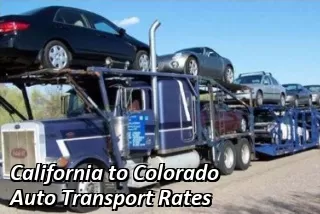
Rates on the California to Colorado route shift based on vehicle size, carrier availability, the season, and — significantly — fuel costs along the I-70 corridor. See how gas prices directly affect your California auto transport fees before you lock in a quote.
What affects the cost of CA to CO car shipping:
- Vehicle type and size — larger vehicles cost more to ship; aftermarket additions like lift kits, grill guards, extended mirrors, or oversized antennas can add fees
- Open vs. enclosed transport — open carriers are more affordable and more widely available on this route; enclosed costs more but protects the vehicle fully
- Door-to-door vs. terminal service — terminal-to-terminal car shipping typically costs less than door-to-door delivery
- Time of year — peak moving season (May through September) and snowbird season (October through November) push rates higher
- Fuel costs — diesel prices affect what carriers charge, especially on a 1,100-mile haul
- Vehicle condition — non-running vehicles need special loading equipment and cost more to ship
- Payment method — some carriers offer a discount for cash or electronic payment at delivery
| Vehicle Type | Open Car Shipping (Est.) | Enclosed Car Shipping (Est.) |
|---|---|---|
| Sedan | $750 – $1,050 | $1,150 – $1,500 |
| SUV / Crossover | $850 – $1,200 | $1,300 – $1,650 |
| Pickup Truck | $850 – $1,200 | $1,300 – $1,650 |
| Minivan | $850 – $1,200 | $1,300 – $1,650 |
| Luxury / Classic Car | $950 – $1,350 | $1,350 – $1,800 |
| Non-Running Vehicle | Add $150 – $300 | Add $150 – $300 |
* Estimated ranges based on recent CA to CO shipments. Your actual rate depends on your vehicle, locations, and booking date. Use the form on this page to get up to 10 real quotes from licensed carriers so you can compare actual prices.
Save Money: Go with Open Car Shipping
For most standard sedans, SUVs, and pickups making the California to Colorado run, open transport is the practical choice — it's how the majority of vehicles move on this route and costs several hundred dollars less than enclosed. Save enclosed shipping for exotic, classic, or high-value vehicles where the extra protection justifies the premium. For more ways to keep your shipment affordable, review these California auto transport money-saving tips before you book.
How Long Does California to Colorado Car Shipping Take?
From Southern California, most shipments reach Denver and other Front Range cities in 3–5 days; Northern California origins run a similar 3–5 day window given the comparable highway distance. If your timeline is tight — a job start date, a lease handover, or a military report date — expedited scheduling can shorten the window for an additional fee. Learn more about California expedited car shipping costs and timelines to decide if it's worth it for your move.
| Origin (California) | Destination (Colorado) | Estimated Transit |
|---|---|---|
| Los Angeles | Denver, CO | 3 – 5 days |
| Los Angeles | Colorado Springs, CO | 3 – 5 days |
| Los Angeles | Fort Collins, CO | 4 – 5 days |
| San Diego | Denver, CO | 3 – 5 days |
| San Diego | Colorado Springs, CO | 3 – 5 days |
| San Francisco | Denver, CO | 3 – 5 days |
| San Francisco | Fort Collins, CO | 4 – 5 days |
| San Jose | Denver, CO | 3 – 5 days |
| Sacramento | Denver, CO | 3 – 5 days |
| Fresno | Denver, CO | 3 – 5 days |
** Estimates based on typical carrier schedules on the I-70 corridor. Actual windows vary based on pickup date, routing, and weather. Door-to-door delivery may add up to one day on each end vs. terminal service.
California to Colorado Car Shipping Service Area
California Auto Transport ships cars from all major California cities to every Colorado destination. Door-to-door and terminal-to-terminal service is available statewide on both ends.
California Pickup Locations
- Los Angeles Los Angeles is the highest-volume car shipping origin in California, with carriers dispatching on nearly every lane in the country. Pickups are available throughout the greater LA metro, including the San Fernando Valley, the Westside, Long Beach, and the Inland Empire. Carriers running the I-10 and I-40 corridors east typically make LA their first stop, keeping availability high and rates competitive. Terminal service is also available.
- San Diego San Diego is one of the busiest military car shipping origins in the country, driven by Naval Base San Diego — the largest naval base on the West Coast — and Naval Air Station North Island. PCS orders generate consistent year-round demand on routes heading east and across the country. Pickups cover all of San Diego County, including Chula Vista, El Cajon, and Oceanside.
- San Francisco / Oakland The Bay Area generates strong car shipping volume year-round, with high demand on routes to the Pacific Northwest, Mountain West, and East Coast. Pickups are available from San Francisco, Oakland, Berkeley, Fremont, and the East Bay. Carriers on the I-80 and I-5 corridors include Bay Area stops on their weekly schedules. Book a week ahead for the best door-to-door pickup availability.
- San Jose / Silicon Valley San Jose and the Silicon Valley corridor generate a high volume of luxury and EV shipments, driven by tech industry relocations from companies like Apple, Google, Meta, and Nvidia. EV-ready carriers are available on most lanes out of this market. Pickups cover all of Santa Clara County, including Sunnyvale, Cupertino, Mountain View, and Palo Alto.
- Sacramento Sacramento is the Central Valley's primary car shipping hub, with carriers making regular pickups on the I-5 and I-80 corridors. Government relocations, UC Davis moves, and Air National Guard PCS orders keep demand consistent year-round. Door-to-door service covers the Sacramento metro and surrounding areas including Elk Grove, Roseville, Stockton, and Modesto.
- All California Locations We also arrange pickups from Bakersfield, Fresno, Long Beach, Anaheim, Riverside, Oxnard, Santa Barbara, and every other California city or ZIP code. Call 1-800-590-6492 to confirm door-to-door availability at your address.
Colorado Delivery Locations
- Denver Denver is the single busiest destination on this route, driven by corporate relocations, a fast-growing tech sector, and steady migration from California's major metros. Carriers dispatch to Denver multiple times per week from both SoCal and NorCal origin points, which keeps availability high and rates competitive.
- Colorado Springs Colorado Springs is the top military shipping destination in the state, anchored by Fort Carson, Peterson Space Force Base, Schriever SFB, and the USAF Academy. PCS orders from California bases flow into Colorado Springs year-round, making it one of the most frequently served corridors in the region.
- Aurora Aurora sits directly east of Denver along I-70 and handles a significant share of the Denver metro's inbound vehicle shipments. Its proximity to major interstate interchange points makes it a straightforward delivery destination with minimal detour from the primary route.
- Fort Collins Fort Collins draws California students and graduates relocating for Colorado State University, as well as professionals moving into the Northern Colorado tech corridor. Delivery runs slightly longer than Denver given its position north of the I-70 mainline, but it's a well-served market.
- Boulder Boulder generates consistent inbound shipping demand from California tied to the University of Colorado and a dense concentration of outdoor, aerospace, and startup employers. It's a short carrier deviation from the Denver metro delivery zone and typically added to the same dispatch run.
- All Colorado Locations We also deliver to Pueblo, Greeley, Lakewood, Thornton, Arvada, Westminster, and every other Colorado address — urban, suburban, or rural. If your destination isn't listed, it's still covered; just enter your zip code in the quote form for accurate pricing to your specific location.
Open vs. Enclosed Car Shipping: California to Colorado
Both options use licensed, insured carriers and deliver door to door. The right choice depends on your vehicle and your budget. For a full breakdown, read the pros and cons of open vs. enclosed car shipping.
Open Car Shipping
Most Popular- Lower cost — the affordable option for most vehicles
- More carriers available on the CA to CO lane
- Faster dispatch from booking to pickup
- Works well for sedans, SUVs, trucks, and minivans
- Vehicle rides on an open multi-car carrier
- Cargo insurance required on all licensed carriers
Estimated cost: $750 – $1,050
Enclosed Car Shipping
Premium Protection- Full protection from weather, debris, and road grime
- Best for luxury, exotic, and classic vehicles
- Recommended for low-clearance and custom-built cars
- Wheel-net or soft-tie systems prevent contact damage
- Higher cargo coverage — commonly $500,000 per load
- White-glove handling by experienced operators
Estimated cost: $1,150 – $1,500
Not sure which is right for your car? Call 1-800-590-6492 and we'll point you in the right direction. Also worth reading: the top 10 questions to ask any car shipping company before you commit.
How to Prepare Your Car for Shipping to Colorado
A little prep before pickup protects you if there's ever a dispute about the vehicle's condition. This checklist is from our full guide on preparing your car for transport:
- Remove all personal belongings from the interior and trunk
- Leave only a quarter tank of fuel — enough to load and unload
- Take date-stamped photos of the full exterior and interior
- Remove or disable toll transponders (FasTrak, E-ZPass, etc.)
- Retract or remove roof racks, spoilers, antennas, and bike mounts
- Make sure the battery is charged and tires are properly inflated
- Tell the carrier about any existing leaks or mechanical issues
- Deactivate the car alarm before the carrier arrives
- Write down the mileage on the Bill of Lading at pickup
- Fold in side mirrors if the vehicle is wider than standard
Personal items: Most carriers won't cover belongings left in the car. Read the full rules on shipping personal items in your vehicle. Also review our Bill of Lading guide so you know exactly what to check at pickup and delivery.
When to Ship Your Car from California to Colorado
The California to Colorado lane runs year-round with no true off season, but rates and lead times shift noticeably by quarter. Summer is the busiest period, while winter introduces real operational risk — I-70 through the Eisenhower Tunnel and the Vail Pass corridor can close or require chains, which delays pickups and extends transit by a day or more. Plan accordingly and read through the key auto transport challenges during winter before scheduling a December through February shipment.

Summer (Jun – Sep)
Summer is peak season on this route. California-to-Colorado demand spikes as college students move for fall semesters, families complete school-year relocations, and corporate transferees time their moves with the warm weather. Book at least 7–10 days out during this period — carrier slots on the I-70 corridor fill quickly in July and August.
Fall (Oct – Nov)
Fall volume stays elevated through October as stragglers from the summer rush and early PCS movers fill the pipeline. Rates begin to soften in November as demand tapers, making it a reasonable window to book if your timeline is flexible. Weather on I-70 can turn quickly in late October, so build a day of buffer into your expected delivery window.
Winter (Dec – Feb)
Winter typically offers the lowest base rates on this corridor as overall demand drops, but weather is a genuine operational factor. I-70 mountain passes can close for hours or days due to snow and avalanche control, and carriers must comply with chain requirements through the Rockies. If your vehicle is a daily driver and you have some schedule flexibility, winter can save money — just account for potential delays.
Spring (Mar – May)
Spring demand ramps up in March and accelerates sharply through May as military PCS orders drop, college semesters end, and families begin summer relocation planning. Booking 5–10 days ahead is advisable by April. Mountain pass conditions improve month-over-month, and by May the I-70 corridor is largely clear, making for reliable transit windows.
Military PCS Season
Colorado hosts some of the most active military installations in the country — Fort Carson, Peterson Space Force Base, Schriever SFB, and the USAF Academy all generate PCS shipments from California bases throughout the year, with the heaviest volume running May through August. Many carriers offer military discounts; ask about documentation requirements when you request your quote.
College Move-In (August)
The University of Colorado system — particularly CU Boulder and CU Denver — plus Colorado State University in Fort Collins pull a measurable wave of California students shipping vehicles in late July and early August. This compressed window creates a short but real capacity crunch on the CA-to-Colorado lane; book as early as possible if your move aligns with fall semester start dates.
How to Choose a California to Colorado Car Shipping Company
Getting multiple quotes is step one — knowing what to look for in those quotes matters just as much. Our guide on how to select a car shipping company covers the full process. Here are the six things that matter most:
FMCSA Registration
Every carrier or broker must hold a valid MC number. Verify any company at FMCSA SAFER before you book.
Proof of Insurance
Ask for a current certificate of insurance. Open carriers typically carry $100,000 to $250,000 per load; enclosed commonly $500,000 or more. Learn what auto transport insurance covers.
All-In Pricing
Your quote should be a final number with no fees added after booking. Know the difference between brokers and carriers and confirm what the quote covers before you agree.
Bill of Lading
A complete Bill of Lading is filled out at pickup and delivery. Our Bill of Lading guide explains what to check. Never sign an incomplete one.
Real Reviews
Check Google and the BBB. Look at how they handled complaints and damage claims — that tells you more than a 5-star average from happy customers.
Route Experience
When you're vetting carriers for this shipment, ask specifically how often they dispatch trucks on the California to Colorado corridor — a carrier who runs I-70 weekly knows exactly where delays stack up, which mountain passes are problematic in which months, and how to sequence pickups and deliveries to hit your window. A broker matching you to a one-off carrier who rarely works this lane is a very different experience than working with someone who dispatches on it every week. That single question can tell you a lot about what your experience will actually look like.
California to Colorado Car Shipping — FAQ
How much does it cost to ship a car from California to Colorado?
A standard sedan on open transport from California to Colorado typically runs $750–$1,050; enclosed shipping for the same vehicle runs $1,150–$1,500. SUVs, trucks, and oversized vehicles add $100–$150 to those baselines, and luxury or classic cars typically add $200–$300. Rates shift with fuel prices, season, and carrier availability, which is why comparing multiple quotes for this specific route is the fastest way to confirm what you'll actually pay.
How long does California to Colorado car shipping take?
From Southern California origins like Los Angeles or San Diego, most shipments arrive in Denver or Colorado Springs in 3–5 days. Northern California origins — San Francisco, Sacramento, San Jose — run a similar 3–5 day transit given comparable distances to the Colorado Front Range. If your schedule is tight, expedited car shipping from California can compress the window for an additional fee.
Is my car insured during shipping from California to Colorado?
Every FMCSA-licensed motor carrier is required to carry cargo insurance that covers your vehicle while it's on the truck — it's not optional, and it applies to the full California to Colorado transit. Before handing over your keys, confirm the carrier's coverage limits and review your own auto policy for any supplemental protection. If anything does happen in transit, here's how to file a damage claim, and this guide to auto transport insurance explains what's actually covered.
Should I choose open or enclosed car shipping from California to Colorado?
Open transport is the right call for most standard vehicles on this route — it's how the large majority of cars move from California to Colorado and costs several hundred dollars less than enclosed. Enclosed shipping makes sense for exotic, classic, or high-value vehicles where full weather and road debris protection justifies the premium; read the open vs. enclosed comparison to decide what fits your vehicle.
Do I have to be there at pickup and delivery?
You don't have to be present personally — a designated proxy can release or accept the vehicle on your behalf at both ends of the shipment. That person needs to be available to sign the bill of lading at pickup and the delivery inspection report when the car arrives; here's what the bill of lading covers and why it matters.
Can I put stuff in my car when it's being shipped?
Most carriers allow a modest amount of personal items in the trunk — typically under 100 lbs — but they're not insured as cargo, and overloading can create compliance issues for the driver. Keep the cabin and back seat clear, and review the full personal items policy before you start packing the trunk.
Can I track my car during California to Colorado shipping?
Most carriers on this route communicate via phone and text rather than a real-time GPS portal. You can typically expect a check-in call when the driver picks up in California, another update when the truck crosses into Nevada or Utah on I-15 or I-70, and a delivery call 12–24 hours before arrival in Colorado. Ask your carrier upfront how they handle updates — and preparing your vehicle properly before pickup ensures check-in inspections go smoothly at each stop.
How far in advance should I book California to Colorado car shipping?
For most of the year, 5–7 days of lead time is sufficient to match your vehicle with a carrier running the I-70 corridor. During peak season — June through August, and around military PCS cycles in spring — booking 10–14 days ahead is advisable to avoid paying a premium for last-minute capacity. Winter bookings can often move faster given lower overall demand, but factor in potential weather delays on the mountain passes.
Ready to Ship Your Car from California to Colorado?
One form gets you up to 10 free quotes from licensed, insured carriers. Compare costs and transit times and book the best deal for your schedule.