

Santa Ana to Los Angeles Car Shipping Route
Santa Ana to Los Angeles covers approximately 35 miles via I-5 north, with SR-22 west and SR-55 north serving as the primary feeders from Santa Ana's urban core into the I-5 interchange near Anaheim and beyond. Carriers staging in Orange County access the freeway grid quickly from Santa Ana's commercial corridors. The route passes through Anaheim, Buena Park, and Commerce before entering the LA Basin. Traffic density on I-5 through East LA is a consistent variable. For most customers, the savings in mileage wear, fuel, and time justify shipping even on a 35-mile haul. See the full breakdown at https://california.auto-transport-shipping.com/articles/benefits-of-auto-transport-service-vs-driving-yourself.html
Los Angeles is one of the most active auto transport destinations in the country, fed by employers like SpaceX in Hawthorne, Netflix and NBCUniversal in the metro, and institutions like UCLA, USC, and Loyola Marymount University. The Port of Los Angeles in San Pedro also generates consistent inbound and outbound vehicle movement. No military installations sit directly on this short corridor, but vehicle transfers tied to Naval Weapons Station Seal Beach and Camp Pendleton feed into this lane indirectly. Weather on this route is mild and rarely causes transit disruption. Avoid common planning errors before you book by reviewing https://california.auto-transport-shipping.com/articles/auto-transport-mistakes-to-avoid.html
Santa Ana to Los Angeles Car Shipping Rates
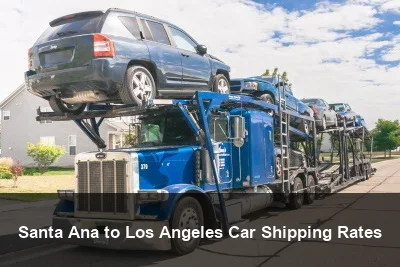
At 35 miles, this is a short-haul intra-California run, which means cost-per-mile is higher than long-distance shipments — that's standard across all carriers for regional moves. Base rates on this corridor typically run lower in absolute terms but represent a higher per-mile figure. Fuel costs on I-5 are a real input on every quote; see how pump prices affect your final rate at https://california.auto-transport-shipping.com/articles/how-gas-prices-impact-california-auto-transport-fees.html. Summer months and year-end corporate relocation cycles can tighten carrier availability and push quotes slightly higher.
What affects the cost of Santa Ana to Los Angeles car shipping:
- Vehicle type and size — larger vehicles take more carrier space; aftermarket additions like lift kits, oversized mirrors, or roof accessories can add fees
- Open vs. enclosed transport — open is lower cost with stronger carrier availability; enclosed protects against weather, debris, and road conditions
- Standard vs. expedited pickup — expedited prioritizes your vehicle for the next available dispatch, typically at a $100–$300 premium
- Time of year — peak demand seasons drive rates higher; off-peak windows offer the most competitive pricing
- Fuel costs — diesel prices affect carrier rates; longer routes are more sensitive to fuel price swings
- Vehicle condition — non-running vehicles require special loading equipment and cost more to ship
| Vehicle Type | Open Car Shipping (Est.) | Enclosed Car Shipping (Est.) |
|---|---|---|
| Sedan | $350 – $500 | $700 – $950 |
| SUV / Crossover | $400 – $600 | $800 – $1,100 |
| Pickup Truck | $400 – $600 | $800 – $1,100 |
| Minivan | $400 – $600 | $800 – $1,100 |
| Luxury / Classic Car | $500 – $700 | $950 – $1,300 |
| Non-Running Vehicle | Add $100–200 | Add $100–200 |
* Estimated ranges based on recent Santa Ana to Los Angeles shipments. Actual rate depends on vehicle, locations, booking date, and current fuel costs. Use the form on this page to compare real quotes from licensed carriers.
Open vs. Enclosed Transport: What Makes Sense on This Route
On a 35-mile run through the LA Basin, open transport is the practical choice for the vast majority of vehicles. The route stays on major urban interstates with no mountain exposure or extreme weather risk. Open carriers dominate this corridor and are dispatched frequently. Enclosed transport makes sense if you're moving a classic, a high-value exotic, or a vehicle that's already in show condition and needs protection from urban road debris on I-5. For a standard daily driver or a late-model sedan, open is the right call and will get you a faster pickup window.
How Long Does Santa Ana to Los Angeles Car Shipping Take?
Carrier transit on this route is typically same-day to two days from confirmed pickup. The driving distance is under an hour in normal traffic, but auto transport doesn't work on individual timetables — your vehicle moves when it fits into a carrier's existing Southern California multi-stop load. Carriers running Orange County to LA loops are frequent, so dispatch usually happens within one to three business days of booking. If your schedule is tight, expedited options exist; review what that costs and how it works at https://california.auto-transport-shipping.com/articles/california-expedited-car-shipping-fast-cost.html
| Service Type | Typical Transit | Pickup Window | Best For |
|---|---|---|---|
| Open — Standard | 1–2 days | 1–3 business days | Best value; most common choice on this route |
| Open — Expedited | Same–1 day | Next day–1 business day | Firm arrival date; faster dispatch window |
| Enclosed — Standard | 2–3 days | 2–5 business days | Luxury, classic, or modified vehicles |
| Enclosed — Expedited | 1–2 days | 1–2 business days | High-value vehicles on a firm delivery deadline |
** The primary delay risk on this corridor isn't weather — it's urban traffic congestion on I-5 through East LA and the downtown interchange. Major events at Dodger Stadium, SoFi Stadium, or the LA Convention Center can affect carrier scheduling windows. Holiday weekends in summer slow dispatch across the entire Southern California network.
Santa Ana to Los Angeles — Route & Logistics
Carriers access this route by staging in Santa Ana's commercial zones near the I-5 and SR-55 interchange, then running north on SR-55 to I-5 or west on SR-22 to connect into the LA freeway network. Total haul distance is approximately 35 miles. The I-5 corridor into Los Angeles is high-volume and carrier-familiar, with multiple exit options depending on the delivery zone within LA.
Key Corridor Waypoints
- Santa Ana, CA Origin staging point. Carriers access SR-55 north from Santa Ana's commercial corridors near Main Street and Bristol Street. The dense urban grid works well for standard carrier equipment. Shopping center lots near the MainPlace Mall area provide practical staging space when street access is tight. Dispatch typically occurs in the morning to fit into multi-stop OC-to-LA loads.
- Anaheim, CA SR-55 north meets SR-91 and connects into the I-5 interchange near Anaheim. This is where carriers merge onto the primary northbound spine. Anaheim's industrial zones and stadium area can generate traffic delays on game days. Carriers familiar with this interchange time their runs to avoid Angels Stadium and Disneyland Resort traffic backups during peak evening hours.
- Buena Park, CA Midpoint along I-5 north between Orange County and LA County. The I-5 and SR-91 interchange at Buena Park is one of the more congested junctions in the region during commute hours. Carriers running this corridor know to account for merge traffic here, particularly westbound SR-91 spillover. No staging occurs here; it's a through-point on the primary interstate route.
- Commerce / East Los Angeles, CA I-5 enters the LA Basin through Commerce and East Los Angeles, where the freeway narrows and interchange density increases significantly. Carriers watch for the I-5/I-710 split and the approach to downtown. This stretch is the most congestion-prone on the entire route. Experienced carriers time arrivals to avoid the 7–9 a.m. and 4–7 p.m. windows through this corridor.
- Los Angeles, CA (Downtown / Delivery Zone) Final delivery point. LA delivery access varies sharply by neighborhood. Downtown, Koreatown, and Hollywood have tight streets and limited pull-over space for large carriers. Westside neighborhoods like Santa Monica and Culver City are more accessible. Carriers typically coordinate a meet point near a parking structure, wide surface lot, or open commercial street to complete the bill of lading inspection and hand off the vehicle.
Pickup & Delivery Access
- Pickup Access in Santa Ana Santa Ana's street grid is carrier-accessible across most of the city, but the densest residential blocks near downtown benefit from meet points at nearby commercial lots — the MainPlace Mall perimeter, South Coast Metro office park areas, or surface lots along Bristol Street all work well. Carriers operating on SR-55 and I-5 can reach most zip codes in Santa Ana without repositioning. Confirm your exact address with the carrier dispatcher at booking.
- Delivery Access in Los Angeles Los Angeles delivery depends heavily on your specific neighborhood. Wide streets in the Valley, El Segundo, and Culver City are carrier-friendly. Downtown LA, Silver Lake, and Echo Park have narrow residential streets that require meet points at nearby lots or wide commercial blocks. Westside beach communities like Venice and Santa Monica have permit zones that affect street staging. Your carrier will confirm the meet point 24 hours before delivery.
- Nearby Pickup Locations Carriers picking up in Santa Ana regularly extend service to Garden Grove, Orange, and Tustin. Call 1‑800‑590‑6492 to confirm door-to-door availability at your address.
Open vs. Enclosed Car Shipping: Santa Ana to Los Angeles
Both options use licensed, insured carriers and deliver door to door. For a full breakdown, read the pros and cons of open vs. enclosed car shipping.
Open Car Shipping
Most Popular- Lower cost — the practical choice for most vehicles
- More carriers available on this corridor
- Faster dispatch from booking to pickup
- Works well for sedans, SUVs, trucks, and minivans
- Vehicle rides on an open multi-car carrier
- Cargo insurance required on all licensed carriers
Estimated cost: $350 – $600
Enclosed Car Shipping
Premium Protection- Full protection from weather, debris, and road grime
- Best for luxury, exotic, and classic vehicles
- Recommended for low-clearance and custom-built cars
- Wheel-net or soft-tie systems prevent contact damage
- Higher cargo coverage — commonly $500,000 per load
- White-glove handling by experienced operators
Estimated cost: $700 – $1,100
Not sure which is right for your vehicle? Call 1-800-590-6492 and we'll point you in the right direction. Also worth reading: the top 10 questions to ask any car shipping company before you commit.
How to Prepare Your Car for Shipping to Los Angeles
A little prep before pickup protects you if there's ever a dispute about your vehicle's condition. This checklist is from our full guide on preparing your car for transport:
- Remove all personal belongings from the interior and trunk
- Leave only a quarter tank of fuel — enough to load and unload
- Take date-stamped photos of the full exterior and interior
- Remove or disable toll transponders (FasTrak, E-ZPass, etc.)
- Retract or remove roof racks, spoilers, antennas, and bike mounts
- Make sure the battery is charged and tires are properly inflated
- Tell the carrier about any existing leaks or mechanical issues
- Deactivate the car alarm before the carrier arrives
- Write down the mileage on the Bill of Lading at pickup
- Fold in side mirrors if the vehicle is wider than standard
Personal items: Most carriers won't cover belongings left in the car. Read the full rules on shipping personal items in your vehicle. Also review our Bill of Lading guide so you know exactly what to check at pickup and delivery.
When to Ship Your Car from Santa Ana to Los Angeles
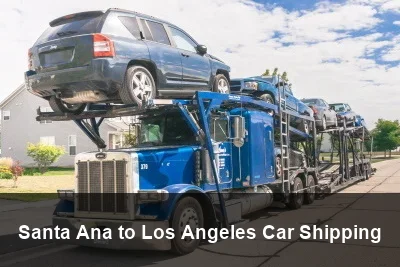
This route operates in a mild Southern California climate year-round, so weather rarely disrupts transit directly. Demand patterns follow corporate relocation cycles, university calendars at USC and UCLA, and broader Southern California population movement. Summer peaks in June through August and year-end pushes in November through December tighten carrier availability slightly and can push quotes up. For winter-specific transport considerations that apply to connecting routes, see https://california.auto-transport-shipping.com/articles/auto-transport-challenges-during-the-winter.html
University Move-In Season (August–September)
USC, UCLA, Loyola Marymount, and Occidental College all run August and September move-in windows that generate significant vehicle movement into Los Angeles. Students and families shipping from Orange County — including Santa Ana — contribute to a measurable demand spike on this corridor. Book at least two weeks ahead if your move date falls between August 10 and September 15. Carrier slots fill faster during this window than any other time of year on this lane.
Summer Corporate Relocation Peak (June–August)
Major LA employers in entertainment, tech, and healthcare drive a consistent summer relocation cycle. Netflix, NBCUniversal, and the broader media industry tend to onboard new hires between June and August, generating inbound vehicle demand into Los Angeles from surrounding counties including Orange County. Rates on this corridor tick upward modestly during this window. Booking two to three weeks out instead of one week gives you better carrier selection and rate stability.
Spring Mild Window (March–May)
March through May is the most favorable window to ship on this route. Demand is lower than summer, weather is consistently mild, and carriers running Southern California loops have good availability. Rates are typically at or near their annual floor during this period. If your move date is flexible and falls in this window, you'll find the best combination of price, scheduling flexibility, and fast dispatch on the Santa Ana to Los Angeles corridor.
Holiday Slowdown and Year-End Surge (November–December)
November and December bring competing pressures. Year-end corporate relocations and lease endings create a demand surge in early December, while the holiday window between December 20 and January 2 slows carrier movement significantly as drivers take time off. If you're shipping in December, aim to book before December 15 to avoid the holiday gap. January sees a recovery in carrier volume as drivers return and new relocation cycles begin for the new year.
Military PCS Adjacent Demand (Year-Round)
While no major military installation sits directly on this short route, the broader Southern California military network — Naval Weapons Station Seal Beach, Camp Pendleton, and Naval Base Ventura County — generates year-round vehicle movement through Orange County and into LA. PCS orders routed through Santa Ana and neighboring cities contribute baseline demand on this corridor. Military shippers should verify PCS entitlements and book with a broker experienced in government move documentation.
How to Choose a Santa Ana to Los Angeles Car Shipping Company
Getting multiple quotes is step one — knowing what to look for in those quotes matters just as much. Our guide on how to select a car shipping company covers the full process. Here are the six things that matter most:
FMCSA Registration
Every carrier or broker must hold a valid MC number. Verify any company at FMCSA SAFER before you book.
Proof of Insurance
Ask for a current certificate of insurance. Open carriers typically carry $100,000–$250,000 per load; enclosed commonly $500,000 or more. Learn what auto transport insurance covers.
All-In Pricing
Your quote should be a final number with no fees added after booking. Know the difference between brokers and carriers and confirm what the quote covers before you agree.
Bill of Lading
A complete Bill of Lading is filled out at pickup and delivery. Our Bill of Lading guide explains what to check. Never sign an incomplete one.
Real Reviews
Check Google and the BBB. Look at how they handled complaints and damage claims — that tells you more than a five-star average from happy customers.
Route Experience
A carrier who runs the Santa Ana to Los Angeles corridor regularly knows details that a generic carrier won't. They know the I-5 through Commerce backs up hard between 7 and 9 a.m. and again from 4 to 7 p.m., and they schedule accordingly. They know that SR-55 north out of Santa Ana moves cleanly in the early morning but stalls near the SR-91 interchange by mid-morning. They know which streets in Koreatown and Hollywood require a meet point and which Westside blocks can accommodate a full multi-car hauler. They've staged near the MainPlace Mall in Santa Ana and know where the weight restrictions are on surface streets near downtown LA. That route familiarity shortens your delivery window and reduces the chance of a rescheduled drop-off.
Santa Ana to Los Angeles Car Shipping — FAQ
How much does it cost to ship a car from Santa Ana to Los Angeles?
On a 35-mile short-haul run like this one, rates typically fall in the range of $150 to $350 for a standard open transport, depending on vehicle size, current fuel costs, and carrier availability at the time you book. Cost-per-mile is higher on short hauls than on cross-country moves — that's consistent across all carriers and all brokers because carriers need to cover fixed costs regardless of trip length. Enclosed transport will run higher. Summer months and year-end relocation cycles can push quotes toward the top of that range. Fill out the quote form for a number specific to your vehicle and zip codes.
How long does Santa Ana to Los Angeles car shipping take?
Transit time once a carrier picks up your vehicle is typically same-day to one business day — the drive is under an hour in manageable traffic. The more relevant timeline is dispatch: how long between booking and actual pickup. On this corridor, dispatch usually runs one to three business days because carriers run Orange County to LA loops frequently. If your schedule is hard-fixed, expedited service can compress that window significantly. Review expedited options and what they cost at https://california.auto-transport-shipping.com/articles/california-expedited-car-shipping-fast-cost.html before committing to a standard booking.
Is my car insured during transport from Santa Ana to Los Angeles?
Yes. Every licensed carrier operating in the U.S. is required by federal law to carry cargo insurance that covers your vehicle while it's on the truck. Before your carrier loads your vehicle, a bill of lading is completed documenting the vehicle's pre-transport condition. That document is your baseline for any damage claim. Your personal auto insurance may also provide supplemental coverage during transport — check your policy. For a full explanation of how coverage works, see https://california.auto-transport-shipping.com/articles/understanding-auto-transport-insurance.html. If you ever need to file a claim, the process is explained at https://california.auto-transport-shipping.com/articles/how-to-file-a-claim-for-vehicle-damage-during-transport.html
Should I choose open or enclosed transport for this route?
For the vast majority of vehicles on this 35-mile urban corridor, open transport is the right call. The route runs on major interstates with no mountain passes, no snow exposure, and no significant weather risk. Open carriers are far more available on this corridor and will get you a faster dispatch window. Enclosed transport makes sense if you're shipping a high-value exotic, a fully restored classic, or a vehicle in show condition where even minor road debris from I-5 is a concern. For a detailed comparison of both options, see https://california.auto-transport-shipping.com/articles/open-vs-enclosed-auto-transport-pros-and-cons.html
Do I have to be present at pickup and delivery?
You don't have to be personally present, but someone over 18 must be available at both ends to inspect the vehicle and sign the bill of lading. The bill of lading is the legal document that records your vehicle's condition before loading and after delivery — it's the document you need if you ever file a damage claim, so the inspection at both ends needs to be done carefully. A trusted family member, neighbor, or agent can handle this if you're unavailable. For more on what the bill of lading covers and what to look for during inspection, see https://california.auto-transport-shipping.com/articles/california-auto-transport-bill-of-lading-information.html
Can carriers access my neighborhood in Los Angeles for delivery?
It depends on where in LA you're receiving the vehicle. Wide residential streets in the San Fernando Valley, El Segundo, and Culver City are generally accessible to multi-car haulers without issues. Dense urban neighborhoods in Silver Lake, Echo Park, downtown, and parts of the Westside have narrow streets, parked cars, and in some cases permit-restricted zones that make direct driveway delivery impractical. In those cases, your carrier will coordinate a nearby meet point — a parking structure entrance, a wide commercial block, or an open lot within walking distance. Confirm the delivery arrangement with your carrier dispatcher 24 hours before the scheduled drop-off.
Does traffic on I-5 affect my delivery time?
Indirectly, yes. Your vehicle's transit time is only a fraction of total scheduling — the bigger variable is dispatch timing and the carrier's overall multi-stop route. But carriers who run this corridor regularly factor I-5 congestion through East LA and Commerce into their scheduling. Major events at Dodger Stadium, SoFi Stadium, or the LA Convention Center can compress carrier windows on specific days. If your delivery date coincides with a large LA event, build in a buffer of one business day. Your carrier will typically confirm a delivery window the evening before arrival.
Is this route a good fit for shipping a dealership or fleet vehicle?
Yes. The Santa Ana to Los Angeles corridor sees regular dealership-to-dealership and fleet transfer volume because Orange County and LA County have dense concentrations of franchise dealers and fleet operators. Carriers running this loop are accustomed to commercial pickups and deliveries, including auction house transfers and dealer lot drop-offs. If you're coordinating a fleet move or a multi-vehicle transfer, a broker who manages Southern California volume regularly can batch your vehicles onto the same load, which reduces per-unit cost and simplifies scheduling across multiple delivery addresses.
Ready to Ship Your Car from Santa Ana to Los Angeles?
One form gets you up to 10 free quotes from licensed, insured carriers. Compare costs and transit times and book the best deal for your schedule.