
San Jose to San Francisco Car Shipping Route
San Jose to San Francisco covers roughly 50 miles depending on the carrier's chosen path. Most carriers take I-280 north through Daly City or US-101 through South San Francisco and the 101/80 interchange, with some using I-880 north through Oakland and crossing via the Bay Bridge. From San Jose, carrier access is straightforward — the Silicon Valley grid feeds directly onto all three corridors with minimal surface street exposure. Despite the short distance, coordinating a personal drive for vehicle delivery during a move or relocation adds wear, timing risk, and one-way logistics costs that professional transport eliminates. Review the full breakdown of those tradeoffs at https://california.auto-transport-shipping.com/articles/benefits-of-auto-transport-service-vs-driving-yourself.html before making your decision.
San Francisco's inbound demand for auto transport is anchored by several specific institutions and employers. UCSF generates student and staff relocations across its Parnassus, Mission Bay, and Mount Zion campuses. Salesforce, Twitter (now X), and dozens of SoMa tech firms see regular corporate vehicle transfers from South Bay campuses. The Presidio, a National Park Service site and former Army installation, draws residents relocating to its housing units. San Francisco State University adds seasonal student volume in August and January. Weather on this corridor is generally mild, but dense fog along I-280 near the San Bruno Mountain stretch and strong crosswinds approaching the Bay Bridge approach can slow carriers. Avoid scheduling errors by reading https://california.auto-transport-shipping.com/articles/auto-transport-mistakes-to-avoid.html before you book.
San Jose to San Francisco Car Shipping Rates
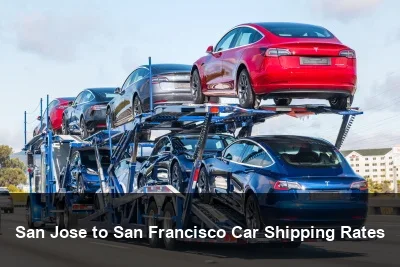
At 50 miles, this is a short-haul corridor, and rates reflect that — base pricing is lower than long-haul moves, but per-mile costs are proportionally higher because carriers are covering fuel, tolls, and time on a run that fills only a portion of their trailer capacity. The Bay Bridge toll adds a fixed cost on the I-880 routing. Rates climb during peak tech relocation season in spring and late summer. Fuel costs directly affect carrier availability and pricing on even short runs — see https://california.auto-transport-shipping.com/articles/how-gas-prices-impact-california-auto-transport-fees.html for how that pricing mechanism works.
What affects the cost of San Jose to San Francisco car shipping:
- Vehicle type and size — larger vehicles take more carrier space; aftermarket additions like lift kits, oversized mirrors, or roof accessories can add fees
- Open vs. enclosed transport — open is lower cost with stronger carrier availability; enclosed protects against weather, debris, and road conditions
- Standard vs. expedited pickup — expedited prioritizes your vehicle for the next available dispatch, typically at a $100–$300 premium
- Time of year — peak demand seasons drive rates higher; off-peak windows offer the most competitive pricing
- Fuel costs — diesel prices affect carrier rates; longer routes are more sensitive to fuel price swings
- Vehicle condition — non-running vehicles require special loading equipment and cost more to ship
| Vehicle Type | Open Car Shipping (Est.) | Enclosed Car Shipping (Est.) |
|---|---|---|
| Sedan | $350 – $500 | $700 – $950 |
| SUV / Crossover | $400 – $600 | $800 – $1,100 |
| Pickup Truck | $400 – $600 | $800 – $1,100 |
| Minivan | $400 – $600 | $800 – $1,100 |
| Luxury / Classic Car | $500 – $700 | $950 – $1,300 |
| Non-Running Vehicle | Add $100–200 | Add $100–200 |
* Estimated ranges based on recent San Jose to San Francisco shipments. Actual rate depends on vehicle, locations, booking date, and current fuel costs. Use the form on this page to compare real quotes from licensed carriers.
Open vs. Enclosed Carrier: What This Bay Area Route Demands
For most standard vehicles on this corridor, open transport is the practical choice. The 50-mile run through the Bay Area presents no mountain passes, no road salt, and no extreme weather exposure. Open carriers serve this route frequently and keep wait times down. Enclosed transport makes sense if you're moving a classic car, a high-value exotic, or a vehicle with a fresh custom paint job — San Francisco delivery zones near the waterfront can involve salt air exposure during staging. If your vehicle's value or condition warrants extra protection, enclosed is available on this corridor with slightly longer lead times.
How Long Does San Jose to San Francisco Car Shipping Take?
On a 50-mile corridor with daily carrier activity between Silicon Valley and San Francisco, most shipments are completed in one to two days from the confirmed pickup date. The driving time for the route itself is under two hours in normal traffic conditions, so transit delay rarely comes from road time — it comes from carrier scheduling, load sequencing, and destination access windows in San Francisco. If your timeline is urgent, expedited options can compress pickup to same-day or next-day. Review the cost and availability tradeoffs at https://california.auto-transport-shipping.com/articles/california-expedited-car-shipping-fast-cost.html before paying the expedite premium.
| Service Type | Typical Transit | Pickup Window | Best For |
|---|---|---|---|
| Open — Standard | 1–2 days | 1–3 business days | Best value; most common choice on this route |
| Open — Expedited | Same–1 day | Next day–1 business day | Firm arrival date; faster dispatch window |
| Enclosed — Standard | 2–3 days | 2–5 business days | Luxury, classic, or modified vehicles |
| Enclosed — Expedited | 1–2 days | 1–2 business days | High-value vehicles on a firm delivery deadline |
** Dense morning and evening commute traffic on US-101 and I-280 through the Peninsula can push carrier delivery windows by several hours. San Francisco delivery zones — especially SOMA, the Mission, and the northern waterfront — sometimes require off-peak staging to avoid street-access conflicts. Plan for possible half-day variance on delivery.
San Jose to San Francisco — Route & Logistics
Carriers departing San Jose typically access I-280 northbound near the SR-87 interchange or pick up US-101 north from the downtown San Jose on-ramps. The I-280 path runs 50 miles along the Peninsula spine into Daly City before connecting to city surface streets. The US-101 path parallels the bay shore through San Mateo, South San Francisco, and Brisbane before entering the city from the southern approach.
Key Corridor Waypoints
- San Jose, CA — Origin Staging Carriers stage in San Jose using the Silicon Valley grid with access from I-280, US-101, I-880, and SR-87. Tech campus areas near North First Street and the Guadalupe River corridor are common meet points. Santa Clara County suburbs including Sunnyvale, Cupertino, Mountain View, and Santa Clara are fully accessible for residential pickup before the carrier enters the freeway system heading north.
- Sunnyvale / Mountain View, CA — Peninsula Entry Northbound carriers often consolidate final Silicon Valley pickups in the Sunnyvale and Mountain View stretch along US-101 or the parallel surface grid before committing to the freeway north. This is the last practical staging zone before traffic density increases approaching Palo Alto and the San Mateo County line. Elevation here is near sea level along the bay margin.
- San Bruno Mountain Corridor — I-280 Midpoint The I-280 routing passes along the western flank of the San Francisco Peninsula, reaching elevations near 750 feet at the San Bruno Mountain area. This stretch is known for heavy coastal fog, particularly in summer mornings. Carriers using this route navigate the Daly City interchange where I-280 meets SR-1 and John Daly Boulevard before descending into the San Francisco city grid.
- South San Francisco, CA — US-101 Corridor Checkpoint Carriers on the US-101 routing pass through South San Francisco, where the freeway narrows and interchange density increases. The Brisbane curve and the approach to Candlestick Point historically create merge congestion during commute hours. This is the last open-road segment before carriers enter the San Francisco city limits and transition to surface street delivery navigation.
- San Francisco, CA — Delivery Zones San Francisco delivery requires carrier-specific route planning. SOMA and Mission Bay are accessible to large carriers via King Street and 7th Street corridors. The Mission District involves narrow cross streets, and the northern waterfront near the Embarcadero requires off-peak timing. Carriers familiar with this city avoid routing through the Financial District or Chinatown with a loaded trailer due to clearance and turn radius limitations.
Pickup & Delivery Access
- Pickup Access in San Jose San Jose offers clean carrier access from multiple freeway approaches. Residential streets in Willow Glen, Almaden, and East San Jose are accessible for standard open carriers. Tech campus areas near North First Street and Great America Parkway in Santa Clara are preferred staging points for corporate shipments. Cul-de-sac streets in Evergreen and Berryessa hills may require a short drive to a nearby arterial for carrier access.
- Delivery Access in San Francisco San Francisco delivery zones vary significantly by neighborhood. SOMA, Mission Bay, and the Richmond District allow carrier access on wider arterials. The Mission, Noe Valley, and Twin Peaks involve steep grades and narrow residential streets that may require a staging point on a nearby commercial street. Fisherman's Wharf and the northern waterfront have restricted truck access during peak tourist hours. Confirm your delivery address specifics with your carrier before the pickup date.
- Nearby Pickup Locations Carriers picking up in San Jose regularly extend service to Sunnyvale, Cupertino, Mountain View, and Santa Clara. Call 1‑800‑590‑6492 to confirm door-to-door availability at your address.
Open vs. Enclosed Car Shipping: San Jose to San Francisco
Both options use licensed, insured carriers and deliver door to door. For a full breakdown, read the pros and cons of open vs. enclosed car shipping.
Open Car Shipping
Most Popular- Lower cost — the practical choice for most vehicles
- More carriers available on this corridor
- Faster dispatch from booking to pickup
- Works well for sedans, SUVs, trucks, and minivans
- Vehicle rides on an open multi-car carrier
- Cargo insurance required on all licensed carriers
Estimated cost: $350 – $600
Enclosed Car Shipping
Premium Protection- Full protection from weather, debris, and road grime
- Best for luxury, exotic, and classic vehicles
- Recommended for low-clearance and custom-built cars
- Wheel-net or soft-tie systems prevent contact damage
- Higher cargo coverage — commonly $500,000 per load
- White-glove handling by experienced operators
Estimated cost: $700 – $1,100
Not sure which is right for your vehicle? Call 1-800-590-6492 and we'll point you in the right direction. Also worth reading: the top 10 questions to ask any car shipping company before you commit.
How to Prepare Your Car for Shipping to San Francisco
A little prep before pickup protects you if there's ever a dispute about your vehicle's condition. This checklist is from our full guide on preparing your car for transport:
- Remove all personal belongings from the interior and trunk
- Leave only a quarter tank of fuel — enough to load and unload
- Take date-stamped photos of the full exterior and interior
- Remove or disable toll transponders (FasTrak, E-ZPass, etc.)
- Retract or remove roof racks, spoilers, antennas, and bike mounts
- Make sure the battery is charged and tires are properly inflated
- Tell the carrier about any existing leaks or mechanical issues
- Deactivate the car alarm before the carrier arrives
- Write down the mileage on the Bill of Lading at pickup
- Fold in side mirrors if the vehicle is wider than standard
Personal items: Most carriers won't cover belongings left in the car. Read the full rules on shipping personal items in your vehicle. Also review our Bill of Lading guide so you know exactly what to check at pickup and delivery.
When to Ship Your Car from San Jose to San Francisco
This corridor runs at moderate-to-high carrier frequency year-round because Bay Area demand never fully drops off. Spring tech relocation season — roughly March through June — drives the highest rate pressure as companies onboard new hires and employees relocate between Silicon Valley and San Francisco. Late August through September sees a secondary spike driven by UCSF and San Francisco State student arrivals. Winter weather on this short coastal route is mild by California standards, but coastal fog and rain can affect carrier scheduling. For winter-specific considerations, see https://california.auto-transport-shipping.com/articles/auto-transport-challenges-during-the-winter.html.
Spring Tech Relocation Season (March–June)
Silicon Valley hiring cycles peak in spring, and carriers running San Jose to San Francisco see the highest demand volume of the year during this window. Companies at Apple, Google, Meta, and Salesforce bring in new hires who need vehicles moved between South Bay housing and San Francisco residences. Book two to three weeks in advance during this period. Rates will be at their annual high, and carrier availability tightens quickly in April and May.
Summer Fog Season (June–August)
The Bay Area's signature summer fog pattern affects both I-280 and US-101 on this corridor, particularly in morning hours. Carriers familiar with the route plan around reduced visibility near San Bruno Mountain and the Daly City descent. This is also when Bay to Breakers, Outside Lands, and other San Francisco events create street closures that affect delivery windows. Build a half-day buffer into your delivery expectation during July and August.
Student Move-In Season (Late August–September)
UCSF's Mission Bay and Parnassus campuses, along with San Francisco State University on the western edge of the city, generate concentrated inbound vehicle demand in late August and early September. Student shipments from Santa Clara County suburbs into San Francisco increase carrier load frequency on this lane but also compress available delivery windows near campus areas. Schedule pickups in San Jose before August 20th to avoid the peak compression window.
Fall Shoulder Season (October–November)
October and November offer the best combination of rate stability and carrier availability on this corridor. Tech relocation activity continues at a moderate pace, fog frequency drops, and student demand has cleared. This is the optimal booking window if your schedule is flexible. Rates typically run 8 to 12 percent below the spring peak. Weather is the most predictable of the year on this coastal corridor during October.
Winter Rain Season (December–February)
The Bay Area winter brings rain rather than snow, but sustained rain events can affect carrier scheduling on the Peninsula. I-280 through the Daly City corridor sees standing water and reduced speed during heavy rain. Rates are at their annual low during January and February, making this the most cost-effective booking window. Carrier frequency dips slightly but remains viable given the year-round Bay Area demand base. Review winter transport considerations at https://california.auto-transport-shipping.com/articles/auto-transport-challenges-during-the-winter.html.
Presidio and Military Transition Season (Year-Round with Spring/Summer Peaks)
The Presidio of San Francisco, a former U.S. Army installation now managed by the National Park Service and housing the Sixth Army headquarters tenant organizations, generates periodic military and government PCS-style vehicle moves. While the Presidio is not a traditional active-duty base, its tenant agencies and housing occupants create inbound vehicle demand from South Bay staging points throughout the year, with peaks aligning with federal fiscal year transitions in late summer and early fall.
How to Choose a San Jose to San Francisco Car Shipping Company
Getting multiple quotes is step one — knowing what to look for in those quotes matters just as much. Our guide on how to select a car shipping company covers the full process. Here are the six things that matter most:
FMCSA Registration
Every carrier or broker must hold a valid MC number. Verify any company at FMCSA SAFER before you book.
Proof of Insurance
Ask for a current certificate of insurance. Open carriers typically carry $100,000–$250,000 per load; enclosed commonly $500,000 or more. Learn what auto transport insurance covers.
All-In Pricing
Your quote should be a final number with no fees added after booking. Know the difference between brokers and carriers and confirm what the quote covers before you agree.
Bill of Lading
A complete Bill of Lading is filled out at pickup and delivery. Our Bill of Lading guide explains what to check. Never sign an incomplete one.
Real Reviews
Check Google and the BBB. Look at how they handled complaints and damage claims — that tells you more than a five-star average from happy customers.
Route Experience
A carrier who runs San Jose to San Francisco regularly knows things that matter operationally. They know that morning deliveries in SOMA before 9 AM beat the double-parking and loading-dock conflicts that hit by mid-morning. They know the Daly City I-280 descent runs at reduced speed in summer fog and that the US-101 Brisbane curve stacks up during afternoon commutes after 3:30 PM. They know that tech campus pickups near North First Street in San Jose work better on Tuesday through Thursday when parking enforcement is lighter. They know which San Francisco cross streets will fit an 80-foot carrier combination and which require splitting the delivery. They also know that the Bay Bridge toll plaza on the I-880 routing adds 15 to 20 minutes on a bad afternoon, and that the I-280 Peninsula run is the cleaner choice for a same-day delivery appointment.
San Jose to San Francisco Car Shipping — FAQ
How much does it cost to ship a car from San Jose to San Francisco?
For a standard sedan on this 50-mile corridor, open transport rates typically fall between $250 and $450 depending on the season and carrier availability. This is a short-haul run, so the per-mile rate is higher than a cross-country move, but the base price stays low because the driving time is under two hours. Enclosed transport on this route runs $450 to $750 for standard vehicles. Rates spike during the spring tech relocation season — March through June — when Silicon Valley hiring cycles drive peak demand. Luxury, oversized, or inoperable vehicles carry rate premiums regardless of season. Get a live quote using the form on this page for current carrier pricing on your specific vehicle.
How long does San Jose to San Francisco car shipping take?
Most shipments on this corridor complete within one to two days from the confirmed pickup date. The actual driving time from San Jose to San Francisco is under two hours on either I-280 or US-101, so transit time is not the constraint — carrier scheduling and load sequencing determine your window. Carriers serving this lane run it multiple times per week, which keeps the average dispatch-to-delivery timeline short. If your situation requires faster service, expedited options can reduce pickup to same-day or next-day at a premium. Review expedited shipping cost factors at https://california.auto-transport-shipping.com/articles/california-expedited-car-shipping-fast-cost.html before deciding whether the upgrade is worth it for your timeline.
Is my car insured during transport from San Jose to San Francisco?
Yes. Every licensed carrier operating in California is required by federal motor carrier regulations to carry cargo insurance covering your vehicle while it is loaded on the transport trailer. The coverage amount and any deductible terms vary by carrier, and your personal auto insurance policy may or may not provide supplemental coverage during transport — you need to verify that directly with your insurer before the pickup date. Before you sign the bill of lading at pickup, do a thorough walk-around inspection with the driver and document any existing condition in writing. For a full explanation of how transport insurance works, see https://california.auto-transport-shipping.com/articles/understanding-auto-transport-insurance.html. If damage occurs, the process for filing a claim is outlined at https://california.auto-transport-shipping.com/articles/how-to-file-a-claim-for-vehicle-damage-during-transport.html.
Should I choose open or enclosed transport for this San Jose to San Francisco route?
For the majority of vehicles on this 50-mile Bay Area corridor, open transport is the right choice. The route involves no mountain passes, no road salt, and no extreme temperature exposure. Carrier frequency is higher for open transport, which keeps your wait time and cost down. Enclosed transport is worth considering if you're moving a classic car, a low-clearance exotic, or a vehicle with a custom paint finish — San Francisco delivery near the waterfront involves salt air during staging, and open transport exposes your vehicle to that environment briefly. For a full comparison of open and enclosed tradeoffs, see https://california.auto-transport-shipping.com/articles/open-vs-enclosed-auto-transport-pros-and-cons.html.
Do I have to be present at pickup and delivery?
You do not have to be personally present, but someone authorized by you must be available at both ends to sign the bill of lading. At pickup in San Jose, the driver will conduct a vehicle inspection and document the condition of your car on the bill of lading before loading. At delivery in San Francisco, the authorized recipient needs to inspect the vehicle again and sign off confirming delivery condition. If you cannot be there, designate a trusted person with clear written authorization. Never sign a delivery bill of lading without a full inspection first. The bill of lading process and your rights under it are covered in detail at https://california.auto-transport-shipping.com/articles/california-auto-transport-bill-of-lading-information.html.
Does Bay Area traffic affect my carrier's delivery timing on this route?
Yes, meaningfully. Both I-280 and US-101 through the Peninsula experience significant morning and afternoon commute congestion, particularly between San Mateo and the San Francisco city limit. Carriers planning a San Francisco delivery before noon will often leave San Jose in the early morning to clear the 7 to 9 AM southbound stack. The US-101 Brisbane curve near Candlestick Point is a consistent afternoon choke point. San Francisco surface street access in SOMA and the Mission District can add 20 to 40 minutes depending on time of day. When your carrier provides a delivery window, treat the late end of that window as the more reliable estimate during weekday business hours.
Are there any San Francisco street or permit restrictions I should know about before delivery?
San Francisco has several neighborhoods where large carrier combinations — typically 75 to 80 feet loaded — cannot safely navigate standard residential streets. The Mission District, Noe Valley, Bernal Heights, and areas around Twin Peaks involve grades above 15 percent and street widths that make carrier turns impossible. Your carrier will identify a nearby staging point on a commercial corridor and complete the final delivery via a shorter approach. The northern waterfront near Fisherman's Wharf and parts of the Embarcadero have restricted truck access windows during peak tourist hours. Confirm your delivery address with your carrier before your pickup date so they can plan the approach in advance rather than problem-solve on arrival.
Is this route viable for shipping a vehicle associated with a Presidio of San Francisco assignment or government relocation?
Yes. The Presidio of San Francisco, located at the northern tip of the San Francisco Peninsula, is accessible to carriers via Doyle Drive and the Park Presidio Boulevard approach. While the Presidio is now a National Park Service site rather than an active military installation, it houses federal tenant organizations and residential units that generate vehicle relocation demand. Carriers familiar with this corridor know the Presidio gate access procedures and the internal road constraints. If you're relocating to Presidio housing, confirm your specific delivery address with your carrier before booking — some internal Presidio roads are not suitable for full-size transport trailers and require short-distance staging at the main entrance.
Ready to Ship Your Car from San Jose to San Francisco?
One form gets you up to 10 free quotes from licensed, insured carriers. Compare costs and transit times and book the best deal for your schedule.