
San Jose to Dallas Car Shipping Route
San Jose to Dallas spans approximately 1,843 driving miles. Carriers depart the South Bay via I-280 or US-101 to I-880 south, then connect to I-5 through the Central Valley or take SR-87 to US-101 south toward the Tejon Pass. From there, I-10 east through the Mojave and across Arizona and New Mexico is the dominant carrier path before connecting to I-20 east into Dallas. The route avoids the Sierra Nevada entirely, keeping it accessible in most weather conditions. Shipping your vehicle eliminates roughly 26 hours of driving and substantial fuel and lodging costs — details covered here: https://california.auto-transport-shipping.com/articles/benefits-of-auto-transport-service-vs-driving-yourself.html
Dallas demand is driven by a concentrated set of employers and institutions. Lockheed Martin's Fort Worth facility, AT&T's corporate headquarters, Toyota's North American headquarters in Plano, and the concentration of financial firms in Uptown Dallas all generate continuous relocation traffic. Naval Air Station Fort Worth Joint Reserve Base produces PCS-cycle demand that spikes in May through August. Southern Methodist University and UT Dallas add student delivery demand in late July and August. Winter weather in West Texas and the Texas Panhandle can introduce transit delays between December and February, particularly ice events on I-20. Avoid common shipping missteps by reviewing: https://california.auto-transport-shipping.com/articles/auto-transport-mistakes-to-avoid.html
San Jose to Dallas Car Shipping Rates
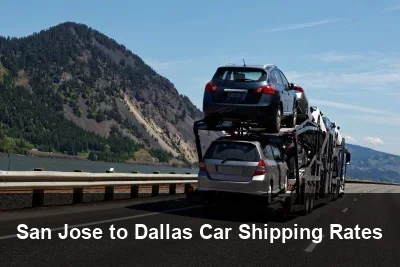
Rates on the San Jose-to-Dallas corridor depend on the 1,843-mile distance tier, current diesel prices across the I-10 and I-20 corridors, and seasonal demand. Summer peaks — driven by military PCS moves and corporate relo cycles — push rates upward from May through August. Winter ice events in West Texas can create short-term surges due to carrier delays and risk premiums. Fuel cost volatility directly affects carrier pricing on this long-haul corridor. For a breakdown of how fuel affects your quote, read: https://california.auto-transport-shipping.com/articles/how-gas-prices-impact-california-auto-transport-fees.html
What affects the cost of San Jose to Dallas car shipping:
- Vehicle type and size — larger vehicles take more carrier space; aftermarket additions like lift kits, oversized mirrors, or roof accessories can add fees
- Open vs. enclosed transport — open is lower cost with stronger carrier availability; enclosed protects against weather, debris, and road conditions
- Standard vs. expedited pickup — expedited prioritizes your vehicle for the next available dispatch, typically at a $100–$300 premium
- Time of year — peak demand seasons drive rates higher; off-peak windows offer the most competitive pricing
- Fuel costs — diesel prices affect carrier rates; longer routes are more sensitive to fuel price swings
- Vehicle condition — non-running vehicles require special loading equipment and cost more to ship
| Vehicle Type | Open Car Shipping (Est.) | Enclosed Car Shipping (Est.) |
|---|---|---|
| Sedan | $1,100 – $1,600 | $1,900 – $2,700 |
| SUV / Crossover | $1,300 – $1,900 | $2,200 – $3,100 |
| Pickup Truck | $1,300 – $1,950 | $2,200 – $3,150 |
| Minivan | $1,300 – $1,900 | $2,200 – $3,100 |
| Luxury / Classic Car | $1,550 – $2,200 | $2,600 – $3,600 |
| Non-Running Vehicle | Add $200–400 | Add $200–400 |
* Estimated ranges based on recent San Jose to Dallas shipments. Actual rate depends on vehicle, locations, booking date, and current fuel costs. Use the form on this page to compare real quotes from licensed carriers.
Open vs. Enclosed: What This Specific Route Actually Requires
The San Jose to Dallas run crosses the Mojave Desert, which means road debris, blowing sand, and UV exposure are real considerations in summer months. Open transport handles this corridor well for standard vehicles — most carriers running this lane use 8- to 10-car open decks and the route is well-traveled enough that vehicles arrive without incident. Enclosed transport is worth the premium for exotics, classic cars, or vehicles with existing paint correction work. If your vehicle is a daily driver, open is the practical and cost-effective choice on this route.
How Long Does San Jose to Dallas Car Shipping Take?
San Jose to Dallas typically runs 5 to 8 days from carrier pickup to delivery. Carrier frequency from Silicon Valley is high — this is an active lane with multiple trucks departing each week — so dispatch-to-pickup windows are shorter than on secondary routes. The 1,843-mile driving distance translates to roughly 3 to 4 days of active transport time once the carrier is loaded. If your timeline is tight, expedited options can compress that window: https://california.auto-transport-shipping.com/articles/california-expedited-car-shipping-fast-cost.html
| Service Type | Typical Transit | Pickup Window | Best For |
|---|---|---|---|
| Open — Standard | 7–10 days | 2–5 business days | Best value; most common choice on this route |
| Open — Expedited | 5–7 days | 1–2 business days | Firm arrival date; faster dispatch window |
| Enclosed — Standard | 7–10 days | 4–8 business days | Luxury, classic, or modified vehicles |
| Enclosed — Expedited | 5–7 days | 2–4 business days | High-value vehicles on a firm delivery deadline |
** Winter ice storms on I-20 through West Texas — particularly between Abilene and Fort Worth — can add 1 to 2 days to transit. These events are most common December through February. Carriers will hold loads at staging points in El Paso or Midland rather than risk highway closures.
San Jose to Dallas — Route & Logistics
Carriers departing San Jose access the route via I-280 or US-101 south to I-880, connecting to I-5 south through the Central Valley, then crossing to I-10 east via the Tejon Pass or SR-58. From I-10, the primary path runs east through the Mojave, across Arizona, through New Mexico, and picks up I-20 east into the Dallas-Fort Worth metroplex.
Key Corridor Waypoints
- San Jose, CA (Departure) Carriers stage in the South Bay grid using SR-87, US-101, or I-880 for easy access to tech campus corridors in Sunnyvale, Cupertino, Mountain View, and Santa Clara. Open suburban streets and wide industrial zones near Alviso and North First Street allow multi-car carrier maneuvering without restrictions. Departure typically routes south toward I-5 via I-880 or through the peninsula via US-101.
- Tejon Pass / Ft. Tejon, CA (I-5, Elevation 4,144 ft) Carriers ascending from the Central Valley via I-5 cross the Tejon Pass at 4,144 feet — the lowest major pass in the Transverse Ranges. CHP inspection checkpoints and chain control zones operate here in winter. Most carriers make a fuel and log-check stop near Lebec or Gorman before descending into the Los Angeles Basin and transitioning to I-10 east.
- Indio / Palm Springs, CA (I-10 East) Once on I-10 east past the Inland Empire, the route enters the Coachella Valley near Indio. This is the last major California fuel point before crossing into Arizona. Summer temperatures here routinely exceed 115°F, which carriers account for in vehicle-securing checks. Some drivers swap here on team-driver runs. Arizona border crossing follows within 90 miles.
- El Paso, TX / Las Cruces, NM (I-10 Junction) The El Paso–Las Cruces metro straddles the New Mexico–Texas border and serves as a natural overnight staging point on this corridor. Carriers log federally required rest hours here, refuel, and perform mid-route vehicle inspections. From El Paso, the route shifts north on I-10 briefly before connecting to I-20 east, the primary artery into Dallas.
- Midland / Odessa, TX (I-20, Elevation 2,780 ft) Midland–Odessa sits at roughly 2,780 feet on the Permian Basin plateau. This is a key carrier waypoint for fuel, rest, and weather assessment. In winter, ice forecasts for the stretch between here and Abilene are monitored closely. Carriers will delay departure from Midland rather than risk I-20 ice closures on the run toward Fort Worth.
- Dallas, TX (Delivery) Carriers enter the DFW metroplex via I-20 west to I-635 or I-30 into central Dallas. Suburban delivery zones in Plano, Irving, and Frisco offer easy wide-street access. Downtown Dallas delivery requires coordination due to narrow CBD streets and loading zone restrictions. Uptown and Knox-Henderson neighborhoods may need curbside staging. DFW Airport corridor staging is available for fleet or corporate deliveries.
Pickup & Delivery Access
- Pickup Access in San Jose San Jose pickup is straightforward across the Silicon Valley grid. Carriers can access residential streets in Willow Glen, Almaden, and Cambrian Park without issue. For tech-corridor pickups near Apple, Google, or Cisco campuses in Cupertino, Sunnyvale, and Mountain View, staging in adjacent surface lots or side streets works reliably. I-880 and US-101 on-ramp proximity means minimal detour time from the established carrier path southbound.
- Delivery Access in Dallas Dallas delivery is carrier-accessible across most of the metro. Suburban zones in Plano, Allen, Frisco, and Irving accommodate full-size multi-car haulers without restriction. Downtown Dallas and Uptown require curbside staging or side-street meets — full-length carriers cannot always access residential blocks in the Arts District or West Village. Coordinate a meet point near a surface lot or parking garage access lane if your delivery address is in a dense urban zone.
- Nearby Pickup Locations Carriers picking up in San Jose regularly extend service to Sunnyvale, Cupertino, Mountain View, and Santa Clara. Call 1‑800‑590‑6492 to confirm door-to-door availability at your address.
Open vs. Enclosed Car Shipping: San Jose to Dallas
Both options use licensed, insured carriers and deliver door to door. For a full breakdown, read the pros and cons of open vs. enclosed car shipping.
Open Car Shipping
Most Popular- Lower cost — the practical choice for most vehicles
- More carriers available on this corridor
- Faster dispatch from booking to pickup
- Works well for sedans, SUVs, trucks, and minivans
- Vehicle rides on an open multi-car carrier
- Cargo insurance required on all licensed carriers
Estimated cost: $1,100 – $1,950
Enclosed Car Shipping
Premium Protection- Full protection from weather, debris, and road grime
- Best for luxury, exotic, and classic vehicles
- Recommended for low-clearance and custom-built cars
- Wheel-net or soft-tie systems prevent contact damage
- Higher cargo coverage — commonly $500,000 per load
- White-glove handling by experienced operators
Estimated cost: $1,900 – $3,150
Not sure which is right for your vehicle? Call 1-800-590-6492 and we'll point you in the right direction. Also worth reading: the top 10 questions to ask any car shipping company before you commit.
How to Prepare Your Car for Shipping to Dallas
A little prep before pickup protects you if there's ever a dispute about your vehicle's condition. This checklist is from our full guide on preparing your car for transport:
- Remove all personal belongings from the interior and trunk
- Leave only a quarter tank of fuel — enough to load and unload
- Take date-stamped photos of the full exterior and interior
- Remove or disable toll transponders (FasTrak, E-ZPass, etc.)
- Retract or remove roof racks, spoilers, antennas, and bike mounts
- Make sure the battery is charged and tires are properly inflated
- Tell the carrier about any existing leaks or mechanical issues
- Deactivate the car alarm before the carrier arrives
- Write down the mileage on the Bill of Lading at pickup
- Fold in side mirrors if the vehicle is wider than standard
Personal items: Most carriers won't cover belongings left in the car. Read the full rules on shipping personal items in your vehicle. Also review our Bill of Lading guide so you know exactly what to check at pickup and delivery.
When to Ship Your Car from San Jose to Dallas
This corridor stays active year-round, but pricing and timing shift by season. Summer — May through August — sees the highest demand from PCS military moves and corporate relocations into DFW, pushing rates up 10 to 20 percent. Late winter brings West Texas ice risk that can delay transit by 1 to 2 days. For specifics on winter shipping risks and how to prepare, review: https://california.auto-transport-shipping.com/articles/auto-transport-challenges-during-the-winter.html
Spring Relocation Season (March–May)
Corporate relocation activity picks up sharply in March as companies finalize Q2 moves. Carriers run full loads in both directions on this lane, keeping rates relatively stable before the summer surge. Book 10 to 14 days in advance if you're moving in April or May. Toyota's Plano campus and AT&T's Dallas HQ drive consistent inbound demand during this window.
Summer Peak — Military PCS and Corporate Moves (June–August)
This is the highest-demand window on the San Jose to Dallas corridor. Naval Air Station Fort Worth Joint Reserve Base PCS cycles, combined with university move-ins at SMU and UT Dallas, saturate available carrier capacity. Rates typically run 15 to 20 percent above off-peak. Book at least 2 to 3 weeks out during June through August to avoid dispatch delays and rate spikes.
Fall Shoulder Season (September–November)
Demand softens after Labor Day and rates become more negotiable through November. Weather is cooperative — Mojave and West Texas heat subsides, and winter ice is not yet a factor. This is one of the best windows for cost-effective shipping on this route. Carriers still run full loads due to return-migration traffic, so transit times remain consistent at 5 to 7 days.
Winter Weather Risk (December–February)
West Texas ice storms on I-20 between Odessa and Fort Worth are the primary winter risk on this corridor. Carriers may hold loads in El Paso or Midland for 24 to 48 hours during freeze events. Budget an extra 1 to 2 days on quoted transit times if shipping between December and mid-February. Enclosed transport demand ticks up slightly due to winter road treatment chemicals on Texas highways.
Student Shipping Window (Late July–August)
UT Dallas, SMU, and Texas A&M Commerce all draw students from the Bay Area and Silicon Valley. Late July through mid-August sees a measurable uptick in single-vehicle shipments from San Jose and the South Bay to the DFW area. If you're shipping a student vehicle, book by early July — this window competes directly with the military PCS surge for available carrier slots.
Tech Relocation Cycles (Year-Round, Peaks in Q1 and Q3)
Silicon Valley-to-Texas corporate relocations don't follow a single seasonal pattern — they spike whenever major tech employers execute office expansions or consolidations. Historically, Q1 (January–March) and Q3 (July–September) see the most movement as new employment contracts activate. If your move is employer-driven, confirm your ship date as soon as relocation paperwork is finalized to avoid competing for capacity during these peaks.
How to Choose a San Jose to Dallas Car Shipping Company
Getting multiple quotes is step one — knowing what to look for in those quotes matters just as much. Our guide on how to select a car shipping company covers the full process. Here are the six things that matter most:
FMCSA Registration
Every carrier or broker must hold a valid MC number. Verify any company at FMCSA SAFER before you book.
Proof of Insurance
Ask for a current certificate of insurance. Open carriers typically carry $100,000–$250,000 per load; enclosed commonly $500,000 or more. Learn what auto transport insurance covers.
All-In Pricing
Your quote should be a final number with no fees added after booking. Know the difference between brokers and carriers and confirm what the quote covers before you agree.
Bill of Lading
A complete Bill of Lading is filled out at pickup and delivery. Our Bill of Lading guide explains what to check. Never sign an incomplete one.
Real Reviews
Check Google and the BBB. Look at how they handled complaints and damage claims — that tells you more than a five-star average from happy customers.
Route Experience
A carrier who regularly runs San Jose to Dallas knows a few things a one-time driver doesn't. They know to pre-check Tejon Pass chain control the night before departure if it's winter. They know the fuel spread between Indio and El Paso is wide and they plan their fill-ups accordingly. They know the I-20 ice window between Odessa and Abilene is the single most unpredictable delay factor on the entire route and they watch the National Weather Service Midland forecast before departing El Paso. They know which truck stops in Midland and Van Horn have pull-through bays for a full 10-car rig. And they know that DFW delivery windows need to be coordinated against morning rush on I-635 and I-30, or you're adding two hours to your delivery day for nothing.
San Jose to Dallas Car Shipping — FAQ
How much does it cost to ship a car from San Jose to Dallas?
On the San Jose to Dallas corridor — approximately 1,843 miles — standard open transport typically ranges from $950 to $1,350 for a standard sedan or SUV, depending on the season and current fuel prices. Enclosed transport runs $1,400 to $2,000 or more for the same vehicle class. Rates spike 15 to 20 percent during the summer PCS and corporate relocation peak (June through August). Oversized vehicles, inoperable vehicles, and expedited bookings all carry additional premiums. The best way to get an accurate number is to fill out the quote form with your specific vehicle, dates, and service type.
How long does San Jose to Dallas car shipping take?
Standard transit on this route is 5 to 8 days from the time a carrier picks up your vehicle. The 1,843-mile distance translates to roughly 3 to 4 days of driving time at legal hours-of-service limits, plus loading, staging, and delivery coordination at each end. San Jose is a high-volume origin, so dispatch-to-pickup lead time is typically 1 to 3 business days — shorter than on smaller California cities. Winter ice events on I-20 in West Texas can add 1 to 2 days during December through February. If your timeline is fixed, expedited options are available.
Is my car insured during transport from San Jose to Dallas?
Yes. Every carrier operating legally in the U.S. is required by federal law to carry cargo insurance covering vehicles on their truck. That policy is the carrier's, not yours — it covers damage caused during transport. Your personal auto insurance may or may not provide supplemental coverage during transport; check your policy before shipping. Before your vehicle is loaded, both you and the driver complete a Bill of Lading that documents the vehicle's pre-transport condition. If damage occurs, that document is the foundation of any claim. For a full explanation of how coverage works, read: https://california.auto-transport-shipping.com/articles/understanding-auto-transport-insurance.html — and if you ever need to file a claim: https://california.auto-transport-shipping.com/articles/how-to-file-a-claim-for-vehicle-damage-during-transport.html
Should I choose open or enclosed transport for the San Jose to Dallas route?
For most vehicles making this run — daily drivers, standard SUVs, newer model-year cars — open transport is the practical choice. The route crosses the Mojave Desert and West Texas plains, where road debris and blowing sand are present but not exceptional hazards for a standard vehicle. Enclosed transport is the right call for classic cars, exotics, vehicles with fresh paint correction, or any vehicle where cosmetic condition at delivery is a hard requirement. The cost difference is real — typically $400 to $700 more for enclosed — so match the service level to actual risk. For a full breakdown: https://california.auto-transport-shipping.com/articles/open-vs-enclosed-auto-transport-pros-and-cons.html
Do I have to be present at pickup in San Jose and delivery in Dallas?
You or a designated representative must be present at both pickup and delivery to sign the Bill of Lading. At pickup, you and the driver walk around the vehicle together and document its pre-transport condition — scratches, dings, existing damage — on the inspection form. At delivery, you do the same and note any changes. Signing at delivery without inspecting the vehicle in detail waives your ability to file a damage claim afterward. If you cannot be present, a trusted adult can act on your behalf. Full details on what the Bill of Lading covers: https://california.auto-transport-shipping.com/articles/california-auto-transport-bill-of-lading-information.html
Does winter weather in Texas affect my San Jose to Dallas shipment?
Yes, and it's the most underestimated delay factor on this route. West Texas — specifically the I-20 corridor between Odessa and Fort Worth — experiences ice storms that can shut down the highway entirely for 12 to 36 hours. Unlike California mountain passes, Texas infrastructure is not equipped for rapid ice treatment, so even a modest freeze event causes significant carrier holdovers. These events occur most frequently from late December through mid-February. If you're shipping during this window, plan for a transit range of 7 to 10 days rather than the standard 5 to 8, and stay in contact with your broker for real-time carrier location updates.
Can I ship a car from San Jose to Dallas for a military PCS move?
Yes, and this corridor handles a significant volume of military PCS shipments annually. Naval Air Station Fort Worth Joint Reserve Base and its tenant commands are among the demand drivers that keep this lane active. If your PCS orders cover vehicle shipping, confirm the reimbursement terms with your transportation office before booking — most branches reimburse one privately owned vehicle shipment per orders set. The peak PCS window is May through August, which is also when carrier capacity on this route is tightest. Book as soon as your orders are finalized to avoid the summer rate surge and dispatch delays.
What are the most common mistakes people make when shipping from San Jose to Dallas?
The most frequent issues on this corridor are waiting too long to book during the summer peak, not inspecting the vehicle thoroughly at delivery before signing the Bill of Lading, and providing an address in Dallas that a full-size carrier physically cannot access. High-rises in Downtown Dallas, narrow streets in Uptown, and dense mixed-use blocks in Deep Ellum may require you to meet the carrier at a nearby staging point. Also, leaving more than a quarter tank of gas in the vehicle adds unnecessary weight and is flagged by most carriers. For a complete list of what to avoid: https://california.auto-transport-shipping.com/articles/auto-transport-mistakes-to-avoid.html
Ready to Ship Your Car from San Jose to Dallas?
One form gets you up to 10 free quotes from licensed, insured carriers. Compare costs and transit times and book the best deal for your schedule.