

San Jose to Milwaukee Car Shipping Route
San Jose to Milwaukee covers approximately 2,089 miles by road. Carriers access the route from San Jose via I-280 or US-101 southbound to connect with I-5 through the Central Valley, or via I-880 north to I-80 eastbound through Sacramento and across Nevada and Utah. From there, I-80 carries loads through Wyoming and Nebraska before carriers transition to I-90 or I-94 into Wisconsin. The Sierra Nevada crossing near Donner Pass sits at roughly 7,000 feet — a relevant factor in winter planning. Driving this yourself takes roughly 30 hours over multiple days. Shipping saves that wear, fuel, and risk. See the full breakdown at https://california.auto-transport-shipping.com/articles/benefits-of-auto-transport-service-vs-driving-yourself.html
Milwaukee-bound shipments serve a range of demand drivers. Marquette University and the University of Wisconsin-Milwaukee generate student moves every August and May. Major employers including Harley-Davidson, Johnson Controls, and Rockwell Automation pull corporate relocations year-round. The 440th Airlift Wing at General Mitchell Air Reserve Station and broader DoD personnel movements in the Great Lakes region add military PCS traffic. Weather is the route's primary operational variable: Wisconsin winters bring snow, ice, and subzero temperatures that can slow final delivery and affect scheduling from November through March. Book early for spring and fall peak windows. Before you ship, review common mistakes at https://california.auto-transport-shipping.com/articles/auto-transport-mistakes-to-avoid.html
San Jose to Milwaukee Car Shipping Rates
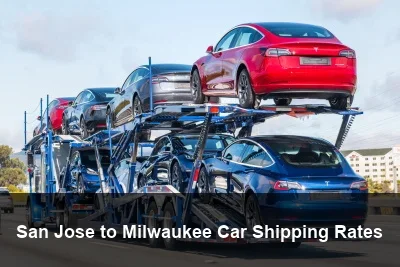
At just over 2,000 miles, this route sits in the long-haul pricing tier where fuel costs have an outsized effect on your quote. I-80 through Wyoming and Nebraska is a high-wind corridor that affects fuel burn. Winter months can add a weather premium as carriers factor in chain requirements near Donner Pass and difficult final delivery conditions in Milwaukee. Summer and early fall typically offer the most competitive pricing. For context on how diesel prices feed into your quote, see https://california.auto-transport-shipping.com/articles/how-gas-prices-impact-california-auto-transport-fees.html
What affects the cost of San Jose to Milwaukee car shipping:
- Vehicle type and size — larger vehicles take more carrier space; aftermarket additions like lift kits, oversized mirrors, or roof accessories can add fees
- Open vs. enclosed transport — open is lower cost with stronger carrier availability; enclosed protects against weather, debris, and road conditions
- Standard vs. expedited pickup — expedited prioritizes your vehicle for the next available dispatch, typically at a $100–$300 premium
- Time of year — peak demand seasons drive rates higher; off-peak windows offer the most competitive pricing
- Fuel costs — diesel prices affect carrier rates; longer routes are more sensitive to fuel price swings
- Vehicle condition — non-running vehicles require special loading equipment and cost more to ship
| Vehicle Type | Open Car Shipping (Est.) | Enclosed Car Shipping (Est.) |
|---|---|---|
| Sedan | $1,100 – $1,600 | $1,900 – $2,700 |
| SUV / Crossover | $1,300 – $1,900 | $2,200 – $3,100 |
| Pickup Truck | $1,300 – $1,950 | $2,200 – $3,150 |
| Minivan | $1,300 – $1,900 | $2,200 – $3,100 |
| Luxury / Classic Car | $1,550 – $2,200 | $2,600 – $3,600 |
| Non-Running Vehicle | Add $200–400 | Add $200–400 |
* Estimated ranges based on recent San Jose to Milwaukee shipments. Actual rate depends on vehicle, locations, booking date, and current fuel costs. Use the form on this page to compare real quotes from licensed carriers.
Open vs. Enclosed: What This Corridor Actually Demands
Open transport covers the large majority of vehicles shipped on this route without issue. Standard sedans, SUVs, and trucks move on open carriers daily. The case for enclosed becomes real if you're shipping between November and March — Wisconsin winters mean road salt spray from I-94 approaches into Milwaukee, and the I-80 corridor through Wyoming can expose vehicles to gravel and debris in high-wind conditions. Enclosed is the right call for classic cars, exotics, or low-clearance vehicles regardless of season. For most daily drivers outside winter months, open transport on this corridor is the practical and cost-effective choice.
How Long Does San Jose to Milwaukee Car Shipping Take?
Standard transit on the San Jose to Milwaukee corridor runs 7 to 10 days from confirmed pickup. Carrier frequency out of Silicon Valley is solid — Bay Area loads fill quickly on I-80 eastbound runs. The 2,089-mile driving distance translates to roughly 4 to 5 driving days for a single operator under federal HOS rules, so multi-driver or relay loads run faster. Scheduling your pickup window with flexibility adds a day or two in practice but helps carriers consolidate efficiently. For time-sensitive moves, expedited options exist — see https://california.auto-transport-shipping.com/articles/california-expedited-car-shipping-fast-cost.html for what that costs and when it makes sense.
| Service Type | Typical Transit | Pickup Window | Best For |
|---|---|---|---|
| Open — Standard | 7–10 days | 2–5 business days | Best value; most common choice on this route |
| Open — Expedited | 5–7 days | 1–2 business days | Firm arrival date; faster dispatch window |
| Enclosed — Standard | 7–10 days | 4–8 business days | Luxury, classic, or modified vehicles |
| Enclosed — Expedited | 5–7 days | 2–4 business days | High-value vehicles on a firm delivery deadline |
** Winter weather on this corridor is the primary delay risk. I-80 through Donner Pass can close or require chains, and I-90 and I-94 in Wisconsin frequently see snow delays between November and March. A weather delay of 1 to 3 additional days is common during winter months. Plan your booking window accordingly.
San Jose to Milwaukee — Route & Logistics
Carriers depart San Jose via US-101, I-280, or I-880 to reach I-80 eastbound through Sacramento. From there the primary corridor runs I-80 through Reno, Salt Lake City, Cheyenne, and Omaha, then transitions to I-90 or I-94 across southern Wisconsin into Milwaukee — covering roughly 2,089 miles of primarily interstate highway.
Key Corridor Waypoints
- Sacramento, CA First major staging point after leaving San Jose, roughly 130 miles northeast via I-880 and I-80. Carriers often consolidate additional Bay Area and Sacramento Valley loads here before committing to the long eastbound run. The I-80 and US-50 interchange is a common decision point for routing. Expect a brief stop or load check before the Sierra ascent begins.
- Donner Pass, CA (elevation 7,056 ft) The route's most operationally significant geographic feature. Donner Pass on I-80 reaches 7,056 feet and is subject to chain controls and closures from November through April. Carriers account for this in winter scheduling — a closure can add 12 to 24 hours to transit. In summer the pass moves efficiently, but it remains the corridor's primary weather choke point regardless of season.
- Salt Lake City, UT Major overnight and fuel stop roughly 750 miles from San Jose. I-80 through Salt Lake City is a high-volume freight corridor with ample truck services. Carriers running this lane often log their rest break here and reposition loads if relay arrangements are in place. The I-15 and I-80 interchange is one of the busiest in the intermountain region and moves efficiently.
- Cheyenne, WY At approximately 6,200 feet elevation, Cheyenne sits at the high point of the Wyoming plains segment of I-80. This stretch between Laramie and Cheyenne is notorious for high crosswinds that affect open carrier stability and fuel burn. Carriers experienced on this corridor know to monitor WYDOT road conditions here in winter. It's also a common fuel and check stop before the long Nebraska flat run.
- Omaha, NE Transition point from I-80 to northbound routing toward I-90 or I-94 into Wisconsin. At roughly 1,500 miles from San Jose, Omaha represents the midpoint logistics hub for this corridor. Relay carriers may exchange loads here. The I-480 loop and I-680 interchanges provide access to the freight district where load handoffs and inspections commonly occur.
- Milwaukee, WI Final delivery point accessed via I-94 westbound from the Illinois state line or I-43 from the south. Downtown Milwaukee and the Third Ward have narrow historic streets where 75-foot carriers cannot operate — staging at a wider commercial area or suburban meet point may be needed. The I-894 bypass and I-43 interchange near West Allis provides accessible staging ground for final residential delivery coordination.
Pickup & Delivery Access
- Pickup Access in San Jose San Jose carriers access the full Santa Clara County grid via US-101, I-280, and I-880. Residential neighborhoods in Willow Glen, Almaden Valley, and Blossom Hill are accessible but narrow streets may require curbside staging. Tech campus corridors in North San Jose near Cisco and Samsung facilities offer wide staging lots. Mountain View, Sunnyvale, and Cupertino pickups along US-101 are straightforward and carrier-preferred for easy highway reentry.
- Delivery Access in Milwaukee Milwaukee delivery is straightforward in suburban zones including Wauwatosa, West Allis, and Brookfield where wide streets accommodate full-size carriers. Downtown Milwaukee, the Historic Third Ward, and Bay View have parking restrictions and narrow approaches that often require a shorter shuttle vehicle or a customer meet at a nearby lot. Bay View residential streets in particular should be flagged at booking so the carrier can plan accordingly.
- Nearby Pickup Locations Carriers picking up in San Jose regularly extend service to Sunnyvale, Cupertino, Mountain View, and Santa Clara. Call 1‑800‑590‑6492 to confirm door-to-door availability at your address.
Open vs. Enclosed Car Shipping: San Jose to Milwaukee
Both options use licensed, insured carriers and deliver door to door. For a full breakdown, read the pros and cons of open vs. enclosed car shipping.
Open Car Shipping
Most Popular- Lower cost — the practical choice for most vehicles
- More carriers available on this corridor
- Faster dispatch from booking to pickup
- Works well for sedans, SUVs, trucks, and minivans
- Vehicle rides on an open multi-car carrier
- Cargo insurance required on all licensed carriers
Estimated cost: $1,100 – $1,950
Enclosed Car Shipping
Premium Protection- Full protection from weather, debris, and road grime
- Best for luxury, exotic, and classic vehicles
- Recommended for low-clearance and custom-built cars
- Wheel-net or soft-tie systems prevent contact damage
- Higher cargo coverage — commonly $500,000 per load
- White-glove handling by experienced operators
Estimated cost: $1,900 – $3,150
Not sure which is right for your vehicle? Call 1-800-590-6492 and we'll point you in the right direction. Also worth reading: the top 10 questions to ask any car shipping company before you commit.
How to Prepare Your Car for Shipping to Milwaukee
A little prep before pickup protects you if there's ever a dispute about your vehicle's condition. This checklist is from our full guide on preparing your car for transport:
- Remove all personal belongings from the interior and trunk
- Leave only a quarter tank of fuel — enough to load and unload
- Take date-stamped photos of the full exterior and interior
- Remove or disable toll transponders (FasTrak, E-ZPass, etc.)
- Retract or remove roof racks, spoilers, antennas, and bike mounts
- Make sure the battery is charged and tires are properly inflated
- Tell the carrier about any existing leaks or mechanical issues
- Deactivate the car alarm before the carrier arrives
- Write down the mileage on the Bill of Lading at pickup
- Fold in side mirrors if the vehicle is wider than standard
Personal items: Most carriers won't cover belongings left in the car. Read the full rules on shipping personal items in your vehicle. Also review our Bill of Lading guide so you know exactly what to check at pickup and delivery.
When to Ship Your Car from San Jose to Milwaukee
This route has a pronounced seasonal pattern. Summer — June through September — is peak demand from student moves and corporate relocations, pushing prices up but keeping carrier availability high. Winter months bring Wisconsin weather premiums and potential Sierra delays. Spring thaw (March–April) and early fall (September–October) offer the best combination of pricing and predictable transit. For a full breakdown of winter shipping risks specific to this corridor, see https://california.auto-transport-shipping.com/articles/auto-transport-challenges-during-the-winter.html
Winter (December–February)
The hardest window on this route. Donner Pass chain controls, Wyoming I-80 wind closures, and Milwaukee subzero delivery conditions all converge. Carriers add weather surcharges and transit estimates extend to 10–14 days. If your move isn't time-sensitive, delaying to March improves both pricing and reliability. If you must ship in winter, book 2 to 3 weeks out and review winter transport risks carefully before confirming.
Spring (March–May)
One of the two best windows on this route. Sierra snow risk drops sharply after mid-March, Wisconsin roads clear, and demand hasn't hit summer peak yet. Pricing is competitive and carrier availability is strong. Corporate relocation season begins in April, so booking 10 to 14 days out is still advisable to secure your preferred pickup window rather than waiting for last-minute availability.
Summer (June–August)
Peak demand driven by UW-Milwaukee and Marquette University student moves, corporate relocations, and Harley-Davidson Homecoming event traffic in Milwaukee each August. Carrier capacity tightens in late July and August. Expect rates to run 10 to 15 percent above spring levels. Book at least two weeks ahead for summer moves. Open carriers are operating at full efficiency in this weather window with no weather-related surcharges.
Student Move Season (August & May)
UW-Milwaukee and Marquette University together enroll over 40,000 students, generating concentrated vehicle move demand in late August and again in mid-May. These are the two busiest booking weeks on the Milwaukee inbound lane from California. If your move aligns with either window, submit your quote request at least three weeks early. Last-minute bookings in these windows often see delayed pickup or higher spot pricing.
Fall (September–October)
The second ideal window on this route. Temperatures across the Sierra and Wyoming are stable, Wisconsin weather is still mild, and summer demand has eased. Carrier pricing often dips from the August peak while frequency remains high. This is a reliable window for corporate and private moves alike. The I-80 corridor is at its most operationally efficient in September and October before the first winter weather systems arrive.
Military PCS Season (April–June)
The Great Lakes region sees significant DoD personnel rotation tied to General Mitchell Air Reserve Station and broader Midwest military installations. April through June is primary PCS season. Military families shipping from Silicon Valley tech-adjacent bases or relocating out of the Bay Area to Wisconsin should book early in this window. Some brokers offer military rate considerations — ask specifically when requesting your quote if this applies to your move.
How to Choose a San Jose to Milwaukee Car Shipping Company
Getting multiple quotes is step one — knowing what to look for in those quotes matters just as much. Our guide on how to select a car shipping company covers the full process. Here are the six things that matter most:
FMCSA Registration
Every carrier or broker must hold a valid MC number. Verify any company at FMCSA SAFER before you book.
Proof of Insurance
Ask for a current certificate of insurance. Open carriers typically carry $100,000–$250,000 per load; enclosed commonly $500,000 or more. Learn what auto transport insurance covers.
All-In Pricing
Your quote should be a final number with no fees added after booking. Know the difference between brokers and carriers and confirm what the quote covers before you agree.
Bill of Lading
A complete Bill of Lading is filled out at pickup and delivery. Our Bill of Lading guide explains what to check. Never sign an incomplete one.
Real Reviews
Check Google and the BBB. Look at how they handled complaints and damage claims — that tells you more than a five-star average from happy customers.
Route Experience
A carrier who runs the San Jose to Milwaukee corridor regularly knows that the Donner Pass window on Sunday afternoons clears faster than Monday mornings due to weekend freight patterns on I-80. They know the Flying J in Sparks, NV and the Pilot in Rawlins, WY are preferred overnight stops that offer the truck space and load security this run needs. They know Milwaukee's I-43 southbound off-ramps near Lincoln Avenue give better access to the south side than I-94 downtown during morning rush. They know Marquette University's campus streets near Wisconsin Avenue require a customer street-corner handoff rather than a driveway delivery. That knowledge keeps your vehicle on schedule and prevents the day-long delays that come from a driver figuring out Milwaukee access in real time.
San Jose to Milwaukee Car Shipping — FAQ
How much does it cost to ship a car from San Jose to Milwaukee?
On this approximately 2,089-mile corridor, most standard sedans and SUVs ship via open carrier in the range of $1,050 to $1,450 depending on the time of year, fuel prices, and how quickly you need pickup. Enclosed transport typically adds 40 to 60 percent to that base rate. Winter months and late-summer student move windows push pricing toward the higher end. Full-size trucks and larger SUVs run $100 to $200 more due to space on the carrier deck. The quote form on this page pulls current carrier pricing for your specific vehicle and timeline.
How long does San Jose to Milwaukee car shipping take?
Standard transit runs 7 to 10 days from confirmed pickup on this route. The 2,089-mile drive takes 4 to 5 days for a single driver under federal hours-of-service rules, but load consolidation, relay scheduling, and any weather delays add time in practice. Donner Pass and the Wyoming stretch of I-80 are the two most common delay points in winter. If you need faster delivery, expedited single-driver or team-driver options can compress transit to 5 to 7 days. See https://california.auto-transport-shipping.com/articles/california-expedited-car-shipping-fast-cost.html for current expedited pricing on this lane.
Is my car insured during transport from San Jose to Milwaukee?
Every licensed carrier operating on this route is required by federal law to carry cargo insurance covering your vehicle during transport. That coverage is active from the moment the carrier takes possession at pickup in San Jose through delivery in Milwaukee. The key step on your end is completing a thorough inspection at both ends and documenting any pre-existing condition on the bill of lading before the driver departs. For a complete explanation of how carrier insurance works and what it covers, see https://california.auto-transport-shipping.com/articles/understanding-auto-transport-insurance.html. If damage does occur, the process for filing a claim is outlined at https://california.auto-transport-shipping.com/articles/how-to-file-a-claim-for-vehicle-damage-during-transport.html
Should I choose open or enclosed transport for the San Jose to Milwaukee route?
Open transport is the right call for most vehicles on this corridor during spring, summer, and fall. The I-80 route is well-maintained and open carriers move it without issue in good weather. The calculus shifts in winter: road salt on Milwaukee approaches, gravel and debris on Wyoming I-80 in high-wind conditions, and the general exposure of a 2,000-mile haul in sub-freezing weather make enclosed worth considering for anything you'd be upset to see with road grime or minor chips. For classic cars, exotics, or low-clearance vehicles, enclosed is the answer year-round on this route. Full comparison at https://california.auto-transport-shipping.com/articles/open-vs-enclosed-auto-transport-pros-and-cons.html
Do I have to be present at pickup in San Jose and delivery in Milwaukee?
You don't have to be personally present, but someone over 18 who can sign the bill of lading and conduct the vehicle inspection must be there at both ends. At pickup in San Jose, that person needs to hand over the keys, confirm the vehicle condition on the inspection report, and sign the bill of lading. The same applies at Milwaukee delivery — your designated contact inspects the vehicle, notes any issues before signing, and takes possession. Never sign a blank or incomplete inspection report. For more on what the bill of lading covers and why it matters, see https://california.auto-transport-shipping.com/articles/california-auto-transport-bill-of-lading-information.html
Does winter weather significantly affect shipping from San Jose to Milwaukee?
Yes — this is one of the more weather-exposed routes in the continental US. Donner Pass on I-80 at 7,056 feet is subject to chain controls and closures from November through April. The Wyoming segment between Laramie and Cheyenne runs at over 6,000 feet and sees high crosswinds and winter closures. Milwaukee itself averages significant snowfall from December through March, which can slow final delivery coordination in urban neighborhoods. A winter transit that would normally run 8 days can stretch to 11 or 12 during a significant weather event. Book with extra lead time between November and March. More detail at https://california.auto-transport-shipping.com/articles/auto-transport-challenges-during-the-winter.html
Is this a good route for shipping a car for a University of Wisconsin-Milwaukee or Marquette University student?
Yes, and it's a common one. Both UW-Milwaukee and Marquette draw students from California, and shipping a vehicle rather than driving cross-country is often the practical choice for a student move. The key timing consideration is that late August — the week before fall semester — is the single busiest inbound week for Milwaukee from California. If you're shipping for a student arriving in August, submit your quote request at least three weeks before the needed delivery date. May is the second peak for student outbound moves from Milwaukee back to California. Book early in both windows to avoid compressed timelines and elevated spot pricing.
Can carriers access my neighborhood in San Jose, or do I need to meet them somewhere?
Most of San Jose is accessible to full-size auto transport carriers. Wide-grid neighborhoods and commercial corridors along US-101 and I-880 are straightforward. Tighter residential streets in areas like Willow Glen, the Alamitos neighborhood, or hilly terrain near Almaden Valley may require the carrier to stop at the nearest accessible cross street rather than pulling directly to your driveway. Tech campus areas in North San Jose near major employers are preferred staging zones because of wide access roads and easy I-880 reentry. When you book, note your specific address so the carrier can confirm access in advance rather than discovering a tight street on pickup day.
Ready to Ship Your Car from San Jose to Milwaukee?
One form gets you up to 10 free quotes from licensed, insured carriers. Compare costs and transit times and book the best deal for your schedule.