

Riverside to Washington DC Car Shipping Route
From Riverside, carriers reach I-15 southbound or SR-60 eastbound within minutes of loading, feeding into the I-10 or I-40 corridor depending on the driver's preferred line east. The full Riverside to Washington DC haul covers approximately 2,670 miles and crosses eight states: California, Arizona, New Mexico, Texas, Oklahoma or Tennessee depending on routing, Virginia, and finally the District. Carriers typically run I-40 to I-81 north through the Shenandoah Valley or I-64 through Richmond into DC. Driving that distance yourself takes four or five days of hard travel. Shipping saves you those days plus fuel, lodging, and wear. See the full breakdown at https://california.auto-transport-shipping.com/articles/benefits-of-auto-transport-service-vs-driving-yourself.html.
Destination demand in Washington DC centers on four pillars: federal employment, military installations, higher education, and defense contracting. Joint Base Anacostia-Bolling sits in Southeast DC; Fort Myer-Henderson Hall borders Arlington Cemetery across the Potomac. Major contractors including Leidos, Booz Allen Hamilton, General Dynamics, and SAIC maintain large workforces in the metro area. Georgetown, American, George Washington, and Howard universities generate student-related shipments each semester. Seasonally, this route carries risk from winter weather between Flagstaff, AZ and the Appalachians from November through March — mountain snow and ice can add transit days. Before you book, review https://california.auto-transport-shipping.com/articles/auto-transport-mistakes-to-avoid.html to avoid common errors.
Riverside to Washington DC Car Shipping Rates
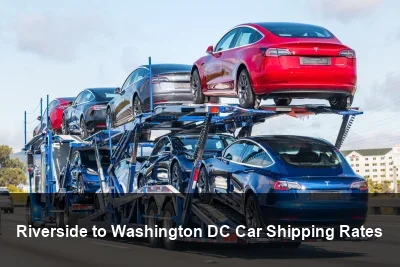
At roughly 2,670 miles, this route falls in the long-haul tier where per-mile rates drop but total cost is still substantial — typically $1,100 to $1,700 for standard open transport depending on season and fuel. Summer and late-August PCS windows push rates up. Winter months can add weather surcharges through the mountain states and mid-Atlantic. Diesel costs directly influence what carriers quote on transcontinental runs; track that relationship at https://california.auto-transport-shipping.com/articles/how-gas-prices-impact-california-auto-transport-fees.html.
What affects the cost of Riverside to Washington DC car shipping:
- Vehicle type and size — larger vehicles take more carrier space; aftermarket additions like lift kits, oversized mirrors, or roof accessories can add fees
- Open vs. enclosed transport — open is lower cost with stronger carrier availability; enclosed protects against weather, debris, and road conditions
- Standard vs. expedited pickup — expedited prioritizes your vehicle for the next available dispatch, typically at a $100–$300 premium
- Time of year — peak demand seasons drive rates higher; off-peak windows offer the most competitive pricing
- Fuel costs — diesel prices affect carrier rates; longer routes are more sensitive to fuel price swings
- Vehicle condition — non-running vehicles require special loading equipment and cost more to ship
| Vehicle Type | Open Car Shipping (Est.) | Enclosed Car Shipping (Est.) |
|---|---|---|
| Sedan | $1,100 – $1,600 | $1,900 – $2,700 |
| SUV / Crossover | $1,300 – $1,900 | $2,200 – $3,100 |
| Pickup Truck | $1,300 – $1,950 | $2,200 – $3,150 |
| Minivan | $1,300 – $1,900 | $2,200 – $3,100 |
| Luxury / Classic Car | $1,550 – $2,200 | $2,600 – $3,600 |
| Non-Running Vehicle | Add $200–400 | Add $200–400 |
* Estimated ranges based on recent Riverside to Washington DC shipments. Actual rate depends on vehicle, locations, booking date, and current fuel costs. Use the form on this page to compare real quotes from licensed carriers.
Open or Enclosed: What This 2,670-Mile Route Requires
Open transport handles the vast majority of Riverside to Washington DC shipments without issue. The primary weather exposure on this corridor is winter road salt applied through Virginia and the DC metro area and occasional desert dust through Arizona and New Mexico. If you're moving a classic car, a luxury vehicle, or anything with a fresh paint job, enclosed is worth the premium because the Appalachian leg and DC itself can be wet and gritty November through March. For a standard daily driver, open is fine and keeps your cost down by $300 to $500.
How Long Does Riverside to Washington DC Car Shipping Take?
Standard transit from Riverside to Washington DC runs 7 to 10 days. Carrier frequency on this corridor is solid — the Inland Empire generates enough volume that trucks heading east depart multiple times per week. At 2,670 miles, a carrier team can run legally in five to six driving days, but single-driver DOT hours-of-service rules and load sequencing typically push delivery to the 7-to-10-day window. If your timeline is tighter, expedited options exist — review costs and tradeoffs at https://california.auto-transport-shipping.com/articles/california-expedited-car-shipping-fast-cost.html.
| Service Type | Typical Transit | Pickup Window | Best For |
|---|---|---|---|
| Open — Standard | 7–10 days | 2–5 business days | Best value; most common choice on this route |
| Open — Expedited | 5–7 days | 1–2 business days | Firm arrival date; faster dispatch window |
| Enclosed — Standard | 7–10 days | 4–8 business days | Luxury, classic, or modified vehicles |
| Enclosed — Expedited | 5–7 days | 2–4 business days | High-value vehicles on a firm delivery deadline |
** Winter is the main transit wildcard. I-40 through Flagstaff sits above 7,000 feet and closes or slows during storms; I-81 through the Shenandoah Valley ices regularly from December through February. Either event can add one to three days. Summer heat through the Arizona and New Mexico desert is manageable but adds driver rest stops.
Riverside to Washington DC — Route & Logistics
Carriers load in the Riverside metro via I-215, SR-60, SR-91, or I-15 and typically route east on I-10 or I-40 through Arizona and New Mexico. After crossing Texas or Oklahoma, the standard line north runs I-81 through the Shenandoah Valley into Northern Virginia, then connects to I-66 or I-395 into Washington DC. The full carrier run covers approximately 2,670 miles.
Key Corridor Waypoints
- Riverside, CA (Origin) Carriers access the load zone via I-215, SR-60, SR-91, or I-15. The Inland Empire freeway grid gives drivers multiple on-ramp options depending on pickup address. Most eastbound runs exit Riverside on I-15 south to I-10 east or SR-60 east to I-10. Staging for multiple pickups in the region often includes nearby Norco, Corona, and Jurupa Valley before the truck runs east.
- Flagstaff, AZ Flagstaff sits at 6,910 feet elevation on I-40 and is the first major altitude and weather checkpoint on the route. In winter, carriers monitor chain requirements and road closures through this stretch. In summer, the elevation actually provides relief from desert heat. Flagstaff serves as a common overnight or fuel stop before the long New Mexico crossing.
- Albuquerque, NM Albuquerque is the primary I-40 junction city in New Mexico and a common driver rest and fuel point at roughly 5,310 feet. Carriers transitioning from I-40 north toward I-25 sometimes adjust routing here depending on load destinations. For the DC-bound line, most trucks continue east on I-40 through Texas before turning north toward the Appalachians.
- Oklahoma City, OK or Memphis, TN Depending on the carrier's preferred northern transition, trucks either run I-40 through Oklahoma City and turn north on I-44 toward I-81, or continue through Memphis on I-40 east. Oklahoma City is a common driver overnight stop and is approximately the halfway mark. Both routes converge toward the Appalachian corridor heading into Virginia.
- Shenandoah Valley, VA (I-81 Corridor) I-81 through the Shenandoah Valley is the dominant approach corridor into Northern Virginia. Carriers running long-haul loads from California regularly stage in the Winchester or Harrisonburg area before final approach to the DC metro. This stretch is prone to winter ice and fog, and truck traffic is heavy throughout the year, which can affect timing of final delivery windows.
- Washington DC (Delivery Zone) Most carriers stage in Arlington, VA or Falls Church, VA rather than driving heavy rigs directly into the District. DC's dense street grid, low-clearance underpasses, and commercial vehicle restrictions in many residential zones require meeting the carrier at an accessible point. The National Mall area and Capitol Hill neighborhoods are typically not direct delivery zones for large transport trailers.
Pickup & Delivery Access
- Pickup Access in Riverside Riverside's street grid is carrier-friendly. Wide residential streets in the Alessandro Boulevard, Magnolia Avenue, and University Avenue corridors handle transport trailers without issue. The areas near the 215/60 interchange and the La Sierra neighborhood offer easy turnaround space. If your address is in a tighter area, a nearby parking lot or shopping center is a simple meet-point solution that costs nothing.
- Delivery Access in Washington DC Washington DC presents real constraints for large carriers. Commercial truck access is restricted on many residential streets, and the District's permit zones and overpass clearances limit where a full-length hauler can operate safely. Most carriers stage in Arlington or Alexandria in Virginia or in College Park or Silver Spring in Maryland, then coordinate a meet-point. Plan for a short drive to retrieve your vehicle rather than expecting curbside delivery.
- Nearby Pickup Locations Carriers picking up in Riverside regularly extend service to Norco, Jurupa Valley, and Corona. Call 1‑800‑590‑6492 to confirm door-to-door availability at your address.
Open vs. Enclosed Car Shipping: Riverside to Washington DC
Both options use licensed, insured carriers and deliver door to door. For a full breakdown, read the pros and cons of open vs. enclosed car shipping.
Open Car Shipping
Most Popular- Lower cost — the practical choice for most vehicles
- More carriers available on this corridor
- Faster dispatch from booking to pickup
- Works well for sedans, SUVs, trucks, and minivans
- Vehicle rides on an open multi-car carrier
- Cargo insurance required on all licensed carriers
Estimated cost: $1,100 – $1,950
Enclosed Car Shipping
Premium Protection- Full protection from weather, debris, and road grime
- Best for luxury, exotic, and classic vehicles
- Recommended for low-clearance and custom-built cars
- Wheel-net or soft-tie systems prevent contact damage
- Higher cargo coverage — commonly $500,000 per load
- White-glove handling by experienced operators
Estimated cost: $1,900 – $3,150
Not sure which is right for your vehicle? Call 1-800-590-6492 and we'll point you in the right direction. Also worth reading: the top 10 questions to ask any car shipping company before you commit.
How to Prepare Your Car for Shipping to Washington DC
A little prep before pickup protects you if there's ever a dispute about your vehicle's condition. This checklist is from our full guide on preparing your car for transport:
- Remove all personal belongings from the interior and trunk
- Leave only a quarter tank of fuel — enough to load and unload
- Take date-stamped photos of the full exterior and interior
- Remove or disable toll transponders (FasTrak, E-ZPass, etc.)
- Retract or remove roof racks, spoilers, antennas, and bike mounts
- Make sure the battery is charged and tires are properly inflated
- Tell the carrier about any existing leaks or mechanical issues
- Deactivate the car alarm before the carrier arrives
- Write down the mileage on the Bill of Lading at pickup
- Fold in side mirrors if the vehicle is wider than standard
Personal items: Most carriers won't cover belongings left in the car. Read the full rules on shipping personal items in your vehicle. Also review our Bill of Lading guide so you know exactly what to check at pickup and delivery.
When to Ship Your Car from Riverside to Washington DC
This route runs year-round but has two distinct pressure points: the summer PCS season from June through August, when military and federal employee relocations spike demand and rates rise 10 to 20 percent, and winter from November through February, when Flagstaff and Appalachian mountain weather can delay transit. Booking two to three weeks out during peak summer gives you more carrier options and better pricing. For a detailed look at winter-specific risks, see https://california.auto-transport-shipping.com/articles/auto-transport-challenges-during-the-winter.html.
Spring (March–May)
Spring is a reliable window on this route. Mountain weather through Flagstaff and the Appalachians begins to ease by March, and PCS demand hasn't peaked yet. Carrier availability is good and pricing is closer to baseline. If you have flexibility on timing, April and May often represent the best balance of transit reliability and cost on the Riverside to Washington DC corridor.
Summer PCS Season (June–August)
Military PCS orders tied to Joint Base Anacostia-Bolling, Fort Myer-Henderson Hall, and DC-area federal installations generate a significant volume surge from June through August. Federal employee transfers and congressional staff relocations add to demand. Rates rise and carrier availability tightens. Book three weeks out minimum. University move-ins at Georgetown, GWU, American, and Howard also add late-August pressure on the DC delivery end.
Back-to-School (Late August–September)
Late August brings a second demand wave from students shipping vehicles to DC-area universities. Georgetown, American University, George Washington University, and Howard University all start fall semesters in late August. Carriers serving the DC metro are often committed to other student moves, which tightens the delivery window. Booking by early August for a late-August delivery date gives you the best shot at your preferred dates.
Winter (November–February)
Winter is the highest-risk period for this specific route. I-40 through Flagstaff at nearly 7,000 feet regularly sees snow and ice from November through February, and I-81 through Virginia's Shenandoah Valley ices consistently in January and February. Carriers may reroute or hold loads. Budget an extra two to three days of transit buffer. Enclosed transport is worth considering if delivering during this window. See https://california.auto-transport-shipping.com/articles/auto-transport-challenges-during-the-winter.html.
Federal Relocation Cycles (Year-Round)
Beyond seasonal patterns, Washington DC generates consistent demand from federal agency relocations, contractor project starts, and congressional transitions. Inauguration years — January of every fourth year — bring an unusual demand spike for vehicle transport into DC from across the country, including California. If your move falls in an inauguration January, book six weeks out. Carrier slots into the District fill faster than any other period on this route.
How to Choose a Riverside to Washington DC Car Shipping Company
Getting multiple quotes is step one — knowing what to look for in those quotes matters just as much. Our guide on how to select a car shipping company covers the full process. Here are the six things that matter most:
FMCSA Registration
Every carrier or broker must hold a valid MC number. Verify any company at FMCSA SAFER before you book.
Proof of Insurance
Ask for a current certificate of insurance. Open carriers typically carry $100,000–$250,000 per load; enclosed commonly $500,000 or more. Learn what auto transport insurance covers.
All-In Pricing
Your quote should be a final number with no fees added after booking. Know the difference between brokers and carriers and confirm what the quote covers before you agree.
Bill of Lading
A complete Bill of Lading is filled out at pickup and delivery. Our Bill of Lading guide explains what to check. Never sign an incomplete one.
Real Reviews
Check Google and the BBB. Look at how they handled complaints and damage claims — that tells you more than a five-star average from happy customers.
Route Experience
A carrier who runs Riverside to Washington DC regularly knows that I-40 through Flagstaff is the weather chokepoint, not just a scenic highway. They pre-check weather three days out and have an alternate I-10/I-20 southern line through El Paso and Dallas ready if Flagstaff is closing. They know that staging in Winchester, VA rather than pushing directly into Northern Virginia on arrival gives them a cleaner delivery window the following morning when DC-area traffic is manageable. They also know that many DC addresses require a meet-point call 24 hours out because last-minute street parking coordination with the customer avoids wasted delivery attempts. Experienced carriers on this run have cleared customs of military base access protocols for Fort Myer and Anacostia-Bolling and know to route away from the National Mall on weekdays.
Riverside to Washington DC Car Shipping — FAQ
How much does it cost to ship a car from Riverside to Washington DC?
Shipping a standard sedan from Riverside to Washington DC on an open carrier typically costs between $1,100 and $1,700 depending on the time of year, current diesel prices, and how quickly you need the vehicle picked up. Summer PCS season from June through August pushes rates toward the top of that range. Enclosed transport adds roughly $300 to $500 over open pricing. Larger vehicles like SUVs and trucks cost more due to the space they occupy on the trailer. Getting a quote early and booking two to three weeks out generally produces better pricing than last-minute requests.
How long does Riverside to Washington DC car shipping take?
Standard transit time is 7 to 10 business days from pickup. At approximately 2,670 miles, a carrier team running legally under DOT hours-of-service rules covers the distance in that window. Carriers departing the Inland Empire multiple times per week means load-matching is relatively quick — typically one to three days from booking to pickup. Winter weather through Flagstaff on I-40 and icy conditions on I-81 through Virginia can add one to three days. If your schedule is firm, expedited options can compress transit; see https://california.auto-transport-shipping.com/articles/california-expedited-car-shipping-fast-cost.html for details on what that costs.
Is my car insured during transport from Riverside to Washington DC?
Licensed carriers are required by federal law to carry cargo insurance covering your vehicle during transport. That coverage is in place from pickup to delivery. Before your vehicle is loaded, the carrier completes a bill of lading documenting existing condition — scratches, dents, and any pre-existing damage. At delivery, you compare the vehicle against that report. If new damage is present, you note it on the bill of lading before signing and file a claim. For a full breakdown of how cargo insurance works, visit https://california.auto-transport-shipping.com/articles/understanding-auto-transport-insurance.html. If you need to file a claim, the process is outlined at https://california.auto-transport-shipping.com/articles/how-to-file-a-claim-for-vehicle-damage-during-transport.html.
Should I choose open or enclosed transport for this route?
Open transport is the right choice for most standard vehicles on this corridor. The route does expose your vehicle to road salt in Virginia and DC during winter months, desert dust through Arizona and New Mexico, and normal highway road debris. For a daily driver, that's acceptable. If you're shipping a classic car, a high-end vehicle, or anything with a custom paint finish, enclosed transport eliminates those risks and is worth the additional cost — particularly for winter shipments when road salt is heaviest through the mid-Atlantic. Full comparison of open and enclosed options is available at https://california.auto-transport-shipping.com/articles/open-vs-enclosed-auto-transport-pros-and-cons.html.
Do I have to be present at pickup and delivery?
You or an authorized representative must be present at both pickup and delivery to sign the bill of lading. This document is critical — it records your vehicle's condition at pickup and again at delivery and is the baseline for any damage claim. You can designate a family member, colleague, or neighbor to handle either end if you're not available yourself. Make sure whoever handles delivery inspects the vehicle thoroughly in daylight before signing. For a full explanation of the bill of lading and what to look for, visit https://california.auto-transport-shipping.com/articles/california-auto-transport-bill-of-lading-information.html.
Does military PCS status affect how I should book this route?
If you're shipping under PCS orders to or from a DC-area installation — Joint Base Anacostia-Bolling, Fort Myer-Henderson Hall, the Washington Navy Yard, or the Marine Barracks — book as early as your orders allow. The summer PCS window from June through August is the highest-demand period on this corridor, and carrier slots fill quickly. Request a copy of your orders when you book; some carriers offer military pricing. Note that base delivery access varies — Anacostia-Bolling and Fort Myer have gate protocols that require advance coordination, so confirm with your carrier whether they have base access or will need a civilian staging point nearby.
What happens if winter weather delays my shipment through the mountain states?
I-40 through Flagstaff, Arizona sits at nearly 7,000 feet and is subject to closures and chain requirements from November through February. I-81 through the Shenandoah Valley in Virginia ices regularly in January and February. Carriers can legally hold a load rather than drive into dangerous conditions, which can add one to three days to transit. This isn't a breach of contract — it's standard safe practice. If you're booking a winter shipment, add a buffer of at least three days to your expected delivery date and communicate that to whoever is receiving the vehicle in DC. See https://california.auto-transport-shipping.com/articles/auto-transport-challenges-during-the-winter.html for more on winter transport planning.
Can a carrier deliver directly to my address in Washington DC?
Many DC addresses are not accessible to a full-length car transport trailer. The District's residential streets are narrower than typical suburban grids, low-clearance underpasses limit certain routes, and commercial vehicle restrictions apply in multiple neighborhoods. Most carriers serving DC stage in Arlington or Alexandria in Virginia or in College Park or Silver Spring in Maryland and coordinate a nearby meet-point with the customer. This is standard practice, not an exception. When you book, confirm with your carrier that they're aware of your specific delivery zip code and discuss a realistic staging location in advance to avoid day-of complications.
Ready to Ship Your Car from Riverside to Washington DC?
One form gets you up to 10 free quotes from licensed, insured carriers. Compare costs and transit times and book the best deal for your schedule.