

Riverside to Fresno Car Shipping Route
The Riverside to Fresno corridor covers approximately 185 miles and is served primarily by two carrier-preferred paths: north via I-215 connecting to I-15 and then SR-99, or west via SR-60 toward the I-5 junction before heading north on SR-99 into the San Joaquin Valley. Most carriers default to SR-99 for the Fresno delivery leg given its direct access into the city's major arterials. Carrier access from Riverside's Inland Empire grid is straightforward — the freeway density around the city center means minimal dead-head miles to the first load point. Compared to driving yourself, transport eliminates fuel costs, mileage wear, and scheduling conflicts. See the full breakdown at https://california.auto-transport-shipping.com/articles/benefits-of-auto-transport-service-vs-driving-yourself.html
Fresno's inbound vehicle demand is anchored by several concrete institutions. California State University, Fresno drives consistent student relocations each August and January. Fresno's position as the economic hub of the San Joaquin Valley means ongoing corporate relocations tied to employers like Amazon's regional fulfillment operations, County of Fresno government, and the healthcare sector centered on UCSF Fresno and Valley Children's Hospital. The route passes through the Tejon Pass region and the San Joaquin Valley floor, where summer heat between June and September can affect transport logistics for temperature-sensitive vehicles. Booking a carrier experienced with this Central Valley heat window matters. Before you finalize your shipment, review common errors at https://california.auto-transport-shipping.com/articles/auto-transport-mistakes-to-avoid.html
Riverside to Fresno Car Shipping Rates
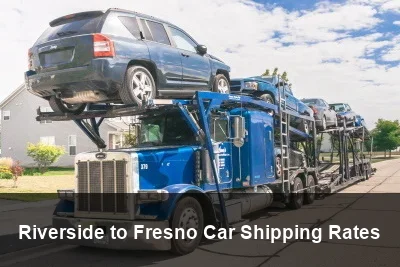
Riverside to Fresno falls into the short-haul tier, typically 185 miles, where per-mile rates run higher than long-distance shipments because carriers absorb fixed costs over fewer miles. Rates on this corridor fluctuate with agricultural harvest cycles in the Central Valley, which pull labor and commercial traffic north in late summer. Fuel prices directly affect carrier quotes on any California route — understand how that math works at https://california.auto-transport-shipping.com/articles/how-gas-prices-impact-california-auto-transport-fees.html. Expect the most competitive pricing between October and April when demand is moderate.
What affects the cost of Riverside to Fresno car shipping:
- Vehicle type and size — larger vehicles take more carrier space; aftermarket additions like lift kits, oversized mirrors, or roof accessories can add fees
- Open vs. enclosed transport — open is lower cost with stronger carrier availability; enclosed protects against weather, debris, and road conditions
- Standard vs. expedited pickup — expedited prioritizes your vehicle for the next available dispatch, typically at a $100–$300 premium
- Time of year — peak demand seasons drive rates higher; off-peak windows offer the most competitive pricing
- Fuel costs — diesel prices affect carrier rates; longer routes are more sensitive to fuel price swings
- Vehicle condition — non-running vehicles require special loading equipment and cost more to ship
| Vehicle Type | Open Car Shipping (Est.) | Enclosed Car Shipping (Est.) |
|---|---|---|
| Sedan | $350 – $500 | $700 – $950 |
| SUV / Crossover | $400 – $600 | $800 – $1,100 |
| Pickup Truck | $400 – $600 | $800 – $1,100 |
| Minivan | $400 – $600 | $800 – $1,100 |
| Luxury / Classic Car | $500 – $700 | $950 – $1,300 |
| Non-Running Vehicle | Add $100–200 | Add $100–200 |
* Estimated ranges based on recent Riverside to Fresno shipments. Actual rate depends on vehicle, locations, booking date, and current fuel costs. Use the form on this page to compare real quotes from licensed carriers.
Open vs. Enclosed: Right Choice for the Riverside–Fresno Run
Open transport is the practical default on this corridor. The route avoids mountain passes with serious winter ice exposure, and the majority of vehicles shipped here are daily drivers, family sedans, and pickup trucks where open exposure carries minimal risk. Enclosed transport makes sense if you're shipping a classic car, a luxury vehicle, or moving during July or August when San Joaquin Valley dust and agricultural particulate are at their peak. If your vehicle's value exceeds $60,000 or it's a show-condition car, the enclosed premium on a 185-mile haul is a reasonable spend.
How Long Does Riverside to Fresno Car Shipping Take?
Most Riverside to Fresno shipments are completed within one to two business days once a carrier is dispatched. The driving distance of roughly 185 miles fits within a carrier's daily hour limit, meaning your vehicle typically moves in a single continuous leg. Carrier frequency from Riverside is strong given the Inland Empire's role as a regional distribution hub, so dispatch windows are generally short — often one to three days from booking to pickup. If your timeline is compressed, expedited options exist: see https://california.auto-transport-shipping.com/articles/california-expedited-car-shipping-fast-cost.html for cost and availability details.
| Service Type | Typical Transit | Pickup Window | Best For |
|---|---|---|---|
| Open — Standard | 1–2 days | 1–3 business days | Best value; most common choice on this route |
| Open — Expedited | Same–1 day | Next day–1 business day | Firm arrival date; faster dispatch window |
| Enclosed — Standard | 2–3 days | 2–5 business days | Luxury, classic, or modified vehicles |
| Enclosed — Expedited | 1–2 days | 1–2 business days | High-value vehicles on a firm delivery deadline |
** Summer heat in the San Joaquin Valley, particularly July through September, can cause carriers to adjust driving schedules to avoid midday high temperatures, adding a partial day in some cases. Tule fog in the Central Valley between December and February can reduce visibility enough to delay SR-99 transit, adding one to two days during severe fog events.
Riverside to Fresno — Route & Logistics
Carriers departing Riverside access the route via I-215 north to I-15, then transition to SR-99 north for the San Joaquin Valley approach into Fresno, or use SR-60 west to connect with I-5 north before rejoining SR-99. Total carrier drive time on either path runs approximately three to three and a half hours for the 185-mile haul.
Key Corridor Waypoints
- Riverside, CA — Inland Empire Freeway Grid Carriers stage pickups using the I-215, SR-60, SR-91, and I-15 interchange cluster near downtown Riverside. The freeway density allows drivers to access residential and commercial pickup zones without significant surface street exposure. Most loads are confirmed and staged within the University Avenue and Magnolia Avenue corridors, which connect cleanly to northbound on-ramps.
- Cajon Pass Area — I-15 / SR-138 Junction, CA Northbound carriers using the I-15 corridor pass through the Cajon Pass at approximately 4,260 feet elevation. This is the primary grade challenge on the eastern path. Carriers with heavy multi-vehicle loads monitor brake temperatures descending the north side. No inspection checkpoint here, but CHP maintains a visible presence at the base of the grade near Victorville.
- Bakersfield, CA — SR-99 / SR-58 Junction Bakersfield sits at the southern threshold of the San Joaquin Valley and serves as a natural carrier staging and fuel point for this corridor. Drivers transitioning from I-5 or coming north on SR-99 from the Grapevine often consolidate loads or confirm delivery windows here. The SR-99 and SR-58 junction is a key decision point for routing into northern Fresno approaches.
- Tulare, CA — SR-99 Midpoint Check Tulare sits roughly halfway between Bakersfield and Fresno on SR-99. Carriers use this stretch to assess timing for delivery windows, particularly when coordinating same-day deliveries to Fresno. The flat Valley terrain allows consistent highway speeds, but agricultural cross-traffic on county roads intersecting SR-99 can slow surface street access near Tulare's industrial areas.
- Fresno, CA — SR-99 / SR-41 Delivery Zone Carriers deliver into Fresno primarily via SR-99 exits connecting to Blackstone Avenue, Shaw Avenue, and Herndon Avenue. These arterials give access to most residential and commercial delivery zones. The SR-41 interchange near downtown provides access to Tower District and central Fresno neighborhoods. Fresno State deliveries stage near the Fowler Avenue and Shaw Avenue grid east of campus.
Pickup & Delivery Access
- Pickup Access in Riverside Riverside's carrier pickup access is strong across the entire city. The Inland Empire freeway grid — I-215, SR-60, SR-91, I-15 — reaches every major neighborhood without requiring extended surface street routing. Arlington, Orangecrest, Canyon Crest, and Downtown Riverside are all carrier-accessible. For oversized carriers, the Victoria Avenue and University Avenue corridors offer the cleanest approaches. Nearby Norco, Jurupa Valley, and Corona are within standard pickup range at no additional access charge.
- Delivery Access in Fresno Fresno delivery is generally straightforward for standard open carriers on major arterials including Blackstone Avenue, Shaw Avenue, and Herndon Avenue. Central Fresno neighborhoods near Fulton Street and the downtown core have narrower access points that may require a shorter carrier or a staging meet point on an adjacent arterial. Tower District streets are tight for multi-vehicle haulers. Confirm your delivery address with the carrier before dispatch to identify any street-width limitations.
- Nearby Pickup Locations Carriers picking up in Riverside regularly extend service to Norco, Jurupa Valley, and Corona. Call 1‑800‑590‑6492 to confirm door-to-door availability at your address.
Open vs. Enclosed Car Shipping: Riverside to Fresno
Both options use licensed, insured carriers and deliver door to door. For a full breakdown, read the pros and cons of open vs. enclosed car shipping.
Open Car Shipping
Most Popular- Lower cost — the practical choice for most vehicles
- More carriers available on this corridor
- Faster dispatch from booking to pickup
- Works well for sedans, SUVs, trucks, and minivans
- Vehicle rides on an open multi-car carrier
- Cargo insurance required on all licensed carriers
Estimated cost: $350 – $600
Enclosed Car Shipping
Premium Protection- Full protection from weather, debris, and road grime
- Best for luxury, exotic, and classic vehicles
- Recommended for low-clearance and custom-built cars
- Wheel-net or soft-tie systems prevent contact damage
- Higher cargo coverage — commonly $500,000 per load
- White-glove handling by experienced operators
Estimated cost: $700 – $1,100
Not sure which is right for your vehicle? Call 1-800-590-6492 and we'll point you in the right direction. Also worth reading: the top 10 questions to ask any car shipping company before you commit.
How to Prepare Your Car for Shipping to Fresno
A little prep before pickup protects you if there's ever a dispute about your vehicle's condition. This checklist is from our full guide on preparing your car for transport:
- Remove all personal belongings from the interior and trunk
- Leave only a quarter tank of fuel — enough to load and unload
- Take date-stamped photos of the full exterior and interior
- Remove or disable toll transponders (FasTrak, E-ZPass, etc.)
- Retract or remove roof racks, spoilers, antennas, and bike mounts
- Make sure the battery is charged and tires are properly inflated
- Tell the carrier about any existing leaks or mechanical issues
- Deactivate the car alarm before the carrier arrives
- Write down the mileage on the Bill of Lading at pickup
- Fold in side mirrors if the vehicle is wider than standard
Personal items: Most carriers won't cover belongings left in the car. Read the full rules on shipping personal items in your vehicle. Also review our Bill of Lading guide so you know exactly what to check at pickup and delivery.
When to Ship Your Car from Riverside to Fresno
This corridor follows a predictable seasonal pricing pattern driven by agricultural cycles, university enrollment dates, and Central Valley weather. Peak demand periods — August through September and January — align with Fresno State's semester starts and harvest-related worker relocations north into the Valley. The least congested booking window runs from mid-October through early December. Winter tule fog is the primary weather variable; see https://california.auto-transport-shipping.com/articles/auto-transport-challenges-during-the-winter.html for how fog-related delays affect scheduling on SR-99.
University Move-In Season (August–September)
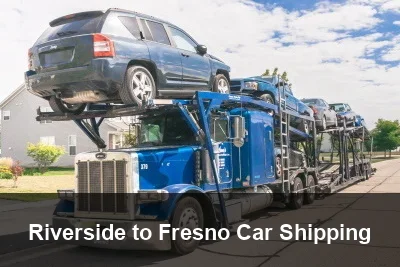
California State University, Fresno begins fall enrollment in late August, creating a concentrated northbound demand spike from Southern California. Carriers fill quickly on this route during this window, and rates reflect that pressure. If you're shipping a student vehicle to Fresno for the fall semester, book at least two to three weeks ahead of your move-in date to secure preferred pickup windows and avoid last-minute rate increases.
Summer Heat Window (June–September)
San Joaquin Valley temperatures routinely exceed 100°F between June and September. Carriers running SR-99 during this period may adjust departure times to early morning to reduce heat exposure on the load. Agricultural dust and particulate are also elevated during summer harvest months. If you're shipping a vehicle with a fresh paint job, custom finish, or convertible soft top, enclosed transport is a stronger choice during this seasonal window.
Tule Fog Season (December–February)
Dense tule fog in the Central Valley between Bakersfield and Fresno is the most significant weather-related transit risk on this corridor. SR-99 is subject to Caltrans Sig-Alert closures during zero-visibility fog events, which can add one to two days to an otherwise single-day haul. If your delivery timeline is firm during winter months, build buffer days into your schedule and confirm with your carrier before dispatch.
Spring Shoulder Season (March–May)
March through May offers the most favorable combination of carrier availability and pricing on this route. Demand from university relocations has subsided since January, summer heat has not yet set in, and tule fog season is winding down. This is the ideal booking window if your timeline is flexible. Rates are typically at their seasonal low, and carrier dispatch times from Riverside are shorter due to balanced load volume.
Agricultural Harvest Relocations (August–October)
The San Joaquin Valley's harvest season drives a secondary inbound vehicle demand pattern distinct from university traffic. Workers and supervisors relocating to Fresno and surrounding agricultural counties for harvest operations generate northbound shipping demand through late summer and into October. This overlaps with the university peak in August and September, compressing carrier availability. Booking early during this dual-demand window is critical to maintaining preferred rates.
January Enrollment and Post-Holiday Demand (January)
A secondary demand peak occurs each January aligned with Fresno State's spring semester start and post-holiday vehicle relocations. Many households that deferred moves during the December holiday period execute shipments in the first two weeks of January. Carrier availability from Riverside tightens briefly during this window. Booking in late December for early January delivery secures better pricing before the post-holiday surge fully materializes.
How to Choose a Riverside to Fresno Car Shipping Company
Getting multiple quotes is step one — knowing what to look for in those quotes matters just as much. Our guide on how to select a car shipping company covers the full process. Here are the six things that matter most:
FMCSA Registration
Every carrier or broker must hold a valid MC number. Verify any company at FMCSA SAFER before you book.
Proof of Insurance
Ask for a current certificate of insurance. Open carriers typically carry $100,000–$250,000 per load; enclosed commonly $500,000 or more. Learn what auto transport insurance covers.
All-In Pricing
Your quote should be a final number with no fees added after booking. Know the difference between brokers and carriers and confirm what the quote covers before you agree.
Bill of Lading
A complete Bill of Lading is filled out at pickup and delivery. Our Bill of Lading guide explains what to check. Never sign an incomplete one.
Real Reviews
Check Google and the BBB. Look at how they handled complaints and damage claims — that tells you more than a five-star average from happy customers.
Route Experience
A carrier who regularly runs the Riverside-to-Fresno corridor knows that SR-99 is almost always the better delivery option over I-5 for Fresno city deliveries — the I-5 Grapevine approach adds distance and grades that don't pay off on a 185-mile haul. Experienced drivers on this lane know to stage Fresno deliveries before the Blackstone Avenue morning commute window, which backs up between 7:00 and 9:00 a.m. They also know that summer agricultural equipment moving on SR-99 near Tulare can slow traffic unexpectedly, and they build contingency time into dispatch calls. For winter bookings, veteran carriers on this corridor monitor the Fresno NWS tule fog advisories before committing to same-day delivery windows, rather than getting locked into a timeline SR-99 closures can invalidate.
Riverside to Fresno Car Shipping — FAQ
How much does it cost to ship a car from Riverside to Fresno?
On a 185-mile short-haul route like Riverside to Fresno, you can generally expect open transport rates to range from approximately $350 to $600 depending on vehicle type, season, and carrier availability. Enclosed transport typically runs $600 to $950 on this corridor. Short-haul routes carry a higher per-mile rate than cross-country shipments because carriers spread fixed costs over fewer miles. Rates rise during the August–September university move-in peak and during January enrollment. Booking two to three weeks ahead of your target pickup date gives you the best rate access and the most carrier options on this lane.
How long does Riverside to Fresno car shipping take?
Most shipments on this corridor complete within one to two business days from carrier dispatch. The 185-mile drive fits within a single carrier day, so your vehicle typically moves in one continuous leg without an overnight stop. After booking, dispatch — meaning the time from order confirmation to carrier pickup — generally runs one to three business days depending on carrier availability from Riverside. Tule fog events in winter and extreme heat in summer can occasionally extend transit by a partial day. If your timeline requires guaranteed delivery within a specific window, expedited options are available; see https://california.auto-transport-shipping.com/articles/california-expedited-car-shipping-fast-cost.html for details.
Is my car insured during transport from Riverside to Fresno?
Yes. Every federally licensed carrier operating on this route is required to carry cargo insurance that covers your vehicle while it is on the transport trailer. Coverage limits vary by carrier and policy, which is why you should confirm the carrier's insurance certificate before your vehicle is loaded. Before pickup, document your vehicle's existing condition thoroughly with dated photographs. If damage occurs during transit, that documentation is critical to a successful claim. For a full explanation of how carrier insurance works and what it covers, visit https://california.auto-transport-shipping.com/articles/understanding-auto-transport-insurance.html. If you need to file a claim, the process is outlined at https://california.auto-transport-shipping.com/articles/how-to-file-a-claim-for-vehicle-damage-during-transport.html.
Should I choose open or enclosed transport for the Riverside to Fresno route?
Open transport is the right call for the majority of vehicles shipped on this corridor. The route does not involve significant mountain pass exposure with ice or snow risk, and SR-99 through the San Joaquin Valley is a high-volume trucking corridor where open carriers run regularly. Enclosed transport is worth the premium if you're shipping a classic car, a vehicle with a concours-condition finish, a luxury vehicle over $60,000 in value, or if you're shipping during July through September when Central Valley dust and agricultural particulate are elevated. For a detailed comparison of both options, see https://california.auto-transport-shipping.com/articles/open-vs-enclosed-auto-transport-pros-and-cons.html.
Do I have to be present at pickup and delivery?
You do not have to be physically present, but someone over 18 must be available to release the vehicle at pickup and accept it at delivery. That person needs to sign the bill of lading, which is the condition report that documents your vehicle's state before it goes on the carrier and again when it is delivered. If you are unavailable in Riverside or Fresno, a trusted representative — a family member, a neighbor, a property manager — can handle both ends. Make sure that person understands they are signing a binding condition document. Full details on the bill of lading process are at https://california.auto-transport-shipping.com/articles/california-auto-transport-bill-of-lading-information.html.
Does tule fog in the Central Valley affect my shipment?
Yes, and it is the most underestimated transit risk on this specific corridor. Tule fog forms in the San Joaquin Valley between Bakersfield and Fresno, typically from December through February, and can reduce visibility on SR-99 to near zero. Caltrans issues Sig-Alert closures on SR-99 during severe fog events, which can ground carriers for hours or halt movement entirely. If you are shipping during this window, build one to two buffer days into your expected delivery timeline. Reputable carriers who run this lane regularly monitor NWS Hanford and Fresno fog advisories before committing to same-day delivery windows. Booking with buffer time costs nothing but prevents avoidable frustration.
Is this a good route for shipping a vehicle related to a Fresno State move?
It is one of the more predictable routes for student vehicle shipments precisely because the demand pattern is so consistent. California State University, Fresno draws heavily from Southern California, and the Inland Empire — including Riverside — is a major feeder region. Carriers know this and position accordingly. The practical caveat is that August is the peak demand month on this corridor; carrier slots fill two to three weeks before fall move-in week. If you are shipping a student vehicle for fall semester, target a booking date in late July. For January enrollment, book during the last week of December to avoid the post-holiday rate spike.
Can carriers reach my address in Fresno directly, or will I need to meet them at a staging point?
Most addresses in Fresno's residential and commercial zones along major arterials — Blackstone Avenue, Shaw Avenue, Herndon Avenue, Cedar Avenue, Chestnut Avenue — are directly accessible to standard open carriers. Areas near downtown Fresno, the Tower District, and older central neighborhoods with narrower streets or overhanging trees may require a short staging meet. Your carrier will identify any access limitations when they confirm your delivery appointment. If you are delivering to a Fresno State campus-adjacent address near Shaw and Woodrow avenues, confirm the street width with your carrier in advance. A meet point at a nearby parking lot or shopping center is a quick solution when direct street access is limited.
Ready to Ship Your Car from Riverside to Fresno?
One form gets you up to 10 free quotes from licensed, insured carriers. Compare costs and transit times and book the best deal for your schedule.