

Riverside to San Diego Car Shipping Route
Riverside sits at roughly 1,000 feet elevation in the Inland Empire, with freeway access via I-215, SR-60, SR-91, and I-15 — all of which funnel carriers efficiently onto the I-15 South corridor toward San Diego. The driving distance is approximately 95 miles, with the route descending from the inland basin through Temecula's wine country and into the coastal climate zone before reaching San Diego County. Carriers avoid the added mileage and fuel burn of a self-drive, and your vehicle accumulates zero additional wear. For a full breakdown of what you save versus driving it yourself, see https://california.auto-transport-shipping.com/articles/benefits-of-auto-transport-service-vs-driving-yourself.html.
San Diego's demand drivers make this one of Southern California's most carrier-friendly short routes. Naval Base San Diego processes a significant share of U.S. Navy PCS orders annually, and MCAS Miramar and Camp Pendleton in northern San Diego County generate additional military vehicle moves. Major employers including Qualcomm, Sharp HealthCare, UC San Diego Health, and General Atomics attract corporate relocation traffic. UCSD, San Diego State University, and the University of San Diego produce recurring student shipping demand each August and May. Weather on this route is generally favorable, though Temecula-area crosswinds occasionally affect taller carriers. Before you book, review https://california.auto-transport-shipping.com/articles/auto-transport-mistakes-to-avoid.html to avoid common booking errors.
Riverside to San Diego Car Shipping Rates
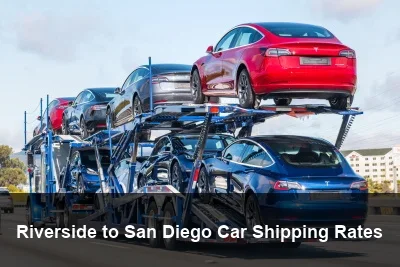
At 95 miles, this route sits in the short-haul pricing band, where base rates per mile are typically higher than on longer corridors but total cost remains moderate. Southbound volume from the Inland Empire is consistent, which keeps rates competitive. Summer military PCS season — June through August — creates demand spikes that can push prices up 10–15%. Fuel costs on I-15 South are a standard carrier input; for how gas prices affect your quote directly, see https://california.auto-transport-shipping.com/articles/how-gas-prices-impact-california-auto-transport-fees.html.
What affects the cost of Riverside to San Diego car shipping:
- Vehicle type and size — larger vehicles take more carrier space; aftermarket additions like lift kits, oversized mirrors, or roof accessories can add fees
- Open vs. enclosed transport — open is lower cost with stronger carrier availability; enclosed protects against weather, debris, and road conditions
- Standard vs. expedited pickup — expedited prioritizes your vehicle for the next available dispatch, typically at a $100–$300 premium
- Time of year — peak demand seasons drive rates higher; off-peak windows offer the most competitive pricing
- Fuel costs — diesel prices affect carrier rates; longer routes are more sensitive to fuel price swings
- Vehicle condition — non-running vehicles require special loading equipment and cost more to ship
| Vehicle Type | Open Car Shipping (Est.) | Enclosed Car Shipping (Est.) |
|---|---|---|
| Sedan | $350 – $500 | $700 – $950 |
| SUV / Crossover | $400 – $600 | $800 – $1,100 |
| Pickup Truck | $400 – $600 | $800 – $1,100 |
| Minivan | $400 – $600 | $800 – $1,100 |
| Luxury / Classic Car | $500 – $700 | $950 – $1,300 |
| Non-Running Vehicle | Add $100–200 | Add $100–200 |
* Estimated ranges based on recent Riverside to San Diego shipments. Actual rate depends on vehicle, locations, booking date, and current fuel costs. Use the form on this page to compare real quotes from licensed carriers.
Open or Enclosed: What This Route Actually Requires
The Riverside-to-San Diego corridor runs through inland desert transition and coastal air — neither environment presents the severe road salt or ice conditions that make enclosed transport mandatory in other regions. Open transport is appropriate for standard vehicles, daily drivers, and most sedans and SUVs moving this route. Enclosed makes sense if you're shipping a classic, a high-value sports car, or a vehicle with a fresh paint job that you don't want exposed to highway road debris on I-15. If your vehicle's value exceeds $75,000, the enclosed premium on a 95-mile haul is modest and worth it.
How Long Does Riverside to San Diego Car Shipping Take?
Most Riverside-to-San Diego shipments complete in one to two days once a carrier is assigned. The driving time is under two hours on I-15 South, so a carrier already staged in the Inland Empire can realistically load in Riverside and deliver in San Diego same-day or next-day. Carrier assignment after booking typically takes 24–72 hours on this corridor given route frequency. If your timeline is compressed — military reporting date, lease start, or vehicle sale — expedited options are available; see https://california.auto-transport-shipping.com/articles/california-expedited-car-shipping-fast-cost.html for what that costs and how it works.
| Service Type | Typical Transit | Pickup Window | Best For |
|---|---|---|---|
| Open — Standard | 1–2 days | 1–3 business days | Best value; most common choice on this route |
| Open — Expedited | Same–1 day | Next day–1 business day | Firm arrival date; faster dispatch window |
| Enclosed — Standard | 2–3 days | 2–5 business days | Luxury, classic, or modified vehicles |
| Enclosed — Expedited | 1–2 days | 1–2 business days | High-value vehicles on a firm delivery deadline |
** Temecula corridor congestion on I-15 during Friday afternoon and holiday weekends can add two to four hours to carrier transit. Periodic strong Santa Ana wind events in fall may cause carriers operating tall multi-car haulers to slow or hold briefly in the Temecula Valley. Neither scenario typically adds a full day, but schedule buffer if your delivery window is firm.
Riverside to San Diego — Route & Logistics
Carriers access this route from Riverside via I-215 South merging onto I-15 South — the primary spine for the full 95-mile run into San Diego. From Riverside's Inland Empire grid, carriers can also approach via SR-91 West to I-15 South or SR-60 West depending on their staging location. The route is entirely freeway, with no significant mountain passes or grade changes that restrict carrier equipment.
Key Corridor Waypoints
- Riverside, CA (Origin) Carrier staging begins in Riverside's Inland Empire grid, accessible from I-215, I-15, SR-60, and SR-91. Downtown Riverside and surrounding neighborhoods like Jurupa Valley and Norco offer open staging areas and commercial streets wide enough for full multi-car haulers. Carriers confirm load condition here before departing southbound on I-15.
- Murrieta/Temecula, CA At roughly the midpoint, the I-15 corridor passes through Murrieta and Temecula at approximately 1,050 feet elevation. This area is a known congestion point during Friday evenings and holiday travel periods. The Temecula Valley also experiences crosswinds during Santa Ana conditions that experienced carriers monitor before continuing south.
- Camp Pendleton, CA I-15 transitions to I-5 near the northern edge of Marine Corps Base Camp Pendleton. Carriers pass through a Border Patrol checkpoint on I-5 in this stretch. Military PCS vehicles destined for Pendleton are sometimes staged here rather than continuing into San Diego proper, depending on the service member's receiving instructions.
- Miramar/Kearny Mesa, CA As carriers enter San Diego County proper, the I-15 corridor passes MCAS Miramar and the Kearny Mesa commercial district. This area serves as a practical staging and delivery zone for north-central San Diego recipients. Kearny Mesa's wide commercial streets and industrial lots make it accessible for large carrier equipment.
- San Diego, CA (Destination) Final delivery in San Diego varies by neighborhood. Mission Valley, downtown, and Chula Vista are carrier-accessible via freeway exits. Coastal neighborhoods including La Jolla, Ocean Beach, and Hillcrest have narrower residential streets; carriers may stage nearby and coordinate a terminal meet. Military base deliveries require pre-arranged gate access.
Pickup & Delivery Access
- Pickup Access in Riverside Riverside offers strong carrier access throughout its freeway-connected grid. Wide commercial streets near Tyler Mall, the I-215 and SR-60 interchange zone, and industrial areas in Jurupa Valley work well as carrier meet points. Residential pickups in neighborhoods with tight cul-de-sacs or overhead obstructions may require the carrier to stage on a nearby arterial. Communicate your address type when booking so the dispatcher can flag access constraints early.
- Delivery Access in San Diego San Diego's carrier accessibility varies by neighborhood. Mission Valley, Kearny Mesa, Chula Vista, and El Cajon are straightforward freeway-adjacent deliveries. Downtown San Diego, Hillcrest, and coastal neighborhoods like La Jolla and Ocean Beach have narrow streets and limited turnaround space for multi-car haulers. Expect to meet the carrier at a nearby parking lot or staging point in those areas. Military base deliveries require sponsor-coordinated gate access arranged in advance.
- Nearby Pickup Locations Carriers picking up in Riverside regularly extend service to Norco, Jurupa Valley, and Corona. Call 1‑800‑590‑6492 to confirm door-to-door availability at your address.
Open vs. Enclosed Car Shipping: Riverside to San Diego
Both options use licensed, insured carriers and deliver door to door. For a full breakdown, read the pros and cons of open vs. enclosed car shipping.
Open Car Shipping
Most Popular- Lower cost — the practical choice for most vehicles
- More carriers available on this corridor
- Faster dispatch from booking to pickup
- Works well for sedans, SUVs, trucks, and minivans
- Vehicle rides on an open multi-car carrier
- Cargo insurance required on all licensed carriers
Estimated cost: $350 – $600
Enclosed Car Shipping
Premium Protection- Full protection from weather, debris, and road grime
- Best for luxury, exotic, and classic vehicles
- Recommended for low-clearance and custom-built cars
- Wheel-net or soft-tie systems prevent contact damage
- Higher cargo coverage — commonly $500,000 per load
- White-glove handling by experienced operators
Estimated cost: $700 – $1,100
Not sure which is right for your vehicle? Call 1-800-590-6492 and we'll point you in the right direction. Also worth reading: the top 10 questions to ask any car shipping company before you commit.
How to Prepare Your Car for Shipping to San Diego
A little prep before pickup protects you if there's ever a dispute about your vehicle's condition. This checklist is from our full guide on preparing your car for transport:
- Remove all personal belongings from the interior and trunk
- Leave only a quarter tank of fuel — enough to load and unload
- Take date-stamped photos of the full exterior and interior
- Remove or disable toll transponders (FasTrak, E-ZPass, etc.)
- Retract or remove roof racks, spoilers, antennas, and bike mounts
- Make sure the battery is charged and tires are properly inflated
- Tell the carrier about any existing leaks or mechanical issues
- Deactivate the car alarm before the carrier arrives
- Write down the mileage on the Bill of Lading at pickup
- Fold in side mirrors if the vehicle is wider than standard
Personal items: Most carriers won't cover belongings left in the car. Read the full rules on shipping personal items in your vehicle. Also review our Bill of Lading guide so you know exactly what to check at pickup and delivery.
When to Ship Your Car from Riverside to San Diego
This corridor stays active year-round, but pricing and demand shift with the calendar. Military PCS orders drive a pronounced summer spike from June through August as service members rotate between bases. Fall and winter see more consistent, moderate pricing. Spring brings northbound snowbird return traffic, but southbound demand stays steady. Weather on I-15 through Temecula is mild most of the year, though Santa Ana wind events in fall and occasional rain in winter can affect hauler scheduling. See https://california.auto-transport-shipping.com/articles/auto-transport-challenges-during-the-winter.html for winter-specific guidance.
Spring (March–May)
Spring brings moderate southbound demand as snowbirds return north and students begin summer arrangements. Pricing is generally stable and carrier availability is good. This is a reliable booking window if your move is flexible. Book one to two weeks out and you'll typically have solid carrier options without the summer rate pressure that follows in June.
Military PCS Season (June–August)
San Diego hosts Naval Base San Diego, MCAS Miramar, and Camp Pendleton — three major installations that generate heavy vehicle shipping demand during summer PCS rotation. If you're moving under military orders, book as early as your orders allow. Carrier capacity on this corridor tightens in July, and rates reflect it. Confirming your pickup window early gives dispatchers more flexibility.
Back-to-School (August–September)
UCSD, San Diego State University, and the University of San Diego all see incoming students shipping vehicles in August and early September. This demand layer compounds the military PCS peak. If you're shipping a student vehicle for fall enrollment, target late July to early August booking. Waiting until move-in week compresses your options and can push delivery past move-in day.
Fall (October–November)
Demand normalizes in fall and rates typically soften after Labor Day. Santa Ana wind events occur in this window and can slow carriers running tall equipment through the Temecula corridor, but delays are usually measured in hours, not days. Fall is a good time to ship if your schedule is flexible — you'll generally find competitive quotes and quicker dispatch than summer.
Winter (December–February)
This corridor sees no snow or ice at route elevation, but occasional rain in San Diego and the Temecula Valley can affect scheduling. Winter is the lowest-demand period on this lane, which means better pricing and faster carrier assignment for most shippers. If your vehicle is high-value and rain exposure concerns you, enclosed transport is available at a modest premium for this short distance.
How to Choose a Riverside to San Diego Car Shipping Company
Getting multiple quotes is step one — knowing what to look for in those quotes matters just as much. Our guide on how to select a car shipping company covers the full process. Here are the six things that matter most:
FMCSA Registration
Every carrier or broker must hold a valid MC number. Verify any company at FMCSA SAFER before you book.
Proof of Insurance
Ask for a current certificate of insurance. Open carriers typically carry $100,000–$250,000 per load; enclosed commonly $500,000 or more. Learn what auto transport insurance covers.
All-In Pricing
Your quote should be a final number with no fees added after booking. Know the difference between brokers and carriers and confirm what the quote covers before you agree.
Bill of Lading
A complete Bill of Lading is filled out at pickup and delivery. Our Bill of Lading guide explains what to check. Never sign an incomplete one.
Real Reviews
Check Google and the BBB. Look at how they handled complaints and damage claims — that tells you more than a five-star average from happy customers.
Route Experience
A carrier who runs the Riverside-to-San Diego lane regularly knows that Friday afternoon I-15 traffic through Temecula is a consistent problem — experienced operators load Thursday or Saturday to avoid it. They know the Border Patrol checkpoint near Camp Pendleton on I-5 adds roughly 15–20 minutes and they account for it. They know that Kearny Mesa and Mission Valley are the practical drop zones for north and central San Diego, while La Jolla and coastal neighborhoods need a side-street staging plan. They also know that Naval Base San Diego deliveries require gate coordination and that showing up without a sponsor contact gets a carrier turned away. These are not details a carrier who runs this lane occasionally will know to plan for.
Riverside to San Diego Car Shipping — FAQ
How much does it cost to ship a car from Riverside to San Diego?
On this 95-mile corridor, open transport typically runs between $250 and $450 depending on vehicle size, season, and how quickly you need pickup. Enclosed transport for the same distance generally runs $400 to $700. Summer months — particularly June through August — see higher rates due to military PCS demand at Naval Base San Diego and Camp Pendleton. Booking two or more weeks out gives dispatchers time to match you with a carrier already running the lane, which often keeps rates at the lower end. Get a quote through the form for a current number based on your vehicle and dates.
How long does Riverside to San Diego car shipping take?
Once a carrier is assigned, transit on this route is typically one to two days. The actual drive time on I-15 South is under two hours, so a carrier staged in the Inland Empire can realistically load in Riverside and deliver in San Diego same-day or the following morning. Carrier assignment after booking usually takes 24 to 72 hours given consistent lane volume. If you have a hard deadline — military reporting date, lease start, or vehicle sale closing — expedited dispatch is available. See https://california.auto-transport-shipping.com/articles/california-expedited-car-shipping-fast-cost.html for how expedited booking works and what it adds to cost.
Is my car insured during transport from Riverside to San Diego?
Yes. Every licensed carrier operating on this corridor is required by FMCSA regulations to carry cargo liability insurance. That coverage applies to your vehicle while it's on the hauler. Before your vehicle is loaded in Riverside, the carrier will complete a Bill of Lading documenting its pre-transport condition. Review that document carefully and note any existing damage before signing. At delivery in San Diego, do the same. If damage occurs in transit, that documentation is your basis for a claim. For a full explanation of how carrier insurance works, see https://california.auto-transport-shipping.com/articles/understanding-auto-transport-insurance.html, and if you need to file a claim, https://california.auto-transport-shipping.com/articles/how-to-file-a-claim-for-vehicle-damage-during-transport.html walks you through the process.
Should I choose open or enclosed transport for this route?
Open transport is appropriate for most vehicles on this corridor. The Riverside-to-San Diego route on I-15 doesn't involve mountain snow, road salt, or the kind of sustained highway debris exposure you'd encounter on a cross-country run. Standard sedans, SUVs, trucks, and minivans move open on this route without issue. Enclosed makes sense if your vehicle is a classic, a high-value sports car, or has a fresh paint job or custom finish you want protected from highway dust and road chips. At 95 miles, the enclosed premium is modest — worth it if the vehicle warrants it. See https://california.auto-transport-shipping.com/articles/open-vs-enclosed-auto-transport-pros-and-cons.html for a full comparison.
Do I have to be present at pickup and delivery?
You don't have to be present personally, but someone you authorize needs to be available at both ends to complete the Bill of Lading. At pickup in Riverside, that person confirms the vehicle's condition before it's loaded and signs the inspection form. At delivery in San Diego, the same process happens in reverse — inspect the vehicle before signing the delivery receipt. If you can't be there yourself, designating a trusted proxy works fine. Don't sign the delivery receipt if you spot damage before you've documented it. For more on how the Bill of Lading protects you, see https://california.auto-transport-shipping.com/articles/california-auto-transport-bill-of-lading-information.html.
Does military PCS affect availability on this route?
Yes, and it's worth planning around. San Diego is one of the largest military metro areas in the country — Naval Base San Diego, MCAS Miramar, and Camp Pendleton collectively generate a substantial volume of PCS vehicle moves every summer. June through August is the peak window, when carrier capacity on this corridor tightens and rates rise. If you're moving under military orders, book as early as your paperwork allows. Some carriers specialize in military PCS moves and understand the documentation requirements for base access and SCRA-related considerations. Let us know your situation when you fill out the form.
What happens at the I-5 checkpoint near Camp Pendleton?
Carriers traveling south on I-5 through the Camp Pendleton corridor pass a permanent Border Patrol checkpoint. This is standard for all commercial vehicles on that stretch and adds roughly 15 to 20 minutes depending on traffic volume. It doesn't affect your shipment's status or cost, but carriers who run this lane regularly account for it in their scheduling. If your carrier is delivering to Camp Pendleton itself, separate gate access coordination is required — that needs to be arranged through your sponsor or housing office before the carrier arrives.
Are there delivery limitations in certain San Diego neighborhoods?
Yes. San Diego's coastal and hillside neighborhoods present real access constraints for multi-car haulers. La Jolla, Ocean Beach, Hillcrest, and parts of North Park have narrow residential streets and limited turnaround space that standard carriers can't navigate safely. In those areas, expect to meet the carrier at a nearby staging point — a shopping center parking lot, commercial street, or adjacent flat area. This is normal and doesn't indicate a problem. When you book, tell the dispatcher your specific delivery address so they can flag access issues before the carrier is dispatched rather than at the delivery appointment.
Ready to Ship Your Car from Riverside to San Diego?
One form gets you up to 10 free quotes from licensed, insured carriers. Compare costs and transit times and book the best deal for your schedule.