

Moreno Valley to San Diego Car Shipping Route
Moreno Valley to San Diego is approximately 95 miles by road, with carriers typically running south on I-215 from the SR-60 interchange before transitioning to I-15 south into San Diego County. The SR-60 and I-215 junction sits near the center of Moreno Valley's street grid, giving carriers straightforward access from most zip codes in the city without navigating residential dead-ends or industrial permit zones. The route passes through Riverside County into San Diego County with no significant mountain crossings — elevation stays manageable compared to routes through the Cajon Pass or the Sierra. Shipping your vehicle rather than driving it yourself saves wear, mileage, and time; see a full breakdown at https://california.auto-transport-shipping.com/articles/benefits-of-auto-transport-service-vs-driving-yourself.html
San Diego's demand for inbound vehicle transport is anchored by several large institutions. Marine Corps Air Station Miramar, Naval Base San Diego, and Marine Corps Recruit Depot generate constant PCS-related shipping volume. UC San Diego in La Jolla and San Diego State University on Montezuma Mesa each bring in thousands of students per year who need vehicles relocated. Major employers including Qualcomm, General Atomics, Northrop Grumman, and Sharp HealthCare also drive corporate and employee relocation shipments. Seasonally, the route sees a mild uptick in summer PCS orders and again in late August for university move-ins. Weather on this corridor is generally favorable, but avoid common planning errors by reviewing https://california.auto-transport-shipping.com/articles/auto-transport-mistakes-to-avoid.html before you book.
Moreno Valley to San Diego Car Shipping Rates
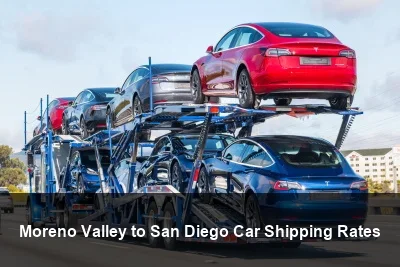
At roughly 95 miles, this route falls into the short-haul pricing tier, which means per-mile rates are higher than long-haul corridors but the total cost is lower overall. Expect base open-carrier rates to reflect that short-distance premium. Summer months see modest rate increases driven by military PCS season and student relocations to San Diego's universities. Fuel costs on the I-215 and I-15 corridor are a real line item for carriers; track how pump prices affect your quote at https://california.auto-transport-shipping.com/articles/how-gas-prices-impact-california-auto-transport-fees.html
What affects the cost of Moreno Valley to San Diego car shipping:
- Vehicle type and size — larger vehicles take more carrier space; aftermarket additions like lift kits, oversized mirrors, or roof accessories can add fees
- Open vs. enclosed transport — open is lower cost with stronger carrier availability; enclosed protects against weather, debris, and road conditions
- Standard vs. expedited pickup — expedited prioritizes your vehicle for the next available dispatch, typically at a $100–$300 premium
- Time of year — peak demand seasons drive rates higher; off-peak windows offer the most competitive pricing
- Fuel costs — diesel prices affect carrier rates; longer routes are more sensitive to fuel price swings
- Vehicle condition — non-running vehicles require special loading equipment and cost more to ship
| Vehicle Type | Open Car Shipping (Est.) | Enclosed Car Shipping (Est.) |
|---|---|---|
| Sedan | $350 – $500 | $700 – $950 |
| SUV / Crossover | $400 – $600 | $800 – $1,100 |
| Pickup Truck | $400 – $600 | $800 – $1,100 |
| Minivan | $400 – $600 | $800 – $1,100 |
| Luxury / Classic Car | $500 – $700 | $950 – $1,300 |
| Non-Running Vehicle | Add $100–200 | Add $100–200 |
* Estimated ranges based on recent Moreno Valley to San Diego shipments. Actual rate depends on vehicle, locations, booking date, and current fuel costs. Use the form on this page to compare real quotes from licensed carriers.
Open vs. Enclosed on the Moreno Valley–San Diego Run
Open transport is the right call for most vehicles on this corridor. The route stays on major interstates — I-215 and I-15 — with no unpaved segments and no significant mountain weather exposure. Road spray and dust are the primary concerns, both of which open carriers handle without issue for standard sedans, trucks, and SUVs. Enclosed transport makes sense if you're shipping a classic, a high-value exotic, or a freshly restored vehicle where any road debris contact is unacceptable. The enclosed premium on a 95-mile corridor is still noticeable relative to total cost, so factor that into your decision.
How Long Does Moreno Valley to San Diego Car Shipping Take?
Most Moreno Valley to San Diego shipments complete in one to two days once a carrier is assigned. The driving time itself is under two hours in normal traffic, so the variable is carrier scheduling and load consolidation, not road time. Because I-215 and I-15 are active carrier corridors serving both directions daily, dispatch times from Moreno Valley are typically faster than from smaller Inland Empire cities. If your timeline is firm, expedited options can lock in a specific pickup window — details at https://california.auto-transport-shipping.com/articles/california-expedited-car-shipping-fast-cost.html
| Service Type | Typical Transit | Pickup Window | Best For |
|---|---|---|---|
| Open — Standard | 1–2 days | 1–3 business days | Best value; most common choice on this route |
| Open — Expedited | Same–1 day | Next day–1 business day | Firm arrival date; faster dispatch window |
| Enclosed — Standard | 2–3 days | 2–5 business days | Luxury, classic, or modified vehicles |
| Enclosed — Expedited | 1–2 days | 1–2 business days | High-value vehicles on a firm delivery deadline |
** I-15 through the Temecula corridor can experience significant congestion on Friday afternoons and Sunday evenings, occasionally affecting carrier scheduling by a partial day. Wildfire activity in Riverside and San Diego counties during late summer and fall is the most likely weather-related delay factor on this specific route.
Moreno Valley to San Diego — Route & Logistics
Carriers access the route by staging at or near the SR-60 and I-215 interchange in western Moreno Valley, then running I-215 south through Riverside and Temecula before transitioning to I-15 south into San Diego County. The total interstate run is straightforward with no weight-restricted bridges or restricted commercial corridors on the primary path.
Key Corridor Waypoints
- Moreno Valley, CA (Origin) Carrier pickup typically staged near the SR-60 / I-215 interchange area. Most residential and commercial addresses in Moreno Valley are within a short surface-street run of this junction. Carriers entering from the LA metro via SR-60 can consolidate loads efficiently before heading south on I-215 without backtracking into congested surface streets.
- Riverside, CA — I-215 / SR-91 Junction A major interchange node where carriers confirm their southbound I-215 routing. Some dispatchers stage or swap loads here given the proximity to the Riverside carrier pool. Elevation sits around 830 feet. Traffic density increases near this junction during peak commute hours, which experienced drivers account for when planning departure windows.
- Temecula, CA — I-15 Transition The point where most carriers shift from I-215 to I-15 south toward San Diego. Temecula sits at approximately 1,015 feet elevation and marks the Riverside–San Diego county line nearby. Friday afternoon and Sunday evening traffic on I-15 through Temecula is the primary congestion risk on this corridor and the most common cause of partial scheduling delays.
- Escondido, CA — I-15 Midpoint Check At roughly 62 miles into the run from Moreno Valley, Escondido is a practical carrier checkpoint and potential secondary staging point for San Diego County deliveries. Sitting at around 660 feet elevation, this is where carriers with multiple San Diego drops often sequence their delivery order based on destination zip codes across the metro.
- San Diego, CA (Destination) Carrier delivery fans out from I-15 and I-8 interchange points depending on final destination. Kearny Mesa, Mission Valley, and Chula Vista are accessible by large carriers without staging. Downtown, Hillcrest, and tighter coastal neighborhoods may require a smaller shuttle vehicle or a meet-point arrangement at a nearby parking area or commercial lot.
Pickup & Delivery Access
- Pickup Access in Moreno Valley Most Moreno Valley addresses are carrier-accessible without staging. Wider residential streets in Sunnymead Ranch, Edgemont, and areas near the TownGate corridor accommodate standard 75-foot multi-car haulers. Tight cul-de-sacs in newer subdivisions may require the driver to meet you on a nearby arterial. The SR-60 / I-215 interchange area is the most convenient meet point if your street has clearance concerns.
- Delivery Access in San Diego San Diego has variable carrier accessibility depending on neighborhood. Kearny Mesa, Mission Valley, El Cajon, and Chula Vista are straightforward for large carriers. Hillcrest, North Park, and parts of Ocean Beach have narrow streets that often require a meet point at a commercial lot or shopping center parking area. Military base deliveries at Miramar or Naval Base San Diego follow installation access protocols and require advance coordination.
- Nearby Pickup Locations Carriers picking up in Moreno Valley regularly extend service to Riverside, Perris, and Hemet. Call 1‑800‑590‑6492 to confirm door-to-door availability at your address.
Open vs. Enclosed Car Shipping: Moreno Valley to San Diego
Both options use licensed, insured carriers and deliver door to door. For a full breakdown, read the pros and cons of open vs. enclosed car shipping.
Open Car Shipping
Most Popular- Lower cost — the practical choice for most vehicles
- More carriers available on this corridor
- Faster dispatch from booking to pickup
- Works well for sedans, SUVs, trucks, and minivans
- Vehicle rides on an open multi-car carrier
- Cargo insurance required on all licensed carriers
Estimated cost: $350 – $600
Enclosed Car Shipping
Premium Protection- Full protection from weather, debris, and road grime
- Best for luxury, exotic, and classic vehicles
- Recommended for low-clearance and custom-built cars
- Wheel-net or soft-tie systems prevent contact damage
- Higher cargo coverage — commonly $500,000 per load
- White-glove handling by experienced operators
Estimated cost: $700 – $1,100
Not sure which is right for your vehicle? Call 1-800-590-6492 and we'll point you in the right direction. Also worth reading: the top 10 questions to ask any car shipping company before you commit.
How to Prepare Your Car for Shipping to San Diego
A little prep before pickup protects you if there's ever a dispute about your vehicle's condition. This checklist is from our full guide on preparing your car for transport:
- Remove all personal belongings from the interior and trunk
- Leave only a quarter tank of fuel — enough to load and unload
- Take date-stamped photos of the full exterior and interior
- Remove or disable toll transponders (FasTrak, E-ZPass, etc.)
- Retract or remove roof racks, spoilers, antennas, and bike mounts
- Make sure the battery is charged and tires are properly inflated
- Tell the carrier about any existing leaks or mechanical issues
- Deactivate the car alarm before the carrier arrives
- Write down the mileage on the Bill of Lading at pickup
- Fold in side mirrors if the vehicle is wider than standard
Personal items: Most carriers won't cover belongings left in the car. Read the full rules on shipping personal items in your vehicle. Also review our Bill of Lading guide so you know exactly what to check at pickup and delivery.
When to Ship Your Car from Moreno Valley to San Diego
This corridor runs well year-round due to Southern California's climate, but pricing and availability shift with predictable seasonal cycles. Summer PCS orders from Miramar and Naval Base San Diego push demand up from May through August. Late August adds student move-in volume from UC San Diego and SDSU. Winter weather is not a significant factor on this specific route, though wildfire-related closures in fall can create brief disruptions. See https://california.auto-transport-shipping.com/articles/auto-transport-challenges-during-the-winter.html for broader winter context.
Spring (March–May)
Carrier availability is solid and rates are generally stable before the summer surge. This is a good window to book if your timing is flexible. Military orders begin ramping up in late April ahead of summer PCS season, so locking in a carrier a week or two earlier than peak can save money and reduce scheduling friction on I-215 and I-15.
Summer PCS & Student Season (June–August)
The highest-demand window on this corridor. Military PCS orders from Marine Corps Air Station Miramar, Naval Base San Diego, and Camp Pendleton drive significant inbound volume. UC San Diego and SDSU student move-ins add another wave in late August. Book at least two weeks out during this period. Rates will reflect increased carrier competition for loads, especially northbound out of San Diego.
Fall Fire Season (September–November)
Southern California wildfire activity peaks in this window and is the primary weather risk on the Moreno Valley–San Diego route. I-15 through the Temecula corridor and segments of Riverside County have seen closure-level events in recent years. Build buffer time into your shipping window if booking in October or November and monitor CHP corridor alerts if you have a tight delivery deadline.
Winter (December–February)
This corridor does not face meaningful winter weather risk at its running elevations. Rates tend to soften slightly after the holiday period, making January and February among the more cost-effective months to ship. Carrier availability is reliable, and transit times are consistent. If you're relocating to San Diego from a colder state and need your vehicle moved from Moreno Valley first, this is an efficient window.
Back-to-School (Late August)
UC San Diego enrollment exceeds 40,000 students and SDSU adds another 36,000-plus. A meaningful share of incoming students relocating from the Inland Empire or LA metro need vehicles transported down. Late August booking volume spikes for one to two weeks. If you're shipping for a student, book pickup for early-to-mid August to avoid competing with peak move-in demand and to guarantee delivery before classes begin.
How to Choose a Moreno Valley to San Diego Car Shipping Company
Getting multiple quotes is step one — knowing what to look for in those quotes matters just as much. Our guide on how to select a car shipping company covers the full process. Here are the six things that matter most:
FMCSA Registration
Every carrier or broker must hold a valid MC number. Verify any company at FMCSA SAFER before you book.
Proof of Insurance
Ask for a current certificate of insurance. Open carriers typically carry $100,000–$250,000 per load; enclosed commonly $500,000 or more. Learn what auto transport insurance covers.
All-In Pricing
Your quote should be a final number with no fees added after booking. Know the difference between brokers and carriers and confirm what the quote covers before you agree.
Bill of Lading
A complete Bill of Lading is filled out at pickup and delivery. Our Bill of Lading guide explains what to check. Never sign an incomplete one.
Real Reviews
Check Google and the BBB. Look at how they handled complaints and damage claims — that tells you more than a five-star average from happy customers.
Route Experience
A carrier who regularly runs the Moreno Valley–San Diego lane knows that Friday southbound I-15 through Temecula is a trap — traffic from the 91 and 60 corridors converges there and can stretch a two-hour run to four. Experienced operators on this route depart Moreno Valley by early afternoon Thursday or wait until Saturday morning. They also know that Kearny Mesa off Clairemont Mesa Boulevard is the cleanest staging area for multi-drop San Diego loads — wide lots, no permit issues, central to I-15, I-8, and I-805. For military deliveries to Miramar, pre-coordinating base access 24 hours ahead is standard practice; skipping that step adds half a day. On the pickup side, the TownGate Parkway corridor in Moreno Valley near SR-60 is the cleanest truck-accessible staging option if a customer's neighborhood has turning radius issues.
Moreno Valley to San Diego Car Shipping — FAQ
How much does it cost to ship a car from Moreno Valley to San Diego?
At roughly 95 miles, this is a short-haul shipment, and short-haul corridors carry a higher per-mile rate than cross-country moves, though the total cost is substantially lower. For a standard sedan on an open carrier, expect rates to fall in the range that reflects current fuel pricing and seasonal demand — summer PCS season and late-August student move-ins push rates higher. The vehicle's size and whether you choose open or enclosed transport also affect the final figure. Fuel costs are a real variable on any California corridor; see how gas prices factor in at https://california.auto-transport-shipping.com/articles/how-gas-prices-impact-california-auto-transport-fees.html. Fill out the quote form for a current number tied to your vehicle and dates.
How long does Moreno Valley to San Diego car shipping take?
Most shipments on this corridor complete within one to two days of carrier pickup. The driving time between Moreno Valley and San Diego is under two hours in normal traffic, so the actual road time is not the variable — carrier scheduling and load consolidation are. I-215 and I-15 are active carrier corridors, which means dispatch from Moreno Valley is typically faster than from smaller Inland Empire cities. If you need a guaranteed pickup window, expedited service is available and compresses the scheduling lead time significantly. Review your options at https://california.auto-transport-shipping.com/articles/california-expedited-car-shipping-fast-cost.html. Build in a buffer of one to two days around your target delivery date for standard bookings.
Is my car insured during transport from Moreno Valley to San Diego?
Every licensed carrier operating on this route is required by federal regulation to carry cargo insurance, and your vehicle is covered under that policy while it is in the carrier's custody. The coverage amount and what it includes varies by carrier, which is why it matters to confirm the specifics before you hand over your keys. Your personal auto insurance policy may also provide supplemental coverage during transport — check with your insurer. For a detailed breakdown of how auto transport insurance works, visit https://california.auto-transport-shipping.com/articles/understanding-auto-transport-insurance.html. If you need to file a damage claim after delivery, the process is outlined at https://california.auto-transport-shipping.com/articles/how-to-file-a-claim-for-vehicle-damage-during-transport.html.
Should I choose open or enclosed transport for the Moreno Valley to San Diego route?
Open transport is appropriate for the vast majority of vehicles on this corridor. The route runs entirely on major interstates — I-215 and I-15 — with no unpaved segments, no significant mountain weather, and no unusual road conditions that would increase exposure risk beyond a standard California highway run. Road spray and light dust are the realistic concerns, and open carriers handle those without issue for standard sedans, trucks, and SUVs. Enclosed transport is worth the premium if you're moving a collector car, a high-value exotic, or a vehicle with a fresh paint restoration where any contact with debris is not acceptable. Full comparison of both options at https://california.auto-transport-shipping.com/articles/open-vs-enclosed-auto-transport-pros-and-cons.html.
Do I have to be present at pickup and delivery?
You do not have to be personally present, but someone with authority to release or receive the vehicle must be there — a trusted friend, family member, or authorized agent. That person needs to conduct the vehicle inspection with the carrier at both ends and sign the Bill of Lading, which is the official condition report that documents your vehicle's state before and after transport. Do not skip the inspection at delivery; it is your primary record if any damage needs to be reported. Understand exactly what the Bill of Lading covers before your shipment moves by reading https://california.auto-transport-shipping.com/articles/california-auto-transport-bill-of-lading-information.html.
How does military PCS affect shipping availability on this route?
Marine Corps Air Station Miramar, Naval Base San Diego, and Marine Corps Recruit Depot collectively generate a large and consistent volume of PCS-related vehicle shipments in and out of San Diego. This has a real effect on the Moreno Valley–San Diego corridor because the Inland Empire is a common relocation destination for military families posted to San Diego bases. During peak PCS season — roughly May through August — carrier demand increases noticeably in both directions. If you have PCS orders, booking as early as your orders are confirmed is the best way to secure preferred pickup dates and avoid the rate premium that comes with last-minute summer bookings.
Does wildfire season affect auto transport on this corridor?
Yes, and it is the most relevant weather-related risk for this specific route. I-15 through the Temecula corridor and portions of Riverside County have experienced wildfire-related closures that directly affect carrier transit between Moreno Valley and San Diego. This risk is highest from late September through November, though fire events have occurred outside that window in recent years. If you're booking a shipment during fire season, build one to two extra days into your delivery window and confirm with your transport coordinator that they're monitoring CHP corridor closures. Standard contracts include force majeure language for road closure events, so delays from closures do not constitute a breach.
Can I ship a vehicle to a San Diego military base directly?
Delivery to an on-base address at Miramar, Naval Base San Diego, or Marine Corps Recruit Depot is possible but requires advance coordination. Carriers need to clear installation access protocols, which typically means pre-registering the vehicle and driver at least 24 hours ahead of the scheduled delivery window. Skipping that step almost always results in a gate delay that adds hours to the delivery. If base access is not arranged in time, many carriers will hold the vehicle at a nearby staging area — Kearny Mesa is the most common option for Miramar-area deliveries — and reschedule base entry for the next available window. Confirm base delivery specifics with your transport coordinator when you book.
Ready to Ship Your Car from Moreno Valley to San Diego?
One form gets you up to 10 free quotes from licensed, insured carriers. Compare costs and transit times and book the best deal for your schedule.