
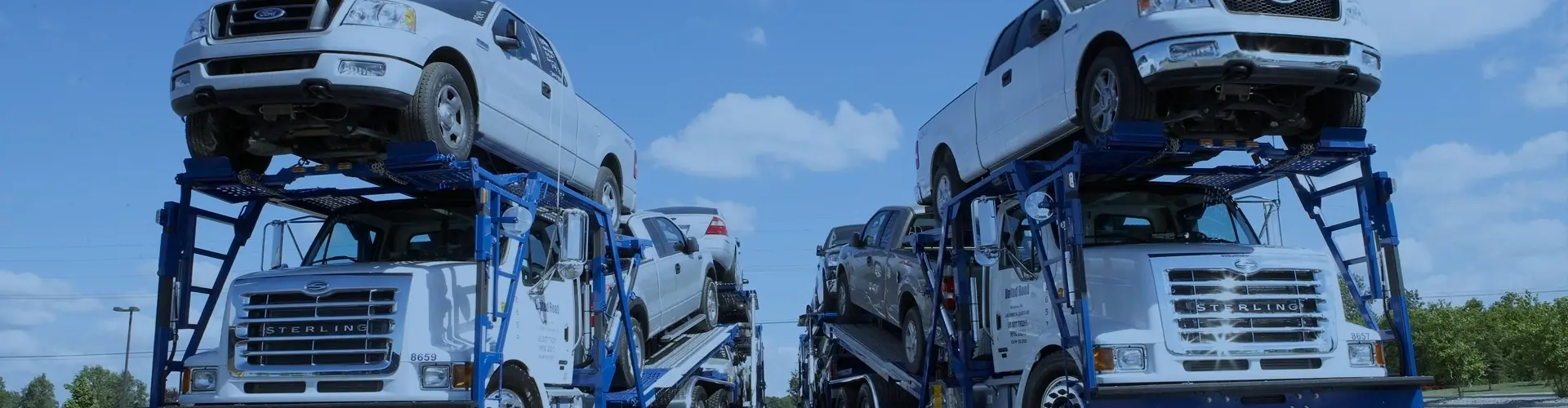
Los Angeles to Sacramento Car Shipping Route
Los Angeles to Sacramento covers approximately 383 miles by road. Most carriers take I-5 north out of Los Angeles, entering the freeway from the I-10 interchange downtown or via I-405 and I-5 through the San Fernando Valley. From there it's a near-straight shot through the Tejon Pass at roughly 4,160 feet elevation, down into the Central Valley, and north through Bakersfield, Fresno, and Stockton before reaching Sacramento. The corridor is truck-friendly with wide lanes and consistent grade changes. Shipping rather than driving saves you roughly 6-7 hours of road time and eliminates fuel, wear, and lodging costs. See the full breakdown at https://california.auto-transport-shipping.com/articles/benefits-of-auto-transport-service-vs-driving-yourself.html
Sacramento demand is anchored by several institutions that generate steady vehicle shipments. Beale Air Force Base in Marysville, about 40 miles north of Sacramento, pulls regular military PCS moves. California State University Sacramento, UC Davis in nearby Davis, and Sacramento City College create student relocation demand every August and January. Major employers including the California Department of Motor Vehicles, Sutter Health, UC Davis Medical Center, and Intel's Folsom campus draw professional relocations from Los Angeles regularly. Summer brings peak demand as state workers and students time moves around fiscal and academic calendars. Fog in the Central Valley from November through February can affect transit during that window. Before booking, review common mistakes at https://california.auto-transport-shipping.com/articles/auto-transport-mistakes-to-avoid.html
Los Angeles to Sacramento Car Shipping Rates
Rates on the Los Angeles to Sacramento corridor typically range from $350 to $650 for standard open transport, depending on vehicle size, season, and current carrier capacity. At 383 miles, this falls into a mid-range distance tier where per-mile costs are moderate but load competition keeps pricing stable. Summer months — June through August — see demand spikes from student and government relocations, which pushes rates upward. Fuel costs along I-5 directly affect carrier pricing; track how that plays out at https://california.auto-transport-shipping.com/articles/how-gas-prices-impact-california-auto-transport-fees.html
What affects the cost of Los Angeles to Sacramento car shipping:
- Vehicle type and size — larger vehicles take more carrier space; aftermarket additions like lift kits, oversized mirrors, or roof accessories can add fees
- Open vs. enclosed transport — open is lower cost with stronger carrier availability; enclosed protects against weather, debris, and road conditions
- Standard vs. expedited pickup — expedited prioritizes your vehicle for the next available dispatch, typically at a $100–$300 premium
- Time of year — peak demand seasons drive rates higher; off-peak windows offer the most competitive pricing
- Fuel costs — diesel prices affect carrier rates; longer routes are more sensitive to fuel price swings
- Vehicle condition — non-running vehicles require special loading equipment and cost more to ship
| Vehicle Type | Open Car Shipping (Est.) | Enclosed Car Shipping (Est.) |
|---|---|---|
| Sedan | $350 – $500 | $700 – $950 |
| SUV / Crossover | $400 – $600 | $800 – $1,100 |
| Pickup Truck | $400 – $600 | $800 – $1,100 |
| Minivan | $400 – $600 | $800 – $1,100 |
| Luxury / Classic Car | $500 – $700 | $950 – $1,300 |
| Non-Running Vehicle | Add $100–200 | Add $100–200 |
* Estimated ranges based on recent Los Angeles to Sacramento shipments. Actual rate depends on vehicle, locations, booking date, and current fuel costs. Use the form on this page to compare real quotes from licensed carriers.
Open vs. Enclosed: What Makes Sense on This Corridor
The I-5 corridor through the Central Valley is open transport territory for most vehicles. The route is flat, well-maintained, and doesn't expose your car to mountain gravel or extreme weather for extended stretches. Open transport is the right call for standard sedans, SUVs, and trucks. If you're shipping a classic, exotic, or freshly wrapped vehicle, enclosed makes sense — not because this route is particularly harsh, but because the extra protection is worth the 40-60% premium for high-value vehicles on any route. For daily drivers, open saves you $150-$250 with no meaningful risk trade-off.
How Long Does Los Angeles to Sacramento Car Shipping Take?
Los Angeles to Sacramento transit typically runs 1 to 2 days once your carrier is assigned and loading is confirmed. The driving distance is roughly 6 hours under normal freeway conditions, and carriers assigned to this lane usually complete delivery the same day or following morning depending on their load sequence and departure time from Los Angeles. Because this is a high-frequency corridor with multiple carriers moving it weekly, dispatch-to-pickup windows are shorter than less active routes. If your timeline is compressed, expedited options are available — see https://california.auto-transport-shipping.com/articles/california-expedited-car-shipping-fast-cost.html for current fast-dispatch pricing.
| Service Type | Typical Transit | Pickup Window | Best For |
|---|---|---|---|
| Open — Standard | 1–2 days | 1–3 business days | Best value; most common choice on this route |
| Open — Expedited | Same–1 day | Next day–1 business day | Firm arrival date; faster dispatch window |
| Enclosed — Standard | 2–3 days | 2–5 business days | Luxury, classic, or modified vehicles |
| Enclosed — Expedited | 1–2 days | 1–2 business days | High-value vehicles on a firm delivery deadline |
** Tule fog in the Central Valley from late November through February is the primary transit risk on this route. Visibility can drop to near zero along I-5 between Bakersfield and Stockton, causing carriers to hold or slow significantly. Budget an extra day during fog season if your delivery date is firm.
Los Angeles to Sacramento — Route & Logistics
Carriers accessing this route from Los Angeles typically enter I-5 northbound from the I-10/I-5 interchange near downtown or via the I-405/I-5 merge in the San Fernando Valley. The route tracks north on I-5 through the Tejon Pass, into the Central Valley, past Bakersfield and Fresno, then north through Stockton to Sacramento — approximately 383 miles of predominantly freeway driving.
Key Corridor Waypoints
- Los Angeles, CA — I-5/I-10 Interchange Carriers load in Los Angeles from multiple quadrants — downtown staging areas, the San Fernando Valley, or the South Bay — then merge onto I-5 northbound. The I-10/I-5 interchange is the primary funnel point for vehicles coming from the Eastside and downtown. Carriers often consolidate final pickups in the Burbank or Glendale area before leaving the metro.
- Tejon Pass, CA — Elevation 4,160 ft The Tejon Pass on I-5, also known as the Grapevine, is the one significant terrain feature on this route. At 4,160 feet, grades are steep enough that carriers slow for safety and, in rare winter events, chains may be required. Snow closures here are infrequent but do occur — carriers monitor Caltrans alerts before ascending. Most trips cross without incident.
- Bakersfield, CA — I-5 Corridor Checkpoint Bakersfield sits at the southern end of the Central Valley and serves as a natural staging or fuel stop for carriers on this run. Agricultural inspection checkpoints near this area require brief stops. Carriers running multi-vehicle loads sometimes adjust sequences here. It's approximately 110 miles from Los Angeles and marks the transition from mountain terrain to flat valley driving.
- Fresno, CA — Central Valley Midpoint Fresno is roughly the midpoint of the I-5 corridor between Los Angeles and Sacramento, around 220 miles from origin. Carriers may overnight here on longer schedules or when tule fog conditions ahead are reported. The I-99 junction near Fresno offers an alternative routing option some carriers use to avoid congestion on the main I-5 trunk.
- Stockton, CA — I-5/I-205 Junction Stockton is the last major interchange before Sacramento, where I-5 and I-205 split. Carriers confirm final delivery routing here — Sacramento proper continues north on I-5, while deliveries to Davis, Elk Grove, or West Sacramento may diverge. This is approximately 50 miles from Sacramento. Traffic through the Stockton interchange during afternoon hours can add 20-30 minutes.
- Sacramento, CA — Delivery Zone Sacramento delivery access is generally good across most neighborhoods. Midtown and downtown have narrower streets and limited large-vehicle clearance, so carriers may request a nearby staging point such as a parking lot or wider arterial. East Sacramento, Rancho Cordova, and Elk Grove are straightforward for standard car-carrier trucks. Confirm your delivery address type when booking.
Pickup & Delivery Access
- Pickup Access in Los Angeles Los Angeles carriers serve all quadrants daily — the Westside via I-405, the Eastside and downtown via I-10 and I-5, the South Bay via I-110, and the San Fernando Valley via I-5 north. Dense urban cores in Hollywood, Koreatown, and downtown may require a nearby parking lot or side-street meet point for truck clearance. Burbank, Glendale, Pasadena, El Monte, and Torrance are all served without surcharge.
- Delivery Access in Sacramento Sacramento carriers can access most residential neighborhoods without issue. Midtown Sacramento has older tree-lined streets with overhead clearance concerns for full-size car carriers; a nearby staging area on a main arterial is often used. East Sacramento, Arden-Arcade, Natomas, Elk Grove, and Rancho Cordova are all accessible directly. Folsom and Roseville deliveries may carry a small outlying-area fee depending on carrier routing.
- Nearby Pickup Locations Carriers picking up in Los Angeles regularly extend service to Burbank, Glendale, Pasadena, El Monte, and Torrance. Call 1‑800‑590‑6492 to confirm door-to-door availability at your address.
Open vs. Enclosed Car Shipping: Los Angeles to Sacramento
Both options use licensed, insured carriers and deliver door to door. For a full breakdown, read the pros and cons of open vs. enclosed car shipping.
Open Car Shipping
Most Popular- Lower cost — the practical choice for most vehicles
- More carriers available on this corridor
- Faster dispatch from booking to pickup
- Works well for sedans, SUVs, trucks, and minivans
- Vehicle rides on an open multi-car carrier
- Cargo insurance required on all licensed carriers
Estimated cost: $350 – $600
Enclosed Car Shipping
Premium Protection- Full protection from weather, debris, and road grime
- Best for luxury, exotic, and classic vehicles
- Recommended for low-clearance and custom-built cars
- Wheel-net or soft-tie systems prevent contact damage
- Higher cargo coverage — commonly $500,000 per load
- White-glove handling by experienced operators
Estimated cost: $700 – $1,100
Not sure which is right for your vehicle? Call 1-800-590-6492 and we'll point you in the right direction. Also worth reading: the top 10 questions to ask any car shipping company before you commit.
How to Prepare Your Car for Shipping to Sacramento
A little prep before pickup protects you if there's ever a dispute about your vehicle's condition. This checklist is from our full guide on preparing your car for transport:
- Remove all personal belongings from the interior and trunk
- Leave only a quarter tank of fuel — enough to load and unload
- Take date-stamped photos of the full exterior and interior
- Remove or disable toll transponders (FasTrak, E-ZPass, etc.)
- Retract or remove roof racks, spoilers, antennas, and bike mounts
- Make sure the battery is charged and tires are properly inflated
- Tell the carrier about any existing leaks or mechanical issues
- Deactivate the car alarm before the carrier arrives
- Write down the mileage on the Bill of Lading at pickup
- Fold in side mirrors if the vehicle is wider than standard
Personal items: Most carriers won't cover belongings left in the car. Read the full rules on shipping personal items in your vehicle. Also review our Bill of Lading guide so you know exactly what to check at pickup and delivery.
When to Ship Your Car from Los Angeles to Sacramento
This corridor sees its strongest demand in summer — June through August — when California state employees execute fiscal-year relocations, CSU Sacramento students move north, and UC Davis incoming students ship vehicles from Southern California. Winter demand is lower but still consistent due to state government and military activity. The main seasonal risk is Central Valley tule fog from November through February, which can affect transit windows. Winter transport specifics are covered at https://california.auto-transport-shipping.com/articles/auto-transport-challenges-during-the-winter.html
Spring Booking Window (March–May)
Spring is a moderate-demand period on this corridor. Rates are stable and carrier availability is good before the summer surge. If your move is planned for June or July, booking in April or May locks in lower rates and gives carriers time to schedule your vehicle into an already-active lane. State agency transfers that begin in the new fiscal year often get booked during this window.
Summer Peak (June–August)
This is the busiest window for Los Angeles to Sacramento shipments. CSU Sacramento and UC Davis student moves, state government fiscal-year relocations, and general summer moving season drive demand sharply higher. Rates increase by 15-25% compared to winter, and carrier availability tightens. Book at least 2 weeks in advance during this period to secure your preferred pickup date and avoid last-minute rate spikes.
Student Move Season (August–September)
UC Davis and California State University Sacramento both draw students from the Los Angeles metro — Orange County, the San Fernando Valley, and the Inland Empire are all common origins. Vehicle shipments spike in mid-August ahead of fall semester starts. If you're shipping a student vehicle, schedule pickup in late July or early August to avoid the peak crunch and keep rates manageable before the semester deadline.
Winter Fog Season (November–February)
Tule fog on I-5 through the Central Valley is the main operational hazard during winter months. Visibility events near Fresno and Stockton can halt or slow carrier movement for hours. Carriers monitor Caltrans alerts and may hold in Bakersfield or Fresno overnight. If you need delivery by a specific date in this window, build in a one-day buffer and discuss fog contingency with your broker at booking.
Military PCS Cycles (Year-Round, Peaks in Summer)
Beale Air Force Base north of Sacramento generates PCS shipments throughout the year, with the largest volume in the summer PCS season from May through August. Military members relocating from the Los Angeles area — including those near Los Angeles Air Force Base in El Segundo — frequently use this lane. If you're PCSing, confirm your orders paperwork is ready, as it may be required for certain billing arrangements with transport brokers.
Fall Return Traffic (September–October)
After summer peak, southbound traffic from Sacramento to Los Angeles picks up as some moves reverse and carriers rebalance loads. This creates slightly better northbound availability in fall since carriers need to fill trucks heading south. October is generally a good month to ship — demand has eased from summer, fog season hasn't fully set in, and rates settle back to moderate levels before the holiday slowdown in late November.
How to Choose a Los Angeles to Sacramento Car Shipping Company
Getting multiple quotes is step one — knowing what to look for in those quotes matters just as much. Our guide on how to select a car shipping company covers the full process. Here are the six things that matter most:
FMCSA Registration
Every carrier or broker must hold a valid MC number. Verify any company at FMCSA SAFER before you book.
Proof of Insurance
Ask for a current certificate of insurance. Open carriers typically carry $100,000–$250,000 per load; enclosed commonly $500,000 or more. Learn what auto transport insurance covers.
All-In Pricing
Your quote should be a final number with no fees added after booking. Know the difference between brokers and carriers and confirm what the quote covers before you agree.
Bill of Lading
A complete Bill of Lading is filled out at pickup and delivery. Our Bill of Lading guide explains what to check. Never sign an incomplete one.
Real Reviews
Check Google and the BBB. Look at how they handled complaints and damage claims — that tells you more than a five-star average from happy customers.
Route Experience
A carrier who regularly runs Los Angeles to Sacramento knows the Grapevine is the decision point — they check Caltrans chain controls before loading because a closure adds 2 hours via the Antelope Valley alternate. They know that Bakersfield traffic on I-5 through the afternoon is manageable but that the I-99 bypass near Fresno saves time on high-traffic days. They know Stockton's I-5/I-205 interchange backs up between 4 and 6 p.m. and plan their approach accordingly. For Sacramento delivery, experienced carriers have staging spots in Natomas and near Cal Expo that work for vehicles whose residential streets won't clear a full-size hauler. That local knowledge means your vehicle doesn't sit on a truck waiting for a carrier to figure out routing — it moves efficiently because the driver already knows this road.
Los Angeles to Sacramento Car Shipping — FAQ
How much does it cost to ship a car from Los Angeles to Sacramento?
Rates for open transport on this corridor typically range from $350 to $650 for a standard sedan or SUV, with enclosed transport running $550 to $950 depending on vehicle size and timing. The 383-mile distance puts this in a mid-range pricing tier where per-mile costs are reasonable and carrier competition keeps pricing stable. Summer months — June through August — see rates on the higher end due to student and government relocation demand. Vehicle type matters too: oversized trucks, lifted vehicles, and non-running cars carry additional fees. Fuel prices also influence carrier rates, which you can track at https://california.auto-transport-shipping.com/articles/how-gas-prices-impact-california-auto-transport-fees.html. Fill out the quote form for current pricing specific to your vehicle and dates.
How long does Los Angeles to Sacramento car shipping take?
Transit on this route runs 1 to 2 days once your carrier is loaded and on the road. The driving distance of approximately 383 miles takes carriers about 6 to 7 hours under normal I-5 conditions. Because this is one of California's most active intrastate auto transport lanes, carriers are dispatched frequently and dispatch-to-pickup windows are shorter than less traveled routes — typically 1 to 4 business days after booking confirmation. The primary delay factor is winter tule fog in the Central Valley, which can hold carriers overnight in Bakersfield or Fresno. If your timing is firm, expedited dispatch options exist — see https://california.auto-transport-shipping.com/articles/california-expedited-car-shipping-fast-cost.html for details.
Is my car insured during transport from Los Angeles to Sacramento?
Yes. Every licensed carrier operating on this route is required by federal law to carry cargo insurance covering vehicles in their care. Your vehicle is insured from the moment it's loaded onto the carrier in Los Angeles until it's released at delivery in Sacramento. The amount and structure of that coverage varies by carrier, so confirm the cargo policy limit before transport. At pickup, you and the carrier complete a Bill of Lading documenting your vehicle's pre-transport condition — that document is your baseline for any damage claim. For a detailed explanation of how transport insurance works, visit https://california.auto-transport-shipping.com/articles/understanding-auto-transport-insurance.html. If you ever need to file a claim, the process is outlined at https://california.auto-transport-shipping.com/articles/how-to-file-a-claim-for-vehicle-damage-during-transport.html.
Should I choose open or enclosed transport for Los Angeles to Sacramento?
Open transport is the right choice for most vehicles on this corridor. The I-5 route through the Central Valley is flat, well-maintained freeway with no significant gravel or off-road segments. The one elevation point — the Tejon Pass at 4,160 feet — is navigated on maintained interstate pavement. Enclosed transport makes sense if you're shipping a high-value exotic, a classic car, a freshly painted vehicle, or anything where cosmetic perfection justifies the 40-60% price premium. For daily drivers, trucks, and standard SUVs, open transport delivers the same outcome at a meaningfully lower price. For a full comparison of both service types, see https://california.auto-transport-shipping.com/articles/open-vs-enclosed-auto-transport-pros-and-cons.html.
Do I have to be present at pickup and delivery in Los Angeles and Sacramento?
You or an authorized representative must be present at both pickup and delivery to sign the Bill of Lading — the inspection document that records your vehicle's condition before and after transport. If you can't be present personally, a trusted adult you designate can fulfill this role. At pickup in Los Angeles, that person walks through the vehicle inspection with the carrier driver and signs off. At Sacramento delivery, they repeat the process and accept the keys. Do not skip the inspection at either end — it's your primary protection for any damage dispute. More on what the Bill of Lading covers is at https://california.auto-transport-shipping.com/articles/california-auto-transport-bill-of-lading-information.html.
Can tule fog in the Central Valley delay my shipment during winter?
Yes, and it's the most common delay factor on this specific route between November and February. Tule fog forms in the San Joaquin Valley along I-5 between Bakersfield and Stockton, sometimes reducing visibility to near zero. Carriers are legally prohibited from driving in unsafe conditions, and they may hold overnight in Bakersfield, Fresno, or Stockton rather than risk the road. If your delivery window is firm and you're shipping between November and February, build in at least one extra day of buffer and discuss fog contingency planning with your broker before confirming your dates. For more on winter transport risks, see https://california.auto-transport-shipping.com/articles/auto-transport-challenges-during-the-winter.html.
Does shipping a car from Los Angeles to Sacramento make sense for a short intrastate move?
At 383 miles, this is well within the range where auto transport delivers clear value over driving. Driving round-trip to return yourself to Los Angeles after delivering a vehicle adds another 6-7 hours, fuel, and potential wear costs. If you're relocating for work or a state government assignment and coordinating a complex move, shipping your vehicle removes one logistical variable. For students moving to CSU Sacramento or UC Davis from Southern California, shipping avoids adding highway miles to a newer vehicle. The cost-versus-convenience calculation consistently favors shipping once you account for total driving costs — the full breakdown is at https://california.auto-transport-shipping.com/articles/benefits-of-auto-transport-service-vs-driving-yourself.html.
Are there special considerations for military PCS shipments on this route?
Military personnel PCSing to Beale Air Force Base near Marysville — about 40 miles north of Sacramento — or to other Sacramento-area installations frequently use this Los Angeles to Sacramento corridor. Beale AFB is home to the 9th Reconnaissance Wing and generates a consistent volume of PCS moves, particularly during the May through August peak season. If you're on military orders, confirm whether your orders package includes a vehicle transport allowance through your Transportation Management Office before booking privately. Some carriers and brokers offer military rates — ask specifically when requesting your quote. Have your orders documentation ready, as some billing arrangements require it at time of booking.
Ready to Ship Your Car from Los Angeles to Sacramento?
One form gets you up to 10 free quotes from licensed, insured carriers. Compare costs and transit times and book the best deal for your schedule.