

Los Angeles to Nashville Car Shipping Route
Los Angeles to Nashville covers approximately 1,865 miles. Carriers depart the LA metro using I-10 east as the primary spine, merging onto I-20 east in Texas before connecting to I-40 east into Tennessee. From the western San Gabriel Valley, some carriers access I-10 directly via the I-605 interchange. Others stage near the I-5 and I-405 corridors in the South Bay before routing east. The drive crosses the Mojave Desert, climbs through New Mexico and Texas, and descends into the humid mid-South. Shipping your vehicle rather than driving it saves roughly 28–30 hours of road time and significant wear. See why transport beats driving at https://california.auto-transport-shipping.com/articles/benefits-of-auto-transport-service-vs-driving-yourself.html
Nashville's inbound demand is anchored by several concrete drivers. Fort Campbell, straddling the Kentucky–Tennessee border, generates military PCS orders continuously — service members relocating to or from installations on the West Coast frequently ship through LA. Vanderbilt University and Belmont University pull student vehicles from California every fall. On the corporate side, HCA Healthcare, Nissan North America's US headquarters in Franklin, and Amazon's Nashville regional hub all produce relocation volume. Seasonally, summer heat across Arizona, New Mexico, and west Texas can affect transit planning, and winter brings ice risk in the Tennessee Valley. Before booking, review common errors at https://california.auto-transport-shipping.com/articles/auto-transport-mistakes-to-avoid.html
Los Angeles to Nashville Car Shipping Rates
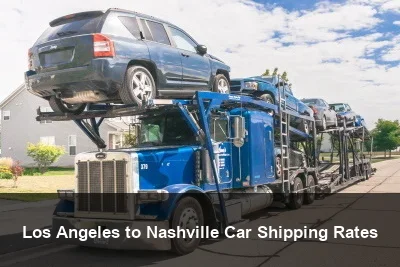
Rates on this corridor reflect the 1,865-mile distance, which falls in the long-haul pricing tier. Fuel costs matter significantly here — diesel prices across Arizona and Texas directly affect carrier quotes. See how fuel affects your rate at https://california.auto-transport-shipping.com/articles/how-gas-prices-impact-california-auto-transport-fees.html. Summer demand spikes in June through August when student and military moves peak, pushing prices up 10–15 percent. Winter crossings through New Mexico and Tennessee occasionally add a weather surcharge. Booking two to three weeks out typically captures the most competitive pricing on this lane.
What affects the cost of Los Angeles to Nashville car shipping:
- Vehicle type and size — larger vehicles take more carrier space; aftermarket additions like lift kits, oversized mirrors, or roof accessories can add fees
- Open vs. enclosed transport — open is lower cost with stronger carrier availability; enclosed protects against weather, debris, and road conditions
- Standard vs. expedited pickup — expedited prioritizes your vehicle for the next available dispatch, typically at a $100–$300 premium
- Time of year — peak demand seasons drive rates higher; off-peak windows offer the most competitive pricing
- Fuel costs — diesel prices affect carrier rates; longer routes are more sensitive to fuel price swings
- Vehicle condition — non-running vehicles require special loading equipment and cost more to ship
| Vehicle Type | Open Car Shipping (Est.) | Enclosed Car Shipping (Est.) |
|---|---|---|
| Sedan | $1,100 – $1,600 | $1,900 – $2,700 |
| SUV / Crossover | $1,300 – $1,900 | $2,200 – $3,100 |
| Pickup Truck | $1,300 – $1,950 | $2,200 – $3,150 |
| Minivan | $1,300 – $1,900 | $2,200 – $3,100 |
| Luxury / Classic Car | $1,550 – $2,200 | $2,600 – $3,600 |
| Non-Running Vehicle | Add $200–400 | Add $200–400 |
* Estimated ranges based on recent Los Angeles to Nashville shipments. Actual rate depends on vehicle, locations, booking date, and current fuel costs. Use the form on this page to compare real quotes from licensed carriers.
Open or Enclosed: What This Route's Conditions Actually Require
For most standard vehicles on the LA–Nashville run, open transport is the practical choice. The I-10 and I-40 corridor is heavily traveled by open carriers, and your vehicle gets the same road exposure it would during any long highway trip. Enclosed makes sense if you're shipping a classic, a luxury vehicle valued over $60,000, or a low-clearance sports car — particularly during summer monsoon season in Arizona and New Mexico, when debris and blowing sand are real factors. The price premium for enclosed on this route typically runs $400–$700 over open rates.
How Long Does Los Angeles to Nashville Car Shipping Take?
Los Angeles to Nashville typically takes 5 to 8 days from pickup to delivery. Carrier frequency from the LA metro is high — multiple loads depart weekly — so dispatch time is usually 1 to 2 days after booking if you've priced competitively. The driving distance of roughly 1,865 miles translates to about 3 to 4 days of actual transit once the carrier departs. LA-based carriers know this lane well and often have Nashville delivery contacts established. If your timeline is tight, expedited options exist — see https://california.auto-transport-shipping.com/articles/california-expedited-car-shipping-fast-cost.html for cost implications.
| Service Type | Typical Transit | Pickup Window | Best For |
|---|---|---|---|
| Open — Standard | 7–10 days | 2–5 business days | Best value; most common choice on this route |
| Open — Expedited | 5–7 days | 1–2 business days | Firm arrival date; faster dispatch window |
| Enclosed — Standard | 7–10 days | 4–8 business days | Luxury, classic, or modified vehicles |
| Enclosed — Expedited | 5–7 days | 2–4 business days | High-value vehicles on a firm delivery deadline |
** Summer monsoons in Arizona (July–September) and winter ice events in Tennessee and Kentucky (December–February) are the two most common delay factors on this corridor. Either can add 1 to 2 days to transit. Cross-Texas stretches through El Paso and Abilene occasionally see high-wind advisories that slow multi-car carriers.
Los Angeles to Nashville — Route & Logistics
Carriers depart the Los Angeles metro via I-10 east, the dominant artery for this lane. From the South Bay and Harbor area, I-110 north connects to I-10 at the downtown interchange. I-405 feeders merge near Santa Monica. The route tracks I-10 through the desert into Texas, picks up I-20 east toward Dallas, then transitions to I-40 east through Oklahoma City and Memphis before the final I-40 push into Nashville.
Key Corridor Waypoints
- Ontario, CA Roughly 40 miles east of downtown Los Angeles via I-10, Ontario serves as a common carrier staging point for eastbound loads. The Inland Empire's warehouse and logistics infrastructure makes it a practical first stop for load consolidation. Carriers departing late from central LA often overnight here before beginning the desert crossing early the following morning.
- Blythe, CA / Arizona State Line The California–Arizona border crossing at Blythe sits at approximately 268 feet elevation along I-10. Agricultural inspection stations operate here, and carriers with certain vehicle types may require brief stops. This marks the transition from California regulation zones into the open desert run. Temperatures routinely exceed 110°F in summer, making early-morning or overnight runs preferable for both equipment and vehicle exteriors.
- El Paso, TX El Paso sits at 3,740 feet elevation and represents the major midpoint corridor junction. Carriers on this lane typically fuel and log here. The I-10 and I-25 interchange handles heavy freight volume, and weigh stations are active in both directions. Some carriers swap drivers or hand off loads in El Paso, making it the most common single overnight stop on the full LA–Nashville run.
- Dallas–Fort Worth Metroplex, TX After transitioning from I-20 east out of west Texas, carriers pass through or around the DFW metroplex. The I-20 and I-30 convergence near Fort Worth routes traffic toward I-40 east. This segment sees significant truck density. Carriers familiar with the corridor time their DFW passage to avoid peak morning and evening congestion windows near the I-635 and I-35E interchanges.
- Memphis, TN Memphis marks the final major waypoint before Nashville. I-40 east runs directly from the Arkansas border through Memphis and continues roughly 210 miles to Nashville. Bridge crossings over the Mississippi River occasionally back up during high-traffic periods. Carriers assess road and weather conditions here before the final push into the Tennessee Valley, particularly in winter when the I-40 corridor east of Memphis can ice quickly.
- Nashville, TN (Delivery Zone) Nashville carriers typically deliver to residential addresses in Midtown, East Nashville, and the suburbs of Brentwood, Franklin, and Antioch without difficulty. Multi-car transporters avoid the tightest streets in the Gulch and 12South neighborhoods. Fort Campbell deliveries route north on I-24 approximately 65 miles from downtown Nashville. Vanderbilt-area deliveries may require a staging meet point near a campus perimeter parking area.
Pickup & Delivery Access
- Pickup Access in Los Angeles Los Angeles carriers access all four metro quadrants daily via I-5, I-10, I-15, I-405, and I-110. Residential streets in dense neighborhoods like Koreatown, Silver Lake, or Venice may require a nearby parking meet point — a wide street, shopping center lot, or park-and-ride — to allow multi-car transporter positioning. Burbank, Glendale, Pasadena, El Monte, and Torrance are all served with standard residential pickup.
- Delivery Access in Nashville Nashville's carrier access is straightforward for most suburban addresses in Brentwood, Franklin, Hermitage, and Antioch. Downtown Nashville and the Gulch have narrow streets and active construction zones that may require a meet point at a nearby parking structure or surface lot. If delivering near Vanderbilt University, confirm street access in advance. Fort Campbell deliveries route via I-24 north and typically require base access coordination.
- Nearby Pickup Locations Carriers picking up in Los Angeles regularly extend service to Burbank, Glendale, Pasadena, El Monte, and Torrance. Call 1‑800‑590‑6492 to confirm door-to-door availability at your address.
Open vs. Enclosed Car Shipping: Los Angeles to Nashville
Both options use licensed, insured carriers and deliver door to door. For a full breakdown, read the pros and cons of open vs. enclosed car shipping.
Open Car Shipping
Most Popular- Lower cost — the practical choice for most vehicles
- More carriers available on this corridor
- Faster dispatch from booking to pickup
- Works well for sedans, SUVs, trucks, and minivans
- Vehicle rides on an open multi-car carrier
- Cargo insurance required on all licensed carriers
Estimated cost: $1,100 – $1,950
Enclosed Car Shipping
Premium Protection- Full protection from weather, debris, and road grime
- Best for luxury, exotic, and classic vehicles
- Recommended for low-clearance and custom-built cars
- Wheel-net or soft-tie systems prevent contact damage
- Higher cargo coverage — commonly $500,000 per load
- White-glove handling by experienced operators
Estimated cost: $1,900 – $3,150
Not sure which is right for your vehicle? Call 1-800-590-6492 and we'll point you in the right direction. Also worth reading: the top 10 questions to ask any car shipping company before you commit.
How to Prepare Your Car for Shipping to Nashville
A little prep before pickup protects you if there's ever a dispute about your vehicle's condition. This checklist is from our full guide on preparing your car for transport:
- Remove all personal belongings from the interior and trunk
- Leave only a quarter tank of fuel — enough to load and unload
- Take date-stamped photos of the full exterior and interior
- Remove or disable toll transponders (FasTrak, E-ZPass, etc.)
- Retract or remove roof racks, spoilers, antennas, and bike mounts
- Make sure the battery is charged and tires are properly inflated
- Tell the carrier about any existing leaks or mechanical issues
- Deactivate the car alarm before the carrier arrives
- Write down the mileage on the Bill of Lading at pickup
- Fold in side mirrors if the vehicle is wider than standard
Personal items: Most carriers won't cover belongings left in the car. Read the full rules on shipping personal items in your vehicle. Also review our Bill of Lading guide so you know exactly what to check at pickup and delivery.
When to Ship Your Car from Los Angeles to Nashville
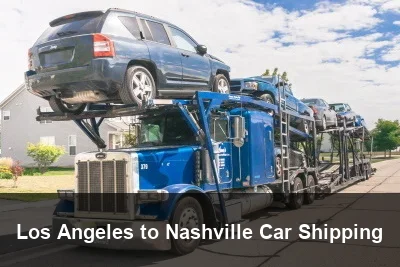
This route has two distinct demand peaks and two weather risk windows. Summer (June–August) peaks on student and military move volume, pushing rates up and tightening carrier availability. Winter (December–February) introduces ice risk on the Tennessee stretch of I-40 and occasional snow in New Mexico. For winter-specific planning on this corridor, see https://california.auto-transport-shipping.com/articles/auto-transport-challenges-during-the-winter.html. Booking at least two to three weeks out in peak periods is the most reliable way to avoid availability gaps.
Spring (March–May)
Spring is a moderate-demand window on this lane. Rates are competitive and carrier availability is good before summer volume builds. Weather across the desert Southwest is favorable — temperatures haven't reached extreme highs yet, and New Mexico and Tennessee roads are generally clear. This is the best window for booking if your move date has any flexibility. Two-week advance booking is usually sufficient to secure a quality carrier.
Summer Peak (June–August)
June through August is the highest-demand period on this corridor. Military PCS orders from bases across Southern California and Fort Campbell drive heavy volume in both directions. Vanderbilt, Belmont, and Tennessee State student relocations add to August load. Rates typically run 10–15 percent above annual averages. Book three to four weeks out and expect daytime desert temps above 110°F in Arizona — carriers on this run often stage overnight crossings to protect vehicles.
Back-to-School (Late July–August)
California has one of the largest out-of-state student populations at Tennessee universities. Late July through late August sees a concentrated surge of student vehicle shipments on this exact lane. Vanderbilt University's August move-in and Tennessee State's fall orientation both pull from the LA metro. If you're shipping a student vehicle, book by mid-July. Waiting until the final two weeks of August significantly limits carrier options and inflates pricing.
Winter (December–February)
Winter transit on this route carries real ice risk east of Memphis and occasional snow on I-40 through New Mexico. Carriers may add one to two days in transit during hard freezes. Nashville's surrounding interstates — particularly I-24 and I-40 — ice quickly and can close temporarily. If you're shipping December through February, build buffer time into your delivery expectation and review winter-specific planning at https://california.auto-transport-shipping.com/articles/auto-transport-challenges-during-the-winter.html
Military PCS Cycles (Year-Round)
Fort Campbell processes PCS orders continuously, with the heaviest cycles landing in May–June and November–December. Service members relocating between Fort Campbell and installations in Southern California — including Camp Pendleton and the LA-area bases — generate consistent bidirectional volume on this lane. Military shippers often qualify for negotiated rates through their branch's approved carrier programs. Confirm documentation requirements in advance, as base delivery at Fort Campbell requires coordination with gate access procedures.
Fall (September–November)
Fall sees moderate and stable demand after summer's peak subsides. Rates typically soften in September and October, making this a cost-effective window for non-urgent moves. Weather across the corridor is generally cooperative — Arizona monsoon season wraps up by mid-September, and Tennessee's first hard freezes typically don't arrive until late November. If your move date falls in this window, you'll likely find the best combination of pricing and carrier availability.
How to Choose a Los Angeles to Nashville Car Shipping Company
Getting multiple quotes is step one — knowing what to look for in those quotes matters just as much. Our guide on how to select a car shipping company covers the full process. Here are the six things that matter most:
FMCSA Registration
Every carrier or broker must hold a valid MC number. Verify any company at FMCSA SAFER before you book.
Proof of Insurance
Ask for a current certificate of insurance. Open carriers typically carry $100,000–$250,000 per load; enclosed commonly $500,000 or more. Learn what auto transport insurance covers.
All-In Pricing
Your quote should be a final number with no fees added after booking. Know the difference between brokers and carriers and confirm what the quote covers before you agree.
Bill of Lading
A complete Bill of Lading is filled out at pickup and delivery. Our Bill of Lading guide explains what to check. Never sign an incomplete one.
Real Reviews
Check Google and the BBB. Look at how they handled complaints and damage claims — that tells you more than a five-star average from happy customers.
Route Experience
A carrier who regularly runs Los Angeles to Nashville knows to stage in Ontario or Fontana before the desert crossing rather than fighting downtown LA loading delays. They know the weigh station protocols at the California–Arizona line in Blythe and the active enforcement zones on I-20 in east Texas. They time their DFW pass to avoid the I-30 and I-635 morning merge, and they watch the Memphis weather feed before committing to the final Tennessee run in winter. On delivery, they know that Vanderbilt-area streets require a staging call, that Fort Campbell gate access needs 24-hour notice, and that the I-40 construction near the Nashville metro has shifted standard exit sequencing for the past two years. That operational knowledge is what separates a five-day delivery from a seven-day one.
Los Angeles to Nashville Car Shipping — FAQ
How much does it cost to ship a car from Los Angeles to Nashville?
Rates on the Los Angeles to Nashville corridor typically range from $950 to $1,450 for standard open transport on a sedan or compact SUV, depending on season, fuel prices, and how quickly you need the vehicle moved. Enclosed transport runs $1,400 to $2,100 for the same vehicle class. Pickup trucks, vans, and oversized vehicles add $150 to $300 to base rates. Summer peak months (June–August) and the holiday window (late November through January) push rates toward the higher end. Booking two to three weeks out and pricing competitively against the carrier's target rate — rather than the minimum — is the most reliable way to get dispatched quickly without overpaying.
How long does Los Angeles to Nashville car shipping take?
Standard transit on this route is 5 to 8 days from pickup to delivery. Carriers depart the LA metro multiple times per week, so dispatch after booking usually runs 1 to 2 days if your rate is competitive. Actual driving transit is 3 to 5 days covering approximately 1,865 miles. Delays are most likely in summer (heat-driven overnight desert staging), during Arizona monsoon season (July–September), or in winter when I-40 in Tennessee ices. If you need delivery by a specific date, an expedited option can tighten that window — see https://california.auto-transport-shipping.com/articles/california-expedited-car-shipping-fast-cost.html for what that costs on this lane.
Is my car insured during transport from Los Angeles to Nashville?
Every licensed carrier is federally required to carry cargo insurance, which covers your vehicle while it's on the transporter. Coverage limits and deductible structures vary by carrier — request a copy of the carrier's insurance certificate before your vehicle is loaded. The bill of lading, which you sign at pickup, documents your vehicle's pre-transport condition and serves as the baseline for any damage claim. Inspect your vehicle carefully at both pickup and delivery before signing anything. For a full explanation of how coverage works, see https://california.auto-transport-shipping.com/articles/understanding-auto-transport-insurance.html. If damage occurs, the claims process is detailed at https://california.auto-transport-shipping.com/articles/how-to-file-a-claim-for-vehicle-damage-during-transport.html
Should I choose open or enclosed transport for the Los Angeles to Nashville route?
For most vehicles — sedans, standard SUVs, daily drivers — open transport is the right call on this corridor. Open carriers run this lane frequently, rates are lower, and availability is better. The road exposure your vehicle gets on an open carrier is no different from what it would see on a 1,865-mile drive. Enclosed transport is worth the premium for classic cars, vehicles valued above $60,000, low-clearance sports cars, or anything you're unwilling to expose to Arizona monsoon debris and blowing sand during the July–September window. For a full breakdown of both options, see https://california.auto-transport-shipping.com/articles/open-vs-enclosed-auto-transport-pros-and-cons.html
Do I have to be present at pickup and delivery?
You or a designated representative must be present at both pickup and delivery to sign the bill of lading. This document records your vehicle's condition before transport and again upon delivery — it's your primary protection if a damage claim becomes necessary. If you can't be there personally, a trusted adult can sign on your behalf; just make sure they understand the inspection process and will examine the vehicle thoroughly before signing. Don't sign a clean bill of lading if you observe damage. More on what the bill of lading covers and why it matters: https://california.auto-transport-shipping.com/articles/california-auto-transport-bill-of-lading-information.html
I'm shipping a vehicle for a military PCS move through Fort Campbell. Are there any specific considerations?
Fort Campbell sits approximately 65 miles north of Nashville via I-24, near Clarksville, Tennessee. If your delivery address is on-base, coordinate gate access at least 24 hours before the carrier's estimated arrival — most carriers are not cleared for unescorted base entry and will need to deliver to a designated gate staging area or an off-post address. Confirm your housing address and gate procedures with your unit's transportation office before booking. Military PCS volume on this corridor is high, particularly May through June and November through December, so book early during those windows.
Does the summer heat in Arizona and Texas affect my vehicle during transport?
Heat is a real operational factor on this corridor from late May through September. Temperatures along I-10 in Arizona routinely exceed 110°F, and west Texas can sustain triple digits for days. For most modern vehicles, heat exposure during transit doesn't cause damage, but a few precautions help. Don't leave anything heat-sensitive inside the vehicle — electronics, candles, aerosols, or medications. Tire pressure on your vehicle should be at the manufacturer's recommended level before pickup, as carriers are not responsible for adjustments. Enclosed transport reduces direct sun exposure and is worth considering for vehicles with older paint or convertible tops with aging seals.
Can I ship a car from nearby cities like Burbank, Pasadena, or Torrance instead of central Los Angeles?
Yes — carriers serving the LA metro cover Burbank, Glendale, Pasadena, El Monte, and Torrance as standard pickup locations, not add-on charges. Suburban locations in these cities are often easier for multi-car transporters to access than dense neighborhoods in Hollywood, the Westside, or downtown LA, where street width and parking restrictions can require a meet point. If you're in a more suburban location, you may actually get faster dispatch since carriers can execute pickup without navigating congested urban cores. Specify your exact address when requesting a quote so the carrier can plan appropriately.
Ready to Ship Your Car from Los Angeles to Nashville?
One form gets you up to 10 free quotes from licensed, insured carriers. Compare costs and transit times and book the best deal for your schedule.