

Los Angeles to Long Beach Car Shipping Route
Los Angeles to Long Beach covers approximately 25 miles by road, with carriers primarily using I-110 south or I-405 south through Torrance and the South Bay before connecting to surface routes into Long Beach. I-710, the Long Beach Freeway, is the direct artery into the port district and downtown Long Beach from the north. Despite the short distance, this is a commercially active corridor with significant truck traffic tied to port operations, which means carriers have genuine freight reasons to run it daily. Driving the route yourself takes under 45 minutes in light traffic, but with LA congestion that easily doubles. Reviewing the full cost picture at https://california.auto-transport-shipping.com/articles/benefits-of-auto-transport-service-vs-driving-yourself.html helps clarify where transport value holds even on short corridors.
Long Beach's demand drivers go well beyond its famous port. California State University Long Beach enrolls over 37,000 students, generating consistent semester-start and semester-end vehicle moves each August and January. The Long Beach Naval Shipyard's legacy and the continued presence of defense contractors like Boeing's facility in nearby Seal Beach support military and contractor relocations. The Port of Long Beach itself employs over 30,000 workers directly, many relocating from out of the area. Weather on this corridor is mild and consistent year-round; coastal marine layer rarely causes transport delays, making scheduling predictable. Before booking, review common errors at https://california.auto-transport-shipping.com/articles/auto-transport-mistakes-to-avoid.html to make sure your move goes smoothly.
Los Angeles to Long Beach Car Shipping Rates
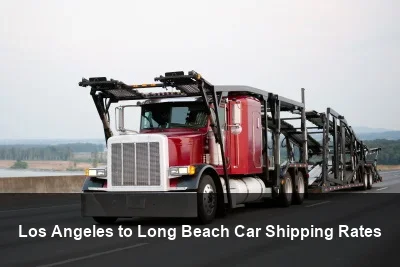
On a 25-mile corridor like Los Angeles to Long Beach, base transport rates reflect minimum carrier fees rather than per-mile economics — carriers set floor pricing on short hauls to cover positioning costs. Expect that dynamic to shape your quote. Seasonal spikes occur in late summer when CSULB students move and during port-driven demand surges tied to vehicle import cycles. Fuel costs influence short-haul pricing more proportionally than long routes; see https://california.auto-transport-shipping.com/articles/how-gas-prices-impact-california-auto-transport-fees.html for how that factors into your rate.
What affects the cost of Los Angeles to Long Beach car shipping:
- Vehicle type and size — larger vehicles take more carrier space; aftermarket additions like lift kits, oversized mirrors, or roof accessories can add fees
- Open vs. enclosed transport — open is lower cost with stronger carrier availability; enclosed protects against weather, debris, and road conditions
- Standard vs. expedited pickup — expedited prioritizes your vehicle for the next available dispatch, typically at a $100–$300 premium
- Time of year — peak demand seasons drive rates higher; off-peak windows offer the most competitive pricing
- Fuel costs — diesel prices affect carrier rates; longer routes are more sensitive to fuel price swings
- Vehicle condition — non-running vehicles require special loading equipment and cost more to ship
| Vehicle Type | Open Car Shipping (Est.) | Enclosed Car Shipping (Est.) |
|---|---|---|
| Sedan | $350 – $500 | $700 – $950 |
| SUV / Crossover | $400 – $600 | $800 – $1,100 |
| Pickup Truck | $400 – $600 | $800 – $1,100 |
| Minivan | $400 – $600 | $800 – $1,100 |
| Luxury / Classic Car | $500 – $700 | $950 – $1,300 |
| Non-Running Vehicle | Add $100–200 | Add $100–200 |
* Estimated ranges based on recent Los Angeles to Long Beach shipments. Actual rate depends on vehicle, locations, booking date, and current fuel costs. Use the form on this page to compare real quotes from licensed carriers.
Open or Enclosed: What This Short LA–Long Beach Run Actually Needs
For most standard vehicles moving between Los Angeles and Long Beach, open transport is the practical choice. The route is short, weather is mild, and coastal marine layer does not produce conditions that damage vehicles in transit on a sub-hour haul. Open carriers run this lane daily and offer the best availability. Enclosed transport makes sense if you're moving a classic car, a high-value exotic, or a vehicle with a fresh paint restoration — particularly if it will be staged near the port where industrial particulate is heavier than in residential areas.
How Long Does Los Angeles to Long Beach Car Shipping Take?
Most Los Angeles to Long Beach shipments are assigned and picked up within one to three business days of booking, with same-day or next-day pickup available when carrier slots align. The actual drive time for a carrier is under one hour in off-peak conditions. Because this corridor sees daily carrier movement tied to port logistics and South Bay runs, you're not waiting for a carrier to build a load — they're already running the route. For time-sensitive moves, expedited options exist: https://california.auto-transport-shipping.com/articles/california-expedited-car-shipping-fast-cost.html covers what that costs and when it's worth it.
| Service Type | Typical Transit | Pickup Window | Best For |
|---|---|---|---|
| Open — Standard | 1–2 days | 1–3 business days | Best value; most common choice on this route |
| Open — Expedited | Same–1 day | Next day–1 business day | Firm arrival date; faster dispatch window |
| Enclosed — Standard | 2–3 days | 2–5 business days | Luxury, classic, or modified vehicles |
| Enclosed — Expedited | 1–2 days | 1–2 business days | High-value vehicles on a firm delivery deadline |
** The main transit variable on this corridor is not weather — it's port-area congestion and I-710 slowdowns near the terminals, which can delay final delivery by several hours on high-traffic days. Schedule flexibility of a half-day on delivery is a reasonable buffer, especially mid-week when port truck activity peaks.
Los Angeles to Long Beach — Route & Logistics
Carriers access this route primarily via I-110 south from downtown Los Angeles or I-405 south through the South Bay, connecting to I-710 north of Long Beach for port-district deliveries or taking surface routes like Pacific Coast Highway for residential neighborhoods. The full haul from central Los Angeles to central Long Beach runs approximately 25 miles with minimal elevation change throughout.
Key Corridor Waypoints
- Los Angeles, CA — Origin Staging Carriers operating from Los Angeles typically stage in areas with wide street access: commercial zones near downtown, Compton corridor, or South LA. I-110 on-ramp access from the Harbor Freeway is the most direct southern departure point. Vehicles booked from the westside or Valley may route via I-405 south to connect to I-110 or I-710 depending on carrier positioning.
- Torrance, CA — South Bay Transit Point Passing through Torrance on I-405 or I-110, carriers may consolidate South Bay pickups or drop-offs for multi-vehicle loads. This area sits at roughly 100 feet elevation with flat, carrier-friendly arterials. Carson and Compton run parallel to this path on I-110, which transitions into the Harbor Freeway approach toward Long Beach at this stage.
- I-710 / I-405 Interchange — Carson Junction The interchange near Carson at approximately 60 feet elevation is a key decision point for carriers: I-710 south leads directly into the port district and downtown Long Beach, while continuing on I-405 serves the western residential neighborhoods of Long Beach. Carriers delivering to port-adjacent addresses use I-710; those going to Naples, Belmont Shore, or Signal Hill divert here.
- Port of Long Beach — Terminal Approach Zone Carriers delivering vehicles tied to port logistics or dealerships receiving imports enter via the Terminal Island Freeway or Pier A access roads. Heavy truck traffic and terminal gate queues are the main delay factor in this zone. Residential deliveries avoid the port district entirely; this waypoint applies to fleet, dealer, or import-export shipments specifically.
- Long Beach, CA — Final Delivery Central and eastern Long Beach neighborhoods are fully carrier-accessible via wide arterials including Willow Street, Atlantic Avenue, and Pacific Coast Highway. Belmont Shore and Naples Island have narrower residential streets where large multi-car haulers may need a staging point at a nearby parking lot or commercial street for final handoff.
Pickup & Delivery Access
- Pickup Access in Los Angeles Los Angeles offers carrier access across all quadrants daily. Downtown and South LA pickups stage on wide commercial streets with easy I-110 access. Westside pickups typically use I-405 approaches. Dense urban cores like Koreatown or Hollywood may require coordinating a nearby meet point — a parking structure or wide side street — to accommodate a multi-car hauler safely.
- Delivery Access in Long Beach Most of Long Beach is carrier-accessible without special arrangements. Downtown Long Beach, North Long Beach, and areas near the 710 corridor are straightforward. Belmont Shore, Naples Island, and parts of the historic district have narrow streets where standard multi-car carriers cannot safely maneuver to a residence; plan a staging meet at a nearby shopping center or school parking lot in those areas.
- Nearby Pickup Locations Carriers picking up in Los Angeles regularly extend service to Burbank, Glendale, Pasadena, El Monte, and Torrance. Call 1‑800‑590‑6492 to confirm door-to-door availability at your address.
Open vs. Enclosed Car Shipping: Los Angeles to Long Beach
Both options use licensed, insured carriers and deliver door to door. For a full breakdown, read the pros and cons of open vs. enclosed car shipping.
Open Car Shipping
Most Popular- Lower cost — the practical choice for most vehicles
- More carriers available on this corridor
- Faster dispatch from booking to pickup
- Works well for sedans, SUVs, trucks, and minivans
- Vehicle rides on an open multi-car carrier
- Cargo insurance required on all licensed carriers
Estimated cost: $350 – $600
Enclosed Car Shipping
Premium Protection- Full protection from weather, debris, and road grime
- Best for luxury, exotic, and classic vehicles
- Recommended for low-clearance and custom-built cars
- Wheel-net or soft-tie systems prevent contact damage
- Higher cargo coverage — commonly $500,000 per load
- White-glove handling by experienced operators
Estimated cost: $700 – $1,100
Not sure which is right for your vehicle? Call 1-800-590-6492 and we'll point you in the right direction. Also worth reading: the top 10 questions to ask any car shipping company before you commit.
How to Prepare Your Car for Shipping to Long Beach
A little prep before pickup protects you if there's ever a dispute about your vehicle's condition. This checklist is from our full guide on preparing your car for transport:
- Remove all personal belongings from the interior and trunk
- Leave only a quarter tank of fuel — enough to load and unload
- Take date-stamped photos of the full exterior and interior
- Remove or disable toll transponders (FasTrak, E-ZPass, etc.)
- Retract or remove roof racks, spoilers, antennas, and bike mounts
- Make sure the battery is charged and tires are properly inflated
- Tell the carrier about any existing leaks or mechanical issues
- Deactivate the car alarm before the carrier arrives
- Write down the mileage on the Bill of Lading at pickup
- Fold in side mirrors if the vehicle is wider than standard
Personal items: Most carriers won't cover belongings left in the car. Read the full rules on shipping personal items in your vehicle. Also review our Bill of Lading guide so you know exactly what to check at pickup and delivery.
When to Ship Your Car from Los Angeles to Long Beach
The Los Angeles to Long Beach corridor runs at high carrier frequency year-round due to port activity, but pricing and lead times shift by season. Late summer brings student-move demand tied to CSULB's fall semester start in late August. Spring semester breaks in May see another uptick. Port vehicle import cycles, which peak in certain quarters, can tighten carrier availability around the I-710 corridor. Winter weather is a non-factor on this coastal route, though broader national winter transport patterns still affect pricing as noted at https://california.auto-transport-shipping.com/articles/auto-transport-challenges-during-the-winter.html
Back-to-School Season (August–September)
CSULB's fall semester start in late August drives a measurable spike in vehicle moves into Long Beach. Students relocating from the Inland Empire, the Valley, or Northern California frequently ship vehicles rather than drive in loaded cars. Book at least two weeks ahead if your move falls between August 10 and September 5. Carrier slots on this corridor fill faster during this window than at any other point in the year.
Spring Semester End (May–June)
May through early June sees outbound moves from Long Beach as students and young professionals relocate after the academic year. Carriers running north toward Los Angeles, Pasadena, and the Valley are in demand. If you're moving a vehicle from Long Beach back to LA during this period, earlier booking is advisable. Rates on this short corridor remain relatively stable, but pickup windows tighten when carrier demand spikes citywide.
Port Demand Cycles (October–November and March–April)
Port of Long Beach vehicle import surges typically align with model year shipping cycles in fall and pre-spring inventory builds. During peak port activity, I-710 corridor congestion increases and carrier delivery windows around the terminal zone can extend by several hours. If your delivery address is near the port district, build in flexible delivery scheduling during these months to account for gate traffic and truck queue delays.
Mild Winter Window (December–February)
Unlike mountain or inland routes, the LA to Long Beach corridor sees no weather-related transport disruptions in winter. Temperatures remain in the 55–70°F range with coastal marine layer as the primary atmospheric condition. This makes winter a dependable shipping window with no weather premium. Carrier availability stays strong because this is a port-driven route regardless of season. No special preparations are needed for winter transport on this corridor.
Summer Relocation Peak (June–August)
Military PCS orders tied to installations in the greater Long Beach and Los Angeles area — including nearby Joint Forces Training Base Los Alamitos — frequently execute in summer. Defense contractor relocations to Boeing's Seal Beach facility and surrounding aerospace employers also peak from June through July. If you're moving under PCS orders, confirm your required delivery date early and book a carrier with documented military move experience on this specific corridor.
How to Choose a Los Angeles to Long Beach Car Shipping Company
Getting multiple quotes is step one — knowing what to look for in those quotes matters just as much. Our guide on how to select a car shipping company covers the full process. Here are the six things that matter most:
FMCSA Registration
Every carrier or broker must hold a valid MC number. Verify any company at FMCSA SAFER before you book.
Proof of Insurance
Ask for a current certificate of insurance. Open carriers typically carry $100,000–$250,000 per load; enclosed commonly $500,000 or more. Learn what auto transport insurance covers.
All-In Pricing
Your quote should be a final number with no fees added after booking. Know the difference between brokers and carriers and confirm what the quote covers before you agree.
Bill of Lading
A complete Bill of Lading is filled out at pickup and delivery. Our Bill of Lading guide explains what to check. Never sign an incomplete one.
Real Reviews
Check Google and the BBB. Look at how they handled complaints and damage claims — that tells you more than a five-star average from happy customers.
Route Experience
A carrier who runs the Los Angeles to Long Beach corridor regularly knows that the I-710 is not the same road at 7 AM as it is at noon — port truck traffic on the 710 between the 405 interchange and the terminal approaches can add 30 to 45 minutes to a delivery that looks simple on paper. Experienced drivers on this run know to schedule port-adjacent deliveries in the mid-morning window before the second shift gate rush. They also know that residential deliveries in Belmont Shore require staging on 2nd Street or in the Ralphs parking corridor on PCH — not curbside on the neighborhood streets. For CSULB deliveries in late August, experienced carriers position ahead of time in the Carson or Compton staging zones to avoid driving a full multi-car hauler into campus-adjacent residential blocks during move-in weekend chaos.
Los Angeles to Long Beach Car Shipping — FAQ
How much does it cost to ship a car from Los Angeles to Long Beach?
On a 25-mile corridor like Los Angeles to Long Beach, transport pricing is driven by minimum carrier fees rather than per-mile rates. Carriers set floor pricing on short hauls to cover positioning and fuel costs, which means this route won't price out the way a 500-mile shipment does. Typical rates for a standard open-transport move on this corridor range depending on vehicle size, timing, and current carrier availability in the lane. Port activity and CSULB semester timing can push rates during peak windows. Fill out the quote form to get a current rate specific to your vehicle type and dates.
How long does Los Angeles to Long Beach car shipping take?
Once a carrier is assigned, the actual transit time on this 25-mile route is under one hour of driving. Most customers see pickup within one to three business days of booking, with same-day or next-day pickup possible when carrier slots are open on this corridor. The main variable is not the drive — it's port-area congestion on I-710 near the Long Beach terminal zone, which can delay final delivery by several hours on high-traffic weekdays. If your timeline is strict, expedited options are available; see https://california.auto-transport-shipping.com/articles/california-expedited-car-shipping-fast-cost.html for current pricing on that service.
Is my car insured during transport from Los Angeles to Long Beach?
Yes. Every licensed carrier operating on this route is required by federal law to carry cargo insurance that covers your vehicle while it is loaded on the truck. Before your vehicle is picked up, you and the driver will complete a Bill of Lading documenting the vehicle's pre-transport condition. At delivery, you inspect the vehicle against that document and note any discrepancies before signing. For a detailed explanation of how coverage works and what broker liability means, read https://california.auto-transport-shipping.com/articles/understanding-auto-transport-insurance.html. If you ever need to file a claim, the process is outlined at https://california.auto-transport-shipping.com/articles/how-to-file-a-claim-for-vehicle-damage-during-transport.html.
Should I choose open or enclosed transport for this route?
For most vehicles on the LA to Long Beach run, open transport is the correct call. The route is short, the weather is mild year-round, and the marine layer along this coastal corridor does not create conditions that damage vehicles during a sub-one-hour haul. Open carriers run this lane daily and offer the best availability and pricing. Enclosed transport is worth the premium if you're moving a high-value classic, an exotic, or a recently restored vehicle — especially for deliveries near the port district where industrial particulate is present. A full breakdown of both options is at https://california.auto-transport-shipping.com/articles/open-vs-enclosed-auto-transport-pros-and-cons.html.
Do I have to be present at pickup and delivery?
You don't have to be personally present, but someone you designate must be available at both ends to sign the Bill of Lading, inspect the vehicle, and transfer keys. At pickup in Los Angeles, that person confirms the pre-transport condition and signs the initial inspection report. At delivery in Long Beach, they inspect the vehicle against that same document before signing off. This step protects you — don't skip it or delegate it to someone who won't do a thorough walkthrough. The Bill of Lading process is explained in detail at https://california.auto-transport-shipping.com/articles/california-auto-transport-bill-of-lading-information.html.
Does port activity at Long Beach affect my transport timeline or pricing?
Yes, in two ways. First, I-710 south of the I-405 interchange carries significant port truck traffic, particularly mid-morning through early afternoon on weekdays. Carriers delivering to port-adjacent addresses or to dealerships near the terminal zone can encounter gate queue delays that add hours to delivery, not minutes. Second, port vehicle import surges — typically in fall and early spring during model-year shipping cycles — can tighten carrier availability and apply upward pressure on rates in this lane. If your delivery is near the terminal district, plan for a flexible delivery window and discuss timing with your carrier at booking.
Is this route practical for military PCS moves to or from the Long Beach area?
Yes. Joint Forces Training Base Los Alamitos sits less than ten miles northeast of Long Beach, and defense contractor relocations tied to Boeing's Seal Beach facility and surrounding aerospace employers generate consistent vehicle transport demand in this corridor. PCS moves typically concentrate in the June through August window when military orders most commonly execute. If you're moving under orders, confirm your required delivery date early — summer is the tightest booking window on this route. Carriers experienced with military moves will work with your timeframe and provide the documentation most bases require.
Can I ship a vehicle I just purchased from a Long Beach dealership back to Los Angeles?
Absolutely, and this is a common use case on this corridor. Long Beach has a significant dealer network, and purchasing a vehicle at auction or from a dealer and having it transported north to Los Angeles rather than driving it yourself is straightforward here. Carriers run the reverse direction daily because they're already delivering loads from LA into Long Beach and need return loads heading north. Coordinate directly with the dealership on pickup access and availability hours, and ensure someone at the dealership is authorized to release the vehicle and sign the Bill of Lading at pickup.
Ready to Ship Your Car from Los Angeles to Long Beach?
One form gets you up to 10 free quotes from licensed, insured carriers. Compare costs and transit times and book the best deal for your schedule.