

Los Angeles to Denver Car Shipping Route
Los Angeles to Denver covers approximately 1,015 miles depending on the exact routing a carrier selects. From the Los Angeles basin, carriers typically access I-15 north through the Cajon Pass, then transition to I-40 or continue northeast through Nevada before picking up I-70 eastbound into Colorado. The Cajon Pass itself sits at roughly 4,190 feet and is the first major grade on the run. Carriers avoid I-10 east for this destination because I-15 provides a more direct northern arc. Shipping your vehicle rather than driving it eliminates fuel, lodging, and wear costs that add up fast over a 1,015-mile trip — read more at https://california.auto-transport-shipping.com/articles/benefits-of-auto-transport-service-vs-driving-yourself.html.
Denver's demand side is anchored by several large institutions. Fort Carson, located south of Colorado Springs just 70 miles from Denver, generates consistent military PCS shipments. Buckley Space Force Base in Aurora handles additional defense-sector volume. The University of Colorado Denver and University of Colorado Boulder both trigger August and January shipping surges. Major employers including Lockheed Martin Space, Raytheon Intelligence, and Amazon's regional distribution operations draw California-based professionals relocating east. Winter weather on I-70 through the Eisenhower Tunnel at 11,158 feet can introduce delays between November and March, so build schedule buffer for that window. Before booking, review https://california.auto-transport-shipping.com/articles/auto-transport-mistakes-to-avoid.html to avoid common errors.
Los Angeles to Denver Car Shipping Rates
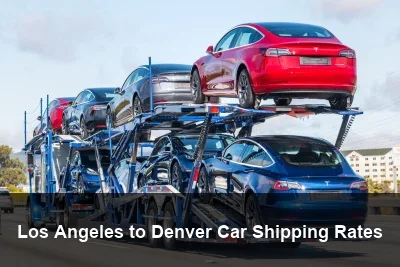
Rates on the Los Angeles to Denver lane reflect a mid-distance corridor — over 1,000 miles but within a single carrier run for experienced teams. Base pricing for a standard sedan typically runs $850–$1,200 for open transport depending on season and fuel costs, which fluctuate and directly affect carrier pricing. See how fuel affects your quote at https://california.auto-transport-shipping.com/articles/how-gas-prices-impact-california-auto-transport-fees.html. Winter months, particularly December through February, can push rates upward due to mountain weather risk and reduced carrier willingness to accept time-sensitive loads over I-70.
What affects the cost of Los Angeles to Denver car shipping:
- Vehicle type and size — larger vehicles take more carrier space; aftermarket additions like lift kits, oversized mirrors, or roof accessories can add fees
- Open vs. enclosed transport — open is lower cost with stronger carrier availability; enclosed protects against weather, debris, and road conditions
- Standard vs. expedited pickup — expedited prioritizes your vehicle for the next available dispatch, typically at a $100–$300 premium
- Time of year — peak demand seasons drive rates higher; off-peak windows offer the most competitive pricing
- Fuel costs — diesel prices affect carrier rates; longer routes are more sensitive to fuel price swings
- Vehicle condition — non-running vehicles require special loading equipment and cost more to ship
| Vehicle Type | Open Car Shipping (Est.) | Enclosed Car Shipping (Est.) |
|---|---|---|
| Sedan | $750 – $1,000 | $1,350 – $1,750 |
| SUV / Crossover | $900 – $1,150 | $1,550 – $2,000 |
| Pickup Truck | $900 – $1,200 | $1,550 – $2,100 |
| Minivan | $900 – $1,150 | $1,550 – $2,000 |
| Luxury / Classic Car | $1,050 – $1,400 | $1,850 – $2,350 |
| Non-Running Vehicle | Add $150–300 | Add $150–300 |
* Estimated ranges based on recent Los Angeles to Denver shipments. Actual rate depends on vehicle, locations, booking date, and current fuel costs. Use the form on this page to compare real quotes from licensed carriers.
Open vs. Enclosed: What This Route's Conditions Suggest
Open transport handles this corridor well for most of the year. The Mojave Desert leg is dry and predictable. The risk point is I-70 west of Denver, specifically the stretch from Vail Pass through the Eisenhower Tunnel, where road salt, snow spray, and debris exposure increase from November through March. If you're shipping a luxury vehicle, a classic car, or anything with a low clearance that makes road debris a concern, enclosed is worth the premium in winter. For late spring through October, open transport on this route is standard practice for carriers and customers alike.
How Long Does Los Angeles to Denver Car Shipping Take?
Most Los Angeles to Denver shipments complete in 3 to 5 days under normal conditions. The driving distance of roughly 1,015 miles fits within a two-day drive for a single carrier team, but federal hours-of-service regulations, multi-vehicle loading schedules, and occasional mountain weather extend that window. Los Angeles is one of the highest-frequency origin markets in the country, so carrier matching is typically fast — often 1 to 2 business days after booking. If your timeline is tight, expedited options exist; review https://california.auto-transport-shipping.com/articles/california-expedited-car-shipping-fast-cost.html for what that costs and how it works.
| Service Type | Typical Transit | Pickup Window | Best For |
|---|---|---|---|
| Open — Standard | 3–5 days | 2–5 business days | Best value; most common choice on this route |
| Open — Expedited | 2–3 days | 1–2 business days | Firm arrival date; faster dispatch window |
| Enclosed — Standard | 3–5 days | 3–7 business days | Luxury, classic, or modified vehicles |
| Enclosed — Expedited | 2–3 days | 1–3 business days | High-value vehicles on a firm delivery deadline |
** Winter weather on I-70 between Vail and the Eisenhower Tunnel can halt or reroute carriers entirely. Colorado Department of Transportation closures happen several times per season. If you're shipping November through March, add 1 to 2 days of buffer to your expected delivery window and confirm your carrier's mountain routing plan.
Los Angeles to Denver — Route & Logistics
Carriers serving this lane exit Los Angeles via I-15 north, ascending the Cajon Pass into the high desert. From Barstow, routing continues northeast, eventually connecting to I-70 eastbound through Grand Junction, the Rockies, and into the Denver metro. The total interstate run covers roughly 1,015 miles and is a well-established carrier corridor with consistent traffic in both directions.
Key Corridor Waypoints
- Cajon Pass, CA The first significant grade leaving the Los Angeles basin — elevation 4,190 feet on I-15. Carriers assess load weight and brake condition here before committing to the desert run. This is a known inspection point for heavy multi-vehicle transporters. Winter ice and summer heat both create brief slowdowns. Traffic from the Inland Empire merges heavily at the I-15 and I-215 split just below the pass.
- Barstow, CA A major carrier staging and fuel stop at the I-15 and I-40 junction. Carriers running this corridor frequently pause in Barstow to refuel, log hours, and confirm routing. Some loads bound for Denver deviate east on I-40 toward Needles before cutting north, but most continue on I-15 toward Las Vegas. Barstow is roughly 140 miles northeast of Los Angeles and marks the true beginning of the open desert run.
- Las Vegas, NV Las Vegas sits approximately 270 miles from Los Angeles and serves as a practical overnight stop for carriers on this corridor. The I-15 interchange here is one of the busiest freight junctions in the Southwest. Carriers sometimes pick up or drop additional vehicles in Las Vegas, which can affect your delivery sequence. From Las Vegas, most carriers shift to US-93 north or continue on I-15 to I-70.
- Grand Junction, CO The entry point into Colorado from the west on I-70, sitting at approximately 4,583 feet elevation. Grand Junction is where carriers formally commit to the mountain crossing. Weather checks for the Vail Pass and Eisenhower Tunnel stretch happen here. In winter, carriers may hold in Grand Junction if CDOT has issued closures east of Glenwood Springs. It's roughly 245 miles from Grand Junction to Denver.
- Eisenhower Tunnel / Vail Pass, CO The highest point on the route — the Eisenhower-Johnson Tunnel sits at 11,158 feet on I-70. This is the single most weather-sensitive section of the Los Angeles to Denver run. CDOT closes or restricts this stretch multiple times each winter season. Carriers with mountain experience know the closure windows and plan accordingly. In summer, the crossing is routine. In winter, it's the primary source of transit delays on this corridor.
- Denver Metro, CO Carriers enter Denver from the west on I-70 and distribute to final delivery points across the metro via I-25, I-225, and I-270. The airport corridor along Pena Boulevard, the Aurora defense sector, and downtown Denver's 16th Street area each have different access considerations. Most residential deliveries work without staging, but downtown high-rise addresses typically require a nearby meet point in a parking structure or lot.
Pickup & Delivery Access
- Pickup Access in Los Angeles Los Angeles carriers access all quadrants of the metro via I-5, I-10, I-15, I-405, and I-110. Dense urban neighborhoods in Hollywood, downtown LA, and parts of Santa Monica may require a nearby parking lot or side street meet point for the carrier's multi-vehicle rig. Suburban areas including Burbank, Glendale, Pasadena, El Monte, and Torrance typically accommodate direct residential pickup without staging.
- Delivery Access in Denver Denver carriers deliver across the metro including Aurora, Lakewood, Englewood, and Centennial without staging issues. Downtown Denver addresses near the 16th Street Mall or Cheesman Park with tight street access may need a meet point in a nearby parking facility. The Tech Center corridor and the area around Buckley Space Force Base in Aurora are fully accessible for standard multi-vehicle transporters.
- Nearby Pickup Locations Carriers picking up in Los Angeles regularly extend service to Burbank, Glendale, Pasadena, El Monte, and Torrance. Call 1‑800‑590‑6492 to confirm door-to-door availability at your address.
Open vs. Enclosed Car Shipping: Los Angeles to Denver
Both options use licensed, insured carriers and deliver door to door. For a full breakdown, read the pros and cons of open vs. enclosed car shipping.
Open Car Shipping
Most Popular- Lower cost — the practical choice for most vehicles
- More carriers available on this corridor
- Faster dispatch from booking to pickup
- Works well for sedans, SUVs, trucks, and minivans
- Vehicle rides on an open multi-car carrier
- Cargo insurance required on all licensed carriers
Estimated cost: $750 – $1,200
Enclosed Car Shipping
Premium Protection- Full protection from weather, debris, and road grime
- Best for luxury, exotic, and classic vehicles
- Recommended for low-clearance and custom-built cars
- Wheel-net or soft-tie systems prevent contact damage
- Higher cargo coverage — commonly $500,000 per load
- White-glove handling by experienced operators
Estimated cost: $1,350 – $2,100
Not sure which is right for your vehicle? Call 1-800-590-6492 and we'll point you in the right direction. Also worth reading: the top 10 questions to ask any car shipping company before you commit.
How to Prepare Your Car for Shipping to Denver
A little prep before pickup protects you if there's ever a dispute about your vehicle's condition. This checklist is from our full guide on preparing your car for transport:
- Remove all personal belongings from the interior and trunk
- Leave only a quarter tank of fuel — enough to load and unload
- Take date-stamped photos of the full exterior and interior
- Remove or disable toll transponders (FasTrak, E-ZPass, etc.)
- Retract or remove roof racks, spoilers, antennas, and bike mounts
- Make sure the battery is charged and tires are properly inflated
- Tell the carrier about any existing leaks or mechanical issues
- Deactivate the car alarm before the carrier arrives
- Write down the mileage on the Bill of Lading at pickup
- Fold in side mirrors if the vehicle is wider than standard
Personal items: Most carriers won't cover belongings left in the car. Read the full rules on shipping personal items in your vehicle. Also review our Bill of Lading guide so you know exactly what to check at pickup and delivery.
When to Ship Your Car from Los Angeles to Denver
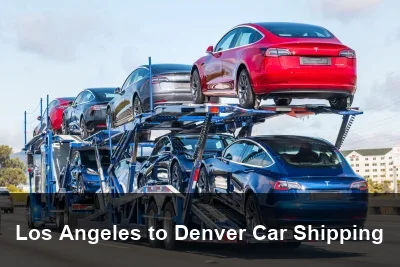
This route has identifiable pricing cycles tied to both calendar demand and mountain weather. Summer — June through August — is peak volume season driven by relocations, university moves, and military PCS orders. Rates are highest then and carrier lead times can stretch. Winter, specifically December through February, adds a weather risk premium. Spring and fall offer the best balance of price and transit reliability. For winter-specific planning, see https://california.auto-transport-shipping.com/articles/auto-transport-challenges-during-the-winter.html.
Spring (March–May)
Shoulder season on this corridor. Mountain weather risk on I-70 drops significantly after mid-March, though late snowstorms at the Eisenhower Tunnel elevation can still occur through April. Carrier availability is good, and rates are typically 10–15% lower than summer peak. A practical window to book if your move date is flexible. Snow chains are no longer commonly required after late April.
Summer Peak (June–August)
Highest demand period on the Los Angeles to Denver lane. Military PCS season, university fall move-ins at CU Denver and CU Boulder, and general relocation activity all converge. Carrier slots fill 2–3 weeks out. Book early and expect rates at the higher end of the annual range. The Mojave Desert leg sees extreme heat — carriers load and move overnight through this section when possible.
Fall (September–November)
Volume stays moderate through October, then drops as winter approaches. October is an excellent window — mountain weather is stable, rates soften from summer highs, and carrier availability is strong. November is the inflection point: early-November shipments are generally fine, but late November increases exposure to the first serious I-70 closures. If you're shipping in November, target the first two weeks.
Winter (December–February)
The most operationally complex window on this route. CDOT closures at Vail Pass and the Eisenhower Tunnel at 11,158 feet can delay carriers by 24 to 48 hours per event. Rates reflect that risk premium. If you must ship in winter, allow 5–7 days for transit rather than the standard 3–5. Enclosed transport is worth considering for luxury or classic vehicles exposed to road salt spray on the mountain stretch.
Ski Season Demand (December–March)
Colorado's ski industry draws seasonal residents from Southern California to Summit County, Vail, and Aspen, but many ship vehicles to Denver and drive the last leg west. This creates a meaningful inbound demand spike at Denver from December through March, keeping carriers motivated to run eastbound loads even in difficult weather. Availability on this lane remains reasonable in winter partly because of this return-load incentive.
University Move-In (August–September)
CU Boulder and CU Denver both draw students from Southern California. August sees a concentrated surge of vehicle shipments from the Los Angeles metro, particularly from the Westside, the San Fernando Valley, and the South Bay. If you're shipping a vehicle for a student starting in late August, book at least 3 weeks ahead. Carriers serving university destinations may require a nearby parking lot rather than direct campus delivery.
How to Choose a Los Angeles to Denver Car Shipping Company
Getting multiple quotes is step one — knowing what to look for in those quotes matters just as much. Our guide on how to select a car shipping company covers the full process. Here are the six things that matter most:
FMCSA Registration
Every carrier or broker must hold a valid MC number. Verify any company at FMCSA SAFER before you book.
Proof of Insurance
Ask for a current certificate of insurance. Open carriers typically carry $100,000–$250,000 per load; enclosed commonly $500,000 or more. Learn what auto transport insurance covers.
All-In Pricing
Your quote should be a final number with no fees added after booking. Know the difference between brokers and carriers and confirm what the quote covers before you agree.
Bill of Lading
A complete Bill of Lading is filled out at pickup and delivery. Our Bill of Lading guide explains what to check. Never sign an incomplete one.
Real Reviews
Check Google and the BBB. Look at how they handled complaints and damage claims — that tells you more than a five-star average from happy customers.
Route Experience
A carrier who regularly runs Los Angeles to Denver knows that the Barstow fuel stop determines pace for the entire run, and that the Las Vegas junction is where loads sometimes get reshuffled based on delivery sequence. They know to pull a weather report for the Eisenhower Tunnel before committing to a departure from Grand Junction, and they know which truck stops between Grand Junction and Denver have adequate clearance for a full multi-vehicle rig. They also know that Denver's Tech Center and Aurora delivery zones move efficiently, while downtown addresses near Colfax Avenue require extra coordination for street access. That operational knowledge translates directly to fewer delays and more accurate ETAs for your vehicle.
Los Angeles to Denver Car Shipping — FAQ
How much does it cost to ship a car from Los Angeles to Denver?
For a standard sedan on open transport, expect to pay between $850 and $1,200 depending on the season, current fuel prices, and how quickly you need the vehicle picked up. SUVs and trucks run $50–$150 higher due to size and weight. Enclosed transport adds roughly 40–60% to the open rate. Winter shipments often carry a $100–$200 weather premium reflecting I-70 mountain risk. Rates are also sensitive to fuel cost fluctuations — see how that works at https://california.auto-transport-shipping.com/articles/how-gas-prices-impact-california-auto-transport-fees.html. The best way to get an accurate number for your vehicle and dates is to fill out the quote form with your specific details.
How long does Los Angeles to Denver car shipping take?
Standard transit on this 1,015-mile corridor runs 3 to 5 days once a carrier picks up your vehicle. Carrier matching from Los Angeles typically takes 1 to 2 business days after booking, given how frequently carriers depart this market. Add buffer in winter — I-70 through the Eisenhower Tunnel at 11,158 feet closes periodically due to weather, and a single closure can add a full day to your delivery window. If you have a hard deadline, expedited options can compress both the carrier matching and transit timeline; details are at https://california.auto-transport-shipping.com/articles/california-expedited-car-shipping-fast-cost.html.
Is my car insured during transport from Los Angeles to Denver?
Yes. Every carrier operating legally is required to carry cargo insurance that covers your vehicle while it's on the transport truck. Coverage amounts and deductible structures vary by carrier, so ask for a copy of the carrier's certificate of insurance before your vehicle is loaded. Your personal auto insurance policy may also provide supplemental coverage during transport — check with your insurer. For a detailed breakdown of what transport insurance covers and what it doesn't, read https://california.auto-transport-shipping.com/articles/understanding-auto-transport-insurance.html. If damage does occur, understand the claims process before you need it: https://california.auto-transport-shipping.com/articles/how-to-file-a-claim-for-vehicle-damage-during-transport.html.
Should I choose open or enclosed transport for the Los Angeles to Denver route?
For most vehicles shipped between April and October, open transport is appropriate and is how the majority of cars move on this corridor. The route is well-established and carrier quality is generally high. The case for enclosed strengthens in winter, specifically on the I-70 mountain stretch west of Denver where road salt, debris, and weather exposure are real factors. Enclosed also makes sense year-round for luxury vehicles, classics, or low-clearance sports cars where any road debris contact is unacceptable. For a full breakdown of the tradeoffs, see https://california.auto-transport-shipping.com/articles/open-vs-enclosed-auto-transport-pros-and-cons.html.
Do I have to be present at pickup and delivery?
You don't have to be there personally, but someone you authorize needs to be present to sign the bill of lading at pickup and delivery. That document records your vehicle's pre-transport condition and is critical if you ever need to file a damage claim. If you can't be there yourself, a trusted representative — family member, friend, or colleague — can handle both inspections on your behalf. Walk through the vehicle condition carefully with the carrier at both ends and note anything on the bill of lading before signing. Read more about what that document covers at https://california.auto-transport-shipping.com/articles/california-auto-transport-bill-of-lading-information.html.
Does winter weather on I-70 actually delay shipments, and how do I plan for it?
Yes, it does — and it's the single most route-specific delay factor on the Los Angeles to Denver corridor. The Eisenhower-Johnson Tunnel at 11,158 feet and Vail Pass just to the west are closed by the Colorado Department of Transportation multiple times each winter season, sometimes for 12 to 36 hours per event. Carriers with mountain experience monitor CDOT alerts and may hold in Grand Junction rather than risk a closure mid-run. If you're shipping between November and March, budget 5–7 days for transit rather than the standard 3–5. Booking earlier in November or waiting until late March reduces your exposure significantly.
I'm doing a military PCS to Fort Carson or Buckley Space Force Base — how does the process work?
Military PCS shipments from Los Angeles to the Denver area are common on this lane, and carriers who regularly run it are familiar with the timing and delivery access at both Fort Carson south of Colorado Springs and Buckley Space Force Base in Aurora. Your military orders will specify your report date, so work backward from that to set your pickup window — allow at least a week before you need the vehicle at your new duty station. Confirm whether you want delivery to base housing or an off-base address, as gate access varies by installation. Book as far ahead as your orders allow, since PCS season from June through August is peak demand on this corridor.
Can I ship a vehicle from nearby cities like Burbank, Pasadena, or Torrance to Denver?
Yes. Carriers serving the Los Angeles to Denver lane cover the full metro, including Burbank and Glendale via the I-5 corridor, Pasadena and El Monte via I-210 and I-10, and Torrance via I-405 and I-110. Pickup access in these suburban areas is generally straightforward for multi-vehicle transporters — most can pull directly to a residential address without needing a staging lot. If your address has significant street restrictions, a nearby parking lot works as a simple alternative. When you fill out the quote form, enter your specific city and address so we can match you with a carrier whose pickup route covers your area.
Ready to Ship Your Car from Los Angeles to Denver?
One form gets you up to 10 free quotes from licensed, insured carriers. Compare costs and transit times and book the best deal for your schedule.