

Los Angeles to Mesa Car Shipping Route
Los Angeles to Mesa covers approximately 287 miles by road, with nearly the entire run on I-10 east from downtown Los Angeles through the Inland Empire, across the California-Arizona state line at Blythe, and into the Phoenix metro. Carriers access I-10 from multiple Los Angeles quadrants — downtown via I-110, the San Gabriel Valley via I-210 connecting at Pomona, and the South Bay via I-405 to I-10. The route is largely flat and carrier-friendly with no significant mountain passes. Transit times and costs compare favorably against driving yourself; see the full breakdown of what you save at https://california.auto-transport-shipping.com/articles/benefits-of-auto-transport-service-vs-driving-yourself.html.
Mesa sits in the East Valley of Maricopa County, and demand drivers on this corridor are specific and trackable. Williams Gateway (Phoenix-Mesa Gateway Airport) hosts Falcon Field and supports aerospace employers including Boeing, which operates a large facility there. Arizona State University's Polytechnic campus in Mesa generates substantial student vehicle moves every August and January. Banner Gateway Medical Center and Banner Ironwood draw healthcare workers relocating from Southern California. Summer heat in the desert Southwest — with Blythe and the I-10 corridor regularly hitting 115°F between June and August — is a real factor for vehicle condition during transport. Review common shipper errors before you book: https://california.auto-transport-shipping.com/articles/auto-transport-mistakes-to-avoid.html.
Los Angeles to Mesa Car Shipping Rates
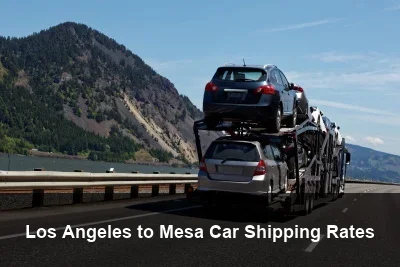
At 287 miles, the LA-to-Mesa run falls into the short-haul pricing tier where per-mile rates are higher than long-haul corridors, but total cost remains moderate. Seasonal demand spikes occur October through March as snowbirds move vehicles into Arizona for winter, pushing rates up 10–20% on the westbound return lane and occasionally tightening eastbound capacity as well. Fuel costs through the desert stretch of I-10 affect carrier pricing directly — see how gas prices move rates on California corridors: https://california.auto-transport-shipping.com/articles/how-gas-prices-impact-california-auto-transport-fees.html.
What affects the cost of Los Angeles to Mesa car shipping:
- Vehicle type and size — larger vehicles take more carrier space; aftermarket additions like lift kits, oversized mirrors, or roof accessories can add fees
- Open vs. enclosed transport — open is lower cost with stronger carrier availability; enclosed protects against weather, debris, and road conditions
- Standard vs. expedited pickup — expedited prioritizes your vehicle for the next available dispatch, typically at a $100–$300 premium
- Time of year — peak demand seasons drive rates higher; off-peak windows offer the most competitive pricing
- Fuel costs — diesel prices affect carrier rates; longer routes are more sensitive to fuel price swings
- Vehicle condition — non-running vehicles require special loading equipment and cost more to ship
| Vehicle Type | Open Car Shipping (Est.) | Enclosed Car Shipping (Est.) |
|---|---|---|
| Sedan | $350 – $500 | $700 – $950 |
| SUV / Crossover | $400 – $600 | $800 – $1,100 |
| Pickup Truck | $400 – $600 | $800 – $1,100 |
| Minivan | $400 – $600 | $800 – $1,100 |
| Luxury / Classic Car | $500 – $700 | $950 – $1,300 |
| Non-Running Vehicle | Add $100–200 | Add $100–200 |
* Estimated ranges based on recent Los Angeles to Mesa shipments. Actual rate depends on vehicle, locations, booking date, and current fuel costs. Use the form on this page to compare real quotes from licensed carriers.
Open vs. Enclosed: What This Desert Route Actually Requires
Open transport is the practical choice for most vehicles on the LA-to-Mesa run. I-10 through the desert is well-paved and low-debris; the primary exposure is road dust and occasional sand between Blythe and the Arizona state line. Enclosed transport makes sense if you're shipping a classic car, exotic, or high-value vehicle and moving during June through August when temperatures in the Blythe-to-Phoenix corridor regularly exceed 110°F. Heat is the one legitimate enclosed-transport argument on this route — not road conditions. For standard production vehicles, open saves money without meaningful added risk.
How Long Does Los Angeles to Mesa Car Shipping Take?
Most Los Angeles to Mesa shipments complete in one to two days. The driving distance is under five hours at highway speed, which means a carrier departing the LA Basin in the morning can reach Mesa same-day if your vehicle is on an already-loaded truck. Carrier frequency from Los Angeles into the Phoenix metro is high — multiple trucks run this lane daily. First available dispatch typically runs 24–48 hours after booking. If your timeline is rigid, expedited scheduling is available; details on cost and timing are at https://california.auto-transport-shipping.com/articles/california-expedited-car-shipping-fast-cost.html.
| Service Type | Typical Transit | Pickup Window | Best For |
|---|---|---|---|
| Open — Standard | 1–2 days | 1–3 business days | Best value; most common choice on this route |
| Open — Expedited | Same–1 day | Next day–1 business day | Firm arrival date; faster dispatch window |
| Enclosed — Standard | 2–3 days | 2–5 business days | Luxury, classic, or modified vehicles |
| Enclosed — Expedited | 1–2 days | 1–2 business days | High-value vehicles on a firm delivery deadline |
** The main transit caveat on this corridor is summer heat between Blythe and Phoenix. When temperatures exceed 115°F, carriers may adjust departure timing to avoid peak afternoon heat, which can push an otherwise same-day delivery to the following morning. Dust storms (haboobs) between July and September can briefly halt I-10 near the Phoenix metro and add hours.
Los Angeles to Mesa — Route & Logistics
Carriers serving this route access I-10 east from multiple Los Angeles entry points — I-110 from downtown, I-605 from the San Gabriel Valley, or direct I-10 on-ramps through West Covina and Pomona. From there it's a single-interstate run through San Bernardino, Palm Springs, Indio, Blythe, and into the Phoenix metro before exiting toward Mesa's surface streets.
Key Corridor Waypoints
- Pomona, CA Where I-10 consolidates outbound traffic from multiple LA quadrants. Carriers coming from the San Gabriel Valley via I-210 or from the South Bay via I-605 merge here. Pomona is a common staging area for loads being built before the desert run. Many drivers do a final load check here before the long I-10 stretch east.
- Palm Springs / Cabazon, CA The San Gorgonio Pass at roughly 2,600 feet is the only meaningful elevation change on this route. High-profile carriers watch for wind through this corridor — gusts regularly hit 50+ mph near Cabazon and the San Gorgonio wind farm. Experienced drivers time their pass-through to avoid peak afternoon gusts, particularly for open multi-car haulers.
- Indio / Coachella, CA The last California metro area before the open desert. Carriers use Indio as a fuel stop — diesel prices are meaningfully lower here than inside the LA Basin. It's also the last practical point to confirm delivery windows with Mesa recipients before entering the remote stretch toward Blythe.
- Blythe, CA / Arizona State Line California's agricultural inspection station sits just west of Blythe and applies to commercial carriers. The Colorado River crossing into Arizona marks the midpoint of the desert stretch. Summer temperatures here routinely reach 118–120°F. Carriers note this as the highest heat-risk segment for any vehicle left on an open trailer.
- Goodyear / Avondale, AZ The western edge of the Phoenix metro where I-10 begins encountering suburban interchange traffic. Carriers heading to Mesa typically continue east on I-10 through downtown Phoenix, then exit via US-60 (Superstition Freeway) or Loop 202 to access Mesa's street grid. This interchange area can slow during Phoenix rush hours, 7–9 AM and 4–6 PM.
- Mesa, AZ (Delivery Zone) Mesa's grid is largely carrier-accessible, but older central Mesa neighborhoods near downtown have narrower streets. The Williams Gateway and Eastmark areas in far east Mesa are purpose-built subdivisions with wide streets and easy truck access. Falcon Field airport area sees frequent military and aerospace employee deliveries, and carriers familiar with this route know the staging spots.
Pickup & Delivery Access
- Pickup Access in Los Angeles Los Angeles carriers access all city quadrants daily via I-10, I-110, I-405, and I-5. Dense neighborhoods in Hollywood, Koreatown, and West LA often require meet-point coordination at a nearby parking area or wide surface street. The Burbank, Glendale, Pasadena, and El Monte areas east of downtown offer straightforward large-vehicle access. South Bay pickups in Torrance route out via I-405 to I-10.
- Delivery Access in Mesa Most of Mesa is accessible for standard multi-car carriers. East Mesa near Williams Gateway Airport and the Eastmark community offers wide arterials and easy access. Central Mesa around Main Street and downtown has older, narrower side streets where carriers may arrange delivery at a nearby commercial parking lot or wide intersection. Confirm your street width before scheduling door-to-door delivery.
- Nearby Pickup Locations Carriers picking up in Los Angeles regularly extend service to Burbank, Glendale, Pasadena, El Monte, and Torrance. Call 1‑800‑590‑6492 to confirm door-to-door availability at your address.
Open vs. Enclosed Car Shipping: Los Angeles to Mesa
Both options use licensed, insured carriers and deliver door to door. For a full breakdown, read the pros and cons of open vs. enclosed car shipping.
Open Car Shipping
Most Popular- Lower cost — the practical choice for most vehicles
- More carriers available on this corridor
- Faster dispatch from booking to pickup
- Works well for sedans, SUVs, trucks, and minivans
- Vehicle rides on an open multi-car carrier
- Cargo insurance required on all licensed carriers
Estimated cost: $350 – $600
Enclosed Car Shipping
Premium Protection- Full protection from weather, debris, and road grime
- Best for luxury, exotic, and classic vehicles
- Recommended for low-clearance and custom-built cars
- Wheel-net or soft-tie systems prevent contact damage
- Higher cargo coverage — commonly $500,000 per load
- White-glove handling by experienced operators
Estimated cost: $700 – $1,100
Not sure which is right for your vehicle? Call 1-800-590-6492 and we'll point you in the right direction. Also worth reading: the top 10 questions to ask any car shipping company before you commit.
How to Prepare Your Car for Shipping to Mesa
A little prep before pickup protects you if there's ever a dispute about your vehicle's condition. This checklist is from our full guide on preparing your car for transport:
- Remove all personal belongings from the interior and trunk
- Leave only a quarter tank of fuel — enough to load and unload
- Take date-stamped photos of the full exterior and interior
- Remove or disable toll transponders (FasTrak, E-ZPass, etc.)
- Retract or remove roof racks, spoilers, antennas, and bike mounts
- Make sure the battery is charged and tires are properly inflated
- Tell the carrier about any existing leaks or mechanical issues
- Deactivate the car alarm before the carrier arrives
- Write down the mileage on the Bill of Lading at pickup
- Fold in side mirrors if the vehicle is wider than standard
Personal items: Most carriers won't cover belongings left in the car. Read the full rules on shipping personal items in your vehicle. Also review our Bill of Lading guide so you know exactly what to check at pickup and delivery.
When to Ship Your Car from Los Angeles to Mesa
This route has clear seasonal pricing patterns. October through April brings snowbird demand — retirees moving vehicles to Arizona for winter push eastbound capacity and can tighten availability. Summer (June–August) creates the opposite: fewer snowbirds but higher heat surcharges and occasional weather-related delays. August sees ASU Polytechnic campus move-in, adding student vehicle volume. For how winter weather affects transport timing more broadly, see https://california.auto-transport-shipping.com/articles/auto-transport-challenges-during-the-winter.html.
Snowbird Season (October–April)
The heaviest demand period on this corridor. Retirees from California and the Pacific Northwest move vehicles into the Phoenix metro for winter, with Mesa being a primary destination. Eastbound capacity fills quickly from mid-October onward. Book at least one to two weeks ahead during this window. Rates trend 10–20% above summer pricing, and carriers may prioritize confirmed loads over last-minute requests.
Summer Heat Window (June–August)
Lower snowbird demand means slightly easier eastbound booking, but desert heat is the operational challenge. Blythe and the I-10 corridor regularly hit 115–120°F. Carriers may schedule overnight or early morning transits to reduce heat exposure for vehicles on open trailers. If you're shipping a luxury or classic vehicle during this period, enclosed transport is worth the premium.
Student Move-In (Late July–August, January)
Arizona State University's Polytechnic campus in Mesa drives two vehicle-move windows annually — late July through August for fall semester and early January for spring. These overlap with the summer heat window in August, meaning competition for eastbound carrier slots can spike despite the season. Book early if your timeline aligns with ASU's academic calendar.
Military PCS Season (May–August)
Williams Gateway area supports aerospace and defense operations, and military PCS cycles concentrate moves between May and August. Boeing Mesa and associated contractors relocate employees from Southern California on a rolling basis. If you're moving on military orders, confirm your preferred dates as early as possible — PCS windows create localized demand spikes that aren't always reflected in general pricing tools.
Spring Shoulder Season (March–May)
March through May is the most favorable window to ship on this corridor. Snowbird return traffic (westbound) is heavy, but eastbound capacity is balanced and temperatures are manageable. Pricing tends to be stable and carrier availability is good. If you have flexibility in your move timeline, this window typically offers the best combination of price, availability, and transit conditions.
How to Choose a Los Angeles to Mesa Car Shipping Company
Getting multiple quotes is step one — knowing what to look for in those quotes matters just as much. Our guide on how to select a car shipping company covers the full process. Here are the six things that matter most:
FMCSA Registration
Every carrier or broker must hold a valid MC number. Verify any company at FMCSA SAFER before you book.
Proof of Insurance
Ask for a current certificate of insurance. Open carriers typically carry $100,000–$250,000 per load; enclosed commonly $500,000 or more. Learn what auto transport insurance covers.
All-In Pricing
Your quote should be a final number with no fees added after booking. Know the difference between brokers and carriers and confirm what the quote covers before you agree.
Bill of Lading
A complete Bill of Lading is filled out at pickup and delivery. Our Bill of Lading guide explains what to check. Never sign an incomplete one.
Real Reviews
Check Google and the BBB. Look at how they handled complaints and damage claims — that tells you more than a five-star average from happy customers.
Route Experience
A carrier who regularly runs LA to Mesa knows specifics that a carrier pulling this lane for the first time does not. They know the Cabazon wind corridor and when to hold for gusts rather than risk load stability on a full multi-car trailer. They know the Blythe agricultural checkpoint procedure and how long it adds. They know that Phoenix rush-hour traffic on I-10 through the downtown interchange can add 45 minutes to an otherwise simple delivery, so a 3 PM arrival target in Mesa means clearing the I-10/I-17 junction before 4 PM. They also know which Mesa zip codes require a staging meet versus which subdivision streets handle a full 75-foot transport rig without issue. That route-specific knowledge is what keeps your vehicle on schedule.
Los Angeles to Mesa Car Shipping — FAQ
How much does it cost to ship a car from Los Angeles to Mesa?
For this 287-mile corridor, most standard sedans and coupes ship on open transport for $350–$550 depending on season, current fuel prices, and booking lead time. SUVs, trucks, and larger vehicles typically run $450–$650. Enclosed transport adds $200–$400 to those ranges. Rates trend higher October through April due to snowbird demand pushing eastbound capacity. Summer months can offer lower base rates, but heat surcharges may apply on some loads. The most accurate quote reflects real-time carrier availability on your specific dates — fill out the form for a current rate.
How long does Los Angeles to Mesa car shipping take?
Transit time on this route is typically one to two days from the moment a carrier picks up your vehicle. The driving distance is under five hours, so same-day delivery is possible if your vehicle is loaded onto a truck departing the LA area in the morning. Dispatch after booking generally runs 24–48 hours for standard service. Summer afternoon heat and occasional dust storms near Phoenix can push delivery to the following morning. If you need a guaranteed window, expedited scheduling is available — see https://california.auto-transport-shipping.com/articles/california-expedited-car-shipping-fast-cost.html for how that's priced.
Is my car insured during transport from Los Angeles to Mesa?
Every licensed carrier operating on this corridor is required by federal law to carry cargo insurance. That coverage is active from the moment the carrier signs the bill of lading at pickup through delivery. The coverage amount and deductible structure varies by carrier — confirm those specifics before you book. Conduct a thorough walk-around inspection at both pickup and delivery, and document any existing condition with photos before the carrier departs. For a full breakdown of how transport insurance works, see https://california.auto-transport-shipping.com/articles/understanding-auto-transport-insurance.html. If damage does occur, the claims process is detailed at https://california.auto-transport-shipping.com/articles/how-to-file-a-claim-for-vehicle-damage-during-transport.html.
Should I choose open or enclosed transport for the LA to Mesa route?
Open transport is appropriate for most vehicles on this corridor. The I-10 desert run is clean pavement with minimal debris risk, and the main environmental exposure is dust and sand between Blythe and the Arizona state line. Enclosed transport is worth considering if you're shipping a classic car, exotic, or high-value vehicle — particularly during June through August when I-10 corridor temperatures exceed 110°F and heat accumulation in an open trailer becomes a real concern. For all standard production vehicles outside peak summer, open is the cost-effective and practical choice. Full comparison at https://california.auto-transport-shipping.com/articles/open-vs-enclosed-auto-transport-pros-and-cons.html.
Do I have to be present at pickup and delivery?
You don't have to be personally present, but someone must be available at both pickup and delivery to hand over the keys, inspect the vehicle alongside the carrier, and sign the bill of lading. That can be a trusted representative — a family member, coworker, or property manager — as long as they understand what to document. The bill of lading is the binding record of your vehicle's condition at both ends of the transport. Never waive the inspection or sign a blank form. Full guidance on bill of lading procedure is at https://california.auto-transport-shipping.com/articles/california-auto-transport-bill-of-lading-information.html.
Does extreme desert heat affect my vehicle during transport on this route?
It can, specifically on open trailers during June through August. The I-10 corridor between Blythe and Phoenix regularly records ambient temperatures above 115°F, and the radiant heat on a fully exposed trailer deck runs higher. For most modern production vehicles, this isn't a serious risk for a one-day transit. However, if your vehicle has a known cooling system issue, aging rubber seals, or you're shipping a classic with period-correct materials, the heat exposure is worth factoring into your carrier-type decision. Enclosed trailers significantly reduce heat load and are the conservative choice for vulnerable vehicles during peak summer.
When is the best time of year to ship a car from Los Angeles to Mesa at the lowest rate?
Late May through early June and late August through September typically offer the most favorable rates on the eastbound LA-to-Mesa lane. Snowbird season (October–April) drives up rates and tightens carrier availability. The peak summer months bring heat-management considerations and, in August, ASU student move-in adds vehicle volume. Spring shoulder season — March through May — is well-balanced if price is less important than comfortable transit conditions. If you have flexibility, target the weeks immediately before snowbird season starts in mid-October or the September window after summer demand drops.
Can I ship a car from nearby cities like Burbank, Pasadena, or Torrance to Mesa using this service?
Yes. Carriers serving the LA-to-Mesa lane provide pickup coverage across the entire Los Angeles metro. Burbank and Glendale are accessible via I-5 south to I-10 east. Pasadena and El Monte connect directly to I-10 via I-210 or local surface streets. Torrance and South Bay locations route out via I-405 to I-10. In all cases, the carrier accesses the I-10 eastbound corridor to begin the desert run. Pickup logistics and any meet-point needs depend on your specific street and neighborhood — confirm those details when you get your quote.
Ready to Ship Your Car from Los Angeles to Mesa?
One form gets you up to 10 free quotes from licensed, insured carriers. Compare costs and transit times and book the best deal for your schedule.