
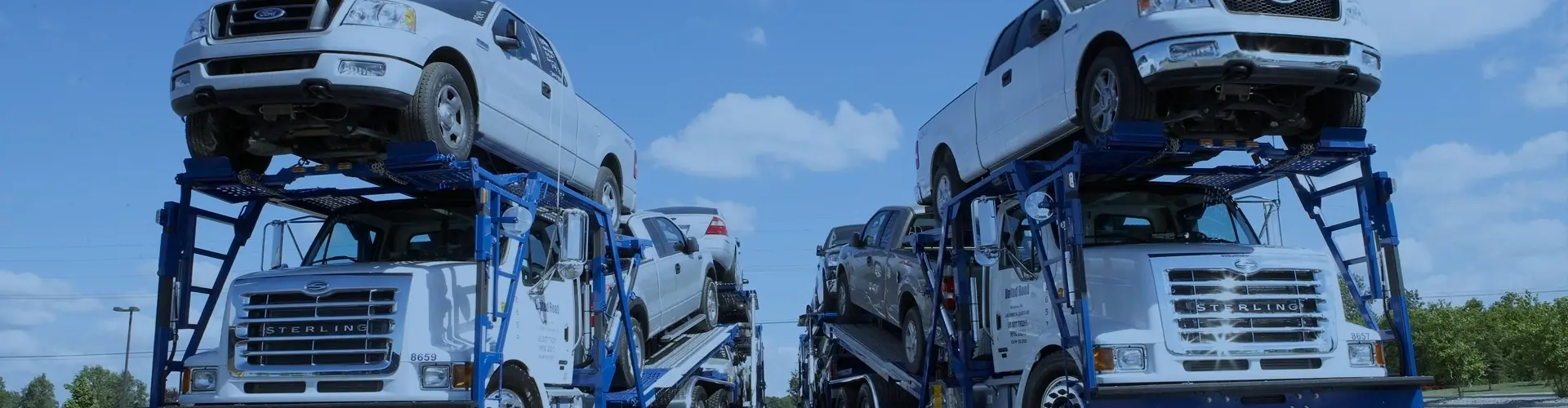
Irvine to Philadelphia Car Shipping Route
Irvine to Philadelphia covers approximately 2,743 miles. Carriers depart Irvine via I-405 north or I-5 north to connect with I-10 east through the Inland Empire, then transition to I-40 east through the Mojave or continue on I-10 through Arizona and New Mexico. From Albuquerque, most carriers pick up I-40 east through Oklahoma, Missouri, and into St. Louis before heading northeast on I-70 through Indiana, Ohio, and into Pennsylvania, terminating in Philadelphia via I-76. This span crosses six time zones of terrain — desert, plains, and Appalachian grades. Driving it yourself adds wear, fuel cost, and four or more days of travel time. Shipping is the practical choice for most owners: see the full breakdown at https://california.auto-transport-shipping.com/articles/benefits-of-auto-transport-service-vs-driving-yourself.html
Philadelphia's demand is anchored by a dense institutional and military footprint. The University of Pennsylvania, Drexel University, Temple University, and Thomas Jefferson University collectively move thousands of students and faculty annually. Jefferson Health, Comcast, and Aramark maintain large corporate workforces with ongoing relocation needs. Naval Support Activity Philadelphia handles active-duty PCS orders that generate predictable, scheduled shipments throughout the year. On the weather side, this route crosses the high desert of eastern California and Arizona, where summer heat warrants attention for sensitive vehicles, and the Appalachian foothills approaching Philadelphia can see ice and snow from November through March. Plan your booking timing carefully and review https://california.auto-transport-shipping.com/articles/auto-transport-mistakes-to-avoid.html before you confirm.
Irvine to Philadelphia Car Shipping Rates
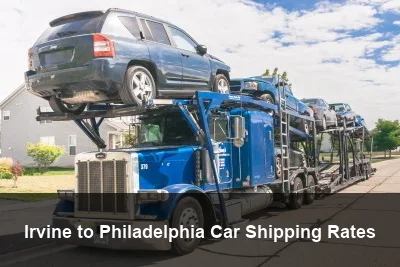
At 2,743 miles, Irvine to Philadelphia sits firmly in the long-haul pricing tier where fuel cost is the single largest variable. Diesel price swings on the I-40 and I-70 corridors directly affect carrier quotes — read more at https://california.auto-transport-shipping.com/articles/how-gas-prices-impact-california-auto-transport-fees.html. Summer demand from student relocations and military PCS orders tightens capacity between May and August, pushing rates up 10–18 percent. Winter weather premiums apply from November through February when Appalachian road conditions increase carrier risk and transit time.
What affects the cost of Irvine to Philadelphia car shipping:
- Vehicle type and size — larger vehicles take more carrier space; aftermarket additions like lift kits, oversized mirrors, or roof accessories can add fees
- Open vs. enclosed transport — open is lower cost with stronger carrier availability; enclosed protects against weather, debris, and road conditions
- Standard vs. expedited pickup — expedited prioritizes your vehicle for the next available dispatch, typically at a $100–$300 premium
- Time of year — peak demand seasons drive rates higher; off-peak windows offer the most competitive pricing
- Fuel costs — diesel prices affect carrier rates; longer routes are more sensitive to fuel price swings
- Vehicle condition — non-running vehicles require special loading equipment and cost more to ship
| Vehicle Type | Open Car Shipping (Est.) | Enclosed Car Shipping (Est.) |
|---|---|---|
| Sedan | $1,100 – $1,600 | $1,900 – $2,700 |
| SUV / Crossover | $1,300 – $1,900 | $2,200 – $3,100 |
| Pickup Truck | $1,300 – $1,950 | $2,200 – $3,150 |
| Minivan | $1,300 – $1,900 | $2,200 – $3,100 |
| Luxury / Classic Car | $1,550 – $2,200 | $2,600 – $3,600 |
| Non-Running Vehicle | Add $200–400 | Add $200–400 |
* Estimated ranges based on recent Irvine to Philadelphia shipments. Actual rate depends on vehicle, locations, booking date, and current fuel costs. Use the form on this page to compare real quotes from licensed carriers.
Open vs. Enclosed: What This 2,743-Mile Route Actually Demands
Open transport is the right call for most standard vehicles on this corridor. The I-40 and I-70 interstates are well-maintained and carrier-proven. Road debris and weather exposure are real across the desert and plains, but no more so than on any comparable long-haul route. Choose enclosed if you're shipping a classic, exotic, or high-value vehicle — the Appalachian section approaching Philadelphia can bring wet, gritty road conditions November through March that justify the added protection. Enclosed runs on this lane are available but less frequent, so book two to three weeks out.
How Long Does Irvine to Philadelphia Car Shipping Take?
Standard transit from Irvine to Philadelphia runs 7 to 10 days from the confirmed pickup date. Carriers dispatching from the I-405 and I-5 staging zones in Irvine connect to I-10 east within 30 minutes of loading. The driving distance for a single carrier team would be roughly 44 to 48 hours moving time, but commercial carriers rotate loads, make additional stops, and comply with federal HOS regulations. Irvine is a consistent outbound market, so dispatch typically happens within 2 to 4 business days of booking. If your schedule is tight, expedited options exist — see https://california.auto-transport-shipping.com/articles/california-expedited-car-shipping-fast-cost.html
| Service Type | Typical Transit | Pickup Window | Best For |
|---|---|---|---|
| Open — Standard | 7–10 days | 2–5 business days | Best value; most common choice on this route |
| Open — Expedited | 5–7 days | 1–2 business days | Firm arrival date; faster dispatch window |
| Enclosed — Standard | 7–10 days | 4–8 business days | Luxury, classic, or modified vehicles |
| Enclosed — Expedited | 5–7 days | 2–4 business days | High-value vehicles on a firm delivery deadline |
** Winter weather between November and March is the most likely source of delay on this route. Ice on I-70 through the Appalachians — particularly the grades approaching Breezewood, Pennsylvania — can hold carriers at rest stops or force reroutes. Build a two-day buffer into your delivery window if you're shipping between December and February.
Irvine to Philadelphia — Route & Logistics
Carriers depart Irvine on I-405 north or I-5 north, merging onto I-10 east near the Ontario area. The primary long-haul path follows I-40 east from Barstow through Flagstaff, Albuquerque, Amarillo, Oklahoma City, and into Missouri, then I-70 northeast through St. Louis, Indianapolis, Columbus, and across Pennsylvania via I-76 to Philadelphia. Total carrier routing is approximately 2,743 miles.
Key Corridor Waypoints
- Barstow, CA First major staging point after leaving Irvine's I-10 east corridor. Carriers transition from the Los Angeles Basin traffic zone onto I-40 east here. Barstow is a common fuel and logbook stop before the Mojave crossing. Elevation around 2,100 feet — heat management in summer is a consideration for open transport loads sitting in direct sun during midday stops.
- Flagstaff, AZ Flagstaff sits at 6,910 feet elevation and is the highest point on the I-40 corridor. In winter months, carriers may encounter snow and ice on the descent toward Winslow. It's also an Arizona Department of Transportation truck inspection zone. Carriers typically log this as an overnight or shift-change point on the cross-country run.
- Albuquerque, NM Major junction where I-40 intersects I-25. Carriers confirm load integrity here and often coordinate with dispatch for eastern segment handoffs. Albuquerque is a reload market for southwest-to-northeast lanes, so vehicles occasionally transfer to a dedicated eastern carrier at this point. Elevation is 5,312 feet; grades descend significantly east of the city.
- St. Louis, MO Gateway interchange where I-40 traffic merges onto I-70 northeast. St. Louis is a major carrier hub with reliable relay operations for the Northeast corridor. Vehicles originating in Southern California on west-to-east runs often stage here briefly before continuing toward Columbus and Philadelphia. Weather can delay this junction in January and February.
- Columbus, OH I-70 checkpoint and common overnight stop on the final leg into Pennsylvania. Columbus carriers familiar with the Philadelphia market know to time their I-76 approach to avoid peak-hour congestion near the King of Prussia interchange. This is also the last realistic point to coordinate delivery scheduling changes before the carrier commits to the final approach.
- Philadelphia, PA (I-76 / I-95 Junction) Carriers enter Philadelphia metro via I-76 east, transitioning to I-95 or local surface streets depending on the delivery address. South Philadelphia and Center City blocks run narrow with limited truck clearance. Most carriers stage at accessible points in Northeast Philadelphia or the Navy Yard area for customer handoff rather than attempting delivery directly into dense row-home neighborhoods.
Pickup & Delivery Access
- Pickup Access in Irvine Irvine's business park corridors along Jamboree Road, Alton Parkway, and the Irvine Spectrum area give carriers wide-lane access and ample staging room. Residential zones off Culver Drive and in Woodbridge are accessible but may require a short drive to a nearby parking lot or shopping center for carrier alignment. Coordinate your pickup location with the carrier 24 hours in advance.
- Delivery Access in Philadelphia Philadelphia delivery access varies sharply by neighborhood. Northeast Philadelphia and areas near I-95 and I-76 exits are carrier-friendly with surface parking available. Center City, South Philadelphia row blocks, and Fishtown's narrow streets are not practical for an 8-car hauler. Plan to meet your carrier at an agreed staging point — a large parking lot near your destination — rather than expecting door-to-door service in dense urban blocks.
- Nearby Pickup Locations Carriers picking up in Irvine regularly extend service to Santa Ana, Costa Mesa, and Lake Forest. Call 1‑800‑590‑6492 to confirm door-to-door availability at your address.
Open vs. Enclosed Car Shipping: Irvine to Philadelphia
Both options use licensed, insured carriers and deliver door to door. For a full breakdown, read the pros and cons of open vs. enclosed car shipping.
Open Car Shipping
Most Popular- Lower cost — the practical choice for most vehicles
- More carriers available on this corridor
- Faster dispatch from booking to pickup
- Works well for sedans, SUVs, trucks, and minivans
- Vehicle rides on an open multi-car carrier
- Cargo insurance required on all licensed carriers
Estimated cost: $1,100 – $1,950
Enclosed Car Shipping
Premium Protection- Full protection from weather, debris, and road grime
- Best for luxury, exotic, and classic vehicles
- Recommended for low-clearance and custom-built cars
- Wheel-net or soft-tie systems prevent contact damage
- Higher cargo coverage — commonly $500,000 per load
- White-glove handling by experienced operators
Estimated cost: $1,900 – $3,150
Not sure which is right for your vehicle? Call 1-800-590-6492 and we'll point you in the right direction. Also worth reading: the top 10 questions to ask any car shipping company before you commit.
How to Prepare Your Car for Shipping to Philadelphia
A little prep before pickup protects you if there's ever a dispute about your vehicle's condition. This checklist is from our full guide on preparing your car for transport:
- Remove all personal belongings from the interior and trunk
- Leave only a quarter tank of fuel — enough to load and unload
- Take date-stamped photos of the full exterior and interior
- Remove or disable toll transponders (FasTrak, E-ZPass, etc.)
- Retract or remove roof racks, spoilers, antennas, and bike mounts
- Make sure the battery is charged and tires are properly inflated
- Tell the carrier about any existing leaks or mechanical issues
- Deactivate the car alarm before the carrier arrives
- Write down the mileage on the Bill of Lading at pickup
- Fold in side mirrors if the vehicle is wider than standard
Personal items: Most carriers won't cover belongings left in the car. Read the full rules on shipping personal items in your vehicle. Also review our Bill of Lading guide so you know exactly what to check at pickup and delivery.
When to Ship Your Car from Irvine to Philadelphia
This corridor has a clear seasonal pricing pattern. Summer — May through August — is the peak demand window driven by university relocations, military PCS orders, and general household moves. Rates rise and carrier availability tightens. Winter months bring the opposite pricing dynamic but add Appalachian weather risk on the Pennsylvania approach. For a full breakdown of winter transport risks on long-haul routes, see https://california.auto-transport-shipping.com/articles/auto-transport-challenges-during-the-winter.html. Spring and fall offer the best balance of price and reliability.
Spring (March – May)
Spring is the window before peak demand hits. Rates are still moderate and Appalachian weather has typically stabilized by mid-March. This is a strong booking window for anyone relocating to Philadelphia for a May or June start date. University of Pennsylvania and Drexel hiring cycles generate outbound California-to-Philadelphia demand in April and May. Book two to three weeks out for best carrier selection.
Summer Peak (June – August)
The busiest stretch on this corridor. Military PCS orders from bases across Southern California drive heavy outbound volume, and university students moving to Penn, Temple, and Drexel add to the load. Carrier capacity tightens in July and August. Expect rates 10–18 percent higher than shoulder season. Book four to six weeks in advance if your move date is fixed. Desert heat in Arizona is also a factor for open transport midday loading.
Fall (September – November)
Fall is the second-best pricing window on this lane. Post-summer demand drops noticeably after Labor Day, and most university arrivals are complete. Carrier availability improves and rates stabilize. Early November is the sweet spot — rates are still reasonable and Appalachian winter weather hasn't set in yet. If you can ship in October, you'll get strong carrier selection and competitive pricing without summer premiums.
Winter (December – February)
This is the highest-risk window for transit delays on this route. I-70 through Ohio and I-76 through Pennsylvania are subject to ice and snow events that hold carriers at truck stops for 12–24 hours or longer. Rates may dip slightly compared to summer, but the risk of a 2- to 3-day extension to your transit window is real. If you must ship in winter, build buffer days into your schedule and consider enclosed transport to protect against road salt and debris.
University Move Cycles (May & August)
Penn, Drexel, Temple, and Jefferson Health all generate high-volume relocation demand in late May and late August. Inbound Philadelphia shipments from California spike during these windows as students, residents, and faculty start new academic year positions. If your move coincides with either of these dates, treat this like peak summer — book early, confirm your delivery window, and have a flexible meeting point ready near campus.
Military PCS Season (April – July)
Naval Support Activity Philadelphia and other DoD installations in the Philadelphia region receive PCS orders predominantly in the April-through-July window. Carriers who run this corridor regularly plan for increased Philadelphia-bound volume during these months. If you're shipping under military orders, confirm with your broker that your carrier accepts third-party billing and that your BOL reflects the correct government delivery contact. This avoids administrative holds at delivery.
How to Choose a Irvine to Philadelphia Car Shipping Company
Getting multiple quotes is step one — knowing what to look for in those quotes matters just as much. Our guide on how to select a car shipping company covers the full process. Here are the six things that matter most:
FMCSA Registration
Every carrier or broker must hold a valid MC number. Verify any company at FMCSA SAFER before you book.
Proof of Insurance
Ask for a current certificate of insurance. Open carriers typically carry $100,000–$250,000 per load; enclosed commonly $500,000 or more. Learn what auto transport insurance covers.
All-In Pricing
Your quote should be a final number with no fees added after booking. Know the difference between brokers and carriers and confirm what the quote covers before you agree.
Bill of Lading
A complete Bill of Lading is filled out at pickup and delivery. Our Bill of Lading guide explains what to check. Never sign an incomplete one.
Real Reviews
Check Google and the BBB. Look at how they handled complaints and damage claims — that tells you more than a five-star average from happy customers.
Route Experience
A carrier who runs the Irvine-to-Philadelphia lane regularly knows details that show up in delivery reliability, not just transit time. They know to avoid loading in Irvine on Friday afternoons when I-405 north backs up past the I-5 merge for two-plus hours. They know that the Flagstaff descent on I-40 requires slowing for load shifts in winter, and that the weigh stations east of Albuquerque on I-40 run strict axle checks that add time if a load is marginally balanced. They know that King of Prussia on I-76 during Monday morning rush can add 45 minutes to the Philadelphia approach, and that Northeast Philadelphia's industrial lots near the Tacony-Palmyra corridor are the most practical staging ground for urban deliveries. That local knowledge protects your schedule.
Irvine to Philadelphia Car Shipping — FAQ
How much does it cost to ship a car from Irvine to Philadelphia?
Standard open transport on this 2,743-mile corridor typically runs between $1,050 and $1,450 for a standard sedan or compact SUV. Larger vehicles — full-size trucks, vans, or SUVs — add $150 to $300. Enclosed transport adds $400 to $700 to those baselines. Rates spike 10–18 percent during peak summer months (June through August) and around university move cycles in late May and late August. Winter months may see slight rate dips but add weather-related risk. Your actual quote depends on vehicle size, transport type, your exact dates, and current carrier availability on this lane.
How long does Irvine to Philadelphia car shipping take?
Standard transit is 7 to 10 days from confirmed pickup. Carriers departing Irvine via I-405 or I-5 connect to I-10 east quickly, and the I-40 to I-70 corridor is a well-traveled freight lane with reliable carrier rotation. The main variable is dispatch time — in Irvine, most vehicles are picked up within 2 to 4 business days of booking on standard service. Winter weather on I-70 through Ohio and I-76 through Pennsylvania is the most common delay factor, sometimes adding 1 to 2 days to the eastern segment. If your timeline is rigid, ask about expedited options at https://california.auto-transport-shipping.com/articles/california-expedited-car-shipping-fast-cost.html
Is my car insured during transport from Irvine to Philadelphia?
Yes. Every licensed carrier operating in the US is required by federal law to carry cargo insurance covering vehicles in transport. That coverage is in effect from the moment your car is loaded onto the carrier in Irvine until it's unloaded in Philadelphia. However, coverage limits and deductible structures vary by carrier. Before you sign anything, confirm the carrier's cargo coverage limit and whether your personal auto policy provides any supplemental coverage during transport. Review the full insurance breakdown at https://california.auto-transport-shipping.com/articles/understanding-auto-transport-insurance.html. If damage occurs, the claim process is straightforward when you have a properly documented bill of lading — see https://california.auto-transport-shipping.com/articles/how-to-file-a-claim-for-vehicle-damage-during-transport.html
Should I choose open or enclosed transport for this route?
Open transport is appropriate for the majority of vehicles making this run. The I-40 and I-70 corridors are standard freight lanes, and road exposure risk is comparable to any long-haul route. That said, this route does cross the Arizona desert in summer and the Appalachian grades in winter — both of which introduce real exposure to heat, grit, and road debris. If you're moving a classic car, luxury vehicle, or anything with a value above $60,000, enclosed is worth the added cost. Carriers offering enclosed service on this specific lane run less frequently, so book three weeks or more in advance. Full comparison: https://california.auto-transport-shipping.com/articles/open-vs-enclosed-auto-transport-pros-and-cons.html
Do I have to be present at pickup in Irvine and delivery in Philadelphia?
You or a designated representative must be present at both pickup and delivery to sign the bill of lading. At pickup in Irvine, the BOL documents your vehicle's pre-transport condition — existing scratches, dents, and any interior notes. At delivery in Philadelphia, you compare the vehicle's condition against that same document before signing off. If you can't be present personally, a trusted representative with your authorization can handle it. Do not release or accept the vehicle without completing the BOL inspection on both ends. Full details on what the bill of lading covers: https://california.auto-transport-shipping.com/articles/california-auto-transport-bill-of-lading-information.html
Does winter weather on the I-70 and I-76 corridors seriously affect my shipment?
Yes, and it's the primary risk factor on this route between November and March. The stretch of I-70 through Ohio and the I-76 Pennsylvania Turnpike through the Appalachians is subject to ice, snow, and occasional road closures during winter storm events. Carriers are legally prohibited from operating in unsafe conditions, which means holds of 12 to 36 hours are possible during significant storms. If you're shipping in winter, build a 2-day buffer into your expected delivery window and confirm that your receiving party in Philadelphia has flexibility. Read more about winter transport risks at https://california.auto-transport-shipping.com/articles/auto-transport-challenges-during-the-winter.html
Can I ship my car from Irvine to Philadelphia under military PCS orders?
Yes, and this corridor handles military PCS shipments regularly due to Naval Support Activity Philadelphia and other DoD facilities in the region. If you're shipping under orders, confirm with your broker upfront that the carrier accepts government or third-party billing, and make sure your orders documentation is ready. Your transportation office will specify whether you're authorized to use a private carrier or must go through the Defense Personal Property Program. Either way, the Irvine-to-Philadelphia lane is carrier-active for military timelines. Give yourself at least three to four weeks of lead time during the April-through-July peak PCS window to secure your preferred pickup date.
Are there specific delivery access issues I should know about in Philadelphia?
Philadelphia's neighborhoods vary significantly in carrier accessibility. Areas near I-95, I-76, and I-676 interchanges — including Northeast Philadelphia and parts of South Philadelphia near the Navy Yard — work well for standard car hauler access. Center City, Old City, and the tight row-home blocks of South Philly and Fishtown are not practical for an 8-car enclosed or open hauler. In those neighborhoods, carriers will designate a nearby staging point — typically a large commercial parking lot within a mile of your address — for vehicle handoff. Confirm this logistics detail with your carrier before the delivery day to avoid confusion on arrival.
Ready to Ship Your Car from Irvine to Philadelphia?
One form gets you up to 10 free quotes from licensed, insured carriers. Compare costs and transit times and book the best deal for your schedule.