
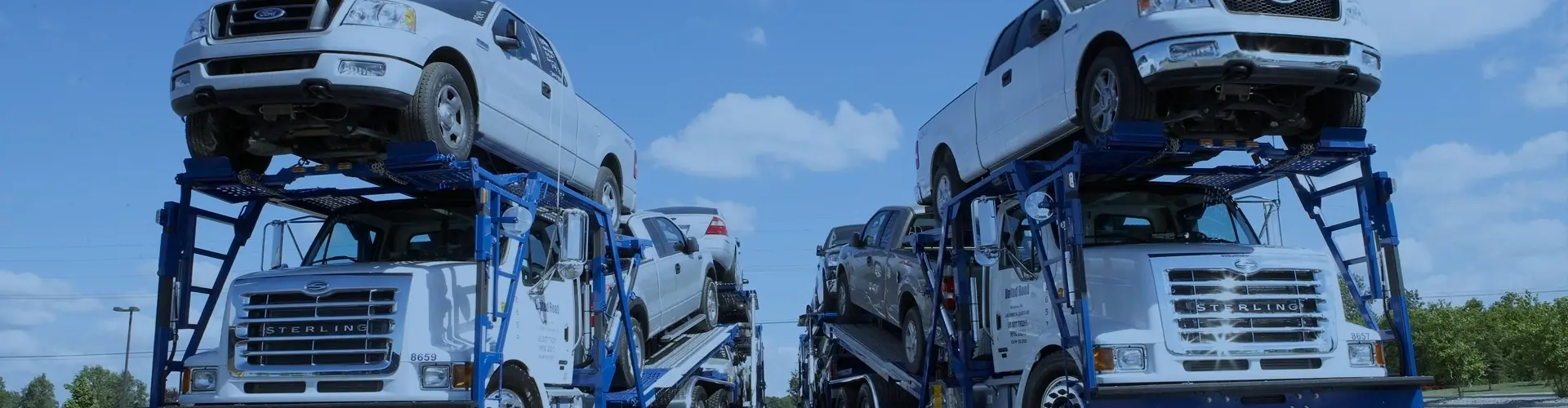
Irvine to New York Car Shipping Route
The Irvine to New York route covers approximately 2,796 miles. Carriers depart Irvine via I-405 north to I-10 east, or via SR-133 and SR-241 to connect toward I-15, depending on staging and load destination. The route crosses the Mojave Desert, climbs through the high desert of Arizona and New Mexico, traverses the Texas Panhandle, and follows I-40 east through Oklahoma, Tennessee, and Virginia before pushing north on I-81 and I-78 into the New York metro. Driving this yourself would take five to seven days of continuous effort. See why most customers choose transport instead at https://california.auto-transport-shipping.com/articles/benefits-of-auto-transport-service-vs-driving-yourself.html
New York's demand drivers are specific and reliable. Fort Hamilton in Brooklyn generates steady military PCS shipments. Columbia University, NYU, Fordham, and dozens of smaller colleges produce student vehicle moves every August and January. Major employers — Goldman Sachs, JPMorgan, Pfizer, and a dense concentration of law firms and media companies — relocate employees from California regularly. Eastbound volume is especially strong in summer when corporate transfer season peaks. Winter transit on this route can add days due to mountain passes in New Mexico and ice on I-81 through Pennsylvania. Review common transport mistakes before you book: https://california.auto-transport-shipping.com/articles/auto-transport-mistakes-to-avoid.html
Irvine to New York Car Shipping Rates
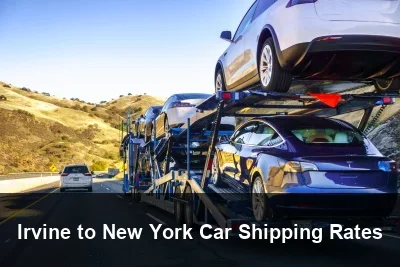
At nearly 2,800 miles, this is a long-haul corridor that prices differently than regional California routes. Base rates reflect fuel burn across multiple fuel markets — California, Arizona, Texas, and the Northeast — each with different diesel pricing. Seasonal demand spikes in June through August push eastbound rates up as corporate and student moves peak simultaneously. Winter months can introduce weather surcharges on mountain and Appalachian segments. Understand how fuel costs feed into your quote at https://california.auto-transport-shipping.com/articles/how-gas-prices-impact-california-auto-transport-fees.html
What affects the cost of Irvine to New York car shipping:
- Vehicle type and size — larger vehicles take more carrier space; aftermarket additions like lift kits, oversized mirrors, or roof accessories can add fees
- Open vs. enclosed transport — open is lower cost with stronger carrier availability; enclosed protects against weather, debris, and road conditions
- Standard vs. expedited pickup — expedited prioritizes your vehicle for the next available dispatch, typically at a $100–$300 premium
- Time of year — peak demand seasons drive rates higher; off-peak windows offer the most competitive pricing
- Fuel costs — diesel prices affect carrier rates; longer routes are more sensitive to fuel price swings
- Vehicle condition — non-running vehicles require special loading equipment and cost more to ship
| Vehicle Type | Open Car Shipping (Est.) | Enclosed Car Shipping (Est.) |
|---|---|---|
| Sedan | $1,100 – $1,600 | $1,900 – $2,700 |
| SUV / Crossover | $1,300 – $1,900 | $2,200 – $3,100 |
| Pickup Truck | $1,300 – $1,950 | $2,200 – $3,150 |
| Minivan | $1,300 – $1,900 | $2,200 – $3,100 |
| Luxury / Classic Car | $1,550 – $2,200 | $2,600 – $3,600 |
| Non-Running Vehicle | Add $200–400 | Add $200–400 |
* Estimated ranges based on recent Irvine to New York shipments. Actual rate depends on vehicle, locations, booking date, and current fuel costs. Use the form on this page to compare real quotes from licensed carriers.
Open vs. Enclosed: What This 2,800-Mile Route Actually Demands
Open transport is the right call for most standard vehicles on this corridor. Carriers run open nine-car trailers coast to coast constantly, keeping open rates competitive. Enclosed makes sense if you're moving a luxury vehicle, classic car, or anything with low ground clearance through the Mojave and high desert terrain. The I-40 corridor through New Mexico and Arizona exposes vehicles to road debris, sand, and significant temperature swings. If your vehicle's value exceeds $80,000 or it's irreplaceable, the enclosed premium on this route is worth it.
How Long Does Irvine to New York Car Shipping Take?
Irvine to New York typically transits in eight to twelve days under normal conditions. The raw driving distance at carrier legal hours — eleven hours per day maximum under federal HOS rules — puts the minimum at roughly five to six driver days, but multi-driver handoffs, load consolidation stops, and delivery sequencing in the New York metro add time. Irvine benefits from strong weekly eastbound dispatch frequency. If your move is time-sensitive, expedited options exist: https://california.auto-transport-shipping.com/articles/california-expedited-car-shipping-fast-cost.html
| Service Type | Typical Transit | Pickup Window | Best For |
|---|---|---|---|
| Open — Standard | 7–10 days | 2–5 business days | Best value; most common choice on this route |
| Open — Expedited | 5–7 days | 1–2 business days | Firm arrival date; faster dispatch window |
| Enclosed — Standard | 7–10 days | 4–8 business days | Luxury, classic, or modified vehicles |
| Enclosed — Expedited | 5–7 days | 2–4 business days | High-value vehicles on a firm delivery deadline |
** Winter storms on the I-40 New Mexico segment, ice on I-81 through Pennsylvania, and New York metro traffic congestion are the most common delay sources. December through February can add two to four days on this corridor. Book with realistic buffer time if your delivery window is rigid.
Irvine to New York — Route & Logistics
Carriers serving this route depart Irvine using I-405 north to I-10 east, or SR-241 east to connect to I-15 south toward I-10. Once on I-10, the route transitions to I-40 east at Needles, California, carrying through Flagstaff, Albuquerque, Amarillo, Oklahoma City, Memphis, and then north through the Appalachians into New York.
Key Corridor Waypoints
- Irvine, CA — Origin Staging Carriers stage in Irvine's business park zones along the Irvine Spectrum and near John Wayne Airport. Access via I-405 or SR-241 gives clean freeway entry without navigating residential streets. Pickup coordination typically uses commercial parking areas in these corridors. Your vehicle is loaded here and enters I-10 east within 30 minutes of departure.
- Needles, CA / I-40 Junction At Needles, elevation 913 feet, carriers transition from I-10 to I-40 east — the primary transcontinental route. Summer temperatures here regularly exceed 115°F, making this a natural driver rest and vehicle inspection checkpoint. Carriers verify tie-downs and check tire pressure before crossing into Arizona. This is where the long desert haul formally begins.
- Flagstaff, AZ — Elevation 6,910 Feet Flagstaff sits at nearly 7,000 feet on the Colorado Plateau and is the highest point on I-40. Winter carriers watch this segment carefully — snow and ice accumulate here even when the desert corridor below is clear. In summer it's a standard overnight stop. Carriers stage at truck stops on Route 66 Business or the I-40 commercial corridor east of downtown.
- Albuquerque, NM — Mid-Corridor Checkpoint Albuquerque at 5,312 feet elevation marks the midpoint of the desert crossing and a common carrier driver exchange point. I-40 passes directly through the metro, giving carriers access to fuel, rest, and load adjustments. It's also where carriers confirm the Tennessee or Virginia delivery routing based on their full load manifest before continuing east.
- Nashville, TN — Eastern Corridor Entry After crossing Oklahoma and Arkansas on I-40, carriers reach Nashville where I-40 and I-81 options diverge. Northbound loads for New York typically pick up I-81 through Virginia and Pennsylvania. Nashville is a natural overnight stop at approximately 1,750 miles into the route. Driver shift changes happen here for carriers running relay operations.
- New York Metro — Delivery Staging Carriers cannot always navigate nine-car trailers into Manhattan, Brooklyn side streets, or dense Queens neighborhoods. Standard practice is staging in New Jersey — Secaucus, Kearny, or Newark — with final delivery by smaller shuttle or coordinated curbside handoff. Outer borough deliveries in Staten Island and parts of the Bronx are more carrier-accessible than midtown Manhattan.
Pickup & Delivery Access
- Pickup Access in Irvine Irvine's grid layout and commercial zoning make carrier access straightforward. Business park clusters near the Irvine Spectrum, Jamboree Road, and the areas adjacent to SR-241 provide legal staging space for multi-car trailers. Residential neighborhoods with narrow cul-de-sacs may require a short drive to a nearby commercial or parking lot meet point. Your carrier will confirm the exact pickup coordinate when dispatched.
- Delivery Access in New York New York City delivery requires planning. Manhattan below 96th Street is difficult for nine-car trailers — carriers typically stage in Secaucus, NJ or the outer boroughs. Brooklyn deliveries near Fort Hamilton or Bay Ridge are more accessible. Queens and Staten Island can often accommodate direct delivery. If you're in a high-density zip code, plan for a meet point at a nearby commercial lot or parking structure.
- Nearby Pickup Locations Carriers picking up in Irvine regularly extend service to Santa Ana, Costa Mesa, and Lake Forest. Call 1‑800‑590‑6492 to confirm door-to-door availability at your address.
Open vs. Enclosed Car Shipping: Irvine to New York
Both options use licensed, insured carriers and deliver door to door. For a full breakdown, read the pros and cons of open vs. enclosed car shipping.
Open Car Shipping
Most Popular- Lower cost — the practical choice for most vehicles
- More carriers available on this corridor
- Faster dispatch from booking to pickup
- Works well for sedans, SUVs, trucks, and minivans
- Vehicle rides on an open multi-car carrier
- Cargo insurance required on all licensed carriers
Estimated cost: $1,100 – $1,950
Enclosed Car Shipping
Premium Protection- Full protection from weather, debris, and road grime
- Best for luxury, exotic, and classic vehicles
- Recommended for low-clearance and custom-built cars
- Wheel-net or soft-tie systems prevent contact damage
- Higher cargo coverage — commonly $500,000 per load
- White-glove handling by experienced operators
Estimated cost: $1,900 – $3,150
Not sure which is right for your vehicle? Call 1-800-590-6492 and we'll point you in the right direction. Also worth reading: the top 10 questions to ask any car shipping company before you commit.
How to Prepare Your Car for Shipping to New York
A little prep before pickup protects you if there's ever a dispute about your vehicle's condition. This checklist is from our full guide on preparing your car for transport:
- Remove all personal belongings from the interior and trunk
- Leave only a quarter tank of fuel — enough to load and unload
- Take date-stamped photos of the full exterior and interior
- Remove or disable toll transponders (FasTrak, E-ZPass, etc.)
- Retract or remove roof racks, spoilers, antennas, and bike mounts
- Make sure the battery is charged and tires are properly inflated
- Tell the carrier about any existing leaks or mechanical issues
- Deactivate the car alarm before the carrier arrives
- Write down the mileage on the Bill of Lading at pickup
- Fold in side mirrors if the vehicle is wider than standard
Personal items: Most carriers won't cover belongings left in the car. Read the full rules on shipping personal items in your vehicle. Also review our Bill of Lading guide so you know exactly what to check at pickup and delivery.
When to Ship Your Car from Irvine to New York
This corridor sees demand fluctuations driven by both Southern California and New York seasonal patterns. Summer is the peak eastbound season — corporate relocations, UCI and Orange County college graduates moving east, and general household moves compress carrier availability and push rates up. Winter brings rate relief on pricing but weather risk on the New Mexico and Appalachian segments. For a full look at winter transport risks, see https://california.auto-transport-shipping.com/articles/auto-transport-challenges-during-the-winter.html
Spring (March–May)
Spring is a solid booking window on this route. Weather on I-40 through the desert Southwest is manageable, and Appalachian ice risk drops significantly by April. Carrier availability is good before the summer peak hits. Rates are generally 10–15% lower than peak summer pricing. If your move is flexible, late March through May gives you the best combination of pricing and transit reliability on this corridor.
Summer Peak (June–August)
June through August is the busiest eastbound period. UCI graduates, Orange County corporate transferees, and the general household moving season all converge simultaneously. Carrier slots fill fast — book three to four weeks ahead if possible. Rates run at their annual high. Desert temperatures through Needles and Flagstaff are extreme; enclosed transport provides added protection during this window if you're moving a high-value vehicle.
Student Move Season (August–September)
Columbia, NYU, Fordham, and New School students returning east from California internships drive a secondary late-summer spike on this corridor. This pattern is distinct from the June corporate wave — it hits carriers hard in late August specifically. If you're a student shipping back to New York for fall semester, book in early August. Waiting until the last week of August means competing for limited carrier space at peak rates.
Winter (December–February)
Winter is the slowest eastbound period and the most weather-affected. Flagstaff regularly sees snow and ice, and I-81 through Pennsylvania and Virginia is prone to winter storm closures. Carriers add buffer days to winter quotes on this corridor. Rates are at their annual low, but transit time guarantees are soft. If you're shipping in January or February, build a flexible delivery window. Review winter transport specifics at https://california.auto-transport-shipping.com/articles/auto-transport-challenges-during-the-winter.html
Military PCS Season (May–July)
Fort Hamilton in Brooklyn and the broader New York metro military presence generates PCS move volume every May through July when the military transfer season peaks. These moves are often coordinated through base transportation offices, but private booking through a broker is common. If you're PCS-ing from a Southern California base to Fort Hamilton or another New York installation, book early — civilian and military demand overlap directly during this window.
Fall (September–November)
Fall is a balanced booking window. Summer demand has cleared, weather on the Appalachian segment remains reliable through October, and carrier availability is good. Westbound loads increase as snowbirds begin moving back toward California and the Southwest, which keeps eastbound rates from dropping too sharply. November is when I-40 mountain segments start seeing early snow — confirm your carrier's weather policy before booking a late-November slot.
How to Choose a Irvine to New York Car Shipping Company
Getting multiple quotes is step one — knowing what to look for in those quotes matters just as much. Our guide on how to select a car shipping company covers the full process. Here are the six things that matter most:
FMCSA Registration
Every carrier or broker must hold a valid MC number. Verify any company at FMCSA SAFER before you book.
Proof of Insurance
Ask for a current certificate of insurance. Open carriers typically carry $100,000–$250,000 per load; enclosed commonly $500,000 or more. Learn what auto transport insurance covers.
All-In Pricing
Your quote should be a final number with no fees added after booking. Know the difference between brokers and carriers and confirm what the quote covers before you agree.
Bill of Lading
A complete Bill of Lading is filled out at pickup and delivery. Our Bill of Lading guide explains what to check. Never sign an incomplete one.
Real Reviews
Check Google and the BBB. Look at how they handled complaints and damage claims — that tells you more than a five-star average from happy customers.
Route Experience
A carrier who runs Irvine to New York regularly knows things a generic coast-to-coast hauler doesn't. They know that I-40 through Flagstaff needs a weather check every November through March, not just in peak winter. They know that the New Mexico weigh stations on I-40 near Gallup run strict and slow. They know that staging in Secaucus or Kearny for New York metro delivery avoids the permit and access complications that come with trying to navigate a nine-car trailer into Brooklyn or Queens cold. They know the Irvine Spectrum and Jamboree Road commercial corridors for clean pickup staging. They know the relay handoff point in Nashville shortens total transit by a full day on relay loads. That operational knowledge is what separates a smooth eight-day transit from a twelve-day one with a damage claim at the end.
Irvine to New York Car Shipping — FAQ
How much does it cost to ship a car from Irvine to New York?
On this corridor — approximately 2,796 miles — open transport for a standard sedan typically runs between $1,100 and $1,600 depending on season, fuel pricing, and how quickly you need the vehicle picked up. SUVs and trucks run $100–$200 higher due to size. Enclosed transport adds $400–$700 to those figures. Summer rates from June through August are at their annual high due to peak eastbound demand from Irvine and the broader Orange County area. Booking three to four weeks ahead and keeping your pickup window flexible by two to three days lowers your quote meaningfully. Use the form on this page for a current rate tied to your vehicle and timeline.
How long does Irvine to New York car shipping take?
Standard transit on this route is eight to twelve days. The driving distance is roughly 2,796 miles, which at legal carrier hours translates to five to six active driving days, plus time for load consolidation, driver rest stops, and delivery sequencing in the New York metro. Irvine has consistent eastbound carrier dispatch, so vehicles are typically picked up within two to four days of booking confirmation. Winter months can extend transit by two to four days due to weather on the Flagstaff and Appalachian segments. If your move has a hard delivery deadline, ask about expedited options at https://california.auto-transport-shipping.com/articles/california-expedited-car-shipping-fast-cost.html
Is my car insured during transport from Irvine to New York?
Every licensed carrier is federally required to carry cargo insurance, which covers your vehicle during transport. Before your vehicle is loaded, the carrier completes a Bill of Lading — a written condition report noting any pre-existing damage. At delivery, you inspect the vehicle against that report. Any damage that occurred during transit and is documented on the Bill of Lading is a carrier liability claim. However, cargo policies vary in deductibles and exclusions, so confirm coverage details before signing. For a full breakdown of how transport insurance works, see https://california.auto-transport-shipping.com/articles/understanding-auto-transport-insurance.html. If you ever need to file a claim, the process is outlined at https://california.auto-transport-shipping.com/articles/how-to-file-a-claim-for-vehicle-damage-during-transport.html
Should I choose open or enclosed transport for this route?
For most standard vehicles, open transport is appropriate on this corridor. The I-40 route is a well-maintained interstate, and open carriers run it constantly. That said, this route crosses the Mojave Desert, the high desert of Arizona and New Mexico, and the Appalachian mountain segment — all of which expose vehicles to road debris, sand, and significant temperature variation. If your vehicle is valued above $80,000, is a classic or collector car, or has low ground clearance that makes it vulnerable to debris, enclosed is the right call. For a detailed comparison of both options, see https://california.auto-transport-shipping.com/articles/open-vs-enclosed-auto-transport-pros-and-cons.html
Do I have to be present at pickup and delivery?
You do not have to be personally present, but someone you authorize must be available at both ends to sign the Bill of Lading. At pickup, the authorized person confirms the vehicle's condition against the carrier's inspection report and hands over the keys. At delivery, the authorized person inspects the vehicle upon arrival and signs off on condition. If any discrepancy exists between pickup and delivery condition notes, that documentation is what supports a damage claim. Do not sign a clean delivery receipt if you observe new damage. Full Bill of Lading details are at https://california.auto-transport-shipping.com/articles/california-auto-transport-bill-of-lading-information.html
How does winter weather affect this specific route?
Winter is the most operationally complex season on the Irvine to New York corridor. Flagstaff, Arizona sits at 6,910 feet on I-40 and accumulates snow from November through March. Carriers sometimes reroute south through I-10 and I-20 to avoid Flagstaff during storm events, which adds distance. Once in the east, I-81 through Pennsylvania and Virginia is a known winter problem segment — ice storms can close it for hours. January and February are when these delays are most common. If you're shipping in winter, build a flexible delivery window of at least fourteen days and review what to expect at https://california.auto-transport-shipping.com/articles/auto-transport-challenges-during-the-winter.html
I'm PCS-ing from Southern California to Fort Hamilton or another New York installation — what do I need to know?
Military PCS shipments from the Southern California to New York corridor run through brokers like this regularly, particularly May through July when the military transfer season peaks. You don't need to use a government-contracted shipper for your personally owned vehicle — private booking is common and often faster. Make sure your Bill of Lading is complete and stored with your PCS paperwork. Fort Hamilton in Brooklyn is in a dense urban area, so confirm your carrier's delivery approach — many stage in Secaucus or Staten Island and coordinate a final delivery rather than attempting the carrier trailer directly on Brooklyn side streets.
Should I ship early or wait if I'm moving from Irvine to New York in the summer?
Ship early. June through August is the peak demand period on this eastbound corridor — UCI graduates, Orange County corporate transferees, and general household movers all compete for the same carrier slots simultaneously. Booking in April or May for a June move gives you better rate options and more flexibility on your pickup window. Waiting until two weeks before your move date in July means accepting whatever carrier slot and rate is available, which is typically the highest of the year. If your move date is fixed and falls in peak summer, book as far in advance as possible and keep your pickup window open by at least three days to improve carrier assignment speed.
Ready to Ship Your Car from Irvine to New York?
One form gets you up to 10 free quotes from licensed, insured carriers. Compare costs and transit times and book the best deal for your schedule.