
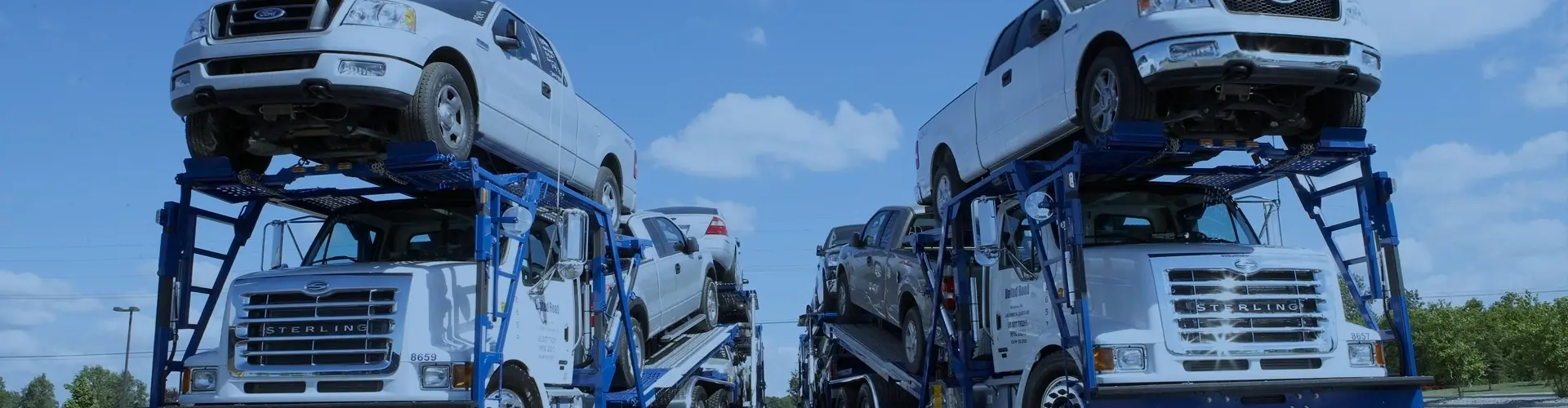
Stockton to Tulsa Car Shipping Route
The Stockton-to-Tulsa corridor covers approximately 1,721 miles. Carriers depart Stockton using either I-5 south to the I-205 interchange or SR-99 to access the Central Valley spine before transitioning east. The most common routing connects through Bakersfield to I-40 east, crossing the Mojave Desert through Barstow and Needles, then running through Albuquerque and Amarillo before dropping south on I-44 into Tulsa. That geography — desert flats, high plains, and minimal mountain exposure — keeps this a reliable open-carrier route in most seasons. Compared to driving it yourself, professional transport saves you roughly three full driving days and significant wear. See why that math favors shipping at https://california.auto-transport-shipping.com/articles/benefits-of-auto-transport-service-vs-driving-yourself.html
Tulsa demand is driven by a mix of sectors that generate consistent inbound vehicle moves. Tinker Air Force Base in nearby Midwest City is one of the largest Air Force installations in the country and produces regular PCS-related shipments. The University of Tulsa and Oral Roberts University bring student vehicle moves each August and May. On the employer side, ONEOK, Williams Companies, and the aerospace maintenance operations at Tulsa International Airport all generate corporate relocation traffic. Weather-wise, the Oklahoma leg of this route sits in a region that sees ice storms from late November through February, which can affect final delivery windows. Before you book, review common pitfalls at https://california.auto-transport-shipping.com/articles/auto-transport-mistakes-to-avoid.html
Stockton to Tulsa Car Shipping Rates
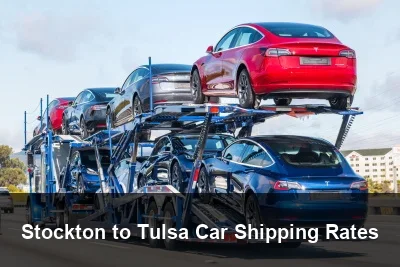
At 1,721 miles, this route falls in the mid-to-long-distance pricing tier where per-mile rates typically compress slightly compared to shorter hauls. Rates fluctuate based on fuel costs along the I-40 corridor — a stretch with limited fuel competition in the desert sections — and seasonal demand spikes in late spring and late summer when PCS and student moves peak. For a breakdown of how diesel prices affect your quote, see https://california.auto-transport-shipping.com/articles/how-gas-prices-impact-california-auto-transport-fees.html. Enclosed transport commands a 40–60% premium on this lane.
What affects the cost of Stockton to Tulsa car shipping:
- Vehicle type and size — larger vehicles take more carrier space; aftermarket additions like lift kits, oversized mirrors, or roof accessories can add fees
- Open vs. enclosed transport — open is lower cost with stronger carrier availability; enclosed protects against weather, debris, and road conditions
- Standard vs. expedited pickup — expedited prioritizes your vehicle for the next available dispatch, typically at a $100–$300 premium
- Time of year — peak demand seasons drive rates higher; off-peak windows offer the most competitive pricing
- Fuel costs — diesel prices affect carrier rates; longer routes are more sensitive to fuel price swings
- Vehicle condition — non-running vehicles require special loading equipment and cost more to ship
| Vehicle Type | Open Car Shipping (Est.) | Enclosed Car Shipping (Est.) |
|---|---|---|
| Sedan | $950 – $1,350 | $1,700 – $2,300 |
| SUV / Crossover | $1,100 – $1,600 | $1,950 – $2,700 |
| Pickup Truck | $1,100 – $1,650 | $1,950 – $2,750 |
| Minivan | $1,100 – $1,600 | $1,950 – $2,700 |
| Luxury / Classic Car | $1,300 – $1,900 | $2,200 – $3,000 |
| Non-Running Vehicle | Add $200–350 | Add $200–350 |
* Estimated ranges based on recent Stockton to Tulsa shipments. Actual rate depends on vehicle, locations, booking date, and current fuel costs. Use the form on this page to compare real quotes from licensed carriers.
Open Carrier Works Here — Unless Your Vehicle Demands Otherwise
The I-40 corridor through the Mojave and high plains is predominantly flat, open-carrier-friendly terrain with minimal overgrowth or low-clearance hazards. For standard sedans, trucks, or SUVs, open transport is the practical choice. If you're shipping a classic car, luxury vehicle, or anything with a low front splitter, enclosed makes sense through the desert stretch where road debris is a real factor. Winter months add a secondary argument for enclosed if you're shipping between November and February and your vehicle crosses through the Oklahoma ice-storm corridor.
How Long Does Stockton to Tulsa Car Shipping Take?
Standard transit on this 1,721-mile corridor runs 5 to 8 days from carrier pickup to delivery. Stockton's position on both I-5 and SR-99 means carriers can consolidate loads quickly — dispatch-to-pickup windows average 1 to 3 business days on this lane, which is tighter than less-trafficked California origins. The I-40 corridor is a high-frequency truck route, so mid-route delays are uncommon outside of weather events. If your timeline is fixed, expedited options can tighten the window; details at https://california.auto-transport-shipping.com/articles/california-expedited-car-shipping-fast-cost.html
| Service Type | Typical Transit | Pickup Window | Best For |
|---|---|---|---|
| Open — Standard | 4–6 days | 2–5 business days | Best value; most common choice on this route |
| Open — Expedited | 2–4 days | 1–2 business days | Firm arrival date; faster dispatch window |
| Enclosed — Standard | 4–6 days | 3–7 business days | Luxury, classic, or modified vehicles |
| Enclosed — Expedited | 2–4 days | 1–3 business days | High-value vehicles on a firm delivery deadline |
** Oklahoma ice storms between late November and February are the most common cause of added transit days on this route. A single freezing-rain event near Tulsa can add 24 to 48 hours to final delivery. If you're booking a winter move, build that buffer into your schedule and confirm delivery-window flexibility with your carrier at booking.
Stockton to Tulsa — Route & Logistics
Carriers access this corridor from Stockton via I-5 south or SR-99 south to Bakersfield, then pick up I-58 east to Barstow where it connects to I-40 east. That interstate runs continuously through Needles, Kingman, Flagstaff, Albuquerque, Amarillo, and Oklahoma City before the final 100-mile push south on I-44 into Tulsa. Total carrier drive time from dispatch to delivery typically spans two driving days.
Key Corridor Waypoints
- Stockton, CA (Origin) Carriers load in Stockton from the Central Valley grid using I-5 or SR-99 as the primary departure spine. The I-205 interchange west of Stockton provides an efficient connector to I-5 south. This origin has consistent carrier coverage because it sits on one of California's busiest freight corridors, reducing the dispatch-to-pickup window significantly compared to more rural Central Valley cities.
- Bakersfield, CA Bakersfield is a practical first staging point and fuel stop roughly 150 miles south of Stockton. Carriers transitioning from SR-99 pick up I-58 east here toward Barstow. This is also where drivers confirm load security before the long desert crossing. A California agricultural inspection checkpoint on I-5 near the Grapevine may affect southbound carrier timing by 15 to 30 minutes.
- Needles, CA / Arizona Border Needles sits at approximately 500 feet elevation and marks the California-Arizona state line on I-40. Summer temperatures here regularly exceed 115°F, which is worth knowing if your vehicle has any fluid or tire concerns — carriers account for this in scheduling and typically cross this stretch during cooler overnight or early morning hours. This is the longest stretch between fuel stops on the route.
- Albuquerque, NM Albuquerque sits at 5,312 feet elevation and is the largest mid-route metro on this corridor. Carriers often use this as an overnight stop or driver-change point on the Stockton-to-Tulsa run. I-40 passes directly through the city with good truck infrastructure. Winter crossings here can involve light snow, but the route stays below the high-elevation hazard zones that affect northern New Mexico passes.
- Amarillo, TX Amarillo is a major truck hub on I-40 at roughly 3,600 feet elevation and sits approximately 400 miles west of Tulsa. Carriers frequently refuel, swap drivers, or stage here before the final push east. The flat Texas panhandle and Oklahoma approach terrain is straightforward for open carriers. High winds are common on this stretch and can occasionally slow multi-level carrier rigs.
- Tulsa, OK (Destination) Carriers enter Tulsa via I-44 from Oklahoma City or directly on I-40 east to US-75 north. The metro has good truck access in most commercial and residential corridors. Neighborhoods near Oral Roberts University and midtown Tulsa have tighter street grids where large multi-car carriers may need a staging location nearby for final delivery transfer to a smaller rig or driver.
Pickup & Delivery Access
- Pickup Access in Stockton Stockton's grid layout and commercial zoning near the port district make carrier access straightforward. Most residential pickups work without special arrangements. The area around I-5 and March Lane, as well as the downtown Stockton waterfront grid, is well-suited to multi-car carrier maneuvering. If your home street is narrow, a nearby commercial lot or big-box parking area within a mile provides an easy alternate meet point.
- Delivery Access in Tulsa Most of Tulsa's residential areas are accessible to standard multi-car carriers. Midtown Tulsa and some historic Cherry Street-area neighborhoods have narrower tree-lined streets where large rigs can be restricted. If you're delivering to ORU-area housing or downtown Tulsa condos, confirm street access in advance. Carriers can typically stage at a nearby retail parking area and complete final delivery in a shorter-wheelbase vehicle or on foot-delivery within a short distance.
- Nearby Pickup Locations Carriers picking up in Stockton regularly extend service to Lodi, Tracy, and Manteca. Call 1‑800‑590‑6492 to confirm door-to-door availability at your address.
Open vs. Enclosed Car Shipping: Stockton to Tulsa
Both options use licensed, insured carriers and deliver door to door. For a full breakdown, read the pros and cons of open vs. enclosed car shipping.
Open Car Shipping
Most Popular- Lower cost — the practical choice for most vehicles
- More carriers available on this corridor
- Faster dispatch from booking to pickup
- Works well for sedans, SUVs, trucks, and minivans
- Vehicle rides on an open multi-car carrier
- Cargo insurance required on all licensed carriers
Estimated cost: $950 – $1,650
Enclosed Car Shipping
Premium Protection- Full protection from weather, debris, and road grime
- Best for luxury, exotic, and classic vehicles
- Recommended for low-clearance and custom-built cars
- Wheel-net or soft-tie systems prevent contact damage
- Higher cargo coverage — commonly $500,000 per load
- White-glove handling by experienced operators
Estimated cost: $1,700 – $2,750
Not sure which is right for your vehicle? Call 1-800-590-6492 and we'll point you in the right direction. Also worth reading: the top 10 questions to ask any car shipping company before you commit.
How to Prepare Your Car for Shipping to Tulsa
A little prep before pickup protects you if there's ever a dispute about your vehicle's condition. This checklist is from our full guide on preparing your car for transport:
- Remove all personal belongings from the interior and trunk
- Leave only a quarter tank of fuel — enough to load and unload
- Take date-stamped photos of the full exterior and interior
- Remove or disable toll transponders (FasTrak, E-ZPass, etc.)
- Retract or remove roof racks, spoilers, antennas, and bike mounts
- Make sure the battery is charged and tires are properly inflated
- Tell the carrier about any existing leaks or mechanical issues
- Deactivate the car alarm before the carrier arrives
- Write down the mileage on the Bill of Lading at pickup
- Fold in side mirrors if the vehicle is wider than standard
Personal items: Most carriers won't cover belongings left in the car. Read the full rules on shipping personal items in your vehicle. Also review our Bill of Lading guide so you know exactly what to check at pickup and delivery.
When to Ship Your Car from Stockton to Tulsa
This corridor sees its highest demand in late spring and late summer driven by military PCS cycles and university move-in schedules. Pricing tends to firm up in June and August. Winter is the softest pricing window, but Oklahoma ice storms add delivery risk from December through February. If you're moving in that window, review what cold-weather transport involves at https://california.auto-transport-shipping.com/articles/auto-transport-challenges-during-the-winter.html before committing to a hard delivery date.
Spring Peak (April–May)
Spring brings the first wave of military PCS orders as the Department of Defense fiscal cycle kicks in. Tinker Air Force Base near Tulsa generates inbound moves from California installations including Travis AFB and Naval Base Ventura County. Carrier availability on this lane tightens in late April. Book at least 10 to 14 days out if your move date falls in this window to avoid premium last-minute pricing.
Summer High Season (June–August)
This is the busiest window on the Stockton-to-Tulsa corridor. University of Tulsa and Oral Roberts University August move-ins overlap with the second PCS wave, compressing carrier availability significantly. Rates are at their annual peak in July. The I-40 desert crossing through Needles can see pavement temperatures above 150°F in July — worth noting for vehicles with low tire pressure or aging rubber before shipment.
Fall Shoulder (September–October)
September and October offer a practical sweet spot on this route. Post-summer demand eases, carrier availability improves, and the desert crossing is significantly cooler than peak summer. Oklahoma weather is stable through October with minimal storm risk. If your move is flexible, targeting late September or October typically produces the most competitive open-carrier quotes without weather-related transit risk on either end.
Winter Caution (November–February)
Oklahoma sits in a documented ice-storm belt that activates between late November and mid-February. Freezing rain, not heavy snow, is the primary hazard — it ices roads quickly and can ground carrier movements for 24 to 48 hours near Tulsa. Rates are softer this time of year, but you should build a 2-day buffer into any delivery window. Enclosed transport makes more sense in this window for higher-value vehicles.
Student Move Cycles (August & May)
University of Tulsa and Oral Roberts University both generate predictable vehicle shipping volume in August at start of fall semester and again in May at graduation. California students relocating to Tulsa for school frequently ship vehicles rather than drive. If you're booking an August student move, plan to lock in a carrier by early July. May moves after graduation are slightly less congested but still warrant early booking.
How to Choose a Stockton to Tulsa Car Shipping Company
Getting multiple quotes is step one — knowing what to look for in those quotes matters just as much. Our guide on how to select a car shipping company covers the full process. Here are the six things that matter most:
FMCSA Registration
Every carrier or broker must hold a valid MC number. Verify any company at FMCSA SAFER before you book.
Proof of Insurance
Ask for a current certificate of insurance. Open carriers typically carry $100,000–$250,000 per load; enclosed commonly $500,000 or more. Learn what auto transport insurance covers.
All-In Pricing
Your quote should be a final number with no fees added after booking. Know the difference between brokers and carriers and confirm what the quote covers before you agree.
Bill of Lading
A complete Bill of Lading is filled out at pickup and delivery. Our Bill of Lading guide explains what to check. Never sign an incomplete one.
Real Reviews
Check Google and the BBB. Look at how they handled complaints and damage claims — that tells you more than a five-star average from happy customers.
Route Experience
A carrier who regularly runs Stockton to Tulsa knows a few things that matter in practice. They know to cross the Needles-to-Kingman desert stretch at night in summer to protect both cargo and equipment. They know the Amarillo truck stops on I-40 — particularly the Love's and Flying J near Whitaker Road — as reliable driver-change and overnight points that keep the schedule predictable. They know that Tulsa's I-244 inner loop can stack up on weekday mornings and that midtown delivery streets south of 15th Street warrant a call to the customer before arrival. They also know that California agricultural inspection at the I-5 Lebec checkpoint occasionally adds 20 to 40 minutes southbound out of Stockton and build that into dispatch timing.
Stockton to Tulsa Car Shipping — FAQ
How much does it cost to ship a car from Stockton to Tulsa?
Open transport on this 1,721-mile corridor typically runs between $950 and $1,350 for a standard sedan or SUV, depending on vehicle size, time of year, and current fuel prices along the I-40 corridor. Enclosed transport adds roughly 40 to 60 percent to that base rate. Peak summer pricing (June through August) and late-spring PCS season run toward the top of that range. Booking 7 to 14 days in advance rather than last-minute generally keeps you closer to the mid-range. Get a current quote by filling out the form on this page with your vehicle type, pickup zip, and preferred dates.
How long does Stockton to Tulsa car shipping take?
From the time a carrier picks up your vehicle in Stockton, standard delivery to Tulsa takes 5 to 8 transit days. The actual drive distance is approximately 1,721 miles, which a carrier team typically covers in 2 to 3 driving days, but multi-stop loads, federal hours-of-service rules, and staging time add to total elapsed time. Dispatch to pickup in Stockton runs 1 to 3 business days on this lane given consistent carrier coverage on the I-5 and SR-99 corridors. If you're working with a firm delivery deadline, expedited options are available — see https://california.auto-transport-shipping.com/articles/california-expedited-car-shipping-fast-cost.html for details on how that service works and what it costs.
Is my car insured during transport from Stockton to Tulsa?
Yes. Every licensed carrier operating on this route is required by federal law to carry cargo insurance. That policy covers your vehicle while it is loaded on the carrier's truck. Before pickup, you and the driver complete a Bill of Lading that documents your vehicle's pre-existing condition — this is your baseline record if you need to file a claim. At delivery, inspect your vehicle against that document before signing. If there is new damage, note it on the Bill of Lading before the driver leaves. For a full explanation of how coverage works and what your personal auto policy may or may not cover, see https://california.auto-transport-shipping.com/articles/understanding-auto-transport-insurance.html. If you need to file a claim, follow the process outlined at https://california.auto-transport-shipping.com/articles/how-to-file-a-claim-for-vehicle-damage-during-transport.html
Should I choose open or enclosed transport for this route?
For most vehicles on the Stockton-to-Tulsa corridor, open transport is the practical and cost-effective choice. The I-40 routing through the Mojave and high plains involves minimal low-clearance or overgrowth hazards. However, if you're shipping a classic car, exotic, or any vehicle with a low front air dam, the desert section between Needles and Flagstaff has enough road debris from wind and truck traffic to warrant enclosed. Winter shipping between November and February also adds a reasonable argument for enclosed if you're concerned about ice-melt chemicals used on Oklahoma roads during freeze events. For a full comparison of what each service level covers, see https://california.auto-transport-shipping.com/articles/open-vs-enclosed-auto-transport-pros-and-cons.html
Do I have to be present at pickup and delivery?
You don't have to be there personally, but someone you authorize needs to be present at both ends. At pickup, that person signs the Bill of Lading and confirms the vehicle's pre-transport condition is accurately documented. At delivery, your authorized representative needs to inspect the vehicle against that same document before signing off. If you sign without inspecting and damage exists, disputing it afterward becomes significantly harder. If you're a student or military member with a constrained schedule, a trusted family member or friend can handle both ends. For a full explanation of what the Bill of Lading covers and why it matters, see https://california.auto-transport-shipping.com/articles/california-auto-transport-bill-of-lading-information.html
Does Tinker Air Force Base near Tulsa affect shipping timelines or availability?
Tinker Air Force Base in Midwest City, just east of Oklahoma City, is one of the largest Air Force installations in the country and generates significant inbound vehicle moves throughout the year. PCS order cycles peak in late spring (April–May) and again in early summer (June–July). During those windows, carrier demand into the greater Tulsa and Oklahoma City metro tightens noticeably. If your move is PCS-related, book as early as your orders allow — ideally 2 to 3 weeks in advance during peak PCS months. Carriers familiar with this route are accustomed to accommodating military move timelines and documentation requirements.
Can the desert section of I-40 cause problems for my vehicle during summer shipping?
The I-40 corridor through the Mojave Desert — specifically the Needles, CA to Kingman, AZ stretch — sees ambient air temperatures above 115°F in July and August. For your vehicle on an open carrier, this means the car's interior and any rubber or adhesive components are exposed to sustained high heat. Before shipping in summer, deflate your tires slightly below maximum to account for thermal expansion, remove any aerosol cans or heat-sensitive items from the interior, and consider a sunshade for the windshield. Experienced carriers on this corridor typically schedule the desert crossing during overnight or early morning hours to manage both equipment stress and cargo exposure.
What should I know about Oklahoma winter weather and its effect on my delivery?
Oklahoma sits in a well-documented ice-storm corridor. Unlike northern states where snowfall is the primary winter hazard, central and northeastern Oklahoma regularly experiences freezing rain events that ice roads quickly and without much warning. These events typically occur between late November and mid-February and can ground carrier movements near Tulsa for 24 to 48 hours. If you're booking a winter shipment on this corridor, do not give your carrier a hard, same-day delivery commitment. Build a 2-day buffer into any obligations — lease start dates, work start dates, or airport pickups — that depend on your vehicle's arrival. Rates are softer in winter, which partially offsets the scheduling inconvenience.
Ready to Ship Your Car from Stockton to Tulsa?
One form gets you up to 10 free quotes from licensed, insured carriers. Compare costs and transit times and book the best deal for your schedule.