
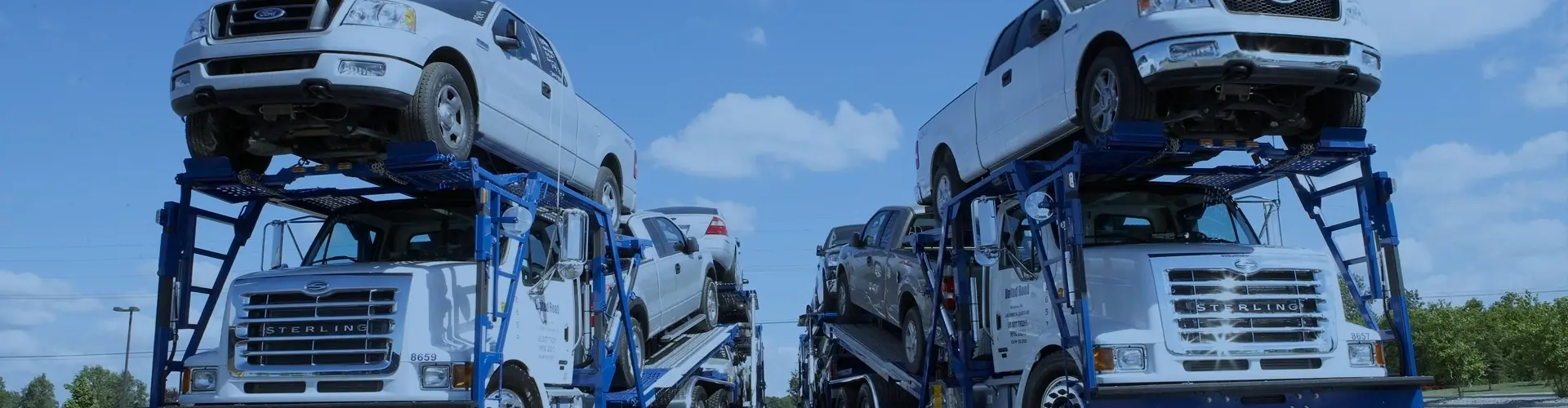
Stockton to Louisville Car Shipping Route
Stockton to Louisville covers approximately 2,151 miles. Carriers exit Stockton via SR-99 or I-5 southbound, merge onto I-205 east toward Tracy, then pick up I-580 east to I-205 connecting to I-5 south toward the Tejon Pass. From there, most loads transition to I-40 east through Arizona, New Mexico, and Texas before heading north on I-65 into Louisville. The route crosses the Mojave Desert, the Texas panhandle, and the rolling terrain of Tennessee — geography that adds real variability to transit. Driving this yourself means 30-plus hours behind the wheel, mounting fuel costs, and wear on your vehicle. A detailed comparison of shipping versus driving is available at https://california.auto-transport-shipping.com/articles/benefits-of-auto-transport-service-vs-driving-yourself.html.
Louisville's inbound demand is anchored by Ford's two assembly plants, which employ thousands and generate constant corporate relocation traffic. The University of Louisville enrolls over 21,000 students, and Bellarmine University adds graduate-level movement each fall and spring. Fort Knox — home to the Army's Human Resources Command and gold depository — drives military PCS shipments throughout the year, with peak movement in the June-through-August window. UPS Worldport's 24-hour operation means Louisville workforce relocations happen on irregular cycles, keeping carrier availability relatively stable even outside peak season. Winter transit on this corridor deserves attention: I-40 through New Mexico and I-65 through Tennessee can both see ice and snow delays between November and March. Review https://california.auto-transport-shipping.com/articles/auto-transport-mistakes-to-avoid.html before finalizing your booking.
Stockton to Louisville Car Shipping Rates
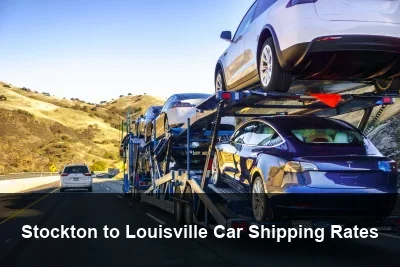
Rates on the Stockton-to-Louisville corridor are influenced by the 2,151-mile distance, fuel pricing along the I-40 and I-65 corridors, and seasonal demand spikes tied to Fort Knox PCS cycles in summer and university move-in periods in August and January. Gas prices affect carrier cost directly on a haul this long — understand how at https://california.auto-transport-shipping.com/articles/how-gas-prices-impact-california-auto-transport-fees.html. Expect baseline quotes in the $1,100–$1,600 range depending on vehicle size, transport type, and booking lead time.
What affects the cost of Stockton to Louisville car shipping:
- Vehicle type and size — larger vehicles take more carrier space; aftermarket additions like lift kits, oversized mirrors, or roof accessories can add fees
- Open vs. enclosed transport — open is lower cost with stronger carrier availability; enclosed protects against weather, debris, and road conditions
- Standard vs. expedited pickup — expedited prioritizes your vehicle for the next available dispatch, typically at a $100–$300 premium
- Time of year — peak demand seasons drive rates higher; off-peak windows offer the most competitive pricing
- Fuel costs — diesel prices affect carrier rates; longer routes are more sensitive to fuel price swings
- Vehicle condition — non-running vehicles require special loading equipment and cost more to ship
| Vehicle Type | Open Car Shipping (Est.) | Enclosed Car Shipping (Est.) |
|---|---|---|
| Sedan | $1,100 – $1,600 | $1,900 – $2,700 |
| SUV / Crossover | $1,300 – $1,900 | $2,200 – $3,100 |
| Pickup Truck | $1,300 – $1,950 | $2,200 – $3,150 |
| Minivan | $1,300 – $1,900 | $2,200 – $3,100 |
| Luxury / Classic Car | $1,550 – $2,200 | $2,600 – $3,600 |
| Non-Running Vehicle | Add $200–400 | Add $200–400 |
* Estimated ranges based on recent Stockton to Louisville shipments. Actual rate depends on vehicle, locations, booking date, and current fuel costs. Use the form on this page to compare real quotes from licensed carriers.
Open vs. Enclosed: What This Route Actually Requires
Open transport is the right call for the majority of vehicles on this route. Carriers run open trailers consistently between California and Kentucky, keeping availability high and rates lower. The one stretch that warrants reconsideration is winter transit — I-40 through northern Arizona and New Mexico and I-65 through Tennessee can deliver road salt, slush, and debris exposure between November and March. If you're shipping a classic car, a luxury vehicle, or anything freshly painted, enclosed transport adds meaningful protection across those conditions. For standard daily drivers moving any other time of year, open is the practical and cost-effective choice.
How Long Does Stockton to Louisville Car Shipping Take?
Stockton to Louisville typically transits in 7 to 10 days under normal conditions. A driver covering this 2,151-mile route straight through would need roughly 30 hours of seat time, but carriers run regulated hours-of-service and often carry multiple loads across different destinations, adding realistic time. Carrier frequency out of Stockton is solid — the I-5 and SR-99 corridors generate consistent load volume. If your timeline is tight, expedited options exist: see https://california.auto-transport-shipping.com/articles/california-expedited-car-shipping-fast-cost.html. Book 5 to 7 days ahead of your target pickup date to secure placement on an outbound load.
| Service Type | Typical Transit | Pickup Window | Best For |
|---|---|---|---|
| Open — Standard | 7–10 days | 2–5 business days | Best value; most common choice on this route |
| Open — Expedited | 5–7 days | 1–2 business days | Firm arrival date; faster dispatch window |
| Enclosed — Standard | 7–10 days | 4–8 business days | Luxury, classic, or modified vehicles |
| Enclosed — Expedited | 5–7 days | 2–4 business days | High-value vehicles on a firm delivery deadline |
** Winter weather between November and March is the primary delay risk on this corridor. I-40 through northern Arizona and New Mexico can trigger chain controls or temporary closures, and I-65 in Tennessee sees ice events that slow carrier movement. Either condition can add 1 to 3 days to an otherwise clean transit window.
Stockton to Louisville — Route & Logistics
Carriers accessing this route exit Stockton on SR-99 or I-5 southbound, transition through the I-205 interchange near Tracy, and build toward I-5 south through the San Joaquin Valley. From the Tejon Pass, most loads shift to I-40 east, running through Barstow, Flagstaff, Albuquerque, and Amarillo before connecting north on I-65 into Louisville — covering approximately 2,151 miles of primary interstate.
Key Corridor Waypoints
- Tracy, CA Tracy sits at the I-205 and I-580 interchange, roughly 15 miles east of Stockton. Carriers from Stockton frequently stage here or pick up additional Central Valley loads before committing to the eastbound run. The interchange gives trucks a clean transition from the valley grid onto the interstate spine heading toward the Altamont Pass and I-5 south.
- Tejon Pass (Grapevine), CA — Elevation 4,144 ft The Grapevine on I-5 is the critical mountain crossing out of the Central Valley into Southern California. At 4,144 feet, it sees chain controls and occasional closure in winter. Carriers plan this crossing carefully — a closure here adds hours and can push loads to overnight in Bakersfield before continuing south toward the I-40 connection at Barstow.
- Barstow, CA Barstow is the practical transition point where I-15 meets I-40. Most carriers heading to Kentucky exit the Mojave here and pick up I-40 east. It's a common overnight stop and fuel point. Carriers familiar with this corridor know Barstow's truck stops and can plan their hours-of-service reset here to maximize forward progress into Arizona.
- Albuquerque, NM Albuquerque sits at roughly the halfway mark and is a natural overnight staging city. I-40 runs directly through the metro at elevation — the city sits at 5,312 feet. Winter carriers watch conditions through the Tijeras Canyon approaches east of the city. It's also a load consolidation point where some regional carriers hand off to dedicated east-coast runs.
- Nashville, TN Nashville is the final major metro before Louisville, sitting about 175 miles south on I-65. Carriers often make a final fuel and log check here. I-65 northbound from Nashville to Louisville is high-volume and well-serviced. Nashville is also a secondary pickup or delivery point for carriers splitting loads across Tennessee and Kentucky on the same run.
- Louisville, KY Carriers enter Louisville from the south on I-65, crossing the Ohio River via the Kennedy or Lincoln Bridge depending on load height. The metro distributes easily across the east side near the University of Louisville, the south side toward Fort Knox access roads, and the west side near UPS Worldport off I-264. Most residential deliveries are curbside with no special permitting required.
Pickup & Delivery Access
- Pickup Access in Stockton Stockton's Central Valley grid is carrier-friendly. Wide commercial arterials off I-5, I-205, and SR-99 allow full-length auto transport trailers to maneuver without restriction. Carriers commonly stage in industrial areas near the Port of Stockton or along Airport Way. Residential pickup is generally feasible; if your street is narrow, a nearby parking lot or wide intersection works as a meet point without added cost.
- Delivery Access in Louisville Louisville is accessible across most neighborhoods for standard open carriers. Suburban areas on the east side near the University of Louisville and south toward Shively present no access issues. Downtown Louisville and the NuLu district have tighter streets — if your delivery address is in a dense urban block, plan to meet the carrier at a nearby parking structure or wide surface lot. Fort Knox-adjacent deliveries route easily off US-31W.
- Nearby Pickup Locations Carriers picking up in Stockton regularly extend service to Lodi, Tracy, and Manteca. Call 1‑800‑590‑6492 to confirm door-to-door availability at your address.
Open vs. Enclosed Car Shipping: Stockton to Louisville
Both options use licensed, insured carriers and deliver door to door. For a full breakdown, read the pros and cons of open vs. enclosed car shipping.
Open Car Shipping
Most Popular- Lower cost — the practical choice for most vehicles
- More carriers available on this corridor
- Faster dispatch from booking to pickup
- Works well for sedans, SUVs, trucks, and minivans
- Vehicle rides on an open multi-car carrier
- Cargo insurance required on all licensed carriers
Estimated cost: $1,100 – $1,950
Enclosed Car Shipping
Premium Protection- Full protection from weather, debris, and road grime
- Best for luxury, exotic, and classic vehicles
- Recommended for low-clearance and custom-built cars
- Wheel-net or soft-tie systems prevent contact damage
- Higher cargo coverage — commonly $500,000 per load
- White-glove handling by experienced operators
Estimated cost: $1,900 – $3,150
Not sure which is right for your vehicle? Call 1-800-590-6492 and we'll point you in the right direction. Also worth reading: the top 10 questions to ask any car shipping company before you commit.
How to Prepare Your Car for Shipping to Louisville
A little prep before pickup protects you if there's ever a dispute about your vehicle's condition. This checklist is from our full guide on preparing your car for transport:
- Remove all personal belongings from the interior and trunk
- Leave only a quarter tank of fuel — enough to load and unload
- Take date-stamped photos of the full exterior and interior
- Remove or disable toll transponders (FasTrak, E-ZPass, etc.)
- Retract or remove roof racks, spoilers, antennas, and bike mounts
- Make sure the battery is charged and tires are properly inflated
- Tell the carrier about any existing leaks or mechanical issues
- Deactivate the car alarm before the carrier arrives
- Write down the mileage on the Bill of Lading at pickup
- Fold in side mirrors if the vehicle is wider than standard
Personal items: Most carriers won't cover belongings left in the car. Read the full rules on shipping personal items in your vehicle. Also review our Bill of Lading guide so you know exactly what to check at pickup and delivery.
When to Ship Your Car from Stockton to Louisville
This corridor sees pricing and availability shift in predictable patterns. Summer brings the heaviest demand spike, driven by Fort Knox PCS orders and university move-ins at U of L and Bellarmine. January marks a secondary demand surge as spring semester begins. Winter months introduce weather risk across I-40 and I-65 that can extend transit — details at https://california.auto-transport-shipping.com/articles/auto-transport-challenges-during-the-winter.html. Booking 7 to 10 days ahead during peak windows protects your rate and load placement.
Spring (March–May)
Spring is a moderate demand period on this corridor. Weather improves across the Southwest and through Tennessee, making transit more reliable. University of Louisville's spring semester wind-down in April and May generates some student shipping volume. Rates are generally competitive — this is one of the better windows to book if your schedule is flexible. Carrier availability is solid and transit times are consistent.
Summer Peak (June–August)
June through August is the highest-demand period on this route. Fort Knox PCS orders peak in June and July as military personnel execute duty-station changes. University move-in at U of L runs mid-August. Carriers fill quickly during this window, and rates reflect that demand. Book at least 10 days ahead if your move falls between June 1 and August 31. Delays are rare but availability is tighter than any other season.
Fall Semester Start (August–September)
August brings a concentrated student-move surge tied to University of Louisville and Bellarmine University fall enrollment. Families shipping vehicles from California to Louisville for students starting in late August should book by early August. This window overlaps with the tail end of military PCS season, compressing available carrier slots. Rates trend 8 to 12 percent above spring levels during this three-week window.
Winter Caution (November–February)
Winter is the lowest-demand period and often offers the best base rates — but transit risk is real. I-40 through northern Arizona and New Mexico sees snow and ice events. I-65 through Tennessee can freeze unexpectedly. Build 2 to 3 extra days of buffer into your timeline between November and February. If you're shipping a vehicle that isn't weatherproofed or recently restored, consider enclosed transport during this window.
Military PCS Season (May–July)
Fort Knox generates consistent PCS shipping demand, with the heaviest concentration between May and July when orders are issued ahead of the fiscal year transition. Carriers serving the Louisville metro are accustomed to military timelines and base-adjacent delivery. If you're a service member, verify your government travel entitlement window before booking — personal-cost bookings made outside that window cannot be reimbursed retroactively.
January Semester Surge (January)
January marks a secondary demand spike as spring semester begins at Louisville-area universities. Students returning from winter break and new transfers shipping vehicles create a concentrated 2-week booking window in early January. Rates tick upward during this period. If your delivery target is mid-January, book before Christmas to secure your slot and avoid the last-minute premium that appears in the first week of the new year.
How to Choose a Stockton to Louisville Car Shipping Company
Getting multiple quotes is step one — knowing what to look for in those quotes matters just as much. Our guide on how to select a car shipping company covers the full process. Here are the six things that matter most:
FMCSA Registration
Every carrier or broker must hold a valid MC number. Verify any company at FMCSA SAFER before you book.
Proof of Insurance
Ask for a current certificate of insurance. Open carriers typically carry $100,000–$250,000 per load; enclosed commonly $500,000 or more. Learn what auto transport insurance covers.
All-In Pricing
Your quote should be a final number with no fees added after booking. Know the difference between brokers and carriers and confirm what the quote covers before you agree.
Bill of Lading
A complete Bill of Lading is filled out at pickup and delivery. Our Bill of Lading guide explains what to check. Never sign an incomplete one.
Real Reviews
Check Google and the BBB. Look at how they handled complaints and damage claims — that tells you more than a five-star average from happy customers.
Route Experience
A carrier who runs Stockton to Louisville regularly knows this route at a level a one-time hauler doesn't. They know the Tejon Pass chain-control windows that typically hit Tuesday through Thursday in January and February, and they plan overnight in Bakersfield rather than risk a closure hold. They know the Barstow transition from I-15 to I-40 requires an early morning departure to clear the Mojave before midday desert heat affects tire pressure on double-stacked loads. They know Albuquerque is the right reset point for hours-of-service, not Flagstaff. And they know Louisville's Kennedy Bridge has a posted clearance that affects double-deck trailer routing — experienced carriers use the Lincoln Bridge for taller loads. That route knowledge is the difference between a 7-day transit and a 10-day one.
Stockton to Louisville Car Shipping — FAQ
How much does it cost to ship a car from Stockton to Louisville?
Shipping a standard sedan from Stockton to Louisville on an open carrier typically runs $1,100 to $1,500 under normal conditions. SUVs, trucks, and larger vehicles run $1,300 to $1,700 due to space and weight. Enclosed transport adds $400 to $600 to those baselines. Rates climb 10 to 15 percent during the Fort Knox PCS peak in June and July and during the August university move-in window. Booking 7 to 10 days ahead of your preferred pickup date gives you the best rate and load availability. Inoperable vehicles require specialized equipment and carry a surcharge of $150 to $300 depending on whether winching is needed.
How long does Stockton to Louisville car shipping take?
Transit on this route runs 7 to 10 days under normal conditions. The 2,151-mile distance requires carriers to manage regulated hours-of-service across multiple driving days, and most loads on this corridor carry vehicles for multiple destinations, which adds real time versus a dedicated run. Carrier frequency out of Stockton is solid given the I-5 and SR-99 load volume, so placement on an outbound truck typically happens within 1 to 3 days of your booking window opening. Winter months add risk — I-40 and I-65 can both see weather delays that push transit to 11 or 12 days. If your timeline is hard, review expedited options at https://california.auto-transport-shipping.com/articles/california-expedited-car-shipping-fast-cost.html.
Is my car insured during transport from Stockton to Louisville?
Every licensed carrier operating on this route is required by federal law to carry cargo insurance covering your vehicle during transport. That coverage is active from the moment the carrier loads your vehicle in Stockton through delivery in Louisville. Before loading, you and the driver complete a Bill of Lading documenting your vehicle's pre-transport condition — that document is your evidence baseline if a claim becomes necessary. Read the full breakdown of what carrier insurance covers and what it doesn't at https://california.auto-transport-shipping.com/articles/understanding-auto-transport-insurance.html. If damage occurs, the process for filing is outlined at https://california.auto-transport-shipping.com/articles/how-to-file-a-claim-for-vehicle-damage-during-transport.html. Photograph your vehicle thoroughly before pickup.
Should I choose open or enclosed transport for this route?
For most vehicles and most of the year, open transport is the right call on this corridor. Carriers run open trailers between California and Kentucky consistently, which means better availability and lower cost. The calculus changes in winter — I-40 through New Mexico and I-65 through Tennessee both see road salt, slush, and debris between November and March. If you're shipping a classic, a luxury vehicle, or anything with fresh paint or custom bodywork, enclosed transport is worth the premium during that window. For a standard daily driver moving in spring, summer, or fall, open is the practical and cost-effective choice. A full comparison of both options is at https://california.auto-transport-shipping.com/articles/open-vs-enclosed-auto-transport-pros-and-cons.html.
Do I have to be present at pickup in Stockton and delivery in Louisville?
You or a designated adult need to be present at both ends. At pickup, someone must sign the Bill of Lading, which documents your vehicle's condition before it goes onto the carrier. At delivery, someone must inspect the vehicle and sign the final Bill of Lading confirming its condition on arrival. If you can't be there personally, a trusted adult — family member, friend, or colleague — can act on your behalf. Do not accept delivery without completing a thorough walk-around inspection before signing. The Bill of Lading is your legal record for any claim. Learn more about what that document covers at https://california.auto-transport-shipping.com/articles/california-auto-transport-bill-of-lading-information.html.
How does Fort Knox military PCS shipping work on this route?
Fort Knox is roughly 35 miles south of Louisville and generates consistent inbound shipping demand, particularly between May and July when PCS orders are issued. If you're a service member PCSing to Fort Knox, your orders may entitle you to a government-paid vehicle shipment — verify your entitlement through your Transportation Office before booking privately. If you're shipping at personal expense, carriers serving Louisville are familiar with base-adjacent deliveries and can typically reach the Fort Knox area via US-31W without staging issues. Book early during the May-through-July window, as carrier slots fill faster than any other period on this corridor.
What weather risks affect transit between Stockton and Louisville?
Two segments of this route carry meaningful weather risk. First, the Tejon Pass on I-5 just south of Bakersfield sits at 4,144 feet and can close for chain controls or brief weather events in winter — carriers familiar with this corridor plan their departure to clear the pass before midday. Second, I-40 through northern Arizona and New Mexico sees snow and ice between November and March, and I-65 through Tennessee can ice unexpectedly during the same window. Either event can add 1 to 3 days to your transit. If you're shipping between November and February, build buffer time into your delivery expectation and consider enclosed transport to avoid road salt and debris exposure.
Can carriers pick up in Lodi, Tracy, or Manteca instead of Stockton?
Yes, and it's worth knowing that carriers operating in this part of the Central Valley often work the Stockton-Tracy-Manteca-Lodi cluster as a single pickup zone. If you're in Tracy, you're sitting directly on I-205, which is a natural carrier staging point before the eastbound run. Lodi is minutes off SR-99 and accessible for most trailer configurations. Manteca connects easily via SR-120. Pickup from any of these cities typically carries no additional surcharge and may actually work better logistically for carriers building a California-to-Midwest load. Confirm your exact address when requesting a quote so the carrier can assess street access.
Ready to Ship Your Car from Stockton to Louisville?
One form gets you up to 10 free quotes from licensed, insured carriers. Compare costs and transit times and book the best deal for your schedule.