

Stockton to Austin Car Shipping Route
Stockton to Austin covers approximately 1,845 miles. Carriers access the route via I-5 south or SR-99 south through the Central Valley, merging onto I-580 east through the Altamont Pass before connecting to I-205 and then I-10 east across Southern California and into Texas. From El Paso, carriers typically continue on I-10 east before cutting north on I-20 or US-183 into Austin. The route crosses the Mojave Desert, West Texas flats, and the Texas Hill Country approaches. Driving this yourself means two to three full days behind the wheel, fuel costs, lodging, and wear on your vehicle. Shipping removes all of that. See why transport beats driving at https://california.auto-transport-shipping.com/articles/benefits-of-auto-transport-service-vs-driving-yourself.html.
Austin demand is structural, not seasonal. Fort Cavazos, roughly 65 miles north in Killeen, generates steady PCS traffic that feeds inbound vehicle volume to the metro. The University of Texas at Austin enrolls over 50,000 students, many arriving from California. Major employers including Dell Technologies, Apple's Austin campus, Tesla Gigafactory Texas in southeast Austin, and a growing semiconductor cluster all pull relocating workers with vehicles. Weather-wise, this corridor crosses the Sonoran Desert and West Texas in summer, where temperatures exceed 110°F, and is subject to winter ice events in the Texas Hill Country between November and February. Plan your move carefully and avoid common pitfalls by reviewing https://california.auto-transport-shipping.com/articles/auto-transport-mistakes-to-avoid.html.
Stockton to Austin Car Shipping Rates
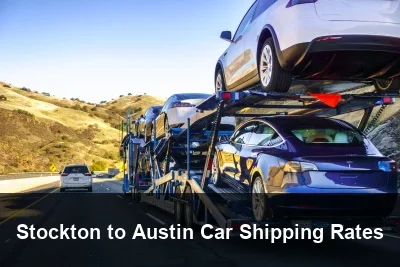
At roughly 1,845 miles, this route sits in the long-haul pricing tier where per-mile rates typically drop compared to shorter corridors, but total cost is substantial. California-to-Texas demand spikes in late spring and summer as relocation season peaks, pushing rates up 10 to 20 percent from May through August. Summer heat across the desert stretch can also increase fuel consumption and wear, factors carriers price into quotes. See how fuel costs affect your rate at https://california.auto-transport-shipping.com/articles/how-gas-prices-impact-california-auto-transport-fees.html.
What affects the cost of Stockton to Austin car shipping:
- Vehicle type and size — larger vehicles take more carrier space; aftermarket additions like lift kits, oversized mirrors, or roof accessories can add fees
- Open vs. enclosed transport — open is lower cost with stronger carrier availability; enclosed protects against weather, debris, and road conditions
- Standard vs. expedited pickup — expedited prioritizes your vehicle for the next available dispatch, typically at a $100–$300 premium
- Time of year — peak demand seasons drive rates higher; off-peak windows offer the most competitive pricing
- Fuel costs — diesel prices affect carrier rates; longer routes are more sensitive to fuel price swings
- Vehicle condition — non-running vehicles require special loading equipment and cost more to ship
| Vehicle Type | Open Car Shipping (Est.) | Enclosed Car Shipping (Est.) |
|---|---|---|
| Sedan | $1,100 – $1,600 | $1,900 – $2,700 |
| SUV / Crossover | $1,300 – $1,900 | $2,200 – $3,100 |
| Pickup Truck | $1,300 – $1,950 | $2,200 – $3,150 |
| Minivan | $1,300 – $1,900 | $2,200 – $3,100 |
| Luxury / Classic Car | $1,550 – $2,200 | $2,600 – $3,600 |
| Non-Running Vehicle | Add $200–400 | Add $200–400 |
* Estimated ranges based on recent Stockton to Austin shipments. Actual rate depends on vehicle, locations, booking date, and current fuel costs. Use the form on this page to compare real quotes from licensed carriers.
Open vs. Enclosed: What Makes Sense on This Desert Corridor
Open transport is the right call for standard daily drivers on this route. The I-10 corridor through the Mojave and West Texas is a high-volume truck lane with well-maintained pavement, and open carriers run it constantly. Enclosed makes sense if you're shipping a luxury vehicle, classic car, or anything with a low-clearance body kit vulnerable to road debris. Summer heat across the desert does not damage vehicles on open carriers under normal transit times. If your vehicle is worth over $60,000 or has cosmetic modifications, the enclosed premium is justified. Otherwise, open is sufficient.
How Long Does Stockton to Austin Car Shipping Take?
Stockton to Austin typically takes four to seven days from carrier pickup to delivery. The driving distance alone represents roughly 28 hours behind the wheel, and carriers make stops, stage at terminals, and coordinate multi-vehicle loads. Stockton benefits from proximity to Bay Area and Sacramento carrier pools, so dispatch times are generally one to three business days. If your timeline is tight, expedited single-car transport can compress that window significantly. Review options at https://california.auto-transport-shipping.com/articles/california-expedited-car-shipping-fast-cost.html. Most standard shipments on this corridor fall in the five-to-six-day range under normal conditions.
| Service Type | Typical Transit | Pickup Window | Best For |
|---|---|---|---|
| Open — Standard | 7–10 days | 2–5 business days | Best value; most common choice on this route |
| Open — Expedited | 5–7 days | 1–2 business days | Firm arrival date; faster dispatch window |
| Enclosed — Standard | 7–10 days | 4–8 business days | Luxury, classic, or modified vehicles |
| Enclosed — Expedited | 5–7 days | 2–4 business days | High-value vehicles on a firm delivery deadline |
** Winter ice events in the Texas Hill Country and I-10 closures near El Paso during dust storms can add one to two days between November and March. Summer monsoon activity in Arizona and New Mexico occasionally slows carriers crossing that segment. Build buffer time into any hard-deadline move.
Stockton to Austin — Route & Logistics
Carriers depart Stockton via I-5 south or SR-99 south, connecting to I-205 west to I-580 east through Altamont Pass, then to I-10 east. That interstate carries the load across the California desert, through Arizona and New Mexico, across El Paso, and into Texas. From I-10, carriers typically cut north on US-183 or SH-71 into Austin. Total driving distance is approximately 1,845 miles.
Key Corridor Waypoints
- Stockton, CA (Origin) Carriers access Stockton via I-5, I-205, or SR-99. The Central Valley grid makes staging straightforward, with wide surface streets and commercial lots near the port area. Most carriers dispatch from the I-5 corridor or consolidate with Sacramento or Stockton-area loads before heading south toward the Altamont Pass interchange.
- Altamont Pass / I-580 Interchange, CA At roughly 1,009 feet elevation, Altamont Pass is where Central Valley carriers transition from I-205 onto I-580 heading east. Wind is a consistent factor here — gusts regularly exceed 30 mph and can slow multi-vehicle haulers. Carriers familiar with this segment plan accordingly and avoid scheduling tight connections through this section in high-wind seasons.
- Blythe, CA / Arizona State Line Blythe sits at the California-Arizona border on I-10 and serves as a natural rest and fuel stop for carriers. The Agricultural Inspection Station here checks loads entering California on the return leg. Eastbound carriers typically top off fuel in Blythe before crossing into Arizona, where the Sonoran Desert stretch begins and temperatures can exceed 115°F in summer.
- El Paso, TX / Las Cruces, NM Junction El Paso is the first major Texas waypoint and a common overnight or driver-change staging point for carriers on this corridor. The I-10 and US-54 interchange here handles significant commercial truck volume. Border inspection activity, high freight density, and refueling logistics make this a reliable stopping point. Carriers crossing into Texas note the time zone change to Central here.
- Fort Stockton / I-10 and US-285 Junction, TX Fort Stockton is the midpoint of the West Texas desert crossing, sitting at approximately 2,970 feet elevation. It's a standard driver rest stop and fuel point for carriers. The I-10 corridor here is exposed and subject to sudden crosswinds and dust. Carriers running this segment in summer account for elevated fuel burn and higher tire wear on long loaded hauls.
- Austin, TX (Destination) Carriers typically enter Austin via US-183 south from I-10 or via SH-71 west. Most residential neighborhoods in central Austin have narrow streets and overhead obstructions that require standard carrier rigs to stage nearby. The Domain area, Mueller district, and South Congress corridor are accessible but tight. East Austin and Round Rock staging lots are common delivery coordination points.
Pickup & Delivery Access
- Pickup Access in Stockton Stockton's grid layout and proximity to I-5 and SR-99 make carrier pickup straightforward. Residential streets throughout the Lincoln Village, Brookside, and Weston Ranch areas can accommodate standard auto transport rigs. For tighter neighborhoods near downtown Stockton, carriers may request a meet point at a commercial lot near the I-5 freeway frontage road or near the Crosstown Freeway interchange to avoid narrow residential blocks.
- Delivery Access in Austin Central Austin's older neighborhoods — Hyde Park, Bouldin Creek, and Travis Heights — have narrow streets that limit large carrier rigs. Carriers typically stage in nearby commercial lots or suburban entry points like the Rundberg Lane corridor, South Lamar commercial strip, or Round Rock. East Austin industrial zones near US-183 work well for final delivery handoffs. Coordinate your delivery address early so your carrier can plan the last mile.
- Nearby Pickup Locations Carriers picking up in Stockton regularly extend service to Lodi, Tracy, and Manteca. Call 1‑800‑590‑6492 to confirm door-to-door availability at your address.
Open vs. Enclosed Car Shipping: Stockton to Austin
Both options use licensed, insured carriers and deliver door to door. For a full breakdown, read the pros and cons of open vs. enclosed car shipping.
Open Car Shipping
Most Popular- Lower cost — the practical choice for most vehicles
- More carriers available on this corridor
- Faster dispatch from booking to pickup
- Works well for sedans, SUVs, trucks, and minivans
- Vehicle rides on an open multi-car carrier
- Cargo insurance required on all licensed carriers
Estimated cost: $1,100 – $1,950
Enclosed Car Shipping
Premium Protection- Full protection from weather, debris, and road grime
- Best for luxury, exotic, and classic vehicles
- Recommended for low-clearance and custom-built cars
- Wheel-net or soft-tie systems prevent contact damage
- Higher cargo coverage — commonly $500,000 per load
- White-glove handling by experienced operators
Estimated cost: $1,900 – $3,150
Not sure which is right for your vehicle? Call 1-800-590-6492 and we'll point you in the right direction. Also worth reading: the top 10 questions to ask any car shipping company before you commit.
How to Prepare Your Car for Shipping to Austin
A little prep before pickup protects you if there's ever a dispute about your vehicle's condition. This checklist is from our full guide on preparing your car for transport:
- Remove all personal belongings from the interior and trunk
- Leave only a quarter tank of fuel — enough to load and unload
- Take date-stamped photos of the full exterior and interior
- Remove or disable toll transponders (FasTrak, E-ZPass, etc.)
- Retract or remove roof racks, spoilers, antennas, and bike mounts
- Make sure the battery is charged and tires are properly inflated
- Tell the carrier about any existing leaks or mechanical issues
- Deactivate the car alarm before the carrier arrives
- Write down the mileage on the Bill of Lading at pickup
- Fold in side mirrors if the vehicle is wider than standard
Personal items: Most carriers won't cover belongings left in the car. Read the full rules on shipping personal items in your vehicle. Also review our Bill of Lading guide so you know exactly what to check at pickup and delivery.
When to Ship Your Car from Stockton to Austin
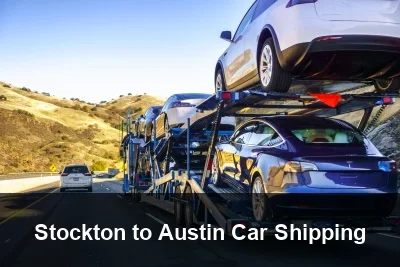
This corridor runs warm year-round but has clear pricing and logistics cycles. Late spring through summer is peak demand — relocation season, UT Austin move-ins, and corporate transfers all converge between May and August, pushing rates and dispatch times higher. Winter brings reduced demand but real weather risk across the Texas Hill Country and the I-10 desert. For guidance on cold-weather shipping considerations, see https://california.auto-transport-shipping.com/articles/auto-transport-challenges-during-the-winter.html.
Spring Relocation Season (March–May)
Corporate relocations and PCS orders from Fort Cavazos ramp up in spring as the new fiscal year begins. Carrier availability on this corridor tightens in April and May. Book three to four weeks out if your move date falls in this window. Rates are rising but not yet at peak summer levels, making late March through mid-April a practical sweet spot for price and availability.
Peak Summer Demand (June–August)
This is the highest-demand window on the Stockton-to-Austin corridor. UT Austin student arrivals, tech sector relocations, and general California-to-Texas migration all peak simultaneously. Rates typically run 15 to 20 percent above off-season baseline. Carriers fill quickly, and dispatch times can stretch to five to seven days. If you're moving in this window, book as early as possible and confirm your pickup window before finalizing your move date.
Fall Shoulder Season (September–November)
Demand softens after August, and rates moderate through October. This is generally the best combination of price and carrier availability on this route. Weather is manageable across the desert stretch, and West Texas temperatures drop to reasonable levels. The Texas Hill Country can see early frost by late November. If your schedule is flexible, September through October often delivers the most competitive quotes with shorter dispatch windows.
Winter Weather Risk (December–February)
West Texas and the Texas Hill Country see ice events between December and February that can close I-10 segments near Fort Stockton and I-20 near Abilene. Carriers reroute or hold until roads clear, adding one to three days to transit. The desert stretch between Blythe and El Paso is also subject to dust storms that trigger temporary closures. Build buffer days into any winter shipment and review winter transport considerations at https://california.auto-transport-shipping.com/articles/auto-transport-challenges-during-the-winter.html.
UT Austin Move-In (Late July–Late August)
The University of Texas at Austin's fall semester move-in drives a concentrated spike in inbound vehicle demand from California. Carriers from Stockton and the broader Bay Area fill quickly during this window. If you're shipping a vehicle for a student arriving in Austin, target dispatch in early to mid-July to avoid the crunch. Last-minute bookings in August during this period face both rate premiums and limited carrier availability.
Military PCS Cycles (April–June and October)
Fort Cavazos PCS orders cluster in late spring and early fall, driving structured surges of inbound Austin-area vehicle demand. These orders often have hard report dates, which means military customers compete directly with civilian shippers for the same carrier slots. If your move coincides with PCS season, book early and confirm your carrier's availability against your report date. Expedited options are worth pricing for PCS moves with fixed timelines.
How to Choose a Stockton to Austin Car Shipping Company
Getting multiple quotes is step one — knowing what to look for in those quotes matters just as much. Our guide on how to select a car shipping company covers the full process. Here are the six things that matter most:
FMCSA Registration
Every carrier or broker must hold a valid MC number. Verify any company at FMCSA SAFER before you book.
Proof of Insurance
Ask for a current certificate of insurance. Open carriers typically carry $100,000–$250,000 per load; enclosed commonly $500,000 or more. Learn what auto transport insurance covers.
All-In Pricing
Your quote should be a final number with no fees added after booking. Know the difference between brokers and carriers and confirm what the quote covers before you agree.
Bill of Lading
A complete Bill of Lading is filled out at pickup and delivery. Our Bill of Lading guide explains what to check. Never sign an incomplete one.
Real Reviews
Check Google and the BBB. Look at how they handled complaints and damage claims — that tells you more than a five-star average from happy customers.
Route Experience
A carrier who runs Stockton to Austin regularly knows that Altamont Pass headwinds are worst in spring afternoons and plans to clear that segment by midday. They know the Blythe fuel stop is critical before the Arizona desert stretch in summer and that Flying J near the I-10 and US-54 interchange in El Paso is the preferred overnight spot for this run. They know central Austin's street constraints and already have staging coordinates near US-183 and SH-71 to avoid getting a 75-foot rig stuck on a narrow South Congress side street. They know Fort Stockton is the only reliable diesel stop for 100-plus miles in either direction and plan their fuel accordingly. That operational knowledge is why corridor-experienced carriers run cleaner, faster, and with fewer surprises than a first-time driver on this lane.
Stockton to Austin Car Shipping — FAQ
How much does it cost to ship a car from Stockton to Austin?
Shipping a standard sedan from Stockton to Austin on an open carrier typically runs between $950 and $1,350 depending on season, fuel prices, and how quickly you need the vehicle dispatched. SUVs and trucks run $100 to $200 higher due to size and weight. Enclosed transport adds 40 to 60 percent over open rates. Peak summer pricing from June through August sits at the upper end of those ranges. Booking two to three weeks in advance and being flexible on your pickup window by one to two days will generally get you a better rate than last-minute requests.
How long does Stockton to Austin car shipping take?
Most Stockton-to-Austin shipments complete in four to seven days from carrier pickup. The driving distance is approximately 1,845 miles, representing about 28 hours of actual drive time. Carriers running multi-vehicle loads make fuel stops, staging stops, and coordinate other deliveries along the corridor, which accounts for the additional days. Dispatch from Stockton typically takes one to three business days after booking. If you have a hard delivery deadline, review expedited options at https://california.auto-transport-shipping.com/articles/california-expedited-car-shipping-fast-cost.html before committing to a standard timeline.
Is my car insured during transport from Stockton to Austin?
Every licensed carrier is required by federal law to carry cargo insurance that covers your vehicle while it's on the truck. Coverage levels vary by carrier, typically ranging from $100,000 to $250,000 in cargo liability. Before your vehicle is loaded, you and the driver complete a Bill of Lading documenting its pre-existing condition. At delivery, you inspect the vehicle against that document before signing. Any new damage is noted and forms the basis of a claim. For a full explanation of how coverage works on this type of shipment, see https://california.auto-transport-shipping.com/articles/understanding-auto-transport-insurance.html. If you ever need to file a claim, follow the steps at https://california.auto-transport-shipping.com/articles/how-to-file-a-claim-for-vehicle-damage-during-transport.html.
Should I choose open or enclosed transport for this route?
Open transport is appropriate for the large majority of vehicles on this corridor. The I-10 route through the Sonoran Desert and West Texas is a high-volume commercial corridor with well-maintained pavement, and open carriers run it daily. Summer heat does not damage vehicles during normal transit windows on open trailers. Enclosed transport is worth the premium for vehicles valued above $60,000, classic cars, or vehicles with low-clearance body modifications vulnerable to road debris. If you're on the fence, review the full comparison at https://california.auto-transport-shipping.com/articles/open-vs-enclosed-auto-transport-pros-and-cons.html to make the call based on your specific vehicle.
Do I have to be present at pickup and delivery?
You do not have to be physically present as long as a designated adult is available to inspect the vehicle, sign the Bill of Lading at pickup, and repeat that process at delivery. The Bill of Lading is the legal record of your vehicle's condition at both ends of the transport — it's what protects you if a claim becomes necessary. Do not authorize anyone to sign delivery acceptance without completing a thorough walk-around inspection first. For more on what the Bill of Lading covers and why it matters, see https://california.auto-transport-shipping.com/articles/california-auto-transport-bill-of-lading-information.html.
Does the summer desert heat on I-10 damage vehicles during transport?
Under normal transit conditions, ambient desert heat does not damage vehicles on open carriers between Stockton and Austin. Vehicles are not running, and heat buildup in a parked vehicle is distinct from operating temperature stress. The main heat-related risk is to fluids that are already at marginal levels — a radiator with low coolant or an aging battery under sustained 110-plus-degree ambient temperatures can be stressed. Before shipping in summer, ensure your vehicle's fluids are at proper levels and your battery is in good condition. Carriers are not responsible for pre-existing mechanical vulnerabilities exposed by heat.
Are there special considerations for military PCS moves from Stockton to Austin?
Fort Cavazos, located approximately 65 miles north of Austin in Killeen, is one of the largest Army installations in the country and generates significant inbound PCS vehicle volume from California. If you're shipping under PCS orders, confirm whether your orders authorize vehicle shipment reimbursement through the Defense Personal Property Program or whether you're contracting privately. Private transport gives you more scheduling control and is often faster than government-contracted moves. PCS season peaks in April through June and again in October — book early if your report date falls in those windows, and know your hard-delivery date before committing to a standard transit estimate.
What happens if there's a winter storm delay on the Texas leg of my shipment?
Winter ice events in the Texas Hill Country and dust storms on the West Texas I-10 segment are the two most common causes of delay on this corridor between November and March. When road conditions trigger closures or make driving unsafe for loaded carriers, drivers hold at a secure staging location until roads clear. This can add one to three days to your transit window. Your broker should notify you when a delay occurs, but you can also check TXDOT road conditions directly. If your move date is time-sensitive and falls in winter, review https://california.auto-transport-shipping.com/articles/auto-transport-challenges-during-the-winter.html and consider building extra days into your delivery window when you book.
Ready to Ship Your Car from Stockton to Austin?
One form gets you up to 10 free quotes from licensed, insured carriers. Compare costs and transit times and book the best deal for your schedule.