

San Jose to Fresno Car Shipping Route
San Jose to Fresno covers roughly 185 miles. Carriers typically stage in the Silicon Valley grid — accessing SR-87 south to US-101, then picking up I-152 east through Gilroy and the Pacheco Pass, or heading south on US-101 to I-5 via Gilroy before cutting east on SR-33 or SR-198 into the valley. The Pacheco Pass route through the Diablo Range is the most direct path and keeps total drive time around three hours. Choosing professional transport over driving yourself eliminates mileage wear, fuel costs, and a half-day commitment. See the full breakdown at https://california.auto-transport-shipping.com/articles/benefits-of-auto-transport-service-vs-driving-yourself.html before you decide.
Fresno's demand is driven by California State University Fresno (enrollment roughly 25,000), Community Regional Medical Center and Kaiser Fresno employing thousands of healthcare workers, and agricultural employers including Wonderful Company and Sun-Maid whose corporate staff relocate seasonally. Fresno Yosemite International Airport attracts corporate relocations as well. Climatically, the Pacheco Pass corridor can experience dense tule fog from November through February, which affects carrier scheduling and occasionally adds a transit day. Summer heat in the Central Valley can exceed 105°F, relevant if you're shipping a vehicle sensitive to heat exposure. Review https://california.auto-transport-shipping.com/articles/auto-transport-mistakes-to-avoid.html before finalizing your booking details.
San Jose to Fresno Car Shipping Rates
Rates on this corridor fall into the short-haul tier — under 200 miles — which typically prices higher per mile than long-distance runs because carriers recover fixed costs over a shorter distance. Expect base open-transport quotes ranging from $300 to $500 depending on vehicle size and season. Summer demand spikes around university move-in, and Central Valley heat can affect carrier willingness to run midday, adding minor scheduling premiums. Fuel costs on this route are modest but still factor in; see https://california.auto-transport-shipping.com/articles/how-gas-prices-impact-california-auto-transport-fees.html for current impact.
What affects the cost of San Jose to Fresno car shipping:
- Vehicle type and size — larger vehicles take more carrier space; aftermarket additions like lift kits, oversized mirrors, or roof accessories can add fees
- Open vs. enclosed transport — open is lower cost with stronger carrier availability; enclosed protects against weather, debris, and road conditions
- Standard vs. expedited pickup — expedited prioritizes your vehicle for the next available dispatch, typically at a $100–$300 premium
- Time of year — peak demand seasons drive rates higher; off-peak windows offer the most competitive pricing
- Fuel costs — diesel prices affect carrier rates; longer routes are more sensitive to fuel price swings
- Vehicle condition — non-running vehicles require special loading equipment and cost more to ship
| Vehicle Type | Open Car Shipping (Est.) | Enclosed Car Shipping (Est.) |
|---|---|---|
| Sedan | $350 – $500 | $700 – $950 |
| SUV / Crossover | $400 – $600 | $800 – $1,100 |
| Pickup Truck | $400 – $600 | $800 – $1,100 |
| Minivan | $400 – $600 | $800 – $1,100 |
| Luxury / Classic Car | $500 – $700 | $950 – $1,300 |
| Non-Running Vehicle | Add $100–200 | Add $100–200 |
* Estimated ranges based on recent San Jose to Fresno shipments. Actual rate depends on vehicle, locations, booking date, and current fuel costs. Use the form on this page to compare real quotes from licensed carriers.
Open vs. Enclosed: What This Specific Corridor Actually Needs
The San Jose to Fresno run is mostly freeway through open terrain — no mountain passes with falling rock, no coastal salt spray, and no urban canyon debris typical of Bay Area city driving. Open transport is the practical choice for standard vehicles on this corridor. Enclosed makes sense if you're moving a classic, exotic, or low-clearance vehicle that can't handle the modest road debris or Central Valley dust on SR-99 and I-5. For daily drivers, SUVs, and pickup trucks, open saves $150 to $250 with no meaningful risk increase on this route.
How Long Does San Jose to Fresno Car Shipping Take?
Most San Jose to Fresno shipments complete in one to two days from the moment a carrier is assigned. The driving distance is under three hours, so once a carrier loads your vehicle in San Jose, Fresno delivery typically happens the same day or the following morning depending on the carrier's broader route sequence. Carrier assignment from San Jose usually takes one to three business days after booking. This is not a route where expedited service is typically necessary unless you have a hard delivery deadline — if you do, review https://california.auto-transport-shipping.com/articles/california-expedited-car-shipping-fast-cost.html for what that adds to your cost.
| Service Type | Typical Transit | Pickup Window | Best For |
|---|---|---|---|
| Open — Standard | 1–2 days | 1–3 business days | Best value; most common choice on this route |
| Open — Expedited | Same–1 day | Next day–1 business day | Firm arrival date; faster dispatch window |
| Enclosed — Standard | 2–3 days | 2–5 business days | Luxury, classic, or modified vehicles |
| Enclosed — Expedited | 1–2 days | 1–2 business days | High-value vehicles on a firm delivery deadline |
** Tule fog along SR-99 and I-5 in the Central Valley runs November through February and can reduce visibility to near zero. Carriers will hold rather than run unsafe conditions, which can add one to two days to winter transits. Summer heat over 100°F rarely causes delays but may push carrier departure times to early morning hours.
San Jose to Fresno — Route & Logistics
Carriers accessing this route from San Jose typically depart via SR-87 south to US-101, then connect to I-152 east through Gilroy toward the Pacheco Pass. From the pass, SR-33 or SR-99 south delivers into Fresno. Total carrier drive time runs approximately 2.5 to 3.5 hours depending on load sequencing and valley traffic near Fresno city limits on SR-99.
Key Corridor Waypoints
- San Jose, CA — Origin Staging Carriers serving this corridor access the Silicon Valley grid via SR-87 and US-101. Tech campus areas near North First Street and the Santa Clara border provide wide-lane staging with minimal traffic conflict. Santa Clara County's suburb streets — Sunnyvale, Cupertino, Mountain View — are fully accessible for standard 75-foot carriers. Pickup is confirmed 12 to 24 hours in advance once a carrier is assigned.
- Gilroy, CA — US-101 / I-152 Junction Gilroy sits at the critical fork where US-101 meets I-152 east. Carriers heading to Fresno via the Pacheco Pass route turn east here. Gilroy is also where carriers running the longer I-5 south alternative continue straight. This junction determines a 20-minute difference in transit time and is the last major fuel and inspection opportunity before the pass.
- Pacheco Pass, CA — SR-152 Summit (Elevation ~1,368 ft) The Pacheco Pass through the Diablo Range reaches approximately 1,368 feet and carries two-lane traffic on SR-152 through Henry W. Coe State Park terrain. The grade is manageable for loaded car carriers but requires speed reduction. Wind can affect high-profile multi-car haulers. This is the most direct crossing from the Bay Area into the San Joaquin Valley and adds no meaningful delay under normal conditions.
- Los Banos, CA — Valley Floor Entry Los Banos marks the descent onto the San Joaquin Valley floor where SR-152 intersects with I-5. Carriers can continue on SR-152 east toward SR-99 or briefly use I-5 south before cutting east. This is a common fuel and log-check stop for carriers. Valley tule fog risk begins here in winter months, and carriers assess conditions before continuing east toward Fresno.
- Madera, CA — SR-99 North Fresno Approach Madera sits on SR-99 roughly 20 miles north of Fresno and serves as a de facto staging and sequencing point for carriers with multiple Central Valley deliveries. Drivers consolidating Fresno and Visalia drops often resequence here. For single-destination San Jose to Fresno shipments, Madera is a brief checkpoint before the final SR-99 south push into Fresno proper.
- Fresno, CA — Delivery Zone Fresno's main delivery areas — Tower District, Fig Garden, and the Clovis suburbs — are accessible to standard carriers. SR-99 provides direct city access. Downtown Fresno's tighter grid may require a staging meetup at a larger parking lot near Fresno Yosemite International Airport or CSU Fresno campus. Industrial north Fresno near the logistics parks off Clinton Avenue handles large carrier turnaround without complications.
Pickup & Delivery Access
- Pickup Access in San Jose San Jose carriers access the full Santa Clara County grid. Wide commercial streets near North First Street, Brokaw Road, and the Sunnyvale and Cupertino borders accommodate 75-foot car haulers without permits. If your address involves a narrow cul-de-sac or gated community, coordinate a meet point at a nearby shopping center or business parking lot. Tech campus visitor lots near major employers are frequently used as convenient staging areas.
- Delivery Access in Fresno Most Fresno residential neighborhoods — Tower District, Sunnyside, and Clovis suburbs — are carrier-accessible. SR-99 off-ramps near Shaw Avenue and Herndon Avenue allow quick neighborhood entry. Downtown Fresno's older grid and some historic district streets are tight for full-size haulers; if delivering there, plan to meet the carrier at a nearby lot such as the CSU Fresno campus periphery or a commercial corridor on Blackstone Avenue.
- Nearby Pickup Locations Carriers picking up in San Jose regularly extend service to Sunnyvale, Cupertino, Mountain View, and Santa Clara. Call 1‑800‑590‑6492 to confirm door-to-door availability at your address.
Open vs. Enclosed Car Shipping: San Jose to Fresno
Both options use licensed, insured carriers and deliver door to door. For a full breakdown, read the pros and cons of open vs. enclosed car shipping.
Open Car Shipping
Most Popular- Lower cost — the practical choice for most vehicles
- More carriers available on this corridor
- Faster dispatch from booking to pickup
- Works well for sedans, SUVs, trucks, and minivans
- Vehicle rides on an open multi-car carrier
- Cargo insurance required on all licensed carriers
Estimated cost: $350 – $600
Enclosed Car Shipping
Premium Protection- Full protection from weather, debris, and road grime
- Best for luxury, exotic, and classic vehicles
- Recommended for low-clearance and custom-built cars
- Wheel-net or soft-tie systems prevent contact damage
- Higher cargo coverage — commonly $500,000 per load
- White-glove handling by experienced operators
Estimated cost: $700 – $1,100
Not sure which is right for your vehicle? Call 1-800-590-6492 and we'll point you in the right direction. Also worth reading: the top 10 questions to ask any car shipping company before you commit.
How to Prepare Your Car for Shipping to Fresno
A little prep before pickup protects you if there's ever a dispute about your vehicle's condition. This checklist is from our full guide on preparing your car for transport:
- Remove all personal belongings from the interior and trunk
- Leave only a quarter tank of fuel — enough to load and unload
- Take date-stamped photos of the full exterior and interior
- Remove or disable toll transponders (FasTrak, E-ZPass, etc.)
- Retract or remove roof racks, spoilers, antennas, and bike mounts
- Make sure the battery is charged and tires are properly inflated
- Tell the carrier about any existing leaks or mechanical issues
- Deactivate the car alarm before the carrier arrives
- Write down the mileage on the Bill of Lading at pickup
- Fold in side mirrors if the vehicle is wider than standard
Personal items: Most carriers won't cover belongings left in the car. Read the full rules on shipping personal items in your vehicle. Also review our Bill of Lading guide so you know exactly what to check at pickup and delivery.
When to Ship Your Car from San Jose to Fresno
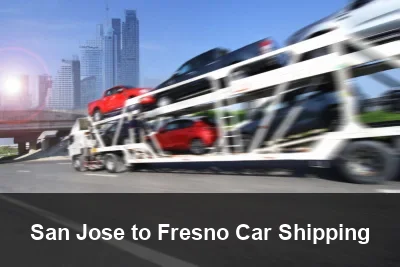
This corridor sees its strongest demand in late summer — August through September — driven by CSU Fresno move-in and Bay Area-to-valley relocations. Winter introduces tule fog risk on SR-99 that can slow carriers without adding significant cost. Spring and fall are the most predictable windows for both pricing and transit. For winter-specific transport considerations, review https://california.auto-transport-shipping.com/articles/auto-transport-challenges-during-the-winter.html before scheduling a December through February shipment.
Late Summer Student Move (August–September)
CSU Fresno's fall semester launch drives the single largest demand spike on this corridor. Bay Area families shipping vehicles south for students — and students returning vehicles north after summer — compress carrier availability in both directions during mid-August. Book at least two weeks in advance for August 10 through September 5 pickups. Rates typically run 10 to 15 percent above the corridor average during this window, and carrier lead times stretch from one to three days to four to six days.
Spring Relocation Season (March–May)
Spring is the most balanced season on this route — demand is steady from Bay Area-to-valley relocations, weather is clear, and the Pacheco Pass is fog-free. Carriers run the corridor multiple times per week in both directions, keeping rates near baseline. If you have flexibility, March through May is the easiest window to get a confirmed pickup within 24 to 48 hours and a firm one-to-two-day delivery window without paying seasonal premiums.
Tule Fog Season (November–February)
Dense tule fog on SR-99 and I-5 in the San Joaquin Valley runs November through February and is the main transit risk on this corridor. Visibility can drop to near zero, and carriers will not run in unsafe conditions. Shipments booked in this window should include a two-day buffer beyond the standard transit estimate. Rates do not typically spike for fog, but plan for flexibility in your delivery schedule. See https://california.auto-transport-shipping.com/articles/auto-transport-challenges-during-the-winter.html for full guidance.
Summer Heat Peak (June–August)
Central Valley temperatures exceed 100°F regularly from June through August. Carriers adapt by scheduling departures before 8 a.m. to avoid midday heat, which can affect loading surface temperatures and tire pressure management on multi-car haulers. This rarely causes delays, but it may shift your pickup window to early morning rather than afternoon. If you're shipping a vehicle with a dark exterior or sensitive electronics, note this and confirm timing with your dispatcher.
Agricultural Harvest Traffic (September–October)
The Central Valley harvest season concentrates heavy agricultural truck traffic on SR-99 and I-5 from September through October. Car carriers navigating into Fresno may encounter congestion near distribution hubs off the freeway, particularly during morning hours. This can add a few hours to a delivery day but rarely extends transit by a full day. Early morning carrier arrivals in Fresno during harvest months help avoid the worst congestion near the SR-99 / SR-41 interchange.
How to Choose a San Jose to Fresno Car Shipping Company
Getting multiple quotes is step one — knowing what to look for in those quotes matters just as much. Our guide on how to select a car shipping company covers the full process. Here are the six things that matter most:
FMCSA Registration
Every carrier or broker must hold a valid MC number. Verify any company at FMCSA SAFER before you book.
Proof of Insurance
Ask for a current certificate of insurance. Open carriers typically carry $100,000–$250,000 per load; enclosed commonly $500,000 or more. Learn what auto transport insurance covers.
All-In Pricing
Your quote should be a final number with no fees added after booking. Know the difference between brokers and carriers and confirm what the quote covers before you agree.
Bill of Lading
A complete Bill of Lading is filled out at pickup and delivery. Our Bill of Lading guide explains what to check. Never sign an incomplete one.
Real Reviews
Check Google and the BBB. Look at how they handled complaints and damage claims — that tells you more than a five-star average from happy customers.
Route Experience
A carrier who runs San Jose to Fresno regularly knows that the Pacheco Pass on SR-152 is fast but winds can affect high-profile loads — experienced drivers reduce speed through the grade rather than fighting lateral push on a full car hauler. They know that morning fog near Los Banos can look clear from the pass but thicken on the valley floor by the time they reach SR-99. They stage Fresno deliveries off Shaw Avenue or Herndon Avenue rather than trying to sequence off downtown exits. They know CSU Fresno's service roads on the east side of campus are carrier-accessible for student deliveries, avoiding the congested Chestnut Avenue approach. That operational knowledge is what separates a smooth one-day delivery from a frustrated two-day run.
San Jose to Fresno Car Shipping — FAQ
How much does it cost to ship a car from San Jose to Fresno?
For this corridor — approximately 185 miles — open transport quotes typically range from $300 to $500 for a standard sedan or SUV. Short-haul routes like this price higher per mile than cross-country runs because carriers recover fixed costs over less distance. Vehicle size, weight, and ground clearance affect the rate: pickup trucks and oversized SUVs run $50 to $100 more than sedans. Timing matters too — August and September see a 10 to 15 percent spike around CSU Fresno's fall semester. Enclosed transport for this corridor runs $600 to $900 depending on availability. Fuel prices are a live factor on every quote; see https://california.auto-transport-shipping.com/articles/how-gas-prices-impact-california-auto-transport-fees.html for current impact on Central Valley corridor pricing.
How long does San Jose to Fresno car shipping take?
Once a carrier is assigned, the actual drive is under three hours, so most deliveries complete within one to two days of pickup. The full window from booking to delivery — including carrier assignment time — is typically three to five business days for standard service. Carrier assignment from the Silicon Valley area usually takes one to three business days because this is an active corridor with consistent outbound demand. If you need a guaranteed delivery window, expedited service can compress assignment time to same-day or next-day at an added cost; review https://california.auto-transport-shipping.com/articles/california-expedited-car-shipping-fast-cost.html for what that costs on a short-haul route like this one. Winter tule fog can add one to two days to the estimate.
Is my car insured during transport from San Jose to Fresno?
Every FMCSA-licensed carrier is required to carry cargo insurance, which covers your vehicle while it is on the hauler. Coverage limits vary by carrier — most run $100,000 to $250,000 in cargo liability, which is adequate for standard vehicles. Before your vehicle is loaded, you and the carrier complete a Bill of Lading documenting all pre-existing condition. At Fresno delivery, you inspect the vehicle against that same document and note any new damage before signing. Do not sign a clean Bill of Lading if you see damage. For a full explanation of how coverage works on this type of shipment, read https://california.auto-transport-shipping.com/articles/understanding-auto-transport-insurance.html. If you need to file a claim, the process is outlined at https://california.auto-transport-shipping.com/articles/how-to-file-a-claim-for-vehicle-damage-during-transport.html.
Should I choose open or enclosed transport for this route?
Open transport is the right choice for the large majority of vehicles on this corridor. The San Jose to Fresno run uses well-maintained freeways — US-101, I-152, SR-99 — with no unusual debris hazards, no salt-spray coastal exposure, and no high-elevation weather risk that would justify enclosed. Open saves $200 to $400 on this route. Choose enclosed if you're shipping a classic, exotic, or low-clearance vehicle, or if Central Valley dust and summer heat are a concern for a sensitive finish. For a full comparison of what each service level actually provides, see https://california.auto-transport-shipping.com/articles/open-vs-enclosed-auto-transport-pros-and-cons.html before you book.
Do I have to be present at pickup in San Jose and delivery in Fresno?
You do not have to be present yourself, but someone you authorize must be there to release the vehicle at pickup and accept it at delivery. That person needs to be able to inspect the vehicle with the carrier, confirm pre-existing condition notes on the Bill of Lading, and sign it at both ends. If you cannot be at the Fresno delivery, name a trusted contact — a family member, roommate, or colleague — in advance and confirm the arrangement with your dispatcher. Signing off on a Bill of Lading without a thorough inspection waives your ability to claim damage afterward. Full guidance on what the Bill of Lading covers is at https://california.auto-transport-shipping.com/articles/california-auto-transport-bill-of-lading-information.html.
Does tule fog in the Central Valley actually delay shipments on this route?
Yes, it can. Tule fog forms in the San Joaquin Valley from roughly November through February and is specific to low-lying areas along SR-99 and I-5 between Los Banos and Fresno. It is not a Bay Area phenomenon — the corridor can be clear from San Jose to the Pacheco Pass and then fog-bound from the valley floor east. Carriers will not run in zero-visibility conditions, and a fog delay typically adds one to two days to the transit estimate. If you're booking a winter shipment, build in a buffer and confirm with your dispatcher whether fog advisories are active on the day of your scheduled delivery.
Is this route heavily used for student vehicle shipping to CSU Fresno?
Yes. California State University Fresno has an enrollment of approximately 25,000 students, many of whom commute from or have family in the Bay Area. The August to September move-in period and May graduation period are the two highest-demand windows on this specific corridor for student-related shipments. If you're shipping a vehicle for a student heading to CSU Fresno for fall semester, book by late July to lock in a competitive rate and avoid the carrier shortage that hits mid-August. The reverse — shipping a vehicle back to San Jose after the school year — sees a smaller but real demand spike in mid-May through early June.
Can carriers access my pickup address in San Jose if I live in a gated community or on a narrow street?
Standard car haulers are 75 to 80 feet long and require a street or lot wide enough to pull forward and load without backing through tight turns. Most of the Silicon Valley grid — Sunnyvale, Cupertino, Mountain View, Santa Clara, and San Jose proper — handles these carriers without issue on main residential and commercial streets. Gated communities, narrow cul-de-sacs, and dense tech campus service roads can be problematic. The standard solution is a nearby meet point: a shopping center parking lot, a business district side street, or a public lot. Coordinate this with your dispatcher when booking so the carrier knows the plan before arrival.
Ready to Ship Your Car from San Jose to Fresno?
One form gets you up to 10 free quotes from licensed, insured carriers. Compare costs and transit times and book the best deal for your schedule.