
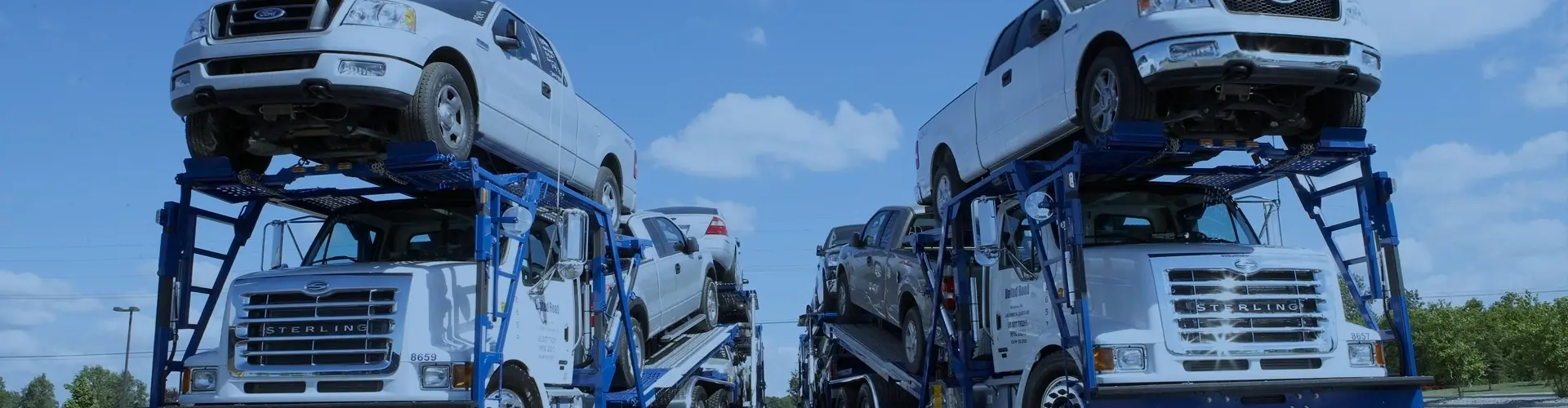
San Bernardino to Chicago Car Shipping Route
San Bernardino to Chicago covers approximately 1,856 miles by road. Carriers exit San Bernardino via I-10 East or I-215 North connecting to I-15, then transition to I-40 East across the Mojave or continue on I-10 through Arizona and New Mexico before picking up I-44 or I-55 into Chicago. The route crosses four states and significant elevation and climate variation. Driving this yourself means two or more days behind the wheel, fuel costs, lodging, and wear on your vehicle. Shipping avoids all of that — see the full comparison at https://california.auto-transport-shipping.com/articles/benefits-of-auto-transport-service-vs-driving-yourself.html before deciding.
Chicago-area demand for inbound vehicles is driven by several concrete factors. Naval Station Great Lakes, roughly 40 miles north of downtown, generates steady military PCS shipments. The University of Chicago, Northwestern University, Loyola, and DePaul collectively cycle tens of thousands of students annually. Major employers including United Airlines, Boeing's corporate headquarters, Amazon's regional fulfillment network, and the Chicago Mercantile Exchange drive executive and corporate relocations year-round. Winter weather between November and March can slow transit through Missouri and Illinois — ice and snow occasionally force route adjustments or add a day to delivery. Before you book, review https://california.auto-transport-shipping.com/articles/auto-transport-mistakes-to-avoid.html to avoid common booking errors.
San Bernardino to Chicago Car Shipping Rates
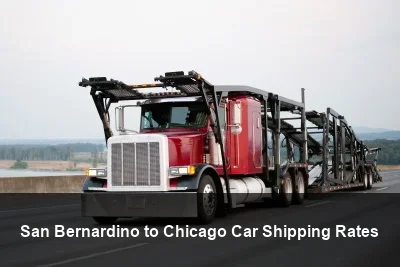
This is a Tier 1 long-haul corridor — 1,856 miles puts it in a distance band where per-mile rates drop compared to shorter routes, but absolute costs are higher. Rates from San Bernardino to Chicago typically run $900–$1,400 for a standard sedan on open transport, with enclosed running 40–60% above that. Fuel surcharges are a direct variable on this distance; changes at desert fueling stations in Arizona and New Mexico affect carrier costs. See how fuel pricing factors into your quote at https://california.auto-transport-shipping.com/articles/how-gas-prices-impact-california-auto-transport-fees.html.
What affects the cost of San Bernardino to Chicago car shipping:
- Vehicle type and size — larger vehicles take more carrier space; aftermarket additions like lift kits, oversized mirrors, or roof accessories can add fees
- Open vs. enclosed transport — open is lower cost with stronger carrier availability; enclosed protects against weather, debris, and road conditions
- Standard vs. expedited pickup — expedited prioritizes your vehicle for the next available dispatch, typically at a $100–$300 premium
- Time of year — peak demand seasons drive rates higher; off-peak windows offer the most competitive pricing
- Fuel costs — diesel prices affect carrier rates; longer routes are more sensitive to fuel price swings
- Vehicle condition — non-running vehicles require special loading equipment and cost more to ship
| Vehicle Type | Open Car Shipping (Est.) | Enclosed Car Shipping (Est.) |
|---|---|---|
| Sedan | $1,100 – $1,600 | $1,900 – $2,700 |
| SUV / Crossover | $1,300 – $1,900 | $2,200 – $3,100 |
| Pickup Truck | $1,300 – $1,950 | $2,200 – $3,150 |
| Minivan | $1,300 – $1,900 | $2,200 – $3,100 |
| Luxury / Classic Car | $1,550 – $2,200 | $2,600 – $3,600 |
| Non-Running Vehicle | Add $200–400 | Add $200–400 |
* Estimated ranges based on recent San Bernardino to Chicago shipments. Actual rate depends on vehicle, locations, booking date, and current fuel costs. Use the form on this page to compare real quotes from licensed carriers.
Open vs. Enclosed: What This 1,856-Mile Route Actually Requires
Most standard vehicles — sedans, SUVs, trucks, minivans — ship open on this corridor without issue. The I-10 and I-40 desert legs are dry and low in road debris; the bigger exposure is the Missouri and Illinois stretch in winter, where road salt and slush increase the case for enclosed if you're shipping a luxury vehicle, classic car, or low-clearance exotic. If you're moving a daily driver between October and March, open is fine. If the vehicle has a pristine finish or significant monetary value, the enclosed premium is worth it on this particular route.
How Long Does San Bernardino to Chicago Car Shipping Take?
San Bernardino to Chicago typically takes 4 to 7 days from pickup to delivery under normal conditions. The driving distance alone is roughly 28 hours at highway speeds, and carriers run legal Hours of Service limits, often teaming drivers on long hauls or staging overnight in Albuquerque or Oklahoma City. San Bernardino's position on the I-10 corridor means dispatch times are generally 1 to 3 business days for open transport. If your timeline is tight, expedited options exist — review what that costs and how it works at https://california.auto-transport-shipping.com/articles/california-expedited-car-shipping-fast-cost.html.
| Service Type | Typical Transit | Pickup Window | Best For |
|---|---|---|---|
| Open — Standard | 7–10 days | 2–5 business days | Best value; most common choice on this route |
| Open — Expedited | 5–7 days | 1–2 business days | Firm arrival date; faster dispatch window |
| Enclosed — Standard | 7–10 days | 4–8 business days | Luxury, classic, or modified vehicles |
| Enclosed — Expedited | 5–7 days | 2–4 business days | High-value vehicles on a firm delivery deadline |
** Winter weather between December and February is the most common source of added transit days on this route. Ice on I-44 through Missouri or I-55 into Chicago can force carriers to hold at a staging point in St. Louis or Springfield, IL for 12 to 24 hours. Budget an extra day or two if you're shipping November through February.
San Bernardino to Chicago — Route & Logistics
Carriers access this route from San Bernardino via I-10 East or SR-259 connecting to the I-10/I-215 interchange. From there the primary corridor runs I-10 East through the Inland Empire, across the Sonoran and Chihuahuan deserts, then transitions to I-44 or I-55 for the final approach into the Chicago metro — 1,856 miles total.
Key Corridor Waypoints
- San Bernardino, CA — I-10 / I-215 Interchange Carriers load vehicles from the Inland Empire grid and access I-10 East directly from the I-10/I-215 interchange. This interchange is the primary staging point for eastbound loads out of San Bernardino, Colton, Rialto, and Highland. Trucks avoid downtown surface streets by using the Tippecanoe Avenue and Waterman Avenue collector roads to reach the on-ramps cleanly.
- Blythe, CA — California-Arizona Border Blythe sits at the California-Arizona state line where I-10 crosses the Colorado River at approximately 270 feet elevation. This is the first natural inspection and fuel stop on the eastbound run. Agricultural inspection stations operate here; carriers carrying plants or certain goods flag for inspection, but vehicle transport carriers pass through without delay in most cases.
- Albuquerque, NM — I-40 / I-25 Interchange Albuquerque is the most common overnight staging point on this corridor, roughly 790 miles from San Bernardino. The I-40 and I-25 interchange sits at 5,312 feet elevation. Carriers on solo runs typically log their required rest break here. Winter conditions at elevation through the Sandia Mountains east of Albuquerque can require chain compliance checks.
- Oklahoma City, OK — I-44 Junction At Oklahoma City, carriers transition from I-40 onto I-44 Northeast toward St. Louis. This junction marks the shift from the desert Southwest to the plains corridor. Oklahoma City is a secondary staging point for carriers on a two-driver or second-day schedule. Fuel and weigh stations are concentrated near the Meridian Avenue and I-40 interchange.
- St. Louis, MO — I-55 North Junction St. Louis is where I-44 meets I-55 North, the final interstate for the Chicago approach. The city sits at approximately 466 feet elevation along the Mississippi River. In winter, this segment is where ice events most commonly cause carrier holds. Carriers staging here can access large truck stops near the I-270 bypass east of downtown.
- Chicago, IL — I-55 / I-90 / I-94 Metro Entry Chicago's carrier access from the south runs I-55 into the city, connecting to I-90/I-94 for northside deliveries or I-290 for western suburbs. Dense neighborhoods like Wicker Park, Lincoln Park, and Hyde Park often require curbside or side-street delivery coordination. Suburban staging in Bolingbrook or Joliet is available for vehicles needing lot-to-door terminal relay.
Pickup & Delivery Access
- Pickup Access in San Bernardino San Bernardino pickups are straightforward for carriers due to the wide arterial grid — Baseline Road, Highland Avenue, and Hospitality Lane all accommodate 75-foot transport rigs. The I-10/I-215 interchange area near Tippecanoe Avenue is the preferred pickup zone for direct eastbound loading. Residential side streets in Highland and Rialto may require meeting the carrier at a nearby shopping center or gas station with sufficient pull-through space.
- Delivery Access in Chicago Chicago delivery access varies sharply by neighborhood. Suburban areas including Naperville, Schaumburg, and Evanston are fully carrier-accessible with standard curbside drops. Dense North Side and South Side neighborhoods — Logan Square, Pilsen, Hyde Park — often have narrow residential streets or overnight parking restrictions that require the driver to stage on a nearby main arterial. Downtown delivery within the Loop is generally not carrier-accessible; a staging point in Cicero or Berwyn is standard for central Chicago addresses.
- Nearby Pickup Locations Carriers picking up in San Bernardino regularly extend service to Colton, Rialto, and Highland. Call 1‑800‑590‑6492 to confirm door-to-door availability at your address.
Open vs. Enclosed Car Shipping: San Bernardino to Chicago
Both options use licensed, insured carriers and deliver door to door. For a full breakdown, read the pros and cons of open vs. enclosed car shipping.
Open Car Shipping
Most Popular- Lower cost — the practical choice for most vehicles
- More carriers available on this corridor
- Faster dispatch from booking to pickup
- Works well for sedans, SUVs, trucks, and minivans
- Vehicle rides on an open multi-car carrier
- Cargo insurance required on all licensed carriers
Estimated cost: $1,100 – $1,950
Enclosed Car Shipping
Premium Protection- Full protection from weather, debris, and road grime
- Best for luxury, exotic, and classic vehicles
- Recommended for low-clearance and custom-built cars
- Wheel-net or soft-tie systems prevent contact damage
- Higher cargo coverage — commonly $500,000 per load
- White-glove handling by experienced operators
Estimated cost: $1,900 – $3,150
Not sure which is right for your vehicle? Call 1-800-590-6492 and we'll point you in the right direction. Also worth reading: the top 10 questions to ask any car shipping company before you commit.
How to Prepare Your Car for Shipping to Chicago
A little prep before pickup protects you if there's ever a dispute about your vehicle's condition. This checklist is from our full guide on preparing your car for transport:
- Remove all personal belongings from the interior and trunk
- Leave only a quarter tank of fuel — enough to load and unload
- Take date-stamped photos of the full exterior and interior
- Remove or disable toll transponders (FasTrak, E-ZPass, etc.)
- Retract or remove roof racks, spoilers, antennas, and bike mounts
- Make sure the battery is charged and tires are properly inflated
- Tell the carrier about any existing leaks or mechanical issues
- Deactivate the car alarm before the carrier arrives
- Write down the mileage on the Bill of Lading at pickup
- Fold in side mirrors if the vehicle is wider than standard
Personal items: Most carriers won't cover belongings left in the car. Read the full rules on shipping personal items in your vehicle. Also review our Bill of Lading guide so you know exactly what to check at pickup and delivery.
When to Ship Your Car from San Bernardino to Chicago
This corridor runs year-round, but pricing and timing shift across seasons. Summer is peak — corporate relocation season, student moves tied to University of Chicago and Northwestern fall enrollment, and general household moving volume all spike May through August. Winter is slower in demand terms but operationally harder due to Midwest weather. Spring and fall offer the best balance of competitive rates and reliable transit times. For a detailed breakdown of winter-specific risks, see https://california.auto-transport-shipping.com/articles/auto-transport-challenges-during-the-winter.html.
Spring (March–May)
Demand begins climbing in March as corporate relocation activity picks up and students start arranging moves ahead of the summer semester break. Rates trend upward through May. Book 2 to 3 weeks out to lock pricing before peak surcharges kick in. Weather along the I-10 desert leg is optimal in spring — mild temperatures, minimal precipitation, and no chain requirements east of California.
Summer Peak (June–August)
This is the busiest period on the San Bernardino to Chicago corridor. University of Chicago and Northwestern enrollment cycles, combined with corporate PCS and household moves, push carrier demand to its highest point. Rates are at their annual peak. Dispatch times can stretch to 3 to 5 days even with heavy carrier supply. Book as far in advance as possible — 3 to 4 weeks is advisable for June and July pickup dates.
Fall (September–November)
Fall sees a moderate demand pullback after August moves conclude, creating a window of slightly lower rates through October. November is when winter weather risk begins along the Missouri and Illinois leg. If you're shipping in November, build a one-day buffer into your expected delivery window. This is one of the better pricing windows for non-urgent shipments that don't require a firm delivery date.
Winter (December–February)
Carrier volume on this route drops in winter but doesn't disappear — military PCS orders at Naval Station Great Lakes run year-round regardless of season. Transit times are less predictable due to ice events on I-44 through Missouri and I-55 into Chicago. Enclosed transport is a stronger option for high-value vehicles shipping in January and February due to road salt exposure on Illinois highways.
Student Move Season (August & January)
Two distinct student demand spikes occur on this corridor — August for fall semester starts at University of Chicago, Northwestern, Loyola, and DePaul, and January for spring semester arrivals. Both periods push rate surcharges. Students relocating from Southern California to Chicago should book a minimum of 2 to 3 weeks ahead of move-in dates to avoid competing with peak corporate and household relocation volume.
Military PCS Season (May–September)
Naval Station Great Lakes, located 40 miles north of Chicago, processes a significant share of Navy PCS transfers between May and September. Service members relocating from California installations — Twentynine Palms, Camp Pendleton, or Edwards AFB — often route through San Bernardino. If you're PCS-ing, confirm your orders allow sufficient lead time; military auto transport demand peaks in June and July alongside civilian moving season.
How to Choose a San Bernardino to Chicago Car Shipping Company
Getting multiple quotes is step one — knowing what to look for in those quotes matters just as much. Our guide on how to select a car shipping company covers the full process. Here are the six things that matter most:
FMCSA Registration
Every carrier or broker must hold a valid MC number. Verify any company at FMCSA SAFER before you book.
Proof of Insurance
Ask for a current certificate of insurance. Open carriers typically carry $100,000–$250,000 per load; enclosed commonly $500,000 or more. Learn what auto transport insurance covers.
All-In Pricing
Your quote should be a final number with no fees added after booking. Know the difference between brokers and carriers and confirm what the quote covers before you agree.
Bill of Lading
A complete Bill of Lading is filled out at pickup and delivery. Our Bill of Lading guide explains what to check. Never sign an incomplete one.
Real Reviews
Check Google and the BBB. Look at how they handled complaints and damage claims — that tells you more than a five-star average from happy customers.
Route Experience
A carrier who runs San Bernardino to Chicago regularly knows details that matter on a 1,856-mile run. They know the Banning Pass wind advisories on I-10 between San Bernardino and Palm Springs can delay departure for top-heavy loads. They know the weigh stations at Ehrenberg, AZ on the California border and at Gallup, NM are consistently active. They know the I-44 rest area near Rolla, MO is the preferred overnight stop before the St. Louis approach, and that the best Chicago delivery window for North Side drops is mid-morning Tuesday through Thursday to avoid permit zone conflicts and street cleaning schedules. This route-specific knowledge reduces delays that add days to generic carrier estimates.
San Bernardino to Chicago Car Shipping — FAQ
How much does it cost to ship a car from San Bernardino to Chicago?
For a standard sedan on open transport, expect to pay between $900 and $1,400 depending on the time of year, your vehicle's size, and current carrier availability. SUVs and trucks run $50 to $150 higher due to additional deck space. Enclosed transport adds 40 to 60 percent to those figures. Summer months — June through August — and January military PCS season are peak pricing periods on this corridor. Booking 2 to 3 weeks ahead of your preferred pickup date gives you the most rate flexibility. Fuel price shifts also affect final quotes; see https://california.auto-transport-shipping.com/articles/how-gas-prices-impact-california-auto-transport-fees.html for context.
How long does San Bernardino to Chicago car shipping take?
Transit time on this 1,856-mile route is typically 4 to 7 days from pickup to delivery once the carrier has loaded your vehicle. Dispatch — the time between booking and pickup — is usually 1 to 3 business days for open transport from San Bernardino given the strong carrier presence on the I-10 eastbound corridor. Winter shipments between November and February can add one to two days due to weather holds in Missouri or Illinois. If you need a guaranteed faster window, expedited options are available — review the cost and process at https://california.auto-transport-shipping.com/articles/california-expedited-car-shipping-fast-cost.html.
Is my car insured during transport from San Bernardino to Chicago?
Yes. Every licensed carrier operating on this route is required by FMCSA regulation to carry cargo liability insurance, which covers your vehicle while it's loaded on the transport truck. Coverage typically ranges from $100,000 to $250,000 per load depending on the carrier's policy. Your personal auto insurance policy may also extend coverage during transport — verify with your insurer before shipping. For a full explanation of how transport insurance works, visit https://california.auto-transport-shipping.com/articles/understanding-auto-transport-insurance.html. If damage does occur, the claims process is straightforward but time-sensitive — see https://california.auto-transport-shipping.com/articles/how-to-file-a-claim-for-vehicle-damage-during-transport.html for the steps.
Should I choose open or enclosed transport for this San Bernardino to Chicago route?
For the majority of vehicles on this corridor — standard sedans, SUVs, trucks, minivans — open transport is the appropriate and cost-effective choice. The I-10 and I-40 desert legs are dry and low in road hazard exposure. The case for enclosed strengthens if you're shipping between November and February when Illinois road salt and winter slush can damage low clearance or show-quality finishes. Luxury vehicles, classics, exotics, and any vehicle with non-standard paint or body modifications should default to enclosed. For a detailed comparison of both options, visit https://california.auto-transport-shipping.com/articles/open-vs-enclosed-auto-transport-pros-and-cons.html.
Do I have to be present at pickup in San Bernardino and delivery in Chicago?
You or a designated agent must be present at both pickup and delivery to sign the Bill of Lading, which documents your vehicle's condition before and after transport. This is a legally required document and your primary protection if a damage claim becomes necessary. You can designate a trusted person — a family member, colleague, or property manager — to sign on your behalf at either end. They need to be able to inspect the vehicle carefully before signing. Learn more about what the Bill of Lading covers and why it matters at https://california.auto-transport-shipping.com/articles/california-auto-transport-bill-of-lading-information.html.
How does winter weather affect shipping a car from San Bernardino to Chicago?
The San Bernardino and California desert leg of this route is largely unaffected by winter weather — the Mojave, Sonoran, and Chihuahuan deserts rarely see significant ice or snow at highway elevation. The risk area is Missouri and Illinois, specifically I-44 between Oklahoma City and St. Louis and I-55 north toward Chicago. Ice events in January and February are the most common cause of 24 to 48-hour carrier holds at staging points in St. Louis or Springfield, IL. Budget an extra day or two into your expected delivery window for any shipment between December and February. See https://california.auto-transport-shipping.com/articles/auto-transport-challenges-during-the-winter.html for full winter transport guidance.
Can I ship a car from San Bernardino to Chicago for a military PCS move to Naval Station Great Lakes?
Yes, and this corridor handles significant military PCS volume specifically because of Naval Station Great Lakes, located in North Chicago about 40 miles north of downtown. Carriers familiar with this route regularly deliver to the Great Lakes area. Your Defense Department orders typically include a vehicle shipping allowance — confirm the reimbursable amount with your Transportation Office before booking. PCS moves often have firm reporting dates, so book as early as your orders allow. June and July are peak PCS months on this route and carriers fill quickly. Have your orders paperwork ready when you request a quote.
Are there vehicle size or weight restrictions that affect shipping from San Bernardino to Chicago?
Standard carriers on this corridor handle most personal vehicles without issue — sedans, SUVs, pickup trucks, and vans all load on standard 7 to 10-car open carriers. Oversized vehicles such as heavy-duty dually trucks, lifted 4x4s with aftermarket tires, and extra-long vans may require a specialized carrier with a dedicated spot rather than a full load, which adds to the rate. Very low-clearance vehicles, particularly modified sports cars with aftermarket body kits, should specify enclosed transport to ensure a carrier with proper low-load ramp equipment is assigned. Flag your vehicle's exact dimensions — height, length, and any modifications — when you fill out the quote form.
Ready to Ship Your Car from San Bernardino to Chicago?
One form gets you up to 10 free quotes from licensed, insured carriers. Compare costs and transit times and book the best deal for your schedule.