

Palmdale to Mesa Car Shipping Route
Palmdale to Mesa covers approximately 390 miles. Carriers stage in Palmdale's high desert grid and access SR-14 south or north before connecting to SR-138 east toward Victorville, where they pick up I-15 south or continue to I-40 east at Barstow — the more common path to the Phoenix metro. I-40 carries the load across the Mojave before handing off to I-93 south at Kingman, Arizona, connecting to I-10 east into the Phoenix metro and Mesa's surface street grid. The Mojave crossing sits between 2,000 and 3,500 feet elevation for much of its length. If you're weighing whether to drive this yourself, review the full cost comparison at https://california.auto-transport-shipping.com/articles/benefits-of-auto-transport-service-vs-driving-yourself.html before deciding.
Mesa's demand drivers are concrete. Luke Air Force Base in neighboring Glendale handles F-35 training and generates a continuous stream of PCS moves; many personnel and contractors live east in Mesa. Arizona State University's Polytechnic Campus at Williams Gateway in Mesa adds student vehicle demand every August and May. Major employers including Boeing Mesa (Apache helicopter production), Banner Health's regional campuses, and a growing tech corridor along the Price Road Superconductor Corridor all fuel relocation traffic. Summer heat across the Sonoran Desert — routinely above 110°F in June through August — is worth factoring into your transport window and carrier selection. Before you book, read https://california.auto-transport-shipping.com/articles/auto-transport-mistakes-to-avoid.html to avoid the most common booking errors on routes like this.
Palmdale to Mesa Car Shipping Rates
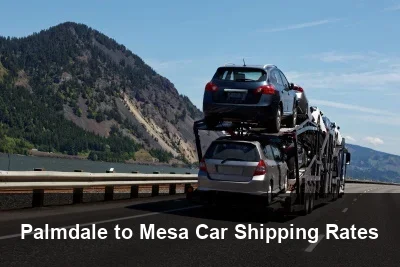
This corridor typically falls in the 350–450 mile pricing tier, which positions it as a mid-distance haul — not short enough for flat local pricing, not long enough for transcontinental discounts. Fall snowbird demand from late September through November can push rates up 10–15% as Arizona-bound volume spikes. Summer heat across the Mojave doesn't add a weather premium directly, but it affects driver scheduling and can reduce available capacity. Fuel costs on this desert corridor matter; see how gas prices factor into your quote at https://california.auto-transport-shipping.com/articles/how-gas-prices-impact-california-auto-transport-fees.html.
What affects the cost of Palmdale to Mesa car shipping:
- Vehicle type and size — larger vehicles take more carrier space; aftermarket additions like lift kits, oversized mirrors, or roof accessories can add fees
- Open vs. enclosed transport — open is lower cost with stronger carrier availability; enclosed protects against weather, debris, and road conditions
- Standard vs. expedited pickup — expedited prioritizes your vehicle for the next available dispatch, typically at a $100–$300 premium
- Time of year — peak demand seasons drive rates higher; off-peak windows offer the most competitive pricing
- Fuel costs — diesel prices affect carrier rates; longer routes are more sensitive to fuel price swings
- Vehicle condition — non-running vehicles require special loading equipment and cost more to ship
| Vehicle Type | Open Car Shipping (Est.) | Enclosed Car Shipping (Est.) |
|---|---|---|
| Sedan | $350 – $500 | $700 – $950 |
| SUV / Crossover | $400 – $600 | $800 – $1,100 |
| Pickup Truck | $400 – $600 | $800 – $1,100 |
| Minivan | $400 – $600 | $800 – $1,100 |
| Luxury / Classic Car | $500 – $700 | $950 – $1,300 |
| Non-Running Vehicle | Add $100–200 | Add $100–200 |
* Estimated ranges based on recent Palmdale to Mesa shipments. Actual rate depends on vehicle, locations, booking date, and current fuel costs. Use the form on this page to compare real quotes from licensed carriers.
Open vs. Enclosed Transport: What This Desert Route Demands
Open transport handles the Palmdale-to-Mesa run without issue the majority of the year. The I-40 Mojave corridor is flat and dry, and carriers run it routinely. Enclosed transport makes sense if you're shipping a classic, exotic, or high-value vehicle during peak summer — sustained 110°F+ temperatures in the Phoenix basin can stress interiors left on an open trailer during a stopover. It also makes sense if you're shipping during a rare winter storm window when SR-138 through the Cajon Pass area sees ice. Otherwise, open is the practical and cost-effective call for standard vehicles on this route.
How Long Does Palmdale to Mesa Car Shipping Take?
Most Palmdale-to-Mesa shipments complete in two to four days under normal conditions. The driving time for a carrier running straight through is roughly six hours, but carriers run multi-vehicle loads and may have additional pickups or deliveries along the I-40 corridor or in the Phoenix metro before reaching Mesa. Palmdale has solid carrier coverage given its position on SR-14 between Los Angeles and the Mojave. If your delivery window is firm, expedited options exist — see https://california.auto-transport-shipping.com/articles/california-expedited-car-shipping-fast-cost.html for what expedited service costs and when it's worth it.
| Service Type | Typical Transit | Pickup Window | Best For |
|---|---|---|---|
| Open — Standard | 1–2 days | 1–3 business days | Best value; most common choice on this route |
| Open — Expedited | Same–1 day | Next day–1 business day | Firm arrival date; faster dispatch window |
| Enclosed — Standard | 2–3 days | 2–5 business days | Luxury, classic, or modified vehicles |
| Enclosed — Expedited | 1–2 days | 1–2 business days | High-value vehicles on a firm delivery deadline |
** Summer thunderstorms along the Arizona stretch of I-10 and I-40 — typically July through September — can slow carriers by a day. Rare winter ice events on SR-138 near Palmdale or on the Cajon Pass connector can delay pickup. Either condition can add one to two days to transit.
Palmdale to Mesa — Route & Logistics
Carriers access the route from Palmdale via SR-14, connecting south toward the I-210 corridor or north toward SR-138 east to Victorville and the I-15/I-40 junction at Barstow. From Barstow, I-40 east runs 150 miles to Kingman, Arizona, where I-93 south drops into the Phoenix metro, feeding I-10 east to Mesa's surface street grid. Total drive distance is approximately 390 miles.
Key Corridor Waypoints
- Palmdale, CA (Origin) Carriers stage in Palmdale's commercial corridors along Avenue S and 10th Street West near SR-14. The freeway on-ramp at SR-14 northbound or southbound is clean and accessible for full-size multi-car haulers. Palmdale's high-desert grid has no significant clearance or weight restrictions affecting standard transport equipment. Elevation here sits at approximately 2,660 feet.
- Victorville / Barstow, CA (Interstate Junction) Carriers traveling SR-138 east reach Victorville and the I-15 corridor, then continue to Barstow where I-40 east begins. Barstow at roughly 2,100 feet elevation serves as a natural staging and fuel point for desert-bound loads. This is the primary junction where carriers commit to the Mojave crossing toward Arizona. Some carriers overnight here when timing or hours-of-service dictate.
- Needles, CA / Colorado River Crossing Needles sits at approximately 490 feet elevation at the California-Arizona border, where I-40 crosses the Colorado River. This is the last California fuel and inspection stop. Summer temperatures here regularly exceed 115°F, which carriers account for in scheduling. Crossing into Arizona triggers Arizona port-of-entry commercial vehicle compliance requirements that carriers on this corridor are familiar with.
- Kingman, AZ (I-40 / US-93 Junction) Kingman is the key decision point at approximately 3,340 feet elevation. Carriers peel off I-40 onto US-93 south toward the Phoenix metro, descending through the Black Mountains into the lower Sonoran Desert. This stretch drops nearly 3,000 feet over 50 miles and is a notable brake-wear segment. Experienced carriers on this route know to pace the descent on loaded multi-car haulers.
- Wickenburg / US-60 Junction, AZ Wickenburg at roughly 2,100 feet is where US-93 meets US-60 east toward the Phoenix metro. Carriers bound for Mesa typically continue on US-60 / Grand Avenue into the west Valley or pick up I-10 east toward the Loop 101 interchange. This is the final routing decision point before the metro grid, and carriers familiar with Mesa deliveries typically choose the US-60-to-Loop 202 path for east Valley access.
- Mesa, AZ (Destination) Mesa's street grid is wide and carrier-accessible in most residential and commercial zones. The Gilbert Road, Dobson Road, and Alma School Road corridors accommodate multi-car haulers without issue. Tighter historic neighborhoods near downtown Mesa and some HOA-governed communities in Eastmark may require staging a block off the primary street. Carriers familiar with Mesa know to confirm driveway clearance in cul-de-sac subdivisions before final approach.
Pickup & Delivery Access
- Pickup Access in Palmdale Palmdale's commercial and residential grid is fully accessible for standard multi-car transport equipment. SR-14 frontage roads along Avenue S, Avenue P, and the 10th Street West corridor offer practical meet points if residential street access is limited. Quartz Hill and Acton are both reachable as alternate pickup zones without adding significant carrier transit time. Confirm your exact address access when booking so the carrier can plan approach routing from SR-14.
- Delivery Access in Mesa Most Mesa zip codes — 85201 through 85215 — are carrier-accessible without staging. The Loop 202 Red Mountain Freeway and US-60 both provide direct grid access. Active adult communities like Sun Lakes and Leisure World have gate and lane restrictions; coordinate gate access in advance. New-build subdivisions in southeast Mesa (Eastmark, Cadence) often have narrow construction-era streets — confirm staging availability with your carrier before final delivery day.
- Nearby Pickup Locations Carriers picking up in Palmdale regularly extend service to Lancaster, Quartz Hill, and Acton. Call 1‑800‑590‑6492 to confirm door-to-door availability at your address.
Open vs. Enclosed Car Shipping: Palmdale to Mesa
Both options use licensed, insured carriers and deliver door to door. For a full breakdown, read the pros and cons of open vs. enclosed car shipping.
Open Car Shipping
Most Popular- Lower cost — the practical choice for most vehicles
- More carriers available on this corridor
- Faster dispatch from booking to pickup
- Works well for sedans, SUVs, trucks, and minivans
- Vehicle rides on an open multi-car carrier
- Cargo insurance required on all licensed carriers
Estimated cost: $350 – $600
Enclosed Car Shipping
Premium Protection- Full protection from weather, debris, and road grime
- Best for luxury, exotic, and classic vehicles
- Recommended for low-clearance and custom-built cars
- Wheel-net or soft-tie systems prevent contact damage
- Higher cargo coverage — commonly $500,000 per load
- White-glove handling by experienced operators
Estimated cost: $700 – $1,100
Not sure which is right for your vehicle? Call 1-800-590-6492 and we'll point you in the right direction. Also worth reading: the top 10 questions to ask any car shipping company before you commit.
How to Prepare Your Car for Shipping to Mesa
A little prep before pickup protects you if there's ever a dispute about your vehicle's condition. This checklist is from our full guide on preparing your car for transport:
- Remove all personal belongings from the interior and trunk
- Leave only a quarter tank of fuel — enough to load and unload
- Take date-stamped photos of the full exterior and interior
- Remove or disable toll transponders (FasTrak, E-ZPass, etc.)
- Retract or remove roof racks, spoilers, antennas, and bike mounts
- Make sure the battery is charged and tires are properly inflated
- Tell the carrier about any existing leaks or mechanical issues
- Deactivate the car alarm before the carrier arrives
- Write down the mileage on the Bill of Lading at pickup
- Fold in side mirrors if the vehicle is wider than standard
Personal items: Most carriers won't cover belongings left in the car. Read the full rules on shipping personal items in your vehicle. Also review our Bill of Lading guide so you know exactly what to check at pickup and delivery.
When to Ship Your Car from Palmdale to Mesa
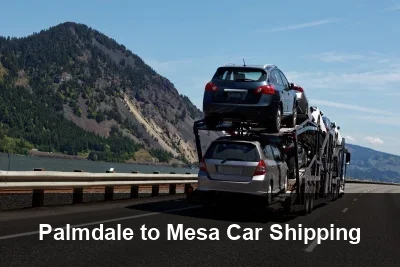
This corridor has two notable demand peaks: the fall snowbird window from late September through November, when retirees and part-year residents move vehicles from California to Arizona, and the summer military PCS season from May through July tied to Luke Air Force Base. Both push pricing and reduce carrier availability. Summer desert heat also compresses driver scheduling windows. For winter shipping considerations specific to the Mojave and Arizona crossing, see https://california.auto-transport-shipping.com/articles/auto-transport-challenges-during-the-winter.html.
Spring Shoulder Season (March–April)
Spring is the most favorable booking window on this corridor. Snowbird reverse migration back to California hasn't peaked yet, temperatures across the Mojave and Sonoran Desert are manageable, and carrier supply outpaces demand. Rates are typically at their lowest, and transit windows are predictable. If your schedule is flexible, March and April offer the best combination of price and availability for Palmdale-to-Mesa shipping.
Summer Heat Window (June–August)
Mesa's summer temperatures consistently exceed 110°F, and the Mojave crossing adds another high-heat segment. Carriers manage load sequencing carefully to avoid extended stops during peak afternoon heat. Enclosed transport becomes more relevant for high-value vehicles during this window. Expect slightly reduced carrier availability mid-July through mid-August. Book at least ten days out and confirm your carrier has experience running the I-40 Mojave-to-Phoenix corridor in summer.
Fall Snowbird Surge (September–November)
The highest-demand window on this route. Antelope Valley and broader Southern California retirees moving vehicles to Mesa's active adult communities — Sun Lakes, Leisure World, Las Sendas — create a concentrated booking surge from late September through November. Rates can climb 10–15% above baseline, and carrier lead times stretch. Book three to four weeks ahead if your move falls in this window, and lock in your rate early to avoid last-minute premium pricing.
Winter Weather Risk (December–February)
True winter disruption on this route is infrequent but real. SR-138 near Palmdale and the Cajon Pass connector can see ice and temporary closures during cold snaps. The I-40 Mojave corridor is generally clear, but Kingman and the Black Mountains descent on US-93 occasionally see snow above 4,000 feet. Carriers familiar with this corridor know the alternate routing options. Add two to three days of buffer to winter transit estimates as a precaution.
Military PCS Season (May–July)
Luke Air Force Base west of Phoenix is one of the largest F-35 training installations in the country, and its PCS cycle drives meaningful vehicle transport volume from Southern California — including Palmdale, which has its own aerospace and defense employment base at Plant 42. May through July sees elevated demand from service members and contractors relocating. If you're on military orders, confirm your carrier accepts military transport documentation and can work within your entitlement window.
Student Move Seasons (August & May)
Arizona State University's Polytechnic Campus in Mesa and broader ASU enrollment generate two concentrated student vehicle move windows: late July through mid-August for fall move-in, and early May for end-of-year departures back to California. These overlap with summer heat and military PCS demand in August, creating a convergence of volume. Book student transport at least two weeks ahead during these windows and confirm delivery timing with campus-area access in mind.
How to Choose a Palmdale to Mesa Car Shipping Company
Getting multiple quotes is step one — knowing what to look for in those quotes matters just as much. Our guide on how to select a car shipping company covers the full process. Here are the six things that matter most:
FMCSA Registration
Every carrier or broker must hold a valid MC number. Verify any company at FMCSA SAFER before you book.
Proof of Insurance
Ask for a current certificate of insurance. Open carriers typically carry $100,000–$250,000 per load; enclosed commonly $500,000 or more. Learn what auto transport insurance covers.
All-In Pricing
Your quote should be a final number with no fees added after booking. Know the difference between brokers and carriers and confirm what the quote covers before you agree.
Bill of Lading
A complete Bill of Lading is filled out at pickup and delivery. Our Bill of Lading guide explains what to check. Never sign an incomplete one.
Real Reviews
Check Google and the BBB. Look at how they handled complaints and damage claims — that tells you more than a five-star average from happy customers.
Route Experience
A carrier who runs Palmdale to Mesa regularly knows things that a first-time driver on this corridor doesn't. They know that the SR-138 to Victorville leg in early morning avoids commuter backup near Palmdale. They know the Barstow truck stop is the right fuel point before the Mojave crossing, not Needles — fuel prices jump near the state line. They know the Black Mountains descent on US-93 south of Kingman requires controlled speed on a loaded multi-car trailer, and that the US-60 approach into Mesa is smoother for east Valley deliveries than threading the I-10/Loop 101 interchange during Phoenix rush hour. They've already solved the routing puzzle that a less experienced carrier figures out on your vehicle's time.
Palmdale to Mesa Car Shipping — FAQ
How much does it cost to ship a car from Palmdale to Mesa?
For a standard sedan on an open carrier, expect a baseline range of roughly $550 to $850 depending on season, fuel costs, and current carrier availability. SUVs and trucks run slightly higher due to size and weight. Enclosed transport adds a 40–60% premium over open rates. The fall snowbird window — late September through November — is typically the most expensive period on this corridor, with rates trending toward the upper end of that range. Summer and spring shoulder seasons tend to offer more competitive pricing. These figures reflect market-rate brokered transport, not a guaranteed quote; fill out the form for a current number based on your vehicle and dates.
How long does Palmdale to Mesa car shipping take?
Most shipments on this route complete in two to four days from confirmed pickup. The driving distance is approximately 390 miles, and a carrier running straight through could cover it in about six hours — but multi-car loads include additional pickups and deliveries along the I-40 corridor and within the Phoenix metro before reaching your Mesa address. Palmdale has solid carrier access via SR-14, so dispatch-to-pickup time is usually one to three business days after booking. If your delivery window is firm or you need faster service, expedited options are available — see https://california.auto-transport-shipping.com/articles/california-expedited-car-shipping-fast-cost.html for current expedited pricing.
Is my car insured during transport from Palmdale to Mesa?
Yes. Every licensed motor carrier operating in the US is required to carry cargo insurance covering your vehicle while it's on their trailer. Before your carrier takes possession of your vehicle, a bill of lading is completed that documents the vehicle's pre-transport condition — any existing scratches, dents, or damage noted at pickup. At delivery, you compare that document against your vehicle's condition. If new damage is present, you note it on the delivery copy before signing. For a full breakdown of how coverage works and what it actually protects, read https://california.auto-transport-shipping.com/articles/understanding-auto-transport-insurance.html. If you ever need to file a claim, the process is outlined at https://california.auto-transport-shipping.com/articles/how-to-file-a-claim-for-vehicle-damage-during-transport.html.
Should I choose open or enclosed transport for this route?
Open transport is the right call for most standard vehicles on the Palmdale-to-Mesa corridor. The I-40 Mojave route is dry and well-maintained, and carriers run it frequently without incident. Enclosed transport makes more sense for classic cars, exotics, or high-value vehicles — particularly if you're shipping during peak summer when sustained 110°F+ temperatures in the Phoenix basin can stress interiors during staging stops on an open trailer. It's also worth considering if you're shipping during a rare winter event with ice risk on SR-138 near Palmdale. For a full breakdown of the trade-offs, see https://california.auto-transport-shipping.com/articles/open-vs-enclosed-auto-transport-pros-and-cons.html.
Do I have to be present at pickup and delivery?
You don't have to be physically present, but someone with authority to inspect the vehicle and sign the bill of lading does need to be there — either you or a designated representative. At pickup, that person confirms the vehicle's pre-transport condition is accurately documented and hands over the keys. At delivery, they inspect the vehicle against the original bill of lading before signing the delivery copy. Don't sign an incomplete or blank bill of lading, and don't waive the inspection. The bill of lading is your primary protection if a damage claim arises. See https://california.auto-transport-shipping.com/articles/california-auto-transport-bill-of-lading-information.html for what this document needs to include.
Does extreme heat in Arizona affect my vehicle during transport?
On an open carrier, your vehicle is exposed to ambient conditions throughout the trip — including the Mojave crossing and arrival into the Phoenix metro where summer temperatures regularly exceed 110°F. For most modern vehicles, this isn't a problem during transit since cars are designed to handle heat. The greater risk is during extended staging stops at a terminal or truck yard in full sun. If your vehicle has a leather interior, custom finishes, or electronics sensitive to heat, enclosed transport eliminates this exposure entirely. For summer shipments of standard vehicles, confirm with your carrier that the transit is point-to-point without intermediate terminal storage.
Is this route affected by military PCS moves, and does that impact my booking?
Yes, meaningfully. Luke Air Force Base west of Phoenix is a major F-35 training installation, and its PCS season from May through July generates consistent vehicle transport demand from Southern California — including from Palmdale, which has its own defense employment base at Air Force Plant 42. That overlap of military origin and destination demand compresses carrier availability on this lane during PCS season. If you're a service member, confirm your carrier accepts military transport documentation and can work within your Defense Transportation System entitlement window. Civilian customers booking in May through July should allow extra lead time — two to three weeks — to account for reduced carrier availability during this window.
When is the worst time to book this route, and how do I avoid the peak pricing window?
The fall snowbird surge from late September through November is the highest-cost, lowest-availability window on the Palmdale-to-Mesa corridor. Retirees relocating vehicles to Mesa's active adult communities create concentrated demand that outpaces carrier supply, and rates trend 10–15% above the annual baseline during this period. The secondary pressure point is late July through mid-August when student move-in demand at Arizona State University Polytechnic Campus overlaps with military PCS and summer heat carrier constraints. If your schedule allows, March through April offers the best combination of availability and pricing. If you must book during a peak window, lock in your rate at least three to four weeks ahead and confirm the carrier before that window closes.
Ready to Ship Your Car from Palmdale to Mesa?
One form gets you up to 10 free quotes from licensed, insured carriers. Compare costs and transit times and book the best deal for your schedule.