

Palmdale to San Francisco Car Shipping Route
The Palmdale to San Francisco route covers approximately 368 miles depending on the specific path a carrier selects. From Palmdale, carriers access SR-14 northbound through the Antelope Valley before connecting to I-5 north near Castaic. The route then climbs through the Tejon Pass — elevation 4,144 feet — before descending into the Central Valley and continuing north through Bakersfield, Fresno, and Stockton before entering the Bay Area via I-580 or I-205. The full drive takes roughly six to seven hours under ideal conditions. Shipping your vehicle rather than driving it saves wear, mileage, and fuel cost; see a full breakdown at https://california.auto-transport-shipping.com/articles/benefits-of-auto-transport-service-vs-driving-yourself.html
Demand on this corridor comes from several identifiable sources. Northrop Grumman and Lockheed Martin's Palmdale operations generate aerospace workforce relocations to Bay Area defense contractors like Raytheon and L3Harris. The Presidio of San Francisco and Naval Station Treasure Island produce a steady stream of military PCS moves. UC Berkeley, UCSF, USF, and San Francisco State create predictable August and January enrollment surges. Weather is a real variable here: Tejon Pass sees snow and ice between November and March, and Altamont Pass near Livermore can produce strong crosswinds that slow carrier progress. Before you book, review https://california.auto-transport-shipping.com/articles/auto-transport-mistakes-to-avoid.html to avoid common scheduling and documentation errors.
Palmdale to San Francisco Car Shipping Rates
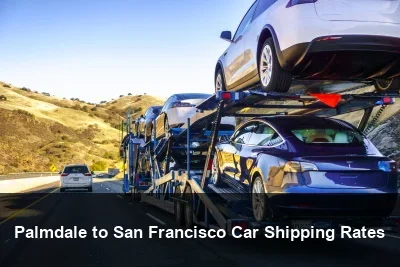
At 368 miles, this route sits in a mid-distance pricing tier — long enough that fuel costs matter but short enough that a carrier can complete the run in a single day. Rates typically range from $350 to $650 for open transport, with enclosed adding 40 to 60 percent. Fuel price swings affect this corridor directly since carriers traverse both high-desert grades and Central Valley miles. For a detailed explanation of how pump prices translate into your quote, see https://california.auto-transport-shipping.com/articles/how-gas-prices-impact-california-auto-transport-fees.html
What affects the cost of Palmdale to San Francisco car shipping:
- Vehicle type and size — larger vehicles take more carrier space; aftermarket additions like lift kits, oversized mirrors, or roof accessories can add fees
- Open vs. enclosed transport — open is lower cost with stronger carrier availability; enclosed protects against weather, debris, and road conditions
- Standard vs. expedited pickup — expedited prioritizes your vehicle for the next available dispatch, typically at a $100–$300 premium
- Time of year — peak demand seasons drive rates higher; off-peak windows offer the most competitive pricing
- Fuel costs — diesel prices affect carrier rates; longer routes are more sensitive to fuel price swings
- Vehicle condition — non-running vehicles require special loading equipment and cost more to ship
| Vehicle Type | Open Car Shipping (Est.) | Enclosed Car Shipping (Est.) |
|---|---|---|
| Sedan | $350 – $500 | $700 – $950 |
| SUV / Crossover | $400 – $600 | $800 – $1,100 |
| Pickup Truck | $400 – $600 | $800 – $1,100 |
| Minivan | $400 – $600 | $800 – $1,100 |
| Luxury / Classic Car | $500 – $700 | $950 – $1,300 |
| Non-Running Vehicle | Add $100–200 | Add $100–200 |
* Estimated ranges based on recent Palmdale to San Francisco shipments. Actual rate depends on vehicle, locations, booking date, and current fuel costs. Use the form on this page to compare real quotes from licensed carriers.
Open vs. Enclosed: What This Specific Route Actually Warrants
Open transport is the correct choice for most standard vehicles on this corridor. SR-14 and I-5 through the Central Valley are high-volume, well-maintained routes — road debris risk is no higher here than on any major California interstate. Enclosed transport makes sense if you're shipping a classic, exotic, or high-value vehicle over Tejon Pass in winter, when road salt, sand spread by Caltrans, and temperature fluctuations create real exposure risk. For a daily driver or late-model sedan, open keeps your cost down without meaningful additional risk.
How Long Does Palmdale to San Francisco Car Shipping Take?
Most Palmdale to San Francisco shipments complete in two to four days from carrier assignment. The driving distance is manageable in a single day, but carrier scheduling, multi-vehicle loading sequences, and pickup windows at both ends typically add time. Palmdale is a secondary market rather than a major hub, so carrier assignment after booking takes one to three days depending on season. If your move has a hard delivery deadline, expedited options can compress that timeline significantly — details at https://california.auto-transport-shipping.com/articles/california-expedited-car-shipping-fast-cost.html
| Service Type | Typical Transit | Pickup Window | Best For |
|---|---|---|---|
| Open — Standard | 1–2 days | 1–3 business days | Best value; most common choice on this route |
| Open — Expedited | Same–1 day | Next day–1 business day | Firm arrival date; faster dispatch window |
| Enclosed — Standard | 2–3 days | 2–5 business days | Luxury, classic, or modified vehicles |
| Enclosed — Expedited | 1–2 days | 1–2 business days | High-value vehicles on a firm delivery deadline |
** Tejon Pass on I-5 is subject to Caltrans chain control and temporary closures between November and March. A winter storm event can add 24 to 48 hours to transit time if a carrier has to stage in Bakersfield or Gorman and wait for the pass to reopen. Build that buffer into your planning window if you're booking between December and February.
Palmdale to San Francisco — Route & Logistics
Carriers serving this route leave Palmdale via SR-14 northbound, transitioning to SR-138 west or continuing to the I-5 junction near Castaic. From there it's I-5 north through the Central Valley, then I-580 west or I-205 west connecting to I-880 or US-101 for final delivery in San Francisco. Total carrier drive time runs six to seven hours without stops.
Key Corridor Waypoints
- Palmdale, CA (Origin) Carriers stage in the Palmdale grid and access SR-14 northbound from Avenue S or the SR-14/SR-138 interchange. The high desert layout gives large multi-car haulers clean street access with minimal low-clearance or tight-turn obstacles. Most residential pickups in the Antelope Valley area do not require a staging meet point, though some subdivision streets may warrant a nearby parking lot transfer.
- Castaic / I-5 Junction, CA SR-14 merges with I-5 near Castaic, elevation approximately 1,100 feet. This interchange is a key logistics decision point: carriers either joined I-5 here or transitioned via SR-138 through Gorman. Castaic is sometimes used as a brief staging stop before the Tejon Pass climb, particularly by carriers coordinating multi-pickup routes through the Santa Clarita Valley.
- Tejon Pass (Ft. Tejon), CA The highest point on I-5 in Southern California at 4,144 feet elevation. Caltrans enforces chain control and lane closures here during winter storm events. Carriers know this checkpoint well — brake checks are standard on the northbound descent into the San Joaquin Valley. This is the single most common source of weather-related delay on this specific corridor between November and March.
- Bakersfield, CA A major Central Valley staging city where carriers running multi-stop California routes frequently load or drop vehicles. If a carrier is building a full load, Bakersfield is a likely consolidation point before continuing north. It also functions as an overnight stop for carriers who cannot legally complete the full run to San Francisco in one driving shift under HOS regulations.
- Tracy / I-205 Interchange, CA The I-5 to I-205 interchange near Tracy is where this route transitions toward the Bay Area. Carriers typically exit here rather than continuing to the I-580 split further north. Tracy sits at the edge of the Sacramento-San Joaquin Delta and marks the beginning of Bay Area traffic patterns. Morning and afternoon rush windows can add 30 to 60 minutes to final approach time.
- San Francisco, CA (Destination) Urban density, narrow streets, and restricted parking make San Francisco the most logistically complex delivery endpoint on this corridor. Most 75-foot multi-car haulers cannot navigate the Mission, Castro, or Richmond neighborhoods directly. Carriers typically stage in SoMa, near the Port of San Francisco, or in Daly City and coordinate a smaller vehicle or terminal pickup for tight residential deliveries.
Pickup & Delivery Access
- Pickup Access in Palmdale Palmdale's grid-based street layout makes carrier access straightforward throughout most of the city, including the Rancho Vista, West Palmdale, and Tierra Subida corridors. SR-14 on-ramp proximity at Avenue S and 47th Street East gives carriers a direct exit path. Neighborhoods with narrower cul-de-sacs near the foothills may require meeting the carrier on a nearby main road. Most commercial and apartment complex parking lots work well as transfer points.
- Delivery Access in San Francisco San Francisco delivery requires upfront coordination. Large auto haulers are prohibited or practically unable to navigate streets in the Castro, Noe Valley, Haight-Ashbury, and Pacific Heights. Your carrier will most likely stage near the SoMa district, Pier 70 area, or Daly City and request that you meet them there. If you're delivering to UCSF Parnassus or the Presidio, confirm access requirements directly with your carrier before the run.
- Nearby Pickup Locations Carriers picking up in Palmdale regularly extend service to Lancaster, Quartz Hill, and Acton. Call 1‑800‑590‑6492 to confirm door-to-door availability at your address.
Open vs. Enclosed Car Shipping: Palmdale to San Francisco
Both options use licensed, insured carriers and deliver door to door. For a full breakdown, read the pros and cons of open vs. enclosed car shipping.
Open Car Shipping
Most Popular- Lower cost — the practical choice for most vehicles
- More carriers available on this corridor
- Faster dispatch from booking to pickup
- Works well for sedans, SUVs, trucks, and minivans
- Vehicle rides on an open multi-car carrier
- Cargo insurance required on all licensed carriers
Estimated cost: $350 – $600
Enclosed Car Shipping
Premium Protection- Full protection from weather, debris, and road grime
- Best for luxury, exotic, and classic vehicles
- Recommended for low-clearance and custom-built cars
- Wheel-net or soft-tie systems prevent contact damage
- Higher cargo coverage — commonly $500,000 per load
- White-glove handling by experienced operators
Estimated cost: $700 – $1,100
Not sure which is right for your vehicle? Call 1-800-590-6492 and we'll point you in the right direction. Also worth reading: the top 10 questions to ask any car shipping company before you commit.
How to Prepare Your Car for Shipping to San Francisco
A little prep before pickup protects you if there's ever a dispute about your vehicle's condition. This checklist is from our full guide on preparing your car for transport:
- Remove all personal belongings from the interior and trunk
- Leave only a quarter tank of fuel — enough to load and unload
- Take date-stamped photos of the full exterior and interior
- Remove or disable toll transponders (FasTrak, E-ZPass, etc.)
- Retract or remove roof racks, spoilers, antennas, and bike mounts
- Make sure the battery is charged and tires are properly inflated
- Tell the carrier about any existing leaks or mechanical issues
- Deactivate the car alarm before the carrier arrives
- Write down the mileage on the Bill of Lading at pickup
- Fold in side mirrors if the vehicle is wider than standard
Personal items: Most carriers won't cover belongings left in the car. Read the full rules on shipping personal items in your vehicle. Also review our Bill of Lading guide so you know exactly what to check at pickup and delivery.
When to Ship Your Car from Palmdale to San Francisco
This corridor follows Bay Area tech relocation cycles and Antelope Valley aerospace workforce patterns, both of which peak in late spring and early fall. Summer brings the highest carrier demand and the widest price range. Winter introduces Tejon Pass weather risk, which can affect both transit time and carrier willingness to quote fixed delivery windows. For a full overview of how winter conditions affect intra-California transport, see https://california.auto-transport-shipping.com/articles/auto-transport-challenges-during-the-winter.html
Spring Relocation Season (March–May)
Bay Area job start dates and Antelope Valley aerospace contract rotations drive a volume spike from March through May. Carriers fill quickly on this lane during this window, particularly northbound. Book two to three weeks in advance if your move aligns with a Q2 job start. Tejon Pass weather risk drops significantly by mid-March, making spring one of the cleanest transit windows of the year on this corridor.
Summer Peak Demand (June–August)
University enrollment at UCSF, SF State, and USF drives strong northbound demand in late July and August. Military PCS orders tied to summer rotation cycles also contribute. Rates on this corridor typically hit their annual high in this window. Carrier availability is good but booking lead time extends to two weeks or more. If you're shipping to San Francisco for a fall semester start, schedule no later than early July.
Back-to-School & Fall Move-In (August–September)
The August 15 through September 10 window is the single busiest period northbound on this route due to simultaneous university move-in cycles across multiple Bay Area campuses. Carriers get fully committed quickly. If you're a student or parent shipping a vehicle to San Francisco, Berkeley, or Oakland, booking in early July is the safest approach. Waiting until late July risks limited availability and higher rates.
Winter Weather Window (November–February)
Tejon Pass chain control events are the primary winter risk on this corridor. Caltrans can close I-5 lanes for 12 to 48 hours during significant storms, and carriers must either wait or reroute through SR-99, which adds distance. If you're booking between November and February, avoid quoting a hard delivery deadline. Build a 48-hour buffer and confirm your carrier's Tejon Pass contingency plan before committing.
Aerospace PCS & Relocation Cycles (Year-Round)
Palmdale's Northrop Grumman and Lockheed Martin facilities generate ongoing relocation demand both northbound to the Bay Area and southbound. These moves happen year-round but cluster in Q1 and Q3 around federal contract cycles. If your move is employer-sponsored through an aerospace or defense contractor, confirm whether your relocation package covers auto transport — many do, and the reimbursement documentation process affects your booking timeline.
How to Choose a Palmdale to San Francisco Car Shipping Company
Getting multiple quotes is step one — knowing what to look for in those quotes matters just as much. Our guide on how to select a car shipping company covers the full process. Here are the six things that matter most:
FMCSA Registration
Every carrier or broker must hold a valid MC number. Verify any company at FMCSA SAFER before you book.
Proof of Insurance
Ask for a current certificate of insurance. Open carriers typically carry $100,000–$250,000 per load; enclosed commonly $500,000 or more. Learn what auto transport insurance covers.
All-In Pricing
Your quote should be a final number with no fees added after booking. Know the difference between brokers and carriers and confirm what the quote covers before you agree.
Bill of Lading
A complete Bill of Lading is filled out at pickup and delivery. Our Bill of Lading guide explains what to check. Never sign an incomplete one.
Real Reviews
Check Google and the BBB. Look at how they handled complaints and damage claims — that tells you more than a five-star average from happy customers.
Route Experience
A carrier who regularly runs Palmdale to San Francisco knows to check Caltrans QuickMap before departure, not after loading. The Tejon Pass closure window between November and February is unpredictable — a carrier who staged in Bakersfield overnight rather than attempting a late-night pass in deteriorating weather has made the right call. They also know that San Francisco delivery staging near SoMa or Daly City is standard, not a negotiation. On the pickup side, experienced carriers on this lane come prepared for Antelope Valley wind — loading sequence matters when vehicles will sit on an exposed deck in 40 mph gusts near Palmdale. They also know the SR-14 / I-5 merge at Castaic backs up hard on Friday afternoons and time their departure accordingly.
Palmdale to San Francisco Car Shipping — FAQ
How much does it cost to ship a car from Palmdale to San Francisco?
Open transport on this 368-mile corridor typically runs between $350 and $650 for a standard sedan or SUV. Enclosed transport adds roughly 40 to 60 percent, putting most quotes between $550 and $950. Rates vary based on vehicle size, current fuel prices, seasonal demand, and how quickly you need the vehicle picked up. Larger vehicles like full-size trucks or lifted SUVs cost more due to their footprint on the carrier deck. Summer and late-August enrollment season push rates toward the upper end of the range. Fill out the form to get a current quote specific to your vehicle and dates.
How long does Palmdale to San Francisco car shipping take?
Most shipments on this corridor complete within two to four days from the time a carrier is assigned. The driving distance is manageable in a single day for an experienced carrier, but multi-vehicle loading schedules, pickup windows, and hours-of-service regulations for commercial drivers typically add time on both ends. Carrier assignment after booking takes one to three days depending on current lane demand. In winter, a Tejon Pass weather delay can add another 24 to 48 hours. If you have a hard delivery deadline, expedited options are available — see https://california.auto-transport-shipping.com/articles/california-expedited-car-shipping-fast-cost.html for details on how expedited service works and what it costs.
Is my car insured during transport from Palmdale to San Francisco?
Yes. Every licensed carrier operating in California is required to carry cargo insurance that covers your vehicle while it is loaded on their truck. Before your vehicle is picked up, the driver will complete a Bill of Lading documenting your vehicle's existing condition. At delivery, you inspect the vehicle against that same document before signing. If damage occurred during transport, any discrepancy between those two reports forms the basis of a claim. For a thorough breakdown of how coverage works and what it does and does not include, read https://california.auto-transport-shipping.com/articles/understanding-auto-transport-insurance.html. If you ever need to file a claim, the process is outlined at https://california.auto-transport-shipping.com/articles/how-to-file-a-claim-for-vehicle-damage-during-transport.html
Should I choose open or enclosed transport for this route?
Open transport is the right call for most vehicles on this corridor. SR-14, I-5, and I-580 are high-volume, well-maintained interstates with no unusual road debris risk. Enclosed transport is worth the premium if you're shipping a collector car, exotic, or high-value vehicle — particularly in winter when Caltrans spreads sand and de-icing material near Tejon Pass and the elements at 4,144 feet elevation create real exposure. For a daily driver, late-model sedan, or standard SUV, open is the cost-effective choice with no meaningful downside on this specific route. For a full comparison of both service types, see https://california.auto-transport-shipping.com/articles/open-vs-enclosed-auto-transport-pros-and-cons.html
Do I have to be present at pickup and delivery?
You or an authorized representative must be present at both pickup and delivery to sign the Bill of Lading. This document is the legal record of your vehicle's condition at each end of the transport and is your primary protection if a damage claim becomes necessary. If you cannot be present personally, you can designate someone else — a family member, neighbor, or property manager — to sign on your behalf. That person should do a thorough walk-around inspection before signing at delivery. For a full explanation of what the Bill of Lading covers and why it matters, see https://california.auto-transport-shipping.com/articles/california-auto-transport-bill-of-lading-information.html
Does the Tejon Pass on I-5 create real delays in winter?
Yes, and it is the most common source of transit delay on this specific route. Tejon Pass on I-5 sits at 4,144 feet elevation and is subject to Caltrans chain control requirements and full lane closures during significant winter storms, typically between November and March. When a closure occurs, carriers either stage in Gorman or Bakersfield and wait it out or reroute through SR-99, which adds distance and time. A weather event at Tejon can realistically add 24 to 48 hours to your transit window. If you are booking a winter shipment, avoid committing to a hard delivery date and build in buffer time.
I'm shipping as part of a military PCS order. Is there anything specific to know about this route?
Palmdale has no active-duty base, but significant aerospace and defense contractor workforce in the Antelope Valley generates PCS-adjacent moves regularly. On the San Francisco end, the Presidio of San Francisco and the broader Bay Area military community produce consistent inbound demand. If your PCS paperwork authorizes auto transport reimbursement, confirm the documentation requirements with your transportation office before booking, as some reimbursement programs require specific carrier credentials or rate documentation. Book as early as your orders allow — summer PCS cycles in June through August overlap with university move-in demand on this corridor, compressing carrier availability significantly.
Are there any issues with carrier access in San Francisco that I should plan for?
San Francisco is the most logistically complex delivery endpoint on this corridor. Large multi-car haulers measuring 75 feet or more cannot physically navigate many of the city's residential neighborhoods, including the Castro, Noe Valley, Haight-Ashbury, Pacific Heights, and parts of the Richmond and Sunset districts. Carriers typically stage near SoMa, the Port of San Francisco area, or in Daly City and coordinate a meet-point delivery. If you're moving to UCSF Parnassus Campus, the Presidio, or a specific residential address in a dense neighborhood, confirm your carrier's delivery plan before the run begins so you can arrange to meet them at a staging location rather than expecting door-to-door delivery.
Ready to Ship Your Car from Palmdale to San Francisco?
One form gets you up to 10 free quotes from licensed, insured carriers. Compare costs and transit times and book the best deal for your schedule.