
Oxnard to Chicago Car Shipping Route
Oxnard to Chicago covers approximately 2,017 miles by road. Carriers access the route via US-101 north through Ventura County, then transition to I-5 north through the San Fernando Valley, picking up I-40 east at Barstow for the long desert and plains crossing. The route passes through the Mojave Desert, New Mexico, the Texas Panhandle, Oklahoma, and Missouri before reaching Illinois. Driving that yourself takes roughly 29-32 hours of seat time, not counting stops, sleep, or mechanical risk. Shipping your vehicle eliminates fuel cost, wear, and the physical toll of a cross-country drive. For a detailed cost comparison, see the full breakdown at https://california.auto-transport-shipping.com/articles/benefits-of-auto-transport-service-vs-driving-yourself.html.
Chicago's inbound demand is driven by several large institutions. Naval Station Great Lakes in North Chicago generates consistent military PCS moves, particularly during summer transfer season. Universities including Northwestern in Evanston, the University of Chicago in Hyde Park, DePaul, and Loyola draw student vehicles in August and January. Major corporate employers — United Airlines headquarters, Caterpillar's regional offices, and the broad financial and healthcare sectors anchored in the Loop — generate executive relocations year-round. On the route itself, winter weather between Oklahoma and Illinois can introduce delays from late November through February, particularly on I-44 and I-55 in Missouri. Before you book, review common booking errors at https://california.auto-transport-shipping.com/articles/auto-transport-mistakes-to-avoid.html.
Oxnard to Chicago Car Shipping Rates
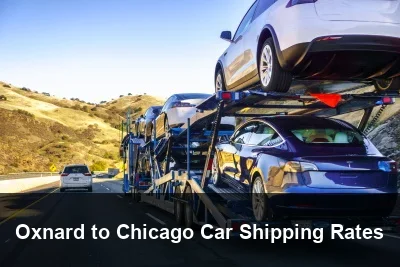
At just over 2,000 miles, this route sits in the long-haul pricing tier, where fuel costs, driver hours-of-service rules, and carrier deadhead logistics weigh most heavily on the final rate. Prices typically rise in late spring and summer when student moves and military PCS transfers spike demand into Chicago. Winter crossings through the Southwest and Midwest can carry modest weather premiums when carriers factor in potential delays. Fuel surcharges on this distance are meaningful — see how pump prices translate into shipping fees at https://california.auto-transport-shipping.com/articles/how-gas-prices-impact-california-auto-transport-fees.html.
What affects the cost of Oxnard to Chicago car shipping:
- Vehicle type and size — larger vehicles take more carrier space; aftermarket additions like lift kits, oversized mirrors, or roof accessories can add fees
- Open vs. enclosed transport — open is lower cost with stronger carrier availability; enclosed protects against weather, debris, and road conditions
- Standard vs. expedited pickup — expedited prioritizes your vehicle for the next available dispatch, typically at a $100–$300 premium
- Time of year — peak demand seasons drive rates higher; off-peak windows offer the most competitive pricing
- Fuel costs — diesel prices affect carrier rates; longer routes are more sensitive to fuel price swings
- Vehicle condition — non-running vehicles require special loading equipment and cost more to ship
| Vehicle Type | Open Car Shipping (Est.) | Enclosed Car Shipping (Est.) |
|---|---|---|
| Sedan | $1,100 – $1,600 | $1,900 – $2,700 |
| SUV / Crossover | $1,300 – $1,900 | $2,200 – $3,100 |
| Pickup Truck | $1,300 – $1,950 | $2,200 – $3,150 |
| Minivan | $1,300 – $1,900 | $2,200 – $3,100 |
| Luxury / Classic Car | $1,550 – $2,200 | $2,600 – $3,600 |
| Non-Running Vehicle | Add $200–400 | Add $200–400 |
* Estimated ranges based on recent Oxnard to Chicago shipments. Actual rate depends on vehicle, locations, booking date, and current fuel costs. Use the form on this page to compare real quotes from licensed carriers.
Open vs. Enclosed on the Oxnard-to-Chicago Run
Open transport is the practical choice for most standard vehicles on this corridor. The route through the Mojave and across the plains is dry the majority of the year, and open carriers run it frequently enough that pricing stays competitive. If you're shipping a luxury vehicle, a classic, or anything with a low ground clearance that you'd rather not expose to road grit from 2,000 miles of highway, enclosed is worth the premium — typically 40-60% more. Winter shipments from November through February, when the Missouri and Illinois legs can see road salt and ice spray, are the strongest use case for enclosed on this specific route.
How Long Does Oxnard to Chicago Car Shipping Take?
Standard transit on the Oxnard-to-Chicago route runs 6 to 9 days under normal conditions. The driving distance translates to roughly 4-5 days of actual travel time for a carrier team, but dispatch, pickup coordination, and multi-vehicle load sequencing typically add 1-3 days on each end. Carrier frequency out of Ventura County is solid — expect a 1-3 day wait for a confirmed pickup once you're booked. If your window is tight, expedited options can compress that significantly; see timing and cost details at https://california.auto-transport-shipping.com/articles/california-expedited-car-shipping-fast-cost.html.
| Service Type | Typical Transit | Pickup Window | Best For |
|---|---|---|---|
| Open — Standard | 7–10 days | 2–5 business days | Best value; most common choice on this route |
| Open — Expedited | 5–7 days | 1–2 business days | Firm arrival date; faster dispatch window |
| Enclosed — Standard | 7–10 days | 4–8 business days | Luxury, classic, or modified vehicles |
| Enclosed — Expedited | 5–7 days | 2–4 business days | High-value vehicles on a firm delivery deadline |
** Winter weather between Oklahoma City and Chicago — particularly on I-44 through Missouri and I-55 into Illinois — can add 1 to 3 days when ice or snow forces carriers to hold or slow down. If you're booking a December through February shipment, build buffer time into your delivery window.
Oxnard to Chicago — Route & Logistics
Carriers serving this route depart Ventura County via US-101 south into the San Fernando Valley, connect to I-5 north, then pick up I-40 east at Barstow. From there the corridor runs through Needles, Flagstaff, Albuquerque, Amarillo, Oklahoma City, Joplin, and St. Louis before the I-55 north leg into Chicago. Total driving distance is approximately 2,017 miles.
Key Corridor Waypoints
- Barstow, CA Barstow is the first major staging and fuel point after carriers exit the Los Angeles basin via I-15 or I-40. Many drivers rest here before the long Mojave crossing. It sits at roughly 2,100 feet elevation and marks the transition from urban Southern California traffic to open desert highway. Carrier dispatch often uses Barstow as a load-confirmation checkpoint before committing to the eastbound run.
- Flagstaff, AZ Flagstaff sits at 6,909 feet on I-40, making it the highest elevation point on the route and the most common overnight stop for carriers running from Southern California. Snow is possible here from October through April, which can slow progress and occasionally force brief holds. Carriers familiar with this corridor plan their hours-of-service around the Flagstaff stop to keep desert crossings in daylight.
- Albuquerque, NM Albuquerque is a natural load-sharing and relay point where carriers may pick up or drop additional vehicles for the eastbound leg. The I-40 and I-25 interchange here is a major junction for Southwest freight. At approximately 5,300 feet elevation, temperatures can swing significantly between day and night. Dispatch teams use Albuquerque to reassess weather east toward Amarillo before continuing.
- Amarillo, TX The Texas Panhandle crossing through Amarillo is one of the longest flat stretches on the route, at around 3,600 feet elevation. Wind and dust can be significant factors in spring. Amarillo is a common fuel and inspection stop; Texas DOT weigh stations on I-40 require carriers to comply with state weight regulations, which experienced drivers account for in their load planning before departure.
- Oklahoma City, OK Oklahoma City marks the transition from I-40 to I-44 northeast, the corridor toward Joplin and St. Louis. Carriers pick up I-44 here and push toward Missouri. In winter, this segment is where ice events begin to be a real transit risk. Oklahoma City is also a relay point for carriers who run team-driver shifts, allowing the truck to continue overnight without stopping.
- St. Louis, MO St. Louis is the final major waypoint before Chicago. Carriers transition from I-44 to I-55 north here, the direct shot into the Chicago metro. The Gateway Arch interchange can be congested during peak hours. In winter, the I-55 corridor from St. Louis to Chicago is one of the most weather-affected segments of the entire route — ice and snow events here account for most delay days on late-autumn and winter shipments.
Pickup & Delivery Access
- Pickup Access in Oxnard Oxnard has good truck access throughout most of the city. Carriers can typically reach residential streets in central Oxnard, the Riverpark area, and neighborhoods near US-101 without restrictions. The area around Port Hueneme and the Channel Islands Harbor is truck-accessible as well. For tight residential streets, a nearby parking lot or shopping center on Gonzales Road or Oxnard Boulevard works well as a meet point.
- Delivery Access in Chicago Chicago delivery access varies sharply by neighborhood. The North Shore suburbs, Evanston, and Naperville are straightforward for standard car carriers. Downtown Chicago and dense North Side neighborhoods like Lincoln Park and Wicker Park have narrow streets and parking restrictions that complicate carrier access. Staging in a nearby parking structure or a large surface lot is the practical solution for those areas. Confirm your delivery address with the carrier dispatcher before the truck departs.
- Nearby Pickup Locations Carriers picking up in Oxnard regularly extend service to Ventura, Port Hueneme, and Camarillo. Call 1‑800‑590‑6492 to confirm door-to-door availability at your address.
Open vs. Enclosed Car Shipping: Oxnard to Chicago
Both options use licensed, insured carriers and deliver door to door. For a full breakdown, read the pros and cons of open vs. enclosed car shipping.
Open Car Shipping
Most Popular- Lower cost — the practical choice for most vehicles
- More carriers available on this corridor
- Faster dispatch from booking to pickup
- Works well for sedans, SUVs, trucks, and minivans
- Vehicle rides on an open multi-car carrier
- Cargo insurance required on all licensed carriers
Estimated cost: $1,100 – $1,950
Enclosed Car Shipping
Premium Protection- Full protection from weather, debris, and road grime
- Best for luxury, exotic, and classic vehicles
- Recommended for low-clearance and custom-built cars
- Wheel-net or soft-tie systems prevent contact damage
- Higher cargo coverage — commonly $500,000 per load
- White-glove handling by experienced operators
Estimated cost: $1,900 – $3,150
Not sure which is right for your vehicle? Call 1-800-590-6492 and we'll point you in the right direction. Also worth reading: the top 10 questions to ask any car shipping company before you commit.
How to Prepare Your Car for Shipping to Chicago
A little prep before pickup protects you if there's ever a dispute about your vehicle's condition. This checklist is from our full guide on preparing your car for transport:
- Remove all personal belongings from the interior and trunk
- Leave only a quarter tank of fuel — enough to load and unload
- Take date-stamped photos of the full exterior and interior
- Remove or disable toll transponders (FasTrak, E-ZPass, etc.)
- Retract or remove roof racks, spoilers, antennas, and bike mounts
- Make sure the battery is charged and tires are properly inflated
- Tell the carrier about any existing leaks or mechanical issues
- Deactivate the car alarm before the carrier arrives
- Write down the mileage on the Bill of Lading at pickup
- Fold in side mirrors if the vehicle is wider than standard
Personal items: Most carriers won't cover belongings left in the car. Read the full rules on shipping personal items in your vehicle. Also review our Bill of Lading guide so you know exactly what to check at pickup and delivery.
When to Ship Your Car from Oxnard to Chicago
This route sees its highest demand from May through August, driven by military PCS transfer season at Naval Station Great Lakes and university move-in cycles at Chicago-area schools. That demand peak pushes rates and reduces flexibility in pickup windows. Winter crossings carry weather risk through Missouri and Illinois from late November through February. For a detailed breakdown of what winter weather does to transit times and carrier behavior, see https://california.auto-transport-shipping.com/articles/auto-transport-challenges-during-the-winter.html.
Spring (March–May)
Demand builds steadily through spring as early military PCS orders activate and corporate relocations ramp up ahead of fiscal-year cycles. Weather along the Oklahoma-Missouri-Illinois segment can include spring storms and flooding risk in April, which occasionally causes minor delays. Booking 2-3 weeks in advance secures better rates before the summer peak compresses availability and drives prices higher.
Summer Peak (June–August)
This is the busiest window on the Oxnard-to-Chicago corridor. Naval Station Great Lakes PCS transfers hit maximum volume in June and July. Northwestern, University of Chicago, DePaul, and Loyola all have August move-in dates that drive last-minute vehicle shipping demand. Expect rates to run 10-20% above off-season and pickup availability to tighten. Book at least 3 weeks out during this window.
Fall (September–November)
Demand softens after Labor Day, and rates typically ease through September and October. This is one of the better value windows for this route — carrier availability is good, weather is stable through the Southwest, and the Missouri-Illinois segment stays clear until late November. If you have schedule flexibility, October is arguably the most reliable month for an on-time, competitively priced delivery.
Winter (December–February)
Winter is the slowest demand period, which helps on price, but weather on the I-44 and I-55 segments through Missouri and Illinois introduces real delay risk. Ice events can hold a carrier for 24-48 hours. Factor that into your delivery window and avoid booking with a hard deadline in January or February. Enclosed transport is worth considering for higher-value vehicles exposed to road salt spray on this portion of the route.
Military PCS Season (May–July)
Naval Station Great Lakes north of Chicago is one of the largest Navy training installations in the country. Service members receiving PCS orders with May through July report dates create a concentrated inbound Chicago demand spike that directly competes with student move demand. If you're a military member using this route, book the moment your orders are confirmed — this window books out faster than any other on the corridor.
How to Choose a Oxnard to Chicago Car Shipping Company
Getting multiple quotes is step one — knowing what to look for in those quotes matters just as much. Our guide on how to select a car shipping company covers the full process. Here are the six things that matter most:
FMCSA Registration
Every carrier or broker must hold a valid MC number. Verify any company at FMCSA SAFER before you book.
Proof of Insurance
Ask for a current certificate of insurance. Open carriers typically carry $100,000–$250,000 per load; enclosed commonly $500,000 or more. Learn what auto transport insurance covers.
All-In Pricing
Your quote should be a final number with no fees added after booking. Know the difference between brokers and carriers and confirm what the quote covers before you agree.
Bill of Lading
A complete Bill of Lading is filled out at pickup and delivery. Our Bill of Lading guide explains what to check. Never sign an incomplete one.
Real Reviews
Check Google and the BBB. Look at how they handled complaints and damage claims — that tells you more than a five-star average from happy customers.
Route Experience
A carrier who regularly runs the Oxnard-to-Chicago corridor knows to stage loads in the Ventura County area by early morning to clear the San Fernando Valley before peak commute traffic hits US-101 southbound. They know Flagstaff is the mandatory rest point, not Needles, because the Mojave crossing in summer requires daytime departure timing. They know the I-44 weigh station sequence through Oklahoma, and they know that the I-55 stretch from Springfield to Joliet is where winter ice events hit first and hardest. They also know that Chicago's lakefront neighborhoods and downtown require delivery coordination a day in advance because parking enforcement is active and street widths limit carrier maneuverability in ways that catch unfamiliar drivers off-guard.
Oxnard to Chicago Car Shipping — FAQ
How much does it cost to ship a car from Oxnard to Chicago?
On this approximately 2,017-mile corridor, open transport typically runs between $1,050 and $1,550 for a standard sedan under normal market conditions. SUVs, trucks, and larger vehicles run $1,200 to $1,750. Enclosed transport adds roughly 40-60% to those figures. Rates are highest from June through August when military PCS and student demand spike simultaneously into Chicago. Winter rates can be lower but may carry a small weather-surcharge depending on current road conditions through Missouri and Illinois. The quote form on this page pulls current carrier pricing for your specific vehicle and dates.
How long does Oxnard to Chicago car shipping take?
Standard transit runs 6 to 9 days from confirmed pickup to delivery. The driving distance translates to roughly 4-5 days of actual carrier travel, with the remainder accounting for dispatch coordination, multi-vehicle load sequencing, and delivery scheduling in the Chicago metro. Carrier frequency out of Ventura County is good, so the pickup wait is typically 1-3 business days after booking. Winter weather between Oklahoma City and Chicago can push total transit toward 10-11 days in a bad-weather week. If you need faster service, expedited options are available — see https://california.auto-transport-shipping.com/articles/california-expedited-car-shipping-fast-cost.html for current pricing and timelines.
Is my car insured during transport from Oxnard to Chicago?
Every licensed carrier is required by federal law to carry cargo insurance, and your vehicle is covered under that policy while it's on the truck. Coverage limits and deductible structures vary by carrier, so it's worth asking for the certificate of insurance before you confirm a booking. Your personal auto insurance policy may also provide some supplemental coverage during transport — check with your insurer. For a full explanation of how carrier insurance works and what it actually covers, see https://california.auto-transport-shipping.com/articles/understanding-auto-transport-insurance.html. If damage does occur, the claims process is outlined at https://california.auto-transport-shipping.com/articles/how-to-file-a-claim-for-vehicle-damage-during-transport.html.
Should I choose open or enclosed transport for this route?
Open transport is the right call for most vehicles on this corridor. The Mojave and Southwest portions of the route are dry and benign the vast majority of the year, and open carriers run this lane frequently enough that you get competitive pricing and good availability. Enclosed makes sense if you're shipping a classic, luxury, or low-clearance vehicle, or if your shipment window falls between December and February when the Missouri-Illinois leg exposes vehicles to road salt and ice spray. The premium for enclosed on this distance typically runs $500-$900 above open rates. For a full comparison of the two options, see https://california.auto-transport-shipping.com/articles/open-vs-enclosed-auto-transport-pros-and-cons.html.
Do I have to be present at pickup and delivery?
You don't have to be present yourself, but someone you authorize needs to be available to inspect the vehicle and sign the bill of lading at both ends. That person can be a family member, friend, or property manager — anyone you trust to walk the vehicle and note its condition accurately. At pickup, the bill of lading documents the vehicle's pre-transport condition; at delivery, it confirms what arrived. Do not skip this inspection step. Signing without inspecting creates complications if damage is found later. For a full explanation of what the bill of lading covers and why it matters, see https://california.auto-transport-shipping.com/articles/california-auto-transport-bill-of-lading-information.html.
Does winter weather cause real delays on the Oxnard-to-Chicago route?
Yes, and the risk is concentrated on a specific portion of the route. The California and Southwest segments — Mojave, Arizona, New Mexico, and the Texas Panhandle — are generally passable year-round. The problem zone is the I-44 corridor through Missouri and the I-55 run from St. Louis into Chicago, where ice storms between December and February can force carriers to park and wait out road conditions. A delay of 24-48 hours is realistic in a bad-weather week. If you're booking a winter shipment, don't give yourself a hard delivery deadline. Build 2-3 extra days into your window and communicate that flexibility to your carrier.
Are there specific timing considerations for military PCS moves through this corridor?
Naval Station Great Lakes, located in North Chicago on Lake Michigan, is one of the country's largest Navy training installations and generates heavy inbound Chicago vehicle demand from May through July as PCS transfer orders activate. That demand competes directly with summer student moves, which makes June and early July the tightest availability window of the year on this corridor. If you have PCS orders routing you to Great Lakes or any other Chicago-area installation, book your transport immediately upon receiving orders — do not wait until 2 weeks out. The earlier you lock in a carrier, the more likely you are to get a pickup date that aligns with your reporting date.
Can carriers access my specific address in Chicago, or will I need to meet them somewhere?
It depends entirely on where in the Chicago metro you're delivering. Suburban addresses in Naperville, Schaumburg, Evanston, or the North Shore are generally no problem for standard car carriers. Dense urban neighborhoods — Lincoln Park, Wicker Park, Logan Square, and anything close to downtown — present narrow streets, permit-zone parking, and loading restrictions that make door-to-door delivery difficult or impossible. In those areas, plan to meet the carrier at a nearby parking lot, a large retail center, or an open surface parking structure. Confirm this with your carrier dispatcher the day before delivery so neither side is surprised at the destination.
Ready to Ship Your Car from Oxnard to Chicago?
One form gets you up to 10 free quotes from licensed, insured carriers. Compare costs and transit times and book the best deal for your schedule.