
Oakland to Los Angeles Car Shipping Route
Oakland to Los Angeles covers approximately 381 miles depending on the route taken. Carriers typically access I-880 south from Oakland, connecting to I-238 and then onto I-580 east before picking up I-5 southbound near Tracy — the fastest, most consistent carrier path through the Central Valley. Some carriers use US-101 for coastal preference, though I-5 is the dominant choice for speed and load efficiency. The Central Valley stretch on I-5 is flat, open, and carrier-friendly. Shipping rather than driving saves you roughly six hours of highway time, fuel costs, and wear on your vehicle. Compare the full cost picture at https://california.auto-transport-shipping.com/articles/benefits-of-auto-transport-service-vs-driving-yourself.html before deciding.
Los Angeles destination demand is driven by a wide base of institutional and commercial activity. UCLA employs over 45,000 people and enrolls roughly 32,000 students, many of them relocating from Northern California. USC adds another 49,000 students. Joint Forces Training Base Los Alamitos and Naval Weapons Station Seal Beach generate regular military PCS moves that feed southbound Oakland loads. Major employers including SpaceX in Hawthorne, Netflix in Hollywood, and Kaiser Permanente across the metro add consistent relocation demand. Weather along the I-5 corridor is generally mild, but Tejon Pass at roughly 4,183 feet can see occasional winter closures. Review common planning errors before you book: https://california.auto-transport-shipping.com/articles/auto-transport-mistakes-to-avoid.html
Oakland to Los Angeles Car Shipping Rates
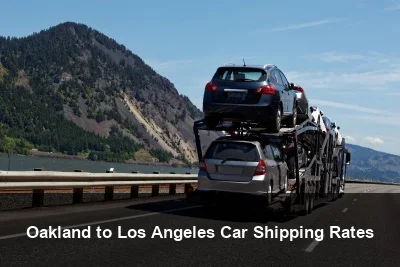
Oakland to LA rates typically fall in the $300–$600 range for standard open transport, depending on vehicle size, season, and how quickly you need pickup. Fuel costs directly influence pricing on this corridor — I-5 is efficient but diesel prices in California run higher than the national average. Read how fuel prices affect your quote directly at https://california.auto-transport-shipping.com/articles/how-gas-prices-impact-california-auto-transport-fees.html. Summer and late December see demand spikes that push rates up. Booking two weeks out gives you the best leverage.
What affects the cost of Oakland to Los Angeles car shipping:
- Vehicle type and size — larger vehicles take more carrier space; aftermarket additions like lift kits, oversized mirrors, or roof accessories can add fees
- Open vs. enclosed transport — open is lower cost with stronger carrier availability; enclosed protects against weather, debris, and road conditions
- Standard vs. expedited pickup — expedited prioritizes your vehicle for the next available dispatch, typically at a $100–$300 premium
- Time of year — peak demand seasons drive rates higher; off-peak windows offer the most competitive pricing
- Fuel costs — diesel prices affect carrier rates; longer routes are more sensitive to fuel price swings
- Vehicle condition — non-running vehicles require special loading equipment and cost more to ship
| Vehicle Type | Open Car Shipping (Est.) | Enclosed Car Shipping (Est.) |
|---|---|---|
| Sedan | $350 – $500 | $700 – $950 |
| SUV / Crossover | $400 – $600 | $800 – $1,100 |
| Pickup Truck | $400 – $600 | $800 – $1,100 |
| Minivan | $400 – $600 | $800 – $1,100 |
| Luxury / Classic Car | $500 – $700 | $950 – $1,300 |
| Non-Running Vehicle | Add $100–200 | Add $100–200 |
* Estimated ranges based on recent Oakland to Los Angeles shipments. Actual rate depends on vehicle, locations, booking date, and current fuel costs. Use the form on this page to compare real quotes from licensed carriers.
Open vs. Enclosed on the Oakland to LA Run
Open transport is the right call for most vehicles on this route. The I-5 corridor is a controlled-access freeway with minimal debris risk, and weather between Oakland and LA is predictable most of the year. Enclosed makes sense for vehicles valued above $80,000, freshly restored classics, or vehicles with modified paint that's sensitive to road grit. Enclosed carriers run this lane regularly, so availability isn't an issue — you'll pay a 40–60% premium over open rates. For a daily driver or standard late-model sedan, open transport is the practical and cost-effective choice.
How Long Does Oakland to Los Angeles Car Shipping Take?
Oakland to Los Angeles typically delivers in one to two days once a carrier picks up your vehicle. The driving time for a carrier is roughly six hours under good conditions, meaning same-day delivery is possible on early pickups, though one overnight is more common. Oakland is a top-tier origin market with daily southbound carrier dispatch, so dispatch-to-pickup windows are usually one to three business days. If your timeline is tighter, expedited options can compress that window significantly: https://california.auto-transport-shipping.com/articles/california-expedited-car-shipping-fast-cost.html
| Service Type | Typical Transit | Pickup Window | Best For |
|---|---|---|---|
| Open — Standard | 1–2 days | 1–3 business days | Best value; most common choice on this route |
| Open — Expedited | Same–1 day | Next day–1 business day | Firm arrival date; faster dispatch window |
| Enclosed — Standard | 2–3 days | 2–5 business days | Luxury, classic, or modified vehicles |
| Enclosed — Expedited | 1–2 days | 1–2 business days | High-value vehicles on a firm delivery deadline |
** Tejon Pass on I-5 sits at 4,183 feet and can close during winter storms, rerouting carriers onto SR-14 through Palmdale and adding three to five hours. This happens a handful of times per year between December and February. Monitor CHP traffic advisories if you're shipping during that window.
Oakland to Los Angeles — Route & Logistics
Carriers leaving Oakland access I-880 south, connect to I-238, and merge onto I-580 east toward the Altamont Pass before picking up I-5 southbound near Tracy. From there, it's a straight Central Valley run through Stockton, Fresno, and Bakersfield before climbing Tejon Pass and descending into the Los Angeles Basin on I-5. Total carrier drive time is approximately six to seven hours under normal conditions.
Key Corridor Waypoints
- Oakland, CA (Origin) Carriers stage in West Oakland industrial zones near the Port of Oakland for efficient I-880 access. The port environment here means high carrier density and quick dispatch. Residential pickup is available throughout Oakland, but drivers prefer Adeline Street corridor and Maritime Street areas for easy on-ramp access without navigating dense surface streets.
- Altamont Pass, CA Carriers crest Altamont Pass on I-580 at roughly 1,009 feet before descending toward Tracy and the I-5 junction. This is where most carriers transition from Bay Area surface congestion to open Central Valley freeway. Wind turbine fields here signal the shift to faster, unimpeded southbound travel. Carriers typically make time adjustments at this junction.
- Stockton, CA Stockton sits at the northern edge of the Central Valley I-5 run and serves as a practical rest or fuel stop for carriers. Some multi-vehicle carrier loads originating in Sacramento are picked up near Stockton, adjusting load weight and sequencing before the long valley stretch. It's approximately 75 miles south of Oakland.
- Bakersfield, CA Bakersfield is the last major city before Tejon Pass and a key decision point for carriers. Fuel, timing, and pass conditions are assessed here. In winter, carriers check Caltrans chain control advisories before proceeding. If Tejon is closed, the SR-58 to SR-14 alternate route adds meaningful time but keeps loads moving.
- Tejon Pass (Grapevine), CA — 4,183 ft The Grapevine section of I-5 climbs to 4,183 feet through the Tehachapi Mountains. It's the only significant elevation on this corridor and the main weather variable. Steep grades stress brakes and engines on fully loaded carriers. CHP closes this section during rare but real winter snow events, typically lasting four to twelve hours.
- Los Angeles, CA (Destination) Carriers enter the LA Basin on I-5 and distribute to neighborhoods via I-405, I-10, I-110, and SR-101. Dense urban neighborhoods including Silver Lake, West Hollywood, and Santa Monica require street staging. San Fernando Valley suburbs like Burbank, Glendale, and Van Nuys offer wider streets and easier carrier access for final delivery.
Pickup & Delivery Access
- Pickup Access in Oakland Oakland carrier pickup works best in West Oakland, the Fruitvale industrial corridor, and near the Port of Oakland on Maritime Street, where I-880 access is direct. Residential pickups throughout Oakland are feasible, but drivers avoid narrow streets in Rockridge and Temescal during peak hours. Emeryville and Alameda are also serviceable staging areas for this corridor.
- Delivery Access in Los Angeles Los Angeles delivery access varies widely by neighborhood. The San Fernando Valley, South Bay, and Pasadena offer strong carrier access with commercial staging options. Dense westside neighborhoods — West Hollywood, Silver Lake, Echo Park — have limited street width and parking enforcement that complicates large carrier maneuvering. In those areas, carriers often meet at a nearby commercial lot or parking structure.
- Nearby Pickup Locations Carriers picking up in Oakland regularly extend service to Berkeley, Alameda, and Emeryville. Call 1‑800‑590‑6492 to confirm door-to-door availability at your address.
Open vs. Enclosed Car Shipping: Oakland to Los Angeles
Both options use licensed, insured carriers and deliver door to door. For a full breakdown, read the pros and cons of open vs. enclosed car shipping.
Open Car Shipping
Most Popular- Lower cost — the practical choice for most vehicles
- More carriers available on this corridor
- Faster dispatch from booking to pickup
- Works well for sedans, SUVs, trucks, and minivans
- Vehicle rides on an open multi-car carrier
- Cargo insurance required on all licensed carriers
Estimated cost: $350 – $600
Enclosed Car Shipping
Premium Protection- Full protection from weather, debris, and road grime
- Best for luxury, exotic, and classic vehicles
- Recommended for low-clearance and custom-built cars
- Wheel-net or soft-tie systems prevent contact damage
- Higher cargo coverage — commonly $500,000 per load
- White-glove handling by experienced operators
Estimated cost: $700 – $1,100
Not sure which is right for your vehicle? Call 1-800-590-6492 and we'll point you in the right direction. Also worth reading: the top 10 questions to ask any car shipping company before you commit.
How to Prepare Your Car for Shipping to Los Angeles
A little prep before pickup protects you if there's ever a dispute about your vehicle's condition. This checklist is from our full guide on preparing your car for transport:
- Remove all personal belongings from the interior and trunk
- Leave only a quarter tank of fuel — enough to load and unload
- Take date-stamped photos of the full exterior and interior
- Remove or disable toll transponders (FasTrak, E-ZPass, etc.)
- Retract or remove roof racks, spoilers, antennas, and bike mounts
- Make sure the battery is charged and tires are properly inflated
- Tell the carrier about any existing leaks or mechanical issues
- Deactivate the car alarm before the carrier arrives
- Write down the mileage on the Bill of Lading at pickup
- Fold in side mirrors if the vehicle is wider than standard
Personal items: Most carriers won't cover belongings left in the car. Read the full rules on shipping personal items in your vehicle. Also review our Bill of Lading guide so you know exactly what to check at pickup and delivery.
When to Ship Your Car from Oakland to Los Angeles
This corridor stays active year-round, but pricing and timing shift across seasons. Summer brings the highest demand as students and relocating professionals move between the Bay Area and LA, pushing rates and reducing carrier availability. Late December is a secondary spike. Winter is generally mild for I-5 travel, but Tejon Pass introduces occasional delay risk. For a detailed look at winter-specific transport planning, see https://california.auto-transport-shipping.com/articles/auto-transport-challenges-during-the-winter.html
Student Move Season (May–September)
UCLA, USC, Berkeley, and Cal State LA all generate relocation volume between Oakland and LA in May through June and again in August through September. This is the busiest window on the corridor. Carrier capacity tightens and rates climb 10–20% above baseline. If you're moving for school or relocating a student's vehicle, book at least two weeks ahead to lock in pricing and avoid dispatch delays.
Summer Peak (June–August)
Corporate relocations, tech worker moves, and the general summer relocation cycle drive the highest annual demand on this route. Bay Area to LA is a top relocation corridor nationally, and summer concentrates that volume. Rates are at their annual peak. I-5 valley heat can exceed 110°F in the Central Valley — open transport is still fine for most vehicles, but enclosed is worth considering for temperature-sensitive exotics.
Fall Shoulder (September–November)
Demand moderates after Labor Day, making September through November a practical window for cost-conscious shippers. Rates typically soften 10–15% from summer peaks, carrier availability improves, and Tejon Pass weather is still reliably clear. This is a good window if your move date is flexible. Weather along the full I-5 corridor is stable and predictable through November.
Winter Grapevine Window (December–February)
Tejon Pass sees a small number of CHP closures each winter, typically lasting under 12 hours. December through February is when this risk is highest. Most shipments move without delay, but if your delivery date is firm, build in a buffer day. Carriers and brokers monitoring this corridor will reroute via SR-14 if the pass closes. See https://california.auto-transport-shipping.com/articles/auto-transport-challenges-during-the-winter.html for full winter guidance.
Military PCS Season (March–June and September–October)
Naval Weapons Station Seal Beach and Joint Forces Training Base Los Alamitos receive regular PCS orders routed through Oakland as a Bay Area origin point. Military PCS moves concentrate in spring and early fall when orders are processed. If you hold military orders, confirm your required delivery date with your broker upfront — this affects which service tier makes sense and whether expedited dispatch is necessary.
How to Choose a Oakland to Los Angeles Car Shipping Company
Getting multiple quotes is step one — knowing what to look for in those quotes matters just as much. Our guide on how to select a car shipping company covers the full process. Here are the six things that matter most:
FMCSA Registration
Every carrier or broker must hold a valid MC number. Verify any company at FMCSA SAFER before you book.
Proof of Insurance
Ask for a current certificate of insurance. Open carriers typically carry $100,000–$250,000 per load; enclosed commonly $500,000 or more. Learn what auto transport insurance covers.
All-In Pricing
Your quote should be a final number with no fees added after booking. Know the difference between brokers and carriers and confirm what the quote covers before you agree.
Bill of Lading
A complete Bill of Lading is filled out at pickup and delivery. Our Bill of Lading guide explains what to check. Never sign an incomplete one.
Real Reviews
Check Google and the BBB. Look at how they handled complaints and damage claims — that tells you more than a five-star average from happy customers.
Route Experience
A carrier who regularly runs Oakland to LA knows that the I-880 to I-238 to I-580 connection to I-5 near Tracy is consistently faster than attempting to load from surface streets in downtown Oakland or Berkeley. They know that Tejon Pass grades require brake checks on loaded 8-car haulers and that staging on the south side of Bakersfield before the climb is standard practice. They know that LA delivery to the Westside is almost always a two-step — drop the load at a commercial lot in Culver City or West LA and do final delivery in a smaller vehicle or on foot for tight blocks. They also know that I-405 through the Sepulveda Pass should be avoided between 4 and 7 PM on weekdays regardless of the final delivery address.
Oakland to Los Angeles Car Shipping — FAQ
How much does it cost to ship a car from Oakland to Los Angeles?
Standard open transport on the Oakland to Los Angeles corridor typically runs between $300 and $550 for a standard sedan or coupe. SUVs, trucks, and full-size vans run $380 to $650 due to their larger footprint on the carrier. Enclosed transport adds roughly 40 to 60 percent to those figures. Pricing moves with fuel costs — California diesel prices directly affect what carriers quote. You'll also pay more during June through August when demand peaks. The most accurate number comes from locking in a quote with your actual pickup window, not an estimate based on average rates.
How long does Oakland to Los Angeles car shipping take?
Once a carrier picks up your vehicle, delivery to Los Angeles typically takes one to two days. The driving time for the route is approximately six to seven hours under normal conditions, making same-day delivery realistic for early morning pickups — though most carriers plan for an overnight. From the time you book, expect one to three business days before a carrier takes the load in Oakland, which is a top-tier origin market with daily southbound dispatch. If you need faster pickup, expedited service is available and worth reviewing at https://california.auto-transport-shipping.com/articles/california-expedited-car-shipping-fast-cost.html
Is my car insured during transport from Oakland to Los Angeles?
Yes. Every licensed carrier operating in California is required to carry cargo insurance that covers your vehicle while it's on the trailer. Before your vehicle is loaded, the driver will complete a Bill of Lading documenting its condition. When it's delivered, you inspect the vehicle against that document and note any new damage before signing. If damage occurred in transit, that Bill of Lading is your primary evidence for a claim. For a detailed breakdown of how carrier insurance works and what it covers, see https://california.auto-transport-shipping.com/articles/understanding-auto-transport-insurance.html. If you need to file a claim, the process is outlined at https://california.auto-transport-shipping.com/articles/how-to-file-a-claim-for-vehicle-damage-during-transport.html
Should I choose open or enclosed transport for this route?
Open transport is appropriate for the vast majority of vehicles shipped on this corridor. The I-5 route is a controlled-access freeway with minimal debris exposure, and California weather between Oakland and LA is consistent and dry for most of the year. Enclosed transport makes practical sense if your vehicle is valued above $80,000, if it's a classic or restored car with period-correct paint, or if it has aftermarket modifications you don't want exposed to road grit. Enclosed carriers run this lane regularly, so availability isn't a limiting factor. For a full comparison of both service types, see https://california.auto-transport-shipping.com/articles/open-vs-enclosed-auto-transport-pros-and-cons.html
Do I have to be present at pickup and delivery?
You don't have to be there personally, but someone over 18 with authority to sign the Bill of Lading does need to be present at both ends. The Bill of Lading documents your vehicle's condition before loading and again at delivery — it's the legal record of the transport and your protection if there's a dispute about damage. If you can't be present, a trusted representative works. What you should not do is sign a blank or incomplete Bill of Lading at delivery without doing a physical inspection first. More on what the Bill of Lading covers is at https://california.auto-transport-shipping.com/articles/california-auto-transport-bill-of-lading-information.html
Can the carrier pick up my car directly from my Oakland neighborhood?
In most cases, yes. Residential pickup throughout Oakland is standard, and carriers service neighborhoods from Montclair to Fruitvale to the waterfront. That said, large 8-car haulers need room to maneuver — tight streets in Rockridge, the Temescal corridor, or hillside neighborhoods near the Oakland Hills may require you to meet the driver on a wider arterial street or in a nearby commercial lot parking area. Drivers will typically call ahead and coordinate a specific meet point if your address presents access challenges. Industrial and commercial areas near West Oakland and the port are the most carrier-friendly staging zones.
Does the Grapevine closing affect my shipment?
It can, but it's not a frequent event. Tejon Pass on I-5 sits at 4,183 feet and CHP closes it during winter storms, typically between December and February. Most closures last under 12 hours. When the Grapevine closes, carriers reroute via SR-58 west to SR-14 south through Palmdale and then onto I-14 into the LA Basin — this adds three to five hours to the transit. If your delivery has a hard deadline in winter, build in a one-day buffer or discuss expedited options with your broker before booking.
Is this a good route for shipping a car for a college student?
Yes, and it's one of the most common use cases on this corridor. Students moving between Bay Area families and Los Angeles schools — particularly UCLA, USC, and LMU — make up a consistent portion of Oakland to LA shipments. For student moves, book in early August for fall semester and mid-May for summer departures to get ahead of the demand surge. Shipping your student's vehicle rather than having them drive I-5 alone eliminates a long solo drive and lets the car arrive at roughly the same time they do. Rates are competitive enough that it often costs less than you'd expect.
Ready to Ship Your Car from Oakland to Los Angeles?
One form gets you up to 10 free quotes from licensed, insured carriers. Compare costs and transit times and book the best deal for your schedule.