
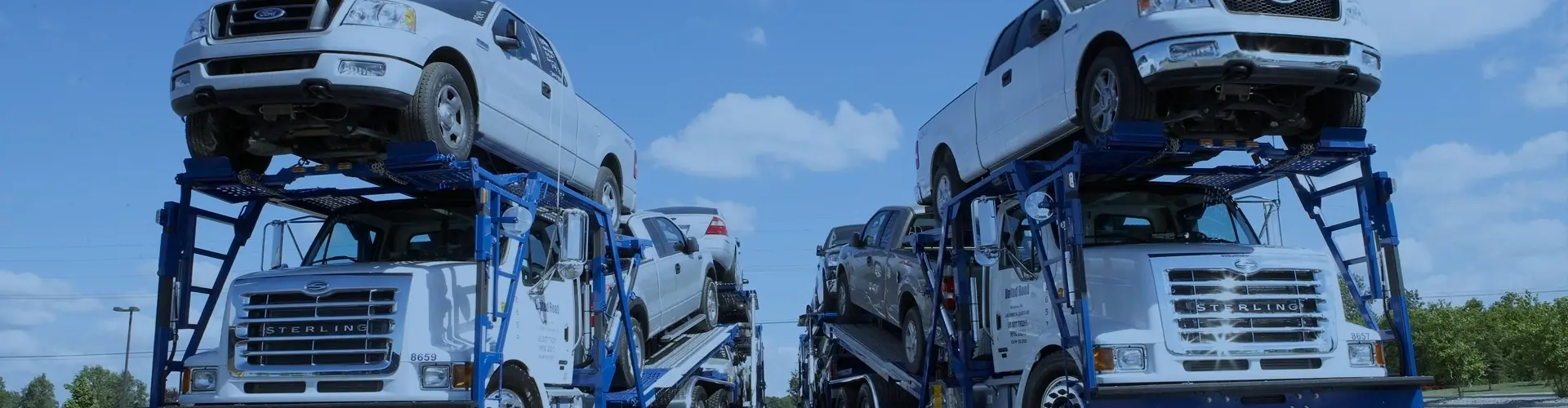
Oakland to Virginia Beach Car Shipping Route
Oakland to Virginia Beach covers roughly 2,842 miles by road. Carriers access the corridor via I-880 northbound to I-80 east, which is the primary departure artery out of the Bay Area. From Sacramento, the route continues east over the Sierra Nevada on I-80 before transitioning to I-76 or I-70 through the Rockies, then cutting south and east toward I-64 into Hampton Roads. The full haul takes experienced drivers approximately five to seven days of actual transit. Compared to driving the route yourself — factoring fuel, lodging, meals, and 50-plus hours behind the wheel — professional transport is the more practical choice. See the full breakdown at https://california.auto-transport-shipping.com/articles/benefits-of-auto-transport-service-vs-driving-yourself.html.
Virginia Beach demand is shaped heavily by the military. Naval Station Norfolk, the world's largest naval station, sits 15 miles from the Virginia Beach city center. Joint Expeditionary Base Little Creek-Fort Story straddles the northern edge of the city. These two installations alone drive thousands of PCS moves annually. Old Dominion University in neighboring Norfolk adds student transport demand each August and January. On the civilian side, major employers include Sentara Health, the City of Virginia Beach, and a dense cluster of defense contractors in the Hampton Roads corridor. Weather-wise, Atlantic-season hurricanes between June and November can affect delivery timing at the destination. Book and plan accordingly, and review common mistakes at https://california.auto-transport-shipping.com/articles/auto-transport-mistakes-to-avoid.html.
Oakland to Virginia Beach Car Shipping Rates
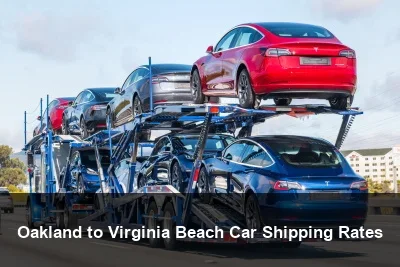
Rates on this corridor reflect the 2,842-mile distance, which puts it firmly in the long-haul tier — expect to pay accordingly. Fuel costs are the largest variable on a run this long; see how pump prices influence your final quote at https://california.auto-transport-shipping.com/articles/how-gas-prices-impact-california-auto-transport-fees.html. Military PCS season from May through August drives demand spikes at both ends, tightening carrier availability and pushing rates up. Late fall and winter generally offer softer pricing, though mountain weather through Nevada and the Rockies can add logistical overhead.
What affects the cost of Oakland to Virginia Beach car shipping:
- Vehicle type and size — larger vehicles take more carrier space; aftermarket additions like lift kits, oversized mirrors, or roof accessories can add fees
- Open vs. enclosed transport — open is lower cost with stronger carrier availability; enclosed protects against weather, debris, and road conditions
- Standard vs. expedited pickup — expedited prioritizes your vehicle for the next available dispatch, typically at a $100–$300 premium
- Time of year — peak demand seasons drive rates higher; off-peak windows offer the most competitive pricing
- Fuel costs — diesel prices affect carrier rates; longer routes are more sensitive to fuel price swings
- Vehicle condition — non-running vehicles require special loading equipment and cost more to ship
| Vehicle Type | Open Car Shipping (Est.) | Enclosed Car Shipping (Est.) |
|---|---|---|
| Sedan | $1,100 – $1,600 | $1,900 – $2,700 |
| SUV / Crossover | $1,300 – $1,900 | $2,200 – $3,100 |
| Pickup Truck | $1,300 – $1,950 | $2,200 – $3,150 |
| Minivan | $1,300 – $1,900 | $2,200 – $3,100 |
| Luxury / Classic Car | $1,550 – $2,200 | $2,600 – $3,600 |
| Non-Running Vehicle | Add $200–400 | Add $200–400 |
* Estimated ranges based on recent Oakland to Virginia Beach shipments. Actual rate depends on vehicle, locations, booking date, and current fuel costs. Use the form on this page to compare real quotes from licensed carriers.
Open vs. Enclosed: What Makes Sense on This Corridor
Open transport is the right call for most standard vehicles on this route. Carriers running Oakland to Virginia Beach cross high-desert terrain and interstate flatlands where road debris and weather exposure are manageable. Enclosed transport adds roughly 40 to 60 percent to your rate — worthwhile if you're moving a classic car, exotic, or low-clearance vehicle that can't absorb minor transit exposure. The Appalachian stretch of I-64 near West Virginia does see winter road treatment from November through March, so if you're shipping a vehicle with a show-quality finish during that window, enclosed is worth the premium.
How Long Does Oakland to Virginia Beach Car Shipping Take?
Standard transit for Oakland to Virginia Beach runs seven to ten business days once your carrier is dispatched. The driving distance of 2,842 miles, combined with federal hours-of-service limits capping drivers at 11 hours per day, sets a realistic floor of five to six driving days. Add one to two days for dispatch lead time and any relay handoffs, and seven to ten days is a conservative, accurate estimate. Oakland's carrier density shortens the dispatch window compared to smaller California markets. If your timeline is compressed, expedited options exist — review them at https://california.auto-transport-shipping.com/articles/california-expedited-car-shipping-fast-cost.html.
| Service Type | Typical Transit | Pickup Window | Best For |
|---|---|---|---|
| Open — Standard | 7–10 days | 2–5 business days | Best value; most common choice on this route |
| Open — Expedited | 5–7 days | 1–2 business days | Firm arrival date; faster dispatch window |
| Enclosed — Standard | 7–10 days | 4–8 business days | Luxury, classic, or modified vehicles |
| Enclosed — Expedited | 5–7 days | 2–4 business days | High-value vehicles on a firm delivery deadline |
** Winter weather on I-80 through the Sierra Nevada and I-70 through the Colorado Rockies is the most common cause of delays on this route. Chain controls or closures can hold carriers at Donner Summit or Vail Pass for 12 to 36 hours. Hurricane-related road closures near Virginia Beach can affect final-mile delivery June through November.
Oakland to Virginia Beach — Route & Logistics
Carriers depart Oakland via I-880 to I-80, heading east through Sacramento and over the Sierra Nevada. The corridor typically runs I-80 to I-76 or I-70 through Denver, then transitions to I-64 east through Charleston, West Virginia, and into Hampton Roads. The full interstate haul covers approximately 2,842 miles, with most carriers completing the run in relay pairs or as a solo long-haul assignment.
Key Corridor Waypoints
- Sacramento, CA First major staging point after Oakland, roughly 85 miles east via I-80. Carriers often consolidate loads here or conduct pre-departure inspections before the Sierra Nevada climb. Sacramento's distribution infrastructure means some carriers swap drivers or loads here. It's also the last major fuel and service stop before the mountain grades begin in earnest.
- Donner Summit, CA — Elevation 7,239 ft The most operationally significant point in the first half of the route. I-80 crosses the Sierra Nevada at Donner Summit, where chain controls and winter closures are common from November through April. Carriers monitor Caltrans road conditions before committing to the ascent. A closure here can hold a load for 24 to 48 hours. Clear-weather transits take roughly 90 minutes through the pass.
- Salt Lake City, UT A natural overnight stop and carrier relay point approximately 750 miles from Oakland. Carriers transitioning from I-80 to I-70 south often stage here. The Salt Lake metro has truck stops and carrier yards that support long-haul operations. Some carriers pick up or drop supplemental loads here to fill trailer capacity before continuing east into the Rockies.
- Denver, CO — I-70 Junction The primary east-west decision point on this corridor. Carriers typically continue east on I-70 through the Kansas plains after Denver, a long flat stretch that allows for efficient daily mileage accumulation. The I-70 approach from the west through the Eisenhower Tunnel — elevation 11,013 feet — is the second high-altitude challenge point and subject to similar weather restrictions as Donner Summit.
- Charleston, WV — I-64 Entry Carriers pick up I-64 east in Charleston for the final push into Hampton Roads. The I-64 corridor through West Virginia and Virginia is mountainous, winding, and slower than the plains miles. It requires careful load management, especially for enclosed carriers. From Charleston to Virginia Beach runs roughly 450 miles, typically one solid driving day under normal conditions.
- Hampton Roads, VA — I-64 / I-264 Junction The final interchange before Virginia Beach delivery. Carriers split here depending on destination ZIP code — I-264 takes loads directly into Virginia Beach proper, while I-64 continues toward Norfolk and the Naval Station. Traffic through the Hampton Roads Bridge-Tunnel can create delays during peak commute hours. Carriers familiar with this corridor time their arrival to avoid the tunnel backup.
Pickup & Delivery Access
- Pickup Access in Oakland Oakland carriers stage most effectively near West Oakland's industrial corridors along Mandela Parkway and Maritime Street, close to I-880 on-ramp access. Residential neighborhoods in North Oakland and Piedmont have narrow streets that complicate large carrier access — arrange a meet point in a commercial zone or open parking lot near I-580 or I-80 for smoother loading.
- Delivery Access in Virginia Beach Virginia Beach's residential neighborhoods in the Oceanfront and Chic's Beach areas involve narrower surface streets that challenge 75-foot car carriers. Staging in commercial lots near I-264 or at Virginia Beach Town Center is often more practical. Military families receiving delivery near Little Creek or Dam Neck should coordinate base access in advance — civilian carriers require visitor pass arrangements.
- Nearby Pickup Locations Carriers picking up in Oakland regularly extend service to Berkeley, Alameda, and Emeryville. Call 1‑800‑590‑6492 to confirm door-to-door availability at your address.
Open vs. Enclosed Car Shipping: Oakland to Virginia Beach
Both options use licensed, insured carriers and deliver door to door. For a full breakdown, read the pros and cons of open vs. enclosed car shipping.
Open Car Shipping
Most Popular- Lower cost — the practical choice for most vehicles
- More carriers available on this corridor
- Faster dispatch from booking to pickup
- Works well for sedans, SUVs, trucks, and minivans
- Vehicle rides on an open multi-car carrier
- Cargo insurance required on all licensed carriers
Estimated cost: $1,100 – $1,950
Enclosed Car Shipping
Premium Protection- Full protection from weather, debris, and road grime
- Best for luxury, exotic, and classic vehicles
- Recommended for low-clearance and custom-built cars
- Wheel-net or soft-tie systems prevent contact damage
- Higher cargo coverage — commonly $500,000 per load
- White-glove handling by experienced operators
Estimated cost: $1,900 – $3,150
Not sure which is right for your vehicle? Call 1-800-590-6492 and we'll point you in the right direction. Also worth reading: the top 10 questions to ask any car shipping company before you commit.
How to Prepare Your Car for Shipping to Virginia Beach
A little prep before pickup protects you if there's ever a dispute about your vehicle's condition. This checklist is from our full guide on preparing your car for transport:
- Remove all personal belongings from the interior and trunk
- Leave only a quarter tank of fuel — enough to load and unload
- Take date-stamped photos of the full exterior and interior
- Remove or disable toll transponders (FasTrak, E-ZPass, etc.)
- Retract or remove roof racks, spoilers, antennas, and bike mounts
- Make sure the battery is charged and tires are properly inflated
- Tell the carrier about any existing leaks or mechanical issues
- Deactivate the car alarm before the carrier arrives
- Write down the mileage on the Bill of Lading at pickup
- Fold in side mirrors if the vehicle is wider than standard
Personal items: Most carriers won't cover belongings left in the car. Read the full rules on shipping personal items in your vehicle. Also review our Bill of Lading guide so you know exactly what to check at pickup and delivery.
When to Ship Your Car from Oakland to Virginia Beach
This route sees demand surge from May through August, driven almost entirely by military PCS cycle timing. Carriers get stretched thin during peak season, and rates rise accordingly. Fall is a moderate window with reasonable pricing. Winter introduces mountain weather risk on the Sierra Nevada and Rockies segments — for a full picture of cold-weather transport challenges, see https://california.auto-transport-shipping.com/articles/auto-transport-challenges-during-the-winter.html. Spring sees a secondary demand uptick tied to university move-outs.
Spring Shoulder Season (March–April)
Mountain passes are still recovering from winter conditions in March, but carrier availability improves as demand hasn't peaked yet. Rates are moderate. Old Dominion University and Regent University end their spring semesters in late April and early May, generating a secondary wave of student relocations into and out of Virginia Beach. Book at least two weeks out to lock in reasonable rates before the summer surge begins.
Military PCS Peak Season (May–August)
This is the busiest window on the Oakland-to-Virginia Beach corridor without question. The Navy's PCS cycle concentrates a massive volume of vehicle moves tied to Naval Station Norfolk and Little Creek. Carrier capacity tightens across the entire Southeast lane. Rates climb 15 to 25 percent above baseline. If you have orders and a firm report date, book four to six weeks in advance to secure your dispatch window and avoid last-minute rate spikes.
Fall (September–November)
Demand softens after Labor Day and rates come down with it. This is generally the most cost-effective window to ship on this corridor if your timing is flexible. Weather through the mountains is manageable through October. Hurricane season technically runs through November, so if your delivery is during an active storm period, build a two to three day buffer into your expectations for final-mile delivery in the Hampton Roads area.
Winter (December–February)
Lowest demand and lowest rates of the year, but the mountain segments introduce real operational risk. I-80 through the Sierra Nevada and I-70 through the Rockies both see chain controls and closures. Carriers may reroute south through I-40 to avoid mountain weather, adding distance. Transit times can extend to 10 to 14 days in a bad weather week. If you're shipping during this window, build schedule flexibility and review winter transport specifics at https://california.auto-transport-shipping.com/articles/auto-transport-challenges-during-the-winter.html.
Back-to-School Demand (Late July–August)
Old Dominion University, Regent University, and Virginia Wesleyan University all see incoming class arrivals in late August. Combined with the tail end of military PCS season, late July through August is the tightest carrier window of the year on this lane. Student relocations from California's Bay Area — a significant college-educated military family concentration — add to outbound Oakland volume. Book early and be flexible on exact pickup dates to avoid being squeezed out.
How to Choose a Oakland to Virginia Beach Car Shipping Company
Getting multiple quotes is step one — knowing what to look for in those quotes matters just as much. Our guide on how to select a car shipping company covers the full process. Here are the six things that matter most:
FMCSA Registration
Every carrier or broker must hold a valid MC number. Verify any company at FMCSA SAFER before you book.
Proof of Insurance
Ask for a current certificate of insurance. Open carriers typically carry $100,000–$250,000 per load; enclosed commonly $500,000 or more. Learn what auto transport insurance covers.
All-In Pricing
Your quote should be a final number with no fees added after booking. Know the difference between brokers and carriers and confirm what the quote covers before you agree.
Bill of Lading
A complete Bill of Lading is filled out at pickup and delivery. Our Bill of Lading guide explains what to check. Never sign an incomplete one.
Real Reviews
Check Google and the BBB. Look at how they handled complaints and damage claims — that tells you more than a five-star average from happy customers.
Route Experience
A carrier who regularly runs Oakland to Virginia Beach knows that the Donner Summit window is everything in winter — departing Oakland on a Tuesday morning to beat a Wednesday Sierra storm system is the kind of timing call that separates experienced operators from one-trip brokers. They know to stage in West Oakland near Maritime Street rather than fighting residential neighborhoods, and they know the Hampton Roads Bridge-Tunnel backs up every weekday from 4 to 7 p.m., making a late-afternoon arrival in Virginia Beach a 90-minute penalty. They also know that Naval Station Norfolk requires a specific delivery coordination for on-base drops and that civilian carriers need pass arrangements 24 to 48 hours in advance. These are not details you learn from a dispatch board — they come from running the lane repeatedly.
Oakland to Virginia Beach Car Shipping — FAQ
How much does it cost to ship a car from Oakland to Virginia Beach?
A standard sedan on open transport between Oakland and Virginia Beach typically runs between $1,200 and $1,700 depending on season, fuel prices, and carrier availability. SUVs and trucks add $100 to $200 due to size and weight. Enclosed transport runs 40 to 60 percent higher. Military PCS season from May through August is the most expensive window — rates can push to the top of that range or above. If you're shipping in fall or winter, you'll generally find softer pricing. Fuel price fluctuations also move rates on a 2,842-mile corridor; see how that math works at https://california.auto-transport-shipping.com/articles/how-gas-prices-impact-california-auto-transport-fees.html.
How long does Oakland to Virginia Beach car shipping take?
Plan for seven to ten business days from pickup to delivery under normal conditions. The 2,842-mile driving distance requires five to six actual transit days when accounting for federal hours-of-service limits. Dispatch lead time from Oakland is typically one to three days given the strong carrier presence in the Bay Area. Winter weather through the Sierra Nevada or Colorado Rockies is the most common cause of extended transit — storms can add 24 to 48 hours at mountain chokepoints. If your schedule is rigid, expedited carrier options can compress transit; review those at https://california.auto-transport-shipping.com/articles/california-expedited-car-shipping-fast-cost.html.
Is my car insured during transport from Oakland to Virginia Beach?
Yes. Every licensed carrier is required by federal law to carry cargo liability insurance covering your vehicle during transport. The coverage limits and deductible structure vary by carrier, which is why you should request a copy of the carrier's certificate of insurance before your vehicle is loaded. Before pickup, document your vehicle's condition thoroughly with timestamped photos from multiple angles. If damage occurs during transit, that documentation is essential. For a full explanation of how transport insurance works, see https://california.auto-transport-shipping.com/articles/understanding-auto-transport-insurance.html. If you need to file a claim, the process is outlined at https://california.auto-transport-shipping.com/articles/how-to-file-a-claim-for-vehicle-damage-during-transport.html.
Should I choose open or enclosed transport for this route?
Open transport is the practical choice for most vehicles on this corridor. The route crosses high desert and interstate flatlands where exposure risk is manageable, and the cost savings over enclosed are significant on a 2,842-mile haul. Enclosed transport makes sense if you're moving a classic, exotic, or low-clearance vehicle, or if you're shipping during winter months when the I-64 stretch through West Virginia involves road salt and treatment chemicals that can affect a show-quality finish. For a detailed comparison of both options, review https://california.auto-transport-shipping.com/articles/open-vs-enclosed-auto-transport-pros-and-cons.html before making your decision.
Do I have to be present at pickup and delivery?
You don't have to be physically present, but someone you authorize must be available at both ends to sign the bill of lading. At pickup, the signed bill of lading documents your vehicle's pre-transport condition — this document protects you if a damage dispute arises later. At delivery, the same document is reviewed and signed to confirm condition upon arrival. If you can't be there yourself, designate a trusted person and make sure they understand what to look for during the inspection. Full details on the bill of lading process are at https://california.auto-transport-shipping.com/articles/california-auto-transport-bill-of-lading-information.html.
How does military PCS affect shipping availability and cost on this route?
Naval Station Norfolk and Joint Expeditionary Base Little Creek generate some of the highest military PCS vehicle shipping volume on the East Coast. When the Navy's PCS cycle peaks in June and July, demand for carriers on this lane spikes sharply. Carriers get booked out further in advance, and rates rise 15 to 25 percent above the off-peak baseline. If you have official orders and a report date, start looking for transport at least four to six weeks out during PCS season. Shipping in late August or September — after the peak — typically restores normal pricing and availability.
Can weather affect my shipment during hurricane season at the Virginia Beach end?
Yes. Virginia Beach sits directly on the Atlantic coast and is subject to hurricane and tropical storm activity from June through November. A storm making landfall near Hampton Roads can delay final-mile delivery by two to five days due to road closures, mandatory evacuations, or carrier rerouting around affected areas. If your delivery falls during an active storm period, communicate with your carrier about contingency staging. Most carriers will hold your vehicle at a secure inland point and complete delivery once roads reopen rather than forcing entry into a closed zone.
Are there any considerations for shipping from the Oakland area specifically versus other Bay Area cities?
Oakland offers a practical advantage as a shipping origin because of its proximity to major interstates — I-880, I-580, I-980, and I-80 are all accessible within a few miles. This means carriers don't have to navigate difficult peninsula or coastal routes to stage your vehicle. If you're in Berkeley, Alameda, or Emeryville, Oakland is still your effective pickup hub. West Oakland's industrial corridors near Maritime Street and Mandela Parkway are carrier-preferred staging areas for large auto transport trucks. Residential neighborhoods with narrow streets can complicate pickup — coordinating a meet point in a nearby commercial area simplifies the process significantly.
Ready to Ship Your Car from Oakland to Virginia Beach?
One form gets you up to 10 free quotes from licensed, insured carriers. Compare costs and transit times and book the best deal for your schedule.