

Oakland to Jacksonville Car Shipping Route
Oakland to Jacksonville covers approximately 2,843 miles. Carriers access the corridor from Oakland via I-880 or I-980 to I-580, then connect to I-80 eastbound — the primary artery across Nevada and Utah. From Salt Lake City, routes typically shift south on I-15 to I-70 east through the Rockies, then pick up I-40 or I-20 across Texas and the Gulf South before reaching I-10 east into Jacksonville. The drive alone would take five or more days of continuous travel. Shipping saves that time and eliminates fuel, lodging, and mechanical wear. For a full breakdown of those savings, see https://california.auto-transport-shipping.com/articles/benefits-of-auto-transport-service-vs-driving-yourself.html
Jacksonville's demand drivers are concentrated in defense and healthcare. NAS Jacksonville on the city's Westside operates A/FRC Southeast and supports thousands of active-duty personnel, many of whom receive PCS orders requiring vehicle transport. Naval Station Mayport, on Jacksonville Beach, is one of the East Coast's largest surface ship homeports. Major civilian employers include Baptist Health, Mayo Clinic Florida in neighboring Duval County, and a large Amazon fulfillment and logistics cluster near I-295. University of North Florida adds move-in and graduation-period volume each August and May. Summer heat along I-10 through Texas and Louisiana can stress vehicles during transit. Read https://california.auto-transport-shipping.com/articles/auto-transport-mistakes-to-avoid.html before you book.
Oakland to Jacksonville Car Shipping Rates
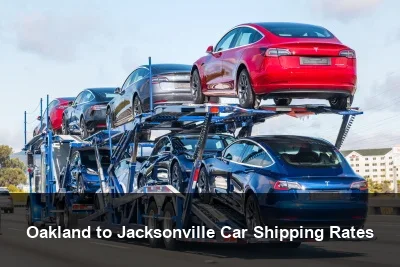
At nearly 2,843 miles, Oakland to Jacksonville falls in the highest distance tier for domestic auto transport, typically $1,050–$1,500 for standard open transport depending on season and fuel costs. California fuel taxes and diesel prices directly affect carrier bids — see https://california.auto-transport-shipping.com/articles/how-gas-prices-impact-california-auto-transport-fees.html for detail on how that feeds into your quote. Summer PCS season from May through August compresses carrier availability and pushes rates up 10–20 percent. Winter snowbird reverse-migration from Florida in March and April can briefly tighten eastbound capacity as well.
What affects the cost of Oakland to Jacksonville car shipping:
- Vehicle type and size — larger vehicles take more carrier space; aftermarket additions like lift kits, oversized mirrors, or roof accessories can add fees
- Open vs. enclosed transport — open is lower cost with stronger carrier availability; enclosed protects against weather, debris, and road conditions
- Standard vs. expedited pickup — expedited prioritizes your vehicle for the next available dispatch, typically at a $100–$300 premium
- Time of year — peak demand seasons drive rates higher; off-peak windows offer the most competitive pricing
- Fuel costs — diesel prices affect carrier rates; longer routes are more sensitive to fuel price swings
- Vehicle condition — non-running vehicles require special loading equipment and cost more to ship
| Vehicle Type | Open Car Shipping (Est.) | Enclosed Car Shipping (Est.) |
|---|---|---|
| Sedan | $1,100 – $1,600 | $1,900 – $2,700 |
| SUV / Crossover | $1,300 – $1,900 | $2,200 – $3,100 |
| Pickup Truck | $1,300 – $1,950 | $2,200 – $3,150 |
| Minivan | $1,300 – $1,900 | $2,200 – $3,100 |
| Luxury / Classic Car | $1,550 – $2,200 | $2,600 – $3,600 |
| Non-Running Vehicle | Add $200–400 | Add $200–400 |
* Estimated ranges based on recent Oakland to Jacksonville shipments. Actual rate depends on vehicle, locations, booking date, and current fuel costs. Use the form on this page to compare real quotes from licensed carriers.
Open vs. Enclosed: What This Route Actually Demands
Open transport is the right call for most standard vehicles on this corridor. The route runs through Nevada desert heat and Gulf South humidity, but neither condition justifies enclosed pricing for a daily driver. Enclosed shipping makes sense if you're moving a classic, exotic, or high-value vehicle that can't absorb minor road debris or grime from I-10's construction zones in Texas. Enclosed runs roughly 40–60 percent more on this route. If your vehicle is financed normally and not collectible, open transport is the practical choice and carrier availability is better.
How Long Does Oakland to Jacksonville Car Shipping Take?
Oakland to Jacksonville typically transits in 7 to 10 days under normal conditions. Carrier frequency out of Oakland is strong — the Bay Area is one of the top five auto transport origin markets nationally — so dispatch times are usually 1 to 3 days after booking. The driving distance for the carrier is 2,843 miles, which at legal HOS limits takes a solo driver roughly 5 to 7 days of active transport time. If your timeline is fixed, review https://california.auto-transport-shipping.com/articles/california-expedited-car-shipping-fast-cost.html to understand what expedited service costs on a corridor this long.
| Service Type | Typical Transit | Pickup Window | Best For |
|---|---|---|---|
| Open — Standard | 7–10 days | 2–5 business days | Best value; most common choice on this route |
| Open — Expedited | 5–7 days | 1–2 business days | Firm arrival date; faster dispatch window |
| Enclosed — Standard | 7–10 days | 4–8 business days | Luxury, classic, or modified vehicles |
| Enclosed — Expedited | 5–7 days | 2–4 business days | High-value vehicles on a firm delivery deadline |
** Summer construction on I-10 through Texas and Louisiana, particularly around Beaumont and Baton Rouge, can add one to two days during July and August. Tropical storm activity in the Gulf South between June and October occasionally forces carriers to reroute or hold, adding up to 48 hours. Book earlier during those months.
Oakland to Jacksonville — Route & Logistics
Carriers depart Oakland using I-880 north to I-980 or I-580 to access I-80 eastbound. From there, the primary corridor runs I-80 to I-15 south through Salt Lake City, then I-70 or I-40 east across the Southwest, connecting to I-20 or I-10 through Texas and Louisiana, and finally I-10 east into Jacksonville. Alternate southern routing via I-8 and I-10 from Los Angeles is occasionally used when loads consolidate through Southern California.
Key Corridor Waypoints
- Oakland, CA / Bay Area Staging Carriers access Oakland via I-880 or I-580, staging in West Oakland industrial zones or Emeryville for multi-vehicle loads. The Port of Oakland proximity means some carriers consolidate here before heading east. Pickup in residential areas like the Oakland Hills may require a meet point on a flat, accessible street due to hauler length restrictions.
- Reno, NV After crossing the Sierra Nevada on I-80 — elevation peaks near 7,239 feet at Donner Pass — carriers descend into Reno, approximately 218 miles from Oakland. Reno is a common overnight and inspection stop. Winter conditions on Donner Pass can require chain controls, adding several hours or forcing a one-day hold between November and March.
- Salt Lake City, UT At roughly 750 miles from Oakland, Salt Lake City is a major junction where carriers on the northern I-80 route shift south onto I-15 toward Las Vegas and the Southwest. Some loads stage here overnight. The Bonneville Salt Flats along I-80 west of Salt Lake are featureless but fast — carriers often make good time across western Utah.
- Albuquerque, NM Carriers routing via I-40 pass through Albuquerque at approximately 1,400 miles into the run. Elevation here is 5,312 feet, dropping sharply as the route moves east toward Amarillo. I-40 through New Mexico and the Texas Panhandle is a common fuel and driver rest corridor. Some loads moving via I-20 skip Albuquerque and route through El Paso instead.
- San Antonio / Houston, TX Houston marks the transition to the Gulf South at roughly 2,100 miles. I-10 east of Houston passes through Beaumont and into Louisiana — this stretch carries heavy truck traffic and sees frequent construction delays. Carriers often time departures from Houston to avoid peak freight hours. Summer heat here regularly exceeds 100°F, which affects unenclosed vehicle surfaces and tire pressure.
- Jacksonville, FL Carriers enter Jacksonville via I-10 east, connecting to I-295 for deliveries to the Westside, Southside, or beaches. NAS Jacksonville is directly off I-295 south, and Naval Station Mayport requires transit through Atlantic Beach on narrow surface streets. Downtown and San Marco have limited truck access — staging near a parking lot or retail area is often preferable for final delivery handoff.
Pickup & Delivery Access
- Pickup Access in Oakland Oakland pickups work best from flat, accessible staging areas. West Oakland industrial blocks along I-880 are carrier-friendly. Residential streets in the hills or Piedmont require a meet point at a nearby flat surface street. Berkeley, Alameda, and Emeryville are all within practical range. Confirm with your driver that your block can accommodate an 80-foot multi-car hauler before giving a home address as pickup.
- Delivery Access in Jacksonville Jacksonville's carrier-accessible areas include the Westside near I-295 and Southside near I-95. NAS Jacksonville deliveries require advance base access coordination. Naval Station Mayport is accessible from Mayport Road but surrounding residential streets in Atlantic Beach are narrow. Downtown and San Marco are tight for large haulers — carriers typically request a staging meet point at a shopping center or open lot near your final destination.
- Nearby Pickup Locations Carriers picking up in Oakland regularly extend service to Berkeley, Alameda, and Emeryville. Call 1‑800‑590‑6492 to confirm door-to-door availability at your address.
Open vs. Enclosed Car Shipping: Oakland to Jacksonville
Both options use licensed, insured carriers and deliver door to door. For a full breakdown, read the pros and cons of open vs. enclosed car shipping.
Open Car Shipping
Most Popular- Lower cost — the practical choice for most vehicles
- More carriers available on this corridor
- Faster dispatch from booking to pickup
- Works well for sedans, SUVs, trucks, and minivans
- Vehicle rides on an open multi-car carrier
- Cargo insurance required on all licensed carriers
Estimated cost: $1,100 – $1,950
Enclosed Car Shipping
Premium Protection- Full protection from weather, debris, and road grime
- Best for luxury, exotic, and classic vehicles
- Recommended for low-clearance and custom-built cars
- Wheel-net or soft-tie systems prevent contact damage
- Higher cargo coverage — commonly $500,000 per load
- White-glove handling by experienced operators
Estimated cost: $1,900 – $3,150
Not sure which is right for your vehicle? Call 1-800-590-6492 and we'll point you in the right direction. Also worth reading: the top 10 questions to ask any car shipping company before you commit.
How to Prepare Your Car for Shipping to Jacksonville
A little prep before pickup protects you if there's ever a dispute about your vehicle's condition. This checklist is from our full guide on preparing your car for transport:
- Remove all personal belongings from the interior and trunk
- Leave only a quarter tank of fuel — enough to load and unload
- Take date-stamped photos of the full exterior and interior
- Remove or disable toll transponders (FasTrak, E-ZPass, etc.)
- Retract or remove roof racks, spoilers, antennas, and bike mounts
- Make sure the battery is charged and tires are properly inflated
- Tell the carrier about any existing leaks or mechanical issues
- Deactivate the car alarm before the carrier arrives
- Write down the mileage on the Bill of Lading at pickup
- Fold in side mirrors if the vehicle is wider than standard
Personal items: Most carriers won't cover belongings left in the car. Read the full rules on shipping personal items in your vehicle. Also review our Bill of Lading guide so you know exactly what to check at pickup and delivery.
When to Ship Your Car from Oakland to Jacksonville
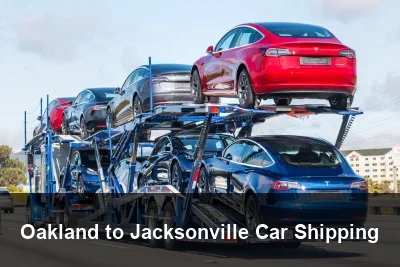
This corridor follows military PCS cycles, snowbird patterns, and Gulf hurricane season, all of which create predictable pricing and availability shifts. May through August is peak season driven by PCS orders at both ends. Late fall sees snowbird volume building toward Florida. Winter on Donner Pass introduces Sierra Nevada weather risk. For a full breakdown of how winter conditions affect pickup and transit timing, see https://california.auto-transport-shipping.com/articles/auto-transport-challenges-during-the-winter.html
Military PCS Season (May–August)
NAS Jacksonville, Naval Station Mayport, and Blount Island Command generate heavy eastbound volume from May through August as service members receive summer PCS orders. Bay Area installations including Travis AFB and Naval Base Alameda alumni add westbound demand. Carrier capacity on this corridor gets absorbed quickly in June and July. Book 2 to 3 weeks ahead of your report date to avoid last-minute rate spikes of 15 to 25 percent.
Summer Heat Advisory (June–September)
I-10 through Texas and Louisiana regularly hits 100–105°F ambient temperature from June through September. Open carriers are unaffected operationally, but interiors of dark-colored vehicles can reach damaging temperatures. Remove any items sensitive to heat before transport. Carrier transit times can stretch slightly as drivers observe stricter rest requirements in extreme heat zones near Beaumont and Baton Rouge.
Snowbird Reverse Migration (March–April)
Florida-to-California snowbird reverse migration in March and April creates a brief westbound demand surge, which can tighten eastbound carrier availability as haulers reposition west. If you're shipping eastbound to Jacksonville in late March or April, expect slightly longer dispatch windows — up to 4 or 5 days — and marginally higher rates as carriers prioritize loaded westbound runs before returning east.
Donner Pass Winter Risk (November–March)
I-80 over Donner Pass at 7,239 feet is subject to chain controls and full closures from November through March. Carriers on the northern route may hold in Reno or divert through Southern California via I-8, adding 1 to 3 days to transit. If your pickup is in late November through February, build buffer time into your schedule and ask your broker whether southern routing is available for your load.
University Move-In and Graduation (August, May)
University of North Florida and Florida State College at Jacksonville both generate vehicle shipping volume in late July through August for fall move-in and again in May around graduation. Demand in the Jacksonville metro spikes during these windows, which can affect delivery scheduling. If you're shipping for a student start date, confirm your preferred delivery window at least 2 weeks out to avoid scheduling conflicts at the destination.
Gulf Hurricane Season Caveat (June–November)
Active hurricane or tropical storm systems tracking toward Jacksonville, the Florida Panhandle, or the Louisiana Gulf Coast can force carriers to hold or reroute during transit. This is not common but adds unpredictability during peak storm months of August and September. If your delivery window is rigid and falls during an active storm period, discuss timing flexibility with your broker before confirming the booking.
How to Choose a Oakland to Jacksonville Car Shipping Company
Getting multiple quotes is step one — knowing what to look for in those quotes matters just as much. Our guide on how to select a car shipping company covers the full process. Here are the six things that matter most:
FMCSA Registration
Every carrier or broker must hold a valid MC number. Verify any company at FMCSA SAFER before you book.
Proof of Insurance
Ask for a current certificate of insurance. Open carriers typically carry $100,000–$250,000 per load; enclosed commonly $500,000 or more. Learn what auto transport insurance covers.
All-In Pricing
Your quote should be a final number with no fees added after booking. Know the difference between brokers and carriers and confirm what the quote covers before you agree.
Bill of Lading
A complete Bill of Lading is filled out at pickup and delivery. Our Bill of Lading guide explains what to check. Never sign an incomplete one.
Real Reviews
Check Google and the BBB. Look at how they handled complaints and damage claims — that tells you more than a five-star average from happy customers.
Route Experience
A carrier who runs Oakland to Jacksonville regularly knows that West Oakland's industrial staging blocks off I-880 are the cleanest pickup option — residential Oakland Hills addresses almost always require a meet-point coordination call the day before. On the road, they know that I-10 east of Beaumont carries commercial truck saturation that makes mid-afternoon arrivals slow, and that Baton Rouge's I-10 bridge corridor backs up on Fridays. They know NAS Jacksonville delivery requires advance base access — showing up without confirming gate procedures means a turned-away load. They stage Jacksonville beach deliveries near the Town Center or a major lot off I-295 rather than attempting narrow Atlantic Beach residential streets with an 80-foot hauler. That corridor familiarity reduces delays that generic carriers run into repeatedly.
Oakland to Jacksonville Car Shipping — FAQ
How much does it cost to ship a car from Oakland to Jacksonville?
Shipping a standard sedan from Oakland to Jacksonville on an open carrier typically runs $1,050 to $1,500 depending on the season, current fuel prices, and how quickly you need pickup. SUVs, trucks, and larger vehicles add $100 to $250 due to extra space on the hauler. Enclosed transport runs 40 to 60 percent higher — expect $1,600 to $2,200 for most vehicles. Rates climb 10 to 20 percent during military PCS season from May through August when eastbound demand is highest. Booking 1 to 2 weeks ahead consistently produces better pricing than last-minute requests on this corridor.
How long does Oakland to Jacksonville car shipping take?
Transit on this corridor typically runs 7 to 10 days from the moment a carrier picks up your vehicle. Dispatch time after booking — meaning the gap between when you confirm and when a carrier physically picks up — is usually 1 to 3 days given Oakland's strong carrier market. The actual driving distance is approximately 2,843 miles. Construction on I-10 between Houston and Baton Rouge during summer months can add a day. Winter Donner Pass closures on I-80 can add 1 to 3 days if the carrier is routed north. If your timeline is fixed, review expedited options at https://california.auto-transport-shipping.com/articles/california-expedited-car-shipping-fast-cost.html
Is my car insured during transport from Oakland to Jacksonville?
Every carrier operating legally in the U.S. is required by FMCSA to carry cargo insurance. Your vehicle is covered from pickup to delivery under that policy. However, carrier policies vary in deductibles and exclusions — pre-existing damage, items left inside the vehicle, and soft-top convertible covers are commonly excluded. Before your driver departs, conduct a thorough walk-around inspection and document the vehicle's condition on the bill of lading. Photograph every angle. For a full explanation of how coverage works and what to watch for, read https://california.auto-transport-shipping.com/articles/understanding-auto-transport-insurance.html. If damage does occur, follow the claims process at https://california.auto-transport-shipping.com/articles/how-to-file-a-claim-for-vehicle-damage-during-transport.html
Should I choose open or enclosed transport for Oakland to Jacksonville?
For most vehicles on this corridor, open transport is the correct choice. The route crosses Nevada desert, southwestern heat, and Gulf South humidity, but none of those conditions damage a standard vehicle during transit. Open carriers are more available and significantly cheaper. Enclosed transport is worth the premium if you're moving a classic car, exotic, or vehicle with a custom paint finish that can't tolerate road grime or minor debris exposure. If you're uncertain whether your vehicle qualifies, review the detailed breakdown at https://california.auto-transport-shipping.com/articles/open-vs-enclosed-auto-transport-pros-and-cons.html before making the call.
Do I have to be present at pickup and delivery?
You don't have to be present personally, but someone you authorize must be there to release and receive the vehicle, sign the bill of lading, and conduct the condition inspection. That person can be a family member, neighbor, or building manager — anyone you trust to document the vehicle accurately. The bill of lading is your legal record of the vehicle's condition at each end of the transport. If no authorized person is available, some carriers allow key lockbox arrangements, but this must be confirmed in advance. Read https://california.auto-transport-shipping.com/articles/california-auto-transport-bill-of-lading-information.html to understand exactly what that inspection should cover.
Does military PCS status affect how I should book this route?
If you're shipping under military PCS orders to or from NAS Jacksonville, Naval Station Mayport, or Blount Island Command, your timing is likely fixed by your report date — which means you have less flexibility to wait for better rates. Book as early as your orders allow, ideally 2 to 3 weeks ahead. Confirm with your broker whether your destination requires base access coordination, because NAS Jacksonville and Mayport both have gate procedures that can delay or turn away unprepared carriers. Many military members also qualify for specific carrier pricing programs, so ask explicitly when you request your quote.
What happens if there's a hurricane or tropical storm during my vehicle's transit?
If a tropical storm or hurricane is tracking toward the Jacksonville area or the I-10 Gulf Coast corridor during your vehicle's transit window, your carrier may hold the load at a staging point — often in Texas or Georgia — until the system clears. This is a safety and insurance requirement, not a discretionary delay. It can add 1 to 4 days to your transit time. This happens most often between August and October. If your delivery date is rigid during hurricane season, discuss contingency plans with your broker before you book and confirm what the carrier's hold and reroute policy covers.
Can I ship personal items in my car during transport from Oakland to Jacksonville?
Technically carriers prohibit it, and cargo insurance does not cover personal belongings inside the vehicle. In practice, many shippers leave a small amount of gear in the trunk — under 100 pounds is a common informal threshold some carriers tolerate. However, if the vehicle is weighed at a DOT inspection point and comes in overweight, or if items shift and cause interior damage, the carrier is not liable. For a cross-country move of 2,843 miles, the risks of leaving valuables in the vehicle are higher than on shorter runs. Laptops, documents, firearms, and perishables should never be included.
Ready to Ship Your Car from Oakland to Jacksonville?
One form gets you up to 10 free quotes from licensed, insured carriers. Compare costs and transit times and book the best deal for your schedule.