
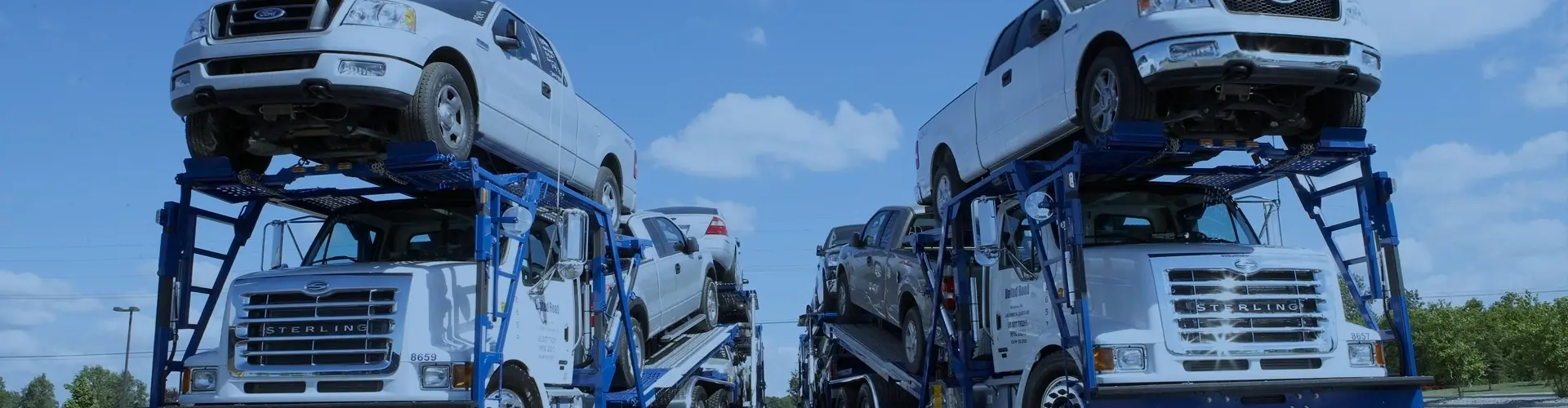
Moreno Valley to Portland Car Shipping Route
Moreno Valley sits at roughly 1,700 feet elevation in the Inland Empire, served directly by SR-60 westbound into the I-10 corridor and I-215 northbound toward San Bernardino. Carriers leaving Moreno Valley typically access I-15 north through the Cajon Pass at 4,260 feet, then connect to I-5 through the San Joaquin Valley or use the I-5/US-101 coastal option depending on load configuration. The total haul to Portland covers 1,087 miles of primarily interstate highway. Driving that yourself means two long days, fuel costs, lodging, and wear on your vehicle. Shipping removes all of that. See a full breakdown of those savings at https://california.auto-transport-shipping.com/articles/benefits-of-auto-transport-service-vs-driving-yourself.html.
Portland demand is anchored by several concrete sources. Joint Base Lewis-McChord sits just south of Tacoma and generates PCS orders that ripple through the Portland metro; personnel frequently take delivery in Portland rather than waiting for base-adjacent carriers. Portland State University and Oregon Health and Science University both run fall enrollment cycles that drive August and September shipping volume. Major private employers include Nike's world headquarters in Beaverton, Intel's large semiconductor campus in Hillsboro, and Providence Health. Seasonally, the Cascade Range crossing near Mount Shasta—elevation 3,554 feet at the pass—can see snow from November through March, adding transit variability. Before you book, review https://california.auto-transport-shipping.com/articles/auto-transport-mistakes-to-avoid.html to avoid common errors on long-haul routes.
Moreno Valley to Portland Car Shipping Rates
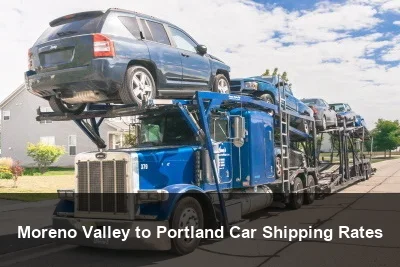
Rates on the Moreno Valley–Portland corridor are primarily driven by the 1,087-mile distance, which puts this squarely in the long-haul pricing tier. Fuel surcharges fluctuate with diesel prices along I-5 and I-15, which directly affect what carriers charge on this run—see https://california.auto-transport-shipping.com/articles/how-gas-prices-impact-california-auto-transport-fees.html. Expect rate increases in late May through August when northbound demand peaks. Winter bookings can see slight premiums if carriers factor in mountain weather risk through the Siskiyous and Cascades. Standard sedans typically fall in the $850–$1,150 range depending on timing and carrier availability.
What affects the cost of Moreno Valley to Portland car shipping:
- Vehicle type and size — larger vehicles take more carrier space; aftermarket additions like lift kits, oversized mirrors, or roof accessories can add fees
- Open vs. enclosed transport — open is lower cost with stronger carrier availability; enclosed protects against weather, debris, and road conditions
- Standard vs. expedited pickup — expedited prioritizes your vehicle for the next available dispatch, typically at a $100–$300 premium
- Time of year — peak demand seasons drive rates higher; off-peak windows offer the most competitive pricing
- Fuel costs — diesel prices affect carrier rates; longer routes are more sensitive to fuel price swings
- Vehicle condition — non-running vehicles require special loading equipment and cost more to ship
| Vehicle Type | Open Car Shipping (Est.) | Enclosed Car Shipping (Est.) |
|---|---|---|
| Sedan | $750 – $1,000 | $1,350 – $1,750 |
| SUV / Crossover | $900 – $1,150 | $1,550 – $2,000 |
| Pickup Truck | $900 – $1,200 | $1,550 – $2,100 |
| Minivan | $900 – $1,150 | $1,550 – $2,000 |
| Luxury / Classic Car | $1,050 – $1,400 | $1,850 – $2,350 |
| Non-Running Vehicle | Add $150–300 | Add $150–300 |
* Estimated ranges based on recent Moreno Valley to Portland shipments. Actual rate depends on vehicle, locations, booking date, and current fuel costs. Use the form on this page to compare real quotes from licensed carriers.
Open vs. Enclosed: Which Makes Sense on This Corridor
Open transport covers the overwhelming majority of vehicles shipped on the Moreno Valley–Portland run and is the right call for standard passenger cars, SUVs, and trucks. I-5 through California and Oregon is a well-maintained freight corridor, and open carriers handle it daily without incident. Enclosed transport makes sense if you're moving a classic, exotic, or low-clearance vehicle and you're booking between November and March when road spray and occasional debris near the Siskiyou Summit create elevated exposure risk. Enclosed adds roughly $300–$500 to the total on this distance. For most vehicles most of the year, open is the practical choice.
How Long Does Moreno Valley to Portland Car Shipping Take?
Standard transit on the Moreno Valley–Portland corridor runs 3 to 5 business days once a carrier is assigned. The driving distance of 1,087 miles translates to approximately 17 to 19 hours of wheel time, which carriers break across two driver days under HOS regulations. Moreno Valley's position inside the Inland Empire carrier pool—one of the densest in California—means dispatch to pickup typically runs 1 to 2 business days. If your timeline is compressed, expedited options exist; see https://california.auto-transport-shipping.com/articles/california-expedited-car-shipping-fast-cost.html for what that costs and how it works on routes of this length.
| Service Type | Typical Transit | Pickup Window | Best For |
|---|---|---|---|
| Open — Standard | 3–5 days | 2–5 business days | Best value; most common choice on this route |
| Open — Expedited | 2–3 days | 1–2 business days | Firm arrival date; faster dispatch window |
| Enclosed — Standard | 3–5 days | 3–7 business days | Luxury, classic, or modified vehicles |
| Enclosed — Expedited | 2–3 days | 1–3 business days | High-value vehicles on a firm delivery deadline |
** The primary transit risk on this corridor is weather near the Siskiyou Summit on I-5 at 4,310 feet elevation. ODOT and Caltrans both issue chain controls and periodic closures between November and April. A full closure can add 24 to 48 hours to delivery. Book with buffer time if your move falls in that window.
Moreno Valley to Portland — Route & Logistics
Carriers access this route from Moreno Valley via SR-60 west to I-15 north, climbing the Cajon Pass at 4,260 feet into the high desert before descending into the San Joaquin Valley. From there, I-5 north runs the full length of California and Oregon into Portland. Total interstate mileage is approximately 1,087 miles, with the majority on I-5 through the Central Valley and Willamette Valley.
Key Corridor Waypoints
- Cajon Pass, CA Carriers exit the Inland Empire via I-15 north, cresting Cajon Pass at 4,260 feet. This is the first significant grade change on the route and where carriers assess load balance before the long inland pull north. Chain controls are rare here but can occur December through February. The descent into the Mojave high desert follows immediately after.
- Bakersfield, CA Bakersfield at roughly 400 feet elevation serves as the primary rest and fuel stop for carriers entering the San Joaquin Valley stretch. Many long-haul carriers running the West Coast lane stage here overnight. It sits approximately 175 miles from the Inland Empire, making it a natural first-day stop before the long valley run north to the Sacramento area.
- Sacramento, CA Sacramento is the mid-route logistics hub for this corridor. Carriers moving north often swap drivers, coordinate with dispatch, or pick up additional loads here. The I-5 and US-50 interchange gives carriers flexibility on routing. At roughly 25 feet elevation, it marks the end of flat valley driving before terrain begins rising toward the Oregon border.
- Siskiyou Summit, CA/OR Border The Siskiyou Summit on I-5 reaches 4,310 feet and is the most operationally significant point on the entire route. Oregon DOT and Caltrans both monitor this crossing. Chain controls and closures occur from November through April and are the single most common cause of transit delays on this corridor. Carriers typically check road conditions at Weed, CA before committing to the crossing.
- Medford, OR Medford sits at 1,378 feet in the Rogue Valley and is the first major Oregon stop after the Siskiyou crossing. Carriers use it as a staging point and weather checkpoint. It also serves as a delivery destination for Southern Oregon customers, so carriers sometimes make partial unloads here before continuing north toward the Eugene and Portland metro areas.
- Portland, OR Portland is the terminus, accessed via I-5 north through the Willamette Valley at near sea level. Carriers typically use the I-205 loop to avoid downtown congestion when delivering to east Portland, Gresham, or the airport corridor. West side deliveries toward Beaverton and Hillsboro route off I-5 via OR-217. Urban density and bridge approaches require coordination on exact meet points.
Pickup & Delivery Access
- Pickup Access in Moreno Valley Moreno Valley's street grid is carrier-friendly throughout most of the city. The Towngate and Moreno Valley Ranch areas offer wide residential streets with easy turnaround access. SR-60 frontage roads near Day Street and Frederick Street give carriers direct access without navigating tight subdivisions. For large multi-car haulers, parking lot meet points near the Moreno Valley Mall or Riverside Plaza provide easy loading without residential maneuvering.
- Delivery Access in Portland Portland carriers prefer the I-205 corridor for east-side deliveries, particularly around Gresham, Troutdale, and the Gateway District. Inner SE and NE Portland neighborhoods have narrower streets that limit large hauler access; staging at nearby commercial parking areas is common. West Hills and inner Northwest Portland require advance coordination due to grade changes and street width. Suburban Beaverton and Hillsboro are straightforward for any carrier size.
- Nearby Pickup Locations Carriers picking up in Moreno Valley regularly extend service to Riverside, Perris, and Hemet. Call 1‑800‑590‑6492 to confirm door-to-door availability at your address.
Open vs. Enclosed Car Shipping: Moreno Valley to Portland
Both options use licensed, insured carriers and deliver door to door. For a full breakdown, read the pros and cons of open vs. enclosed car shipping.
Open Car Shipping
Most Popular- Lower cost — the practical choice for most vehicles
- More carriers available on this corridor
- Faster dispatch from booking to pickup
- Works well for sedans, SUVs, trucks, and minivans
- Vehicle rides on an open multi-car carrier
- Cargo insurance required on all licensed carriers
Estimated cost: $750 – $1,200
Enclosed Car Shipping
Premium Protection- Full protection from weather, debris, and road grime
- Best for luxury, exotic, and classic vehicles
- Recommended for low-clearance and custom-built cars
- Wheel-net or soft-tie systems prevent contact damage
- Higher cargo coverage — commonly $500,000 per load
- White-glove handling by experienced operators
Estimated cost: $1,350 – $2,100
Not sure which is right for your vehicle? Call 1-800-590-6492 and we'll point you in the right direction. Also worth reading: the top 10 questions to ask any car shipping company before you commit.
How to Prepare Your Car for Shipping to Portland
A little prep before pickup protects you if there's ever a dispute about your vehicle's condition. This checklist is from our full guide on preparing your car for transport:
- Remove all personal belongings from the interior and trunk
- Leave only a quarter tank of fuel — enough to load and unload
- Take date-stamped photos of the full exterior and interior
- Remove or disable toll transponders (FasTrak, E-ZPass, etc.)
- Retract or remove roof racks, spoilers, antennas, and bike mounts
- Make sure the battery is charged and tires are properly inflated
- Tell the carrier about any existing leaks or mechanical issues
- Deactivate the car alarm before the carrier arrives
- Write down the mileage on the Bill of Lading at pickup
- Fold in side mirrors if the vehicle is wider than standard
Personal items: Most carriers won't cover belongings left in the car. Read the full rules on shipping personal items in your vehicle. Also review our Bill of Lading guide so you know exactly what to check at pickup and delivery.
When to Ship Your Car from Moreno Valley to Portland
This corridor sees its strongest northbound demand from May through August, driven by Portland's relocation season, university move-ins, and summer PCS military orders. That demand peak compresses carrier availability and pushes rates up modestly. Winter months from November through February see lower demand but carry weather risk through the Siskiyous, which can add transit time and occasional rate premiums. For a detailed look at winter shipping risks specific to mountain crossings, see https://california.auto-transport-shipping.com/articles/auto-transport-challenges-during-the-winter.html.
Spring Relocation Season (March–May)
March through May sees the first wave of Moreno Valley–Portland volume as corporate relocations and real estate closings align with the Pacific Northwest's milder weather. Carriers are available but booking windows tighten in April. Rates are moderate compared to summer peak. If you're moving for a job start in April or May, book 10 to 14 days ahead to lock in a carrier at a reasonable rate.
Summer Peak Demand (June–August)
This is the busiest period on the corridor. Portland-area dealership deliveries, Nike and Intel relocation packages, and military PCS orders to Pacific Northwest installations all converge from June through August. Carrier slots fill faster and rates trend higher. Book 2 to 3 weeks out if your move falls in this window. Open carriers are plentiful but enclosed capacity books out faster.
University Move-In Surge (Late August–September)
Portland State University and Oregon Health and Science University both see student and faculty arrivals in late August and early September. This creates a concentrated short-term demand spike for northbound carriers. Vehicles headed to Portland for academic-year starts should be booked no later than early August. The spike typically flattens by mid-September as enrollment stabilizes and carrier supply catches up.
Winter Weather Window (November–February)
The Siskiyou Summit is the primary risk factor for winter shipments on this route. I-5 chain controls and closures between November and February can hold a carrier at the border crossing for 12 to 48 hours. Rates may carry a small weather premium during this period. Build buffer time into your delivery expectation and avoid scheduling hard delivery deadlines in December or January. See winter shipping details at https://california.auto-transport-shipping.com/articles/auto-transport-challenges-during-the-winter.html.
Military PCS Orders (Year-Round, Peaks Spring/Summer)
PCS orders to Joint Base Lewis-McChord and Portland-area reserve installations generate consistent demand on this corridor, with peaks in March through July when the military's primary PCS season runs. Service members shipping privately-owned vehicles from the Inland Empire—where March Air Reserve Base is located nearby—should book as early as orders are confirmed. Carriers familiar with this lane handle military shipments regularly.
How to Choose a Moreno Valley to Portland Car Shipping Company
Getting multiple quotes is step one — knowing what to look for in those quotes matters just as much. Our guide on how to select a car shipping company covers the full process. Here are the six things that matter most:
FMCSA Registration
Every carrier or broker must hold a valid MC number. Verify any company at FMCSA SAFER before you book.
Proof of Insurance
Ask for a current certificate of insurance. Open carriers typically carry $100,000–$250,000 per load; enclosed commonly $500,000 or more. Learn what auto transport insurance covers.
All-In Pricing
Your quote should be a final number with no fees added after booking. Know the difference between brokers and carriers and confirm what the quote covers before you agree.
Bill of Lading
A complete Bill of Lading is filled out at pickup and delivery. Our Bill of Lading guide explains what to check. Never sign an incomplete one.
Real Reviews
Check Google and the BBB. Look at how they handled complaints and damage claims — that tells you more than a five-star average from happy customers.
Route Experience
A carrier who runs Moreno Valley to Portland regularly knows that the Cajon Pass can back up with commercial traffic on Monday mornings when trucks restart after weekend hours. They know to fuel in Bakersfield rather than wait for the less competitive pricing in the Sacramento Valley. They know the Siskiyou Summit weather window closes fast and that a 6 AM departure from Medford clears the pass before afternoon weather builds in winter months. On the Portland end, experienced carriers know that I-205 east is the efficient approach for most deliveries and that the St. Johns Bridge approach to North Portland requires planning for oversized loads. That operational knowledge is the difference between a 3-day delivery and a 5-day one.
Moreno Valley to Portland Car Shipping — FAQ
How much does it cost to ship a car from Moreno Valley to Portland?
Shipping a standard sedan from Moreno Valley to Portland on an open carrier typically runs between $850 and $1,150 depending on the time of year, current fuel prices, and how quickly you need the vehicle picked up. SUVs and trucks add $75 to $150 due to size and weight. Enclosed transport for this route runs $300 to $500 more than open. Summer months from June through August and late August university move-in timing tend to push rates toward the higher end of the range. Fuel price swings on the I-5 corridor also affect carrier pricing; see https://california.auto-transport-shipping.com/articles/how-gas-prices-impact-california-auto-transport-fees.html for how that calculation works.
How long does Moreno Valley to Portland car shipping take?
Once a carrier is dispatched, transit from Moreno Valley to Portland typically runs 3 to 5 business days. The 1,087-mile drive requires two driver days under federal hours-of-service rules. Moreno Valley's location inside the Inland Empire carrier pool means dispatch to pickup usually runs 1 to 2 business days after booking. The main variable that can extend this timeline is weather at the Siskiyou Summit on the California-Oregon border, where I-5 chain controls or closures between November and April can hold carriers for 24 to 48 hours. If timing is critical, expedited options are available; see https://california.auto-transport-shipping.com/articles/california-expedited-car-shipping-fast-cost.html.
Is my car insured during transport from Moreno Valley to Portland?
Yes. Every carrier operating legally on this route is required to carry cargo liability insurance under FMCSA regulations. That coverage is active from the moment your vehicle is loaded onto the hauler until it is delivered in Portland. Before pickup, document your vehicle's condition thoroughly with timestamped photos from multiple angles. At delivery, inspect the car against the bill of lading before signing off. If you find damage, note it on the delivery receipt before the carrier leaves. For a full explanation of what carrier insurance covers and excludes, see https://california.auto-transport-shipping.com/articles/understanding-auto-transport-insurance.html. If you need to file a claim, the process is detailed at https://california.auto-transport-shipping.com/articles/how-to-file-a-claim-for-vehicle-damage-during-transport.html.
Should I choose open or enclosed transport for this route?
Open transport is appropriate for the large majority of vehicles on the Moreno Valley–Portland run. I-5 is a high-volume freight corridor with well-maintained surfaces, and open carriers complete this route regularly without incident. Enclosed transport is worth the added cost if you're shipping a classic car, a high-value exotic, or a low-clearance performance vehicle, particularly between November and March when road spray and potential debris near the Siskiyou Summit create elevated exposure. For a detailed comparison of both options, see https://california.auto-transport-shipping.com/articles/open-vs-enclosed-auto-transport-pros-and-cons.html. If your vehicle has a factory paint warranty condition or concours-level finish, enclosed is the conservative call regardless of season.
Do I have to be present at pickup and delivery?
You or a designated representative must be present at both pickup and delivery to sign the bill of lading, which is the legal document recording your vehicle's condition before and after transport. You don't have to be the registered owner, but whoever is present needs to be an adult who can inspect the vehicle and sign the paperwork. At pickup, the driver will complete a condition report with you. At delivery in Portland, you'll compare the vehicle's condition against that original report before signing. For a full explanation of what the bill of lading covers and why it matters, see https://california.auto-transport-shipping.com/articles/california-auto-transport-bill-of-lading-information.html.
Does winter weather on this route cause delays, and how should I plan for it?
Yes, winter weather is the primary transit variable on the Moreno Valley–Portland corridor. The Siskiyou Summit on I-5 at 4,310 feet elevation is subject to chain controls and full closures from November through April. When ODOT or Caltrans closes the pass, carriers must hold at Weed, CA or Ashland, OR until the road reopens. A single closure event can add 24 to 48 hours to your delivery timeline. If you're shipping between November and March, build at least a two-day buffer into your delivery expectation and avoid scheduling hard deadlines around that window. Carriers experienced on this lane monitor road conditions actively, but closures are ultimately outside their control.
I'm a service member at March Air Reserve Base shipping a vehicle to the Pacific Northwest. What should I know?
March Air Reserve Base in Riverside County is roughly 10 miles from Moreno Valley, which puts you squarely inside the Inland Empire carrier pool. Carriers familiar with military PCS shipments run this corridor regularly, particularly in the spring and summer PCS season from March through July. Book as soon as your orders are confirmed—waiting until 30 days out during peak PCS season means competing for carrier slots with other service members doing the same thing. Portland-area deliveries for personnel assigned to Joint Base Lewis-McChord or Portland-area reserve units are handled frequently by carriers on this lane. Keep a copy of your orders accessible in case your broker needs to document the shipment.
Can I ship a vehicle from a nearby city like Riverside or Hemet instead of Moreno Valley?
Yes. Carriers serving the Moreno Valley pickup area routinely serve Riverside, Perris, and Hemet as part of the same Inland Empire zone. Riverside is directly adjacent and adds no meaningful logistics complexity. Hemet, about 20 miles southeast via SR-74, is accessible but may require a slightly wider pickup window depending on carrier routing. If you're in any of these cities, quote your actual address—most brokers will assign you to the same carrier pool that covers Moreno Valley, and your rate and transit time will be essentially the same as a Moreno Valley origin shipment.
Ready to Ship Your Car from Moreno Valley to Portland?
One form gets you up to 10 free quotes from licensed, insured carriers. Compare costs and transit times and book the best deal for your schedule.