

Los Angeles to Tulsa Car Shipping Route
Los Angeles to Tulsa covers approximately 1,445 miles by road. Carriers depart the Los Angeles basin via I-10 east, the primary artery for this run, though staging and pickup access also draws on I-5, I-15, I-110, and I-405 depending on where your vehicle originates in the metro. From I-10, carriers continue east through the Inland Empire, cross into Arizona at Blythe, transit through Phoenix and then Tucson or bypass via I-40 through Flagstaff, and push into Oklahoma via I-40 into Tulsa. Driving that distance yourself means fuel, lodging, meals, and wear on a vehicle you're trying to preserve. Shipping instead is a straightforward value comparison — see the full breakdown at https://california.auto-transport-shipping.com/articles/benefits-of-auto-transport-service-vs-driving-yourself.html.
Tulsa's inbound demand is driven by several concrete anchors. Tulsa International Airport and American Airlines' maintenance hub employ thousands and draw regular relocations. The University of Tulsa and Oral Roberts University generate student and faculty moves each August and January. Major energy employers including Williams Companies, ONEOK, and Unit Corporation relocate staff to and from California repeatedly. Tinker Air Force Base in nearby Midwest City also generates PCS moves that funnel through Tulsa. Weather on this corridor matters: the Texas Panhandle and western Oklahoma see ice storms from November through March that can slow transit. Plan around those windows carefully, and before you book, review https://california.auto-transport-shipping.com/articles/auto-transport-mistakes-to-avoid.html to avoid common errors.
Los Angeles to Tulsa Car Shipping Rates
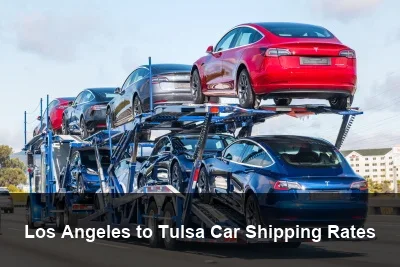
Rates on the Los Angeles to Tulsa lane reflect a 1,445-mile haul that falls in the mid-to-long distance tier — typically ranging from $900 to $1,400 for a standard sedan on open transport, depending on season and fuel costs. Summer peaks in June and July push prices upward as student and military PCS demand compresses carrier availability. Fuel surcharges directly affect this corridor; the run crosses high-diesel-cost stretches through Arizona and New Mexico. For context on how fuel costs flow into your quote, see https://california.auto-transport-shipping.com/articles/how-gas-prices-impact-california-auto-transport-fees.html.
What affects the cost of Los Angeles to Tulsa car shipping:
- Vehicle type and size — larger vehicles take more carrier space; aftermarket additions like lift kits, oversized mirrors, or roof accessories can add fees
- Open vs. enclosed transport — open is lower cost with stronger carrier availability; enclosed protects against weather, debris, and road conditions
- Standard vs. expedited pickup — expedited prioritizes your vehicle for the next available dispatch, typically at a $100–$300 premium
- Time of year — peak demand seasons drive rates higher; off-peak windows offer the most competitive pricing
- Fuel costs — diesel prices affect carrier rates; longer routes are more sensitive to fuel price swings
- Vehicle condition — non-running vehicles require special loading equipment and cost more to ship
| Vehicle Type | Open Car Shipping (Est.) | Enclosed Car Shipping (Est.) |
|---|---|---|
| Sedan | $950 – $1,350 | $1,700 – $2,300 |
| SUV / Crossover | $1,100 – $1,600 | $1,950 – $2,700 |
| Pickup Truck | $1,100 – $1,650 | $1,950 – $2,750 |
| Minivan | $1,100 – $1,600 | $1,950 – $2,700 |
| Luxury / Classic Car | $1,300 – $1,900 | $2,200 – $3,000 |
| Non-Running Vehicle | Add $200–350 | Add $200–350 |
* Estimated ranges based on recent Los Angeles to Tulsa shipments. Actual rate depends on vehicle, locations, booking date, and current fuel costs. Use the form on this page to compare real quotes from licensed carriers.
Open vs. Enclosed: What This Route's Conditions Actually Require
For most vehicles making the Los Angeles to Tulsa run, open transport is appropriate. The I-10 and I-40 corridor is a high-volume freight lane with well-maintained pavement and predictable conditions outside of winter months. Road debris risk is moderate, not elevated. Enclosed transport adds roughly 30 to 50 percent to your cost and is worth it for exotics, classics, or low-clearance vehicles where a single road chip represents a significant loss. If you're moving a daily driver, leased vehicle, or standard SUV, open is the practical call on this route.
How Long Does Los Angeles to Tulsa Car Shipping Take?
Standard transit on the Los Angeles to Tulsa route runs three to five days once a carrier picks up your vehicle. The driving distance at carrier pace — factoring HOS regulations limiting daily drive time to eleven hours — typically requires two to three driving days. Los Angeles is one of the highest-volume origin markets in the country, so carrier availability is not the bottleneck it can be on thinner corridors. Expedited options can compress the window if your timeline is fixed; see https://california.auto-transport-shipping.com/articles/california-expedited-car-shipping-fast-cost.html for what that costs and how it works on this corridor.
| Service Type | Typical Transit | Pickup Window | Best For |
|---|---|---|---|
| Open — Standard | 4–6 days | 2–5 business days | Best value; most common choice on this route |
| Open — Expedited | 2–4 days | 1–2 business days | Firm arrival date; faster dispatch window |
| Enclosed — Standard | 4–6 days | 3–7 business days | Luxury, classic, or modified vehicles |
| Enclosed — Expedited | 2–4 days | 1–3 business days | High-value vehicles on a firm delivery deadline |
** Winter ice events across the Texas Panhandle and western Oklahoma — typically December through February — can add one to two days when carriers hold position or detour. I-40 closures near Amarillo due to blowing snow or ice are documented annual occurrences. If you're booking between November and March, build buffer into your delivery expectation.
Los Angeles to Tulsa — Route & Logistics
Carriers serving this route depart the Los Angeles basin on I-10 east, accessing it from I-405, I-110, or I-5 depending on origin quadrant. The route crosses into Arizona at Blythe, continues to either Phoenix or Flagstaff via I-40, then runs east through New Mexico, the Texas Panhandle, and into Oklahoma on I-40 directly into Tulsa. Total carrier drive time spans two to three driver days under federal hours-of-service rules.
Key Corridor Waypoints
- Pomona / Ontario, CA The eastern Inland Empire is a common early staging point for carriers picking up vehicles across the Los Angeles metro. Ontario and Pomona offer large commercial lots near I-10 and I-15 interchange zones where multi-car carriers consolidate loads before committing to the eastbound run. If you're in the San Gabriel Valley or eastern LA County, this is a practical meet-point option.
- Blythe, CA / Arizona State Line The California-Arizona border crossing at Blythe sits at roughly 270 miles from central Los Angeles. California's agricultural inspection station here is the last regulatory checkpoint before Arizona. Carriers often fuel here given California's higher diesel prices. Summer temperatures routinely exceed 115°F in this stretch, which is a consideration for enclosed carriers monitoring vehicle cabin heat during transit.
- Flagstaff, AZ At 6,910 feet elevation, Flagstaff sits on I-40 and is the highest significant point on this corridor. Carriers choosing the northern I-40 route through Flagstaff rather than the southern I-10 Phoenix route add slight mileage but avoid Phoenix metro congestion. Winter snow and ice at Flagstaff can require chain controls and slow transit from November through April.
- Albuquerque, NM Albuquerque at approximately 5,310 feet elevation is the mid-corridor overnight stop for most carriers on this run. The I-40 and I-25 interchange here is a major freight junction. Carriers typically log their first rest here before the push through the Texas Panhandle. It also serves as a waypoint where loads can be transferred between carriers on relay arrangements.
- Amarillo, TX Amarillo on I-40 through the Texas Panhandle sits at roughly 3,600 feet and is the corridor's primary weather choke point. Winter ice storms and sustained high winds are documented hazards that have closed I-40 multiple times per season. Summer crosswinds affect high-profile carriers. Amarillo is also a fueling and driver rest stop before the final Oklahoma push.
- Tulsa, OK Carriers enter Tulsa from the west on I-40, transitioning to I-44 north into the city. Residential delivery is accessible across most of Tulsa's metro grid. The areas near downtown and the Pearl and Brady Arts districts have narrower streets; arrange a nearby parking lot or surface street staging point for large multi-car carriers if your delivery address is in those zones.
Pickup & Delivery Access
- Pickup Access in Los Angeles Los Angeles carrier access is metro-wide via I-10, I-5, I-15, I-110, and I-405. Dense neighborhoods in Downtown LA, Silver Lake, or West Hollywood may require a nearby parking lot or side street meet point for a full-size multi-car hauler. Burbank, Glendale, Pasadena, El Monte, and Torrance are all served with standard driveway access in most cases. Pickup scheduling covers all four metro quadrants daily given Los Angeles's volume.
- Delivery Access in Tulsa Tulsa's suburban grid — South Tulsa, Broken Arrow, Owasso, Jenks — offers straightforward carrier access with wide residential streets. Midtown and downtown Tulsa have narrower corridors near Cherry Street and the Arts District where a full nine-car hauler may not reach your driveway; a nearby commercial parking lot works as a simple alternative. No permit zones currently restrict delivery, but confirm with your carrier if delivering to a gated community with low overhead clearance.
- Nearby Pickup Locations Carriers picking up in Los Angeles regularly extend service to Burbank, Glendale, Pasadena, El Monte, and Torrance. Call 1‑800‑590‑6492 to confirm door-to-door availability at your address.
Open vs. Enclosed Car Shipping: Los Angeles to Tulsa
Both options use licensed, insured carriers and deliver door to door. For a full breakdown, read the pros and cons of open vs. enclosed car shipping.
Open Car Shipping
Most Popular- Lower cost — the practical choice for most vehicles
- More carriers available on this corridor
- Faster dispatch from booking to pickup
- Works well for sedans, SUVs, trucks, and minivans
- Vehicle rides on an open multi-car carrier
- Cargo insurance required on all licensed carriers
Estimated cost: $950 – $1,650
Enclosed Car Shipping
Premium Protection- Full protection from weather, debris, and road grime
- Best for luxury, exotic, and classic vehicles
- Recommended for low-clearance and custom-built cars
- Wheel-net or soft-tie systems prevent contact damage
- Higher cargo coverage — commonly $500,000 per load
- White-glove handling by experienced operators
Estimated cost: $1,700 – $2,750
Not sure which is right for your vehicle? Call 1-800-590-6492 and we'll point you in the right direction. Also worth reading: the top 10 questions to ask any car shipping company before you commit.
How to Prepare Your Car for Shipping to Tulsa
A little prep before pickup protects you if there's ever a dispute about your vehicle's condition. This checklist is from our full guide on preparing your car for transport:
- Remove all personal belongings from the interior and trunk
- Leave only a quarter tank of fuel — enough to load and unload
- Take date-stamped photos of the full exterior and interior
- Remove or disable toll transponders (FasTrak, E-ZPass, etc.)
- Retract or remove roof racks, spoilers, antennas, and bike mounts
- Make sure the battery is charged and tires are properly inflated
- Tell the carrier about any existing leaks or mechanical issues
- Deactivate the car alarm before the carrier arrives
- Write down the mileage on the Bill of Lading at pickup
- Fold in side mirrors if the vehicle is wider than standard
Personal items: Most carriers won't cover belongings left in the car. Read the full rules on shipping personal items in your vehicle. Also review our Bill of Lading guide so you know exactly what to check at pickup and delivery.
When to Ship Your Car from Los Angeles to Tulsa
This corridor sees its strongest demand from May through August, when student moves for University of Tulsa and Oral Roberts University, combined with military PCS cycles tied to Tinker Air Force Base, compress carrier availability and lift rates. Winter pricing from November through February softens demand but introduces weather risk across the Texas Panhandle and western Oklahoma. For a detailed look at cold-weather transport logistics on routes like this one, see https://california.auto-transport-shipping.com/articles/auto-transport-challenges-during-the-winter.html.
Spring Relocation Window (March – May)
Spring brings early relocation activity as energy sector employees finalize moves ahead of summer and university faculty transitions begin. Rates on this corridor are moderate in March and April before climbing in May as summer demand builds. This is one of the better windows to book if you want competitive pricing with reliable carrier availability — weather through Arizona and Oklahoma is generally stable.
Peak Summer Demand (June – August)
June through August is the highest-demand period on this route. Military PCS orders tied to Tinker Air Force Base near Oklahoma City drive concentrated moves, and university students shipping vehicles to Tulsa for fall semester add to load pressure. Carrier availability tightens and rates climb. Book three to four weeks ahead of your target pickup date to secure your preferred window and avoid paying rush premiums.
Student and Faculty Moves (August – September)
The University of Tulsa and Oral Roberts University both open fall semester in mid-August, generating a concentrated wave of vehicle shipments from California in late July and August. Faculty hires and graduate student relocations are common on this lane. If your move is academic in nature, treat July 15 as your booking deadline — waiting until August means competing for the same limited carrier slots as dozens of other university-timed moves.
Winter Weather Risk (November – February)
The Texas Panhandle and western Oklahoma are the corridor's primary winter hazard zone. I-40 near Amarillo has documented closures from ice and blowing snow multiple times each winter season. Rates are lower from November through January, but add two to three buffer days to your delivery expectation. Review winter transport planning specifics at https://california.auto-transport-shipping.com/articles/auto-transport-challenges-during-the-winter.html before committing to a hard delivery deadline.
Military PCS Cycles (April – June, September – October)
Tinker Air Force Base in Midwest City, just east of Oklahoma City and 100 miles from Tulsa, generates PCS orders that concentrate in spring and early fall. Personnel relocating from Southern California — including those near Edwards AFB, Los Alamitos, or NAS Point Mugu — frequently ship vehicles on this lane. Military discount rates apply through most brokers; confirm availability at booking and have your orders documentation ready.
Fall Shoulder Season (October – November)
October is a practical booking window on this route. Summer demand has eased, rates normalize, and weather through Arizona and New Mexico remains stable before Panhandle winter events begin in earnest. If your schedule has flexibility and you're not locked to a summer or January deadline, October offers a good combination of price and predictable transit times.
How to Choose a Los Angeles to Tulsa Car Shipping Company
Getting multiple quotes is step one — knowing what to look for in those quotes matters just as much. Our guide on how to select a car shipping company covers the full process. Here are the six things that matter most:
FMCSA Registration
Every carrier or broker must hold a valid MC number. Verify any company at FMCSA SAFER before you book.
Proof of Insurance
Ask for a current certificate of insurance. Open carriers typically carry $100,000–$250,000 per load; enclosed commonly $500,000 or more. Learn what auto transport insurance covers.
All-In Pricing
Your quote should be a final number with no fees added after booking. Know the difference between brokers and carriers and confirm what the quote covers before you agree.
Bill of Lading
A complete Bill of Lading is filled out at pickup and delivery. Our Bill of Lading guide explains what to check. Never sign an incomplete one.
Real Reviews
Check Google and the BBB. Look at how they handled complaints and damage claims — that tells you more than a five-star average from happy customers.
Route Experience
A carrier who runs the Los Angeles to Tulsa corridor regularly knows specifics that a carrier taking it for the first time doesn't. They know that I-40 through the Panhandle near Amarillo can shut down with four hours' notice in winter and that the I-44 merge into Tulsa backs up during morning drive on weekdays. They stage overnight in Albuquerque by design, not by chance, because the elevation drop from Flagstaff and the long flat stretch into the Panhandle can be managed best with a full reset there. They know that Ontario and Pomona are the practical load-completion points for multi-pickup days across the Los Angeles basin, and that South Tulsa residential streets accommodate large carriers without the workarounds that downtown delivery requires. That route familiarity shortens your transit and reduces the chance of surprises at either end.
Los Angeles to Tulsa Car Shipping — FAQ
How much does it cost to ship a car from Los Angeles to Tulsa?
Shipping a standard sedan from Los Angeles to Tulsa on open transport typically runs between $900 and $1,400 depending on season, current fuel costs, and how quickly you need pickup. SUVs and trucks run $50 to $150 more due to size and weight. Enclosed transport adds roughly 30 to 50 percent to those figures. Summer months — June through August — see the highest rates on this corridor because military PCS and student demand compress carrier availability. Booking two to three weeks ahead of your target date gives you the best chance at the lower end of the range. Fuel surcharges directly influence quotes on this 1,445-mile haul; see https://california.auto-transport-shipping.com/articles/how-gas-prices-impact-california-auto-transport-fees.html for how that's calculated.
How long does Los Angeles to Tulsa car shipping take?
Standard transit on this route runs three to five days from pickup to delivery. The driving distance of approximately 1,445 miles requires two to three driver days under federal hours-of-service rules, with carriers typically staging an overnight stop in Albuquerque. Los Angeles generates enough outbound volume that carrier matching usually happens within five to ten days of your deposit during standard periods. Summer peak season can extend matching time slightly. Winter bookings between November and February should add one to two buffer days to account for potential I-40 weather delays through the Texas Panhandle. If you need a compressed timeline, expedited options are available — see https://california.auto-transport-shipping.com/articles/california-expedited-car-shipping-fast-cost.html.
Is my car insured during transport from Los Angeles to Tulsa?
Every licensed carrier operating on this route is required by federal law to carry cargo insurance that covers your vehicle while it's on the hauler. Coverage limits vary by carrier — most run policies ranging from $100,000 to $250,000 in cargo coverage. Before your vehicle is loaded, the carrier completes a bill of lading documenting its pre-transport condition; you'll sign that at pickup and again at delivery. Any damage that occurs in transit should be noted on the delivery copy before you sign. Your personal auto insurance may or may not extend to transport; check your policy. For a full explanation of how transport insurance works, see https://california.auto-transport-shipping.com/articles/understanding-auto-transport-insurance.html. If you ever need to file a damage claim, https://california.auto-transport-shipping.com/articles/how-to-file-a-claim-for-vehicle-damage-during-transport.html walks through the process step by step.
Should I choose open or enclosed transport for the Los Angeles to Tulsa route?
Open transport is appropriate for most vehicles on this corridor. The I-10 and I-40 route is a high-volume freight lane with predictable conditions during the majority of the year, and road debris risk is not elevated compared to mountain or coastal routes. Enclosed transport makes sense if you're shipping a classic car, exotic, or any vehicle where cosmetic condition is a financial concern — a single rock chip during open transport on a $150,000 vehicle is a different calculus than on a daily driver. Enclosed also provides better protection during the November-through-March window when the Panhandle sees winter precipitation. For a full comparison of both options, see https://california.auto-transport-shipping.com/articles/open-vs-enclosed-auto-transport-pros-and-cons.html.
Do I have to be present at pickup and delivery?
You don't have to be personally present, but someone you authorize needs to be there for both pickup and delivery to sign the bill of lading. At pickup, the carrier documents your vehicle's existing condition — scratches, dents, glass chips — on the inspection form. You or your representative confirms that documentation is accurate before signing. At delivery, that same form is compared against the vehicle's current state, and any new damage is noted before the final signature. Signing without inspecting is the most common mistake in the transport process. Read more about what the bill of lading means for your shipment at https://california.auto-transport-shipping.com/articles/california-auto-transport-bill-of-lading-information.html.
Does winter weather on this route cause significant delays?
Yes, on specific segments. The Texas Panhandle stretch of I-40, particularly near Amarillo, has a documented history of winter closures caused by ice storms and blowing snow. These events typically last 12 to 48 hours and can add one to two days to your transit window. Flagstaff, Arizona, at nearly 7,000 feet elevation, also sees winter snow events that can require chain controls or brief carrier holds. If you're booking between November and February, don't commit to a hard delivery deadline. Build two to three buffer days into your schedule. For more on managing winter transport logistics, see https://california.auto-transport-shipping.com/articles/auto-transport-challenges-during-the-winter.html.
I'm doing a military PCS move through Tinker Air Force Base — does that affect how I should book?
Military PCS moves tied to Tinker Air Force Base near Oklahoma City — about 100 miles southwest of Tulsa — are common on this corridor, particularly in the April-through-June and September-through-October cycles when orders concentrate. That demand compresses carrier availability on the Los Angeles to Oklahoma lane during those windows and can push rates upward. If you have PCS orders, book as soon as your reporting date is confirmed — waiting until two weeks before a June report date is one of the most common mistakes military members make on this route. Most brokers offer a military discount; have your orders ready at booking to confirm eligibility.
Can I ship a vehicle from Burbank, Glendale, Pasadena, El Monte, or Torrance instead of central Los Angeles?
Yes. Carriers serving the Los Angeles to Tulsa lane pick up across the entire metro, including Burbank, Glendale, Pasadena, El Monte, and Torrance. These suburban areas are generally easier for large multi-car haulers than dense inner-city neighborhoods because street access is more accommodating. If you're in a location with a narrow driveway or street that won't fit a nine-car hauler, your carrier will identify a nearby meet point — a commercial parking lot or wide side street — at no additional cost in most cases. Your specific address is reviewed at booking to flag any access issues before pickup day.
Ready to Ship Your Car from Los Angeles to Tulsa?
One form gets you up to 10 free quotes from licensed, insured carriers. Compare costs and transit times and book the best deal for your schedule.