

Lancaster to Dallas Car Shipping Route
The drive from Lancaster, CA to Dallas, TX covers approximately 1,421 miles. Carriers depart Lancaster via SR-14 south, merging onto I-10 east through the Inland Empire after passing through the San Bernardino Mountains corridor, then transitioning to I-20 east through west Texas into the DFW metroplex. Alternatively, some carriers run SR-138 east to connect to I-15 south before picking up I-10. The high desert origin is carrier-friendly — wide industrial grid streets and no urban congestion to fight leaving Lancaster. Shipping saves you roughly 1,400 miles of personal wear, fuel, meals, and lodging. See a full breakdown of those savings at https://california.auto-transport-shipping.com/articles/benefits-of-auto-transport-service-vs-driving-yourself.html.
Dallas-area demand is anchored by specific institutions. Naval Air Station Joint Reserve Base Fort Worth processes regular military PCS moves. University of Texas at Dallas, Southern Methodist University, and Texas Christian University collectively cycle thousands of students relocating annually. Corporate campuses for Toyota's North American headquarters in Plano, AT&T's global HQ in downtown Dallas, and American Airlines in Fort Worth generate executive relocation volume throughout the year. Weather is a real variable on this corridor — the Mojave and west Texas segments can hit 110°F in summer, while December through February brings ice risk across I-20 in east Texas. Plan around those windows. Before you book, review https://california.auto-transport-shipping.com/articles/auto-transport-mistakes-to-avoid.html to avoid the most common shipper errors.
Lancaster to Dallas Car Shipping Rates
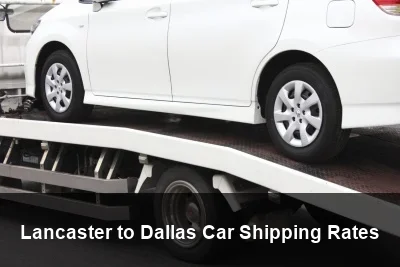
At 1,421 miles, this route sits in the long-haul tier where per-mile rates compress slightly but total cost still runs $900–$1,400 for a standard open carrier booking depending on vehicle size, season, and current fuel costs. Summer demand from student moves and corporate relocations pushes rates up June through August. Diesel prices significantly affect your final quote on a run this long — understand that relationship at https://california.auto-transport-shipping.com/articles/how-gas-prices-impact-california-auto-transport-fees.html before you compare quotes.
What affects the cost of Lancaster to Dallas car shipping:
- Vehicle type and size — larger vehicles take more carrier space; aftermarket additions like lift kits, oversized mirrors, or roof accessories can add fees
- Open vs. enclosed transport — open is lower cost with stronger carrier availability; enclosed protects against weather, debris, and road conditions
- Standard vs. expedited pickup — expedited prioritizes your vehicle for the next available dispatch, typically at a $100–$300 premium
- Time of year — peak demand seasons drive rates higher; off-peak windows offer the most competitive pricing
- Fuel costs — diesel prices affect carrier rates; longer routes are more sensitive to fuel price swings
- Vehicle condition — non-running vehicles require special loading equipment and cost more to ship
| Vehicle Type | Open Car Shipping (Est.) | Enclosed Car Shipping (Est.) |
|---|---|---|
| Sedan | $950 – $1,350 | $1,700 – $2,300 |
| SUV / Crossover | $1,100 – $1,600 | $1,950 – $2,700 |
| Pickup Truck | $1,100 – $1,650 | $1,950 – $2,750 |
| Minivan | $1,100 – $1,600 | $1,950 – $2,700 |
| Luxury / Classic Car | $1,300 – $1,900 | $2,200 – $3,000 |
| Non-Running Vehicle | Add $200–350 | Add $200–350 |
* Estimated ranges based on recent Lancaster to Dallas shipments. Actual rate depends on vehicle, locations, booking date, and current fuel costs. Use the form on this page to compare real quotes from licensed carriers.
Open vs. Enclosed: What Makes Sense on This Specific Run
Open transport is the practical choice for most standard vehicles on this corridor. The Mojave Desert segment and west Texas plains expose your vehicle to road debris and UV, but that is normal open-carrier risk priced into every quote. If you are shipping a classic car, a leased luxury vehicle, or anything where paint condition is contractually relevant, enclosed makes sense — particularly in summer when the I-10 and I-20 corridors are hammered by sandstorms near El Paso and Pecos. Enclosed carriers run this lane regularly enough that the premium is predictable, usually 40–60 percent above open rates.
How Long Does Lancaster to Dallas Car Shipping Take?
Standard transit from Lancaster to Dallas runs 5 to 8 days under normal conditions. A carrier driving this straight would need roughly 20 to 22 hours behind the wheel, but multi-vehicle loads mean planned stops in Tucson, El Paso, and Midland for fuel, rest, and load sequencing. Lancaster's SR-14 access keeps pickup scheduling tight — carriers coming off Los Angeles basin runs can add your vehicle without a significant detour. For time-sensitive moves, expedited single-vehicle transport cuts this to 3 to 4 days. See pricing and availability for that option at https://california.auto-transport-shipping.com/articles/california-expedited-car-shipping-fast-cost.html.
| Service Type | Typical Transit | Pickup Window | Best For |
|---|---|---|---|
| Open — Standard | 4–6 days | 2–5 business days | Best value; most common choice on this route |
| Open — Expedited | 2–4 days | 1–2 business days | Firm arrival date; faster dispatch window |
| Enclosed — Standard | 4–6 days | 3–7 business days | Luxury, classic, or modified vehicles |
| Enclosed — Expedited | 2–4 days | 1–3 business days | High-value vehicles on a firm delivery deadline |
** Winter ice on I-20 east of Abilene and summer monsoon flooding near El Paso on I-10 can each add 1 to 2 days. December through February carries the highest weather delay risk on this route; book with buffer time if your delivery window is firm during those months.
Lancaster to Dallas — Route & Logistics
Carriers access the interstate system from Lancaster via SR-14 south to I-210, connecting to I-10 east through San Bernardino and Riverside counties. From there the primary lane runs I-10 east through Phoenix, Tucson, and El Paso, then I-20 east through Midland, Abilene, and into the DFW metro. Total carrier drive distance is approximately 1,421 miles across three states.
Key Corridor Waypoints
- Cajon Pass, CA Carriers drop from the high desert via SR-138 or SR-14 and negotiate the 4,260-foot Cajon Pass before entering the San Bernardino Valley. This segment demands low gear management on heavy multi-car haulers. Brake inspections are common at the base of the pass. Some carriers stage briefly in Victorville to adjust load balance before the grade.
- Blythe, CA / Arizona State Line The California-Arizona border crossing at Blythe is an active agricultural inspection checkpoint. Carriers with clean loads pass quickly, but inspections can add 20 to 40 minutes. This is also a common fuel stop given the sparse services across the Sonoran Desert ahead. Day runs prefer crossing here before noon to avoid peak heat on the Arizona segment.
- Tucson, AZ Tucson sits at roughly 2,400 feet and serves as a natural overnight staging point for carriers running Lancaster to Dallas. The I-10 and I-19 interchange gives carriers flexibility to refuel and swap drivers. Several truck-accessible lots near the south side industrial corridor are used for overnight load security. This is typically the end of day one for standard transit schedules.
- El Paso, TX / Las Cruces, NM Area The I-10 and I-25 junction near El Paso is the major transition point into Texas. Carriers shift from New Mexico briefly through the El Paso urban corridor before entering open west Texas. Summer monsoon season between July and September causes periodic flash flooding on the I-10 frontage roads here. Border zone inspection activity can add 30 to 60 minutes during high-traffic periods.
- Midland / Odessa, TX The Permian Basin corridor is a functional midpoint between El Paso and Dallas — roughly 300 miles from each. Carriers often take a mandatory rest break in Midland or Odessa. Industrial truck infrastructure is strong here due to oilfield traffic. The I-20 straightens considerably east of Odessa, allowing faster progress toward Abilene and the DFW approach.
- Fort Worth / Dallas Metro Entry Carriers approach Dallas from the west via I-20, entering the metroplex through Arlington before reaching the I-30 and I-35E interchange. North Dallas delivery zones, including Plano, Frisco, and McKinney, require carriers to exit early and navigate surface arterials. Downtown Dallas has loading zone restrictions. Most residential deliveries occur curbside in suburban neighborhoods without permit requirements.
Pickup & Delivery Access
- Pickup Access in Lancaster Lancaster's street grid is carrier-friendly throughout. Flat, wide roads in the industrial corridor near Avenue I and Division Street accommodate 75-foot car haulers without permits. Residential neighborhoods in Quartz Hill and the Antelope Valley are accessible for standard pickup. Carriers traveling SR-14 south routinely schedule Lancaster stops without detour cost. If your street has overhead utility lines or tight turns, a nearby commercial parking lot works as a simple meet point.
- Delivery Access in Dallas Most Dallas suburban areas — Plano, Irving, Garland, Mesquite, and Arlington — are fully accessible to standard car haulers at curbside. Downtown Dallas has narrow lane configurations and loading zone restrictions on several blocks; carriers typically stage vehicles in the Design District or near Victory Park for downtown deliveries. North Dallas and Frisco are the easiest delivery zones with wide residential streets and minimal permit requirements.
- Nearby Pickup Locations Carriers picking up in Lancaster regularly extend service to Palmdale, Quartz Hill, and Rosamond. Call 1‑800‑590‑6492 to confirm door-to-door availability at your address.
Open vs. Enclosed Car Shipping: Lancaster to Dallas
Both options use licensed, insured carriers and deliver door to door. For a full breakdown, read the pros and cons of open vs. enclosed car shipping.
Open Car Shipping
Most Popular- Lower cost — the practical choice for most vehicles
- More carriers available on this corridor
- Faster dispatch from booking to pickup
- Works well for sedans, SUVs, trucks, and minivans
- Vehicle rides on an open multi-car carrier
- Cargo insurance required on all licensed carriers
Estimated cost: $950 – $1,650
Enclosed Car Shipping
Premium Protection- Full protection from weather, debris, and road grime
- Best for luxury, exotic, and classic vehicles
- Recommended for low-clearance and custom-built cars
- Wheel-net or soft-tie systems prevent contact damage
- Higher cargo coverage — commonly $500,000 per load
- White-glove handling by experienced operators
Estimated cost: $1,700 – $2,750
Not sure which is right for your vehicle? Call 1-800-590-6492 and we'll point you in the right direction. Also worth reading: the top 10 questions to ask any car shipping company before you commit.
How to Prepare Your Car for Shipping to Dallas
A little prep before pickup protects you if there's ever a dispute about your vehicle's condition. This checklist is from our full guide on preparing your car for transport:
- Remove all personal belongings from the interior and trunk
- Leave only a quarter tank of fuel — enough to load and unload
- Take date-stamped photos of the full exterior and interior
- Remove or disable toll transponders (FasTrak, E-ZPass, etc.)
- Retract or remove roof racks, spoilers, antennas, and bike mounts
- Make sure the battery is charged and tires are properly inflated
- Tell the carrier about any existing leaks or mechanical issues
- Deactivate the car alarm before the carrier arrives
- Write down the mileage on the Bill of Lading at pickup
- Fold in side mirrors if the vehicle is wider than standard
Personal items: Most carriers won't cover belongings left in the car. Read the full rules on shipping personal items in your vehicle. Also review our Bill of Lading guide so you know exactly what to check at pickup and delivery.
When to Ship Your Car from Lancaster to Dallas
This corridor runs year-round but has identifiable pricing and timing patterns. Summer months from June through August carry the highest demand as student relocations and corporate transfers peak simultaneously. Winter brings the lowest base rates but the highest weather risk. Spring is the optimal booking window — demand has not yet surged and carriers are active after winter slowdowns. For winter-specific risk details, see https://california.auto-transport-shipping.com/articles/auto-transport-challenges-during-the-winter.html.
Spring (March–May)
Optimal booking window for this route. Carrier availability is strong after the winter slowdown, demand has not hit summer peaks, and weather across I-10 and I-20 is generally cooperative. Rates are typically at or near the annual low for open transport. Edwards AFB PCS season begins ramping in April, so military shippers in the Rosamond and Lancaster area should book at least 2 weeks ahead during this window.
Summer Peak (June–August)
Highest demand period on this corridor. University of Texas at Dallas, SMU, and TCU student move-ins drive Dallas inbound volume sharply upward in late July and August. Combined with corporate relocation season, open carrier capacity tightens and rates increase 15 to 25 percent above spring pricing. Desert heat across I-10 in Arizona and west Texas is extreme — enclosed transport becomes a more relevant consideration for sensitive vehicles during this window.
Winter (December–February)
Lowest rates of the year but highest transit risk. Ice events on I-20 between Abilene and Fort Worth can shut lanes for 12 to 48 hours. This is not rare — north Texas sees multiple ice events annually, and carriers must hold loads until roads clear. If your delivery date is firm, build at least 3 extra days into your window. Review https://california.auto-transport-shipping.com/articles/auto-transport-challenges-during-the-winter.html before committing to a winter booking.
Military PCS Season (April–June)
Edwards Air Force Base in Rosamond, roughly 20 miles north of Lancaster, generates concentrated PCS move demand between April and June when military orders are issued. Carriers already routing through the Antelope Valley for Edwards pickups often accept Lancaster loads in the same dispatch cycle, improving your access to capacity during this window. Military shippers should confirm government Bill of Lading compatibility with the broker before booking.
Fall (September–November)
A secondary favorable window on this route. Corporate relocation volume remains solid through October, and weather improves across the Arizona and New Mexico segments after monsoon season ends. Dallas inbound volume stays above baseline due to fall semester moves and year-end corporate transfers. Rates typically stabilize in the mid-range between summer peaks and winter lows. This is a reliable window for non-urgent bookings.
How to Choose a Lancaster to Dallas Car Shipping Company
Getting multiple quotes is step one — knowing what to look for in those quotes matters just as much. Our guide on how to select a car shipping company covers the full process. Here are the six things that matter most:
FMCSA Registration
Every carrier or broker must hold a valid MC number. Verify any company at FMCSA SAFER before you book.
Proof of Insurance
Ask for a current certificate of insurance. Open carriers typically carry $100,000–$250,000 per load; enclosed commonly $500,000 or more. Learn what auto transport insurance covers.
All-In Pricing
Your quote should be a final number with no fees added after booking. Know the difference between brokers and carriers and confirm what the quote covers before you agree.
Bill of Lading
A complete Bill of Lading is filled out at pickup and delivery. Our Bill of Lading guide explains what to check. Never sign an incomplete one.
Real Reviews
Check Google and the BBB. Look at how they handled complaints and damage claims — that tells you more than a five-star average from happy customers.
Route Experience
A carrier who runs Lancaster to Dallas regularly knows that SR-14 pickup windows work best before 8 AM or after 4 PM to avoid Antelope Valley commuter traffic backing up the corridor. They know the Cajon Pass requires reduced speed with a full ten-car load and that afternoon staging in Victorville prevents the grade from becoming a brake problem. They time the El Paso crossing to avoid peak border-zone activity on weekday mornings. They know Midland's truck stops fill by 9 PM during oilfield season and plan accordingly. On the Dallas end, experienced carriers pre-route north Dallas deliveries on I-35E northbound before 7 AM to beat gridlock on the LBJ Freeway. That operational knowledge is the difference between a 5-day delivery and a 9-day one.
Lancaster to Dallas Car Shipping — FAQ
How much does it cost to ship a car from Lancaster to Dallas?
Shipping a standard sedan or SUV from Lancaster, CA to Dallas, TX on an open carrier typically runs between $900 and $1,400 depending on the time of year, current diesel prices, and how quickly you need the vehicle picked up. Summer months from June through August run toward the top of that range due to student and corporate relocation demand in the DFW market. Enclosed transport adds roughly 40 to 60 percent to the open rate. Truck and van shipments cost more due to size and weight. Get a locked quote by filling out the form — rates shift with fuel and carrier availability, so a quote from today is more accurate than any published estimate.
How long does Lancaster to Dallas car shipping take?
Standard open carrier transit from Lancaster to Dallas runs 5 to 8 business days from the date of pickup. The driving distance is approximately 1,421 miles, which a carrier covers over 2 to 3 driving days accounting for rest stops, multi-vehicle delivery sequencing, fuel stops in Tucson and Midland, and any weather delays. Lancaster's SR-14 access keeps the pickup scheduling efficient — carriers coming off Los Angeles basin loads frequently add Antelope Valley pickups without major schedule disruption. If your timeline is tighter, expedited single-vehicle transport can reduce transit to 3 to 4 days. See current expedited pricing at https://california.auto-transport-shipping.com/articles/california-expedited-car-shipping-fast-cost.html.
Is my car insured during transport from Lancaster to Dallas?
Every licensed carrier operating on this route is federally required to carry cargo insurance. That coverage is active from the moment your vehicle is loaded onto the hauler in Lancaster until it is released at delivery in Dallas. Standard cargo policy limits and what they actually cover vary by carrier — some policies have per-vehicle sublimits that may not fully cover a high-value vehicle. Before you sign a contract, ask for the carrier's certificate of insurance and review the coverage limits against your vehicle's market value. Understand exactly what the policy covers at https://california.auto-transport-shipping.com/articles/understanding-auto-transport-insurance.html, and if damage does occur, follow the formal claim process documented at https://california.auto-transport-shipping.com/articles/how-to-file-a-claim-for-vehicle-damage-during-transport.html.
Should I choose open or enclosed transport for this route?
Open transport is appropriate for most standard vehicles on the Lancaster to Dallas corridor. The exposure risk is real — the Mojave Desert and west Texas plains generate road debris and UV exposure, and summer sandstorms near El Paso on I-10 are a known event — but these are priced-in conditions for open haulers who run this lane regularly. Enclosed makes sense if you are shipping a classic car, a leased vehicle where exterior condition is contractually significant, or any vehicle where a paint or body claim would exceed the cost premium for enclosed service. Enclosed carriers run this route consistently, so the premium is not inflated by scarcity. Review the full comparison at https://california.auto-transport-shipping.com/articles/open-vs-enclosed-auto-transport-pros-and-cons.html.
Do I have to be present at pickup and delivery?
You or a designated adult representative must be physically present at both pickup in Lancaster and delivery in Dallas to sign the Bill of Lading at each end. At pickup, the Bill of Lading documents your vehicle's existing condition — every scratch, dent, and chip gets noted before the carrier accepts the load. At delivery, you compare the vehicle's condition against that document and note any new damage before signing release. If you cannot be present personally, assign someone you trust to perform that inspection carefully. Do not sign a delivery receipt if damage is visible and not documented. The Bill of Lading process is explained in full at https://california.auto-transport-shipping.com/articles/california-auto-transport-bill-of-lading-information.html.
Does the winter weather in Texas affect my Lancaster to Dallas shipment?
Yes, meaningfully. North Texas experiences ice storms regularly between December and February, and I-20 between Abilene and Fort Worth is one of the corridors most affected. A single ice event can close lanes for 12 to 48 hours, and carriers are legally required to hold loads until conditions allow safe operation. This is not an edge case — winter ice shutdowns happen multiple times in an average Texas winter. If you are booking between November and February, build at least 3 extra days into your expected delivery window. Do not book non-refundable travel or plan vehicle-dependent commitments around a firm winter delivery date.
I'm at Edwards Air Force Base. Can I ship my vehicle from the Lancaster area on military PCS orders?
Yes, and Lancaster and the Rosamond area near Edwards AFB are well within normal carrier pickup range. If your PCS orders include a government Bill of Lading for vehicle shipment, confirm with your broker that the carrier in their network accepts GBL payment — not all do, and a mismatch creates delays. If you are using personal funds and will file for reimbursement, get your full itemized receipt at booking. PCS season runs heaviest from April through June, so carrier availability in the Antelope Valley tightens during those months. Book as soon as your orders are confirmed, not when you have a report date approaching.
Can I put personal items in my car during transport on this route?
Carriers on this corridor, like all licensed auto transport carriers, are not licensed to transport household goods inside vehicles. Most carriers prohibit personal items entirely or allow a minimal amount — typically under 100 pounds — stored below the window line and out of sight. Items left in the vehicle are not covered under cargo insurance; they are shipped entirely at your risk. Practically speaking, a few items in a sealed trunk are routinely overlooked, but anything visible or heavy can cause a carrier to refuse pickup or require removal on the spot. Do not pack anything irreplaceable, fragile, or high-value inside the vehicle for this run.
Ready to Ship Your Car from Lancaster to Dallas?
One form gets you up to 10 free quotes from licensed, insured carriers. Compare costs and transit times and book the best deal for your schedule.