

Fremont to Denver Car Shipping Route
Fremont to Denver covers approximately 1,235 miles. Carriers access the route from Fremont via I-880 northbound to the I-80 interchange in Oakland, or via I-680 north to I-580 east, both of which funnel onto I-80 east through Sacramento. From Sacramento, trucks climb over Donner Pass — elevation 7,057 feet — into Nevada, cross the salt flats toward Salt Lake City on I-80, then continue east through Utah before picking up I-70 east into Denver. The full carrier drive runs roughly 18–20 hours, typically split over two days. Shipping saves you the fuel, wear, and two days of driving; see a full breakdown at https://california.auto-transport-shipping.com/articles/benefits-of-auto-transport-service-vs-driving-yourself.html.
Denver's demand drivers are diverse and durable. Buckley Space Force Base in Aurora generates steady military PCS shipments. Fort Carson near Colorado Springs adds further government-related volume. CU Denver, University of Denver, and Colorado State University in Fort Collins produce strong August and January student shipping cycles. Major employers — Lockheed Martin, Raytheon, Amazon, and a growing life-sciences cluster along the I-25 corridor — bring corporate relocations. Seasonally, I-70 through the Rockies can develop delays or chain requirements between November and April, and Donner Pass on the California side can close briefly during heavy snow. Plan timing carefully and review https://california.auto-transport-shipping.com/articles/auto-transport-mistakes-to-avoid.html before you book.
Fremont to Denver Car Shipping Rates
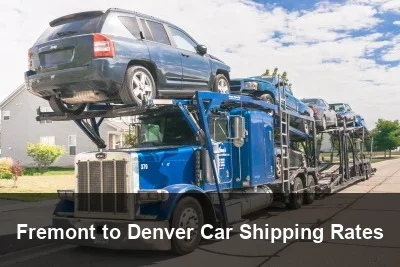
Rates on the Fremont-to-Denver corridor are shaped by the 1,235-mile distance, which puts this route in the mid-haul pricing tier — long enough for fuel costs to matter but short enough for carriers to complete in two driver days. Diesel prices directly affect the base rate on any run of this length; see how that works at https://california.auto-transport-shipping.com/articles/how-gas-prices-impact-california-auto-transport-fees.html. Expect mild summer demand surges in June through August from student and relocation traffic, and potential weather premiums in winter when Donner Pass or I-70 mountain segments add carrier risk.
What affects the cost of Fremont to Denver car shipping:
- Vehicle type and size — larger vehicles take more carrier space; aftermarket additions like lift kits, oversized mirrors, or roof accessories can add fees
- Open vs. enclosed transport — open is lower cost with stronger carrier availability; enclosed protects against weather, debris, and road conditions
- Standard vs. expedited pickup — expedited prioritizes your vehicle for the next available dispatch, typically at a $100–$300 premium
- Time of year — peak demand seasons drive rates higher; off-peak windows offer the most competitive pricing
- Fuel costs — diesel prices affect carrier rates; longer routes are more sensitive to fuel price swings
- Vehicle condition — non-running vehicles require special loading equipment and cost more to ship
| Vehicle Type | Open Car Shipping (Est.) | Enclosed Car Shipping (Est.) |
|---|---|---|
| Sedan | $950 – $1,350 | $1,700 – $2,300 |
| SUV / Crossover | $1,100 – $1,600 | $1,950 – $2,700 |
| Pickup Truck | $1,100 – $1,650 | $1,950 – $2,750 |
| Minivan | $1,100 – $1,600 | $1,950 – $2,700 |
| Luxury / Classic Car | $1,300 – $1,900 | $2,200 – $3,000 |
| Non-Running Vehicle | Add $200–350 | Add $200–350 |
* Estimated ranges based on recent Fremont to Denver shipments. Actual rate depends on vehicle, locations, booking date, and current fuel costs. Use the form on this page to compare real quotes from licensed carriers.
Open vs. Enclosed: What This Route's Conditions Actually Require
Open transport is the practical choice for most vehicles on this corridor. The route crosses Nevada desert and Utah salt flats, where blowing grit and road debris are typical but manageable. For a standard sedan, SUV, or truck, open carriers handle this run daily without issue. Enclosed becomes worth the cost premium — typically 40–60% more — if you're shipping a classic car, a high-value exotic, or a vehicle with fresh paint. Winter shipments crossing Donner Pass or I-70's Eisenhower Tunnel zone may also justify enclosed if you want moisture and debris protection during chain-control conditions.
How Long Does Fremont to Denver Car Shipping Take?
Standard transit on the Fremont-to-Denver route runs four to six days from pickup confirmation. Carriers run this corridor regularly; the Bay Area-to-Denver lane has enough consistent volume that dispatch windows after booking average two to three business days before your vehicle is assigned and moving. The carrier drive itself covers roughly 1,235 miles over two driving days. If your timeline is tight, expedited options exist that can reduce the pickup window significantly — details at https://california.auto-transport-shipping.com/articles/california-expedited-car-shipping-fast-cost.html. Budget a day of buffer on either end for coordination.
| Service Type | Typical Transit | Pickup Window | Best For |
|---|---|---|---|
| Open — Standard | 4–6 days | 2–5 business days | Best value; most common choice on this route |
| Open — Expedited | 2–4 days | 1–2 business days | Firm arrival date; faster dispatch window |
| Enclosed — Standard | 4–6 days | 3–7 business days | Luxury, classic, or modified vehicles |
| Enclosed — Expedited | 2–4 days | 1–3 business days | High-value vehicles on a firm delivery deadline |
** Winter is the main transit wildcard. Donner Pass can close for hours during heavy Sierra Nevada snowstorms, and I-70 through the Eisenhower Tunnel zone enforces chain requirements that slow carrier progress. November through March carries the highest risk of a one-to-two-day delay. Book with flexibility in that window.
Fremont to Denver — Route & Logistics
Carriers serving this route depart Fremont via I-880 to I-80 in Oakland, or via I-680 north to I-580 east before merging onto I-80. From there the route runs east through Sacramento, over Donner Pass, across Nevada on I-80, through Salt Lake City, and east on I-80 to I-15 south briefly, connecting to I-70 east into Denver — 1,235 miles total.
Key Corridor Waypoints
- Fremont, CA — I-880 / I-680 Access Carriers pick up in Fremont using I-880 northbound toward Oakland or I-680 north to I-580 east. The area near the Tesla factory on Kato Road offers good staging space with wide street access. Both freeway options merge onto I-80 east within 20 miles, making Fremont one of the more carrier-accessible East Bay origin points for east-bound loads.
- Sacramento, CA — I-80 / I-5 Junction Sacramento is the last major metro before the Sierra Nevada climb. Carriers often consolidate loads here if topping off a truck from multiple Bay Area pickup points. The I-80 / I-5 junction is a key decision point; all Denver-bound trucks continue east on I-80 toward Donner Pass. Fuel stops and quick inspections typically happen here before the mountain segment.
- Donner Pass, CA — Elevation 7,057 ft The highest point on the California segment of the route. In winter, chain control is enforced intermittently from Truckee to the Nevada border. Carriers familiar with this corridor monitor Caltrans alerts in real time. The pass is clear the majority of the year but represents the single greatest weather-related delay risk on the Fremont-to-Denver haul.
- Salt Lake City, UT — I-80 / I-15 Interchange Salt Lake City is the primary overnight stop for most carriers on this corridor. It sits roughly at the midpoint of the drive and has ample truck facilities along I-80 and I-15. Carriers also use SLC to pick up or drop off additional vehicles, which can slightly extend time on the ground but keeps loads efficient and rates competitive.
- Grand Junction, CO — I-70 Entry Point Grand Junction marks where I-70 eastbound enters Colorado from Utah. Carriers cross the Colorado River here and begin the climb toward the Rockies. The segment from Grand Junction to the Eisenhower Tunnel — 150 miles east — includes sustained grades and is where winter chain requirements and congestion most commonly affect transit time on this route.
- Denver, CO — I-70 / I-25 / I-225 Delivery Zone Denver carriers typically deliver to residential neighborhoods, apartment complexes, and businesses accessible off I-70, I-25, and I-225. The Tech Center corridor south of downtown, Aurora near Buckley Space Force Base, and the university districts near Evans Avenue and Speer Boulevard are all serviceable by standard auto transport trucks without special permitting.
Pickup & Delivery Access
- Pickup Access in Fremont Fremont offers good carrier access throughout the city. The Warm Springs and Irvington districts have wide residential streets suitable for standard transport trucks. The area around the Tesla Gigafactory on Kato Road provides large-vehicle staging space if you need a central meet point. I-880 on-ramps at Auto Mall Parkway and Fremont Boulevard are convenient for carriers heading north toward Oakland and I-80 east.
- Delivery Access in Denver Most Denver-area neighborhoods are carrier-accessible. Suburbs like Aurora, Lakewood, Centennial, and Arvada accommodate full-size transport trucks without issue. Downtown Denver's lower downtown district and Capitol Hill have narrow streets and parking restrictions that can make large truck maneuvering difficult. If you're delivering to those areas, plan a nearby staging point such as a shopping center or park-and-ride lot and meet the carrier there.
- Nearby Pickup Locations Carriers picking up in Fremont regularly extend service to Newark, Union City, and Milpitas. Call 1‑800‑590‑6492 to confirm door-to-door availability at your address.
Open vs. Enclosed Car Shipping: Fremont to Denver
Both options use licensed, insured carriers and deliver door to door. For a full breakdown, read the pros and cons of open vs. enclosed car shipping.
Open Car Shipping
Most Popular- Lower cost — the practical choice for most vehicles
- More carriers available on this corridor
- Faster dispatch from booking to pickup
- Works well for sedans, SUVs, trucks, and minivans
- Vehicle rides on an open multi-car carrier
- Cargo insurance required on all licensed carriers
Estimated cost: $950 – $1,650
Enclosed Car Shipping
Premium Protection- Full protection from weather, debris, and road grime
- Best for luxury, exotic, and classic vehicles
- Recommended for low-clearance and custom-built cars
- Wheel-net or soft-tie systems prevent contact damage
- Higher cargo coverage — commonly $500,000 per load
- White-glove handling by experienced operators
Estimated cost: $1,700 – $2,750
Not sure which is right for your vehicle? Call 1-800-590-6492 and we'll point you in the right direction. Also worth reading: the top 10 questions to ask any car shipping company before you commit.
How to Prepare Your Car for Shipping to Denver
A little prep before pickup protects you if there's ever a dispute about your vehicle's condition. This checklist is from our full guide on preparing your car for transport:
- Remove all personal belongings from the interior and trunk
- Leave only a quarter tank of fuel — enough to load and unload
- Take date-stamped photos of the full exterior and interior
- Remove or disable toll transponders (FasTrak, E-ZPass, etc.)
- Retract or remove roof racks, spoilers, antennas, and bike mounts
- Make sure the battery is charged and tires are properly inflated
- Tell the carrier about any existing leaks or mechanical issues
- Deactivate the car alarm before the carrier arrives
- Write down the mileage on the Bill of Lading at pickup
- Fold in side mirrors if the vehicle is wider than standard
Personal items: Most carriers won't cover belongings left in the car. Read the full rules on shipping personal items in your vehicle. Also review our Bill of Lading guide so you know exactly what to check at pickup and delivery.
When to Ship Your Car from Fremont to Denver
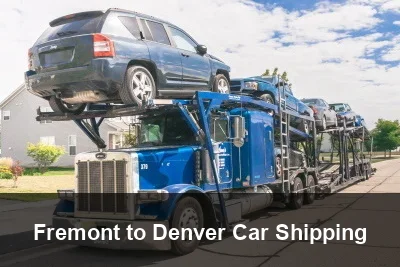
This route has four distinct seasonal patterns worth understanding before you book. Summer brings the highest demand and the most competition for carrier space, driven by student moves and corporate relocations. Winter brings weather risk on Donner Pass and I-70. Spring and fall offer the best balance of price and reliability. For a detailed look at how winter shipping affects this type of corridor, see https://california.auto-transport-shipping.com/articles/auto-transport-challenges-during-the-winter.html.
Spring (March–May)
Spring is generally the best window for this route. Donner Pass and I-70 mountain segments are mostly clear by late March, and summer demand hasn't yet pushed rates up. Carrier availability is solid. If you have any flexibility in your schedule, late April or early May shipping tends to offer reliable transit times and competitive pricing with minimal weather disruption on either the Sierra Nevada or Rocky Mountain segments.
Summer Peak (June–August)
June through August is the busiest period on this corridor. University of Denver, CU Denver, and CSU Fort Collins student moves drive a sharp volume increase, and corporate relocations to Denver's tech and aerospace sectors peak during this window. Book at least two to three weeks out to secure your carrier slot. Rates run 10–20% higher than spring. Carrier availability is good, but last-minute booking means less choice.
Student & Military PCS Season (July–September)
This route sees a meaningful PCS shipping spike from Buckley Space Force Base in Aurora and Fort Carson near Colorado Springs. Military orders typically cluster in the June-to-September window. If you're shipping on PCS orders, confirm your pickup dates align with your reporting date and allow buffer time. Government Bill of Lading coordination through your transportation office works with most carriers who regularly serve the Denver metro.
Winter Risk Window (November–March)
Donner Pass and the I-70 Eisenhower Tunnel corridor are the two choke points in winter. Chain control on the California side and closures or slowdowns on the Colorado side can add one to two days to transit. Carriers experienced on this route monitor both in real time. If you must ship in this window, budget extra days in your schedule and consider enclosed transport for added protection against road moisture and debris.
Fall (September–October)
Fall is a solid secondary window for this route. Post-summer demand drops, rates stabilize, and early October typically still offers clean driving conditions over the mountain passes. Volume from end-of-summer moves winds down, so carrier dispatch times are slightly faster. Watch the calendar — early November snowstorms in the Sierra Nevada or Rockies can arrive quickly, so aim to ship before the first week of November if possible.
Ski Season Relocations (November–February)
Colorado's ski industry draws seasonal workers and second-home owners shipping vehicles from California each fall. Summit County, Breckenridge, and Vail-area deliveries are off the main carrier lanes, so plan for terminal delivery in Denver and arrange final transport yourself if your destination is a mountain ski town. Carriers cover the Denver metro well; high-altitude mountain town delivery requires additional coordination and often a separate local arrangement.
How to Choose a Fremont to Denver Car Shipping Company
Getting multiple quotes is step one — knowing what to look for in those quotes matters just as much. Our guide on how to select a car shipping company covers the full process. Here are the six things that matter most:
FMCSA Registration
Every carrier or broker must hold a valid MC number. Verify any company at FMCSA SAFER before you book.
Proof of Insurance
Ask for a current certificate of insurance. Open carriers typically carry $100,000–$250,000 per load; enclosed commonly $500,000 or more. Learn what auto transport insurance covers.
All-In Pricing
Your quote should be a final number with no fees added after booking. Know the difference between brokers and carriers and confirm what the quote covers before you agree.
Bill of Lading
A complete Bill of Lading is filled out at pickup and delivery. Our Bill of Lading guide explains what to check. Never sign an incomplete one.
Real Reviews
Check Google and the BBB. Look at how they handled complaints and damage claims — that tells you more than a five-star average from happy customers.
Route Experience
A carrier who runs Fremont to Denver regularly knows that Bay Area loads build fastest when combined with San Jose or Oakland pickups, and that scheduling Donner Pass crossings mid-week in winter avoids the worst weekend chain-control backups from Sierra ski traffic. They know the Flying J in Elko, Nevada is the most reliable mid-Nevada stop, and that the Eisenhower Tunnel on I-70 — elevation 11,158 feet — can back up westbound traffic on Friday afternoons and eastbound on Sunday evenings because of ski resort traffic, which indirectly affects eastbound staging time east of the Divide. They also know that Aurora and the southeast Denver suburbs deliver faster than central Denver due to easier truck access off I-225, and they'll tell you upfront if your Denver address needs a staging meet rather than direct driveway delivery.
Fremont to Denver Car Shipping — FAQ
How much does it cost to ship a car from Fremont to Denver?
On the Fremont-to-Denver corridor — approximately 1,235 miles — open transport for a standard sedan typically ranges from $900 to $1,200 depending on the season, current diesel prices, and how quickly you need pickup. SUVs and trucks run $50–$150 more due to size. Enclosed transport adds roughly 40–60% to the base rate. Summer months of June through August see the highest demand and the highest rates on this lane. Winter rates may be slightly lower but carry weather-related risk on Donner Pass and I-70. Use the quote form on this page for a current, route-specific estimate.
How long does Fremont to Denver car shipping take?
From the time you confirm booking, expect four to six days total — two to three days for carrier dispatch and pickup, and two days of active driving time to cover the 1,235-mile route. Carriers on this lane are fairly consistent because the Bay Area-to-Denver corridor has enough volume to keep trucks moving. The main variable is weather: Donner Pass closures in winter or I-70 slowdowns through the Eisenhower Tunnel zone can add one to two days during November through March. If your timeline is strict, expedited dispatch can shorten the pre-pickup window significantly.
Is my car insured during transport from Fremont to Denver?
Yes. Every licensed auto transport carrier is required by federal law to carry cargo insurance that covers your vehicle while it's on the truck. Before your vehicle is loaded, the carrier completes a Bill of Lading documenting its pre-transport condition. At delivery in Denver, you inspect the vehicle against that report. If any damage occurred in transit, that document is your basis for a claim. For a clear explanation of how coverage works and what your personal auto policy does or doesn't add, read https://california.auto-transport-shipping.com/articles/understanding-auto-transport-insurance.html. If you ever need to file a claim, the process is outlined at https://california.auto-transport-shipping.com/articles/how-to-file-a-claim-for-vehicle-damage-during-transport.html.
Should I choose open or enclosed transport for the Fremont-to-Denver route?
Open transport is the right call for most vehicles on this corridor. The route crosses Nevada desert and Utah salt flats — both environments with blowing dust and road grit — but open carriers handle these conditions every day without causing damage to standard vehicles. Enclosed becomes worth the price premium if you're shipping a classic car, a high-value exotic, a vehicle with a fresh custom paint job, or if you're moving in winter when Donner Pass or I-70 mountain conditions add exposure to road moisture and debris. For a full comparison of both options, see https://california.auto-transport-shipping.com/articles/open-vs-enclosed-auto-transport-pros-and-cons.html.
Do I have to be present at pickup in Fremont and delivery in Denver?
You or a designated representative must be present at both pickup and delivery to sign the Bill of Lading. At pickup in Fremont, the carrier documents your vehicle's condition — any pre-existing scratches, dents, or glass chips — and you sign off that the report is accurate. At delivery in Denver, you inspect the vehicle against that same report before signing the final copy. If you can't be there personally, a trusted person with your authorization can handle both. Do not skip the delivery inspection — it's your only opportunity to note any transit damage. More on the Bill of Lading process: https://california.auto-transport-shipping.com/articles/california-auto-transport-bill-of-lading-information.html.
How does winter weather affect shipping between Fremont and Denver?
This is the most weather-exposed route from the Bay Area. Two specific segments carry risk: Donner Pass on I-80 in California, elevation 7,057 feet, where Caltrans can impose chain control or brief closures during heavy Sierra Nevada snowstorms; and I-70 through the Eisenhower Tunnel zone in Colorado, elevation 11,158 feet, where CDOT enforces chain laws and occasional closures during storms. Both can add one to two days to transit. The risk window is November through March, with January and February being the most unpredictable. If you're shipping during those months, build buffer time into your schedule and confirm your carrier monitors road conditions actively.
I'm relocating to Denver for a military PCS. Are there things specific to this route I should know?
Buckley Space Force Base in Aurora and Fort Carson near Colorado Springs are both well within the Denver metro carrier delivery zone, so final delivery access is not an issue. The main thing to coordinate is timing: military PCS orders often have compressed timelines, and summer PCS season from June through September is when Bay Area-to-Denver carrier space is most competitive. Book as early as your orders allow. If you're using a Government Bill of Lading through your transportation office, confirm the carrier accepts it before booking. Most carriers on this corridor who handle regular military volume do, but verify upfront to avoid last-minute issues.
Can a carrier pick up near the Tesla Gigafactory or specific parts of Fremont?
Yes. The area around the Tesla factory on Kato Road in the Warm Springs district of Fremont has wide commercial access roads and space for transport trucks to maneuver. The broader Warm Springs neighborhood and the Auto Mall Parkway corridor near I-880 are both practical pickup zones. Irvington and Mission San Jose residential areas work for standard truck access on most streets. If you live in a narrower residential area or a complex with low-clearance entries, your dispatcher will arrange a nearby open staging location — typically a shopping center or wide surface lot — within a short drive of your address.
Ready to Ship Your Car from Fremont to Denver?
One form gets you up to 10 free quotes from licensed, insured carriers. Compare costs and transit times and book the best deal for your schedule.