
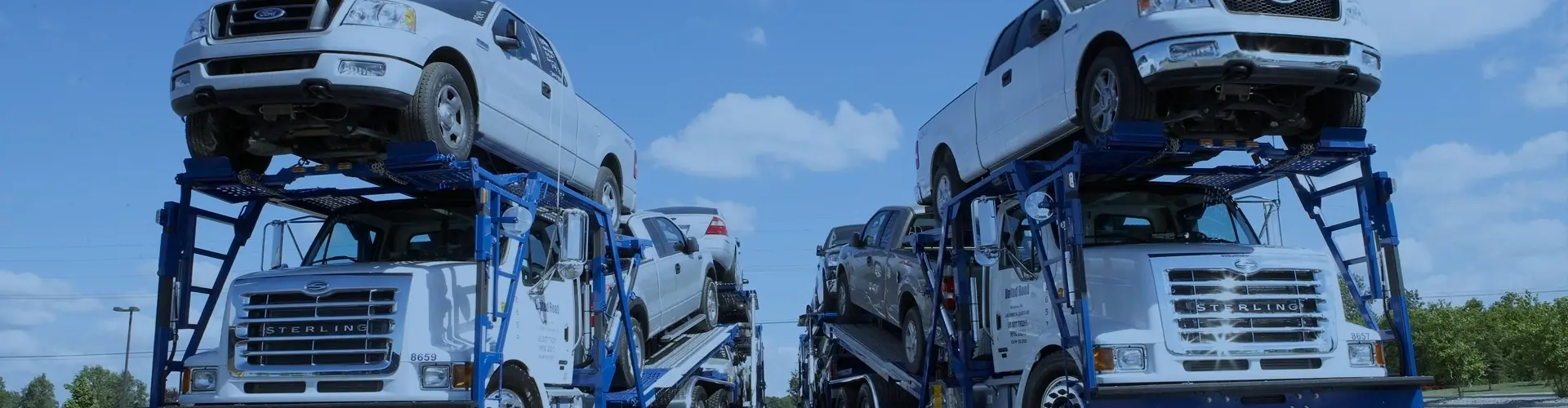
Chula Vista to San Jose Car Shipping Route
Chula Vista to San Jose covers approximately 502 miles. Carriers depart the South Bay grid via I-5 northbound or SR-125 connecting to SR-54 before merging onto I-5, bypassing downtown San Diego entirely. From there the route follows I-5 through the Los Angeles basin, transitions to I-5 or the I-405 split depending on load size and traffic windows, then continues north through the San Fernando Valley and climbs through the Tejon Pass area before dropping into the San Joaquin Valley. Carriers then pick up I-5 north toward Stockton and cut west on I-580 or CA-152 into the South Bay. Driving this yourself adds 8–9 hours of windshield time and wear to your vehicle; see why transport makes more practical sense at https://california.auto-transport-shipping.com/articles/benefits-of-auto-transport-service-vs-driving-yourself.html.
San Jose and the surrounding South Bay are home to major demand generators that keep carriers pointed north from San Diego consistently. Moffett Federal Airfield supports military and contractor personnel moves, and Naval Air Station Lemoore — a mid-route stop zone — occasionally creates staging demand. San Jose State University drives August and January move cycles. Major tech employers including Cisco Systems in San Jose, Apple in Cupertino, and Google in Mountain View all generate corporate relocation volume. Seasonally, the I-5 corridor through the San Joaquin Valley is straightforward in summer but fog conditions near Fresno and Stockton between November and February can slow carrier progress. Before booking, review common shipping errors at https://california.auto-transport-shipping.com/articles/auto-transport-mistakes-to-avoid.html.
Chula Vista to San Jose Car Shipping Rates
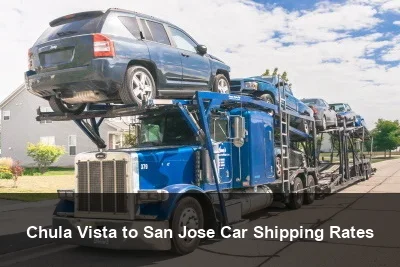
At just over 500 miles, this route sits in the mid-distance pricing tier — far enough to warrant dedicated carrier scheduling but short enough to avoid the multi-driver relay costs of cross-country moves. Rates fluctuate with diesel prices along the I-5 corridor; when fuel costs climb, surcharges appear faster on high-frequency lanes like this one. Summer corporate relocation season and late-spring student moves push demand up and available carrier slots down. Current fuel pricing's effect on your quote is explained at https://california.auto-transport-shipping.com/articles/how-gas-prices-impact-california-auto-transport-fees.html.
What affects the cost of Chula Vista to San Jose car shipping:
- Vehicle type and size — larger vehicles take more carrier space; aftermarket additions like lift kits, oversized mirrors, or roof accessories can add fees
- Open vs. enclosed transport — open is lower cost with stronger carrier availability; enclosed protects against weather, debris, and road conditions
- Standard vs. expedited pickup — expedited prioritizes your vehicle for the next available dispatch, typically at a $100–$300 premium
- Time of year — peak demand seasons drive rates higher; off-peak windows offer the most competitive pricing
- Fuel costs — diesel prices affect carrier rates; longer routes are more sensitive to fuel price swings
- Vehicle condition — non-running vehicles require special loading equipment and cost more to ship
| Vehicle Type | Open Car Shipping (Est.) | Enclosed Car Shipping (Est.) |
|---|---|---|
| Sedan | $650 – $900 | $1,200 – $1,600 |
| SUV / Crossover | $800 – $1,050 | $1,400 – $1,850 |
| Pickup Truck | $800 – $1,050 | $1,400 – $1,850 |
| Minivan | $800 – $1,050 | $1,400 – $1,850 |
| Luxury / Classic Car | $900 – $1,200 | $1,500 – $2,000 |
| Non-Running Vehicle | Add $150–250 | Add $150–250 |
* Estimated ranges based on recent Chula Vista to San Jose shipments. Actual rate depends on vehicle, locations, booking date, and current fuel costs. Use the form on this page to compare real quotes from licensed carriers.
Open vs. Enclosed: What Makes Sense on This Corridor
The Chula Vista to San Jose run stays on major interstates for nearly its entire length, so road debris and weather exposure are moderate rather than extreme. Open transport is the practical choice for standard sedans, trucks, and SUVs on this corridor — rates typically run $150–$250 less than enclosed for the same distance. Enclosed makes sense if you're moving a classic, a luxury vehicle over $80,000, or a low-clearance sports car through the I-5 corridor where construction zones near the Tejon Pass area occasionally kick up loose material. Salt air exposure is minimal once you leave the coastal zone.
How Long Does Chula Vista to San Jose Car Shipping Take?
Standard transit on this route runs 2 to 4 days from confirmed pickup. A carrier covering 500 miles under normal conditions can complete the run in one driving day, but loading schedules, multi-vehicle loads, and Los Angeles traffic windows typically add a day of buffer. Chula Vista's access to the San Diego carrier pool means dispatch-to-pickup time is usually shorter here than from more isolated origin cities. If your move is time-sensitive, expedited options exist — details at https://california.auto-transport-shipping.com/articles/california-expedited-car-shipping-fast-cost.html.
| Service Type | Typical Transit | Pickup Window | Best For |
|---|---|---|---|
| Open — Standard | 2–4 days | 2–4 business days | Best value; most common choice on this route |
| Open — Expedited | 1–2 days | 1–2 business days | Firm arrival date; faster dispatch window |
| Enclosed — Standard | 2–4 days | 3–6 business days | Luxury, classic, or modified vehicles |
| Enclosed — Expedited | 1–2 days | 1–3 business days | High-value vehicles on a firm delivery deadline |
** Dense tule fog along I-5 between Fresno and Stockton, typically November through February, is the single most common cause of added transit time on this corridor. A carrier who loses visibility in the Valley may hold overnight rather than drive blind, adding 12–24 hours. Plan for a 5-day window if shipping during fog season.
Chula Vista to San Jose — Route & Logistics
Carriers depart Chula Vista using I-5 northbound as the primary artery, with SR-125 and SR-54 serving as access feeders from eastern and southern neighborhoods. The route runs north on I-5 through the Los Angeles metro, over the Tejon Pass at approximately 4,160 feet, through the San Joaquin Valley, and connects to the South Bay via I-580 westbound or CA-152 through Gilroy before reaching San Jose.
Key Corridor Waypoints
- Chula Vista, CA (Origin) Carriers access I-5 northbound directly from the Chula Vista street grid. SR-125 and SR-54 provide feeder access from Eastlake and eastern neighborhoods. The San Diego carrier pool stages frequently near National City and Bonita. Some streets adjacent to the US–Mexico border have limited truck clearance, so terminal-area staging may be used for oversized loads.
- Los Angeles Metro / I-5 Corridor The most time-sensitive section of the route. Carriers navigate the I-5 and I-405 merge zones through downtown LA and the San Fernando Valley. Most experienced drivers schedule this section for early morning or late-night passage to avoid peak congestion. A transit delay here of 1–3 hours is common during weekday afternoon windows; it rarely adds a full day.
- Tejon Pass, CA (Elevation ~4,160 ft) Where I-5 crests the Tehachapi Mountains between the Los Angeles basin and the San Joaquin Valley. At 4,160 feet elevation, this section occasionally sees chain control or brief closures during winter storms — rare but possible December through February. Carriers familiar with this corridor monitor Caltrans advisories and time this crossing accordingly to avoid delays.
- Fresno / Stockton, CA (San Joaquin Valley Transit Zone) The flat I-5 stretch through the Valley is fast and uneventful in summer but becomes a tule fog zone from November through February. Visibility can drop to near zero in early morning hours, and carriers may hold at a truck stop near Fresno or Stockton rather than risk slow-speed travel. This is the most common source of a 12–24 hour transit extension on this route.
- Gilroy / CA-152 Junction Carriers transitioning from I-5 to the South Bay use either CA-152 westbound through Gilroy — known for its agricultural sprawl and moderate truck traffic — or continue to I-580 for the more direct approach. CA-152 is the shorter cut but includes a winding mountain section near Pacheco Pass that some carriers with heavier loads avoid in favor of the flatter I-580 approach.
- San Jose, CA (Destination) Delivery access in San Jose is generally straightforward in residential neighborhoods with wide streets. Downtown and Japantown corridors have parking restrictions that can complicate large carrier delivery. The North San Jose tech campus zone near Cisco and the airport area are carrier-friendly. Carriers often stage near the I-880 and I-280 corridors for final-mile coordination with the recipient.
Pickup & Delivery Access
- Pickup Access in Chula Vista Chula Vista's South Bay street grid is accessible to most standard transport carriers. The western sections near I-5 are easiest for direct pickup. Eastern neighborhoods accessed via SR-125 — including Eastlake — work well but require drivers to navigate residential streets. Some blocks closest to the international border corridor have overhead clearance or width restrictions; if your address is in that zone, a nearby parking lot or big-box store lot can serve as a meet point.
- Delivery Access in San Jose San Jose's residential areas in Willow Glen, Almaden Valley, and Evergreen are carrier-accessible with standard equipment. Downtown San Jose and the Japantown neighborhood have parking enforcement and narrow lanes that make full-carrier delivery difficult; curbside coordination with 24-hour notice resolves most situations. The North First Street tech corridor and neighborhoods surrounding Mineta San Jose International Airport offer ample staging space. South San Jose off CA-85 is consistently easy for final delivery.
- Nearby Pickup Locations Carriers picking up in Chula Vista regularly extend service to National City, Bonita, and Eastlake. Call 1‑800‑590‑6492 to confirm door-to-door availability at your address.
Open vs. Enclosed Car Shipping: Chula Vista to San Jose
Both options use licensed, insured carriers and deliver door to door. For a full breakdown, read the pros and cons of open vs. enclosed car shipping.
Open Car Shipping
Most Popular- Lower cost — the practical choice for most vehicles
- More carriers available on this corridor
- Faster dispatch from booking to pickup
- Works well for sedans, SUVs, trucks, and minivans
- Vehicle rides on an open multi-car carrier
- Cargo insurance required on all licensed carriers
Estimated cost: $650 – $1,050
Enclosed Car Shipping
Premium Protection- Full protection from weather, debris, and road grime
- Best for luxury, exotic, and classic vehicles
- Recommended for low-clearance and custom-built cars
- Wheel-net or soft-tie systems prevent contact damage
- Higher cargo coverage — commonly $500,000 per load
- White-glove handling by experienced operators
Estimated cost: $1,200 – $1,850
Not sure which is right for your vehicle? Call 1-800-590-6492 and we'll point you in the right direction. Also worth reading: the top 10 questions to ask any car shipping company before you commit.
How to Prepare Your Car for Shipping to San Jose
A little prep before pickup protects you if there's ever a dispute about your vehicle's condition. This checklist is from our full guide on preparing your car for transport:
- Remove all personal belongings from the interior and trunk
- Leave only a quarter tank of fuel — enough to load and unload
- Take date-stamped photos of the full exterior and interior
- Remove or disable toll transponders (FasTrak, E-ZPass, etc.)
- Retract or remove roof racks, spoilers, antennas, and bike mounts
- Make sure the battery is charged and tires are properly inflated
- Tell the carrier about any existing leaks or mechanical issues
- Deactivate the car alarm before the carrier arrives
- Write down the mileage on the Bill of Lading at pickup
- Fold in side mirrors if the vehicle is wider than standard
Personal items: Most carriers won't cover belongings left in the car. Read the full rules on shipping personal items in your vehicle. Also review our Bill of Lading guide so you know exactly what to check at pickup and delivery.
When to Ship Your Car from Chula Vista to San Jose
This corridor runs in mild conditions for most of the year, which keeps pricing more stable than alpine or desert routes. The two demand peaks are summer corporate relocation season (June–August) and late spring university moves (May). Winter is operationally low-risk except for Valley fog and the rare Tejon Pass weather event. For a full breakdown of winter shipping considerations, see https://california.auto-transport-shipping.com/articles/auto-transport-challenges-during-the-winter.html. Book 7–10 days ahead during peak windows.
University Move Season (May – August)
San Jose State University's spring graduation and fall enrollment cycles drive two distinct move surges. May through early June sees southbound demand as students return home; late July through August reverses it as fall semester approaches. If you're shipping for a student move, book at least two weeks out during these windows. Available carrier slots fill faster than off-season, and rates run 10–15% higher than the winter baseline on this corridor.
Summer Corporate Relocation (June – September)
Silicon Valley's tech sector relocates heavily in summer when new-hire onboarding and lease cycles align. Cisco, Adobe, Apple, and scores of mid-size firms in the South Bay generate consistent northbound vehicle demand from June through September. This is the highest-volume period on the Chula Vista-to-San Jose lane. Rates are at their annual peak and carrier availability tightens. Book 10–14 days ahead and confirm your window early.
Military PCS Season (April – July)
Naval Base San Diego is one of the largest military installations in the country, and PCS order cycles peak between April and July. Chula Vista sits directly adjacent to this demand pool. If you're a service member moving to a Northern California assignment — Moffett Federal Airfield or any Bay Area installation — this is your highest-competition window for carrier slots. Military discount programs are available; confirm eligibility when you request your quote.
Winter Shipping (December – February)
Winter on this route is mild at both ends, but the I-5 corridor through the San Joaquin Valley generates tule fog events that can hold carriers overnight near Fresno or Stockton. The Tejon Pass also sees occasional chain-control requirements. Rates dip slightly in winter as demand drops, making it a cost-effective window if your timeline is flexible. Add a 1–2 day buffer to your delivery estimate for any shipment between December and February.
Spring Booking Window (March – April)
March and April represent the last moderate-cost, moderate-demand window before summer pricing kicks in. Carriers are active, slots are available within a week, and rates sit below the summer peak by a meaningful margin. If your move is flexible and planned for late spring or early summer, booking in March or early April locks in better pricing before corporate and student demand compresses the carrier pool heading into June.
How to Choose a Chula Vista to San Jose Car Shipping Company
Getting multiple quotes is step one — knowing what to look for in those quotes matters just as much. Our guide on how to select a car shipping company covers the full process. Here are the six things that matter most:
FMCSA Registration
Every carrier or broker must hold a valid MC number. Verify any company at FMCSA SAFER before you book.
Proof of Insurance
Ask for a current certificate of insurance. Open carriers typically carry $100,000–$250,000 per load; enclosed commonly $500,000 or more. Learn what auto transport insurance covers.
All-In Pricing
Your quote should be a final number with no fees added after booking. Know the difference between brokers and carriers and confirm what the quote covers before you agree.
Bill of Lading
A complete Bill of Lading is filled out at pickup and delivery. Our Bill of Lading guide explains what to check. Never sign an incomplete one.
Real Reviews
Check Google and the BBB. Look at how they handled complaints and damage claims — that tells you more than a five-star average from happy customers.
Route Experience
A carrier who runs the Chula Vista–San Jose lane regularly knows that the real variable isn't the 500 miles — it's the LA window and the Valley fog. Experienced drivers on this corridor leave the San Diego area by 4 a.m. to clear the I-5 through Los Angeles before the 7 a.m. congestion builds, reaching the Tejon Pass by mid-morning and the Valley floor by noon. The fog risk near Stockton is a late-night and early-morning phenomenon, so a carrier who times the run correctly either clears it before dusk or waits at a Fresno or Stockton truck stop until visibility returns. Staging in Chula Vista often happens near the National City terminal zone rather than at a residence, especially for loads building off I-5. On the San Jose end, North First Street near the airport is a reliable final-delivery staging corridor that avoids downtown parking complications.
Chula Vista to San Jose Car Shipping — FAQ
How much does it cost to ship a car from Chula Vista to San Jose?
On this approximately 502-mile corridor, open transport for a standard sedan typically runs between $650 and $950 depending on season and current carrier availability. SUVs and trucks run $750 to $1,100. Enclosed transport adds roughly $200 to $350 to either figure. Rates climb 10–15% during the summer corporate relocation and university move peaks — generally June through August. The best way to get an accurate number is to request a quote directly, since real-time carrier availability on the I-5 corridor affects pricing more than any published estimate.
How long does Chula Vista to San Jose car shipping take?
Standard transit runs 2 to 4 days from confirmed pickup. A carrier can physically complete 502 miles in a single long driving day, but load coordination, Los Angeles traffic timing, and multi-vehicle scheduling typically mean your vehicle is in transit for 2 days with delivery on day 3 or 4. In winter, tule fog in the San Joaquin Valley between Fresno and Stockton is the most common cause of a one-day extension. If you're working with a firm deadline, ask about expedited options at https://california.auto-transport-shipping.com/articles/california-expedited-car-shipping-fast-cost.html.
Is my car insured during transport from Chula Vista to San Jose?
Yes. Every licensed carrier operating on this route is required by federal law to carry cargo insurance covering your vehicle during transport. Coverage limits and deductible structures vary by carrier, so you should request a copy of the carrier's certificate of insurance before your vehicle is loaded. Your personal auto insurance policy may or may not provide supplemental coverage during transport — check with your insurer directly. For a plain-language explanation of how transport insurance works, see https://california.auto-transport-shipping.com/articles/understanding-auto-transport-insurance.html. If you need to file a damage claim, the process is outlined at https://california.auto-transport-shipping.com/articles/how-to-file-a-claim-for-vehicle-damage-during-transport.html.
Should I choose open or enclosed transport for this route?
Open transport is the right call for most vehicles on this corridor. The route stays on major interstates — I-5 through Los Angeles, over Tejon Pass, through the Valley — without significant off-road or remote exposure. Road debris risk is moderate, and weather exposure is low for most of the year. Enclosed makes sense if you're moving a vehicle valued over $80,000, a classic car, or a low-clearance exotic that would be vulnerable to the occasional construction debris near Tejon Pass. For a full comparison of what each option covers, see https://california.auto-transport-shipping.com/articles/open-vs-enclosed-auto-transport-pros-and-cons.html.
Do I have to be present at pickup and delivery?
You or an authorized representative must be present at both pickup and delivery to sign the bill of lading — the inspection document that records your vehicle's condition before and after transport. This document is your primary protection if a damage dispute arises, so reviewing it carefully at both ends matters. If you cannot be present personally, a designated adult can sign on your behalf as long as you've communicated that in advance with your broker. Full details on what the bill of lading covers and why it's important are at https://california.auto-transport-shipping.com/articles/california-auto-transport-bill-of-lading-information.html.
Does military PCS status affect how I should book this route from Chula Vista?
If you're shipping under PCS orders from Naval Base San Diego or a nearby installation, a few things apply specifically to your situation. First, the April through July window is peak PCS season, and carrier slots out of the San Diego area tighten considerably — book as far ahead as your orders allow, ideally 10–14 days minimum. Second, most reputable brokers offer a military discount; confirm availability when you request your quote. Third, if your receiving installation is Moffett Federal Airfield or another Bay Area base, make sure your point of contact there can receive the vehicle or authorize a representative to sign the bill of lading.
How does tule fog in the San Joaquin Valley affect my shipment?
Tule fog is a ground-level radiation fog that forms in the San Joaquin Valley — the stretch of I-5 between roughly Fresno and Stockton — primarily from late November through early February. It can reduce visibility to near zero in the pre-dawn hours, and carriers will hold rather than drive blind. In practical terms, this means a shipment that would normally deliver in 3 days during summer might take 4 days in January. When booking a winter shipment on this corridor, give yourself a 5-day delivery window rather than 3–4. This is the most predictable delay factor on the Chula Vista to San Jose route.
Can I ship from Chula Vista to San Jose if I live in Eastlake or another eastern neighborhood?
Yes. Eastlake and other eastern Chula Vista neighborhoods accessed via SR-125 are serviceable by most standard auto transport carriers. SR-125 connects cleanly to I-5 via SR-54, so carriers can route efficiently from those areas without significant added distance or difficulty. The main consideration is that residential streets in newer planned communities like Eastlake may have width or turning-radius constraints for the longest multi-car haulers. If your street is narrow or has low-hanging trees, a nearby commercial parking lot — a Home Depot or grocery store lot within a half-mile — works well as a carrier meet point.
Ready to Ship Your Car from Chula Vista to San Jose?
One form gets you up to 10 free quotes from licensed, insured carriers. Compare costs and transit times and book the best deal for your schedule.