

Chula Vista to Oakland Car Shipping Route
Chula Vista to Oakland covers approximately 502 miles, with carriers accessing I-5 northbound from the South Bay street grid via SR-54 or SR-125. From I-5, the route continues north through the Los Angeles Basin, then picks up I-5 through the Central Valley before merging onto I-580 westbound into the Oakland hills. Elevation climbs modestly through the Tejon Pass area before descending into the flat valley run north. The route bypasses most of the Sierra Nevada, keeping it accessible year-round. Shipping your vehicle rather than driving saves wear on your car across five hundred miles of freeway. More on those savings here: https://california.auto-transport-shipping.com/articles/benefits-of-auto-transport-service-vs-driving-yourself.html
Oakland and the surrounding East Bay attract consistent relocation volume. Major employers include Kaiser Permanente's Oakland Medical Center, the Port of Oakland — one of the country's busiest container ports — Lawrence Berkeley National Laboratory in the hills above the city, and the entire Bay Area tech sector accessible via BART or the Bay Bridge. The California State University East Bay campus in nearby Hayward adds student-driven transport demand at the start and end of academic terms. Weather along this corridor is mild by national standards, but Tejon Pass can see fog and occasional rain in winter that slows transit. Review common mistakes before booking: https://california.auto-transport-shipping.com/articles/auto-transport-mistakes-to-avoid.html
Chula Vista to Oakland Car Shipping Rates
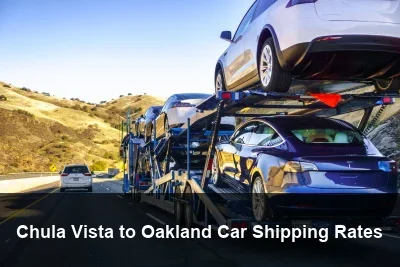
Rates on the Chula Vista-to-Oakland corridor reflect a 500-plus-mile distance tier — long enough that per-mile costs drop compared to shorter hauls, but short enough that most carriers run it in a single driving day. Fuel costs along I-5 and I-580 directly affect your quote; when diesel prices spike in California, expect that to pass through to the rate. See how fuel pricing moves these numbers: https://california.auto-transport-shipping.com/articles/how-gas-prices-impact-california-auto-transport-fees.html. Summer relocation season and spring military PCS cycles create rate pressure in April through August.
What affects the cost of Chula Vista to Oakland car shipping:
- Vehicle type and size — larger vehicles take more carrier space; aftermarket additions like lift kits, oversized mirrors, or roof accessories can add fees
- Open vs. enclosed transport — open is lower cost with stronger carrier availability; enclosed protects against weather, debris, and road conditions
- Standard vs. expedited pickup — expedited prioritizes your vehicle for the next available dispatch, typically at a $100–$300 premium
- Time of year — peak demand seasons drive rates higher; off-peak windows offer the most competitive pricing
- Fuel costs — diesel prices affect carrier rates; longer routes are more sensitive to fuel price swings
- Vehicle condition — non-running vehicles require special loading equipment and cost more to ship
| Vehicle Type | Open Car Shipping (Est.) | Enclosed Car Shipping (Est.) |
|---|---|---|
| Sedan | $650 – $900 | $1,200 – $1,600 |
| SUV / Crossover | $800 – $1,050 | $1,400 – $1,850 |
| Pickup Truck | $800 – $1,050 | $1,400 – $1,850 |
| Minivan | $800 – $1,050 | $1,400 – $1,850 |
| Luxury / Classic Car | $900 – $1,200 | $1,500 – $2,000 |
| Non-Running Vehicle | Add $150–250 | Add $150–250 |
* Estimated ranges based on recent Chula Vista to Oakland shipments. Actual rate depends on vehicle, locations, booking date, and current fuel costs. Use the form on this page to compare real quotes from licensed carriers.
Open vs. Enclosed Transport on the Chula Vista–Oakland Run
Open transport is the right call for most vehicles on this corridor. I-5 through the Central Valley is a high-volume freight route with well-maintained lanes, and the coastal weather profile means no ice or road salt exposure. Save enclosed shipping for exotics, classics, or low-clearance vehicles where the price premium — typically 40 to 60 percent more — is justified by the vehicle's value. If your car is a daily driver with under $50,000 in value, open is sufficient. Oakland delivery areas occasionally involve tight streets; communicate that to your carrier regardless of trailer type.
How Long Does Chula Vista to Oakland Car Shipping Take?
Standard transit on this route is two to four days from the time a carrier picks up your vehicle in Chula Vista. The driving time alone is roughly seven to eight hours without stops, but carriers run multi-vehicle loads and operate within federal hours-of-service limits. Chula Vista's proximity to the San Diego carrier pool means dispatch-to-pickup windows are typically short — often one to two business days after booking. Expedited options can tighten that window if you're on a hard deadline. More on fast-turnaround options: https://california.auto-transport-shipping.com/articles/california-expedited-car-shipping-fast-cost.html
| Service Type | Typical Transit | Pickup Window | Best For |
|---|---|---|---|
| Open — Standard | 2–4 days | 2–4 business days | Best value; most common choice on this route |
| Open — Expedited | 1–2 days | 1–2 business days | Firm arrival date; faster dispatch window |
| Enclosed — Standard | 2–4 days | 3–6 business days | Luxury, classic, or modified vehicles |
| Enclosed — Expedited | 1–2 days | 1–3 business days | High-value vehicles on a firm delivery deadline |
** Tejon Pass and the Grapevine segment of I-5 can slow or briefly close during winter rain and fog events, typically November through February. A closure adds twelve to eighteen hours rerouting through CA-58 or delays until conditions clear. Build a one-day buffer into hard delivery deadlines during those months.
Chula Vista to Oakland — Route & Logistics
Carriers access this corridor via SR-54 or SR-125 onto I-5 northbound from the Chula Vista street grid. The route follows I-5 through Los Angeles and the Central Valley, then transitions to I-580 westbound through Livermore and the Altamont Pass into the East Bay, terminating in Oakland. Total interstate driving distance is approximately 502 miles.
Key Corridor Waypoints
- Chula Vista, CA Carrier pickup originates from Chula Vista's South Bay grid, with access via SR-54 or SR-125 connecting to I-5 northbound. Streets near the border can limit large trailer movement, so drivers typically stage at wider arterials near H Street or Telegraph Canyon Road before loading. The San Diego carrier pool supports quick dispatch from this origin.
- Los Angeles Basin, CA Carriers transit the LA metro via I-5 through downtown or take I-405 to bypass central congestion depending on time of day. This segment — roughly 120 miles from Chula Vista — is the most time-sensitive part of the run. Morning and evening rush hours on I-5 through the basin add 45 to 90 minutes. Most experienced carriers time their arrival here for mid-morning or late evening.
- Tejon Pass / The Grapevine, CA (elevation ~4,183 ft) The Grapevine is the elevation high point of this corridor, where I-5 crests the Tehachapi Mountains at roughly 4,183 feet. In winter, Caltrans periodically closes this segment for weather. Carriers check road conditions before committing to departure from LA. In summer, high temperatures stress vehicle cooling systems on open trailers during the long climb.
- Fresno / Central Valley, CA The Central Valley stretch from Bakersfield to Stockton is flat, fast, and well-traveled. Carriers often use Fresno or Stockton as overnight staging points when hours-of-service limits are reached. Fuel and rest stops are plentiful along this segment. Dense tule fog in winter can reduce visibility to near zero along this corridor, particularly between November and February.
- Altamont Pass, CA (elevation ~1,009 ft) After Stockton, I-580 westbound climbs over Altamont Pass into the East Bay. Wind speeds here are consistently high — this is one of California's wind energy corridors — which can affect high-profile open trailers. Carriers familiar with this route factor Altamont's crosswinds into their speed and bracing decisions. The pass marks the final approach into the Oakland metro.
- Oakland, CA Final delivery in Oakland typically routes via I-880 through the flatland districts or I-580 into the hills depending on the drop address. The Port of Oakland area, Temescal, and Rockridge have navigable streets for large trailers. North Oakland and some Piedmont-adjacent streets are narrow. Carriers often confirm a meet point in advance — a wide commercial lot or gas station works well for residential neighborhoods.
Pickup & Delivery Access
- Pickup Access in Chula Vista Chula Vista's South Bay grid is accessible for standard and large auto transport trailers via SR-54 and SR-125 to I-5. Main arterials like H Street, Telegraph Canyon Road, and Broadway accommodate carrier maneuvering. Streets immediately adjacent to the US-Mexico border have limited truck access due to CBP infrastructure. If your address is in a tight residential pocket or near the border zone, arrange to meet your carrier at a nearby commercial lot.
- Delivery Access in Oakland Oakland carriers route primarily via I-880 or I-580 depending on the delivery zone. Flatland neighborhoods near the port — West Oakland, Fruitvale, San Antonio — are trailer-accessible. Rockridge, Temescal, and Grand Lake have moderate street width. The Oakland Hills and Montclair have steep, narrow roads where large trailers cannot turn around; plan a meet point at a commercial area at the base of the hills rather than a hilltop residential address.
- Nearby Pickup Locations Carriers picking up in Chula Vista regularly extend service to National City, Bonita, and Eastlake. Call 1‑800‑590‑6492 to confirm door-to-door availability at your address.
Open vs. Enclosed Car Shipping: Chula Vista to Oakland
Both options use licensed, insured carriers and deliver door to door. For a full breakdown, read the pros and cons of open vs. enclosed car shipping.
Open Car Shipping
Most Popular- Lower cost — the practical choice for most vehicles
- More carriers available on this corridor
- Faster dispatch from booking to pickup
- Works well for sedans, SUVs, trucks, and minivans
- Vehicle rides on an open multi-car carrier
- Cargo insurance required on all licensed carriers
Estimated cost: $650 – $1,050
Enclosed Car Shipping
Premium Protection- Full protection from weather, debris, and road grime
- Best for luxury, exotic, and classic vehicles
- Recommended for low-clearance and custom-built cars
- Wheel-net or soft-tie systems prevent contact damage
- Higher cargo coverage — commonly $500,000 per load
- White-glove handling by experienced operators
Estimated cost: $1,200 – $1,850
Not sure which is right for your vehicle? Call 1-800-590-6492 and we'll point you in the right direction. Also worth reading: the top 10 questions to ask any car shipping company before you commit.
How to Prepare Your Car for Shipping to Oakland
A little prep before pickup protects you if there's ever a dispute about your vehicle's condition. This checklist is from our full guide on preparing your car for transport:
- Remove all personal belongings from the interior and trunk
- Leave only a quarter tank of fuel — enough to load and unload
- Take date-stamped photos of the full exterior and interior
- Remove or disable toll transponders (FasTrak, E-ZPass, etc.)
- Retract or remove roof racks, spoilers, antennas, and bike mounts
- Make sure the battery is charged and tires are properly inflated
- Tell the carrier about any existing leaks or mechanical issues
- Deactivate the car alarm before the carrier arrives
- Write down the mileage on the Bill of Lading at pickup
- Fold in side mirrors if the vehicle is wider than standard
Personal items: Most carriers won't cover belongings left in the car. Read the full rules on shipping personal items in your vehicle. Also review our Bill of Lading guide so you know exactly what to check at pickup and delivery.
When to Ship Your Car from Chula Vista to Oakland
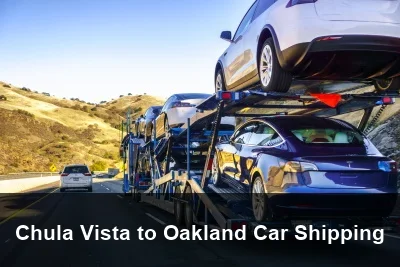
This corridor stays open year-round, but pricing and transit times shift predictably with the seasons. Summer — June through August — is the peak demand window due to military PCS moves out of San Diego-area installations and Bay Area job relocations. Spring also sees rate pressure from academic-year-end student moves. Winter is generally the lowest-cost window, though Tejon Pass weather adds transit uncertainty. More on winter transport planning: https://california.auto-transport-shipping.com/articles/auto-transport-challenges-during-the-winter.html
Summer Peak (June–August)
This is the busiest window on the Chula Vista–Oakland corridor. Military PCS orders from Naval Base San Diego and Naval Amphibious Base Coronado drive high outbound volume in June and July. Bay Area tech and corporate relocations add to demand. Carriers fill quickly, and rates run 10 to 20 percent above off-peak. Book two to three weeks out to lock in price and availability during this period.
Academic Move Season (Late Aug & Mid-May)
Students moving to UC Berkeley, California State University East Bay, and other Bay Area institutions create a two-week demand spike in late August. A similar spike occurs in May when the academic year ends and students ship vehicles back south. If your move coincides with these windows, book early. Carriers running from San Diego County north are in high demand during these exact weeks, and rates reflect it.
Fall Booking Window (September–November)
September through November is the best value window on this route. Demand drops after summer PCS season, carriers have open capacity, and rates soften. Weather is cooperative — fog at Tejon is a minor factor by late fall but rarely causes outright closures this early. If your timeline is flexible and you want the lowest rate, this is the window to book. Transit times are also tighter due to available carrier capacity.
Winter Caution (December–February)
The Grapevine at Tejon Pass can close for rain, ice, or snow — unusual but not rare in January and February. When it closes, carriers either wait or reroute via CA-58 through Bakersfield, adding up to a full day. Tule fog in the Central Valley reduces safe driving speeds significantly during this window. Build a one to two day buffer into your delivery expectation if shipping in winter. Rates are lower, but transit reliability is reduced.
Military PCS Cycles (Feb–Mar and Jun–Jul)
Two PCS cycles hit per year: a spring cycle in February and March, and a summer cycle peaking in June and July. Both drive significant outbound volume from Chula Vista and National City, which sit next to Naval Base San Diego. If you're a service member moving to NAS Alameda's tenant commands or other Bay Area installations, plan your booking around these windows — or book well ahead to avoid competing with a surge of similar moves.
Spring Rate Uptick (March–May)
Rates begin climbing in March as PCS orders start and the general relocation season kicks off. This is earlier than many shippers expect. If you're moving in May, treat it like summer pricing — book early. The flip side is that spring weather is the most reliable window on this corridor. Tejon Pass is clear, valley fog is gone, and carriers run efficiently. Good transit predictability, but prices are moving upward.
How to Choose a Chula Vista to Oakland Car Shipping Company
Getting multiple quotes is step one — knowing what to look for in those quotes matters just as much. Our guide on how to select a car shipping company covers the full process. Here are the six things that matter most:
FMCSA Registration
Every carrier or broker must hold a valid MC number. Verify any company at FMCSA SAFER before you book.
Proof of Insurance
Ask for a current certificate of insurance. Open carriers typically carry $100,000–$250,000 per load; enclosed commonly $500,000 or more. Learn what auto transport insurance covers.
All-In Pricing
Your quote should be a final number with no fees added after booking. Know the difference between brokers and carriers and confirm what the quote covers before you agree.
Bill of Lading
A complete Bill of Lading is filled out at pickup and delivery. Our Bill of Lading guide explains what to check. Never sign an incomplete one.
Real Reviews
Check Google and the BBB. Look at how they handled complaints and damage claims — that tells you more than a five-star average from happy customers.
Route Experience
A carrier who regularly runs Chula Vista to Oakland knows to time the LA Basin crossing before 7 a.m. or after 8 p.m. to avoid the I-5 downtown bottleneck. They know Tejon Pass weather by checking the Caltrans Grapevine road condition line before leaving the San Diego area — not after reaching Bakersfield. They know that Central Valley staging in Stockton or Tracy puts them at the Altamont approach fresh, rather than pushing tired through the East Bay. On delivery, they know that a West Oakland commercial lot off I-880 handles staging far better than trying to nose a 75-foot rig into a hillside Oakland residential street. That institutional knowledge is what separates a clean, on-time delivery from a call explaining a delay.
Chula Vista to Oakland Car Shipping — FAQ
How much does it cost to ship a car from Chula Vista to Oakland?
Rates on the Chula Vista to Oakland corridor typically range from $550 to $950 for a standard open transport on a sedan or SUV, depending on the time of year and current fuel prices. Enclosed transport runs $900 to $1,400 for the same vehicle class. Rates are highest June through August due to military PCS demand and summer relocation season. The 502-mile distance puts this in a mid-to-long-haul tier where per-mile costs are more efficient than shorter routes. Get a current quote through the form above — rates shift with fuel and carrier availability, and a live quote is more accurate than any published estimate.
How long does Chula Vista to Oakland car shipping take?
Once a carrier picks up your vehicle in Chula Vista, standard transit to Oakland is two to four days. The driving distance is approximately 502 miles — a single long day of driving — but carriers operate under federal hours-of-service rules and run multi-vehicle loads, which extends the clock. Dispatch-to-pickup time from Chula Vista is typically one to two business days given the city's proximity to the San Diego carrier pool. Total door-to-door time from booking to delivery is usually four to seven days under normal conditions. Expedited booking compresses the dispatch window if you need faster service: https://california.auto-transport-shipping.com/articles/california-expedited-car-shipping-fast-cost.html
Is my car insured during transport from Chula Vista to Oakland?
Yes. Every licensed carrier is required to carry cargo insurance, which covers your vehicle while it's on the transport trailer. Before your vehicle is loaded, the driver completes a Bill of Lading documenting its pre-existing condition. You should photograph your car from all angles before pickup and compare that documentation against the vehicle's condition at delivery in Oakland. If damage occurs, the Bill of Lading is your primary evidence for a claim. For a full breakdown of how carrier insurance works and what it covers, read https://california.auto-transport-shipping.com/articles/understanding-auto-transport-insurance.html. For the claims process specifically: https://california.auto-transport-shipping.com/articles/how-to-file-a-claim-for-vehicle-damage-during-transport.html
Should I choose open or enclosed transport for this route?
Open transport is the right choice for most vehicles on this corridor. The Chula Vista to Oakland route follows I-5 and I-580 — major California freeways with no ice, no road salt, and minimal weather exposure for most of the year. Enclosed transport adds 40 to 60 percent to your cost and is justified for high-value classics, exotics, or low-clearance vehicles where road debris is a real concern. If you're shipping a daily driver, a standard SUV, or a vehicle under $50,000, open is sufficient and significantly cheaper. Review the full comparison of both options here: https://california.auto-transport-shipping.com/articles/open-vs-enclosed-auto-transport-pros-and-cons.html
Do I have to be present at pickup in Chula Vista and delivery in Oakland?
You don't have to be present personally, but someone you designate must be available at both ends to inspect the vehicle and sign the Bill of Lading. At pickup in Chula Vista, that person confirms the vehicle's pre-transport condition. At delivery in Oakland, they confirm the vehicle arrived as expected. If there's damage, the signed Bill of Lading at delivery is what initiates a claim — an unsigned or unchecked delivery is difficult to dispute later. Designate someone reliable if you can't be there yourself. More on the Bill of Lading process: https://california.auto-transport-shipping.com/articles/california-auto-transport-bill-of-lading-information.html
Does the Grapevine or Tejon Pass cause transport delays on this route?
It can, specifically in winter. The Grapevine section of I-5 through Tejon Pass reaches approximately 4,183 feet elevation and occasionally closes for rain, ice, or snow between November and February. When Caltrans closes the Grapevine, carriers either hold until it reopens — usually within 12 to 24 hours — or reroute east via CA-58 through Bakersfield, which adds time and fuel cost. Central Valley tule fog during this same period reduces safe travel speeds. If you're shipping December through February, build a one to two day buffer into your delivery timeline and don't schedule hard commitments around the delivery date.
I'm a military member PCSing from the San Diego area to the Bay Area. What should I know about shipping my car?
The Chula Vista and National City area is adjacent to Naval Base San Diego and Naval Amphibious Base Coronado, and this route to the Bay Area — where NAS Alameda tenant commands and other installations operate — sees heavy PCS transport volume every year. The June and July PCS cycle is the busiest period on this corridor; carriers fill fast and rates run higher. If your orders allow, book your vehicle transport as soon as you receive them, not the week before your report date. Spring PCS (February–March) also creates demand spikes. Book three to four weeks out during those windows to get competitive pricing and reliable pickup timing.
Can carriers access my Chula Vista pickup address directly, or do I need to meet somewhere?
Most standard Chula Vista addresses are accessible. The South Bay street grid handles auto transport trailers well on main corridors like H Street, Telegraph Canyon Road, and East Palomar. If your address is on a narrow residential cul-de-sac, near the US-Mexico border zone where CBP infrastructure limits truck movement, or in a dense apartment complex without a wide apron, your carrier may ask to meet at a nearby commercial lot — a shopping center, grocery store, or church parking lot works well. Your driver will communicate any access concern before the pickup day. This is routine and doesn't add cost or delay.
Ready to Ship Your Car from Chula Vista to Oakland?
One form gets you up to 10 free quotes from licensed, insured carriers. Compare costs and transit times and book the best deal for your schedule.