

Chula Vista to Jacksonville Car Shipping Route
Shipping your vehicle from Chula Vista to Jacksonville covers approximately 2,271 miles. Carriers typically access I-8 east via I-5 north or SR-125 from Chula Vista's South Bay grid, bypassing downtown San Diego. From I-8, the route connects to I-10 east in the Phoenix area, which carries the load all the way through Tucson, El Paso, San Antonio, Houston, Baton Rouge, and into northern Florida before terminating in Jacksonville. Key geography includes the Sonoran Desert, Texas Hill Country, and Gulf Coast humidity zones — all manageable on a modern carrier trailer. Shipping rather than driving saves you thousands in fuel, wear, and lodging over a three-plus-day drive. See a full breakdown at https://california.auto-transport-shipping.com/articles/benefits-of-auto-transport-service-vs-driving-yourself.html.
Jacksonville's transport demand is anchored by three military installations: Naval Air Station Jacksonville, Naval Station Mayport, and Blount Island Command. Together they generate some of the highest military PCS volume in the southeastern United States. The University of North Florida and Jacksonville University add a student relocation cycle in late summer and May. Major employers including Fidelity National Financial, Baptist Health, and Amazon's regional fulfillment operations draw corporate relocations year-round. On the route itself, summer heat across West Texas and Arizona can slow carriers slightly if chassis cooling is a concern, while Gulf Coast thunderstorm season runs June through September. Before you book, review common shipping errors at https://california.auto-transport-shipping.com/articles/auto-transport-mistakes-to-avoid.html.
Chula Vista to Jacksonville Car Shipping Rates
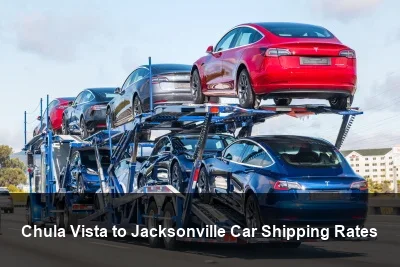
Rates on the Chula Vista–Jacksonville corridor reflect the 2,271-mile distance, which places this squarely in the long-haul tier where fuel costs carry significant weight. Diesel price fluctuations along I-10 — particularly through California, Arizona, and Texas — directly affect what carriers quote. See how fuel affects your rate at https://california.auto-transport-shipping.com/articles/how-gas-prices-impact-california-auto-transport-fees.html. Expect base open-transport rates between $1,150 and $1,550 for a standard sedan, with enclosed quotes running $400–$700 higher. Summer military PCS season (May–August) and January snowbird return traffic both push rates upward.
What affects the cost of Chula Vista to Jacksonville car shipping:
- Vehicle type and size — larger vehicles take more carrier space; aftermarket additions like lift kits, oversized mirrors, or roof accessories can add fees
- Open vs. enclosed transport — open is lower cost with stronger carrier availability; enclosed protects against weather, debris, and road conditions
- Standard vs. expedited pickup — expedited prioritizes your vehicle for the next available dispatch, typically at a $100–$300 premium
- Time of year — peak demand seasons drive rates higher; off-peak windows offer the most competitive pricing
- Fuel costs — diesel prices affect carrier rates; longer routes are more sensitive to fuel price swings
- Vehicle condition — non-running vehicles require special loading equipment and cost more to ship
| Vehicle Type | Open Car Shipping (Est.) | Enclosed Car Shipping (Est.) |
|---|---|---|
| Sedan | $1,100 – $1,600 | $1,900 – $2,700 |
| SUV / Crossover | $1,300 – $1,900 | $2,200 – $3,100 |
| Pickup Truck | $1,300 – $1,950 | $2,200 – $3,150 |
| Minivan | $1,300 – $1,900 | $2,200 – $3,100 |
| Luxury / Classic Car | $1,550 – $2,200 | $2,600 – $3,600 |
| Non-Running Vehicle | Add $200–400 | Add $200–400 |
* Estimated ranges based on recent Chula Vista to Jacksonville shipments. Actual rate depends on vehicle, locations, booking date, and current fuel costs. Use the form on this page to compare real quotes from licensed carriers.
Open vs. Enclosed: What This Route Actually Warrants
Open transport is appropriate for most standard vehicles on this corridor. I-10 is a well-traveled route and carriers maintain their equipment accordingly. Where enclosed makes sense: if you're shipping a classic, exotic, or modified vehicle through the Arizona desert in July, where road debris and UV exposure are real factors, the premium is justified. Luxury SUVs and sports cars destined for Jacksonville's beach communities also tend to ship enclosed. For a daily driver or late-model sedan, open is cost-effective and routine on this lane.
How Long Does Chula Vista to Jacksonville Car Shipping Take?
Plan for 7 to 10 business days from Chula Vista to Jacksonville under normal conditions. Carrier availability out of the San Diego pool is strong, so dispatch usually happens within 1 to 3 days of booking. The driving time for a solo carrier would be approximately 33 hours of wheel time; with required rest breaks and multi-vehicle load coordination, 7 days is the realistic minimum. If your move is time-sensitive, expedited options exist — review them at https://california.auto-transport-shipping.com/articles/california-expedited-car-shipping-fast-cost.html. Florida's geography means most Jacksonville deliveries occur without staging delays given the city's freeway infrastructure.
| Service Type | Typical Transit | Pickup Window | Best For |
|---|---|---|---|
| Open — Standard | 7–10 days | 2–5 business days | Best value; most common choice on this route |
| Open — Expedited | 5–7 days | 1–2 business days | Firm arrival date; faster dispatch window |
| Enclosed — Standard | 7–10 days | 4–8 business days | Luxury, classic, or modified vehicles |
| Enclosed — Expedited | 5–7 days | 2–4 business days | High-value vehicles on a firm delivery deadline |
** Summer thunderstorms across Louisiana and the Florida Panhandle (June–September) can add 12 to 24 hours to delivery. Winter fog events along the Gulf Coast in December and January occasionally slow carrier runs through Baton Rouge and Mobile. Budget an extra day in your timeline if you're shipping during either of those windows.
Chula Vista to Jacksonville — Route & Logistics
Carriers serving this route exit Chula Vista via SR-125 or I-5 north, connect to I-8 east, and pick up I-10 east near Casa Grande, Arizona. I-10 runs the full distance through Phoenix, Tucson, El Paso, San Antonio, Houston, and Baton Rouge before carriers cut north on I-95 or I-295 into Jacksonville. Total interstate mileage is approximately 2,271 miles with minimal non-freeway segments.
Key Corridor Waypoints
- Chula Vista, CA (Origin) Carriers access the South Bay street grid via SR-54 or SR-125. Pickup zones near H Street, Broadway, and East Palomar are truck-accessible. Some border-adjacent streets in western Chula Vista have overhead restrictions or narrow lanes; carriers typically coordinate a meet point on a wider arterial if your address is in a restricted block.
- El Centro, CA / Yuma, AZ (I-8 Corridor) The first major staging and fuel stop for carriers leaving San Diego County. Elevation drops sharply through the Imperial Valley to near sea level, then climbs into the Arizona desert. Summer temperatures regularly exceed 110°F here. Some carriers prefer overnight stops in Yuma to avoid midday heat if hauling multiple vehicles in open configuration.
- Casa Grande, AZ (I-8 / I-10 Junction) This interchange is where I-8 meets I-10 and carriers commit to the long eastbound run. It's a common fuel and inspection checkpoint for long-haul drivers. Load integrity checks and tire pressure adjustments happen here given the temperature extremes experienced crossing the Sonoran Desert segment from San Diego.
- El Paso, TX (I-10 Midpoint) El Paso sits at roughly 3,740 feet elevation and marks the halfway point of the corridor. It's a major overnight stop for carriers; the city has several truck-friendly fuel plazas along I-10. Border inspection activity near El Paso can create brief slowdowns, but long-haul carriers on this route are familiar with the timing and route around bottlenecks.
- San Antonio, TX (I-10 / I-35 Junction) San Antonio is a key load coordination city. Carriers sometimes pick up or drop off vehicles here, slightly adjusting load weight and distribution before the Gulf Coast run. The interchange with I-35 is heavily trafficked and a known congestion point during morning and evening hours. Carriers with route experience budget time accordingly.
- Jacksonville, FL (Destination) Carriers typically enter Jacksonville via I-10 east or I-295 north, both of which provide clean access to major residential zones, NAS Jacksonville, and Mayport. The Southside, Mandarin, and Riverside neighborhoods are fully carrier-accessible. Some downtown and San Marco streets are tighter; a parking lot or shopping center meet point is standard if your delivery address has restricted access.
Pickup & Delivery Access
- Pickup Access in Chula Vista Chula Vista's South Bay grid is generally accessible for standard 10-car carrier trailers. Main corridors like H Street, Third Avenue, East Palomar, and Telegraph Canyon Road work well for staging. Streets immediately adjacent to the US–Mexico border and some older western Chula Vista neighborhoods have overhead wire or width restrictions; if your address is in one of those areas, carriers will coordinate a nearby open parking lot or gas station as a meet point.
- Delivery Access in Jacksonville Jacksonville is carrier-friendly overall. I-10, I-95, and I-295 give direct access to most neighborhoods. NAS Jacksonville and Mayport have gate protocols — your carrier will confirm whether on-base delivery is possible or if you'll need to meet at a designated gate-adjacent staging area. Downtown Jacksonville and some San Marco streets have parking restrictions; if your delivery address is there, expect to coordinate a surface lot or nearby side street.
- Nearby Pickup Locations Carriers picking up in Chula Vista regularly extend service to National City, Bonita, and Eastlake. Call 1‑800‑590‑6492 to confirm door-to-door availability at your address.
Open vs. Enclosed Car Shipping: Chula Vista to Jacksonville
Both options use licensed, insured carriers and deliver door to door. For a full breakdown, read the pros and cons of open vs. enclosed car shipping.
Open Car Shipping
Most Popular- Lower cost — the practical choice for most vehicles
- More carriers available on this corridor
- Faster dispatch from booking to pickup
- Works well for sedans, SUVs, trucks, and minivans
- Vehicle rides on an open multi-car carrier
- Cargo insurance required on all licensed carriers
Estimated cost: $1,100 – $1,950
Enclosed Car Shipping
Premium Protection- Full protection from weather, debris, and road grime
- Best for luxury, exotic, and classic vehicles
- Recommended for low-clearance and custom-built cars
- Wheel-net or soft-tie systems prevent contact damage
- Higher cargo coverage — commonly $500,000 per load
- White-glove handling by experienced operators
Estimated cost: $1,900 – $3,150
Not sure which is right for your vehicle? Call 1-800-590-6492 and we'll point you in the right direction. Also worth reading: the top 10 questions to ask any car shipping company before you commit.
How to Prepare Your Car for Shipping to Jacksonville
A little prep before pickup protects you if there's ever a dispute about your vehicle's condition. This checklist is from our full guide on preparing your car for transport:
- Remove all personal belongings from the interior and trunk
- Leave only a quarter tank of fuel — enough to load and unload
- Take date-stamped photos of the full exterior and interior
- Remove or disable toll transponders (FasTrak, E-ZPass, etc.)
- Retract or remove roof racks, spoilers, antennas, and bike mounts
- Make sure the battery is charged and tires are properly inflated
- Tell the carrier about any existing leaks or mechanical issues
- Deactivate the car alarm before the carrier arrives
- Write down the mileage on the Bill of Lading at pickup
- Fold in side mirrors if the vehicle is wider than standard
Personal items: Most carriers won't cover belongings left in the car. Read the full rules on shipping personal items in your vehicle. Also review our Bill of Lading guide so you know exactly what to check at pickup and delivery.
When to Ship Your Car from Chula Vista to Jacksonville
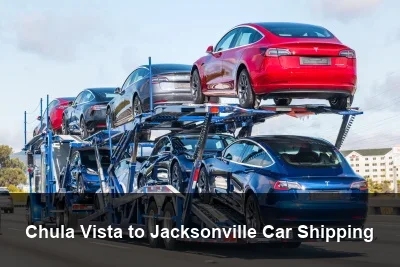
This route sees two distinct demand peaks: the summer military PCS window (May through August) driven by NAS Jacksonville and Mayport rotation orders, and the January–February period when California residents relocating to Florida spike eastbound volume. Both peaks compress carrier availability and push rates up 10 to 20 percent. Winter weather on the Gulf Coast is mild but not absent — ice events in northern Florida and Louisiana occur occasionally. Read more at https://california.auto-transport-shipping.com/articles/auto-transport-challenges-during-the-winter.html.
Military PCS Season (May–August)
Navy and Marine Corps PCS orders tied to NAS Jacksonville and Mayport generate the heaviest eastbound demand on this corridor from May through August. If you have orders, book 3 to 4 weeks ahead. Carrier slots fill quickly during peak rotation months, and rates run 15 to 20 percent above baseline. Having your order documentation ready speeds dispatch and can help prioritize your pickup window.
Summer Heat Window (June–September)
I-10 through Arizona and West Texas sees sustained temperatures above 105°F from June through September. For standard vehicles this has minimal impact, but if you're shipping a classic or a vehicle with a fresh paint job, enclosed transport eliminates UV and debris exposure across the desert segment. Carriers are experienced on this run but build in rest stops during peak heat hours, which can add half a day to transit.
Spring Relocation Surge (March–April)
California-to-Florida relocation volume climbs in March and April as households finalize spring moves before school year changes. This is also when carriers begin positioning for summer PCS season, so westbound return loads are plentiful and eastbound rates remain competitive. Booking 2 weeks out is sufficient in most years during this window, but spring break weeks in late March can create brief dispatch delays in the San Diego area.
Winter Gulf Coast Caution (December–February)
Northern Florida and coastal Louisiana experience occasional freezing rain and ice events between December and February. These are infrequent but can delay carriers by 12 to 24 hours when they occur. The San Diego end of this route is rarely affected by winter weather. If you're targeting a January delivery, build a two-day buffer into your timeline. Review winter transport considerations at https://california.auto-transport-shipping.com/articles/auto-transport-challenges-during-the-winter.html.
Student Shipping Window (August and May)
University of North Florida and Jacksonville University both drive student vehicle shipping in late July through mid-August and again in early May. These cycles overlap with PCS season in summer, creating a combined demand spike that tightens carrier availability to Jacksonville specifically. If you're shipping for a student, book as early as possible during these months and confirm flexible pickup dates to improve match speed.
Snowbird Return Traffic (January–February)
January and February see a surge of California residents who wintered in Florida shipping vehicles back west — or Florida-bound buyers completing a purchase. Eastbound volume from California also spikes as tax-motivated relocations close. This makes January one of the priciest months on the Chula Vista–Jacksonville corridor. If your timing is flexible, mid-February through early March tends to offer slightly better rates as that surge normalizes.
How to Choose a Chula Vista to Jacksonville Car Shipping Company
Getting multiple quotes is step one — knowing what to look for in those quotes matters just as much. Our guide on how to select a car shipping company covers the full process. Here are the six things that matter most:
FMCSA Registration
Every carrier or broker must hold a valid MC number. Verify any company at FMCSA SAFER before you book.
Proof of Insurance
Ask for a current certificate of insurance. Open carriers typically carry $100,000–$250,000 per load; enclosed commonly $500,000 or more. Learn what auto transport insurance covers.
All-In Pricing
Your quote should be a final number with no fees added after booking. Know the difference between brokers and carriers and confirm what the quote covers before you agree.
Bill of Lading
A complete Bill of Lading is filled out at pickup and delivery. Our Bill of Lading guide explains what to check. Never sign an incomplete one.
Real Reviews
Check Google and the BBB. Look at how they handled complaints and damage claims — that tells you more than a five-star average from happy customers.
Route Experience
A carrier who runs the Chula Vista–Jacksonville lane regularly knows that the tightest pickup window in San Diego County is Friday afternoon through Saturday morning — base personnel and civilians both want weekend pickups, which overloads dispatcher schedules. Experienced carriers on this corridor stage out of the Otay Ranch and Eastlake areas of Chula Vista, which avoids the western grid entirely. On the delivery end, they know that Mayport deliveries require 48-hour advance notification to the gate and that the Southside Jacksonville industrial areas near I-95 and I-295 offer the cleanest drop points for multi-vehicle loads. They also avoid the I-10/I-610 Houston interchange during morning hours — a 45-minute delay turns into two hours without local knowledge. These details don't show up on a generic quote sheet, but they determine whether your vehicle arrives on day 7 or day 11.
Chula Vista to Jacksonville Car Shipping — FAQ
How much does it cost to ship a car from Chula Vista to Jacksonville?
Expect to pay between $1,150 and $1,550 for open transport of a standard sedan on this 2,271-mile corridor under normal conditions. Enclosed transport adds $400 to $700 on top of that range. Several variables move the final number: vehicle size (trucks and SUVs cost more than sedans), time of year (summer PCS season and January relocation peaks push rates up 10 to 20 percent), and current diesel prices along I-10 in California, Arizona, and Texas. Inoperable vehicles also carry a surcharge. Get a live quote through the form on this page for a number specific to your vehicle type and preferred dates.
How long does Chula Vista to Jacksonville car shipping take?
Standard transit time is 7 to 10 business days. Carrier dispatch from the San Diego area typically happens within 1 to 3 days of booking confirmation. From pickup, the driving time to Jacksonville is roughly 33 hours of wheel time, but carriers operate multi-vehicle loads with mandatory rest requirements, so 7 days is the realistic floor. Summer PCS season congestion in the San Diego carrier pool, Gulf Coast thunderstorm delays in June through September, and rare winter ice events on the Gulf Coast can push this toward 10 to 12 days. If you need a faster window, expedited options exist — see https://california.auto-transport-shipping.com/articles/california-expedited-car-shipping-fast-cost.html.
Is my car insured during transport from Chula Vista to Jacksonville?
Yes. Every licensed carrier operating on this route is required by federal law to carry cargo insurance. That coverage is active from the moment your vehicle is loaded onto the trailer in Chula Vista until it's delivered in Jacksonville. Before pickup, you and the carrier complete a Bill of Lading documenting your vehicle's pre-existing condition — photos and written notes. At delivery, you inspect the vehicle against that document before signing. If damage occurred in transit, that Bill of Lading is your evidence for a claim. For a detailed breakdown of how coverage works, read https://california.auto-transport-shipping.com/articles/understanding-auto-transport-insurance.html. If you ever need to file a claim, the process is explained at https://california.auto-transport-shipping.com/articles/how-to-file-a-claim-for-vehicle-damage-during-transport.html.
Should I choose open or enclosed transport for this route?
Open transport is the right choice for the majority of vehicles on this corridor. The route is heavily traveled by professional carriers who maintain their equipment, and road conditions on I-10 and I-8 are predictable. Enclosed transport makes sense if you're shipping a classic car, an exotic, a vehicle with a show-quality finish, or any vehicle where a door ding or rock chip would cost more than the price difference between open and enclosed. The Arizona desert segment in summer is the primary exposure factor for open loads. For a full comparison of both options, see https://california.auto-transport-shipping.com/articles/open-vs-enclosed-auto-transport-pros-and-cons.html.
Do I have to be present at pickup and delivery?
You or a designated representative must be present at both pickup and delivery to sign the Bill of Lading. This document records your vehicle's condition before it's loaded and serves as the legal record if any dispute arises. You can authorize a spouse, family member, neighbor, or property manager to stand in for you at either end — they just need to be an adult who can inspect the vehicle and sign. Do not sign the delivery Bill of Lading if you notice damage that wasn't documented at pickup; note it in writing before signing. Full details on what this document covers are at https://california.auto-transport-shipping.com/articles/california-auto-transport-bill-of-lading-information.html.
Does military PCS status affect how I should book shipping from Chula Vista to Jacksonville?
Yes, in two important ways. First, if you have official PCS orders to NAS Jacksonville or Mayport, book as early as those orders are confirmed — ideally 3 to 4 weeks out. Summer PCS season (May through August) is the busiest period on this exact corridor, and carrier slots in the San Diego area fill quickly when rotation orders are issued. Second, some brokers offer military discount rates — ask specifically when requesting a quote. Also confirm with the receiving installation whether on-base delivery is authorized or whether you'll need to arrange a meet point near the gate.
What weather should I be aware of when shipping between Chula Vista and Jacksonville?
The two main weather factors on this corridor are desert heat and Gulf Coast storms. I-8 through Imperial County and I-10 through Arizona see temperatures above 110°F from June through September. This rarely stops carriers but can affect open-transport vehicles with sensitive materials inside — remove anything heat-sensitive before shipping. Gulf Coast thunderstorm season runs June through September and occasionally produces flooding delays on I-10 in Louisiana and along the Florida Panhandle. Winter brings occasional ice events in northern Florida and along the Gulf Coast between December and February, which can add a day to transit. Build buffer time into your schedule if you're shipping during any of these windows.
Can I ship personal items inside my car from Chula Vista to Jacksonville?
Carriers are not licensed to transport household goods, so you technically cannot ship personal belongings inside the vehicle. Most carriers allow a small amount of items in the trunk — typically under 100 pounds — but this is at the carrier's discretion, not guaranteed, and those items are not covered by cargo insurance if they're damaged or missing. Anything visible in the cabin increases the risk of a window smash, particularly during overnight staging stops along the I-10 corridor in Texas and Louisiana. Keep the interior clear, and if you do leave a small bag in the trunk, document it on the Bill of Lading at pickup.
Ready to Ship Your Car from Chula Vista to Jacksonville?
One form gets you up to 10 free quotes from licensed, insured carriers. Compare costs and transit times and book the best deal for your schedule.