
Chula Vista to Denver Car Shipping Route
From Chula Vista, carriers access the route via I-5 north to I-8 east, or use SR-125 north to connect eastbound. SR-54 provides a secondary grid connection to the South Bay freeway network. The route covers approximately 1,089 miles, crossing the Sonoran Desert through El Centro and Yuma, climbing into Phoenix metro traffic, then ascending northeast through New Mexico and southern Colorado before dropping into Denver at roughly 5,280 feet elevation. Driving this yourself takes 15–17 hours minimum across two days. Shipping saves you the mileage, fuel, and mechanical wear. For a breakdown of what you avoid: https://california.auto-transport-shipping.com/articles/benefits-of-auto-transport-service-vs-driving-yourself.html
Denver's demand for inbound vehicles from Southern California is supported by several specific institutions. Buckley Space Force Base in Aurora and Fort Carson south of Colorado Springs generate steady military PCS transfers, many originating from San Diego-area installations. The University of Denver, University of Colorado Denver, and Colorado State University in Fort Collins pull student vehicles each August and January. Employers including Lockheed Martin Space, Raytheon, and Denver Health attract California professionals relocating east. Seasonally, I-70 through the Rockies can experience weather closures between November and April that affect final delivery timing. Before you book, review common booking errors at https://california.auto-transport-shipping.com/articles/auto-transport-mistakes-to-avoid.html
Chula Vista to Denver Car Shipping Rates
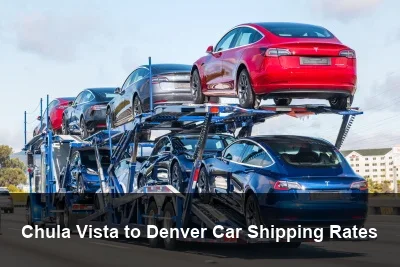
Rates on the Chula Vista–Denver corridor are influenced by the 1,089-mile distance, which puts it in a mid-to-long-haul pricing tier. Fuel costs on desert stretches and mountain fuel premiums on I-70 both factor in — see how fuel prices affect your quote at https://california.auto-transport-shipping.com/articles/how-gas-prices-impact-california-auto-transport-fees.html. Summer demand spikes in June through August as students and military families move, pushing open-carrier availability down and rates up. Winter months can add a weather surcharge for enclosed or for guaranteed delivery windows through mountain passes.
What affects the cost of Chula Vista to Denver car shipping:
- Vehicle type and size — larger vehicles take more carrier space; aftermarket additions like lift kits, oversized mirrors, or roof accessories can add fees
- Open vs. enclosed transport — open is lower cost with stronger carrier availability; enclosed protects against weather, debris, and road conditions
- Standard vs. expedited pickup — expedited prioritizes your vehicle for the next available dispatch, typically at a $100–$300 premium
- Time of year — peak demand seasons drive rates higher; off-peak windows offer the most competitive pricing
- Fuel costs — diesel prices affect carrier rates; longer routes are more sensitive to fuel price swings
- Vehicle condition — non-running vehicles require special loading equipment and cost more to ship
| Vehicle Type | Open Car Shipping (Est.) | Enclosed Car Shipping (Est.) |
|---|---|---|
| Sedan | $750 – $1,000 | $1,350 – $1,750 |
| SUV / Crossover | $900 – $1,150 | $1,550 – $2,000 |
| Pickup Truck | $900 – $1,200 | $1,550 – $2,100 |
| Minivan | $900 – $1,150 | $1,550 – $2,000 |
| Luxury / Classic Car | $1,050 – $1,400 | $1,850 – $2,350 |
| Non-Running Vehicle | Add $150–300 | Add $150–300 |
* Estimated ranges based on recent Chula Vista to Denver shipments. Actual rate depends on vehicle, locations, booking date, and current fuel costs. Use the form on this page to compare real quotes from licensed carriers.
Open vs. Enclosed: What This Route Actually Requires
Most vehicles shipping from Chula Vista to Denver move fine on open carriers. The I-8 desert crossing and I-25 plains stretch are standard open-carrier territory. Where enclosed becomes worth considering is if you're shipping a luxury vehicle, classic car, or anything with a low clearance that may struggle with mountain ramp angles. Winter shipments between November and April add road salt and debris exposure on I-70 near Denver, which makes enclosed more defensible for high-value vehicles during that window. For everything else — daily drivers, SUVs, standard sedans — open is the practical and cost-effective choice on this corridor.
How Long Does Chula Vista to Denver Car Shipping Take?
Standard transit for Chula Vista to Denver runs 4 to 7 days from confirmed pickup. The San Diego carrier pool dispatches regularly on this lane, so truck assignment typically happens within 1 to 3 business days of booking. The driving distance for a carrier is roughly 1,089 miles, which a two-driver team can cover faster but most solo operators run in two legs with a federally mandated rest. If your timeline is tight, expedited options exist — review what that costs and how it works at https://california.auto-transport-shipping.com/articles/california-expedited-car-shipping-fast-cost.html before committing to a standard booking.
| Service Type | Typical Transit | Pickup Window | Best For |
|---|---|---|---|
| Open — Standard | 3–5 days | 2–5 business days | Best value; most common choice on this route |
| Open — Expedited | 2–3 days | 1–2 business days | Firm arrival date; faster dispatch window |
| Enclosed — Standard | 3–5 days | 3–7 business days | Luxury, classic, or modified vehicles |
| Enclosed — Expedited | 2–3 days | 1–3 business days | High-value vehicles on a firm delivery deadline |
** The primary delay risk on this route is I-70 through the Colorado Rockies between November and April. Chain laws, closures at the Eisenhower Tunnel, and Vail Pass weather can hold carriers for 12 to 36 hours. Build buffer into your schedule if you're booking a winter move.
Chula Vista to Denver — Route & Logistics
Carriers depart Chula Vista using I-5 north or SR-125 north to reach I-8 eastbound, the main desert artery. I-8 runs to I-10 east through Phoenix, which connects to I-17 north and then I-40 or US-89 depending on the carrier's preference. From Flagstaff, most continue on I-40 to Albuquerque, then pick up I-25 north into Denver. Total driving distance is approximately 1,089 miles.
Key Corridor Waypoints
- El Centro, CA First major staging point after leaving the Chula Vista/South Bay area, roughly 120 miles east on I-8. Carriers running solo often fuel and log here before the Arizona border crossing. Imperial Valley heat in summer means carriers typically time this segment for early morning or evening runs to protect vehicle finishes and manage engine temps on loaded rigs.
- Yuma, AZ Arizona port of entry and inspection checkpoint at the California–Arizona state line on I-8. Commercial carriers may be directed through the agricultural and weight inspection station. Yuma also sits near Marine Corps Air Station Yuma, which occasionally generates vehicle pickups that carriers on this lane absorb as additional loads heading east toward Phoenix.
- Phoenix, AZ Major junction at I-10 and I-17. Carriers either continue east on I-10 toward Tucson and into New Mexico, or exit north on I-17 toward Flagstaff and I-40. The Phoenix metro is a high-volume carrier hub where loads are sometimes adjusted or co-loaded. Summer temps here exceed 110°F, which matters for vehicles left on open carriers during extended stops.
- Albuquerque, NM Reached via I-40 east from Flagstaff or I-25 north from Tucson depending on routing. Albuquerque sits at 5,312 feet elevation and is a common overnight stop for carriers on this corridor. It also serves as a pickup/drop point for carriers repositioning loads. From here, I-25 north runs directly to Denver through Raton Pass at 7,834 feet.
- Raton Pass, NM/CO Border Elevation 7,834 feet on I-25. The New Mexico–Colorado state line crossing. Not a closure risk as serious as I-70, but winter ice and reduced visibility at the pass can slow carriers. Trucks descend steeply into Trinidad, CO on the other side. Most carriers factor pass conditions into their pre-run weather checks when dispatching out of Albuquerque.
- Denver, CO Final delivery via I-25 into the metro area. Carriers serving central Denver, Capitol Hill, or LoDo neighborhoods may need to stage deliveries in off-street lots or meet in more accessible zones due to narrow streets and loading restrictions. Aurora and Lakewood suburban addresses are straightforward. Buckley Space Force Base and Fort Carson deliveries follow base access procedures with advance scheduling.
Pickup & Delivery Access
- Pickup Access in Chula Vista Chula Vista's South Bay street grid is largely accessible to standard auto transport carriers. Neighborhoods like Eastlake and Bonita offer wide residential streets for loading. Areas closer to the US–Mexico border and older downtown streets can have restricted truck access. Many carriers prefer meeting at staging areas near I-805 or SR-54 interchanges. Coordinating a meet point on a commercial lot or wide arterial saves scheduling delays.
- Delivery Access in Denver Denver's suburban areas — Aurora, Lakewood, Centennial, and Thornton — are carrier-accessible with standard equipment. Central Denver, Capitol Hill, and RiNo have narrower streets and parking restrictions that may require staging in a nearby lot or business area. Deliveries to Buckley Space Force Base require advance coordination with the base access office. Fort Carson deliveries south of Denver follow similar base entry protocols.
- Nearby Pickup Locations Carriers picking up in Chula Vista regularly extend service to National City, Bonita, and Eastlake. Call 1‑800‑590‑6492 to confirm door-to-door availability at your address.
Open vs. Enclosed Car Shipping: Chula Vista to Denver
Both options use licensed, insured carriers and deliver door to door. For a full breakdown, read the pros and cons of open vs. enclosed car shipping.
Open Car Shipping
Most Popular- Lower cost — the practical choice for most vehicles
- More carriers available on this corridor
- Faster dispatch from booking to pickup
- Works well for sedans, SUVs, trucks, and minivans
- Vehicle rides on an open multi-car carrier
- Cargo insurance required on all licensed carriers
Estimated cost: $750 – $1,200
Enclosed Car Shipping
Premium Protection- Full protection from weather, debris, and road grime
- Best for luxury, exotic, and classic vehicles
- Recommended for low-clearance and custom-built cars
- Wheel-net or soft-tie systems prevent contact damage
- Higher cargo coverage — commonly $500,000 per load
- White-glove handling by experienced operators
Estimated cost: $1,350 – $2,100
Not sure which is right for your vehicle? Call 1-800-590-6492 and we'll point you in the right direction. Also worth reading: the top 10 questions to ask any car shipping company before you commit.
How to Prepare Your Car for Shipping to Denver
A little prep before pickup protects you if there's ever a dispute about your vehicle's condition. This checklist is from our full guide on preparing your car for transport:
- Remove all personal belongings from the interior and trunk
- Leave only a quarter tank of fuel — enough to load and unload
- Take date-stamped photos of the full exterior and interior
- Remove or disable toll transponders (FasTrak, E-ZPass, etc.)
- Retract or remove roof racks, spoilers, antennas, and bike mounts
- Make sure the battery is charged and tires are properly inflated
- Tell the carrier about any existing leaks or mechanical issues
- Deactivate the car alarm before the carrier arrives
- Write down the mileage on the Bill of Lading at pickup
- Fold in side mirrors if the vehicle is wider than standard
Personal items: Most carriers won't cover belongings left in the car. Read the full rules on shipping personal items in your vehicle. Also review our Bill of Lading guide so you know exactly what to check at pickup and delivery.
When to Ship Your Car from Chula Vista to Denver
This route has two distinct demand peaks. Summer — June through August — is driven by military PCS cycles, student relocations, and corporate transfers from California to Denver's growing job market. That combination tightens carrier availability and pushes rates up. Winter brings a different consideration: I-70 mountain pass closures between November and March can delay final delivery. For a detailed look at how winter conditions affect transport timelines, see https://california.auto-transport-shipping.com/articles/auto-transport-challenges-during-the-winter.html. Booking two to three weeks in advance in either peak period is strongly advised.
Spring (March–May)
Spring is a moderate-demand window before the summer PCS and student rush. Rates are generally stable, and I-70 pass conditions begin improving by late April, reducing weather delay risk. If you have flexibility, March through early May offers competitive pricing and reasonable carrier availability. Late May can start tightening as early military orders begin processing, so book a few weeks out.
Summer Peak (June–August)
The busiest shipping window on this corridor. Military PCS orders from Naval Base San Diego, Naval Air Station North Island, and Marine Corps Air Station Miramar generate a significant volume of eastbound moves toward Colorado installations. Simultaneously, students heading to University of Denver and CU Denver ship vehicles back home or to new apartments. Book 2–3 weeks ahead minimum. Rates are at their annual high during this window.
Back-to-School (August–September)
A second demand surge occurs in late August as students depart Southern California for Colorado universities. This overlaps with the tail end of military PCS season, keeping carrier capacity strained. If you're shipping for a student, target early August before the crunch. September cools demand noticeably once the academic year starts and PCS orders wind down, making it a better value window for flexible shippers.
Winter (November–March)
Demand drops, and rates soften — but I-70 through the Rockies introduces real transit risk. Eisenhower Tunnel and Vail Pass closures can hold carriers for 12–36 hours. Carriers experienced on this lane will build mountain pass checks into their routing. If you're shipping a high-value vehicle in winter, enclosed transport significantly reduces exposure to road salt and debris on the Denver metro approach. Budget extra days in your schedule.
Ski Season Demand Shift (December–February)
Colorado's ski season draws a secondary vehicle movement from Southern California — particularly higher-end SUVs and AWD vehicles heading to the Denver area as seasonal residents or workers relocate to ski resort communities. This creates minor upward pressure on enclosed carrier demand between December and February. If you're moving a vehicle for ski-season use, book early November to lock in pre-season rates.
How to Choose a Chula Vista to Denver Car Shipping Company
Getting multiple quotes is step one — knowing what to look for in those quotes matters just as much. Our guide on how to select a car shipping company covers the full process. Here are the six things that matter most:
FMCSA Registration
Every carrier or broker must hold a valid MC number. Verify any company at FMCSA SAFER before you book.
Proof of Insurance
Ask for a current certificate of insurance. Open carriers typically carry $100,000–$250,000 per load; enclosed commonly $500,000 or more. Learn what auto transport insurance covers.
All-In Pricing
Your quote should be a final number with no fees added after booking. Know the difference between brokers and carriers and confirm what the quote covers before you agree.
Bill of Lading
A complete Bill of Lading is filled out at pickup and delivery. Our Bill of Lading guide explains what to check. Never sign an incomplete one.
Real Reviews
Check Google and the BBB. Look at how they handled complaints and damage claims — that tells you more than a five-star average from happy customers.
Route Experience
A carrier who runs the Chula Vista–Denver lane regularly knows that the South Bay pickup window is tightest on Mondays and Fridays when San Diego-area dispatchers flood the board. Mid-week pickups clear faster. They know to check Raton Pass and Vail Pass conditions before committing to a delivery date rather than after loading. They know Phoenix is a staging hub where co-loads happen and that a two-day Phoenix layover is normal in summer heat, not negligence. They know Aurora addresses near Buckley Space Force Base require lead time on access coordination. They know the difference between a viable Eastlake street in Chula Vista and a border-adjacent block that forces a meet-point renegotiation. That operational knowledge is what separates a smooth 5-day delivery from a frustrating 9-day one.
Chula Vista to Denver Car Shipping — FAQ
How much does it cost to ship a car from Chula Vista to Denver?
Rates on this 1,089-mile corridor typically range from $850 to $1,350 for open transport and $1,300 to $2,100 for enclosed, depending on vehicle size, transport type, and the time of year you're booking. Summer months — June through August — are peak demand due to military PCS moves and student relocations, and rates reflect that. Winter softens pricing but can add carrier surcharges for mountain pass conditions on I-70. The best way to get a current number is to fill out the quote form with your specific vehicle, pickup window, and delivery zip code. Fuel price fluctuations also affect this corridor — see https://california.auto-transport-shipping.com/articles/how-gas-prices-impact-california-auto-transport-fees.html for detail on how that works.
How long does Chula Vista to Denver car shipping take?
From confirmed pickup, standard transit runs 4 to 7 days. Carriers dispatching from the San Diego pool typically assign a truck within 1 to 3 business days of booking. The actual driving distance is approximately 1,089 miles, which a solo carrier covers in two driving days with required rest stops. The variable that most often extends this timeline is I-70 mountain pass conditions between November and April — closures at Vail Pass or the Eisenhower Tunnel can add 12 to 36 hours to the final leg. If your schedule is firm, expedited transport options are available: https://california.auto-transport-shipping.com/articles/california-expedited-car-shipping-fast-cost.html
Is my car insured during transport from Chula Vista to Denver?
Yes. Every licensed carrier operating on this route is required by federal law to carry cargo insurance, and that coverage applies to your vehicle while it's on the truck. Before your vehicle is loaded in Chula Vista, both you and the carrier complete a Bill of Lading documenting existing condition — this is the record you'll reference if you need to file a claim in Denver. Your personal auto insurance policy may also provide supplemental coverage during transport, so it's worth a quick call to your insurer before shipping. For a full breakdown of how transport insurance works, read https://california.auto-transport-shipping.com/articles/understanding-auto-transport-insurance.html. If you ever need to file a claim, the process is explained clearly at https://california.auto-transport-shipping.com/articles/how-to-file-a-claim-for-vehicle-damage-during-transport.html
Should I choose open or enclosed transport for the Chula Vista to Denver route?
Open transport is the right call for most vehicles on this corridor. The route runs through desert terrain and plains — not conditions that justify the premium for enclosed on a standard daily driver, SUV, or sedan. Where enclosed makes practical sense: luxury vehicles, classic cars, vehicles with factory paint that can't absorb road debris, or any shipment scheduled between November and April when I-70 approaches in Denver expose vehicles to road salt and grit. The enclosed premium on this route typically runs $400–$700 above open rates. For a full comparison of both options, see https://california.auto-transport-shipping.com/articles/open-vs-enclosed-auto-transport-pros-and-cons.html
Do I have to be present at pickup in Chula Vista and delivery in Denver?
You don't have to be present personally, but someone you authorize must be available at both ends. At pickup in Chula Vista, that person signs the Bill of Lading, confirms the vehicle's condition, and hands over the keys. At delivery in Denver, your designee inspects the vehicle, signs off on delivery condition, and receives the keys. The Bill of Lading is your legal record at both ends — don't waive that inspection, even if the carrier is pressed for time. If you can't be present yourself, a trusted contact, property manager, or family member can handle it. Full details on the Bill of Lading process: https://california.auto-transport-shipping.com/articles/california-auto-transport-bill-of-lading-information.html
How do winter mountain pass conditions affect my Chula Vista to Denver shipment?
Between November and April, I-70 through the Colorado Rockies is the primary transit risk on this route. Closures at the Eisenhower Tunnel and Vail Pass due to snow, ice, or accidents can hold carriers for 12 to 36 hours or longer during severe events. Colorado's chain law can also restrict commercial vehicles on certain segments, forcing carriers to wait at staging points in Grand Junction or Glenwood Springs. If you're booking a winter shipment, add at least one to two buffer days to your expected delivery window and ask your broker whether the assigned carrier has current mountain driving experience. For more on winter transport challenges, see https://california.auto-transport-shipping.com/articles/auto-transport-challenges-during-the-winter.html
Does military PCS status affect how I should book this route?
Yes, in two ways. First, if you're PCSing from Naval Base San Diego, NAS North Island, or MCAS Miramar and moving to Buckley Space Force Base or Fort Carson, you're in the highest-demand shipping window — May through August — when carrier capacity on this exact corridor tightens significantly. Book as soon as your orders are confirmed, not when you're two weeks from your report date. Second, delivery to a military base in Colorado requires advance coordination with the base access office, which your carrier needs to arrange before arrival. Make sure the carrier you're assigned has experience with base access procedures at the destination installation.
Are there areas in Chula Vista or Denver where carriers have trouble accessing?
In Chula Vista, streets near the US–Mexico border corridor and some older neighborhoods in the western part of the city have tighter turns and lower overhead clearances that restrict full-size auto transport trucks. Carriers typically prefer loading from wider arterials or commercial areas near SR-54 or I-805. Eastlake and newer South Bay developments are generally straightforward. In Denver, central neighborhoods like Capitol Hill, LoDo, and RiNo have parking restrictions and narrow streets that make direct residential delivery difficult. For those addresses, carriers usually stage nearby — in a commercial lot or park-and-ride — and ask you to meet them there. Confirm access logistics with your carrier when the truck is assigned.
Ready to Ship Your Car from Chula Vista to Denver?
One form gets you up to 10 free quotes from licensed, insured carriers. Compare costs and transit times and book the best deal for your schedule.