
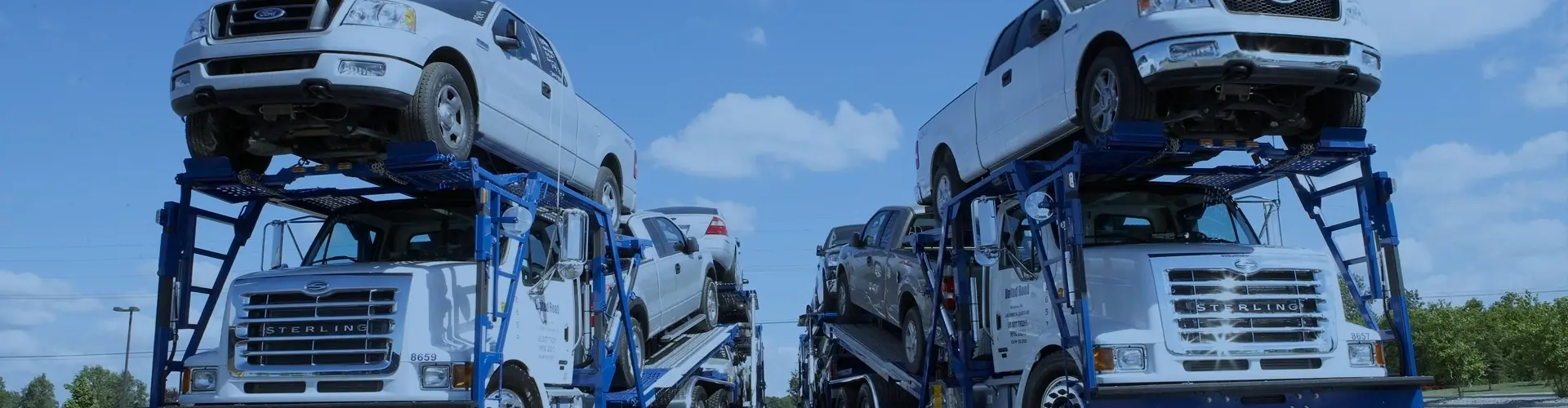
Santa Clarita to Washington DC Car Shipping Route
Santa Clarita sits roughly 2,672 miles from Washington DC by road. Carriers pick up in Santa Clarita using the I-5/SR-14 interchange — SR-14 connects the Antelope Valley communities of Newhall, Saugus, and Canyon Country directly to that junction, so access from any part of Santa Clarita is straightforward. From there, trucks typically run I-40 east through the Mojave, then pick up I-81 or I-64 through the Appalachians before dropping into the DC metro via I-66 or I-95. The drive alone would take a licensed driver roughly 38 to 40 hours over four to five days. Shipping avoids that mileage accumulation, wear, and fuel cost entirely. See a full cost comparison at https://california.auto-transport-shipping.com/articles/benefits-of-auto-transport-service-vs-driving-yourself.html.
Demand at the Washington DC end is driven by a specific mix of institutions. Joint Base Myer-Henderson Hall in Arlington and Joint Base Andrews in Prince George's County both generate PCS orders on military timelines, which tend to cluster in early summer. The federal civilian workforce — agencies including the Department of Defense, Homeland Security, and the State Department — relocates staff regularly. Georgetown University, American University, and George Washington University create a student shipping season peaking in August. Winters on this corridor include real weather: the Appalachian stretch through Virginia and West Virginia can see snow and ice from November through March, which may affect transit. Before you book, review common booking errors at https://california.auto-transport-shipping.com/articles/auto-transport-mistakes-to-avoid.html.
Santa Clarita to Washington DC Car Shipping Rates
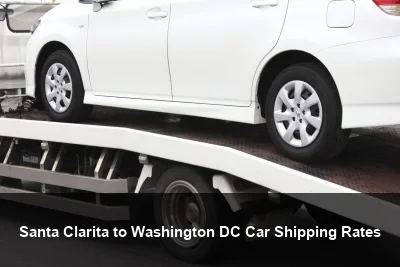
At roughly 2,672 miles, this route falls into the long-haul tier where per-mile rates drop but total cost rises. Fuel is the largest variable on a run this long — diesel prices in California and across the I-40 corridor directly affect your quote. Rate spikes occur in May through July when military PCS season peaks and again in late August when DC-area universities open. For a direct breakdown of how fuel costs feed into your quote, see https://california.auto-transport-shipping.com/articles/how-gas-prices-impact-california-auto-transport-fees.html.
What affects the cost of Santa Clarita to Washington DC car shipping:
- Vehicle type and size — larger vehicles take more carrier space; aftermarket additions like lift kits, oversized mirrors, or roof accessories can add fees
- Open vs. enclosed transport — open is lower cost with stronger carrier availability; enclosed protects against weather, debris, and road conditions
- Standard vs. expedited pickup — expedited prioritizes your vehicle for the next available dispatch, typically at a $100–$300 premium
- Time of year — peak demand seasons drive rates higher; off-peak windows offer the most competitive pricing
- Fuel costs — diesel prices affect carrier rates; longer routes are more sensitive to fuel price swings
- Vehicle condition — non-running vehicles require special loading equipment and cost more to ship
| Vehicle Type | Open Car Shipping (Est.) | Enclosed Car Shipping (Est.) |
|---|---|---|
| Sedan | $1,100 – $1,600 | $1,900 – $2,700 |
| SUV / Crossover | $1,300 – $1,900 | $2,200 – $3,100 |
| Pickup Truck | $1,300 – $1,950 | $2,200 – $3,150 |
| Minivan | $1,300 – $1,900 | $2,200 – $3,100 |
| Luxury / Classic Car | $1,550 – $2,200 | $2,600 – $3,600 |
| Non-Running Vehicle | Add $200–400 | Add $200–400 |
* Estimated ranges based on recent Santa Clarita to Washington DC shipments. Actual rate depends on vehicle, locations, booking date, and current fuel costs. Use the form on this page to compare real quotes from licensed carriers.
Open vs. Enclosed on the Santa Clarita to Washington DC Run
Open transport covers the overwhelming majority of vehicles shipped on this corridor and is appropriate for standard sedans, SUVs, and trucks. The route crosses the Mojave, then moves through the Appalachian range, which introduces road debris and weather exposure — but that's true of any long-haul route and open carriers manage it routinely. Choose enclosed if you're moving a classic car, a high-value exotic, or a vehicle with a fresh paint job you want fully protected through mountain passes and potential winter weather in Virginia. Enclosed adds roughly 40 to 60 percent to the base rate on this corridor.
How Long Does Santa Clarita to Washington DC Car Shipping Take?
Standard transit on the Santa Clarita to Washington DC route runs 7 to 10 days under normal conditions. The driving distance alone is about 2,672 miles, which takes a carrier multiple driving days after factoring in hours-of-service regulations, fuel stops, and any intermediate pickups or deliveries along the I-40 corridor. Santa Clarita's position on a well-traveled California departure lane means carriers load here regularly, so dispatch time is typically 1 to 3 business days. If your timeline is compressed, expedited options exist — see https://california.auto-transport-shipping.com/articles/california-expedited-car-shipping-fast-cost.html for what that costs and when it makes sense.
| Service Type | Typical Transit | Pickup Window | Best For |
|---|---|---|---|
| Open — Standard | 7–10 days | 2–5 business days | Best value; most common choice on this route |
| Open — Expedited | 5–7 days | 1–2 business days | Firm arrival date; faster dispatch window |
| Enclosed — Standard | 7–10 days | 4–8 business days | Luxury, classic, or modified vehicles |
| Enclosed — Expedited | 5–7 days | 2–4 business days | High-value vehicles on a firm delivery deadline |
** Winter weather in the Appalachian stretch — specifically through West Virginia and northern Virginia on I-81 and I-64 — can add 1 to 2 days between November and March if carriers reroute or hold for road clearance. Summer PCS season in June and July can extend carrier dispatch windows by a day or two if demand temporarily outpaces available trucks.
Santa Clarita to Washington DC — Route & Logistics
Carriers depart Santa Clarita via the I-5/SR-14 interchange, heading south briefly on I-5 before picking up I-10 east or routing directly to I-40 through Barstow. From there the run crosses Arizona, New Mexico, and Texas before turning northeast. The total drive covers approximately 2,672 miles, finishing via I-81 north through the Shenandoah Valley or I-66 east into the DC metro.
Key Corridor Waypoints
- Newhall Pass, CA The I-5/SR-14 interchange at Newhall Pass is the primary carrier access point for all of Santa Clarita. Sitting at roughly 1,600 feet elevation, this interchange funnels trucks from Saugus, Canyon Country, and downtown Santa Clarita onto the freeway system without surface-street complications. Carriers typically conduct their pre-load vehicle inspection here or immediately south before heading toward the I-10 connection.
- Barstow, CA Barstow sits at 2,175 feet on the high Mojave Desert and serves as the first major fuel and driver rest stop on eastbound runs. The I-40/I-15 junction here is a decision point — some carriers stay on I-15 northeast toward Las Vegas to pick up additional loads, while others commit directly to I-40 east toward Albuquerque. Many overnight stops on this corridor happen in or near Barstow.
- Albuquerque, NM Albuquerque at 5,312 feet is the largest city on the I-40 corridor between California and the Texas Panhandle. Carriers use it as a secondary load or drop point, and many drivers make their second overnight stop here. In winter, the higher elevations approaching Albuquerque from the west can carry snow, occasionally causing brief delays. The I-25 interchange here provides a northern alternate if carriers are routing toward Denver.
- Oklahoma City, OK Oklahoma City marks the eastern end of the Mojave-to-Plains crossing and is a major carrier staging hub. The I-40/I-35 interchange here handles high truck volume. Drivers often refuel, swap out, or take mandatory rest breaks in the OKC area. From this point the route trends northeast, and carriers commonly begin planning their final-leg approach to the DC metro from here.
- Roanoke, VA Roanoke sits at roughly 1,175 feet in the Blue Ridge Valley and marks the carrier's entry into the mid-Atlantic mountain stretch. I-81 through this corridor carries heavy commercial traffic and can back up significantly near the Virginia/Tennessee border. In winter, this section from Roanoke north to Winchester is the most weather-sensitive portion of the entire route — ice and snow are common and may prompt short holds.
- Tysons Corner / Springfield, VA The I-495 Beltway interchanges at Tysons Corner in Northern Virginia or Springfield serve as the final staging area before DC delivery. Most carriers stop here rather than driving into the District proper with a loaded multi-car hauler. Deliveries into DC neighborhoods, Maryland suburbs, or Alexandria are dispatched from this area using the staging lot as a base. Congestion on the Beltway is predictable during morning and evening rush.
Pickup & Delivery Access
- Pickup Access in Santa Clarita Santa Clarita's suburban grid is fully accessible to standard multi-car haulers. The I-5/SR-14 interchange provides clean entry and exit from Newhall, Saugus, and Canyon Country without routing through narrow residential streets. Wide arterials like Soledad Canyon Road and Sierra Highway connect neighborhoods to the interchange. Carriers can typically pull to your driveway or a nearby flat side street. If your home has a steep driveway or low overhead clearance, coordinate a nearby open parking area as a meet point.
- Delivery Access in Washington DC Washington DC proper has restrictions that affect full-size multi-car haulers — narrow streets in Capitol Hill, Georgetown, and Dupont Circle often cannot accommodate an 80-foot transport truck. Carriers typically stage in Northern Virginia near Tysons Corner, Springfield, or in Maryland near Silver Spring or College Park, then arrange final delivery from there. If you're in Arlington, Alexandria, or Bethesda, direct residential delivery is usually feasible. Confirm your delivery address with the carrier at dispatch so they can plan the final approach correctly.
- Nearby Pickup Locations Carriers picking up in Santa Clarita regularly extend service to Newhall, Saugus, and Canyon Country. Call 1‑800‑590‑6492 to confirm door-to-door availability at your address.
Open vs. Enclosed Car Shipping: Santa Clarita to Washington DC
Both options use licensed, insured carriers and deliver door to door. For a full breakdown, read the pros and cons of open vs. enclosed car shipping.
Open Car Shipping
Most Popular- Lower cost — the practical choice for most vehicles
- More carriers available on this corridor
- Faster dispatch from booking to pickup
- Works well for sedans, SUVs, trucks, and minivans
- Vehicle rides on an open multi-car carrier
- Cargo insurance required on all licensed carriers
Estimated cost: $1,100 – $1,950
Enclosed Car Shipping
Premium Protection- Full protection from weather, debris, and road grime
- Best for luxury, exotic, and classic vehicles
- Recommended for low-clearance and custom-built cars
- Wheel-net or soft-tie systems prevent contact damage
- Higher cargo coverage — commonly $500,000 per load
- White-glove handling by experienced operators
Estimated cost: $1,900 – $3,150
Not sure which is right for your vehicle? Call 1-800-590-6492 and we'll point you in the right direction. Also worth reading: the top 10 questions to ask any car shipping company before you commit.
How to Prepare Your Car for Shipping to Washington DC
A little prep before pickup protects you if there's ever a dispute about your vehicle's condition. This checklist is from our full guide on preparing your car for transport:
- Remove all personal belongings from the interior and trunk
- Leave only a quarter tank of fuel — enough to load and unload
- Take date-stamped photos of the full exterior and interior
- Remove or disable toll transponders (FasTrak, E-ZPass, etc.)
- Retract or remove roof racks, spoilers, antennas, and bike mounts
- Make sure the battery is charged and tires are properly inflated
- Tell the carrier about any existing leaks or mechanical issues
- Deactivate the car alarm before the carrier arrives
- Write down the mileage on the Bill of Lading at pickup
- Fold in side mirrors if the vehicle is wider than standard
Personal items: Most carriers won't cover belongings left in the car. Read the full rules on shipping personal items in your vehicle. Also review our Bill of Lading guide so you know exactly what to check at pickup and delivery.
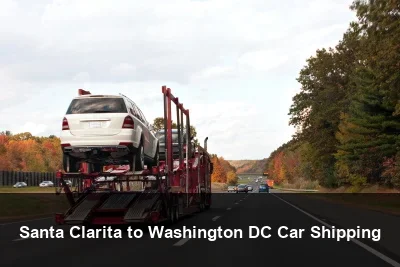
When to Ship Your Car from Santa Clarita to Washington DC
This corridor has a pronounced early-summer rate spike driven by military PCS orders from Joint Base Andrews and Joint Base Myer-Henderson Hall, typically running May through July. A secondary spike hits in August when university students ship vehicles for the new academic year. Winter transit through the Appalachians introduces weather risk from November through March. For detail on winter shipping risks on long-haul corridors, see https://california.auto-transport-shipping.com/articles/auto-transport-challenges-during-the-winter.html. Spring and fall offer the best combination of competitive rates and clean weather windows.
Spring Window (March–April)
March and April offer a brief rate-friendly window before PCS season drives demand. Weather through the Appalachians is improving but can still deliver late-season snow in March. If your move isn't tied to a military or academic deadline, booking in this window often gets you a lower rate and faster dispatch than the summer rush that follows. Transit risk from weather is moderate and declining through April.
Military PCS Season (May–July)
The single largest demand driver on this corridor is military Permanent Change of Station orders. Joint Base Andrews and Joint Base Myer-Henderson Hall both generate high vehicle volume in this window, and those orders are date-driven — service members have to move by a specific date. Book at least 3 to 4 weeks ahead if your timeline falls in this period. Rates climb noticeably from late May through early July, and carrier availability tightens.
University Move-In (August)
Georgetown University, American University, and George Washington University all open in late August, pulling student vehicles from California into the DC metro. This overlaps with the tail end of PCS season, making early-to-mid August one of the most competitive booking windows of the year. If you're shipping for a student, book in July to lock in a rate before the August surge hits. Dispatch windows can stretch to 5 to 7 days during peak.
Winter Transit Risk (November–March)
The Appalachian stretch on I-81 through Virginia and West Virginia carries real winter weather risk. Ice and snow between Roanoke and Winchester can prompt temporary carrier holds of 12 to 48 hours. Overall transit can stretch to 10 to 12 days in January and February. Rates are typically lower in winter, but build buffer time into any move with a firm arrival deadline. Open transport continues through winter — it is not suspended.
Fall Shoulder Season (September–October)
After the August university surge, fall is the second-best window to ship on this corridor. Demand moderates, rates ease, and Appalachian weather is generally clear through October. Carriers are running regularly in both directions and dispatch times tighten up. If you have scheduling flexibility, September and October consistently offer strong availability and competitive pricing without the volatility of summer or the weather risk of winter.
How to Choose a Santa Clarita to Washington DC Car Shipping Company
Getting multiple quotes is step one — knowing what to look for in those quotes matters just as much. Our guide on how to select a car shipping company covers the full process. Here are the six things that matter most:
FMCSA Registration
Every carrier or broker must hold a valid MC number. Verify any company at FMCSA SAFER before you book.
Proof of Insurance
Ask for a current certificate of insurance. Open carriers typically carry $100,000–$250,000 per load; enclosed commonly $500,000 or more. Learn what auto transport insurance covers.
All-In Pricing
Your quote should be a final number with no fees added after booking. Know the difference between brokers and carriers and confirm what the quote covers before you agree.
Bill of Lading
A complete Bill of Lading is filled out at pickup and delivery. Our Bill of Lading guide explains what to check. Never sign an incomplete one.
Real Reviews
Check Google and the BBB. Look at how they handled complaints and damage claims — that tells you more than a five-star average from happy customers.
Route Experience
A carrier who runs the Santa Clarita to Washington DC lane regularly has pattern knowledge that a one-off driver doesn't. They know that the Newhall Pass pickup requires arriving before midday to avoid backing up against the SR-14 afternoon commute. They know Barstow is the last reliable multi-truck fueling stop before the long I-40 Mojave crossing, and that the Albuquerque I-25 junction is the smart reroute if I-40 has a weather event east of Flagstaff. They know to check road conditions on I-81 through the Shenandoah Valley before committing to that final leg in winter, and that the Springfield I-495 interchange — not the District itself — is the right staging point for Northern Virginia and DC deliveries. That accumulated route knowledge reduces surprises and keeps your vehicle on schedule.
Santa Clarita to Washington DC Car Shipping — FAQ
How much does it cost to ship a car from Santa Clarita to Washington DC?
For a standard sedan on open transport, expect a range of roughly $1,100 to $1,500 depending on the time of year, current fuel prices, and how quickly you need the vehicle picked up. SUVs and trucks run $1,200 to $1,700. Enclosed transport adds approximately 40 to 60 percent to those figures. Rates spike in May through July during military PCS season and again in August for university move-in. Booking 2 to 3 weeks out and keeping your schedule flexible by a day or two on both ends will get you the most competitive quote on this corridor.
How long does Santa Clarita to Washington DC car shipping take?
Standard transit runs 7 to 10 days after carrier pickup. The driving distance is approximately 2,672 miles, which takes a carrier 4 to 5 driving days under federal hours-of-service rules. Add 1 to 3 business days for dispatch — the time between booking and actual pickup — and you reach the 7 to 10 day total. Winter months can push that to 10 to 12 days if weather in the Appalachians causes a hold. If you need faster service, expedited dispatch is available and reduces the pickup window to 1 business day or less.
Is my car insured during transport from Santa Clarita to Washington DC?
Every federally licensed carrier is required to carry cargo liability insurance, and your vehicle is covered under that policy for the duration of transit. Before pickup, document your vehicle's condition thoroughly — photograph all four sides, the roof, and the undercarriage — and confirm that condition matches what's recorded on the Bill of Lading. Do not sign the delivery Bill of Lading if there is new damage present without noting the damage in writing first. For a full breakdown of how transport insurance works, see https://california.auto-transport-shipping.com/articles/understanding-auto-transport-insurance.html. If you do need to file a claim, the process is explained at https://california.auto-transport-shipping.com/articles/how-to-file-a-claim-for-vehicle-damage-during-transport.html.
Should I choose open or enclosed transport for this route?
Open transport is appropriate for the vast majority of vehicles shipped on this corridor. The route crosses the Mojave Desert and the Appalachian Mountains, both of which introduce normal road exposure, but open carriers handle these conditions routinely. Choose enclosed if you're shipping a classic car, a high-value exotic, or a vehicle where paint condition is a specific concern — the Appalachian stretch in winter can mean road salt spray if any precipitation hits. Enclosed adds cost but provides full weather and debris protection end to end. For a detailed comparison of both options, see https://california.auto-transport-shipping.com/articles/open-vs-enclosed-auto-transport-pros-and-cons.html.
Do I have to be present at pickup and delivery?
You or an authorized representative must be present at both pickup and delivery to sign the Bill of Lading. This document is your legal record of vehicle condition at the start of transport and your confirmation of condition at delivery. If you cannot be present personally, a trusted adult — a family member, colleague, or property manager — can act on your behalf. Make sure that person knows to inspect the vehicle carefully and not sign if new damage is present. For more on what the Bill of Lading covers and why it matters, see https://california.auto-transport-shipping.com/articles/california-auto-transport-bill-of-lading-information.html.
Does military PCS status affect pricing or scheduling on this route?
Yes, in two ways. First, PCS season — primarily May through July — is the highest-demand window on this corridor because Joint Base Andrews in Prince George's County and Joint Base Myer-Henderson Hall in Arlington generate a large volume of orders simultaneously. That demand concentration pushes rates up and tightens carrier availability. Second, if you're an active-duty service member with official PCS orders, some carriers and brokers offer a modest discount as a courtesy — ask directly when requesting a quote. Book as early as your orders allow to avoid the worst of the summer rate spike.
What happens if winter weather delays my shipment through the Appalachians?
Between November and March, the I-81 corridor through Virginia and West Virginia is the most weather-sensitive section of this route. Ice and snow can prompt carriers to hold for road clearance, typically 12 to 48 hours. That is a normal, safety-driven decision and not a breach of your transport agreement. Build buffer time into any winter shipment — if you have a hard deadline at the DC end, communicate it at booking and consider whether expedited service is worth the added cost to reduce pickup delay at the California end. Most winter shipments still complete within 10 to 12 days.
Can I ship personal items in my car during transport from Santa Clarita to Washington DC?
Carriers are not licensed to transport household goods — only the vehicle itself. Most carriers permit a limited amount of personal items in the trunk, typically up to 100 pounds, stored below window level so they don't obstruct the driver's view or add visible load. Items left in the car are not covered by the carrier's cargo insurance policy. Do not leave valuables, electronics, or irreplaceable documents in the vehicle. Remove aftermarket accessories that could shift or fall during transit. If you're shipping significant belongings alongside the car, use a licensed household goods mover for those items separately.
Ready to Ship Your Car from Santa Clarita to Washington DC?
One form gets you up to 10 free quotes from licensed, insured carriers. Compare costs and transit times and book the best deal for your schedule.