

Santa Clarita to Tulsa Car Shipping Route
From Santa Clarita, carriers enter the national highway network quickly via the I-5/SR-14 interchange in Valencia, one of the most carrier-accessible points in the northern San Fernando Valley. The primary routing runs I-5 south to I-10 east, or directly via SR-14 northeast to U.S. 395 and into I-40 at Barstow — both are proven carrier paths across the Mojave Desert before climbing into the Texas Panhandle and then cutting north through Oklahoma to Tulsa. The total drive distance is roughly 1,421 miles, a two-day run for a commercial driver. Shipping eliminates that mileage from your personal vehicle entirely. For a full breakdown of cost and wear savings, see https://california.auto-transport-shipping.com/articles/benefits-of-auto-transport-service-vs-driving-yourself.html.
Tulsa's inbound vehicle demand is anchored by several concrete demand drivers. Tulsa International Airport is a major logistics hub, and the Port of Catoosa — the westernmost inland port in the U.S. — supports heavy industrial employment. Major employers including ONEOK, Williams Companies, American Airlines maintenance operations, and Northrop Grumman's Tulsa facility generate steady corporate relocation traffic. The University of Tulsa and Oral Roberts University both add student shipments in August and January. Seasonally, winter weather across the Texas Panhandle and Oklahoma can introduce transit variability from November through February, and summer heat through the Mojave requires confirming your carrier uses sun-shielded transport for temperature-sensitive vehicles. Before booking, review https://california.auto-transport-shipping.com/articles/auto-transport-mistakes-to-avoid.html to avoid the most common errors on long-haul moves.
Santa Clarita to Tulsa Car Shipping Rates
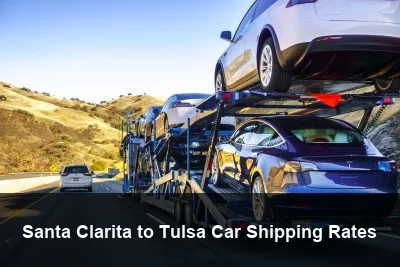
Rates on the Santa Clarita to Tulsa corridor are shaped by distance — at 1,421 miles this falls firmly in the long-haul tier — plus fuel costs along the I-40 corridor, and seasonal demand spikes in late summer when student and military PCS moves peak. Winter weather across Oklahoma can add a modest premium for carriers managing storm detours. Current diesel pricing directly affects your quote; for an explanation of how fuel costs flow into your rate, see https://california.auto-transport-shipping.com/articles/how-gas-prices-impact-california-auto-transport-fees.html. Standard sedans typically run lower per-mile costs than SUVs or pickups due to carrier deck space calculations.
What affects the cost of Santa Clarita to Tulsa car shipping:
- Vehicle type and size — larger vehicles take more carrier space; aftermarket additions like lift kits, oversized mirrors, or roof accessories can add fees
- Open vs. enclosed transport — open is lower cost with stronger carrier availability; enclosed protects against weather, debris, and road conditions
- Standard vs. expedited pickup — expedited prioritizes your vehicle for the next available dispatch, typically at a $100–$300 premium
- Time of year — peak demand seasons drive rates higher; off-peak windows offer the most competitive pricing
- Fuel costs — diesel prices affect carrier rates; longer routes are more sensitive to fuel price swings
- Vehicle condition — non-running vehicles require special loading equipment and cost more to ship
| Vehicle Type | Open Car Shipping (Est.) | Enclosed Car Shipping (Est.) |
|---|---|---|
| Sedan | $950 – $1,350 | $1,700 – $2,300 |
| SUV / Crossover | $1,100 – $1,600 | $1,950 – $2,700 |
| Pickup Truck | $1,100 – $1,650 | $1,950 – $2,750 |
| Minivan | $1,100 – $1,600 | $1,950 – $2,700 |
| Luxury / Classic Car | $1,300 – $1,900 | $2,200 – $3,000 |
| Non-Running Vehicle | Add $200–350 | Add $200–350 |
* Estimated ranges based on recent Santa Clarita to Tulsa shipments. Actual rate depends on vehicle, locations, booking date, and current fuel costs. Use the form on this page to compare real quotes from licensed carriers.
Open vs. Enclosed: What This Route's Conditions Actually Require
Open transport is the practical choice for most vehicles on this corridor. The route through the Mojave and across Oklahoma's plains is flat and highway-dominated — road debris risk is low, and the bulk of mileage is interstate. Enclosed transport makes sense if you're shipping a classic car, a vehicle with a finished show restoration, or anything with a factory MSRP above $80,000. The Mojave leg in summer produces sustained heat but not the kind of grit exposure that damages paint on modern clearcoat finishes. Budget the enclosed premium — typically 40 to 60 percent above open rates — only if your vehicle's condition or value genuinely warrants it.
How Long Does Santa Clarita to Tulsa Car Shipping Take?
Standard transit time for Santa Clarita to Tulsa runs four to six business days under normal conditions. Carriers departing the Valencia staging area can cover the 1,421 miles in two driver days, but commercial transport schedules account for multi-stop loading, required rest periods, and delivery windows at the destination. Santa Clarita's strong carrier access at I-5/SR-14 means dispatch typically happens within one to two business days of order placement. If your move is time-sensitive, expedited single-vehicle transport can compress that window significantly — see https://california.auto-transport-shipping.com/articles/california-expedited-car-shipping-fast-cost.html for current options and pricing on fast-dispatch service.
| Service Type | Typical Transit | Pickup Window | Best For |
|---|---|---|---|
| Open — Standard | 4–6 days | 2–5 business days | Best value; most common choice on this route |
| Open — Expedited | 2–4 days | 1–2 business days | Firm arrival date; faster dispatch window |
| Enclosed — Standard | 4–6 days | 3–7 business days | Luxury, classic, or modified vehicles |
| Enclosed — Expedited | 2–4 days | 1–3 business days | High-value vehicles on a firm delivery deadline |
** Winter months — November through February — are the primary delay risk on this route. Ice and snow events across the Texas Panhandle near Amarillo and through eastern Oklahoma can force carriers to hold position for 12 to 48 hours. If your delivery window is firm, book early and discuss weather contingency with your dispatcher before committing to a hard delivery date.
Santa Clarita to Tulsa — Route & Logistics
Carriers serving this route depart Santa Clarita via the I-5/SR-14 interchange in Valencia, which feeds directly into two viable long-haul paths: I-5 south to I-10 east toward Phoenix and then I-40, or SR-14 northeast to U.S. 395 south to I-40 at Barstow. Both merge onto I-40 east through Albuquerque and Amarillo before transitioning to I-44 northeast through Oklahoma City and into Tulsa, covering 1,421 miles of predominantly interstate highway.
Key Corridor Waypoints
- Valencia, CA (I-5/SR-14 Interchange) This interchange is the primary carrier staging and load point for Santa Clarita shipments. The interchange sits at roughly 1,200 feet elevation and gives carriers direct access to both the southbound I-5 corridor toward Los Angeles and the SR-14 northeast toward the Mojave. Most multi-car haulers pick up here or in adjacent Newhall rather than navigating deeper into residential subdivisions.
- Barstow, CA (I-40 Junction) Barstow is the desert gateway and a critical junction where SR-58 and I-15 traffic consolidates onto I-40 east. At roughly 2,100 feet elevation, it's a common overnight rest stop and fuel point for carriers. Summer temperatures exceed 110°F here regularly, making early morning departures standard for drivers managing heat load on open carriers.
- Albuquerque, NM (I-40/I-25 Interchange) Albuquerque sits at 5,312 feet elevation and marks the route's highest sustained plateau crossing. The I-40/I-25 interchange is a major commercial truck hub with fuel, inspection, and weigh stations. Carriers often stage here for a second-driver handoff or overnight rest. State-required vehicle inspections at the New Mexico port of entry east of Gallup are standard procedure on this corridor.
- Amarillo, TX (I-40 Corridor, Texas Panhandle) Amarillo is the primary weather checkpoint on this route. At 3,600 feet elevation on the exposed Texas Panhandle, it's where winter ice storms most frequently halt carrier movement. Carriers check road conditions here before continuing northeast. It's also a common fuel stop given the extended open-highway stretch between Albuquerque and Oklahoma City with limited urban services.
- Oklahoma City, OK (I-40/I-44 Junction) Oklahoma City is where I-40 transitions to I-44 northeast toward Tulsa, roughly 100 miles from the destination. This interchange is a significant commercial logistics hub, and carriers frequently confirm delivery appointments and coordinate with Tulsa customers from here. Tinker Air Force Base, adjacent to OKC, also generates military vehicle shipments that share this corridor.
- Tulsa, OK (Delivery Zone) Tulsa's major arterials — US-75, I-244, and the I-44 spur — give carriers solid access to most residential and commercial delivery zones. Midtown and south Tulsa neighborhoods are fully accessible by standard multi-car hauler. The Pearl District and some downtown blocks have tighter clearances; carriers may stage nearby on wider commercial streets and complete the final drop on a shorter local route.
Pickup & Delivery Access
- Pickup Access in Santa Clarita Santa Clarita's suburban grid — Newhall, Saugus, and Canyon Country — is fully accessible by standard multi-car haulers. Wide arterials like Bouquet Canyon Road, Soledad Canyon Road, and McBean Parkway allow door-adjacent pickup in most neighborhoods. The I-5/SR-14 interchange area in Valencia offers large commercial lots suitable for carrier staging if your street has overhead obstruction from trees or power lines. Confirm your address in advance and the dispatcher will identify the closest accessible meet point.
- Delivery Access in Tulsa Most of Tulsa is accessible by standard open carrier. South Tulsa and east Tulsa residential neighborhoods have wide streets and clear overhead clearance. Midtown Tulsa is generally accessible but some older neighborhoods near the University of Tulsa have mature tree canopy that limits overhead clearance — carriers may stage on an adjacent arterial. Downtown Tulsa delivery on multi-car haulers is uncommon; a nearby commercial lot or the carrier's local terminal is the typical handoff point for high-density addresses.
- Nearby Pickup Locations Carriers picking up in Santa Clarita regularly extend service to Newhall, Saugus, and Canyon Country. Call 1‑800‑590‑6492 to confirm door-to-door availability at your address.
Open vs. Enclosed Car Shipping: Santa Clarita to Tulsa
Both options use licensed, insured carriers and deliver door to door. For a full breakdown, read the pros and cons of open vs. enclosed car shipping.
Open Car Shipping
Most Popular- Lower cost — the practical choice for most vehicles
- More carriers available on this corridor
- Faster dispatch from booking to pickup
- Works well for sedans, SUVs, trucks, and minivans
- Vehicle rides on an open multi-car carrier
- Cargo insurance required on all licensed carriers
Estimated cost: $950 – $1,650
Enclosed Car Shipping
Premium Protection- Full protection from weather, debris, and road grime
- Best for luxury, exotic, and classic vehicles
- Recommended for low-clearance and custom-built cars
- Wheel-net or soft-tie systems prevent contact damage
- Higher cargo coverage — commonly $500,000 per load
- White-glove handling by experienced operators
Estimated cost: $1,700 – $2,750
Not sure which is right for your vehicle? Call 1-800-590-6492 and we'll point you in the right direction. Also worth reading: the top 10 questions to ask any car shipping company before you commit.
How to Prepare Your Car for Shipping to Tulsa
A little prep before pickup protects you if there's ever a dispute about your vehicle's condition. This checklist is from our full guide on preparing your car for transport:
- Remove all personal belongings from the interior and trunk
- Leave only a quarter tank of fuel — enough to load and unload
- Take date-stamped photos of the full exterior and interior
- Remove or disable toll transponders (FasTrak, E-ZPass, etc.)
- Retract or remove roof racks, spoilers, antennas, and bike mounts
- Make sure the battery is charged and tires are properly inflated
- Tell the carrier about any existing leaks or mechanical issues
- Deactivate the car alarm before the carrier arrives
- Write down the mileage on the Bill of Lading at pickup
- Fold in side mirrors if the vehicle is wider than standard
Personal items: Most carriers won't cover belongings left in the car. Read the full rules on shipping personal items in your vehicle. Also review our Bill of Lading guide so you know exactly what to check at pickup and delivery.
When to Ship Your Car from Santa Clarita to Tulsa
This corridor follows a predictable seasonal pricing and availability pattern. Summer — June through August — is peak demand driven by military PCS orders, university move-ins at OU, OSU, TU, and ORU, and corporate relocations timed to the school calendar. Winter brings reduced demand but weather-related risk through the Texas Panhandle and Oklahoma. For a detailed breakdown of winter shipping considerations on this route, see https://california.auto-transport-shipping.com/articles/auto-transport-challenges-during-the-winter.html. Spring and fall offer the best combination of competitive pricing and low weather risk.
Spring (March – May)
Spring is the best pricing window on this corridor. Weather through the Mojave, New Mexico, and Texas Panhandle is stable, ice risk drops sharply after mid-March, and carrier availability is high. Corporate relocation demand begins building in April. If you have flexibility in your move date, booking in March or April typically returns lower rates and shorter dispatch times than the summer peak that follows.
Summer Peak (June – August)
June through August is the highest-demand period. Military PCS orders from bases including Fort Sill in Oklahoma and Edwards Air Force Base in California drive significant vehicle movement. University move-ins at the University of Tulsa and Oral Roberts University add further demand in late July and August. Book at least two to three weeks ahead during this window. Rates run 10 to 20 percent above annual averages during peak weeks.
Fall (September – November)
September and October are the second-best pricing window. Demand falls off after the summer rush, carrier supply is stable, and weather through Oklahoma remains manageable until late November. University return traffic after Thanksgiving adds a brief demand bump in mid-November. If your vehicle is inbound to Tulsa for a fall semester or new job start, confirm booking before October to avoid any Thanksgiving-week dispatch delays.
Winter (December – February)
Winter is the lowest-demand, highest-risk season on this corridor. Ice storms across the Texas Panhandle and Oklahoma can delay transit by one to three days. Rates are typically at their annual low, but transit time estimates should be padded accordingly. If your vehicle has low ground clearance or you're shipping an unprotected classic, consider enclosed transport during this window. Review the full winter shipping guide at https://california.auto-transport-shipping.com/articles/auto-transport-challenges-during-the-winter.html before committing to a winter move date.
Military PCS Season (May – August)
PCS orders tied to Edwards Air Force Base, Vandenberg Space Force Base, and Fort Irwin in California — combined with inbound orders to Tinker Air Force Base near Oklahoma City and Fort Sill in Lawton — create a structured military demand surge from May through August. Carriers who run this lane regularly are familiar with the documentation requirements for military moves. If you're on PCS orders, book as soon as orders are in hand. This window books up faster than the general public peak.
How to Choose a Santa Clarita to Tulsa Car Shipping Company
Getting multiple quotes is step one — knowing what to look for in those quotes matters just as much. Our guide on how to select a car shipping company covers the full process. Here are the six things that matter most:
FMCSA Registration
Every carrier or broker must hold a valid MC number. Verify any company at FMCSA SAFER before you book.
Proof of Insurance
Ask for a current certificate of insurance. Open carriers typically carry $100,000–$250,000 per load; enclosed commonly $500,000 or more. Learn what auto transport insurance covers.
All-In Pricing
Your quote should be a final number with no fees added after booking. Know the difference between brokers and carriers and confirm what the quote covers before you agree.
Bill of Lading
A complete Bill of Lading is filled out at pickup and delivery. Our Bill of Lading guide explains what to check. Never sign an incomplete one.
Real Reviews
Check Google and the BBB. Look at how they handled complaints and damage claims — that tells you more than a five-star average from happy customers.
Route Experience
A carrier who runs Santa Clarita to Tulsa regularly knows things that a general freight carrier doesn't. They know that SR-14 northeast through Palmdale is often faster than the I-5 south option during Los Angeles morning traffic, and that the Cajon Pass alternative routing adds elevation but avoids the I-10 Palm Springs bottleneck on Fridays. They know that the New Mexico weigh station east of Gallup runs slow on Monday mornings, and that the I-40 stretch through the Texas Panhandle between Amarillo and Oklahoma City has almost no services for 200 miles — so fueling in Amarillo is non-negotiable. In Tulsa, they know that the 71st Street corridor in south Tulsa is far easier for multi-car delivery access than attempting anything near the IDL downtown. These details translate to on-time delivery and fewer surprises on your end.
Santa Clarita to Tulsa Car Shipping — FAQ
How much does it cost to ship a car from Santa Clarita to Tulsa?
On the Santa Clarita to Tulsa corridor — 1,421 miles — open transport for a standard sedan typically runs between $950 and $1,350 depending on the time of year, current diesel prices, and how quickly you need pickup. SUVs, trucks, and larger vehicles run higher due to deck space requirements. Enclosed transport adds roughly 40 to 60 percent above open pricing. Summer peak months and military PCS season push rates toward the upper end of the range. The most accurate figure comes from a live quote based on your vehicle type, pickup zip, and target dates. Use the form on this page to get a current number.
How long does Santa Clarita to Tulsa car shipping take?
Expect four to six business days under normal conditions. The driving distance is 1,421 miles — a two-day commercial run — but multi-stop loading, mandatory driver rest periods, and delivery scheduling at the destination add time. Dispatch from Santa Clarita typically happens within one to two business days of booking, given the strong carrier access at the I-5/SR-14 interchange. Winter weather across the Texas Panhandle and Oklahoma can add one to three days in December through February. If you have a firm delivery deadline, expedited single-vehicle transport is available — see https://california.auto-transport-shipping.com/articles/california-expedited-car-shipping-fast-cost.html for current options.
Is my car insured during transport from Santa Clarita to Tulsa?
Yes. Every federally licensed carrier is required by the FMCSA to carry cargo insurance that covers your vehicle during transport. Before your vehicle is loaded, you and the driver will complete a Bill of Lading — a condition report that documents existing damage. At delivery, you inspect the vehicle against that same report. If new damage appears, you note it on the delivery Bill of Lading before signing. For a full explanation of how carrier insurance works and what it covers, see https://california.auto-transport-shipping.com/articles/understanding-auto-transport-insurance.html. If you ever need to file a claim, the process is outlined at https://california.auto-transport-shipping.com/articles/how-to-file-a-claim-for-vehicle-damage-during-transport.html.
Should I choose open or enclosed transport for this route?
Open transport is appropriate for the large majority of vehicles shipped on this corridor. The route is predominantly interstate highway through the Mojave, New Mexico, and Oklahoma — debris risk is low, and modern clearcoat finishes handle open-air transport without issue across these roads. Enclosed transport is worth the premium if your vehicle is a classic, a show car, a low-production exotic, or carries a value above $80,000. Summer heat in the Mojave desert is an additional consideration for vehicles with heat-sensitive interiors or non-factory paint. For a full side-by-side breakdown, see https://california.auto-transport-shipping.com/articles/open-vs-enclosed-auto-transport-pros-and-cons.html.
Do I have to be present at pickup and delivery?
You or an authorized representative must be present at both pickup and delivery to inspect the vehicle and sign the Bill of Lading. The Bill of Lading is the legal condition record for your shipment — it's what protects you if a damage claim is needed later. If you cannot be present personally, a trusted adult can act on your behalf. That person should understand what they're signing and conduct a thorough walkthrough of the vehicle at both ends. For full information on what the Bill of Lading covers and your rights under it, see https://california.auto-transport-shipping.com/articles/california-auto-transport-bill-of-lading-information.html.
Does winter weather on this route cause significant delays?
Yes, winter is the primary delay risk on the Santa Clarita to Tulsa corridor. The stretch through the Texas Panhandle near Amarillo is exposed and flat — ice storms can shut down I-40 for 12 to 48 hours with little warning. Eastern Oklahoma also sees winter storm activity that can slow final delivery. If you're shipping between November and February, build buffer time into your schedule and avoid committing to a hard delivery date. Rates are typically lower in winter, but the time trade-off is real. See https://california.auto-transport-shipping.com/articles/auto-transport-challenges-during-the-winter.html for a full breakdown of how winter conditions affect long-haul transport.
Is this route commonly used for military PCS vehicle shipments?
Yes. The Santa Clarita to Tulsa corridor sees significant military PCS volume because it connects Southern California installations — Edwards Air Force Base, Fort Irwin, and Vandenberg Space Force Base — with Oklahoma military destinations including Tinker Air Force Base near Oklahoma City and Fort Sill in Lawton. Carriers who run this lane regularly are experienced with the paperwork and timing requirements of military moves. If you're shipping on PCS orders, book as soon as your orders are finalized. Peak PCS season runs May through August, and carrier availability tightens significantly during that window.
What should I know about shipping through the Mojave Desert on this route?
The Mojave Desert leg — from the Santa Clarita area through Barstow and across to Needles or into New Mexico — is the most environmentally demanding section of this corridor. Summer temperatures regularly exceed 110°F in the desert floor zones. For open transport, this means potential heat buildup in dark-colored interiors, and any fluids or items left inside the vehicle should be removed beforehand. Enclosed transport provides insulation but is not a temperature-controlled environment. Carriers experienced on this route depart the Mojave section in early morning hours during summer to manage heat load. Confirm your carrier's summer desert protocol when booking.
Ready to Ship Your Car from Santa Clarita to Tulsa?
One form gets you up to 10 free quotes from licensed, insured carriers. Compare costs and transit times and book the best deal for your schedule.