

San Diego to Austin Car Shipping Route
San Diego to Austin covers approximately 1,458 miles. Carriers typically access the route via I-8 east out of San Diego, transitioning to I-10 east through El Centro and into Arizona, then picking up I-10 all the way through Tucson, Las Cruces, and El Paso before continuing northeast into Texas. Some carriers exit I-10 at Junction, TX and take I-27 or US-290 northeast into Austin. The Sonoran Desert and West Texas terrain are consistent and largely flat — conditions that allow for steady transit. Shipping your vehicle rather than driving it saves wear, fuel, and time. See a full comparison at https://california.auto-transport-shipping.com/articles/benefits-of-auto-transport-service-vs-driving-yourself.html
Demand out of San Diego is shaped by several concentrated driver pools. Naval Base San Diego — the largest surface warfare base in the world — generates year-round PCS orders that move vehicles to and from Texas installations including Fort Cavazos and Joint Base San Antonio. The University of Texas at Austin and Texas State University in San Marcos pull student relocations each August. Major Austin employers including Tesla, Apple, Amazon, and Oracle draw tech workers from San Diego's biotech and defense corridors. Seasonally, summer heat across West Texas and the Chihuahuan Desert can affect open-carrier scheduling. Review common shipping mistakes before you book at https://california.auto-transport-shipping.com/articles/auto-transport-mistakes-to-avoid.html
San Diego to Austin Car Shipping Rates
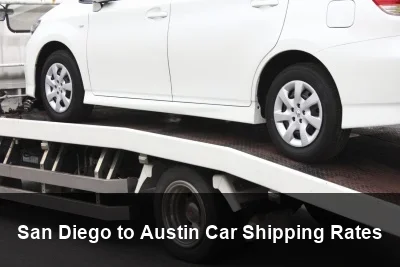
At roughly 1,458 miles, San Diego to Austin sits in a mid-to-long distance tier where per-mile rates typically run lower than shorter hauls but total costs are still significant. Summer demand — driven by military PCS cycles, student moves, and corporate relocations — pushes rates up from May through August. Fuel costs on this I-8 and I-10 corridor directly affect carrier pricing; for a detailed breakdown see https://california.auto-transport-shipping.com/articles/how-gas-prices-impact-california-auto-transport-fees.html. Booking two or more weeks out gives you better rate access than last-minute requests.
What affects the cost of San Diego to Austin car shipping:
- Vehicle type and size — larger vehicles take more carrier space; aftermarket additions like lift kits, oversized mirrors, or roof accessories can add fees
- Open vs. enclosed transport — open is lower cost with stronger carrier availability; enclosed protects against weather, debris, and road conditions
- Standard vs. expedited pickup — expedited prioritizes your vehicle for the next available dispatch, typically at a $100–$300 premium
- Time of year — peak demand seasons drive rates higher; off-peak windows offer the most competitive pricing
- Fuel costs — diesel prices affect carrier rates; longer routes are more sensitive to fuel price swings
- Vehicle condition — non-running vehicles require special loading equipment and cost more to ship
| Vehicle Type | Open Car Shipping (Est.) | Enclosed Car Shipping (Est.) |
|---|---|---|
| Sedan | $950 – $1,350 | $1,700 – $2,300 |
| SUV / Crossover | $1,100 – $1,600 | $1,950 – $2,700 |
| Pickup Truck | $1,100 – $1,650 | $1,950 – $2,750 |
| Minivan | $1,100 – $1,600 | $1,950 – $2,700 |
| Luxury / Classic Car | $1,300 – $1,900 | $2,200 – $3,000 |
| Non-Running Vehicle | Add $200–350 | Add $200–350 |
* Estimated ranges based on recent San Diego to Austin shipments. Actual rate depends on vehicle, locations, booking date, and current fuel costs. Use the form on this page to compare real quotes from licensed carriers.
Open vs. Enclosed: What This Route's Conditions Actually Require
Open transport is the practical choice for most vehicles on this corridor. The I-8 and I-10 through the Sonoran and Chihuahuan deserts are paved, well-maintained interstates with no significant debris hazards under normal conditions. Road grime and dust accumulate, but nothing beyond what a standard wash removes. Enclosed transport makes sense if you're moving a classic car, luxury vehicle, or anything where paint condition matters above cost. Enclosed rates run 40–60% higher on this lane. If your vehicle is a daily driver in good condition, open is the sensible call.
How Long Does San Diego to Austin Car Shipping Take?
San Diego to Austin typically transits in 4 to 6 days under normal conditions. The driving distance is approximately 1,458 miles, and carriers running this lane regularly can cover it in two to three driving days accounting for hours-of-service regulations. San Diego is a well-serviced origin — carrier availability is generally good, with dispatch windows of 1 to 3 business days after booking. If your timeline is compressed, expedited options exist; details on cost and availability are at https://california.auto-transport-shipping.com/articles/california-expedited-car-shipping-fast-cost.html
| Service Type | Typical Transit | Pickup Window | Best For |
|---|---|---|---|
| Open — Standard | 4–6 days | 2–5 business days | Best value; most common choice on this route |
| Open — Expedited | 2–4 days | 1–2 business days | Firm arrival date; faster dispatch window |
| Enclosed — Standard | 4–6 days | 3–7 business days | Luxury, classic, or modified vehicles |
| Enclosed — Expedited | 2–4 days | 1–3 business days | High-value vehicles on a firm delivery deadline |
** Summer heat across the Sonoran Desert and West Texas can cause carriers to adjust driving schedules — some prefer overnight runs through Arizona and New Mexico in July and August. Border inspection checkpoints near El Paso can add a few hours. Either factor can extend transit by one day during peak summer months.
San Diego to Austin — Route & Logistics
Carriers serving this route depart San Diego via I-8 east or I-15 north to I-215 to connect with I-10. The primary corridor is I-10 east for the bulk of the distance through Arizona, New Mexico, and West Texas before transitioning toward Austin. Total route mileage from San Diego to Austin is approximately 1,458 miles across four states.
Key Corridor Waypoints
- El Centro, CA First significant staging point roughly 115 miles east of San Diego. Carriers clearing the Imperial Valley often pause here for fuel and vehicle checks before crossing into Arizona. The elevation drops to below sea level through the Salton Sea basin before this point — carriers monitor tire pressure and cooling systems given the extreme heat in summer months.
- Yuma, AZ Interstate junction where I-8 meets US-95, approximately 170 miles from San Diego. Yuma is a common overnight stop for carriers on this lane. A USDA agricultural inspection station operates here — carriers must be cleared before proceeding east. The station occasionally causes short delays during high-volume seasonal periods but rarely adds more than 30 minutes.
- Tucson, AZ Major interchange where I-8 ends and merges with I-10 east. Carriers transition here to the primary long-haul corridor that carries them all the way to Texas. Tucson also functions as a secondary staging city where carriers may add or drop vehicles depending on their manifest. Elevation here is approximately 2,400 feet — a notable rise after the desert floor.
- El Paso, TX / Las Cruces, NM The I-10 corridor passes through Las Cruces, NM before entering El Paso, TX — the first Texas city on route. This is a critical inspection and fuel point. El Paso sits at roughly 3,800 feet elevation. Carriers often spend a layover night here. The border proximity means CBP checkpoints are active; transport trucks are waved through routinely but inspections can cause brief delays.
- Junction, TX Where carriers on the Austin-bound route typically split from I-10 onto US-83 north or continue on I-10 to I-27 northeast toward the Hill Country. Junction sits at the edge of the Edwards Plateau at about 1,740 feet. Some carriers prefer US-290 east from here directly into Austin, depending on their delivery schedule and any remaining stops.
- Austin, TX Final delivery point. Carriers approach Austin from the west via US-290 or from the south via I-35. The urban core along Congress Avenue and East Austin has narrow streets and active construction zones that can limit large carrier maneuverability. Most deliveries in central Austin use staging areas near major surface streets or parking lots for final transfer.
Pickup & Delivery Access
- Pickup Access in San Diego San Diego's grid layout and wide arterial streets support door-to-door pickup across most residential and commercial neighborhoods including Mission Valley, North Park, Kearny Mesa, and Chula Vista. Military installations — Naval Base San Diego, MCAS Miramar — require civilians and carriers to use designated meet points near base gates. Escondido, El Cajon, and La Mesa are accessible without staging.
- Delivery Access in Austin Austin carriers deliver door-to-door across most suburban areas including Round Rock, Cedar Park, Pflugerville, and South Austin. Central Austin's downtown core — particularly 2nd Street, Red River, and East 6th — has limited large-vehicle access due to construction, parked vehicles, and lane restrictions. Customers in those zones typically stage deliveries in adjacent parking areas or side streets one block off the main route.
- Nearby Pickup Locations Carriers picking up in San Diego regularly extend service to Chula Vista, El Cajon, Escondido, and La Mesa. Call 1‑800‑590‑6492 to confirm door-to-door availability at your address.
Open vs. Enclosed Car Shipping: San Diego to Austin
Both options use licensed, insured carriers and deliver door to door. For a full breakdown, read the pros and cons of open vs. enclosed car shipping.
Open Car Shipping
Most Popular- Lower cost — the practical choice for most vehicles
- More carriers available on this corridor
- Faster dispatch from booking to pickup
- Works well for sedans, SUVs, trucks, and minivans
- Vehicle rides on an open multi-car carrier
- Cargo insurance required on all licensed carriers
Estimated cost: $950 – $1,650
Enclosed Car Shipping
Premium Protection- Full protection from weather, debris, and road grime
- Best for luxury, exotic, and classic vehicles
- Recommended for low-clearance and custom-built cars
- Wheel-net or soft-tie systems prevent contact damage
- Higher cargo coverage — commonly $500,000 per load
- White-glove handling by experienced operators
Estimated cost: $1,700 – $2,750
Not sure which is right for your vehicle? Call 1-800-590-6492 and we'll point you in the right direction. Also worth reading: the top 10 questions to ask any car shipping company before you commit.
How to Prepare Your Car for Shipping to Austin
A little prep before pickup protects you if there's ever a dispute about your vehicle's condition. This checklist is from our full guide on preparing your car for transport:
- Remove all personal belongings from the interior and trunk
- Leave only a quarter tank of fuel — enough to load and unload
- Take date-stamped photos of the full exterior and interior
- Remove or disable toll transponders (FasTrak, E-ZPass, etc.)
- Retract or remove roof racks, spoilers, antennas, and bike mounts
- Make sure the battery is charged and tires are properly inflated
- Tell the carrier about any existing leaks or mechanical issues
- Deactivate the car alarm before the carrier arrives
- Write down the mileage on the Bill of Lading at pickup
- Fold in side mirrors if the vehicle is wider than standard
Personal items: Most carriers won't cover belongings left in the car. Read the full rules on shipping personal items in your vehicle. Also review our Bill of Lading guide so you know exactly what to check at pickup and delivery.
When to Ship Your Car from San Diego to Austin
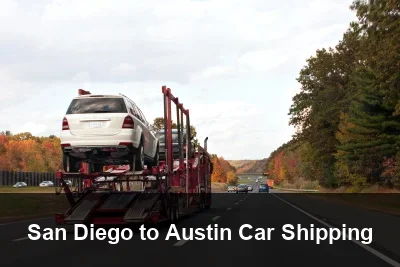
This route runs year-round at solid volume, but two distinct peaks shape pricing: the military PCS window from May through August, and the late-summer student move tied to UT Austin's fall semester. Winter months are generally mild across I-10, though El Paso and the Davis Mountains can see ice or snow events in January and February. For a detailed look at winter transport risks, see https://california.auto-transport-shipping.com/articles/auto-transport-challenges-during-the-winter.html. Booking outside peak windows typically yields lower rates and faster dispatch.
Spring PCS Season (March–May)
Military PCS orders issued in spring start pushing vehicle shipments out of Naval Base San Diego and Camp Pendleton toward Texas installations including Fort Cavazos near Killeen and Joint Base San Antonio. Carrier capacity tightens as this demand builds. Book at least two to three weeks ahead if your orders are in this window. Rates begin climbing in late March and peak by mid-May.
Peak Summer Demand (June–August)
The busiest period on this lane. Military PCS volumes are at maximum, UT Austin freshmen and transfer students are relocating, and corporate moves from San Diego's tech and biotech employers to Austin's Apple and Tesla campuses concentrate heavily in this window. Rates are highest from late June through August. Heat across the Sonoran Desert can also prompt carriers to run overnight legs, which may extend transit by a day.
Fall Shoulder Season (September–November)
Demand softens after the summer rush and student move-in is complete. Rates typically drop in September and remain moderate through November. Weather conditions across I-10 are generally ideal during this window — desert temperatures cool, and winter storms are not yet a factor at elevation. This is one of the better periods for cost-effective, on-schedule transport on this corridor.
Winter Weather Window (December–February)
The I-10 corridor through El Paso and the Davis Mountains can experience ice and snow in January and February, occasionally forcing carrier delays of one to two days. These events are infrequent but real. If you're shipping in winter, build a buffer into your delivery expectation. Consult https://california.auto-transport-shipping.com/articles/auto-transport-challenges-during-the-winter.html for how winter conditions affect planning and insurance documentation.
Student Relocation Window (Late July–Mid-August)
UT Austin's fall semester start drives a concentrated wave of student vehicle shipments from California each August. San Diego-area students at UCSD, SDSU, and USD who are transferring or graduating and heading to Austin for graduate programs, jobs, or UT enrollment contribute to this spike. Carrier space fills quickly in early August. Booking by mid-July secures better rates and scheduling.
How to Choose a San Diego to Austin Car Shipping Company
Getting multiple quotes is step one — knowing what to look for in those quotes matters just as much. Our guide on how to select a car shipping company covers the full process. Here are the six things that matter most:
FMCSA Registration
Every carrier or broker must hold a valid MC number. Verify any company at FMCSA SAFER before you book.
Proof of Insurance
Ask for a current certificate of insurance. Open carriers typically carry $100,000–$250,000 per load; enclosed commonly $500,000 or more. Learn what auto transport insurance covers.
All-In Pricing
Your quote should be a final number with no fees added after booking. Know the difference between brokers and carriers and confirm what the quote covers before you agree.
Bill of Lading
A complete Bill of Lading is filled out at pickup and delivery. Our Bill of Lading guide explains what to check. Never sign an incomplete one.
Real Reviews
Check Google and the BBB. Look at how they handled complaints and damage claims — that tells you more than a five-star average from happy customers.
Route Experience
A carrier who regularly runs San Diego to Austin knows that the USDA checkpoint in Yuma moves faster in the early morning before peak commercial traffic, and that the I-10 rest areas east of Tucson are the most reliable overnight staging points between San Diego and El Paso. They know to expect CBP activity near the I-10/US-54 interchange in El Paso without losing significant time, and that summer afternoon heat on the stretch between Lordsburg, NM and Van Horn, TX pushes tire temperatures into ranges that warrant slower speeds and extended rest cycles. On the Austin end, they know that I-35 through downtown during morning rush is a load-delivery trap and that US-290 west into the city runs cleaner. This operational knowledge is the difference between a 4-day transit and a 6-day one.
San Diego to Austin Car Shipping — FAQ
How much does it cost to ship a car from San Diego to Austin?
Shipping a standard sedan from San Diego to Austin on an open carrier typically runs between $950 and $1,350 under normal demand conditions. Larger vehicles like SUVs, trucks, and minivans cost more due to the space they occupy on the carrier. Enclosed transport runs roughly 40–60% higher than open on this lane. Rates increase significantly during peak military PCS season from May through August and during the late July to mid-August student relocation window. Booking two or more weeks in advance typically yields the best available rate. Last-minute bookings within 72 hours of a needed pickup carry a premium. Fuel price fluctuations on the I-10 corridor also affect carrier pricing; see https://california.auto-transport-shipping.com/articles/how-gas-prices-impact-california-auto-transport-fees.html for how that works.
How long does San Diego to Austin car shipping take?
Most shipments on this lane complete in 4 to 6 days once the carrier picks up your vehicle. The driving distance is approximately 1,458 miles. Carriers operating under federal hours-of-service limits typically cover this in two to three driving days. Add one to two days for dispatch — the time between booking confirmation and actual pickup — and you get a realistic 4 to 6 day window from booking to delivery. Summer heat can push carriers toward overnight runs across the Sonoran Desert and West Texas, occasionally adding a day. Winter ice events near El Paso are infrequent but can also cause a one-day delay. If your timeline is tight, expedited options are available; review them at https://california.auto-transport-shipping.com/articles/california-expedited-car-shipping-fast-cost.html
Is my car insured during transport from San Diego to Austin?
Every licensed carrier is required to carry cargo insurance that covers your vehicle while it's on their truck. Before your vehicle is loaded, a Bill of Lading is completed documenting its pre-transport condition — photograph your vehicle thoroughly from all angles before pickup so you have independent documentation as well. If damage occurs during transport, your claim is filed against the carrier's cargo policy. The process works best when the condition report at pickup and delivery are both accurate and signed. For a full explanation of how coverage works and what it does and doesn't include, read https://california.auto-transport-shipping.com/articles/understanding-auto-transport-insurance.html. If you do need to file a claim, the process is outlined at https://california.auto-transport-shipping.com/articles/how-to-file-a-claim-for-vehicle-damage-during-transport.html
Should I choose open or enclosed transport for San Diego to Austin?
Open transport is the right choice for most vehicles on this route. The I-8 and I-10 corridor through Arizona and West Texas is paved interstate the entire way, with no off-road or unpaved segments. Your vehicle will accumulate road dust and grime — especially across the Chihuahuan Desert section between El Paso and Junction, TX — but nothing that a car wash won't resolve. Enclosed transport makes sense if you're shipping a classic car, a high-value exotic, a fully restored vehicle, or anything where minor cosmetic exposure isn't acceptable. You'll pay 40–60% more for enclosed, so the decision should be deliberate. For a detailed comparison of both options on routes like this one, see https://california.auto-transport-shipping.com/articles/open-vs-enclosed-auto-transport-pros-and-cons.html
Do I have to be present at pickup and delivery?
You do not have to be physically present, but someone you authorize needs to be. At pickup, that person signs the Bill of Lading confirming the pre-transport condition of the vehicle and hands over the keys. At delivery, your authorized contact receives the vehicle, inspects it against the original condition report, and signs off. If you're a military member with PCS orders and you won't be available, a family member, friend, or power of attorney can handle both ends. Never release your vehicle without a signed Bill of Lading, and never accept delivery without comparing the vehicle's condition to the original inspection report. For full details on what the Bill of Lading covers and why it matters, see https://california.auto-transport-shipping.com/articles/california-auto-transport-bill-of-lading-information.html
Can I ship my car from a military base in San Diego?
Carriers cannot enter active military installations to pick up your vehicle. If you're stationed at Naval Base San Diego, MCAS Miramar, or Naval Amphibious Base Coronado, you'll need to arrange a civilian meet point near the base — typically a public parking area, retail lot, or street location just outside the gate. This is standard procedure and carriers familiar with San Diego know the common staging spots near each base. When booking, specify that you're picking up near a military installation so the carrier can plan accordingly. The handoff is straightforward as long as the meet point is confirmed in advance and both parties know the exact location.
Does the summer heat along I-10 damage vehicles during open transport?
No — vehicles on open carriers are designed to handle ambient temperature and weather exposure. The heat itself doesn't cause damage to your vehicle. Where heat becomes a factor is in carrier operations: extremely high temperatures between Yuma and El Paso in July and August can lead carriers to shift to early morning or overnight driving to manage tire and engine temperatures on their rigs. This can extend transit by one day in peak summer. Your vehicle arrives with dust and road film from the desert crossing regardless of season — that's expected and easily remedied. If you have a vehicle with a specific heat sensitivity concern, such as a classic car with an older cooling system, note that when booking.
What's the best time of year to ship from San Diego to Austin for the lowest rates?
September through November is typically the most favorable pricing window on this corridor. The military PCS peak has ended, students have completed their August relocations, and winter weather hasn't yet become a scheduling factor. Carrier availability is good and demand pressure is lower, which translates to more competitive quotes and faster dispatch. February and early March can also offer reasonable rates before the spring PCS cycle ramps up. Avoid booking in June, July, or August unless your timeline requires it — rates during those months are the highest of the year on this lane, and carrier space books out further in advance.
Ready to Ship Your Car from San Diego to Austin?
One form gets you up to 10 free quotes from licensed, insured carriers. Compare costs and transit times and book the best deal for your schedule.