

Sacramento to Virginia Beach Car Shipping Route
Sacramento to Virginia Beach covers approximately 2,854 miles depending on the carrier's chosen line. Most carriers depart Sacramento via I-80 east toward Reno, then connect south through Utah and Colorado, or run I-80 the full stretch through the midwest before dropping south on I-95 to the Hampton Roads region. Some carriers take the southern variant, picking up I-10 through Arizona and Texas before heading north on I-95. Either way, the drive takes a professional carrier between 7 and 10 days. Shipping versus driving that distance yourself is a significant cost and logistics comparison — see the breakdown at https://california.auto-transport-shipping.com/articles/benefits-of-auto-transport-service-vs-driving-yourself.html before committing.
Virginia Beach demand is anchored by the military. Naval Air Station Oceana operates within the city limits, and Joint Expeditionary Base Little Creek and Naval Station Norfolk sit within 15 miles. PCS orders generate year-round vehicle shipments in both directions. Old Dominion University and Regent University bring student vehicle demand in August and May. Major civilian employers include Sentara Health, the city government, and a large defense contracting sector that cycles personnel regularly. Winter on the I-80 corridor through Nevada and Utah can introduce weather delays between December and March — plan buffer days accordingly. Before you book, review https://california.auto-transport-shipping.com/articles/auto-transport-mistakes-to-avoid.html to avoid common errors on long-haul routes.
Sacramento to Virginia Beach Car Shipping Rates
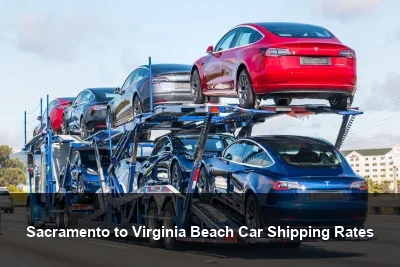
Rates on the Sacramento–Virginia Beach corridor are shaped by the 2,854-mile distance, which puts it firmly in the long-haul tier. Fuel costs have a direct impact on what you're quoted — carriers price this route with elevated fuel exposure built in. See how fuel pricing feeds into your quote at https://california.auto-transport-shipping.com/articles/how-gas-prices-impact-california-auto-transport-fees.html. Military PCS season (May through August) tightens carrier capacity from Northern California east and pushes rates up. Winter weather premiums apply when the I-80 mountain passage through Nevada and Utah is in storm cycles.
What affects the cost of Sacramento to Virginia Beach car shipping:
- Vehicle type and size — larger vehicles take more carrier space; aftermarket additions like lift kits, oversized mirrors, or roof accessories can add fees
- Open vs. enclosed transport — open is lower cost with stronger carrier availability; enclosed protects against weather, debris, and road conditions
- Standard vs. expedited pickup — expedited prioritizes your vehicle for the next available dispatch, typically at a $100–$300 premium
- Time of year — peak demand seasons drive rates higher; off-peak windows offer the most competitive pricing
- Fuel costs — diesel prices affect carrier rates; longer routes are more sensitive to fuel price swings
- Vehicle condition — non-running vehicles require special loading equipment and cost more to ship
| Vehicle Type | Open Car Shipping (Est.) | Enclosed Car Shipping (Est.) |
|---|---|---|
| Sedan | $1,100 – $1,600 | $1,900 – $2,700 |
| SUV / Crossover | $1,300 – $1,900 | $2,200 – $3,100 |
| Pickup Truck | $1,300 – $1,950 | $2,200 – $3,150 |
| Minivan | $1,300 – $1,900 | $2,200 – $3,100 |
| Luxury / Classic Car | $1,550 – $2,200 | $2,600 – $3,600 |
| Non-Running Vehicle | Add $200–400 | Add $200–400 |
* Estimated ranges based on recent Sacramento to Virginia Beach shipments. Actual rate depends on vehicle, locations, booking date, and current fuel costs. Use the form on this page to compare real quotes from licensed carriers.
Open vs. Enclosed on the Sacramento to Virginia Beach Run
Open transport covers the overwhelming majority of vehicles shipped on this corridor without issue. The route runs through desert terrain in Nevada and Utah and interstate corridors across the mid-South — road debris and weather exposure are real but routine, and open carriers handle both. If you're moving a collector car, a leased luxury vehicle subject to return-condition clauses, or a classic that's already in show condition, enclosed is the call. Expect enclosed rates to run 40–60% above open on this mileage tier. For a standard daily driver, open is the practical and cost-effective choice.
How Long Does Sacramento to Virginia Beach Car Shipping Take?
Standard transit from Sacramento to Virginia Beach runs 7 to 10 business days from the time your vehicle is loaded. Sacramento's position on I-5 and I-80 means carriers load here without detours, which shortens the front end of the estimate. The 2,854-mile drive requires multiple driving days under federal HOS rules, so plan accordingly. Expedited options exist if your delivery window is fixed — see https://california.auto-transport-shipping.com/articles/california-expedited-car-shipping-fast-cost.html for details on what expedited service costs and whether the premium is justified for your timeline.
| Service Type | Typical Transit | Pickup Window | Best For |
|---|---|---|---|
| Open — Standard | 7–10 days | 2–5 business days | Best value; most common choice on this route |
| Open — Expedited | 5–7 days | 1–2 business days | Firm arrival date; faster dispatch window |
| Enclosed — Standard | 7–10 days | 4–8 business days | Luxury, classic, or modified vehicles |
| Enclosed — Expedited | 5–7 days | 2–4 business days | High-value vehicles on a firm delivery deadline |
** Winter weather through the Sierra Nevada on I-80 and across the Utah plateau can add 1 to 3 days to transit between December and March. Carriers may hold vehicles at staging points in Reno or Salt Lake City during active storm systems rather than risk mountain passes. Build that buffer into your planning window if you're shipping in winter months.
Sacramento to Virginia Beach — Route & Logistics
Carriers access the Sacramento metro via I-5 from the south and north and I-80 from the west. From Sacramento, the primary eastbound routing runs I-80 through the Sierra Nevada and into Reno, NV. From there carriers continue east across Nevada and Utah or pick up a southern arc through I-15 before connecting to I-70 or I-40 and ultimately I-95 north into Virginia Beach. Total carrier drive time typically spans 3 to 4 driving legs.
Key Corridor Waypoints
- Reno, NV First major staging point after the Sierra Nevada crossing on I-80. Elevation drops from over 7,000 feet at Donner Summit to 4,500 feet in Reno. Carriers often pause here to inspect loads after mountain grades, refuel, and log rest time. In winter, Reno is a common hold point when Donner Pass closes or chains are required on I-80.
- Salt Lake City, UT A central staging hub on the I-80/I-15 corridor. Carriers connecting from I-80 may drop south on I-15 here toward I-70 or continue east on I-80 through Wyoming. Salt Lake City sits at 4,226 feet elevation. In winter, the Wasatch Front approach can see significant snow delays. Many carriers running Southern California loads connect through here as a fuel and rest stop.
- Denver, CO Key midpoint for carriers running I-70 east toward Kansas City. Denver sits at 5,280 feet and serves as a natural overnight stop on the corridor. From here, carriers move onto the high plains on I-70, which is flat and fast. Denver is also a load-matching point where drivers may consolidate or swap delivery assignments before continuing east.
- St. Louis, MO Major interstate junction where I-70 meets I-64 and I-55. Carriers heading to Virginia Beach typically stay on I-64 east from St. Louis, which runs directly to the Hampton Roads area. This stretch through Kentucky, West Virginia, and Virginia includes mountain grades in the Appalachians. St. Louis is a common overnight and vehicle inspection point at the halfway mark.
- Charleston, WV I-64 runs through Charleston in the heart of Appalachian terrain. The grades and curves through West Virginia require careful load management for multi-car carriers. Carriers verify strapping and load balance here before the final push east. Elevation ranges from 600 to over 3,000 feet across this stretch. Weather-related slowdowns occur here in winter and early spring.
- Virginia Beach, VA I-64 delivers carriers into the Hampton Roads metro, where the route terminates near the oceanfront. The area's dense military presence means carriers are familiar with delivery logistics near NAS Oceana and the Joint Expeditionary Base corridor. Residential neighborhoods near the base can involve narrow streets, requiring staging at nearby parking lots or commercial areas for final delivery positioning.
Pickup & Delivery Access
- Pickup Access in Sacramento Sacramento's grid layout makes carrier access straightforward across most of the city. Wide arterials near I-5 and I-80 on-ramps — particularly in North Sacramento, Rancho Cordova, and the downtown commercial zones — handle standard and oversized car carriers without issue. Carriers active on I-80 east service this area daily. Residential streets in Midtown or East Sacramento with parking constraints may require a nearby meet point at a shopping center or surface lot.
- Delivery Access in Virginia Beach Virginia Beach is largely accessible for standard car carriers throughout the main commercial corridors along Virginia Beach Boulevard and Dam Neck Road near NAS Oceana. Tightly packed resort-area streets near the oceanfront and narrow residential streets in the Oceanfront and Seatack neighborhoods can restrict 75-foot carrier movement. Carriers often stage at nearby parking lots, the Convention Center area, or a commercial strip for final delivery on those blocks. Confirm your exact address with the driver in advance.
- Nearby Pickup Locations Carriers picking up in Sacramento regularly extend service to Elk Grove, Roseville, Folsom, and Davis. Call 1‑800‑590‑6492 to confirm door-to-door availability at your address.
Open vs. Enclosed Car Shipping: Sacramento to Virginia Beach
Both options use licensed, insured carriers and deliver door to door. For a full breakdown, read the pros and cons of open vs. enclosed car shipping.
Open Car Shipping
Most Popular- Lower cost — the practical choice for most vehicles
- More carriers available on this corridor
- Faster dispatch from booking to pickup
- Works well for sedans, SUVs, trucks, and minivans
- Vehicle rides on an open multi-car carrier
- Cargo insurance required on all licensed carriers
Estimated cost: $1,100 – $1,950
Enclosed Car Shipping
Premium Protection- Full protection from weather, debris, and road grime
- Best for luxury, exotic, and classic vehicles
- Recommended for low-clearance and custom-built cars
- Wheel-net or soft-tie systems prevent contact damage
- Higher cargo coverage — commonly $500,000 per load
- White-glove handling by experienced operators
Estimated cost: $1,900 – $3,150
Not sure which is right for your vehicle? Call 1-800-590-6492 and we'll point you in the right direction. Also worth reading: the top 10 questions to ask any car shipping company before you commit.
How to Prepare Your Car for Shipping to Virginia Beach
A little prep before pickup protects you if there's ever a dispute about your vehicle's condition. This checklist is from our full guide on preparing your car for transport:
- Remove all personal belongings from the interior and trunk
- Leave only a quarter tank of fuel — enough to load and unload
- Take date-stamped photos of the full exterior and interior
- Remove or disable toll transponders (FasTrak, E-ZPass, etc.)
- Retract or remove roof racks, spoilers, antennas, and bike mounts
- Make sure the battery is charged and tires are properly inflated
- Tell the carrier about any existing leaks or mechanical issues
- Deactivate the car alarm before the carrier arrives
- Write down the mileage on the Bill of Lading at pickup
- Fold in side mirrors if the vehicle is wider than standard
Personal items: Most carriers won't cover belongings left in the car. Read the full rules on shipping personal items in your vehicle. Also review our Bill of Lading guide so you know exactly what to check at pickup and delivery.
When to Ship Your Car from Sacramento to Virginia Beach
This corridor moves year-round, but pricing and transit time vary meaningfully by season. Military PCS season from May through August drives the highest demand and tightest carrier capacity. Winter months bring weather exposure on I-80 through Nevada and on I-64 through West Virginia. Summer rates are typically the highest of the year. For a detailed breakdown of winter-specific risks on this route, see https://california.auto-transport-shipping.com/articles/auto-transport-challenges-during-the-winter.html before booking a December through February shipment.
Spring (March–May)
Late spring is the front edge of PCS season. Military families receive orders in April and May, and Virginia Beach inbound demand starts climbing fast. Book early if you're moving in late May — carrier capacity on this corridor tightens quickly as military volume stacks up. Weather across the full route improves through April, reducing the mountain-pass delays common in winter months. Rates begin rising in May.
Summer PCS Season (June–August)
Peak season on this route is driven almost entirely by military PCS orders tied to NAS Oceana, Joint Expeditionary Base Little Creek, and Naval Station Norfolk. This is the highest-demand, highest-rate window of the year. Carriers are busy, pickup windows can stretch, and rates reflect that. If your orders are already in hand, book transport as soon as possible — 2 to 3 weeks of lead time is not excessive during this window.
Fall (September–November)
Demand eases after Labor Day and rates typically soften from their summer peak. Fall is one of the better booking windows on this corridor — carrier availability is higher, transit times are more predictable, and weather across Nevada and the Appalachians is generally clear through October. November starts introducing mountain weather risk on I-80 and I-64. If you're flexible, late September through mid-October is historically the best value window.
Winter (December–February)
I-80 through the Sierra Nevada and the Nevada desert and I-64 through West Virginia both carry weather risk in winter. Carriers may be rerouted or delayed at staging points in Reno or Salt Lake City during storm systems. Transit times can extend by 1 to 3 days. Rates may include weather-related premiums. Review https://california.auto-transport-shipping.com/articles/auto-transport-challenges-during-the-winter.html before booking a winter shipment on this corridor.
Student Move Season (August & May)
Old Dominion University and Regent University both generate meaningful inbound vehicle demand in late August and outbound demand in May. This overlaps with military PCS season in August, compounding the capacity crunch. Students moving from Northern California to Virginia Beach should treat this corridor like military season: book early, confirm pickup dates, and don't assume a last-minute booking will land the dates you need.
How to Choose a Sacramento to Virginia Beach Car Shipping Company
Getting multiple quotes is step one — knowing what to look for in those quotes matters just as much. Our guide on how to select a car shipping company covers the full process. Here are the six things that matter most:
FMCSA Registration
Every carrier or broker must hold a valid MC number. Verify any company at FMCSA SAFER before you book.
Proof of Insurance
Ask for a current certificate of insurance. Open carriers typically carry $100,000–$250,000 per load; enclosed commonly $500,000 or more. Learn what auto transport insurance covers.
All-In Pricing
Your quote should be a final number with no fees added after booking. Know the difference between brokers and carriers and confirm what the quote covers before you agree.
Bill of Lading
A complete Bill of Lading is filled out at pickup and delivery. Our Bill of Lading guide explains what to check. Never sign an incomplete one.
Real Reviews
Check Google and the BBB. Look at how they handled complaints and damage claims — that tells you more than a five-star average from happy customers.
Route Experience
A carrier who runs Sacramento to Hampton Roads regularly knows the Sierra Nevada windows — specifically that Donner Pass can close on short notice between November and March and that Reno is the logical hold point, not a cause for alarm. They know I-64 through West Virginia narrows to two lanes in sections through the New River Gorge corridor and that load management through those grades matters. They know NAS Oceana and Little Creek have gate protocols that affect delivery timing, and that staging near Kempsville or along Virginia Beach Boulevard makes more logistical sense than forcing a full-length carrier into the resort district. They've pre-cleared their truck for California agricultural inspection checkpoints on I-5 and I-80 and know the fastest fueling points on I-70 across Kansas. That route-specific experience shortens your transit and reduces the chance of a surprised driver calling you from the Appalachians.
Sacramento to Virginia Beach Car Shipping — FAQ
How much does it cost to ship a car from Sacramento to Virginia Beach?
Rates on this corridor typically range from $1,100 to $1,700 for open transport on a standard sedan or SUV, and $1,800 to $2,700 for enclosed. The 2,854-mile distance puts this in the long-haul tier, where fuel cost is a significant factor in your quote. Military PCS season from June through August pushes rates to the top of those ranges or above as carrier capacity tightens. Winter shipments may carry weather premiums. The best way to get a number specific to your vehicle, dates, and transport type is to fill out the quote form — rates shift with carrier availability and fuel pricing at the time of booking.
How long does Sacramento to Virginia Beach car shipping take?
Standard transit on this route runs 7 to 10 business days from the time your vehicle is loaded onto the carrier. Sacramento's access to I-80 and I-5 means carriers load here without repositioning delays, which helps the front end of that estimate. The 2,854 miles require multiple driving days under federal Hours of Service rules, so there's a hard floor on how fast this moves even under ideal conditions. Winter weather on the Sierra Nevada, the Nevada desert, or the Appalachian stretch of I-64 can add 1 to 3 days. If your timeline is fixed, expedited service is available — see https://california.auto-transport-shipping.com/articles/california-expedited-car-shipping-fast-cost.html for details.
Is my car insured during transport from Sacramento to Virginia Beach?
Yes. Every licensed carrier operating in interstate commerce is required by federal law to maintain cargo insurance covering vehicles on their load. That coverage applies from the time your vehicle is loaded in Sacramento until it's delivered in Virginia Beach. Before your vehicle is loaded, you and the driver will complete a Bill of Lading documenting the vehicle's pre-transport condition. At delivery, compare the vehicle's condition against that document carefully. If damage occurred in transit, the Bill of Lading is your primary evidence. For a full breakdown of how coverage works, see https://california.auto-transport-shipping.com/articles/understanding-auto-transport-insurance.html, and if you need to file a claim, start here: https://california.auto-transport-shipping.com/articles/how-to-file-a-claim-for-vehicle-damage-during-transport.html.
Should I choose open or enclosed transport for this route?
For most vehicles making this trip, open transport is the right call. The Sacramento to Virginia Beach corridor runs through desert terrain in Nevada and Utah and interstate highways across the South — exposure is routine and manageable. Carriers on open trailers handle this route daily without incident. Enclosed makes sense if you're shipping a collector car, a high-value exotic, a leased vehicle subject to strict return conditions, or a vehicle in show condition. Enclosed rates on this corridor typically run 40 to 60 percent above open. For a detailed comparison of what each service level covers, see https://california.auto-transport-shipping.com/articles/open-vs-enclosed-auto-transport-pros-and-cons.html.
Do I have to be present at pickup and delivery?
You or a designated representative needs to be present at both pickup in Sacramento and delivery in Virginia Beach. At pickup, someone must sign the Bill of Lading, which documents the vehicle's condition before transport. At delivery, someone must inspect the vehicle and sign off confirming its arrival condition. If you can't be there yourself, a trusted person with authority to sign on your behalf is acceptable — just make sure they know to conduct a thorough inspection before signing. For a full explanation of what the Bill of Lading covers and why it matters, see https://california.auto-transport-shipping.com/articles/california-auto-transport-bill-of-lading-information.html.
Does military PCS status affect how I should book transport to Virginia Beach?
Yes, meaningfully. Virginia Beach is one of the highest-density military transport destinations in the country, with NAS Oceana, Joint Expeditionary Base Little Creek, and Naval Station Norfolk all generating PCS-driven vehicle shipments. If your orders have you reporting between June and August, you're booking during the peak demand window on this corridor. Carrier capacity tightens fast during that window and rates reflect it. Book as soon as your orders are confirmed — 3 to 4 weeks of lead time is reasonable in the off-season, but during PCS peak you want more runway than that. Also confirm whether your orders include a government travel entitlement that covers vehicle shipment before you pay out of pocket.
What weather risks should I know about on the Sacramento to Virginia Beach route?
Two stretches carry real weather risk depending on the time of year. First, I-80 through the Sierra Nevada east of Sacramento can close or require chains between November and March during active storm systems. Carriers may hold at staging points in Reno rather than risk the pass, which adds time. Second, I-64 through West Virginia crosses the Appalachians, where winter weather, fog, and ice are seasonal factors through March. Both stretches are well-managed by experienced carriers, but they're real variables in your transit window. If you're booking between December and February, build in buffer days and plan for the possibility of a 1 to 3 day delay.
Can carriers access residential addresses in Virginia Beach, or do I need to meet them somewhere?
Most of Virginia Beach is accessible to standard car carriers. The commercial corridors along Virginia Beach Boulevard, Dam Neck Road, and the inland residential grid near NAS Oceana present no unusual access problems. The exception is the resort district near the oceanfront, where street widths and parking restrictions can make it difficult for a 75-foot multi-car carrier to maneuver. If your delivery address is in that zone, your driver will likely ask to meet at a nearby staging point — a shopping center, hotel parking lot, or commercial strip. Coordinate your exact address with the driver a day or two before delivery so you're not surprised.
Ready to Ship Your Car from Sacramento to Virginia Beach?
One form gets you up to 10 free quotes from licensed, insured carriers. Compare costs and transit times and book the best deal for your schedule.