

Rancho Cucamonga to Raleigh Car Shipping Route
From Rancho Cucamonga, carriers access the route via SR-210 west to I-15 south, merging onto I-10 east toward Phoenix. The primary corridor then follows I-10 through New Mexico and into Texas before transitioning to I-20 east or I-40 east depending on the carrier's preferred run through Oklahoma and Tennessee. Total driving distance is approximately 2,587 miles. That distance alone illustrates why professional transport makes financial sense — fuel, two or more nights of lodging, food, and wear on your vehicle add up fast on a solo drive. Review the full cost comparison at https://california.auto-transport-shipping.com/articles/benefits-of-auto-transport-service-vs-driving-yourself.html before you decide.
Raleigh sits in Wake County at around 315 feet elevation — no mountain crossings on the final approach, which simplifies winter delivery. Demand into the city is anchored by NC State University, Duke University, the University of North Carolina at Chapel Hill, and the Research Triangle Park, one of the largest research campuses in the country, housing employers like IBM, Cisco, and Biogen. Fort Liberty, about 60 miles southwest, generates heavy military PCS shipments. Seasonal weather is the main transit variable — I-40 through the Appalachian foothills can see ice events from November through March. Understand how weather affects scheduling at https://california.auto-transport-shipping.com/articles/auto-transport-mistakes-to-avoid.html before you book.
Rancho Cucamonga to Raleigh Car Shipping Rates
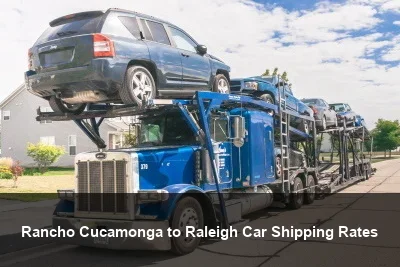
At 2,587 miles, this route falls into the long-haul pricing tier where base rates reflect fuel burn, driver hours, and carrier availability across two time zones. Summer PCS military orders push demand — and therefore rates — upward from May through August. Winter months can add a fuel surcharge if I-40 through North Carolina sees ice closures. Current diesel prices directly affect what carriers quote on a run this long; see how fuel costs factor in at https://california.auto-transport-shipping.com/articles/how-gas-prices-impact-california-auto-transport-fees.html.
What affects the cost of Rancho Cucamonga to Raleigh car shipping:
- Vehicle type and size — larger vehicles take more carrier space; aftermarket additions like lift kits, oversized mirrors, or roof accessories can add fees
- Open vs. enclosed transport — open is lower cost with stronger carrier availability; enclosed protects against weather, debris, and road conditions
- Standard vs. expedited pickup — expedited prioritizes your vehicle for the next available dispatch, typically at a $100–$300 premium
- Time of year — peak demand seasons drive rates higher; off-peak windows offer the most competitive pricing
- Fuel costs — diesel prices affect carrier rates; longer routes are more sensitive to fuel price swings
- Vehicle condition — non-running vehicles require special loading equipment and cost more to ship
| Vehicle Type | Open Car Shipping (Est.) | Enclosed Car Shipping (Est.) |
|---|---|---|
| Sedan | $1,100 – $1,600 | $1,900 – $2,700 |
| SUV / Crossover | $1,300 – $1,900 | $2,200 – $3,100 |
| Pickup Truck | $1,300 – $1,950 | $2,200 – $3,150 |
| Minivan | $1,300 – $1,900 | $2,200 – $3,100 |
| Luxury / Classic Car | $1,550 – $2,200 | $2,600 – $3,600 |
| Non-Running Vehicle | Add $200–400 | Add $200–400 |
* Estimated ranges based on recent Rancho Cucamonga to Raleigh shipments. Actual rate depends on vehicle, locations, booking date, and current fuel costs. Use the form on this page to compare real quotes from licensed carriers.
Open vs. Enclosed on the Rancho Cucamonga to Raleigh Run
Open transport covers the vast majority of vehicles shipped on this corridor without issue. The I-10 and I-40 stretches through the desert Southwest carry road debris risk in summer monsoon season, and the Appalachian foothills section of I-40 introduces salt and sand exposure if your delivery falls during a winter weather event in Tennessee or North Carolina. For a daily driver or standard production vehicle, open is the practical choice. For a classic car, exotic, or freshly painted vehicle, enclosed eliminates all of those exposure risks and is worth the premium.
How Long Does Rancho Cucamonga to Raleigh Car Shipping Take?
Standard transit from Rancho Cucamonga to Raleigh runs 7 to 10 business days on open transport. Carriers running I-10 east to I-40 east average roughly 500 miles per day under federal hours-of-service rules, which puts the mechanical drive time at approximately five to six driving days with mandatory rest stops. The Inland Empire has strong carrier density on I-15 and I-10, so dispatch typically happens within one to two business days of order placement. If your delivery window is firm, expedited options exist — see https://california.auto-transport-shipping.com/articles/california-expedited-car-shipping-fast-cost.html for what that costs on a long-haul run.
| Service Type | Typical Transit | Pickup Window | Best For |
|---|---|---|---|
| Open — Standard | 7–10 days | 2–5 business days | Best value; most common choice on this route |
| Open — Expedited | 5–7 days | 1–2 business days | Firm arrival date; faster dispatch window |
| Enclosed — Standard | 7–10 days | 4–8 business days | Luxury, classic, or modified vehicles |
| Enclosed — Expedited | 5–7 days | 2–4 business days | High-value vehicles on a firm delivery deadline |
** Winter ice events on I-40 through the Tennessee and North Carolina mountains — particularly near the Asheville, NC corridor at approximately 2,140 feet — can force carriers to hold or reroute, adding one to three days. Monsoon-season flooding near Phoenix on I-10 in July and August is a secondary delay risk.
Rancho Cucamonga to Raleigh — Route & Logistics
Carriers depart Rancho Cucamonga via SR-210 west to I-15 south, connecting to I-10 east at the Cajon Pass interchange. From there the route runs east through Phoenix, Tucson, El Paso, and into Texas before picking up I-20 or I-40 east toward the Carolinas. The total corridor covers approximately 2,587 miles across six states.
Key Corridor Waypoints
- Ontario / Fontana, CA Carriers staging in the Inland Empire often consolidate loads at yards near Ontario or Fontana before departing. The I-10 and I-15 interchange just south of Rancho Cucamonga is the primary on-ramp to the eastern corridor. This staging area sees heavy outbound volume and is where your vehicle joins a multi-car trailer heading east.
- Phoenix, AZ Phoenix sits approximately 370 miles from Rancho Cucamonga and serves as the first major overnight or driver-change point on the run. Carriers use the I-10 and I-17 interchange area for fuel and inspection stops. Summer temperatures here exceed 110°F, which is why enclosed transport matters for heat-sensitive vehicles crossing Arizona in July or August.
- El Paso, TX El Paso marks the Texas entry point at roughly 3,740 feet elevation. Carriers cross the New Mexico–Texas state line and may conduct a brief DOT inspection stop. From here the route follows I-10 east or angles north to I-20 east depending on the carrier's planned run toward Dallas or Shreveport.
- Dallas / Fort Worth, TX Dallas is the major mid-route hub where carriers frequently swap drivers or pick up additional loads. The I-20 and I-30 interchange funnels cross-country traffic toward the Southeast. Expect a rest stop or driver exchange here. Transit timing from Rancho Cucamonga to Dallas is typically two to three driving days.
- Memphis, TN Memphis connects I-40 east with the final push into the Carolinas. Carriers use the I-40 and I-55 interchange as a fuel and logistical check point. From Memphis, Raleigh is approximately 580 miles — one long driving day or a short day plus a final morning push, depending on hours-of-service remaining.
- Raleigh, NC Raleigh sits at 315 feet elevation with no significant terrain barriers on the final approach from I-40 east. Carriers typically access delivery zones via I-440 (the Raleigh Beltline) to reach residential, university-area, or commercial delivery addresses. The beltline keeps carriers off congested downtown surface streets for most deliveries.
Pickup & Delivery Access
- Pickup Access in Rancho Cucamonga Rancho Cucamonga's street grid is carrier-friendly — wide arterials along Foothill Boulevard, Haven Avenue, and 4th Street allow full-size multi-car haulers to maneuver without difficulty. Residential cul-de-sacs in the northern hillside neighborhoods near the 210 freeway may require you to meet the carrier at a nearby parking lot, shopping center, or church lot on a flat street.
- Delivery Access in Raleigh Most of Raleigh is accessible for standard open carriers via I-440 and I-540. The Glenwood South and Warehouse District neighborhoods near downtown have narrow streets where full-size haulers can't turn around easily — your driver may ask you to meet at a staging point like a shopping center on Capital Boulevard or Wake Forest Road rather than delivering door to door.
- Nearby Pickup Locations Carriers picking up in Rancho Cucamonga regularly extend service to Ontario, Fontana, and Upland. Call 1‑800‑590‑6492 to confirm door-to-door availability at your address.
Open vs. Enclosed Car Shipping: Rancho Cucamonga to Raleigh
Both options use licensed, insured carriers and deliver door to door. For a full breakdown, read the pros and cons of open vs. enclosed car shipping.
Open Car Shipping
Most Popular- Lower cost — the practical choice for most vehicles
- More carriers available on this corridor
- Faster dispatch from booking to pickup
- Works well for sedans, SUVs, trucks, and minivans
- Vehicle rides on an open multi-car carrier
- Cargo insurance required on all licensed carriers
Estimated cost: $1,100 – $1,950
Enclosed Car Shipping
Premium Protection- Full protection from weather, debris, and road grime
- Best for luxury, exotic, and classic vehicles
- Recommended for low-clearance and custom-built cars
- Wheel-net or soft-tie systems prevent contact damage
- Higher cargo coverage — commonly $500,000 per load
- White-glove handling by experienced operators
Estimated cost: $1,900 – $3,150
Not sure which is right for your vehicle? Call 1-800-590-6492 and we'll point you in the right direction. Also worth reading: the top 10 questions to ask any car shipping company before you commit.
How to Prepare Your Car for Shipping to Raleigh
A little prep before pickup protects you if there's ever a dispute about your vehicle's condition. This checklist is from our full guide on preparing your car for transport:
- Remove all personal belongings from the interior and trunk
- Leave only a quarter tank of fuel — enough to load and unload
- Take date-stamped photos of the full exterior and interior
- Remove or disable toll transponders (FasTrak, E-ZPass, etc.)
- Retract or remove roof racks, spoilers, antennas, and bike mounts
- Make sure the battery is charged and tires are properly inflated
- Tell the carrier about any existing leaks or mechanical issues
- Deactivate the car alarm before the carrier arrives
- Write down the mileage on the Bill of Lading at pickup
- Fold in side mirrors if the vehicle is wider than standard
Personal items: Most carriers won't cover belongings left in the car. Read the full rules on shipping personal items in your vehicle. Also review our Bill of Lading guide so you know exactly what to check at pickup and delivery.
When to Ship Your Car from Rancho Cucamonga to Raleigh
This corridor sees its strongest demand from May through August, driven by military PCS orders tied to Fort Liberty and corporate relocation cycles in the Research Triangle. Winter months from November through February are softer on price but carry weather risk on the I-40 mountain segment through Tennessee and North Carolina. Booking early in winter is smart but factor in potential delay days. For a full breakdown of cold-weather transport risks on long-haul routes, see https://california.auto-transport-shipping.com/articles/auto-transport-challenges-during-the-winter.html.
Spring Relocation Season (March–May)
Corporate relocation activity into the Research Triangle ramps up in March and April as companies execute Q1 and Q2 hire start dates. Carrier availability is good and rates are moderate before the summer PCS surge hits. Booking two to three weeks out gives you flexibility on pickup windows. Weather along I-40 through the Appalachians is mostly clear but occasional late-season ice events are possible through mid-March.
Summer Peak — PCS & Relocation (June–August)
This is the busiest window on this corridor. Military families executing PCS orders to and from Fort Liberty account for a measurable share of June and July volume. Corporate moves tied to NC State, Duke, and Research Triangle Park employers also peak now. Rates are at their highest, and carrier slots fill quickly. Book three to four weeks ahead if your move falls in this window to avoid delays and rate increases.
Fall Shoulder Season (September–November)
Demand softens after Labor Day and rates typically drop 8 to 15 percent from summer peaks. This is one of the better windows to ship if your timeline allows it — carrier availability is solid, weather through Arizona and Texas is cooling from summer heat, and the I-40 mountain section is clear before Thanksgiving. NC State and UNC semester schedules generate some student vehicle demand in mid-August and late December.
Winter Weather Risk (December–February)
Lower demand means lower base rates, but the I-40 corridor through the Great Smoky Mountains and into the Asheville, NC area at roughly 2,140 feet elevation can see black ice and snow closures. Carriers may reroute south through Atlanta and I-85 to avoid mountain closures, adding mileage and time. Budget an extra one to three days on your delivery estimate and review winter transport risks at https://california.auto-transport-shipping.com/articles/auto-transport-challenges-during-the-winter.html.
Student Shipping Windows (August & December–January)
NC State University, UNC Chapel Hill, and Duke University each generate student vehicle moves at the start and end of fall semester. Inbound volume to Raleigh peaks in late July and August; outbound picks up in mid-December. If you're shipping a student vehicle, book early for the August window — it overlaps with the military PCS peak and carrier slots go fast on the California-to-Carolinas run.
How to Choose a Rancho Cucamonga to Raleigh Car Shipping Company
Getting multiple quotes is step one — knowing what to look for in those quotes matters just as much. Our guide on how to select a car shipping company covers the full process. Here are the six things that matter most:
FMCSA Registration
Every carrier or broker must hold a valid MC number. Verify any company at FMCSA SAFER before you book.
Proof of Insurance
Ask for a current certificate of insurance. Open carriers typically carry $100,000–$250,000 per load; enclosed commonly $500,000 or more. Learn what auto transport insurance covers.
All-In Pricing
Your quote should be a final number with no fees added after booking. Know the difference between brokers and carriers and confirm what the quote covers before you agree.
Bill of Lading
A complete Bill of Lading is filled out at pickup and delivery. Our Bill of Lading guide explains what to check. Never sign an incomplete one.
Real Reviews
Check Google and the BBB. Look at how they handled complaints and damage claims — that tells you more than a five-star average from happy customers.
Route Experience
A carrier who runs the Rancho Cucamonga to Raleigh corridor regularly knows that I-10 through the Arizona desert demands an early morning departure from Phoenix to beat summer heat that can stress tire pressure and load straps by midday. They know the Cajon Pass grade just north of the I-15 and I-10 interchange gets crosswind advisories that affect high-profile trailers, and they time their El Paso fuel stop to avoid the weigh station queue on I-10 eastbound that backs up mid-morning. On the delivery end, they know to use the I-440 inner beltline to access north Raleigh addresses cleanly, avoiding downtown surface congestion on Wilmington Street and Fayetteville Street where trailer swings are impossible.
Rancho Cucamonga to Raleigh Car Shipping — FAQ
How much does it cost to ship a car from Rancho Cucamonga to Raleigh?
On this 2,587-mile corridor, open transport typically runs between $1,050 and $1,500 for a standard sedan or SUV, depending on when you book and current carrier availability. Enclosed transport runs $1,600 to $2,400 for the same distance. Rates climb 10 to 20 percent during the May through August peak, when military PCS orders and corporate relocation moves into the Research Triangle drive up demand. Booking two to three weeks ahead gives you the most competitive pricing. Diesel fuel costs directly affect long-haul quotes on a run this size — see how that works at https://california.auto-transport-shipping.com/articles/how-gas-prices-impact-california-auto-transport-fees.html.
How long does Rancho Cucamonga to Raleigh car shipping take?
Standard transit on this route runs 7 to 10 business days for open transport. Carriers typically dispatch within one to two business days from the Inland Empire, where I-15 and I-10 carrier frequency is strong. The driving distance of approximately 2,587 miles translates to five to six carrier driving days under federal hours-of-service rules, with mandatory rest stops at Phoenix, Dallas, and Memphis on a typical run. Winter weather on I-40 through the Tennessee and North Carolina mountains can add one to three days. If your delivery window is fixed, expedited options exist — see https://california.auto-transport-shipping.com/articles/california-expedited-car-shipping-fast-cost.html.
Is my car insured during transport from Rancho Cucamonga to Raleigh?
Yes. Licensed carriers are required by federal law to carry cargo insurance, which covers your vehicle while it is loaded on the trailer. Coverage limits and deductible structures vary by carrier, so ask for the certificate of insurance before you sign anything. Your personal auto insurance policy may also provide supplemental coverage during transport — check with your insurer. Before pickup, photograph your vehicle thoroughly from all angles and note every existing scratch or dent on the bill of lading. For a full breakdown of how transport insurance works, see https://california.auto-transport-shipping.com/articles/understanding-auto-transport-insurance.html. If a damage claim becomes necessary, the process is explained at https://california.auto-transport-shipping.com/articles/how-to-file-a-claim-for-vehicle-damage-during-transport.html.
Should I choose open or enclosed transport for this route?
Open transport is the right call for most vehicles on this corridor. The majority of cars shipped from Rancho Cucamonga to Raleigh arrive in the same condition they left. That said, the Arizona desert section of I-10 carries road debris risk in monsoon season (July and August), and the I-40 mountain stretch through Tennessee and North Carolina introduces salt and sand if your shipment moves during a winter weather event. If you're shipping a classic car, luxury vehicle, or a vehicle with fresh paint or bodywork, enclosed transport eliminates all of those exposure risks. See the full comparison at https://california.auto-transport-shipping.com/articles/open-vs-enclosed-auto-transport-pros-and-cons.html.
Do I have to be present at pickup and delivery?
You — or a designated adult you authorize — must be present at both pickup and delivery to sign the bill of lading. At pickup, you and the driver walk the vehicle together, document existing condition, and both sign the inspection report. At delivery, you repeat the inspection and note any new damage before signing. If you can't be there yourself, you can authorize a trusted adult to act on your behalf. Do not sign a blank or incomplete bill of lading under any circumstances. The bill of lading is your primary document if a damage claim becomes necessary — understand what it covers at https://california.auto-transport-shipping.com/articles/california-auto-transport-bill-of-lading-information.html.
Does military PCS affect availability and pricing on this route?
Yes, meaningfully. Fort Liberty (formerly Fort Bragg), located about 60 miles southwest of Raleigh near Fayetteville, NC, is one of the largest military installations in the country. PCS orders tied to Fort Liberty generate a concentrated spike in vehicle transport demand from May through August, which is the same window that California military installations and corporate employers are also moving personnel. During this peak, carrier slots on the Rancho Cucamonga to Raleigh run fill faster and base rates increase. If your PCS orders land in this window, book as early as your reporting date is confirmed — ideally four or more weeks ahead.
How does winter weather on I-40 affect my shipment?
The I-40 corridor through the Great Smoky Mountains and the Asheville, NC area sits at roughly 2,140 feet elevation and is the most weather-sensitive segment on this entire route. Ice storms and snow events between late November and mid-March can prompt carriers to reroute south through Atlanta on I-85 rather than risk a mountain closure. That reroute adds roughly 100 miles and a partial day to your transit. If your delivery window is during winter, build a buffer of one to three extra days into your planning. Full details on how cold weather affects long-haul transport are at https://california.auto-transport-shipping.com/articles/auto-transport-challenges-during-the-winter.html.
Can I ship personal items inside my car during transport?
Carriers are not licensed to transport personal goods — only the vehicle itself. Leaving items inside your car creates liability problems: if cargo shifts and damages the interior, it is not covered by the carrier's cargo insurance. Federal DOT regulations prohibit transporting household goods in a vehicle being shipped on a car hauler. Practically speaking, carriers may also refuse a load or face fines at weigh stations if the vehicle is visibly loaded with personal property. Keep the trunk and interior clear except for a small emergency kit — jumper cables and a spare tire are generally acceptable and expected.
Ready to Ship Your Car from Rancho Cucamonga to Raleigh?
One form gets you up to 10 free quotes from licensed, insured carriers. Compare costs and transit times and book the best deal for your schedule.