

Rancho Cucamonga to Minneapolis Car Shipping Route
The drive from Rancho Cucamonga to Minneapolis covers approximately 1,856 miles. Carriers access the route using SR-210 east to I-15 north, the primary artery through the Inland Empire. From I-15, the route passes through Las Vegas, then transitions to I-70 east through Utah and Colorado or alternatively through I-80 through Wyoming before dropping south on I-90 and I-35 into Minneapolis. The route crosses desert flatlands, the Wasatch Range foothills, high plains, and eventually the Upper Midwest. Shipping your vehicle rather than driving it yourself saves significant wear, fuel cost, and time. Learn more about those savings at https://california.auto-transport-shipping.com/articles/benefits-of-auto-transport-service-vs-driving-yourself.html.
Minneapolis demand is driven by several consistent sources. The University of Minnesota enrolls over 50,000 students, generating spring and fall shipping spikes. Major employers including Target Corporation, UnitedHealth Group, 3M, and Medtronic regularly relocate employees from California. The Twin Cities metro also hosts several Minnesota National Guard installations, including Camp Ripley north of the metro, generating periodic military PCS moves. Seasonally, winter conditions between November and March can slow transit on the Wyoming and South Dakota segments of this corridor. Planning your booking window and understanding the route's weather exposure will protect your vehicle and timeline. Review common errors first at https://california.auto-transport-shipping.com/articles/auto-transport-mistakes-to-avoid.html.
Rancho Cucamonga to Minneapolis Car Shipping Rates
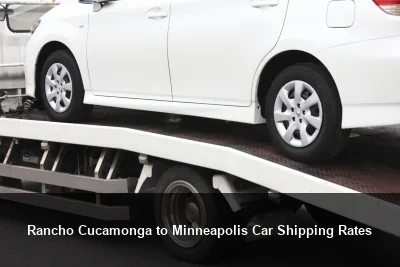
Rates on the Rancho Cucamonga to Minneapolis corridor reflect the 1,856-mile distance, which places this route in the upper-mid tier for transcontinental pricing. Fuel costs are a meaningful variable on a run this long; when diesel prices spike, surcharges apply across all carriers on this corridor. See how fuel affects your quote at https://california.auto-transport-shipping.com/articles/how-gas-prices-impact-california-auto-transport-fees.html. Seasonal demand peaks in May through August push open carrier rates up by 10–20 percent. Winter months can introduce weather surcharges, particularly for the Wyoming and South Dakota mountain and plains segments.
What affects the cost of Rancho Cucamonga to Minneapolis car shipping:
- Vehicle type and size — larger vehicles take more carrier space; aftermarket additions like lift kits, oversized mirrors, or roof accessories can add fees
- Open vs. enclosed transport — open is lower cost with stronger carrier availability; enclosed protects against weather, debris, and road conditions
- Standard vs. expedited pickup — expedited prioritizes your vehicle for the next available dispatch, typically at a $100–$300 premium
- Time of year — peak demand seasons drive rates higher; off-peak windows offer the most competitive pricing
- Fuel costs — diesel prices affect carrier rates; longer routes are more sensitive to fuel price swings
- Vehicle condition — non-running vehicles require special loading equipment and cost more to ship
| Vehicle Type | Open Car Shipping (Est.) | Enclosed Car Shipping (Est.) |
|---|---|---|
| Sedan | $1,100 – $1,600 | $1,900 – $2,700 |
| SUV / Crossover | $1,300 – $1,900 | $2,200 – $3,100 |
| Pickup Truck | $1,300 – $1,950 | $2,200 – $3,150 |
| Minivan | $1,300 – $1,900 | $2,200 – $3,100 |
| Luxury / Classic Car | $1,550 – $2,200 | $2,600 – $3,600 |
| Non-Running Vehicle | Add $200–400 | Add $200–400 |
* Estimated ranges based on recent Rancho Cucamonga to Minneapolis shipments. Actual rate depends on vehicle, locations, booking date, and current fuel costs. Use the form on this page to compare real quotes from licensed carriers.
Open vs. Enclosed Carrier Selection for This 1,856-Mile Run
Open transport is the right call for standard vehicles on this route most of the year. The I-15 and I-80 corridors are high-frequency lanes with competitive open carrier rates. Choose enclosed if you're shipping a luxury vehicle, classic car, or anything with a low clearance kit — the Wyoming and South Dakota plains segments expose vehicles to road debris and, in winter, road salt spray and gravel. If you're shipping between November and March, enclosed adds meaningful protection for paint and undercarriage on the Upper Midwest approach into Minneapolis.
How Long Does Rancho Cucamonga to Minneapolis Car Shipping Take?
Transit from Rancho Cucamonga to Minneapolis typically runs 5 to 8 days from carrier pickup. The driving time alone for 1,856 miles is roughly 27 to 30 hours, but carriers run multi-vehicle loads on regulated hours-of-service schedules, stopping for federally mandated rest. Rancho Cucamonga's position within the Inland Empire carrier network means dispatch is typically fast — often 1 to 2 business days after booking. If your timeline is tight, expedited options can reduce both dispatch and transit windows. Review expedited service costs at https://california.auto-transport-shipping.com/articles/california-expedited-car-shipping-fast-cost.html.
| Service Type | Typical Transit | Pickup Window | Best For |
|---|---|---|---|
| Open — Standard | 7–10 days | 2–5 business days | Best value; most common choice on this route |
| Open — Expedited | 5–7 days | 1–2 business days | Firm arrival date; faster dispatch window |
| Enclosed — Standard | 7–10 days | 4–8 business days | Luxury, classic, or modified vehicles |
| Enclosed — Expedited | 5–7 days | 2–4 business days | High-value vehicles on a firm delivery deadline |
** Winter weather between November and March is the single most common cause of transit delays on this route. Snow and ice closures on I-80 through Wyoming and on I-90 through South Dakota can add 1 to 3 days. Book with extra lead time if you're shipping November through February and need a firm delivery window.
Rancho Cucamonga to Minneapolis — Route & Logistics
Carriers pick up in Rancho Cucamonga using SR-210 east or I-10 to access I-15 north — the primary spine of this route. I-15 runs through the Cajon Pass at 4,190 feet before flattening into the Mojave. From there, carriers route through Las Vegas, then east and north via I-70, I-80, or US-50 corridors depending on load planning, connecting to I-35 south into Minneapolis for final delivery.
Key Corridor Waypoints
- Cajon Pass, CA Carriers depart Rancho Cucamonga north on I-15, climbing to 4,190 feet at Cajon Pass. This is a frequent inspection and brake-check point for multi-axle transport rigs. Grades here can slow heavy loads in summer heat and create ice hazards November through March. Carriers familiar with this corridor time their departure to avoid afternoon heat buildup on long climbs.
- Las Vegas, NV Las Vegas is the primary staging and load-consolidation hub for Southern California to Midwest carriers. Many carriers pick up or drop off additional vehicles here, adjusting load configurations before the long Nevada-Utah-Wyoming stretch. Expect a scheduled overnight stop for drivers on regulated hours. The I-15 to I-70 or I-80 junction decision is typically made here based on weather and load balance.
- Salt Lake City, UT Salt Lake City is a major waypoint where I-15 meets I-80. Carriers running this corridor commonly stage here for fuel, inspections, and load checks before entering Wyoming. The Wasatch Front elevation changes from roughly 4,200 feet in the valley to over 7,000 feet on I-80 east create gear and brake demands that experienced carriers account for in their timing.
- Cheyenne, WY Cheyenne sits at 6,063 feet and represents the highest sustained elevation on I-80 for this corridor. It is also the most weather-vulnerable segment November through March, with frequent wind advisories and winter closures. Carriers log mandatory rest stops here and monitor Wyoming DOT conditions before continuing east. This is the most common point where weather-related delays originate on this route.
- Sioux Falls, SD Carriers transitioning from I-90 to I-29 north toward Minneapolis typically fuel and rest in Sioux Falls. This junction marks the shift from plains highway to Upper Midwest urban approach. Sioux Falls is also a secondary vehicle drop-off point for some multi-city loads, so drivers may adjust scheduling here if delivering to other Minnesota or Wisconsin destinations on the same run.
- Minneapolis, MN Final delivery routes into Minneapolis use I-35W or I-35E depending on the specific Minneapolis or Saint Paul destination. Downtown Minneapolis has narrow streets and construction zones that require staging in accessible lots near the University of Minnesota or suburban delivery points in Bloomington or Eden Prairie. Carriers experienced on this corridor know which blocks prohibit large rigs and plan final-mile delivery accordingly.
Pickup & Delivery Access
- Pickup Access in Rancho Cucamonga Rancho Cucamonga offers straightforward carrier access across its full grid. The I-15 and SR-210 interchange at the 15/210 split is the logical carrier staging point. Residential streets in the Victoria Gardens area, Haven Avenue corridor, and the Etiwanda neighborhood are all accessible to standard 75-foot transport rigs. Industrial zones near Ontario Mills and the Rancho Cucamonga Metrolink station provide open staging for large multi-car carriers. Terminal drops at Ontario can also be arranged for added flexibility.
- Delivery Access in Minneapolis Minneapolis delivery access varies by neighborhood. Suburban areas including Bloomington, Eden Prairie, Plymouth, and Minnetonka are fully accessible for standard transport rigs. Downtown Minneapolis and the University of Minnesota campus area near Dinkytown have posted restrictions for oversized vehicles, particularly on one-way grid streets. Carriers typically stage in the university's surrounding commercial lots or in the industrial zones near the I-94 and I-35W interchange and coordinate a final-mile handoff from there.
- Nearby Pickup Locations Carriers picking up in Rancho Cucamonga regularly extend service to Ontario, Fontana, and Upland. Call 1‑800‑590‑6492 to confirm door-to-door availability at your address.
Open vs. Enclosed Car Shipping: Rancho Cucamonga to Minneapolis
Both options use licensed, insured carriers and deliver door to door. For a full breakdown, read the pros and cons of open vs. enclosed car shipping.
Open Car Shipping
Most Popular- Lower cost — the practical choice for most vehicles
- More carriers available on this corridor
- Faster dispatch from booking to pickup
- Works well for sedans, SUVs, trucks, and minivans
- Vehicle rides on an open multi-car carrier
- Cargo insurance required on all licensed carriers
Estimated cost: $1,100 – $1,950
Enclosed Car Shipping
Premium Protection- Full protection from weather, debris, and road grime
- Best for luxury, exotic, and classic vehicles
- Recommended for low-clearance and custom-built cars
- Wheel-net or soft-tie systems prevent contact damage
- Higher cargo coverage — commonly $500,000 per load
- White-glove handling by experienced operators
Estimated cost: $1,900 – $3,150
Not sure which is right for your vehicle? Call 1-800-590-6492 and we'll point you in the right direction. Also worth reading: the top 10 questions to ask any car shipping company before you commit.
How to Prepare Your Car for Shipping to Minneapolis
A little prep before pickup protects you if there's ever a dispute about your vehicle's condition. This checklist is from our full guide on preparing your car for transport:
- Remove all personal belongings from the interior and trunk
- Leave only a quarter tank of fuel — enough to load and unload
- Take date-stamped photos of the full exterior and interior
- Remove or disable toll transponders (FasTrak, E-ZPass, etc.)
- Retract or remove roof racks, spoilers, antennas, and bike mounts
- Make sure the battery is charged and tires are properly inflated
- Tell the carrier about any existing leaks or mechanical issues
- Deactivate the car alarm before the carrier arrives
- Write down the mileage on the Bill of Lading at pickup
- Fold in side mirrors if the vehicle is wider than standard
Personal items: Most carriers won't cover belongings left in the car. Read the full rules on shipping personal items in your vehicle. Also review our Bill of Lading guide so you know exactly what to check at pickup and delivery.
When to Ship Your Car from Rancho Cucamonga to Minneapolis
This route has distinct seasonal pricing and logistics patterns. Summer is the busiest and most expensive window, driven by University of Minnesota move-ins, corporate relocation cycles, and military PCS season. Fall offers a brief rate dip before demand rebuilds. Winter introduces real weather risk on Wyoming and South Dakota segments. Review carrier-specific winter challenges at https://california.auto-transport-shipping.com/articles/auto-transport-challenges-during-the-winter.html before booking a November through February shipment on this corridor.

Spring (March–May)
Demand starts building in March as University of Minnesota students begin arranging moves for the academic year's end and corporate relocation cycles kick off. Rates climb through April and May. Book 2 to 3 weeks ahead if you want to move before Memorial Day. Wyoming weather is still unpredictable through April, so build buffer time into your delivery expectation if you're shipping in March or early April.
Summer Peak (June–August)
This is the highest-demand, highest-rate window on this corridor. Military PCS orders, University of Minnesota fall semester move-ins, and general relocation volume all peak simultaneously. Open carrier rates run 10 to 20 percent above winter floor pricing. Carriers fill fast. Book at least 2 to 3 weeks out and confirm your pickup window early. Desert segments through Nevada and Utah also expose vehicles to extreme heat — check fluid levels before handoff.
Fall (September–November)
September and early October offer a brief pricing window as summer relocation demand subsides. Carrier availability is generally good in this window, and rates moderate slightly from summer peaks. By late October, the Wyoming and South Dakota segments begin seeing early winter conditions. If you're shipping in November, treat it as a winter booking: add buffer days and consider enclosed transport for any vehicle you're not willing to expose to early road salt.
Winter (December–February)
This is the most logistically complex window on this corridor. I-80 through Wyoming and I-90 through South Dakota face regular closures and severe wind events. Carriers may reroute or hold loads at Cheyenne or Sioux Falls staging. Rates can dip slightly as demand drops, but weather surcharges partially offset savings. Enclosed transport is strongly recommended for premium vehicles. Plan for 7 to 10 days minimum transit and confirm weather status with your carrier before dispatch. See https://california.auto-transport-shipping.com/articles/auto-transport-challenges-during-the-winter.html for full guidance.
University of Minnesota Move Season (August–September)
The University of Minnesota's fall semester generates concentrated inbound vehicle demand into Minneapolis in August and early September. This is a route-specific demand spike that tightens carrier availability and pushes rates. Students and families relocating from Southern California — especially the Inland Empire — contribute meaningfully to this load. If your timeline aligns with late August, book at minimum 3 weeks ahead to secure a carrier and preferred pickup date.
Military PCS Season (April–July)
Minnesota National Guard installations and Twin Cities area reserve components generate PCS movement concentrated in the April through July window, aligned with federal PCS order cycles. If you hold military orders, you may qualify for specific carrier rates and documentation requirements differ slightly from standard bookings. Coordinate your booking date around your reporting date, and factor in the 5 to 8 day transit window when calculating your vehicle arrival deadline.
How to Choose a Rancho Cucamonga to Minneapolis Car Shipping Company
Getting multiple quotes is step one — knowing what to look for in those quotes matters just as much. Our guide on how to select a car shipping company covers the full process. Here are the six things that matter most:
FMCSA Registration
Every carrier or broker must hold a valid MC number. Verify any company at FMCSA SAFER before you book.
Proof of Insurance
Ask for a current certificate of insurance. Open carriers typically carry $100,000–$250,000 per load; enclosed commonly $500,000 or more. Learn what auto transport insurance covers.
All-In Pricing
Your quote should be a final number with no fees added after booking. Know the difference between brokers and carriers and confirm what the quote covers before you agree.
Bill of Lading
A complete Bill of Lading is filled out at pickup and delivery. Our Bill of Lading guide explains what to check. Never sign an incomplete one.
Real Reviews
Check Google and the BBB. Look at how they handled complaints and damage claims — that tells you more than a five-star average from happy customers.
Route Experience
A carrier who runs the Rancho Cucamonga to Minneapolis lane regularly knows details that a one-off carrier won't. They know to depart the Cajon Pass before 9 a.m. in summer to avoid afternoon heat stress on the climb. They know that the I-80 Wyoming DOT closure alerts at Elk Mountain hit with little warning and that staging in Cheyenne rather than pushing through is safer and faster overall. They know that Minneapolis delivery into the University District requires early morning drop-off windows before parking enforcement shifts and that Bloomington suburban delivery is always smoother than downtown. They've staged at the same Sioux Falls truck plaza a hundred times and know which fuel stops have adequate pull-through for an 8-car hauler. That operational knowledge reduces your actual transit time and eliminates avoidable delays.
Rancho Cucamonga to Minneapolis Car Shipping — FAQ
How much does it cost to ship a car from Rancho Cucamonga to Minneapolis?
For a standard sedan on an open carrier, expect rates in the range of $950 to $1,350 depending on season and fuel prices. SUVs and trucks run $1,100 to $1,500. Enclosed transport adds roughly 40 to 60 percent to open carrier pricing. Summer — June through August — is the most expensive window due to relocation and university-move demand. Winter rates can be slightly lower but may carry weather surcharges for Wyoming and South Dakota segments. Fuel cost volatility affects this 1,856-mile corridor meaningfully; review the current impact at https://california.auto-transport-shipping.com/articles/how-gas-prices-impact-california-auto-transport-fees.html. Fill out the form for a firm quote tied to today's rates.
How long does Rancho Cucamonga to Minneapolis car shipping take?
Transit on this corridor typically runs 5 to 8 days from carrier pickup. The route covers 1,856 miles, which translates to roughly 27 to 30 hours of actual driving time, but carriers operate on federal hours-of-service limits with mandatory rest stops, and multi-city load stops add time. Carrier dispatch from Rancho Cucamonga is generally 1 to 2 business days after booking given the Inland Empire's carrier density. Winter months can extend transit to 7 to 10 days due to weather holds in Wyoming or South Dakota. If you need faster service, review expedited options at https://california.auto-transport-shipping.com/articles/california-expedited-car-shipping-fast-cost.html.
Is my car insured during transport from Rancho Cucamonga to Minneapolis?
Yes. Every licensed carrier operating in the United States is required by federal law to carry cargo insurance. That coverage applies to your vehicle while it is loaded on the carrier. The coverage amount and deductible structure varies by carrier, so confirm specifics before you sign. Damage during loading or unloading is typically covered; pre-existing damage is documented on the bill of lading at pickup and excluded. For a full explanation of how transport insurance works, read https://california.auto-transport-shipping.com/articles/understanding-auto-transport-insurance.html. If damage does occur, the process for filing is outlined at https://california.auto-transport-shipping.com/articles/how-to-file-a-claim-for-vehicle-damage-during-transport.html.
Should I choose open or enclosed transport for this route?
Open transport is appropriate for most standard vehicles on this corridor during spring and summer. The I-15 and I-80 open carrier lanes are well-established and competitive. Enclosed makes practical sense if you're shipping a luxury, classic, or low-clearance vehicle — or if you're shipping between November and March, when road salt and gravel on the Wyoming and South Dakota segments create real surface risk. Enclosed also adds protection against the extreme heat exposure your vehicle faces on the Nevada and Utah desert segments in summer. Review the full comparison at https://california.auto-transport-shipping.com/articles/open-vs-enclosed-auto-transport-pros-and-cons.html.
Do I have to be present at pickup in Rancho Cucamonga and delivery in Minneapolis?
You do not have to be present personally, but someone 18 or older must be available to sign the bill of lading at both pickup and delivery. The bill of lading documents your vehicle's condition at handoff and is your legal protection if a damage claim arises. You can designate a trusted contact — a neighbor, family member, or building manager — to handle the inspection and signature at either end. Make sure that person knows to inspect the vehicle thoroughly before signing. Full guidance on bill of lading documentation is at https://california.auto-transport-shipping.com/articles/california-auto-transport-bill-of-lading-information.html.
How does winter weather affect shipping from Rancho Cucamonga to Minneapolis?
Winter is the highest-risk window on this corridor specifically because of the Wyoming and South Dakota segments. I-80 through Wyoming near Elk Mountain and the Laramie Range is one of the most frequently closed interstate segments in the country during winter storms. I-90 through South Dakota also experiences blizzard closures. Carriers may hold at Cheyenne or Sioux Falls for 12 to 48 hours during severe events. Minneapolis itself sees heavy snow and road salt, which affects your vehicle on final delivery. If you're shipping November through February, build 2 extra days into your timeline and consider enclosed transport. See https://california.auto-transport-shipping.com/articles/auto-transport-challenges-during-the-winter.html for full context.
Does shipping a car to Minneapolis for University of Minnesota move-in require special timing?
Not special coordination, but definitely early booking. University of Minnesota fall move-in runs through August and early September, and demand from Southern California — including the Inland Empire — concentrates heavily in that window. Carriers on the Rancho Cucamonga to Minneapolis lane fill quickly during late July through mid-August. If your student's move-in date is fixed, work backward from that date using the 5 to 8 day transit estimate and book at minimum 3 weeks ahead. Delivering to the University District requires awareness of narrow streets near Dinkytown — confirm your delivery address and staging access with your carrier before dispatch.
Can I ship a car from Rancho Cucamonga to Minneapolis if I have military PCS orders?
Yes, and this corridor handles military PCS shipments regularly. Minnesota National Guard and Twin Cities reserve components generate consistent move traffic on this lane, particularly April through July. You will need to provide your orders documentation to your carrier or broker. Some carriers offer specific pricing for military moves. Your personal property entitlement through the government may cover shipping costs separately — verify your entitlement allowance before paying out of pocket. The standard transit window of 5 to 8 days applies, so coordinate your vehicle arrival date against your reporting date at your gaining unit and build in buffer for weather-related delays if shipping in spring.
Ready to Ship Your Car from Rancho Cucamonga to Minneapolis?
One form gets you up to 10 free quotes from licensed, insured carriers. Compare costs and transit times and book the best deal for your schedule.