

Oxnard to Jacksonville Car Shipping Route
The Oxnard to Jacksonville route covers approximately 2,580 miles. Carriers access the corridor by taking US-101 south to SR-134 or I-210, connecting to I-10 east in the Los Angeles basin. From there, the route runs through the Sonoran Desert into Arizona, crosses New Mexico and Texas, and picks up I-10 through Louisiana and Mississippi before reaching Jacksonville via I-10 east into Duval County. The drive takes a solo driver roughly 36 to 40 hours over four or five days — meaning fuel, lodging, meals, and wear on your vehicle add up fast. Shipping avoids all of that. See a full breakdown of those savings at https://california.auto-transport-shipping.com/articles/benefits-of-auto-transport-service-vs-driving-yourself.html
Jacksonville's transport demand is anchored by two major military installations. Naval Station Mayport, home to Atlantic Fleet surface ships, and Naval Air Station Jacksonville together produce hundreds of PCS vehicle moves annually, creating reliable inbound carrier demand from California. The University of North Florida and Florida State College at Jacksonville bring student relocation traffic each August and January. Major employers including Mayo Clinic Florida, Fidelity Investments, Deutsche Bank, and a growing tech sector add corporate relocation volume. Summer in Florida means hurricane season from June through November, which can introduce weather-related delivery delays. Before you book, review https://california.auto-transport-shipping.com/articles/auto-transport-mistakes-to-avoid.html to avoid common scheduling and paperwork errors on a route this long.
Oxnard to Jacksonville Car Shipping Rates
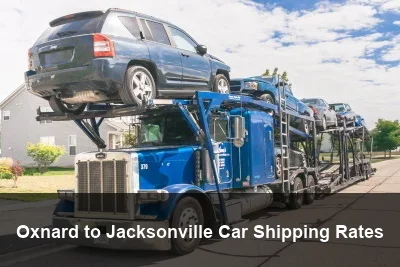
At roughly 2,580 miles, the Oxnard-to-Jacksonville corridor falls into the long-haul pricing tier where per-mile rates decrease but total cost climbs. Expect rates to rise in late spring as snowbirds book Florida-bound moves ahead of summer, and again in late summer when military PCS orders and student relocations spike. Texas and Arizona fuel prices directly affect carrier operating costs on this route; fluctuations there pass through to your quote. Check https://california.auto-transport-shipping.com/articles/how-gas-prices-impact-california-auto-transport-fees.html for a current read on how fuel pricing is trending.
What affects the cost of Oxnard to Jacksonville car shipping:
- Vehicle type and size — larger vehicles take more carrier space; aftermarket additions like lift kits, oversized mirrors, or roof accessories can add fees
- Open vs. enclosed transport — open is lower cost with stronger carrier availability; enclosed protects against weather, debris, and road conditions
- Standard vs. expedited pickup — expedited prioritizes your vehicle for the next available dispatch, typically at a $100–$300 premium
- Time of year — peak demand seasons drive rates higher; off-peak windows offer the most competitive pricing
- Fuel costs — diesel prices affect carrier rates; longer routes are more sensitive to fuel price swings
- Vehicle condition — non-running vehicles require special loading equipment and cost more to ship
| Vehicle Type | Open Car Shipping (Est.) | Enclosed Car Shipping (Est.) |
|---|---|---|
| Sedan | $1,100 – $1,600 | $1,900 – $2,700 |
| SUV / Crossover | $1,300 – $1,900 | $2,200 – $3,100 |
| Pickup Truck | $1,300 – $1,950 | $2,200 – $3,150 |
| Minivan | $1,300 – $1,900 | $2,200 – $3,100 |
| Luxury / Classic Car | $1,550 – $2,200 | $2,600 – $3,600 |
| Non-Running Vehicle | Add $200–400 | Add $200–400 |
* Estimated ranges based on recent Oxnard to Jacksonville shipments. Actual rate depends on vehicle, locations, booking date, and current fuel costs. Use the form on this page to compare real quotes from licensed carriers.
Open vs. Enclosed for the Oxnard–Jacksonville Desert and Humidity Run
Open transport is the practical choice for most standard vehicles on this corridor. The route crosses the Sonoran Desert in Arizona and the Gulf Coast humidity belt, but open carriers handle these conditions routinely. If you're moving a classic car, a luxury vehicle, or anything with a custom paint job or convertible top, enclosed transport is worth the premium — Arizona road debris and Florida's salt-heavy coastal air are real factors. For a daily driver or a typical sedan or SUV, open transport keeps cost reasonable without meaningful added risk on this run.
How Long Does Oxnard to Jacksonville Car Shipping Take?
Standard transit on the Oxnard-to-Jacksonville corridor runs 7 to 10 business days from carrier pickup. The driving distance alone requires 36 to 40 hours behind the wheel, and carriers operate under federal hours-of-service rules that limit daily drive time. Carrier frequency out of Ventura County is solid thanks to Naval Base Ventura County PCS volume, but Oxnard is not a tier-one pickup hub, so add one to two days for dispatch. If your timeline is tight, expedited options exist — see https://california.auto-transport-shipping.com/articles/california-expedited-car-shipping-fast-cost.html for what that costs on a long-haul run.
| Service Type | Typical Transit | Pickup Window | Best For |
|---|---|---|---|
| Open — Standard | 7–10 days | 2–5 business days | Best value; most common choice on this route |
| Open — Expedited | 5–7 days | 1–2 business days | Firm arrival date; faster dispatch window |
| Enclosed — Standard | 7–10 days | 4–8 business days | Luxury, classic, or modified vehicles |
| Enclosed — Expedited | 5–7 days | 2–4 business days | High-value vehicles on a firm delivery deadline |
** Summer thunderstorms across the Texas Panhandle and New Mexico, plus hurricane-related road closures in Louisiana, Mississippi, or northern Florida from June through November, can add one to three days. I-10 through Baton Rouge is a known congestion point that slows carriers regardless of season.
Oxnard to Jacksonville — Route & Logistics
Carriers depart Oxnard via US-101 south or SR-1, merging into the Los Angeles basin to reach I-10 east at the I-10/I-605 interchange in the San Gabriel Valley. From there, I-10 runs continuously through Arizona, New Mexico, and Texas before cutting northeast through Louisiana and Mississippi into Jacksonville, covering approximately 2,580 miles on a nearly all-interstate route.
Key Corridor Waypoints
- Los Angeles Basin, CA Carriers exit Ventura County via US-101 south and pick up I-10 east near the I-10/I-605 interchange in the San Gabriel Valley. This is the primary on-ramp to the transcontinental corridor. Some carriers consolidate loads here, adding vehicles from Los Angeles before heading east. Expect light to moderate urban traffic during morning or evening rush windows.
- Blythe, CA / Arizona State Line Blythe at the California-Arizona border sits at roughly 270 feet elevation and marks the entry into the Sonoran Desert. Arizona agriculture inspection stations are active here; carriers with non-compliant loads face inspection delays. Temperatures regularly exceed 110°F in summer, and carriers manage tire pressure and cargo checks at this crossing before pushing east toward Phoenix.
- Phoenix, AZ Phoenix is the largest mid-route staging city and a common overnight stop for carriers on the California-to-Florida run. Some carriers swap drivers here or take on additional loads. The I-10 through Phoenix is well-maintained but experiences significant rush-hour congestion; carriers typically time arrivals to avoid the I-10/I-17 stack interchange during peak hours.
- El Paso, TX / Las Cruces, NM Junction The I-10 corridor through El Paso at 3,740 feet elevation is a federal customs enforcement zone with Border Patrol checkpoints near the Texas-New Mexico line. All carriers pass through; delays are typically brief. This is also a common refuel and rest stop before the long Texas stretch. Wind advisories on the high desert stretch can affect enclosed trailer handling.
- San Antonio, TX San Antonio is a major staging and reload point roughly halfway through Texas on I-10. Carriers frequently coordinate here with dispatch for any schedule adjustments. I-10 east from San Antonio through Houston is heavily trafficked by commercial freight; carriers experienced on this corridor know to avoid Houston's I-10/I-610 interchange during peak commute hours to prevent multi-hour delays.
- Jacksonville, FL (I-10 Arrival) I-10 terminates in Jacksonville at the I-95 interchange near downtown. Carriers serving Southside, Mandarin, or Beaches-area neighborhoods can access most delivery points directly off I-95 or I-295. Downtown Jacksonville has limited truck access on some streets; staging at a nearby parking lot or shopping center is common for narrow residential deliveries.
Pickup & Delivery Access
- Pickup Access in Oxnard Oxnard's street grid is largely truck-accessible, and carriers regularly work the US-101 corridor through Ventura County. The port area near Channel Islands Boulevard offers wide arterials suited to multi-car haulers. Residential pickups in newer subdivisions near Camarillo or Point Mugu are accessible but may require a meet point on a main commercial street. Coordinate your pickup location with the carrier at booking confirmation.
- Delivery Access in Jacksonville Most of Jacksonville is carrier-accessible by standard multi-car hauler. Southside, the Beaches communities (Atlantic Beach, Neptune Beach), and Mandarin are straightforward. Downtown Jacksonville and some historic Riverside-Avondale neighborhoods have narrow streets where a 75-foot hauler can't maneuver; in those cases, carriers arrange a staging meetup at a nearby commercial lot like a shopping center or public parking facility.
- Nearby Pickup Locations Carriers picking up in Oxnard regularly extend service to Ventura, Port Hueneme, and Camarillo. Call 1‑800‑590‑6492 to confirm door-to-door availability at your address.
Open vs. Enclosed Car Shipping: Oxnard to Jacksonville
Both options use licensed, insured carriers and deliver door to door. For a full breakdown, read the pros and cons of open vs. enclosed car shipping.
Open Car Shipping
Most Popular- Lower cost — the practical choice for most vehicles
- More carriers available on this corridor
- Faster dispatch from booking to pickup
- Works well for sedans, SUVs, trucks, and minivans
- Vehicle rides on an open multi-car carrier
- Cargo insurance required on all licensed carriers
Estimated cost: $1,100 – $1,950
Enclosed Car Shipping
Premium Protection- Full protection from weather, debris, and road grime
- Best for luxury, exotic, and classic vehicles
- Recommended for low-clearance and custom-built cars
- Wheel-net or soft-tie systems prevent contact damage
- Higher cargo coverage — commonly $500,000 per load
- White-glove handling by experienced operators
Estimated cost: $1,900 – $3,150
Not sure which is right for your vehicle? Call 1-800-590-6492 and we'll point you in the right direction. Also worth reading: the top 10 questions to ask any car shipping company before you commit.
How to Prepare Your Car for Shipping to Jacksonville
A little prep before pickup protects you if there's ever a dispute about your vehicle's condition. This checklist is from our full guide on preparing your car for transport:
- Remove all personal belongings from the interior and trunk
- Leave only a quarter tank of fuel — enough to load and unload
- Take date-stamped photos of the full exterior and interior
- Remove or disable toll transponders (FasTrak, E-ZPass, etc.)
- Retract or remove roof racks, spoilers, antennas, and bike mounts
- Make sure the battery is charged and tires are properly inflated
- Tell the carrier about any existing leaks or mechanical issues
- Deactivate the car alarm before the carrier arrives
- Write down the mileage on the Bill of Lading at pickup
- Fold in side mirrors if the vehicle is wider than standard
Personal items: Most carriers won't cover belongings left in the car. Read the full rules on shipping personal items in your vehicle. Also review our Bill of Lading guide so you know exactly what to check at pickup and delivery.
When to Ship Your Car from Oxnard to Jacksonville
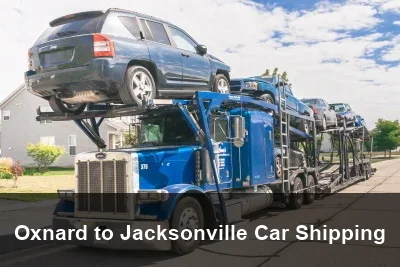
This route runs California-to-Florida year-round, but demand and pricing are not flat. Spring and early summer see a surge as military PCS orders activate and snowbirds finalize their moves. Hurricane season from June through November introduces delivery uncertainty in Florida. Winter brings moderate snowbird reverse traffic — vehicles moving back to California — which improves carrier availability for westbound but can tighten Florida-bound slots. For a detailed look at winter-specific risks, see https://california.auto-transport-shipping.com/articles/auto-transport-challenges-during-the-winter.html
Spring PCS Season (March–May)
Military PCS orders from Naval Base Ventura County and receiving installations at NAS Jacksonville and Naval Station Mayport spike in spring. This is the busiest booking window on this corridor. Carrier availability tightens and rates rise. Book four to six weeks in advance if your orders have a spring reporting date. Waiting until two weeks out in this window typically means higher rates and fewer carrier options.
Summer Heat and Hurricane Season (June–August)
Summer crossings mean sustained triple-digit temperatures through Arizona and New Mexico. Carriers manage this routinely, but enclosed transport customers should confirm their carrier's heat mitigation practices for high-value vehicles. Florida's hurricane season begins June 1; while direct hits on Jacksonville are less common than on the southern coast, tropical storm activity can delay I-10 delivery windows. Build buffer time into summer moves.
Fall Snowbird Window (September–November)
California-to-Florida demand picks up in September and October as snowbirds position vehicles ahead of winter. This is a high-volume window that can stretch transit times by one to two days if carriers are heavily loaded. Booking three to four weeks ahead locks in better rates before the October demand peak. Florida delivery conditions improve as hurricane season winds down in November.
Winter Reverse Flow (December–February)
Florida-to-California is the dominant direction in winter as snowbirds return west, which means California-bound carriers are full and Florida-bound carriers have capacity. If you're shipping from Oxnard to Jacksonville in winter, you may find more competitive pricing and faster dispatch than in spring or fall. Desert overnight temperatures in Arizona and New Mexico can drop below freezing; carriers adjust departure timing accordingly.
Student Move-In and Semester Transitions (August, January)
The University of North Florida and Florida State College at Jacksonville both generate vehicle relocation demand in late July and August for fall semester and again in early January. These spikes are smaller than military PCS surges but noticeable on the California-to-Florida lane. If you're relocating for school, booking in early July or mid-December gives you better rate and availability options before the move-in rush compresses both.
How to Choose a Oxnard to Jacksonville Car Shipping Company
Getting multiple quotes is step one — knowing what to look for in those quotes matters just as much. Our guide on how to select a car shipping company covers the full process. Here are the six things that matter most:
FMCSA Registration
Every carrier or broker must hold a valid MC number. Verify any company at FMCSA SAFER before you book.
Proof of Insurance
Ask for a current certificate of insurance. Open carriers typically carry $100,000–$250,000 per load; enclosed commonly $500,000 or more. Learn what auto transport insurance covers.
All-In Pricing
Your quote should be a final number with no fees added after booking. Know the difference between brokers and carriers and confirm what the quote covers before you agree.
Bill of Lading
A complete Bill of Lading is filled out at pickup and delivery. Our Bill of Lading guide explains what to check. Never sign an incomplete one.
Real Reviews
Check Google and the BBB. Look at how they handled complaints and damage claims — that tells you more than a five-star average from happy customers.
Route Experience
A carrier who runs the Oxnard-to-Jacksonville lane regularly knows that the I-10 through Houston's west loop — specifically the I-610/I-10 interchange — is the single most reliable delay point on the entire route, and they time their Texas run to arrive before 6 a.m. or after 7 p.m. They know the Arizona weight stations near Ehrenberg are active and enforce axle limits strictly, so load configuration out of Southern California matters. They know that the Baton Rouge I-10 bridge over the Mississippi River runs heavy commercial traffic and is prone to backups after accidents. And they know that NAS Jacksonville deliveries work best when coordinated a day in advance through the base housing office to confirm gate access, which an inexperienced carrier will miss until they're already sitting at the gate.
Oxnard to Jacksonville Car Shipping — FAQ
How much does it cost to ship a car from Oxnard to Jacksonville?
On the Oxnard-to-Jacksonville corridor at approximately 2,580 miles, open transport for a standard sedan typically runs between $1,050 and $1,450 depending on the season, fuel prices, and how quickly you need pickup. SUVs and trucks run $1,200 to $1,600. Enclosed transport adds roughly 40 to 60 percent to those figures. Rates climb in spring during the military PCS surge and in fall during the snowbird window. Booking three to four weeks ahead consistently produces better pricing than booking under two weeks out. Fill out the quote form for a current rate based on your vehicle and dates.
How long does Oxnard to Jacksonville car shipping take?
Standard transit runs 7 to 10 business days from carrier pickup. Dispatch out of Oxnard typically takes one to two days since Ventura County is a secondary — not primary — carrier hub, though Naval Base Ventura County PCS volume helps carrier frequency. The driving distance requires 36 to 40 hours under federal hours-of-service rules, spread across multiple days. Texas and Louisiana traffic, plus any weather events on the Gulf Coast, can extend transit toward the upper end. If your timeline is firm, expedited booking is available; see https://california.auto-transport-shipping.com/articles/california-expedited-car-shipping-fast-cost.html for what that adds to the cost.
Is my car insured during transport?
Every licensed carrier is federally required to carry cargo insurance, which covers your vehicle against damage caused during transport. Before your vehicle is loaded, the driver completes a Bill of Lading noting existing condition. At delivery, you compare that document against the vehicle's current condition before signing. If damage occurred in transit, that Bill of Lading is your claim evidence. Review https://california.auto-transport-shipping.com/articles/understanding-auto-transport-insurance.html to understand what carrier insurance covers and what it doesn't, and read https://california.auto-transport-shipping.com/articles/how-to-file-a-claim-for-vehicle-damage-during-transport.html before your delivery appointment so you know exactly what steps to take if you find an issue.
Should I choose open or enclosed transport for the Oxnard to Jacksonville route?
Open transport is appropriate for most vehicles on this route. The corridor crosses the Sonoran Desert and the Gulf Coast humidity zone, but open carriers move vehicles across these conditions daily without issue. Enclosed transport is worth the added cost if you're shipping a classic, exotic, or high-value vehicle where road debris from the Arizona and Texas desert stretches, or Florida's salt-laden coastal air, poses a real risk to paint or exterior components. For a full comparison of both options including cost differences, see https://california.auto-transport-shipping.com/articles/open-vs-enclosed-auto-transport-pros-and-cons.html before you decide.
Do I have to be present at pickup and delivery?
You or a designated adult representative must be present at both pickup and delivery to sign the Bill of Lading. At pickup, the document records your vehicle's pre-transport condition — existing scratches, dents, and damage are noted. At delivery, you sign off confirming the vehicle arrived in the same condition. If you're a military customer with a fixed reporting date and can't be at pickup or delivery personally, a trusted adult can stand in with your authorization. Do not sign the final delivery Bill of Lading if you have not done a thorough walk-around inspection. Learn more at https://california.auto-transport-shipping.com/articles/california-auto-transport-bill-of-lading-information.html
Does military PCS affect availability or pricing on this route?
Yes, directly. Naval Base Ventura County in Oxnard is one of the Navy's largest installations on the West Coast, and NAS Jacksonville and Naval Station Mayport are major receiving commands on the Florida end. When PCS orders cycle in spring — typically March through June — both ends of this route see a spike in vehicle shipping demand. Carriers fill up faster, rates move up, and transit windows stretch slightly. If you have military orders, book as early as your orders allow, ideally four to six weeks before your required delivery date. Confirm that your broker knows your orders timeline so they can coordinate carrier scheduling accordingly.
What happens if a hurricane or tropical storm affects delivery to Jacksonville?
Jacksonville sits in northeast Florida and is less frequently impacted by direct hurricane landfalls than the Tampa Bay or Miami corridors, but tropical storms and hurricane-related flooding can close segments of I-10 through northern Florida or back up carriers in Louisiana and Mississippi. If a storm event is active during your delivery window, your carrier may hold the vehicle at a secure staging point in Georgia or South Carolina until roads clear. This can add two to four days to your transit. Shipping between December and May minimizes this risk. If you're booking for a June through November delivery, build buffer time into your schedule.
Can carriers reach my specific neighborhood in Jacksonville, or will I need a meet point?
Most of Jacksonville is accessible to standard multi-car haulers. Southside, the Northside, Mandarin, and the Beaches communities — Atlantic Beach, Neptune Beach, Jacksonville Beach — are all workable with typical truck-and-trailer configurations. Downtown Jacksonville and historic neighborhoods like Riverside and Avondale have narrower streets that a 75-foot hauler cannot navigate safely. In those cases, your carrier will arrange a staging meetup at a nearby commercial lot such as a shopping center or big-box store parking area within a few miles of your address. Confirm your delivery address specifics with the carrier at dispatch so they can flag any access issues before arrival.
Ready to Ship Your Car from Oxnard to Jacksonville?
One form gets you up to 10 free quotes from licensed, insured carriers. Compare costs and transit times and book the best deal for your schedule.