

Oxnard to Austin Car Shipping Route
The Oxnard to Austin route covers approximately 1,547 miles. Carriers access the route from Oxnard via US-101 south through the Ventura County grid, connecting to I-10 east through the Los Angeles basin and the Inland Empire. From there, the route crosses the Sonoran Desert through Palm Springs, Blythe, and Tucson before cutting through southern New Mexico and entering Texas at El Paso. Carriers then follow I-10 east to I-20 or continue on I-10 to Kerrville before turning north toward Austin on TX-27 or I-35. Compared to driving this distance yourself, auto transport eliminates fuel costs, wear, lodging, and roughly three days of your time. See a full breakdown at https://california.auto-transport-shipping.com/articles/benefits-of-auto-transport-service-vs-driving-yourself.html.
Austin's demand drivers are unusually diverse for a single metro. Tesla's Gigafactory Texas in southeast Austin employs over 20,000 workers and generates steady inbound relocation volume. Apple's 133-acre campus in North Austin and Dell's Round Rock headquarters add white-collar relocation traffic. The University of Texas at Austin enrolls roughly 51,000 students, creating predictable August and December-January shipping surges. Fort Cavazos in Killeen, about 65 miles north, is one of the Army's largest installations and produces consistent PCS movement into the Austin area year-round. Weather-wise, the desert crossing through Arizona and southern New Mexico can push summer temperatures above 115°F, which is worth noting for heat-sensitive vehicles. Before booking, review https://california.auto-transport-shipping.com/articles/auto-transport-mistakes-to-avoid.html to avoid common scheduling errors.
Oxnard to Austin Car Shipping Rates
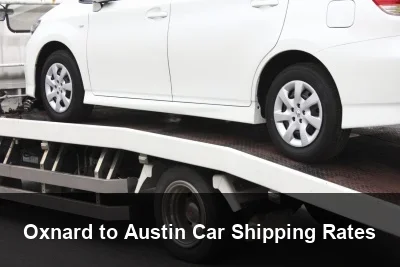
At roughly 1,547 miles, this route sits in the long-haul pricing tier where per-mile rates compress slightly but fuel and driver hours still dominate the quote. Summer heat in Arizona and New Mexico does not typically add a surcharge, but August demand spikes from UT Austin student moves and post-July-4th relocation traffic regularly push prices up 10-15%. Diesel price swings on the I-10 corridor directly affect carrier bids — see https://california.auto-transport-shipping.com/articles/how-gas-prices-impact-california-auto-transport-fees.html for how that math works.
What affects the cost of Oxnard to Austin car shipping:
- Vehicle type and size — larger vehicles take more carrier space; aftermarket additions like lift kits, oversized mirrors, or roof accessories can add fees
- Open vs. enclosed transport — open is lower cost with stronger carrier availability; enclosed protects against weather, debris, and road conditions
- Standard vs. expedited pickup — expedited prioritizes your vehicle for the next available dispatch, typically at a $100–$300 premium
- Time of year — peak demand seasons drive rates higher; off-peak windows offer the most competitive pricing
- Fuel costs — diesel prices affect carrier rates; longer routes are more sensitive to fuel price swings
- Vehicle condition — non-running vehicles require special loading equipment and cost more to ship
| Vehicle Type | Open Car Shipping (Est.) | Enclosed Car Shipping (Est.) |
|---|---|---|
| Sedan | $950 – $1,350 | $1,700 – $2,300 |
| SUV / Crossover | $1,100 – $1,600 | $1,950 – $2,700 |
| Pickup Truck | $1,100 – $1,650 | $1,950 – $2,750 |
| Minivan | $1,100 – $1,600 | $1,950 – $2,700 |
| Luxury / Classic Car | $1,300 – $1,900 | $2,200 – $3,000 |
| Non-Running Vehicle | Add $200–350 | Add $200–350 |
* Estimated ranges based on recent Oxnard to Austin shipments. Actual rate depends on vehicle, locations, booking date, and current fuel costs. Use the form on this page to compare real quotes from licensed carriers.
Open vs. Enclosed: What Makes Sense on This Corridor
Open transport covers the vast majority of vehicles on this route without issue. The I-10 desert crossing does not present road-debris hazards beyond normal highway conditions, and most carriers run clean equipment on this well-trafficked corridor. Enclosed transport makes sense if you're shipping a classic car, a luxury vehicle valued above $80,000, or anything with a low ground clearance that needs extra protection through the rougher sections of southern New Mexico. Budget roughly 40-60% more for enclosed service. For most daily drivers and standard SUVs, open is the practical and cost-effective choice.
How Long Does Oxnard to Austin Car Shipping Take?
Standard transit on the Oxnard-to-Austin route runs 4 to 6 days once a carrier is assigned. The driving distance is approximately 1,547 miles, and carriers typically cover 400-500 miles per day after accounting for hours-of-service regulations and mandatory rest stops. Oxnard sees regular carrier availability because of its position on the US-101 corridor and proximity to the LA pickup pool. If your timeline is tight, expedited options can shorten this to 3-4 days at a premium — see https://california.auto-transport-shipping.com/articles/california-expedited-car-shipping-fast-cost.html for specifics on how that service works.
| Service Type | Typical Transit | Pickup Window | Best For |
|---|---|---|---|
| Open — Standard | 4–6 days | 2–5 business days | Best value; most common choice on this route |
| Open — Expedited | 2–4 days | 1–2 business days | Firm arrival date; faster dispatch window |
| Enclosed — Standard | 4–6 days | 3–7 business days | Luxury, classic, or modified vehicles |
| Enclosed — Expedited | 2–4 days | 1–3 business days | High-value vehicles on a firm delivery deadline |
** Summer heat across the Arizona desert — regularly exceeding 115°F in July and August — can slow carrier movement as trucks operate during cooler overnight hours. Border inspection points near El Paso can add several hours. Winter weather in the Guadalupe Mountains on I-10 near the Texas-New Mexico line occasionally causes brief closures, adding up to a full day.
Oxnard to Austin — Route & Logistics
Carriers access this route from Oxnard via US-101 south, merging onto I-10 east through the Los Angeles basin. The full run covers approximately 1,547 miles before terminating in Austin. The Ventura County grid offers straightforward truck access, and Port Hueneme's commercial truck traffic means carriers are already staged in the area regularly, reducing dispatch time compared to more rural origin points.
Key Corridor Waypoints
- Camarillo, CA First major staging point east of Oxnard on US-101. Carriers dispatched from the Oxnard-Port Hueneme area often do final pre-load checks here before merging south toward the LA basin. The Camarillo interchange provides easy access to both US-101 and SR-1 without navigating urban congestion. Truck stops along this stretch handle fueling before the run toward I-10.
- Ontario, CA / I-10 Junction This is where US-101 traffic from Ventura County fully transitions onto I-10 east heading toward the desert. Ontario sits at roughly 1,000 feet elevation and acts as a natural staging and load-consolidation point for carriers running Southern California-to-Texas routes. Some carriers pick up additional vehicles here before heading into the desert, so this junction can add a few hours to dispatch timing.
- Blythe, CA / Arizona Border At approximately 270 miles from Oxnard, Blythe marks the California-Arizona state line and a mandatory agricultural inspection checkpoint. Carriers pass through here before crossing into Parker, Arizona. Elevation at Blythe sits near sea level. This is a common overnight rest point for carriers running the I-10 corridor, and fuel prices at the border are typically competitive compared to the California side.
- Tucson, AZ Roughly 570 miles from Oxnard, Tucson is a significant mid-route logistics hub at approximately 2,400 feet elevation. Carriers often fuel, rest, and sometimes swap drivers here. The I-10 and I-19 interchange near Tucson is one of the busier freight junctions in the Southwest. Border Patrol interior checkpoints operate on eastbound I-10 east of Tucson — expect a brief inspection stop with no impact on vehicle condition.
- El Paso, TX / New Mexico Border At roughly 850 miles from Oxnard, El Paso marks the Texas entry point. The I-10 corridor through El Paso runs near 3,700 feet elevation. The Guadalupe Pass section of I-10 northeast of El Paso reaches 5,820 feet — the highest point on the entire interstate. This section can see ice and brief closures in December through February, which is the primary weather delay risk on this route.
- Austin, TX Final delivery zone. Carriers typically access central Austin via I-35 from the south or MoPac Expressway from the west. Downtown and UT campus-adjacent streets can be tight for full car-haulers during peak hours. Residential deliveries in Hyde Park, Mueller, or East Austin may require the driver to stage nearby on a wider street and do a short driveway delivery. Scheduling delivery during mid-morning weekdays avoids the worst congestion windows.
Pickup & Delivery Access
- Pickup Access in Oxnard Oxnard's street grid handles car-carrier trucks without significant access issues. The US-101 corridor and the areas near Saviers Road and Harbor Boulevard provide the most practical meet-point zones. The industrial and port-adjacent sections near Port Hueneme Boulevard accommodate large rigs easily. Residential neighborhoods in south Oxnard near Gonzales Road may require drivers to park on a nearby arterial for final handoff. Confirm your exact address with the carrier at dispatch to identify the best meet point.
- Delivery Access in Austin Most of Austin is accessible to car-hauler trucks via I-35, TX-71, and MoPac, but urban core delivery — particularly near UT Austin's West Campus or the 6th Street entertainment district — requires staging on broader streets like Cesar Chavez or Riverside Drive. North Austin neighborhoods near the Domain and Apple's campus are generally truck-friendly. Suburban areas in Round Rock, Cedar Park, and Pflugerville present no access issues. Coordinate with your driver 24 hours out to confirm a specific delivery point.
- Nearby Pickup Locations Carriers picking up in Oxnard regularly extend service to Ventura, Port Hueneme, and Camarillo. Call 1‑800‑590‑6492 to confirm door-to-door availability at your address.
Open vs. Enclosed Car Shipping: Oxnard to Austin
Both options use licensed, insured carriers and deliver door to door. For a full breakdown, read the pros and cons of open vs. enclosed car shipping.
Open Car Shipping
Most Popular- Lower cost — the practical choice for most vehicles
- More carriers available on this corridor
- Faster dispatch from booking to pickup
- Works well for sedans, SUVs, trucks, and minivans
- Vehicle rides on an open multi-car carrier
- Cargo insurance required on all licensed carriers
Estimated cost: $950 – $1,650
Enclosed Car Shipping
Premium Protection- Full protection from weather, debris, and road grime
- Best for luxury, exotic, and classic vehicles
- Recommended for low-clearance and custom-built cars
- Wheel-net or soft-tie systems prevent contact damage
- Higher cargo coverage — commonly $500,000 per load
- White-glove handling by experienced operators
Estimated cost: $1,700 – $2,750
Not sure which is right for your vehicle? Call 1-800-590-6492 and we'll point you in the right direction. Also worth reading: the top 10 questions to ask any car shipping company before you commit.
How to Prepare Your Car for Shipping to Austin
A little prep before pickup protects you if there's ever a dispute about your vehicle's condition. This checklist is from our full guide on preparing your car for transport:
- Remove all personal belongings from the interior and trunk
- Leave only a quarter tank of fuel — enough to load and unload
- Take date-stamped photos of the full exterior and interior
- Remove or disable toll transponders (FasTrak, E-ZPass, etc.)
- Retract or remove roof racks, spoilers, antennas, and bike mounts
- Make sure the battery is charged and tires are properly inflated
- Tell the carrier about any existing leaks or mechanical issues
- Deactivate the car alarm before the carrier arrives
- Write down the mileage on the Bill of Lading at pickup
- Fold in side mirrors if the vehicle is wider than standard
Personal items: Most carriers won't cover belongings left in the car. Read the full rules on shipping personal items in your vehicle. Also review our Bill of Lading guide so you know exactly what to check at pickup and delivery.
When to Ship Your Car from Oxnard to Austin
This corridor runs year-round without true off-seasons, but pricing and availability shift with predictable demand cycles. August is the peak month — UT Austin's fall semester start and post-summer corporate relocations create a compression in carrier availability. Winter is generally the lightest demand period and often the best window for lower rates. The desert crossing through Arizona is drivable in all seasons, though summer heat and occasional winter mountain ice near El Paso are the two primary weather variables. See https://california.auto-transport-shipping.com/articles/auto-transport-challenges-during-the-winter.html for winter transport specifics.
UT Austin Student Moves (August & January)
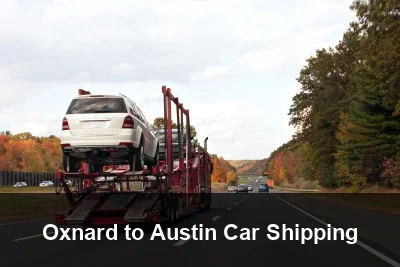
The University of Texas at Austin's fall semester start in late August is the single busiest demand spike on this corridor. Students and families shipping vehicles from Southern California to Austin compress carrier availability in a two-week window. Book at least three weeks in advance for late July through mid-August. January see a smaller but similar spike for spring semester arrivals. Rates during peak August can run 12-18% above baseline.
Summer Heat Window (June – September)
The I-10 desert crossing through Arizona sees sustained temperatures above 110°F from June through early September. Carriers navigate this by running overnight hours, which can extend transit times by half a day or more. Heat-sensitive vehicles — those with rubber seals, convertible tops, or known cooling system issues — should be inspected before shipping. Enclosed transport offers no meaningful temperature advantage at these volumes; the trailer interior heats similarly to open carriers in direct sun.
Winter Mountain Risk (December – February)
Guadalupe Pass on I-10 near the Texas-New Mexico border reaches 5,820 feet and can ice over between December and February. Closures are brief but do occur a few times each winter season. If you're shipping during this window, build in an extra buffer day on your delivery estimate. Rates are typically at their lowest during January and February, making this a cost-effective window despite the slight weather risk. Reference: https://california.auto-transport-shipping.com/articles/auto-transport-challenges-during-the-winter.html
Spring Corporate Relocation Season (March – May)
Texas's strong job market — anchored by Tesla, Dell, Apple, and a dense semiconductor sector in Austin — drives steady corporate relocation traffic from Southern California in spring. This period sees moderate demand without the August spike, and carrier availability is generally good. Rates run near baseline. If you're relocating for a job start in spring, booking two weeks out is usually sufficient to secure a carrier on your preferred window.
Military PCS Season (May – August)
Fort Cavazos in Killeen, about 65 miles north of Austin, is one of the Army's largest posts and a major PCS hub. Military move orders cluster heavily between May and August, when service members transition between duty stations. This overlaps directly with the summer peak, further compressing carrier availability into Austin. Active-duty and veteran shippers should confirm terminal-to-door delivery options and verify military discount eligibility when requesting quotes.
Fall Off-Peak Window (October – November)
October and November represent the most balanced window on this corridor — demand eases after the summer and back-to-school spikes, weather in the desert Southwest is mild, and the Guadalupe Pass presents no meaningful winter risk yet. Carriers are available with shorter lead times, and rates typically reflect the lower demand. If your move is flexible, this is the window to target for the best combination of rate, availability, and transit predictability.
How to Choose a Oxnard to Austin Car Shipping Company
Getting multiple quotes is step one — knowing what to look for in those quotes matters just as much. Our guide on how to select a car shipping company covers the full process. Here are the six things that matter most:
FMCSA Registration
Every carrier or broker must hold a valid MC number. Verify any company at FMCSA SAFER before you book.
Proof of Insurance
Ask for a current certificate of insurance. Open carriers typically carry $100,000–$250,000 per load; enclosed commonly $500,000 or more. Learn what auto transport insurance covers.
All-In Pricing
Your quote should be a final number with no fees added after booking. Know the difference between brokers and carriers and confirm what the quote covers before you agree.
Bill of Lading
A complete Bill of Lading is filled out at pickup and delivery. Our Bill of Lading guide explains what to check. Never sign an incomplete one.
Real Reviews
Check Google and the BBB. Look at how they handled complaints and damage claims — that tells you more than a five-star average from happy customers.
Route Experience
A carrier who regularly runs the Oxnard-to-Austin corridor knows that Port Hueneme proximity means faster dispatch than most Ventura County origins — trucks are already in the area for port-related hauls. They know to fuel before the Blythe crossing because Arizona prices east of the border spike at certain truck stops on I-10. They know the Border Patrol checkpoint east of Tucson adds up to 45 minutes during heavy traffic windows and to build that into delivery estimates. They know that Austin's I-35 is worst between 7-9am and 4-7pm, and that staging at a truck stop off Highway 290 or Slaughter Lane for a midmorning delivery cuts two hours off the urban approach. Experienced carriers on this lane protect these timing windows; first-timers often don't.
Oxnard to Austin Car Shipping — FAQ
How much does it cost to ship a car from Oxnard to Austin?
At 1,547 miles, Oxnard-to-Austin typically quotes between $950 and $1,400 for standard open transport, depending on vehicle size, current diesel prices, and seasonal demand. Enclosed transport runs roughly $1,500 to $2,200 for the same route. The August window — driven by UT Austin's semester start and summer PCS moves to Fort Cavazos — is consistently the most expensive. January and February are typically the lowest-rate months. Your exact quote depends on your vehicle's year, make, and dimensions, along with your preferred pickup window. Use the form on this page to get current carrier bids.
How long does Oxnard to Austin car shipping take?
Standard transit on this route runs 4 to 6 days from the time a carrier picks up your vehicle. The driving distance is approximately 1,547 miles, and carriers are bound by federal hours-of-service regulations that limit daily driving to 11 hours per driver. Oxnard benefits from strong carrier availability due to its US-101 corridor position and proximity to Port Hueneme, so dispatch is usually 1-3 business days after booking. Summer heat in Arizona can push overnight-only driving windows, adding half a day. If you need faster delivery, expedited options exist — see https://california.auto-transport-shipping.com/articles/california-expedited-car-shipping-fast-cost.html.
Is my car insured during transport from Oxnard to Austin?
Yes. Every federally licensed carrier operating on this route is required to carry cargo insurance that covers your vehicle during transport. Before your vehicle is loaded in Oxnard, the driver completes a Bill of Lading documenting your vehicle's existing condition — scratches, dents, and all pre-existing damage are noted. At delivery in Austin, you compare that condition against what arrives. If damage occurred in transit, that document is your primary evidence for a claim. For a full breakdown of how coverage works, see https://california.auto-transport-shipping.com/articles/understanding-auto-transport-insurance.html. If you ever need to file a claim, the process is outlined at https://california.auto-transport-shipping.com/articles/how-to-file-a-claim-for-vehicle-damage-during-transport.html.
Should I choose open or enclosed transport for the Oxnard to Austin route?
Open transport is the right call for most vehicles on this corridor. The I-10 route through Arizona and southern New Mexico is well-maintained, and carriers running this lane regularly use clean, professional equipment. Enclosed transport makes sense if you're shipping a classic vehicle, a luxury or exotic car valued above $80,000, or a vehicle with a convertible top or unusually low ground clearance. The cost premium for enclosed on this route runs 40-60%. For a full comparison of what each service actually provides, see https://california.auto-transport-shipping.com/articles/open-vs-enclosed-auto-transport-pros-and-cons.html.
Do I have to be present at pickup in Oxnard and delivery in Austin?
You don't have to be personally present, but someone you authorize must be available to sign the Bill of Lading at both ends. At pickup in Oxnard, that person walks the vehicle with the driver and signs off on its condition. At delivery in Austin, the same process happens in reverse — your authorized contact inspects the vehicle and signs the delivery receipt. Do not sign the delivery Bill of Lading if you see new damage without noting it on the form first. Learn more about the Bill of Lading and why it matters at https://california.auto-transport-shipping.com/articles/california-auto-transport-bill-of-lading-information.html.
Does winter weather affect shipping on the Oxnard to Austin route?
The primary winter risk on this corridor is Guadalupe Pass on I-10 near the Texas-New Mexico border, which reaches 5,820 feet elevation. Ice and occasional brief road closures occur a handful of times between December and February. If you're shipping during this period, add at least one buffer day to your delivery estimate. The rest of the route — including the Arizona desert crossing — presents minimal winter weather risk. January and February are also the lowest-demand months, which means lower rates despite the slight weather variable. Details on winter transport considerations are at https://california.auto-transport-shipping.com/articles/auto-transport-challenges-during-the-winter.html.
Can I ship my car to Austin for a military PCS move from the Oxnard area?
Yes, and this is a common use case on this corridor. Fort Cavazos in Killeen — about 65 miles north of Austin — is one of the Army's largest installations, and service members relocating from the Southern California coast, including Ventura County and nearby Naval Base Ventura County in Port Hueneme, regularly use auto transport for PCS moves. Most carriers can accommodate military move documentation requirements. PCS orders typically need to be confirmed before booking, and move dates should align with your reporting window. Confirm with your carrier whether they accept government travel vouchers or direct billing to your transportation office.
What's the best time of year to ship a car from Oxnard to Austin to get the lowest rate?
January and February consistently produce the lowest rates on this route. Demand drops after the holiday season, UT Austin's spring semester has already started, and military PCS moves are at their annual low before the May-August surge. October and November are the second-best window — demand eases after the back-to-school period, desert weather is mild, and carriers are available with shorter lead times. Avoid late July through mid-August if rate is your primary concern, as UT Austin's fall semester, corporate summer relocations, and military PCS traffic all overlap during that window.
Ready to Ship Your Car from Oxnard to Austin?
One form gets you up to 10 free quotes from licensed, insured carriers. Compare costs and transit times and book the best deal for your schedule.