
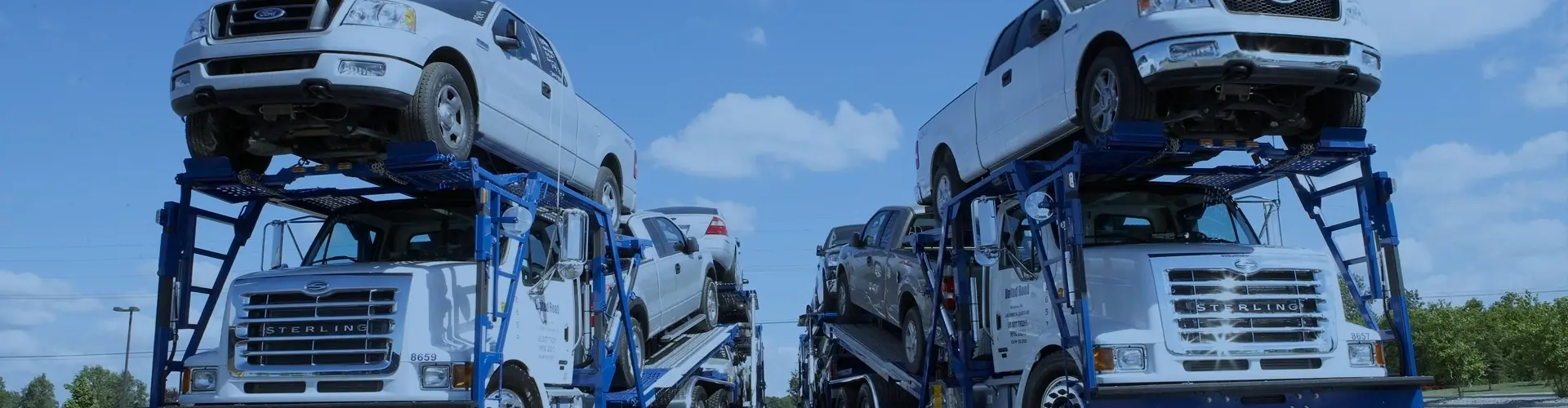
Oceanside to Louisville Car Shipping Route
Oceanside sits at the southern end of North San Diego County, and carriers access the route by connecting from SR-76 or SR-78 east to I-15 north, then picking up I-40 eastbound through the Mojave Desert after passing through the Inland Empire. The total driving distance from Oceanside to Louisville is approximately 1,847 miles. Across that distance, carriers move through three climate zones and multiple elevation changes, making professional transport the practical choice over driving it yourself. Shipping saves you two to three days of hard driving, fuel costs, and wear on your vehicle. Learn more about those savings at https://california.auto-transport-shipping.com/articles/benefits-of-auto-transport-service-vs-driving-yourself.html.
Louisville demand is anchored by several large institutional employers. Ford operates two major assembly plants in the metro — the Kentucky Truck Plant and Louisville Assembly Plant — generating consistent corporate relocation volume. UPS Worldport, one of the largest air cargo hubs in the world, relocates logistics staff regularly. The University of Louisville and Bellarmine University drive student shipments in May and August. Fort Knox, roughly 35 miles southwest of Louisville, adds military PCS demand that mirrors what Camp Pendleton generates on the Oceanside end. Seasonally, I-40 through Oklahoma and Tennessee sees ice and snow from November through March, which can affect transit. Before you book, review https://california.auto-transport-shipping.com/articles/auto-transport-mistakes-to-avoid.html.
Oceanside to Louisville Car Shipping Rates
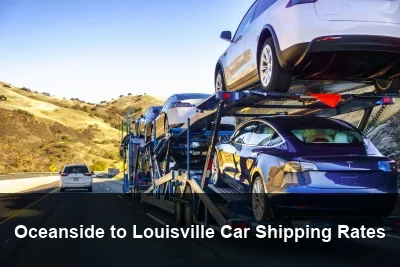
At 1,847 miles, this route falls into the long-haul tier, where per-mile rates typically drop compared to shorter corridors but base costs are higher. Fuel prices on I-15 through the Mojave and I-40 through the Southwest directly affect carrier pricing — see how that works at https://california.auto-transport-shipping.com/articles/how-gas-prices-impact-california-auto-transport-fees.html. Demand spikes in May through August from student and military PCS moves push rates up 10 to 20 percent. Winter months can add fuel surcharges when carriers deal with snow routing through Tennessee and Kentucky.
What affects the cost of Oceanside to Louisville car shipping:
- Vehicle type and size — larger vehicles take more carrier space; aftermarket additions like lift kits, oversized mirrors, or roof accessories can add fees
- Open vs. enclosed transport — open is lower cost with stronger carrier availability; enclosed protects against weather, debris, and road conditions
- Standard vs. expedited pickup — expedited prioritizes your vehicle for the next available dispatch, typically at a $100–$300 premium
- Time of year — peak demand seasons drive rates higher; off-peak windows offer the most competitive pricing
- Fuel costs — diesel prices affect carrier rates; longer routes are more sensitive to fuel price swings
- Vehicle condition — non-running vehicles require special loading equipment and cost more to ship
| Vehicle Type | Open Car Shipping (Est.) | Enclosed Car Shipping (Est.) |
|---|---|---|
| Sedan | $1,100 – $1,600 | $1,900 – $2,700 |
| SUV / Crossover | $1,300 – $1,900 | $2,200 – $3,100 |
| Pickup Truck | $1,300 – $1,950 | $2,200 – $3,150 |
| Minivan | $1,300 – $1,900 | $2,200 – $3,100 |
| Luxury / Classic Car | $1,550 – $2,200 | $2,600 – $3,600 |
| Non-Running Vehicle | Add $200–400 | Add $200–400 |
* Estimated ranges based on recent Oceanside to Louisville shipments. Actual rate depends on vehicle, locations, booking date, and current fuel costs. Use the form on this page to compare real quotes from licensed carriers.
Open or Enclosed: What This Route Actually Requires
Open transport is the right call for most standard vehicles on this corridor. The route through the Mojave, New Mexico, and Oklahoma is dry and exposed, but open carriers handle it daily without issue. Where enclosed makes sense: if you're shipping a classic car, a Porsche, or any vehicle where road grit, dust from the Mojave, or spring hail in Oklahoma and Tennessee is a real concern. Enclosed costs roughly 40 to 60 percent more. For a daily driver or a vehicle under $60,000 in value, open transport is the practical, well-tested choice on this lane.
How Long Does Oceanside to Louisville Car Shipping Take?
Plan for six to nine days door-to-door from Oceanside to Louisville under normal conditions. Carriers running this corridor full-time drive roughly 500 miles per day, governed by federal HOS rules. Pickup from Oceanside typically happens within three to seven days of your first available date — carrier frequency in North San Diego County is solid given Camp Pendleton PCS volume. If your timeline is tight, expedited options exist: https://california.auto-transport-shipping.com/articles/california-expedited-car-shipping-fast-cost.html. Loading sequence and your position on the carrier's trailer also affect final delivery timing by a day in either direction.
| Service Type | Typical Transit | Pickup Window | Best For |
|---|---|---|---|
| Open — Standard | 7–10 days | 2–5 business days | Best value; most common choice on this route |
| Open — Expedited | 5–7 days | 1–2 business days | Firm arrival date; faster dispatch window |
| Enclosed — Standard | 7–10 days | 4–8 business days | Luxury, classic, or modified vehicles |
| Enclosed — Expedited | 5–7 days | 2–4 business days | High-value vehicles on a firm delivery deadline |
** Between November and March, winter weather on I-40 through the Texas Panhandle and I-65 through Kentucky can add one to three days. Ice events near Louisville are the most common delay trigger — carriers may hold in Nashville until roads clear. Book with buffer time if you're moving January through February.
Oceanside to Louisville — Route & Logistics
Carriers depart Oceanside by connecting to SR-76 or SR-78 east to I-15 north through the Inland Empire, then transitioning to I-40 eastbound at Barstow. I-40 runs the majority of this route through Arizona, New Mexico, Texas, Oklahoma, and Tennessee before carriers cut north on I-65 into Louisville — covering 1,847 miles total.
Key Corridor Waypoints
- Barstow, CA The critical junction where I-15 meets I-40. Carriers staging out of San Diego County consolidate here before committing to the long eastbound run. Barstow is a common overnight stop and the last reliable fuel and inspection point before the Mojave stretch deepens. At roughly 2,100 feet elevation, temperatures here already differ sharply from coastal Oceanside.
- Kingman, AZ A standard carrier rest and fuel point on I-40 at roughly 3,300 feet elevation. Kingman marks the end of the high-desert Mojave crossing and the beginning of the Arizona plateau. Carriers often complete driver log resets here. Vehicle inspection checkpoints near the California-Arizona border are active — carriers expect brief stops and factor them into scheduling.
- Albuquerque, NM A major staging city at 5,300 feet elevation where carriers may drop or add loads. Albuquerque sits at the intersection of I-40 and I-25, making it a natural reposition point for multi-load carriers. Winter weather above 5,000 feet is a real factor from November through March. Carriers running behind schedule due to mountain conditions often regroup here.
- Oklahoma City, OK The geographic midpoint of the I-40 run and a key overnight stop. Oklahoma City is a busy carrier hub with strong freight volume in both directions, which helps keep this lane competitive. Spring severe weather — including hail — is a serious concern April through June. Carriers may delay departure from OKC if storm cells are active across eastern Oklahoma or Arkansas.
- Nashville, TN Where I-40 connects to I-65 northbound toward Louisville. Nashville is a critical transition point roughly 170 miles south of the destination. Carriers often finalize delivery scheduling here and contact Louisville recipients to confirm windows. In winter, carriers may stage in Nashville if I-65 through Kentucky has active ice warnings, adding up to 24 hours.
- Louisville, KY Final delivery hub at the intersection of I-65, I-64, and I-71. Residential neighborhoods near the University of Louisville and downtown can have narrow streets and limited truck clearance. Carriers commonly use staging areas near the Gene Snyder Freeway (I-265) for large rigs and coordinate final-mile delivery or customer meet points from there.
Pickup & Delivery Access
- Pickup Access in Oceanside Oceanside's main residential and commercial streets are carrier-accessible without issue. The broad grid near Oceanside Blvd, Mission Avenue, and the area around the Transit Center works well for standard transport trucks. Carriers cannot enter Camp Pendleton base housing — if you live on base, coordinate a civilian meet point at the main gate area or a nearby Oceanside parking lot. Carlsbad and Vista are easily covered within the same pickup run.
- Delivery Access in Louisville Louisville's suburban areas — St. Matthews, Jeffersontown, Middletown, and the East End — are fully carrier-accessible for standard transport trucks. Downtown Louisville and the Old Louisville neighborhood have narrower blocks and on-street parking restrictions that can complicate large rig access. If you're in those areas, plan a meet point at a nearby commercial parking lot or a staging area along the Gene Snyder Freeway corridor for smooth final delivery.
- Nearby Pickup Locations Carriers picking up in Oceanside regularly extend service to Carlsbad, Vista, and Camp Pendleton area. Call 1‑800‑590‑6492 to confirm door-to-door availability at your address.
Open vs. Enclosed Car Shipping: Oceanside to Louisville
Both options use licensed, insured carriers and deliver door to door. For a full breakdown, read the pros and cons of open vs. enclosed car shipping.
Open Car Shipping
Most Popular- Lower cost — the practical choice for most vehicles
- More carriers available on this corridor
- Faster dispatch from booking to pickup
- Works well for sedans, SUVs, trucks, and minivans
- Vehicle rides on an open multi-car carrier
- Cargo insurance required on all licensed carriers
Estimated cost: $1,100 – $1,950
Enclosed Car Shipping
Premium Protection- Full protection from weather, debris, and road grime
- Best for luxury, exotic, and classic vehicles
- Recommended for low-clearance and custom-built cars
- Wheel-net or soft-tie systems prevent contact damage
- Higher cargo coverage — commonly $500,000 per load
- White-glove handling by experienced operators
Estimated cost: $1,900 – $3,150
Not sure which is right for your vehicle? Call 1-800-590-6492 and we'll point you in the right direction. Also worth reading: the top 10 questions to ask any car shipping company before you commit.
How to Prepare Your Car for Shipping to Louisville
A little prep before pickup protects you if there's ever a dispute about your vehicle's condition. This checklist is from our full guide on preparing your car for transport:
- Remove all personal belongings from the interior and trunk
- Leave only a quarter tank of fuel — enough to load and unload
- Take date-stamped photos of the full exterior and interior
- Remove or disable toll transponders (FasTrak, E-ZPass, etc.)
- Retract or remove roof racks, spoilers, antennas, and bike mounts
- Make sure the battery is charged and tires are properly inflated
- Tell the carrier about any existing leaks or mechanical issues
- Deactivate the car alarm before the carrier arrives
- Write down the mileage on the Bill of Lading at pickup
- Fold in side mirrors if the vehicle is wider than standard
Personal items: Most carriers won't cover belongings left in the car. Read the full rules on shipping personal items in your vehicle. Also review our Bill of Lading guide so you know exactly what to check at pickup and delivery.
When to Ship Your Car from Oceanside to Louisville
This route has distinct pricing and timing patterns across the year. Military PCS orders spike in May and June as Camp Pendleton rotations align with the summer PCS season, tightening truck availability and pushing rates higher. Student moves in August create a secondary surge. Winter adds weather risk on the eastern half of I-40 and into Kentucky. For a detailed look at cold-weather transport challenges, see https://california.auto-transport-shipping.com/articles/auto-transport-challenges-during-the-winter.html. Spring and fall offer the best balance of availability and pricing on this corridor.
Spring (March–May)
Demand begins climbing in March as PCS orders are issued and early movers start booking. By April, carrier capacity starts tightening out of Oceanside. Oklahoma and Tennessee see active severe weather including hail through May, which is worth noting if you're shipping a higher-value vehicle. Book two to three weeks ahead of your target pickup date to secure your preferred window at a reasonable rate.
Summer PCS Season (June–August)
This is peak demand on this corridor. Camp Pendleton PCS orders, University of Louisville student arrivals, and general relocation season converge simultaneously. Carrier capacity is at its tightest and rates are at their highest — typically 15 to 25 percent above the annual baseline. If you're a military family with a confirmed report date, book the moment you have orders in hand. Waiting costs you both money and scheduling flexibility.
Fall (September–November)
September and October are the sweet spot on this route. Military PCS volume drops, student moves are complete, and winter hasn't yet created weather risk on I-40 or I-65. Carrier availability is solid, rates soften slightly, and transit times are predictable. If your schedule has any flexibility, targeting a fall ship date gives you the best combination of cost, availability, and transit reliability.
Winter (December–February)
The eastern portion of this route — particularly I-40 through the Texas Panhandle and I-65 into Kentucky — is vulnerable to ice and snow events. Louisville itself averages meaningful winter precipitation. Carriers may hold vehicles in Nashville or Oklahoma City for 24 to 48 hours during active weather. Build buffer time into your schedule and review the full picture at https://california.auto-transport-shipping.com/articles/auto-transport-challenges-during-the-winter.html.
Military PCS Cycle (May–June)
Camp Pendleton is one of the largest Marine Corps bases in the country, and its PCS rotation generates significant outbound vehicle shipping demand every May and June. If you're moving on military orders, you're competing for carrier capacity with hundreds of other service members in the same window. Submit your booking as soon as orders are cut. Carriers familiar with the Pendleton area know the civilian meet points and move efficiently.
How to Choose a Oceanside to Louisville Car Shipping Company
Getting multiple quotes is step one — knowing what to look for in those quotes matters just as much. Our guide on how to select a car shipping company covers the full process. Here are the six things that matter most:
FMCSA Registration
Every carrier or broker must hold a valid MC number. Verify any company at FMCSA SAFER before you book.
Proof of Insurance
Ask for a current certificate of insurance. Open carriers typically carry $100,000–$250,000 per load; enclosed commonly $500,000 or more. Learn what auto transport insurance covers.
All-In Pricing
Your quote should be a final number with no fees added after booking. Know the difference between brokers and carriers and confirm what the quote covers before you agree.
Bill of Lading
A complete Bill of Lading is filled out at pickup and delivery. Our Bill of Lading guide explains what to check. Never sign an incomplete one.
Real Reviews
Check Google and the BBB. Look at how they handled complaints and damage claims — that tells you more than a five-star average from happy customers.
Route Experience
A carrier who runs Oceanside to Louisville regularly knows things a generic carrier doesn't. They know that Camp Pendleton pickups require civilian staging at the Mainside gate area and that tight coordination with military families on short-notice orders is part of the job. They know to check I-40 weather across the Texas Panhandle before departing Albuquerque in winter and that Nashville is the decision point for holding versus pushing through to Louisville. They know that Louisville delivery in the Highlands or Old Louisville means routing to the Gene Snyder corridor first. They've timed the Mojave crossing to avoid peak summer heat during the day. That operational knowledge translates to fewer delays and cleaner handoffs on both ends.
Oceanside to Louisville Car Shipping — FAQ
How much does it cost to ship a car from Oceanside to Louisville?
On this 1,847-mile corridor, open transport for a standard sedan typically runs $950 to $1,350 depending on time of year, current fuel prices, and how quickly you need pickup. SUVs and trucks run $1,100 to $1,550. Enclosed transport adds 40 to 60 percent to those figures. Summer PCS season — June through August — is when rates are highest due to Camp Pendleton demand combining with general relocation season. Fall and winter months offer the most competitive pricing. The quote form on this page gives you a current market rate based on live carrier availability on this specific lane.
How long does Oceanside to Louisville car shipping take?
From first available pickup date to delivery, plan for eight to twelve days total: three to seven days for carrier assignment and pickup in Oceanside, followed by six to nine days of transit to Louisville. Carriers running I-40 full-time cover roughly 500 miles per day under federal Hours of Service regulations. Weather delays on the eastern half of I-40 through Oklahoma and Tennessee, or on I-65 into Kentucky during winter, can add one to three days. If your timeline is firm, expedited dispatch is available — see https://california.auto-transport-shipping.com/articles/california-expedited-car-shipping-fast-cost.html for how that works and what it costs.
Is my car insured during transport from Oceanside to Louisville?
Every licensed carrier operating on this route is required by federal law to carry cargo insurance — minimum $100,000 per load. That coverage applies to your vehicle while it's on the trailer. Before your carrier departs Oceanside, you and the driver complete a Bill of Lading documenting your vehicle's pre-existing condition. At delivery in Louisville, you inspect the vehicle and note any new damage before signing off. If damage occurred in transit, that Bill of Lading is your primary claim document. For a full explanation of how coverage works, see https://california.auto-transport-shipping.com/articles/understanding-auto-transport-insurance.html. If you need to file a claim, the process is detailed at https://california.auto-transport-shipping.com/articles/how-to-file-a-claim-for-vehicle-damage-during-transport.html.
Should I choose open or enclosed transport for this route?
Open transport is the standard and practical choice for most vehicles on this corridor. The Mojave Desert crossing is dry, the I-40 corridor is well-traveled, and open carriers handle it without issue daily. Where enclosed makes sense: luxury vehicles, classics, or any car where road grit from the Mojave, dust through New Mexico, or spring hail in Oklahoma and Tennessee is a real financial risk. Enclosed costs significantly more but provides full weather and debris protection. For most daily drivers and vehicles under $60,000 in value, open is the right call. See the full comparison at https://california.auto-transport-shipping.com/articles/open-vs-enclosed-auto-transport-pros-and-cons.html.
Do I have to be present at pickup and delivery?
You don't have to be personally present, but an authorized adult must be available at both ends to complete the Bill of Lading. At pickup in Oceanside, that person inspects the vehicle with the driver, documents existing condition, and signs the form. At delivery in Louisville, the same process happens — your representative inspects the vehicle before signing. If you live on Camp Pendleton and need to designate someone for the civilian meet point, that works as long as they're authorized. The Bill of Lading is your legal protection document — understand what it covers at https://california.auto-transport-shipping.com/articles/california-auto-transport-bill-of-lading-information.html.
I'm PCS-ing from Camp Pendleton to Fort Knox — how does that affect my transport booking?
This is a well-traveled military relocation pair, and carriers familiar with both ends know the logistics. On the Oceanside side, you cannot be picked up inside Camp Pendleton — coordinate a civilian meet point near the Mainside gate or a nearby commercial lot. On the Louisville end, Fort Knox is about 35 miles southwest of the city. Carriers can typically deliver to the Fort Knox area directly or to a designated meet point just off post. Book as soon as your PCS orders are cut — summer PCS season tightens capacity fast in the Oceanside market, and rates reflect that demand.
What weather risks should I know about on the Oceanside to Louisville route?
The western half of the route — through the Mojave, Arizona, and New Mexico — is generally clear and dry year-round. The risk zone starts around Oklahoma, where spring severe weather including hail is active April through June. I-40 through the Texas Panhandle and I-65 into Kentucky are the winter trouble spots, with ice events most common December through February. Louisville itself sees meaningful winter precipitation. If your vehicle is shipping November through March, build extra buffer into your schedule. Carriers may hold in Nashville during active ice events rather than risk I-65. Review https://california.auto-transport-shipping.com/articles/auto-transport-challenges-during-the-winter.html for the full picture.
Can I ship personal items inside my vehicle?
Technically yes, but with important caveats specific to this long-haul corridor. Carriers are not licensed freight movers — personal items are not covered by cargo insurance, and any items left in the vehicle travel at your own risk across nearly 1,900 miles. Federal regulations cap personal items at 100 pounds in the trunk or cargo area only — nothing on seats or visible through windows. On a route this long, with multiple driver changeovers possible, keeping valuables out of the vehicle is the right call. Stick to floor mats, a spare tire, and items that aren't worth worrying about for nine days of transit.
Ready to Ship Your Car from Oceanside to Louisville?
One form gets you up to 10 free quotes from licensed, insured carriers. Compare costs and transit times and book the best deal for your schedule.