

Oakland to Chicago Car Shipping Route
The Oakland to Chicago auto transport route covers approximately 2,131 miles, running primarily on I-80 from the Bay Area straight through to the Chicago metro. Carriers typically access I-80 from Oakland via I-880 northbound or I-580 eastbound, merging onto I-80 east through Sacramento, then across the Sierra Nevada, the Great Basin, and the Rockies before descending into the Midwest plains. The route passes through Nevada, Utah, Wyoming, and Nebraska before reaching Illinois. Driving this yourself would take four to five days minimum and add significant mileage to your vehicle. Shipping eliminates that wear and cost entirely — see why at https://california.auto-transport-shipping.com/articles/benefits-of-auto-transport-service-vs-driving-yourself.html.
Chicago's demand for inbound vehicle transport is driven by a dense concentration of institutions and employers. The University of Chicago, Northwestern University, DePaul, and Loyola generate consistent student shipping demand each August and January. Major employers including United Airlines at O'Hare, Advocate Aurora Health, and the Chicago Board of Trade drive corporate relocation traffic. Naval Station Great Lakes, about 35 miles north of downtown on Lake Michigan, generates steady military PCS shipments. Weather is a real operational factor — Chicago winters bring snow, ice, and temperature extremes that can affect both transit timing and your vehicle's condition on delivery. Review https://california.auto-transport-shipping.com/articles/auto-transport-mistakes-to-avoid.html before you book.
Oakland to Chicago Car Shipping Rates
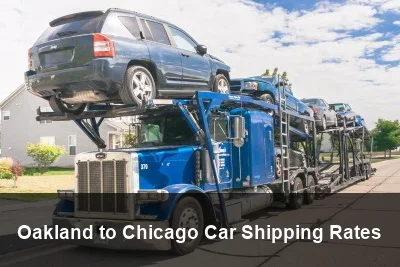
Rates on the Oakland-to-Chicago corridor are shaped by the 2,131-mile distance, which puts it firmly in the long-haul pricing tier. Fuel costs across the Sierra Nevada and Rocky Mountain grades add a measurable surcharge compared to flatter corridors — gas price fluctuations directly affect carrier bids on this route, as detailed at https://california.auto-transport-shipping.com/articles/how-gas-prices-impact-california-auto-transport-fees.html. Expect higher rates in summer when student and relocation demand peaks and in late fall when carriers begin avoiding the northern I-80 corridor ahead of mountain winter closures.
What affects the cost of Oakland to Chicago car shipping:
- Vehicle type and size — larger vehicles take more carrier space; aftermarket additions like lift kits, oversized mirrors, or roof accessories can add fees
- Open vs. enclosed transport — open is lower cost with stronger carrier availability; enclosed protects against weather, debris, and road conditions
- Standard vs. expedited pickup — expedited prioritizes your vehicle for the next available dispatch, typically at a $100–$300 premium
- Time of year — peak demand seasons drive rates higher; off-peak windows offer the most competitive pricing
- Fuel costs — diesel prices affect carrier rates; longer routes are more sensitive to fuel price swings
- Vehicle condition — non-running vehicles require special loading equipment and cost more to ship
| Vehicle Type | Open Car Shipping (Est.) | Enclosed Car Shipping (Est.) |
|---|---|---|
| Sedan | $1,100 – $1,600 | $1,900 – $2,700 |
| SUV / Crossover | $1,300 – $1,900 | $2,200 – $3,100 |
| Pickup Truck | $1,300 – $1,950 | $2,200 – $3,150 |
| Minivan | $1,300 – $1,900 | $2,200 – $3,100 |
| Luxury / Classic Car | $1,550 – $2,200 | $2,600 – $3,600 |
| Non-Running Vehicle | Add $200–400 | Add $200–400 |
* Estimated ranges based on recent Oakland to Chicago shipments. Actual rate depends on vehicle, locations, booking date, and current fuel costs. Use the form on this page to compare real quotes from licensed carriers.
Open vs. Enclosed: What This Specific Corridor Demands
For most standard vehicles, open transport is appropriate on this corridor and is what the majority of carriers run. The route does cross high-elevation, weather-exposed terrain — Donner Pass on I-80 sits at 7,227 feet — and if you're shipping in November through March, road debris, salt spray in Illinois, and mountain weather are real exposure factors. If you're shipping a luxury vehicle, classic car, or anything with a low clearance kit or custom finish, enclosed is worth the premium. For daily drivers and late-model vehicles shipped between April and October, open is the practical and cost-effective choice.
How Long Does Oakland to Chicago Car Shipping Take?
Oakland to Chicago transit typically runs 6 to 9 days under normal conditions. I-80 is one of the most heavily traveled carrier corridors in the country, so dispatch from Oakland usually happens within 1 to 3 business days of booking. The driving distance for a carrier is roughly 2,131 miles, which translates to approximately 3 to 4 driving days accounting for federal HOS regulations. Carriers often multi-load, meaning your vehicle may ride with 6 to 9 others, requiring some coordination at both ends. If your timeline is compressed, expedited options exist — see https://california.auto-transport-shipping.com/articles/california-expedited-car-shipping-fast-cost.html.
| Service Type | Typical Transit | Pickup Window | Best For |
|---|---|---|---|
| Open — Standard | 7–10 days | 2–5 business days | Best value; most common choice on this route |
| Open — Expedited | 5–7 days | 1–2 business days | Firm arrival date; faster dispatch window |
| Enclosed — Standard | 7–10 days | 4–8 business days | Luxury, classic, or modified vehicles |
| Enclosed — Expedited | 5–7 days | 2–4 business days | High-value vehicles on a firm delivery deadline |
** Winter weather on I-80 through Donner Pass and across Wyoming's high desert can delay transit by 1 to 3 days during storm events. Illinois ice storms in January and February occasionally complicate last-mile delivery in Chicago. Build buffer time into any shipment booked between November and March.
Oakland to Chicago — Route & Logistics
Carriers serving this route access I-80 eastbound from Oakland using I-880 north from the port area or I-580 east from the 98th Avenue interchange. From there, I-80 runs continuously through Sacramento, across the Sierra Nevada at Donner Pass, through Reno, Salt Lake City, and across Wyoming and Nebraska before entering Illinois and terminating at the I-90/I-94 interchange in Chicago.
Key Corridor Waypoints
- Sacramento, CA First major staging and fuel stop roughly 90 miles from Oakland. Carriers often pick up additional vehicles here from Sacramento-area customers, completing their load before the mountain grades. The I-80 and I-50 interchange is a common decision point. Sacramento also serves as an overnight rest stop before the Donner Pass climb on eastbound runs.
- Donner Pass, CA (Elevation 7,227 ft) The most operationally significant point on the entire route. Donner Pass on I-80 is the Sierra Nevada crossing and the primary weather choke point for this corridor. Caltrans can close or chain-control I-80 here during winter storms, which can halt carrier movement for 12 to 36 hours. Carriers experienced on this lane monitor Caltrans road conditions before departure from Sacramento.
- Reno/Sparks, NV After descending the eastern Sierra slope, Reno is the first substantial urban area and a common overnight stop for carriers heading east. I-80 runs directly through the metro. Reno is also a pickup/delivery point for Northern Nevada customers, so carriers may add or offload a vehicle here before continuing across Nevada's Great Basin stretch toward Utah.
- Salt Lake City, UT A major carrier hub at the I-80 and I-15 interchange. Salt Lake City is where routes to the Southwest diverge, and many carriers serving the Chicago lane refuel, inspect loads, and sometimes swap drivers here. The Wasatch Front urban corridor also generates its own vehicle shipping demand, occasionally adding a stop before the Wyoming stretch heading east.
- Cheyenne, WY (Elevation 6,063 ft) Cheyenne sits at the top of the Laramie Range on I-80 and is the second major high-elevation concern after Donner Pass. Wyoming's stretch of I-80 between Laramie and Cheyenne is prone to high-wind closures and winter whiteouts. Carriers time this section carefully in winter. Cheyenne is also a common overnight stop before the long Nebraska plains run.
- Omaha, NE / Council Bluffs, IA The Missouri River crossing at the I-80 Omaha interchange marks the transition from open plains to the Midwest's denser freight corridor. Carriers are now within 500 miles of Chicago. This is a common last overnight or fuel stop before the final push. Some carriers pick up or drop off vehicles in the Omaha metro, occasionally adjusting the load before the Chicago delivery run.
Pickup & Delivery Access
- Pickup Access in Oakland Oakland pickups are most accessible from West Oakland industrial streets and the Port of Oakland perimeter roads along Maritime Street and Middle Harbor Road, where wide staging areas accommodate multi-car haulers. Residential pickups in the Oakland Hills or areas with steep grades or narrow streets may require a meet point at a nearby flat commercial lot. Emeryville, Alameda, and Berkeley are all serviceable with minimal repositioning.
- Delivery Access in Chicago Chicago delivery access varies significantly by neighborhood. Suburban and near-north areas like Evanston, Schaumburg, and Oak Park are straightforward for standard car haulers. Dense neighborhoods like Wicker Park, Logan Square, or Lincoln Park have narrow residential streets and parking enforcement that can complicate curbside delivery. Carriers familiar with Chicago typically coordinate a meet point near a wide commercial street or parking lot when delivering to dense zip codes.
- Nearby Pickup Locations Carriers picking up in Oakland regularly extend service to Berkeley, Alameda, and Emeryville. Call 1‑800‑590‑6492 to confirm door-to-door availability at your address.
Open vs. Enclosed Car Shipping: Oakland to Chicago
Both options use licensed, insured carriers and deliver door to door. For a full breakdown, read the pros and cons of open vs. enclosed car shipping.
Open Car Shipping
Most Popular- Lower cost — the practical choice for most vehicles
- More carriers available on this corridor
- Faster dispatch from booking to pickup
- Works well for sedans, SUVs, trucks, and minivans
- Vehicle rides on an open multi-car carrier
- Cargo insurance required on all licensed carriers
Estimated cost: $1,100 – $1,950
Enclosed Car Shipping
Premium Protection- Full protection from weather, debris, and road grime
- Best for luxury, exotic, and classic vehicles
- Recommended for low-clearance and custom-built cars
- Wheel-net or soft-tie systems prevent contact damage
- Higher cargo coverage — commonly $500,000 per load
- White-glove handling by experienced operators
Estimated cost: $1,900 – $3,150
Not sure which is right for your vehicle? Call 1-800-590-6492 and we'll point you in the right direction. Also worth reading: the top 10 questions to ask any car shipping company before you commit.
How to Prepare Your Car for Shipping to Chicago
A little prep before pickup protects you if there's ever a dispute about your vehicle's condition. This checklist is from our full guide on preparing your car for transport:
- Remove all personal belongings from the interior and trunk
- Leave only a quarter tank of fuel — enough to load and unload
- Take date-stamped photos of the full exterior and interior
- Remove or disable toll transponders (FasTrak, E-ZPass, etc.)
- Retract or remove roof racks, spoilers, antennas, and bike mounts
- Make sure the battery is charged and tires are properly inflated
- Tell the carrier about any existing leaks or mechanical issues
- Deactivate the car alarm before the carrier arrives
- Write down the mileage on the Bill of Lading at pickup
- Fold in side mirrors if the vehicle is wider than standard
Personal items: Most carriers won't cover belongings left in the car. Read the full rules on shipping personal items in your vehicle. Also review our Bill of Lading guide so you know exactly what to check at pickup and delivery.
When to Ship Your Car from Oakland to Chicago
This corridor has two distinct seasonal pressure points: summer relocation demand, which peaks June through August, and winter weather risk, which runs November through March across the Sierra Nevada and Wyoming. Summer sees the highest prices and tightest carrier availability due to concurrent demand from Chicago universities, Bay Area tech relocations, and military PCS season at Naval Station Great Lakes. Winter requires weather contingency planning for mountain passes on both ends. For a full breakdown of cold-season risks, see https://california.auto-transport-shipping.com/articles/auto-transport-challenges-during-the-winter.html.
University Move-In Season (July–September)
University of Chicago, Northwestern, DePaul, and Loyola all see student arrivals in August and early September. Combined with Bay Area tech company relocations starting in June and July, this is the highest-demand window on the Oakland-Chicago corridor. Book at least 2 to 3 weeks ahead during this period. Carrier availability tightens fast and rates climb with demand. Flexibility on pickup date gives you more pricing leverage.
Military PCS Season (April–June)
Naval Station Great Lakes, the Navy's largest training installation, located in North Chicago on Lake Michigan, drives consistent military PCS shipments into the Chicago metro from April through June each year. If you're moving on military orders, confirm your booking window aligns with your reporting date. Carriers who run this lane regularly are familiar with base access restrictions and can coordinate delivery near Great Lakes without issue.
Spring Rate Window (March–May)
Late March through May is historically the most cost-effective window to ship on this corridor. Winter weather risk drops off, mountain passes reopen reliably, and summer demand has not yet spiked. Carrier supply is strong as trucks return to northern routes after wintering in southern lanes. If your timeline is flexible and you can target a spring ship date, you're likely to see lower rates and shorter dispatch times.
Winter Weather Risk (November–March)
Donner Pass, the Wyoming high desert, and Chicago itself all present winter hazards for this route between November and March. Caltrans chain controls and Wyoming I-80 wind closures are the most common delay sources. Illinois ice storms can delay last-mile delivery. Add 2 to 4 buffer days to your transit estimate for any shipment booked in this window and discuss weather contingencies with your broker before booking. Review https://california.auto-transport-shipping.com/articles/auto-transport-challenges-during-the-winter.html.
Fall Corporate Relocation (September–October)
Corporate relocation peaks hit this corridor in September and October as companies finalize fiscal-year moves. Chicago's concentration of financial services firms, healthcare systems, and logistics companies generates consistent inbound relocation demand from the Bay Area. Booking in September means competing with both end-of-student-season traffic and early corporate movers. Locking in your date by mid-August gives you better carrier options before fall demand fully materializes.
How to Choose a Oakland to Chicago Car Shipping Company
Getting multiple quotes is step one — knowing what to look for in those quotes matters just as much. Our guide on how to select a car shipping company covers the full process. Here are the six things that matter most:
FMCSA Registration
Every carrier or broker must hold a valid MC number. Verify any company at FMCSA SAFER before you book.
Proof of Insurance
Ask for a current certificate of insurance. Open carriers typically carry $100,000–$250,000 per load; enclosed commonly $500,000 or more. Learn what auto transport insurance covers.
All-In Pricing
Your quote should be a final number with no fees added after booking. Know the difference between brokers and carriers and confirm what the quote covers before you agree.
Bill of Lading
A complete Bill of Lading is filled out at pickup and delivery. Our Bill of Lading guide explains what to check. Never sign an incomplete one.
Real Reviews
Check Google and the BBB. Look at how they handled complaints and damage claims — that tells you more than a five-star average from happy customers.
Route Experience
A carrier who runs Oakland to Chicago regularly knows that the window to clear Donner Pass before a storm closes I-80 is measured in hours, not days, and that staging in West Sacramento overnight versus pushing through is often the right call in November and March. They know the Wyoming stretch between Rawlins and Laramie on I-80 is the second most likely delay point on the whole corridor — wind closures there can add a day with no warning. They also know that delivering to Chicago's lakefront neighborhoods on a weekday morning avoids the worst of the street-parking enforcement cycles. These aren't details you'd find on a generic carrier's checklist. They're earned from repeated runs on this exact lane.
Oakland to Chicago Car Shipping — FAQ
How much does it cost to ship a car from Oakland to Chicago?
On the Oakland-to-Chicago corridor, rates for a standard sedan on open transport typically range from $1,050 to $1,450 depending on the time of year, current fuel prices, and how quickly you need dispatch. SUVs and trucks run $100 to $200 higher due to size and weight on the carrier. Enclosed transport adds roughly $400 to $700 on top of open rates. Summer and early fall are the highest-cost windows due to university and relocation demand. Booking 2 to 3 weeks out generally gets you better pricing than last-minute requests. Use the quote form on this page for a current estimate on your specific vehicle and dates.
How long does Oakland to Chicago car shipping take?
From first available pickup to delivery in Chicago, plan for 6 to 9 days under normal conditions. Dispatch from Oakland typically takes 1 to 3 business days after booking, and the driving portion runs 3 to 4 days given federal hours-of-service limits for commercial drivers. This corridor is well-trafficked, so carrier availability is generally strong, but mountain weather between November and March can add 1 to 3 days if Donner Pass or Wyoming's I-80 segment is affected by closures. If your timeline is firm, expedited dispatch options can compress the pickup window — see https://california.auto-transport-shipping.com/articles/california-expedited-car-shipping-fast-cost.html for details.
Is my car insured during transport from Oakland to Chicago?
Every licensed carrier operating in the U.S. is required by federal law to carry cargo insurance that covers your vehicle during transport. However, the coverage limits, deductibles, and exclusions vary between carriers, and the standard carrier policy may not fully cover a high-value vehicle. Before your car is loaded, a bill of lading will document its condition — review this document carefully and note any pre-existing damage in writing. For a full explanation of how auto transport insurance works, see https://california.auto-transport-shipping.com/articles/understanding-auto-transport-insurance.html. If damage does occur, the process for filing a claim is explained step by step at https://california.auto-transport-shipping.com/articles/how-to-file-a-claim-for-vehicle-damage-during-transport.html.
Should I choose open or enclosed transport for Oakland to Chicago?
For most vehicles shipped on this corridor between April and October, open transport is the practical choice and represents the majority of what carriers run. The route does cross high-elevation terrain at Donner Pass (7,227 feet) and through Wyoming, which introduces road debris and weather exposure. If you're shipping a luxury vehicle, classic car, or anything with custom bodywork, enclosed transport eliminates those exposure risks and is worth the premium. For Chicago deliveries in winter, enclosed also protects against salt and road spray during last-mile delivery. A full comparison of both options is available at https://california.auto-transport-shipping.com/articles/open-vs-enclosed-auto-transport-pros-and-cons.html.
Do I have to be present at pickup in Oakland and delivery in Chicago?
You or a designated representative must be present at both ends of the shipment. At pickup, someone needs to sign the bill of lading, which documents your vehicle's existing condition with written notes and photos before the carrier loads it. At delivery, the same document is reviewed and signed to confirm the vehicle arrived in the same condition. If you can't be present personally, you can authorize another adult to act on your behalf — this is common for out-of-state moves where timing is tight. For a full explanation of the bill of lading and what to look for before signing, visit https://california.auto-transport-shipping.com/articles/california-auto-transport-bill-of-lading-information.html.
Does winter weather on I-80 affect my shipment between Oakland and Chicago?
Yes, and it's the most significant operational variable on this corridor between November and March. Donner Pass on I-80 is the primary choke point — Caltrans can implement chain controls or close the pass entirely during Sierra storms. Wyoming's I-80 stretch between Laramie and Cheyenne is the second major risk point, with high-wind closures that can halt carrier movement with little advance notice. Chicago itself sees ice storms that can delay last-mile delivery. If you're shipping in winter, add 2 to 4 buffer days to your transit estimate and discuss the carrier's contingency plan before booking. See https://california.auto-transport-shipping.com/articles/auto-transport-challenges-during-the-winter.html.
I'm shipping for a military PCS to Naval Station Great Lakes — what should I know?
Naval Station Great Lakes is located in North Chicago, Illinois, approximately 35 miles north of downtown on the Lake Michigan shoreline. It's accessible via I-94 north from Chicago, making it straightforward for carriers running the I-80 to I-90/I-94 corridor into the Chicago metro. If you're on PCS orders, book as early as your reporting date is confirmed — PCS season from April through June sees elevated demand on this route from both coasts. Carriers familiar with Great Lakes deliveries know the base access protocols and can coordinate to deliver near the installation or to a meet point just outside the gate if on-base access is restricted.
Can I ship a car from Oakland to Chicago if I'm also relocating from the Bay Area?
Yes, and this is one of the most common scenarios on this corridor. Bay Area to Chicago relocations typically involve professional moves driven by employers in Chicago's financial, healthcare, and tech sectors, or university enrollment. The practical approach is to book your auto transport separately from your household goods move, since vehicle carriers and moving trucks operate on different schedules and neither can wait for the other. Have your vehicle ready for pickup 1 to 2 days before your intended move date, and arrange for someone to receive it in Chicago if you're flying ahead. The same dispatcher who handles your car can usually accommodate a flexible delivery window of a few days on either side of your target date.
Ready to Ship Your Car from Oakland to Chicago?
One form gets you up to 10 free quotes from licensed, insured carriers. Compare costs and transit times and book the best deal for your schedule.